
Implantable Drug Delivery Devices Global Market Opportunities And Strategies To 2035
By Product (Contraceptive Implants, Spinal Implants, Brachytherapy Seeds, Drug-Eluting Stents, Intraocular Stents, Implantable Infusion Pumps, Other Products), By Technology (Diffusion, Osmotic, Magnetic, Other Technologies), By Application (Contraception, Ophthalmology, Cardiovascular, Diabetes, Oncology, Autoimmune Diseases, Other Applications), And By Region, Opportunities And Strategies – Global Forecast To 2035
Implantable Drug Delivery Devices Market Definition
Implantable drug delivery devices are medical devices designed to be placed inside the body to release medications in a controlled and sustained manner over an extended period. These devices are typically implanted under the skin or within specific tissues and are used to deliver precise doses of drugs directly to targeted areas, improving therapeutic effectiveness while reducing side effects associated with systemic drug administration. Their primary purpose is to enhance patient compliance, minimize the need for frequent dosing and provide consistent drug levels in the body, which is especially important for chronic conditions such as cancer, diabetes, pain management and hormonal disorders. The implantable drug delivery devices market consists of revenues generated by entities (organizations, sole traders and partnerships) that design, manufacture and supply implantable systems used for controlled drug release within the body. The market includes devices that utilize mechanical, chemical, or electronic mechanisms to administer therapeutic agents over extended durations for various medical conditions.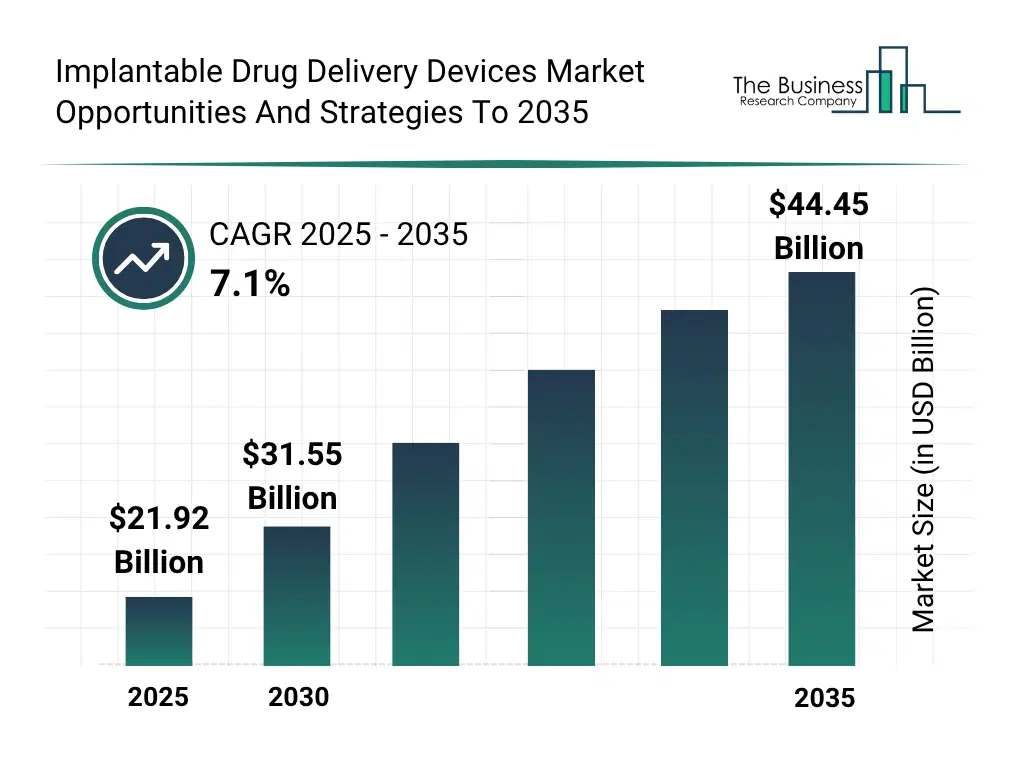
Implantable Drug Delivery Devices Market Size
The global implantable drug delivery devices market reached a value of nearly $21,924.1 million in 2025, having grown at a compound annual growth rate (CAGR) of 8.1% since 2020. The market is expected to grow from $21,924.1 million in 2025 to $31,549.2 million in 2030 at a rate of 7.6%. The market is then expected to grow at a CAGR of 7.1% from 2030 and reach $44,453.9 million in 2035. Growth in the historic period resulted from rising prevalence of chronic diseases, growing demand for targeted and sustained drug delivery, rising demand for contraceptive implants and increase in surgical procedures. Factors that negatively affected growth in the historic period were high initial and treatment costs and stringent regulatory requirements and approval delays. Going forward, advancements in drug delivery technologies, growing adoption of personalized and precision medicine, rising healthcare expenditure and increasing demand for home-based and long-term care will drive the growth. Factors that could hinder the growth of the implantable drug delivery devices market in the future include drug safety concerns, limited reimbursement and insurance coverage and impact of trade war and tariffs.
Implantable Drug Delivery Devices Market Segmentation
The implantable drug delivery devices market is segmented by product, by technology and by application.By Product –
The implantable drug delivery devices market is segmented by product into:
- a) Contraceptive Implants
- b) Spinal Implants
- c) Brachytherapy Seeds
- d) Drug-Eluting Stents
- e) Intraocular Stents
- f) Implantable Infusion Pumps
- g) Other Products
By Technology –
The implantable drug delivery devices market is segmented by technology into:
- a) Diffusion
- b) Osmotic
- c) Magnetic
- d) Other Technologies
By Application –
The implantable drug delivery devices market is segmented by application into:
- a) Contraception
- b) Ophthalmology
- c) Cardiovascular
- d) Diabetes
- e) Oncology
- f) Autoimmune Diseases
- g) Other Applications
By Geography - The implantable drug delivery devices market is segmented by geography into:
- China
- India
- Japan
- Australia
- Taiwan
- South Korea
- Indonesia
- USA
- Canada
- Brazil
- France
- Germany
- UK
- Italy
- Spain
- Russia
-
o Asia Pacific
o Africa