
In Silico Protein Design Market Report 2026
Global Outlook – By Software Type (Cloud-Based Software, On-Premise Software), By Technology Type (Molecular Modelling, Artificial Intelligence And Machine Learning Algorithms, Homology Modelling, Other Technology Types), By Application (Drug Discovery And Development, Enzyme Engineering, Biomarker Discovery, Vaccinology, Academic Research), By End-User (Pharmaceutical And Biotechnology Companies, Academic And Research Institutes, Other End-Users) – Market Size, Trends, Strategies, and Forecast to 2030
In Silico Protein Design Market Overview
• In Silico Protein Design market size has reached to $1.87 billion in 2025 • Expected to grow to $4.86 billion in 2030 at a compound annual growth rate (CAGR) of 20.9% • Growth Driver: Increasing Demand For Personalized Medicine Is Fueling The Market Growth Due To Increasing Adoption Of Targeted Therapies And Advances In Genomic Research • Market Trend: Advancements In Automated Protein Design Platforms Accelerating Therapeutic Innovation • North America was the largest region in 2025 and Asia-Pacific is the fastest growing region.What Is Covered Under In Silico Protein Design Market?
In silico protein design refers to creating or modifying protein structures using computer-based modelling and simulations instead of laboratory experiments. It uses computational tools to predict how amino acid sequences will fold and interact, enabling the design of proteins with desired shapes and functions. This approach speeds up discovery, reduces costs, and allows researchers to explore many possibilities before testing in the lab. The main software types of in silico protein design include cloud-based software and on-premise software. Cloud-based software refers to digital tools and platforms that operate over the internet, allowing users to access advanced protein design applications without needing to install or maintain them on local computers. It uses various technologies such as molecular modelling, artificial intelligence and machine learning algorithms, homology modelling, and others, and is applied for drug discovery and development, enzyme engineering, biomarker discovery, vaccinology, and academic research. It is used by several end-users, including pharmaceutical and biotechnology companies, academic and research institutes, and others.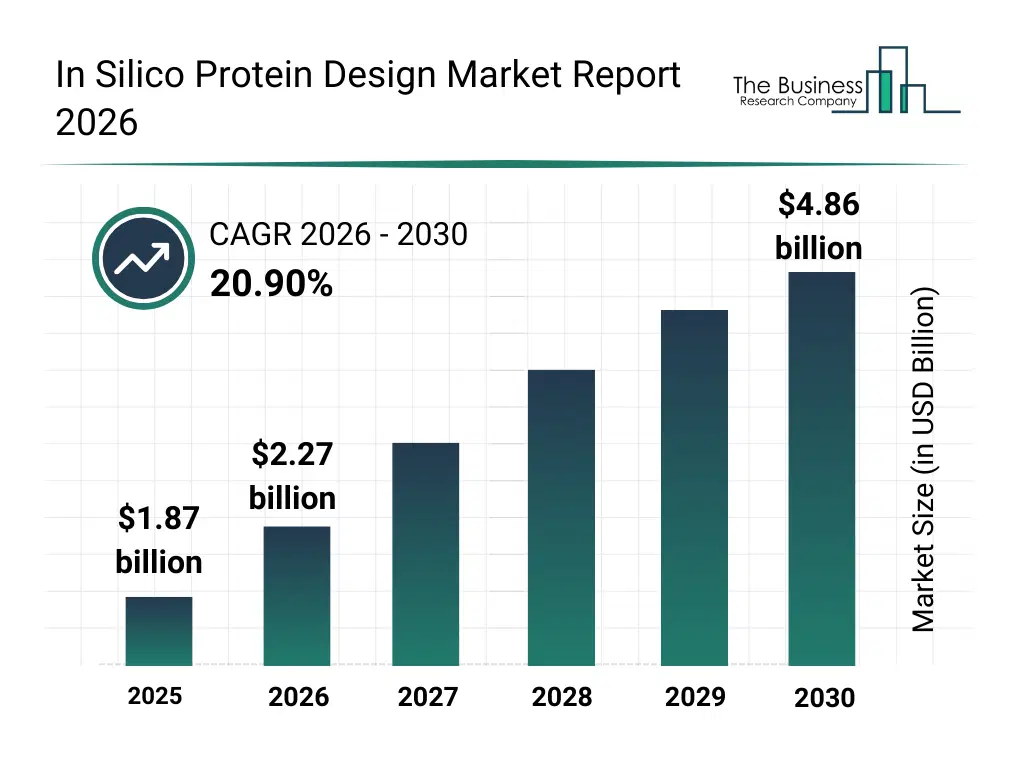
What Is The In Silico Protein Design Market Size and Share 2026?
The in silico protein design market size has grown exponentially in recent years. It will grow from $1.87 billion in 2025 to $2.27 billion in 2026 at a compound annual growth rate (CAGR) of 21.2%. The growth in the historic period can be attributed to advancements in computational biology tools, growing availability of protein structure databases, increased use of in silico methods in drug discovery, expansion of academic bioinformatics research, rising demand for cost-efficient protein design approaches.What Is The In Silico Protein Design Market Growth Forecast?
The in silico protein design market size is expected to see exponential growth in the next few years. It will grow to $4.86 billion in 2030 at a compound annual growth rate (CAGR) of 20.9%. The growth in the forecast period can be attributed to increasing investments in ai-based drug discovery, rising adoption of personalized medicine development, expansion of cloud computing infrastructure, growing use of automation in biological research, increasing collaboration between biotech and software companies. Major trends in the forecast period include increasing adoption of ai-driven protein modelling platforms, rising use of cloud-based simulation software, growing integration of machine learning in structure prediction, expansion of computational enzyme engineering, enhanced focus on rapid protein optimization.
Global In Silico Protein Design Market Segmentation
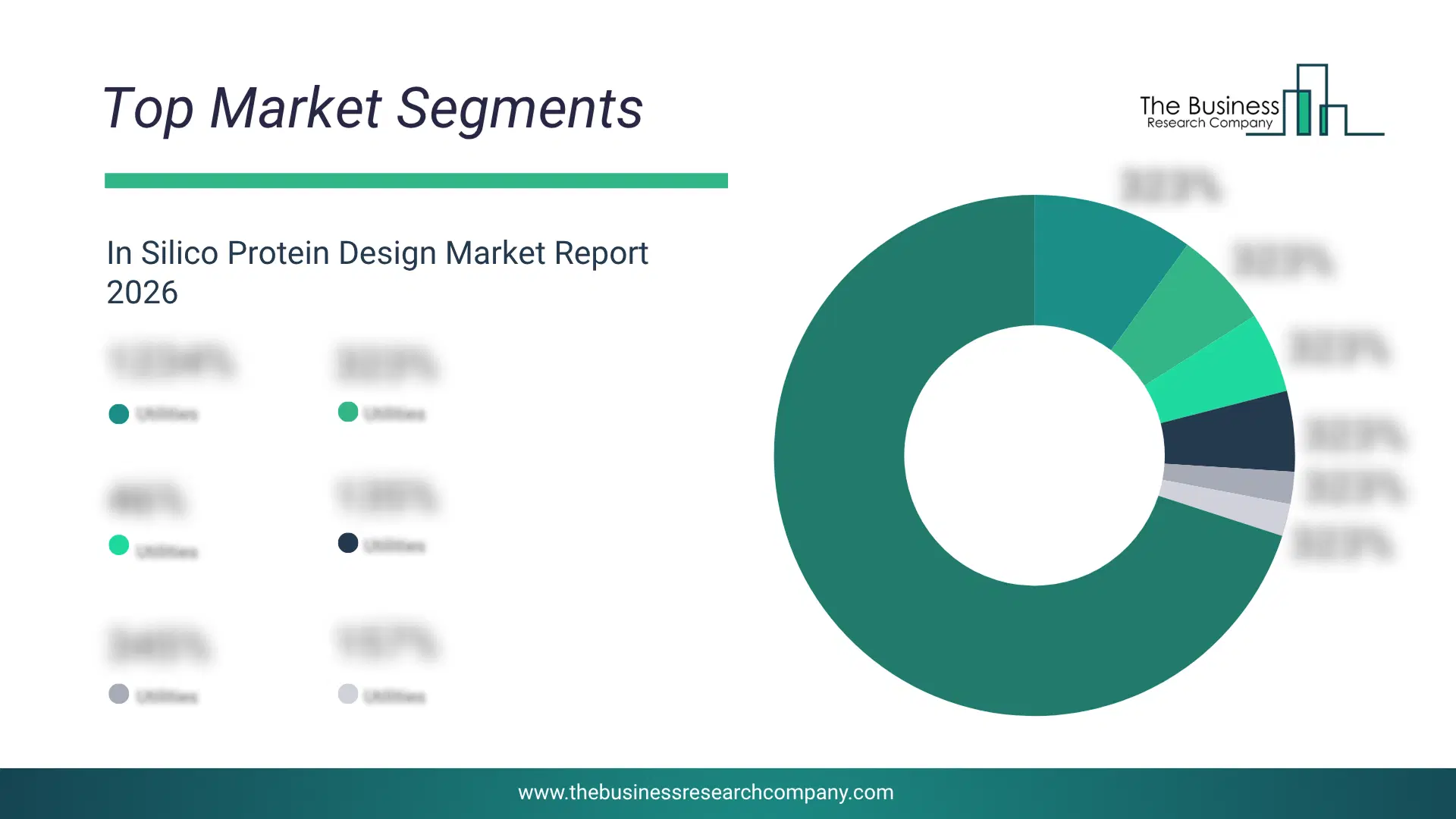
1) By Software Type: Cloud-Based Software, On-Premise Software 2) By Technology Type: Molecular Modelling, Artificial Intelligence And Machine Learning Algorithms, Homology Modelling, Other Technology Types 3) By Application: Drug Discovery And Development, Enzyme Engineering, Biomarker Discovery, Vaccinology, Academic Research 4) By End-User: Pharmaceutical And Biotechnology Companies, Academic And Research Institutes, Other End-Users Subsegments: 1) By Cloud-Based Software: Subscription-Based, Pay-Per-Use, Hybrid Cloud 2) By On-Premise Software: Enterprise License, Perpetual License, Customized SolutionsWhat Is The Driver Of The In Silico Protein Design Market?
The increasing demand for personalized medicine is expected to propel the growth of the in silico protein design market going forward. Personalized medicine refers to tailoring medical treatment and prevention strategies to an individual’s unique genetic makeup, lifestyle, and environment. The demand for personalized medicine is rising due to advancements in genomic technologies, as the growing adoption of value-based care models is increasing due to the focus on improving patient outcomes while reducing overall healthcare costs. Silico protein design supports the demand for personalized medicine by enabling the rapid development of customized therapeutic proteins tailored to individual patient profiles. For instance, in February 2024, according to the Personalized Medicine Coalition (PMC), a US-based non-profit organization, the FDA authorized 16 new personalized treatments for rare disease patients in 2023, compared to just six approvals in 2022. Therefore, the increasing demand for personalized medicine is driving the growth of the in silico protein design industry.Key Players In The Global In Silico Protein Design Market
Major companies operating in the in silico protein design market are Dassault Systèmes SE, Schrödinger Inc., Generate Biomedicines Inc., Insilico Medicine Inc., Chemical Computing Group ULC, Arzeda Corp., Outpace Bio Inc., Evozyne Inc., Cradle Bio B.V., Seismic Therapeutics Inc., Profluent Bio Inc., Nabla Bio Inc., Antiverse Ltd., EvolutionaryScale Inc., RevolKa Ltd., Molecular Discovery Ltd., Inte:Ligand GmbH, Kuano Ltd., AI Proteins Inc., Menten AI Inc.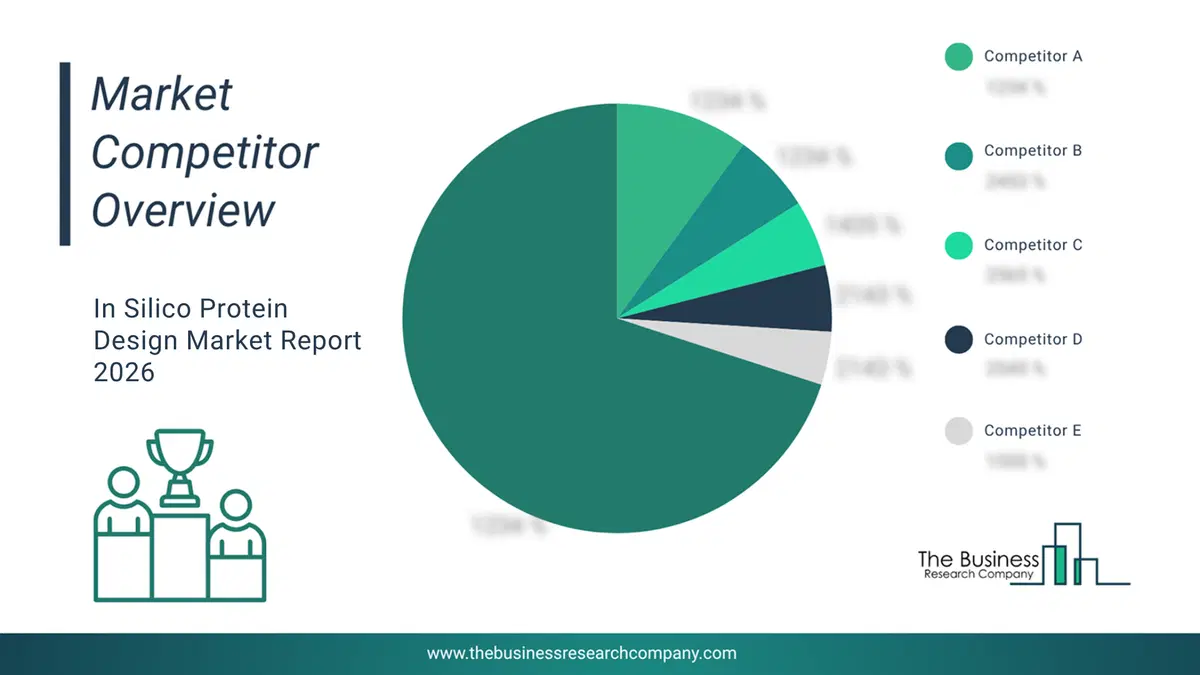
This chart is for illustrative purposes; the full report includes a detailed competitor analysis and comprehensive overview of the top 10 companies in the market.
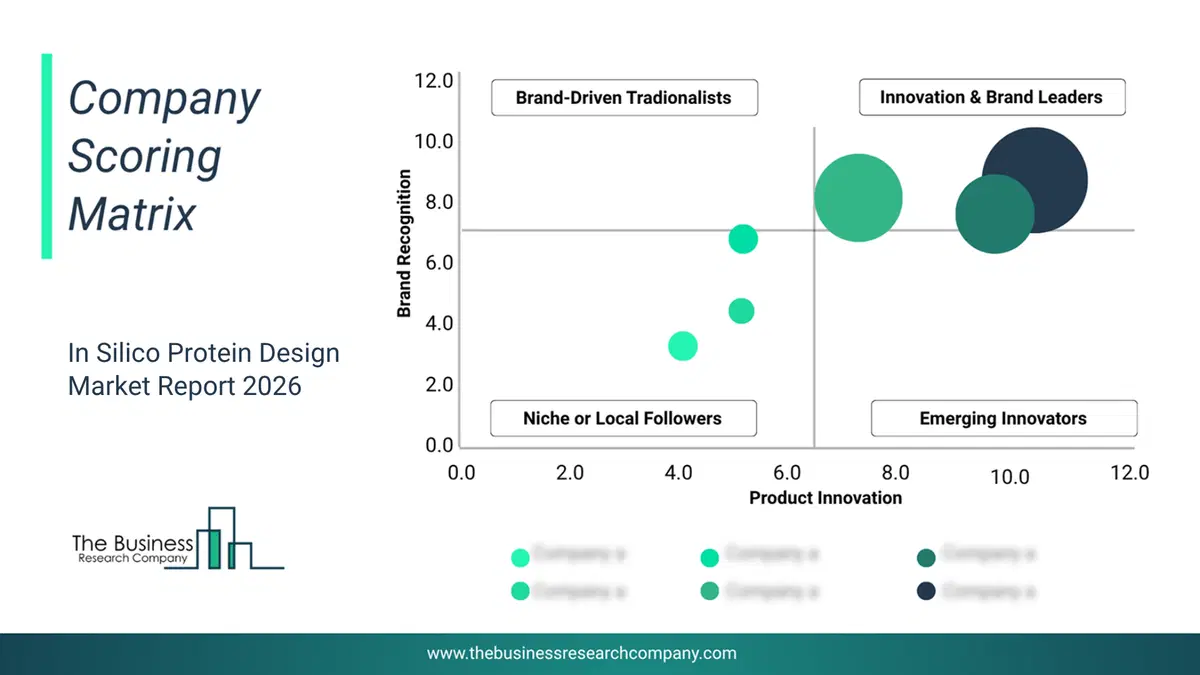
This chart maps companies by product innovation and brand strength, with bubble size indicating relative revenue, helping identify market leaders, challengers, and niche players. This is an illustrative chart; the full report provides a complete and accurate competitive analysis.
Global In Silico Protein Design Market Trends and Insights
Major companies operating in the in silico protein design market are focusing on developing advanced solutions, such as push-button protein design platforms, to accelerate drug discovery, improve therapeutic efficacy, and enable the creation of novel biologics. Push-button protein design platforms are tools that allow scientists to create and modify proteins quickly using automated, easy-to-use processes without requiring extensive manual input. For instance, in July 2025, Latent Labs, a UK-based biotechnology company, introduced Latent-X, a generative AI model accessible through a web-based push-button platform that enables users without coding expertise to upload targets and design macrocycles and mini-binders at the atomic level. The system delivers 91–100% hit rates for macrocycles and 10–64% for mini-binders, achieves picomolar to micromolar binding affinities with lab-verified specificity, and produces complete sequences and structures more than ten times faster than previous methods. This technological progress is expanding accessibility and accelerating innovation in protein therapeutics.What Are Latest Mergers And Acquisitions In The In Silico Protein Design Market?
In July 2023, BioNTech SE, a Germany-based biotechnology company, acquired InstaDeep Ltd. for an undisclosed amount. With this acquisition, BioNTech and InstaDeep aimed to combine BioNTech’s expertise in immunotherapy and vaccine development with InstaDeep’s cutting-edge artificial intelligence and machine learning technologies to accelerate and enhance AI-powered drug discovery, design, and development processes, ultimately improving the creation of innovative therapies for cancer and infectious diseases. InstaDeep Ltd. is a UK-based company offering in silico protein design technologies.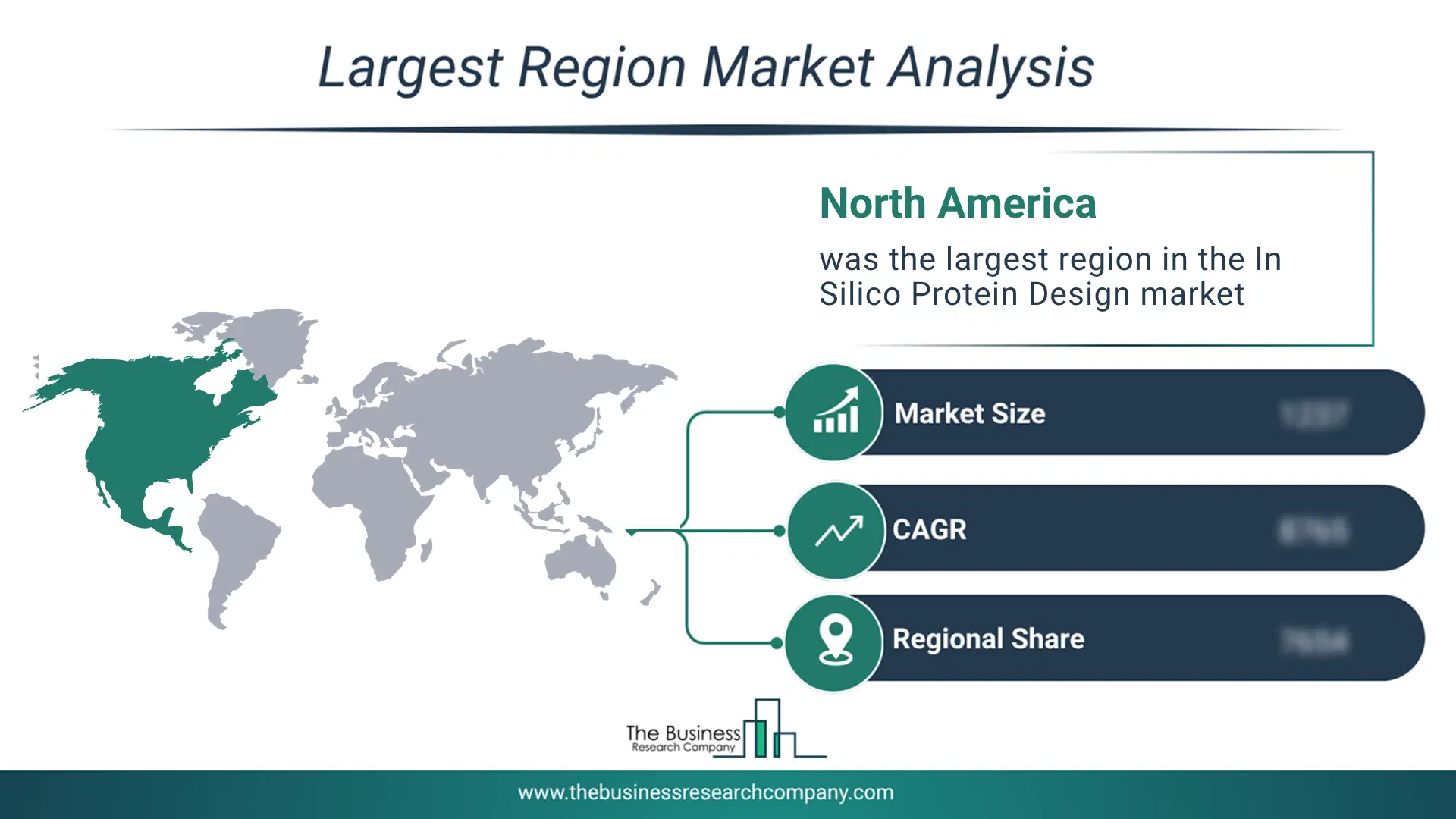
Regional Insights
North America was the largest region in the in silico protein design market in 2025. Asia-Pacific is expected to be the fastest-growing region in the forecast period. The regions covered in this market report are Asia-Pacific, South East Asia, Western Europe, Eastern Europe, North America, South America, Middle East, Africa. The countries covered in this market report are Australia, Brazil, China, France, Germany, India, Indonesia, Japan, Taiwan, Russia, South Korea, UK, USA, Canada, Italy, Spain.What Defines the In Silico Protein Design Market?
The in silico protein design market consists of revenues earned by entities by providing services such as protein structure modelling, protein engineering and optimization, antibody and biologic design, molecular docking, and virtual screening. The market value includes the value of related goods sold by the service provider or included within the service offering. The in silico protein design market also includes sales of optimized proteins, enzyme variants, peptides and vaccine candidates, protein models, and research kits. Values in this market are ‘factory gate’ values, that is, the value of goods sold by the manufacturers or creators of the goods, whether to other entities (including downstream manufacturers, wholesalers, distributors, and retailers) or directly to end customers. The value of goods in this market includes related services sold by the creators of the goods.How is Market Value Defined and Measured?
The market value is defined as the revenues that enterprises gain from the sale of goods and/or services within the specified market and geography through sales, grants, or donations in terms of the currency (in USD unless otherwise specified). The revenues for a specified geography are consumption values that are revenues generated by organizations in the specified geography within the market, irrespective of where they are produced. It does not include revenues from resales along the supply chain, either further along the supply chain or as part of other products.
This chart presents market attractiveness based on a quantitative evaluation of growth, competition, strategic alignment, and risk, offering a clear view of opportunity areas for decision-making. This chart is for illustrative purposes; the full report contains the complete analysis.

This chart highlights the Total Addressable Market (TAM) by estimating the maximum revenue opportunity using an assumption-driven approach, supporting strategic planning and opportunity sizing across markets. The chart is illustrative; the full report provides a more comprehensive analysis.
What Key Data and Analysis Are Included in the In Silico Protein Design Market Report 2026?
The in silico protein design market research report is one of a series of new reports from The Business Research Company that provides market statistics, including industry global market size, regional shares, competitors with the market share, detailed market segments, market trends and opportunities, and any further data you may need to thrive in the in silico protein design industry. The market research report delivers a complete perspective of everything you need, with an in-depth analysis of the current and future state of the industry.In Silico Protein Design Market Report Forecast Analysis
| Report Attribute | Details |
|---|---|
| Market Size Value In 2026 | $2.27 billion |
| Revenue Forecast In 2030 | $4.86 billion |
| Growth Rate | CAGR of 21.2% from 2026 to 2030 |
| Base Year For Estimation | 2025 |
| Actual Estimates/Historical Data | 2020-2025 |
| Forecast Period | 2026 - 2030 |
| Market Representation | Revenue in USD Billion and CAGR from 2026 to 2030 |
| Segments Covered | Software Type, Technology Type, Application, End-User |
| Regional Scope | Asia-Pacific, Western Europe, Eastern Europe, North America, South America, Middle East, Africa |
| Country Scope | The countries covered in the report are Australia, Brazil, China, France, Germany, India, Indonesia, Japan, Taiwan, Russia, South Korea, UK, USA, Canada, Italy, Spain. |
| Key Companies Profiled | Dassault Systèmes SE, Schrödinger Inc., Generate Biomedicines Inc., Insilico Medicine Inc., Chemical Computing Group ULC, Arzeda Corp., Outpace Bio Inc., Evozyne Inc., Cradle Bio B.V., Seismic Therapeutics Inc., Profluent Bio Inc., Nabla Bio Inc., Antiverse Ltd., EvolutionaryScale Inc., RevolKa Ltd., Molecular Discovery Ltd., Inte:Ligand GmbH, Kuano Ltd., AI Proteins Inc., Menten AI Inc. |
| Customization Scope | Request for Customization |
| Pricing And Purchase Options | Explore Purchase Options |