
Inbound Logistics Market Report 2026
Global Outlook – By Function (Transportation; Warehousing; Inventory Management; Procurement; Supplier Relationship Management), By Mode Of Transportation (Roadways; Railways; Airways; Waterways), By Application (Primary Inbound Logistics; Secondary Inbound Logistics; Cross-Docking), By End User (Retail And E-Commerce; Manufacturing; Automotive; Healthcare; Food And Beverage; Consumer Goods; Aerospace And Defense; Other End Users) – Market Size, Trends, Strategies, and Forecast to 2030
Inbound Logistics Market Overview
• Inbound Logistics market size has reached to $1728.04 billion in 2025 • Expected to grow to $2624.29 billion in 2030 at a compound annual growth rate (CAGR) of 8.7% • Growth Driver: Expansion Of Global Trade To Drive Inbound Logistics Market Growth • Market Trend: Technological Advancements Enhance Inbound Logistics With Real-Time Data And Predictive Insights • North America was the largest region in 2025.What Is Covered Under Inbound Logistics Market?
Inbound logistics refers to the processes involved in receiving, storing, and distributing raw materials or goods that a company requires to produce its products or services. It is the first step in the overall supply chain process, focusing on how materials are transported from suppliers to a company's facilities. The main functions of inbound logistics include transportation, warehousing, inventory management, procurement, and supplier relationship management. Transportation in inbound logistics involves the movement of goods from suppliers to a company's facilities, which includes managing various transport modes such as trucks, ships, planes, and trains to ensure timely and efficient delivery of products. The modes of transportation include roads, railways, airlines, and waterways for applications such as primary inbound logistics, secondary inbound logistics, and cross-docking. The end users include retail and e-commerce, manufacturing, automotive, healthcare, food and beverage, consumer goods, aerospace and defense, and others.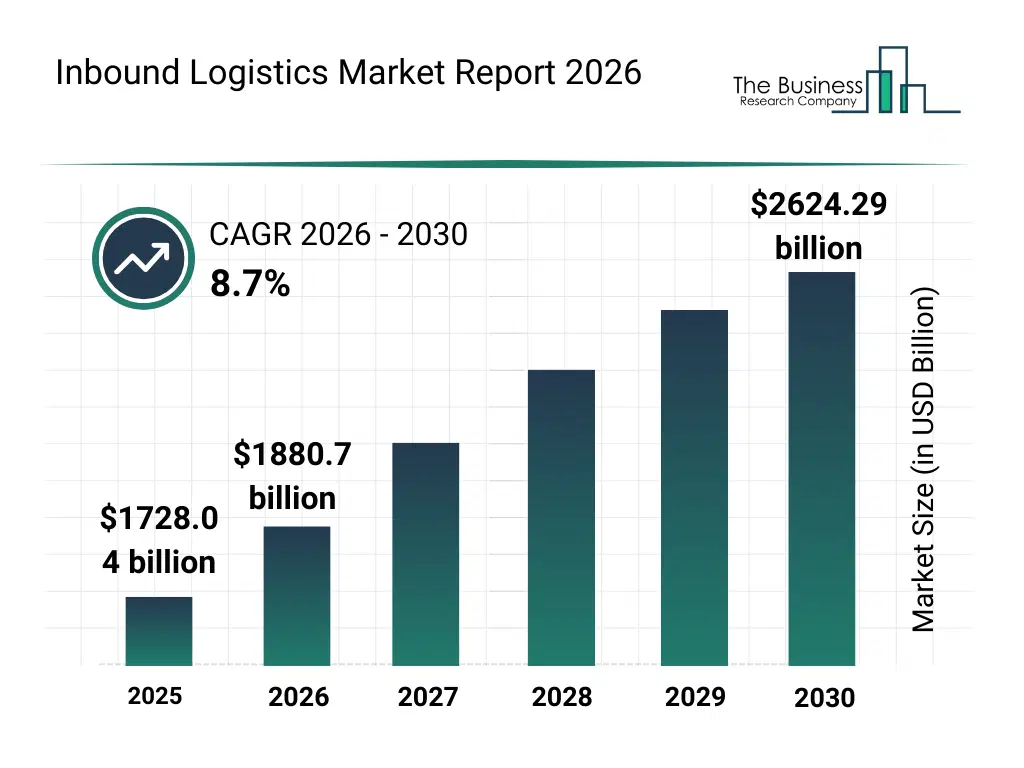
What Is The Inbound Logistics Market Size and Share 2026?
The inbound logistics market size has grown strongly in recent years. It will grow from $1728.04 billion in 2025 to $1880.7 billion in 2026 at a compound annual growth rate (CAGR) of 8.8%. The growth in the historic period can be attributed to expansion of global manufacturing supply chains, growth of centralized procurement models, increased use of third-party logistics providers, rising demand for inventory efficiency, adoption of standardized inbound logistics processes.What Is The Inbound Logistics Market Growth Forecast?
The inbound logistics market size is expected to see strong growth in the next few years. It will grow to $2624.29 billion in 2030 at a compound annual growth rate (CAGR) of 8.7%. The growth in the forecast period can be attributed to increasing investments in supply chain digitization, rising focus on resilient sourcing strategies, expansion of sustainable inbound logistics practices, growing use of real-time tracking technologies, increasing adoption of predictive demand planning. Major trends in the forecast period include increasing integration of digital procurement platforms, rising adoption of automated warehousing solutions, growing focus on supplier visibility and traceability, expansion of cross-docking operations, enhanced emphasis on inventory optimization.
Global Inbound Logistics Market Segmentation
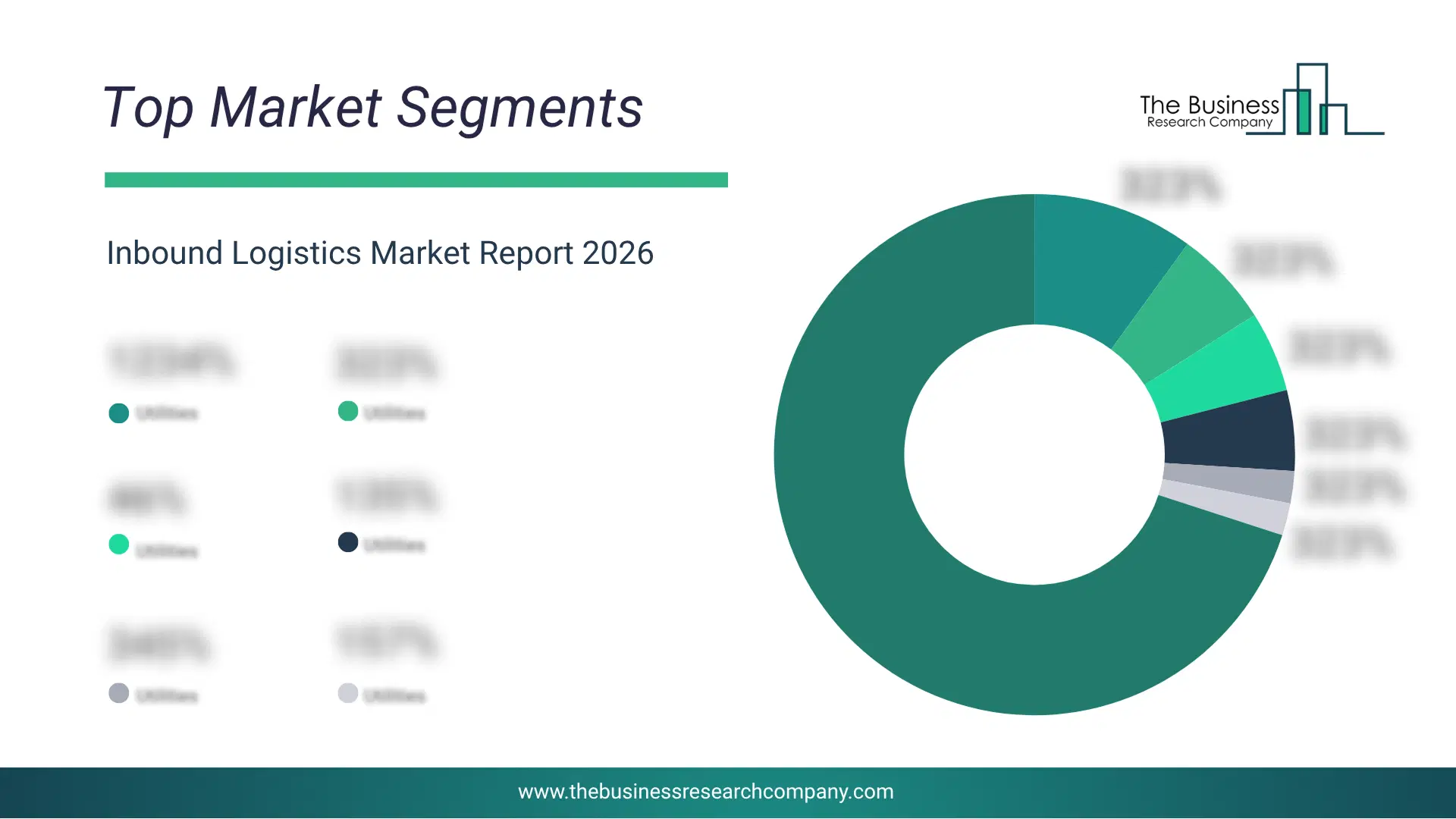
1) By Function: Transportation, Warehousing, Inventory Management, Procurement, Supplier Relationship Management 2) By Mode Of Transportation: Roadways, Railways, Airways, Waterways 3) By Application: Primary Inbound Logistics, Secondary Inbound Logistics, Cross-Docking 4) By End User: Retail And E-Commerce, Manufacturing, Automotive, Healthcare, Food And Beverage, Consumer Goods, Aerospace And Defense, Other End Users Subsegments: 1) By Transportation: Freight Transportation, Last-Mile Delivery Services, Intermodal Transportation Solutions 2) By Warehousing: Public Warehousing, Private Warehousing, Automated Warehousing Solutions 3) By Inventory Management: Inventory Tracking And Control, Demand Forecasting And Planning, Stock Replenishment Strategies 4) By Procurement: Sourcing And Supplier Selection, Purchase Order Management, Contract Negotiation And Management 5) By Supplier Relationship Management: Supplier Performance Evaluation, Collaboration And Communication Tools, Risk Management And Compliance MonitoringWhat Is The Driver Of The Inbound Logistics Market?
The expansion of global trade is expected to propel the growth of the inbound logistics market going forward. Global trade refers to the exchange of goods and services between countries around the world. Global trade is expanding due to increased international cooperation, advancements in technology, and growing demand for diverse products across borders. Inbound logistics supports global trade by ensuring efficient and timely management of goods and materials from suppliers to production facilities, optimizing supply chains across international borders. For instance, in July 2024, according to a report published by the United Nations Conference on Trade and Development (UNCTAD), a Switzerland-based international organization, global trade will approach $32 trillion in 2024, driven by increased exports from China, India, and the US. The report anticipates an additional $250 billion in goods trade and $100 billion in services trade in the first half of 2024 compared to the latter half of 2023. Therefore, the expansion of global trade will drive growth in the inbound logistics industry.Key Players In The Global Inbound Logistics Market
Major companies operating in the inbound logistics market are Deutsche Post DHL Group, A.P. Moller - Maersk A/S, Kuehne + Nagel International AG, DSV A/S, DB Schenker Logistics, C.H. Robinson Worldwide Inc., FedEx Global Logistics Inc., Nippon Express Co. Ltd., CEVA Logistics AG, Sinotrans Limited, Ryder System Inc., Kerry Logistics Network Limited, Expeditors International of Washington Inc., XPO Logistics Inc., Toll Holdings Limited, Hellmann Worldwide Logistics SE & Co. KG, Yusen Logistics Co. Ltd., Dematic Corporation, Honeywell Intelligrated, Penske Logistics LLC, Siemens Logistics GmbH, Blue Yonder, Manhattan Associates Inc., Rhenus Logistics GmbH & Co. KG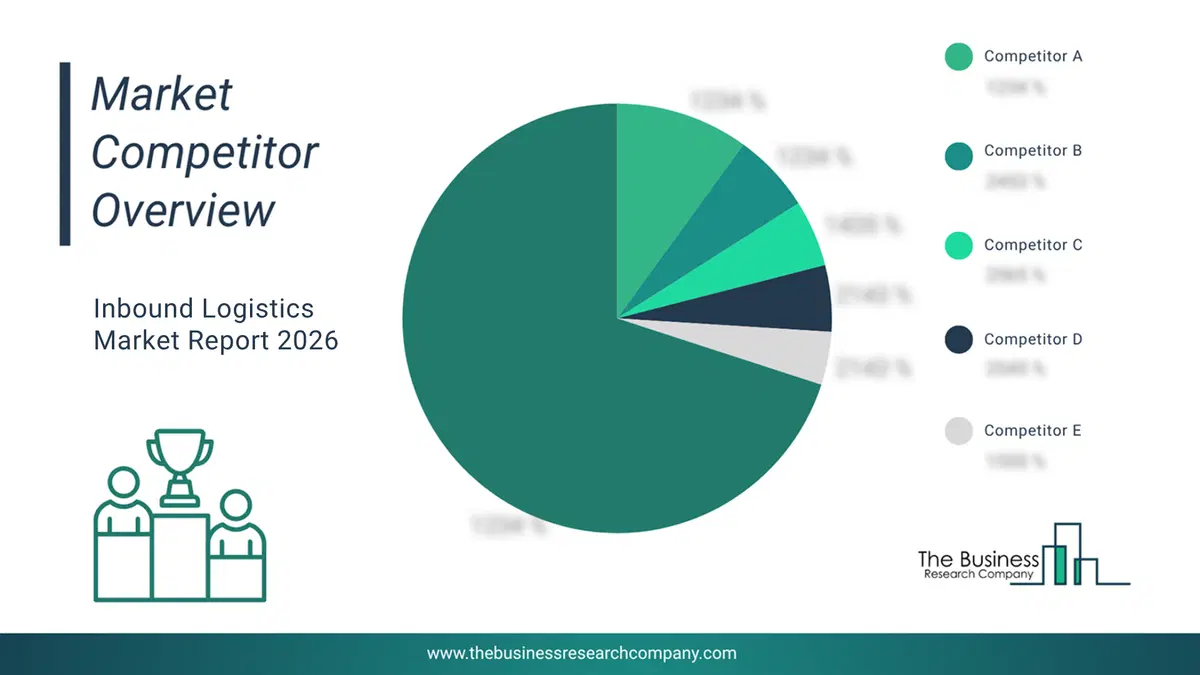
This chart is for illustrative purposes; the full report includes a detailed competitor analysis and comprehensive overview of the top 10 companies in the market.
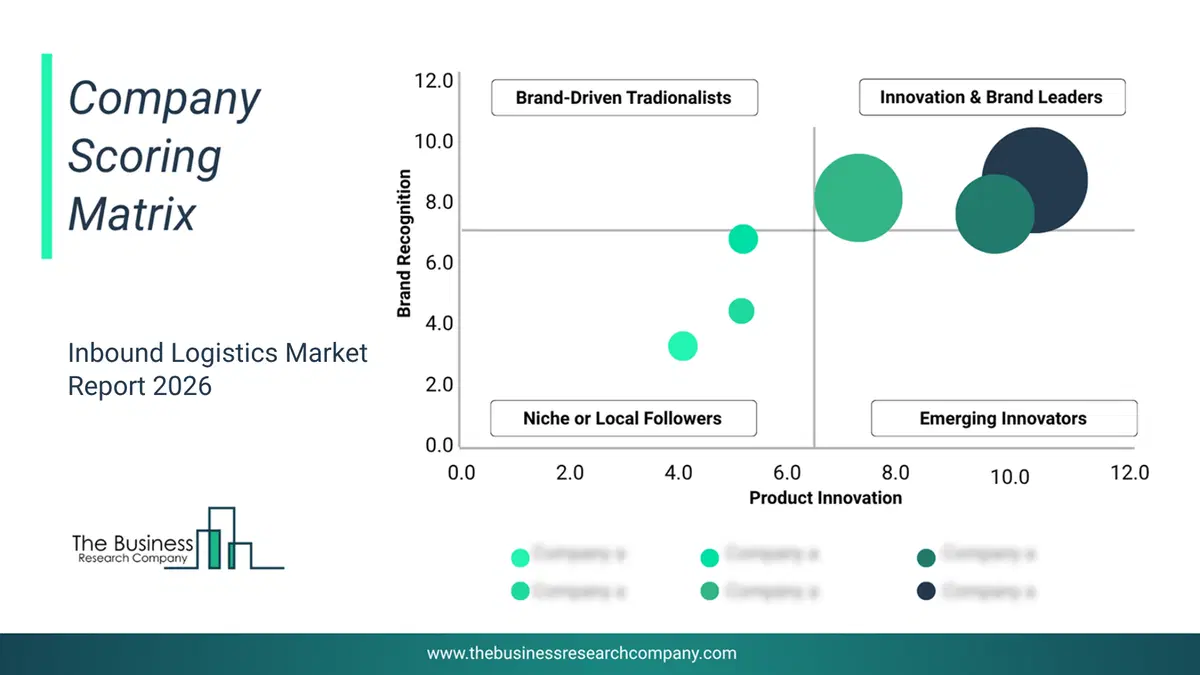
This chart maps companies by product innovation and brand strength, with bubble size indicating relative revenue, helping identify market leaders, challengers, and niche players. This is an illustrative chart; the full report provides a complete and accurate competitive analysis.
Global Inbound Logistics Market Trends and Insights
Major companies operating in the inbound logistics market are focusing on advancements in supply chain visibility techniques, such as real-time data analysis, to enable timely decision-making across the supply chain. Real-time data analysis in inbound logistics enhances visibility, efficiency, and accuracy by providing immediate insights into the status and location of shipments, enabling proactive management and optimized operations. For instance, in November 2023, FourKites Inc., a US-based technology company, launched its Inbound Visibility Solution to enhance end-to-end, shipment, and order-level insights across suppliers. This new solution offers predictive and precise management of inbound orders and shipments, featuring real-time data analysis, disruption identification with financial impact assessment, and comprehensive order lifecycle visibility from pre-tendering to delivery. The solution integrates these insights into the My Workspace dashboard, allowing users to quickly access critical supply chain information and take prompt action.What Are Latest Mergers And Acquisitions In The Inbound Logistics Market?
In August 2024, Blue Yonder Group, Inc., a US-based technology company, acquired One Network Enterprises for $839 million. This acquisition aims to improve inbound logistics by enhancing visibility, efficiency, and agility in managing shipments and inventory while fostering stronger supply chain collaboration. One Network Enterprises is a US-based technology company providing cloud-based supply chain services, including inbound logistics.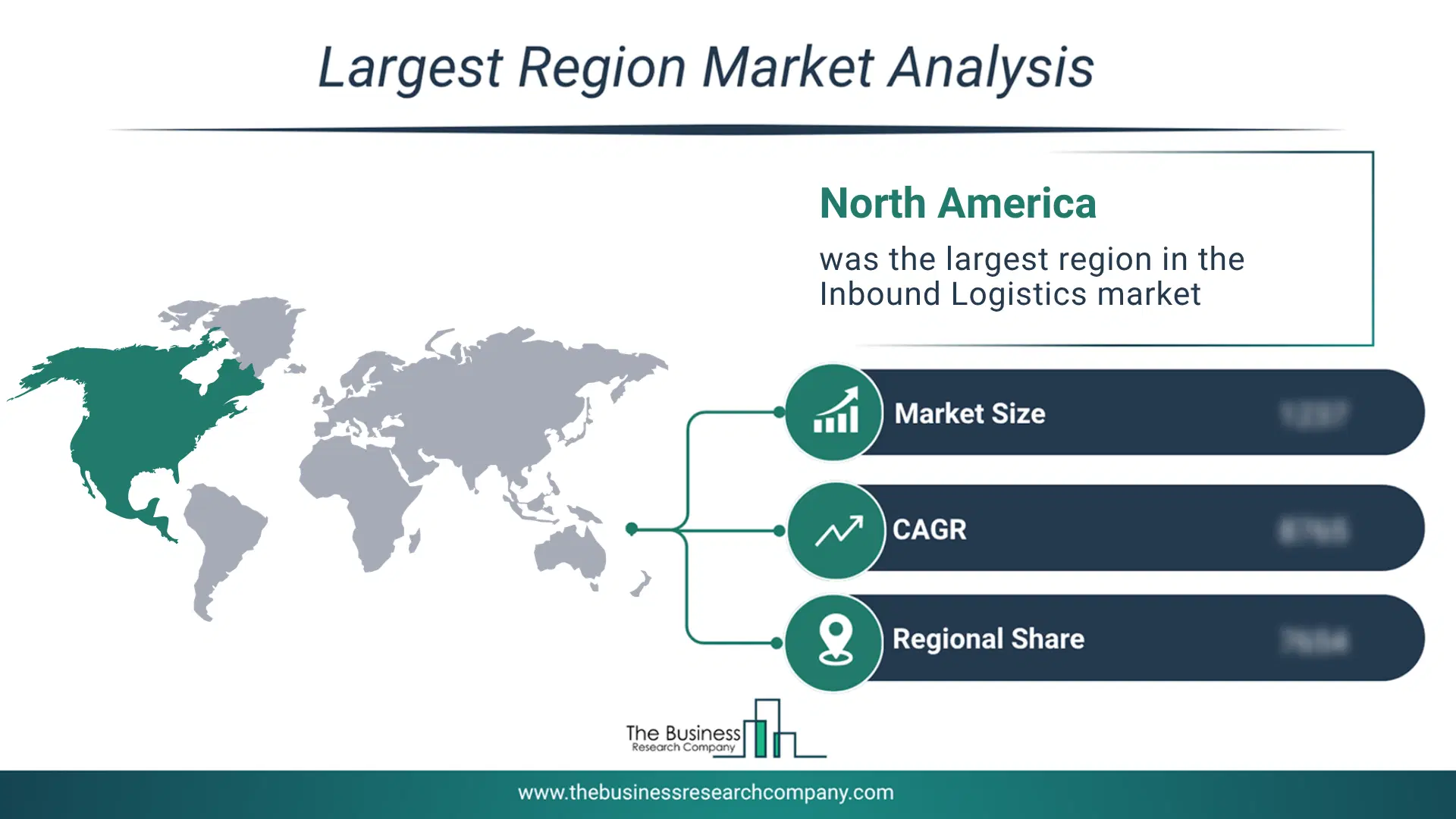
Regional Outlook
North America was the largest region in the inbound logistics market in 2025. The regions covered in this market report are Asia-Pacific, South East Asia, Western Europe, Eastern Europe, North America, South America, Middle East, Africa. The countries covered in this market report are Australia; Brazil; China; France; Germany; India; Indonesia; Japan; Taiwan; Russia; South Korea; UK; USA; Canada; Italy; Spain.What Defines the Inbound Logistics Market?
The inbound logistics market consists of revenues earned by entities by providing services such as logistics consulting, customs brokerage, supply chain coordination, dock management, and customs compliance. The market value includes the value of related goods sold by the service provider or included within the service offering. The inbound logistics market also includes sales of automated guided vehicles (AGVs), sorting systems, barcode scanners and RFID systems, and pallet racking systems. Values in this market are ‘factory gate’ values, that is, the value of goods sold by the manufacturers or creators of the goods, whether to other entities (including downstream manufacturers, wholesalers, distributors, and retailers) or directly to end customers. The value of goods in this market includes related services sold by the creators of the goods.How is Market Value Defined and Measured?
The market value is defined as the revenues that enterprises gain from the sale of goods and/or services within the specified market and geography through sales, grants, or donations in terms of the currency (in USD unless otherwise specified). The revenues for a specified geography are consumption values that are revenues generated by organizations in the specified geography within the market, irrespective of where they are produced. It does not include revenues from resales along the supply chain, either further along the supply chain or as part of other products.
This chart presents market attractiveness based on a quantitative evaluation of growth, competition, strategic alignment, and risk, offering a clear view of opportunity areas for decision-making. This chart is for illustrative purposes; the full report contains the complete analysis.

This chart highlights the Total Addressable Market (TAM) by estimating the maximum revenue opportunity using an assumption-driven approach, supporting strategic planning and opportunity sizing across markets. The chart is illustrative; the full report provides a more comprehensive analysis.
What Key Data and Analysis Are Included in the Inbound Logistics Market Report 2026?
The inbound logistics market research report is one of a series of new reports from The Business Research Company that provides market statistics, including Market Report 2026?global market size, regional shares, competitors with the market share, detailed market segments, market trends and opportunities, and any further data you may need to thrive in the inbound logistics Market Report 2026? The market research report delivers a complete perspective of everything you need, with an in-depth analysis of the current and future state of the Market Report 2026?Inbound Logistics Market Report Forecast Analysis
| Report Attribute | Details |
|---|---|
| Market Size Value In 2026 | $1880.7 billion |
| Revenue Forecast In 2030 | $2624.29 billion |
| Growth Rate | CAGR of 8.8% from 2026 to 2030 |
| Base Year For Estimation | 2025 |
| Actual Estimates/Historical Data | 2020-2025 |
| Forecast Period | 2026 - 2030 - 2030 |
| Market Representation | Revenue in USD Billion and CAGR from 2026 to 2030 |
| Segments Covered | Function, Mode Of Transportation, Application, End User |
| Regional Scope | Asia-Pacific, Western Europe, Eastern Europe, North America, South America, Middle East, Africa |
| Country Scope | The countries covered in the report are Australia, Brazil, China, France, Germany, India, Indonesia, Japan, Taiwan, Russia, South Korea, UK, USA, Canada, Italy, Spain. |
| Key Companies Profiled | Deutsche Post DHL Group, A.P. Moller - Maersk A/S, Kuehne + Nagel International AG, DSV A/S, DB Schenker Logistics, C.H. Robinson Worldwide Inc., FedEx Global Logistics Inc., Nippon Express Co. Ltd., CEVA Logistics AG, Sinotrans Limited, Ryder System Inc., Kerry Logistics Network Limited, Expeditors International of Washington Inc., XPO Logistics Inc., Toll Holdings Limited, Hellmann Worldwide Logistics SE & Co. KG, Yusen Logistics Co. Ltd., Dematic Corporation, Honeywell Intelligrated, Penske Logistics LLC, Siemens Logistics GmbH, Blue Yonder, Manhattan Associates Inc., Rhenus Logistics GmbH & Co. KG |
| Customization Scope | Request for Customization |
| Pricing And Purchase Options | Explore Purchase Options |