
Inclined Barrier Free Elevator Market Report 2026
Global Outlook – By Type (Residential Inclined Elevators, Commercial Inclined Elevators, Public Infrastructure Elevators, Outdoor Inclined Elevators), By Technology Used (Electric Elevators, Rope-Driven Elevators), By Application Sector (Healthcare Facilities, Residential Buildings, Shopping Malls And Retail Spaces, Educational Institutions), By End User (Homeowners, Construction Companies, Facility Managers) – Market Size, Trends, Strategies, and Forecast to 2030
Inclined Barrier Free Elevator Market Overview
• Inclined Barrier Free Elevator market size has reached to $2.36 billion in 2025 • Expected to grow to $3.55 billion in 2030 at a compound annual growth rate (CAGR) of 8.4% • Growth Driver: Impact Of Green Building Practices On The Growth Of The Market Due To Rising Demand For Energy-Efficient And Sustainable Infrastructure • Asia-Pacific was the largest region and fastest growing region.What Is Covered Under Inclined Barrier Free Elevator Market?
An inclined barrier free elevator is a mobility solution that travels along an angled pathway to facilitate movement between different levels. It is designed with a focus on accessibility, ensuring smooth and secure transportation for individuals along sloped routes. The system includes safety features and stable guidance mechanisms to provide reliable operation. The main types of inclined barrier free elevators are residential inclined elevators, commercial inclined elevators, public infrastructure elevators, and outdoor inclined elevators. Residential inclined elevators are mobility solutions installed along staircases or sloped surfaces in homes to help individuals move safely between different floor levels. These elevators utilize various technologies, including hydraulic, electric, pneumatic, and rope-driven systems, and are installed through new installations, modernizations, and maintenance. They are used across various applications such as healthcare facilities, residential buildings, shopping malls and retail spaces, educational institutions, and entertainment venues, and are primarily utilized by end users, homeowners, construction companies, facility managers, and building architects and designers.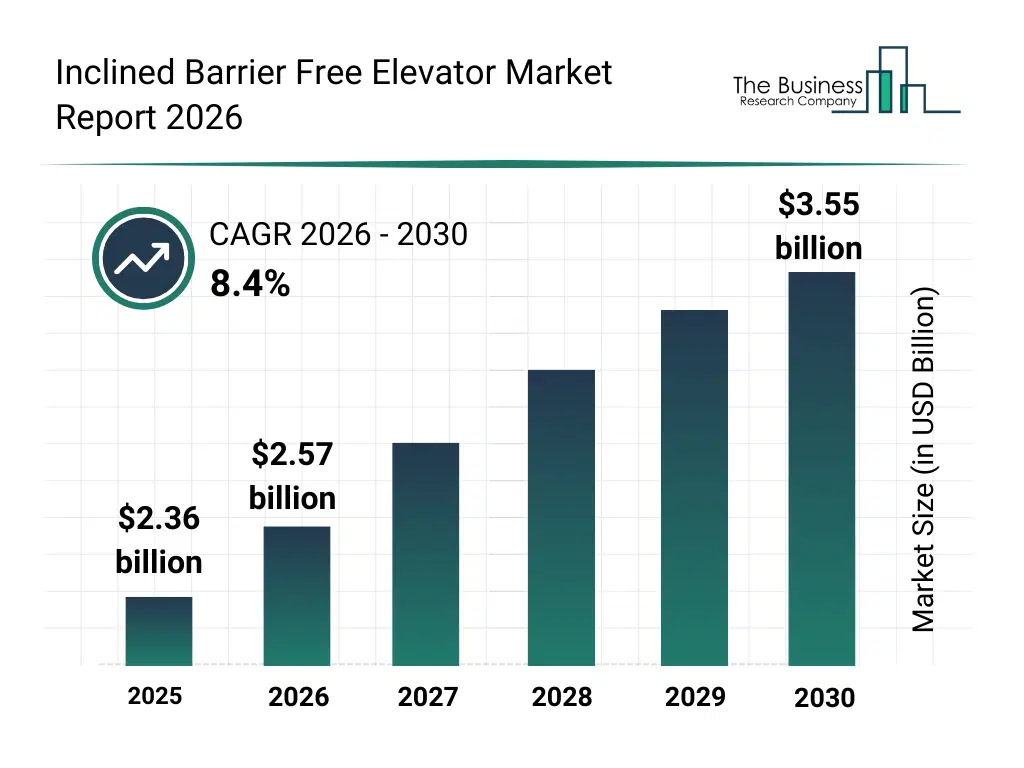
What Is The Inclined Barrier Free Elevator Market Size and Share 2026?
The inclined barrier free elevator market size has grown strongly in recent years. It will grow from $2.36 billion in 2025 to $2.57 billion in 2026 at a compound annual growth rate (CAGR) of 8.7%. The growth in the historic period can be attributed to accessibility regulations, aging population needs, public transport modernization, urban infrastructure upgrades, inclusive building standards.What Is The Inclined Barrier Free Elevator Market Growth Forecast?
The inclined barrier free elevator market size is expected to see strong growth in the next few years. It will grow to $3.55 billion in 2030 at a compound annual growth rate (CAGR) of 8.4%. The growth in the forecast period can be attributed to smart mobility infrastructure, expansion of public transit hubs, universal design adoption, investments in healthcare facilities, tourism infrastructure growth. Major trends in the forecast period include growing demand for accessibility solutions, installation in public infrastructure projects, customization for sloped architectures, focus on safety and stability systems, integration with modern building designs.Tariff Impact On Inclined Barrier Free Elevator Market
Tariffs have influenced the inclined barrier free elevator market by raising costs of drive systems, guide rails, and electronic controls. These impacts are most evident in Europe and Asia Pacific. Installation costs have increased. However, tariffs are supporting regional elevator component manufacturing.
Global Inclined Barrier Free Elevator Market Segmentation
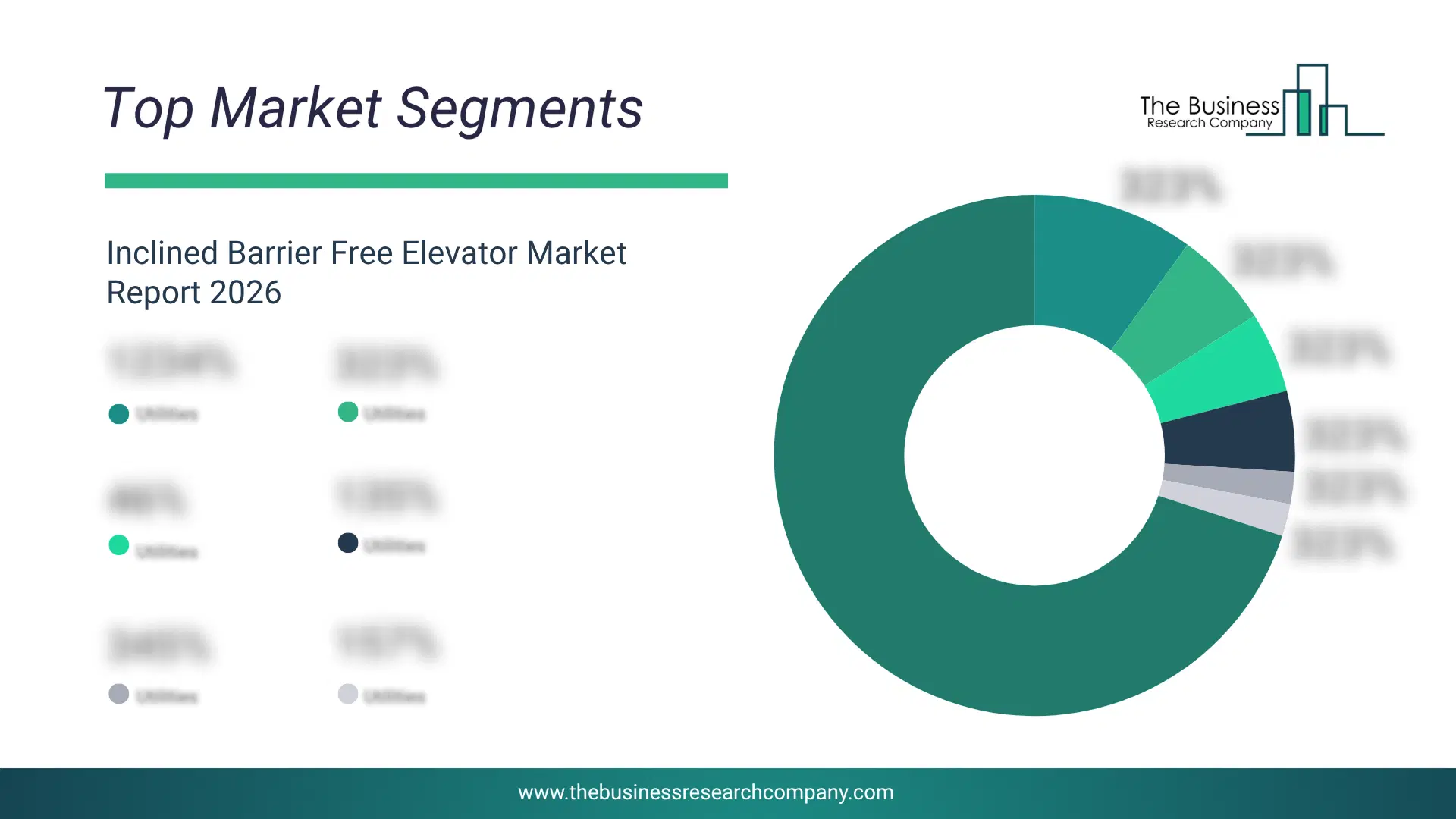
1) By Type: Residential Inclined Elevators, Commercial Inclined Elevators, Public Infrastructure Elevators, Outdoor Inclined Elevators 2) By Technology Used: Electric Elevators, Rope-Driven Elevators 3) By Application Sector: Healthcare Facilities, Residential Buildings, Shopping Malls And Retail Spaces, Educational Institutions 4) By End User: Homeowners, Construction Companies, Facility Managers Subsegments: 1) By Residential Inclined Elevators: Private Homes, Apartments, Villas 2) By Commercial Inclined Elevators: Hotels And Resorts, Office Buildings, Retail Stores And Shopping Malls 3) By Public Infrastructure Elevators: Railway Stations, Airports, Metro And Subway Systems 4) By Outdoor Inclined Elevators: Hilly Terrains, Public Parks And Tourist Spots, Pedestrian OverpassesWhat Are The Drivers Of The Inclined Barrier Free Elevator Market?
The increasing adoption of green building practices is expected to propel the growth of the inclined barrier free elevator market going forward. Green building practices refer to construction methods that are environmentally responsible, aiming to conserve resources and reduce a building’s ecological impact. The rise in green building practices is driven by growing demand for energy-efficient buildings that lower long-term energy expenses and reduce environmental harm. Inclined barrier-free elevators support green building practices by offering energy-efficient vertical transportation solutions that help minimize a building’s overall environmental impact. For instance, in July 2024, according to the Green Building Council, a US-based non-profit organization, they contributed to more than 46,000 residential projects certified under the LEED green building rating system in 2024, following a nearly 5% increase in new LEED residential project registrations in 2023. Therefore, the increasing adoption of green building practices is driving the growth of the inclined barrier free elevator industry. The rise in people with disabilities is expected to propel the growth of the inclined barrier-free elevator market going forward. People with disabilities are individuals who experience functional limitations in daily activities such as hearing, vision, mobility, cognition, self-care, or independent living. The growing number of people with disabilities is largely driven by population aging, as advancing age increases the likelihood of experiencing disability due to health conditions or injuries. The rising number of people with disabilities boosts demand for inclined barrier-free elevators as these systems provide essential accessibility for individuals with mobility challenges to navigate multi-level buildings safely and independently. For instance, in January 2025, according to the Department for Transport (DfT), a UK-based government authority, in 2023, disabled adults in England made, on average, 25% fewer trips than non-disabled adults, a gap that has remained consistent with previous years. Therefore, the rise in people with disabilities is driving the growth of the inclined barrier-free elevator market.Key Players In The Global Inclined Barrier Free Elevator Market
Major companies operating in the inclined barrier free elevator market are KONE Corporation, Savaria Corporation, Stannah Lift Services Limited, Garaventa Lift GmbH, Handicare Group AB, Lifeway Mobility LLC, Cibes Lift International AB, AOYAMA Elevator Global Ltd., Terry Lifts, Vimec Srl, Pollock Lifts Limited, Ascendor GmbH, GARTEC Ltd., APLUS Elevator, Clark Elevator Service Company, Lehner Lifttechnik GmbH, Liftup A/S, Nationwide Lifts & Escalators LTD., Schindler India Private Limited, TK Access Solutions Ltd., AGUSTIN Electric, Extrema Srl, Forstor, INVALIFTS LIMITED.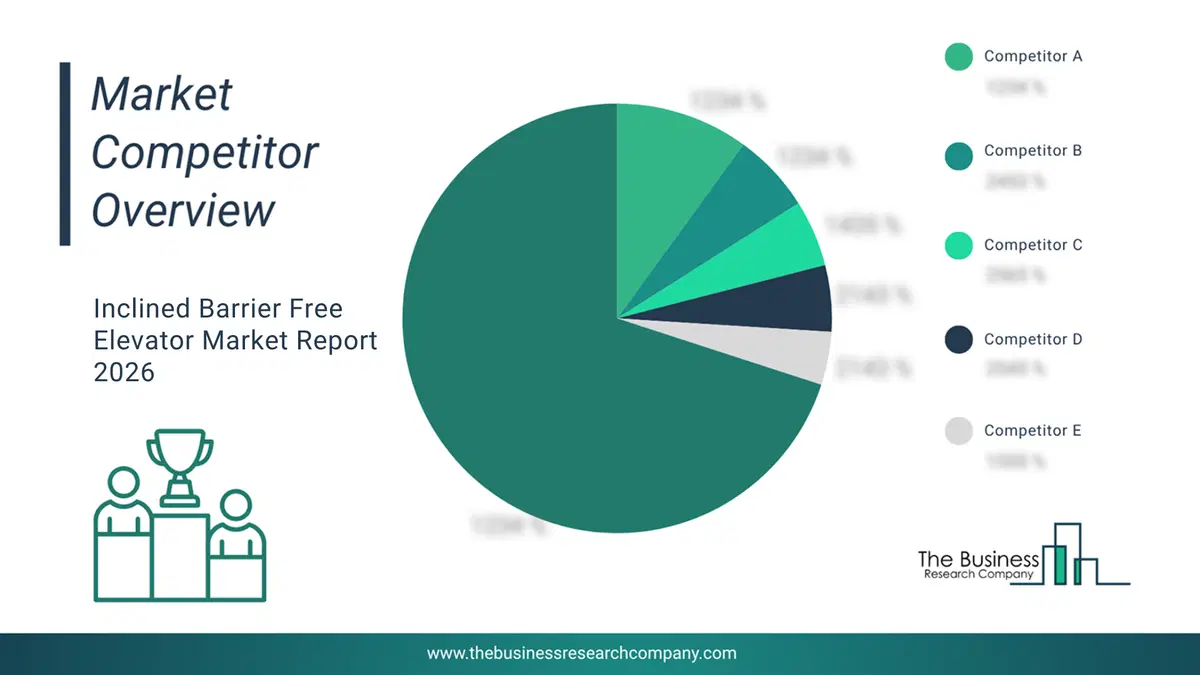
This chart is for illustrative purposes; the full report includes a detailed competitor analysis and comprehensive overview of the top 10 companies in the market.
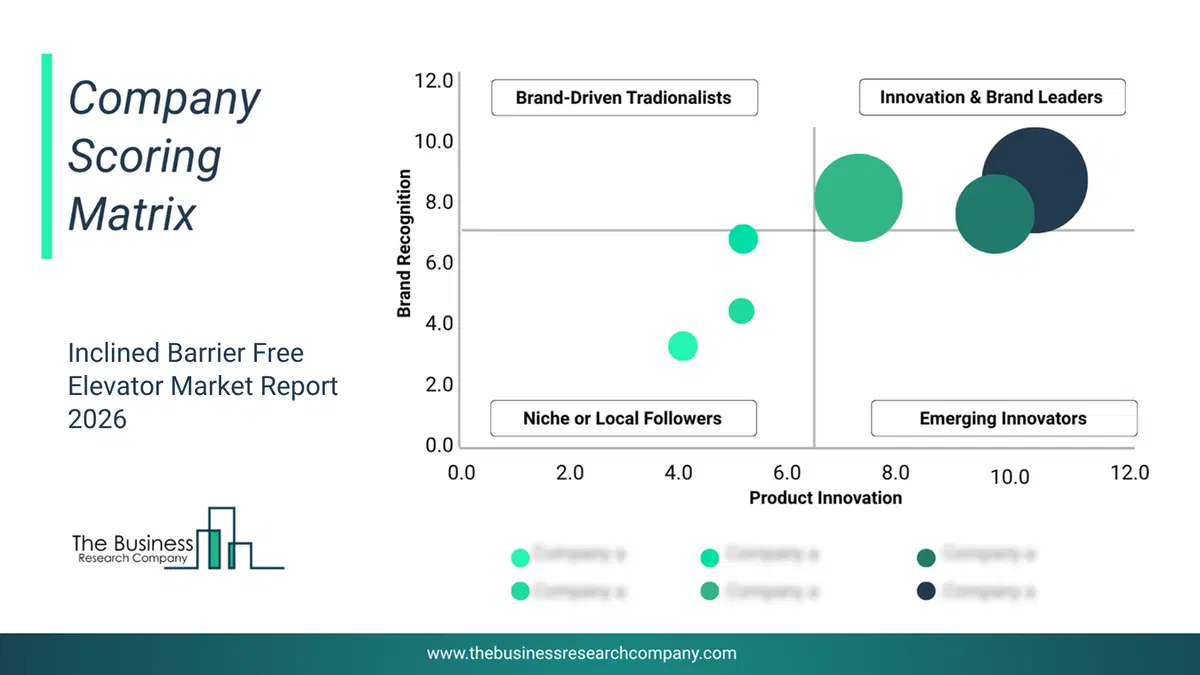
This chart maps companies by product innovation and brand strength, with bubble size indicating relative revenue, helping identify market leaders, challengers, and niche players. This is an illustrative chart; the full report provides a complete and accurate competitive analysis.
What Are Latest Mergers And Acquisitions In The Inclined Barrier Free Elevator Market?
In October 2024, Harmar Mobility LLC, a US-based manufacturer of mobility solutions, acquired Pollock Lifts for an undisclosed amount. With this acquisition, Harmar Mobility aims to expand geographically into the UK and Europe and broaden its product portfolio by adding residential shaftless elevators. Pollock Lifts is a UK-based manufacturer of inclined barrier-free elevators.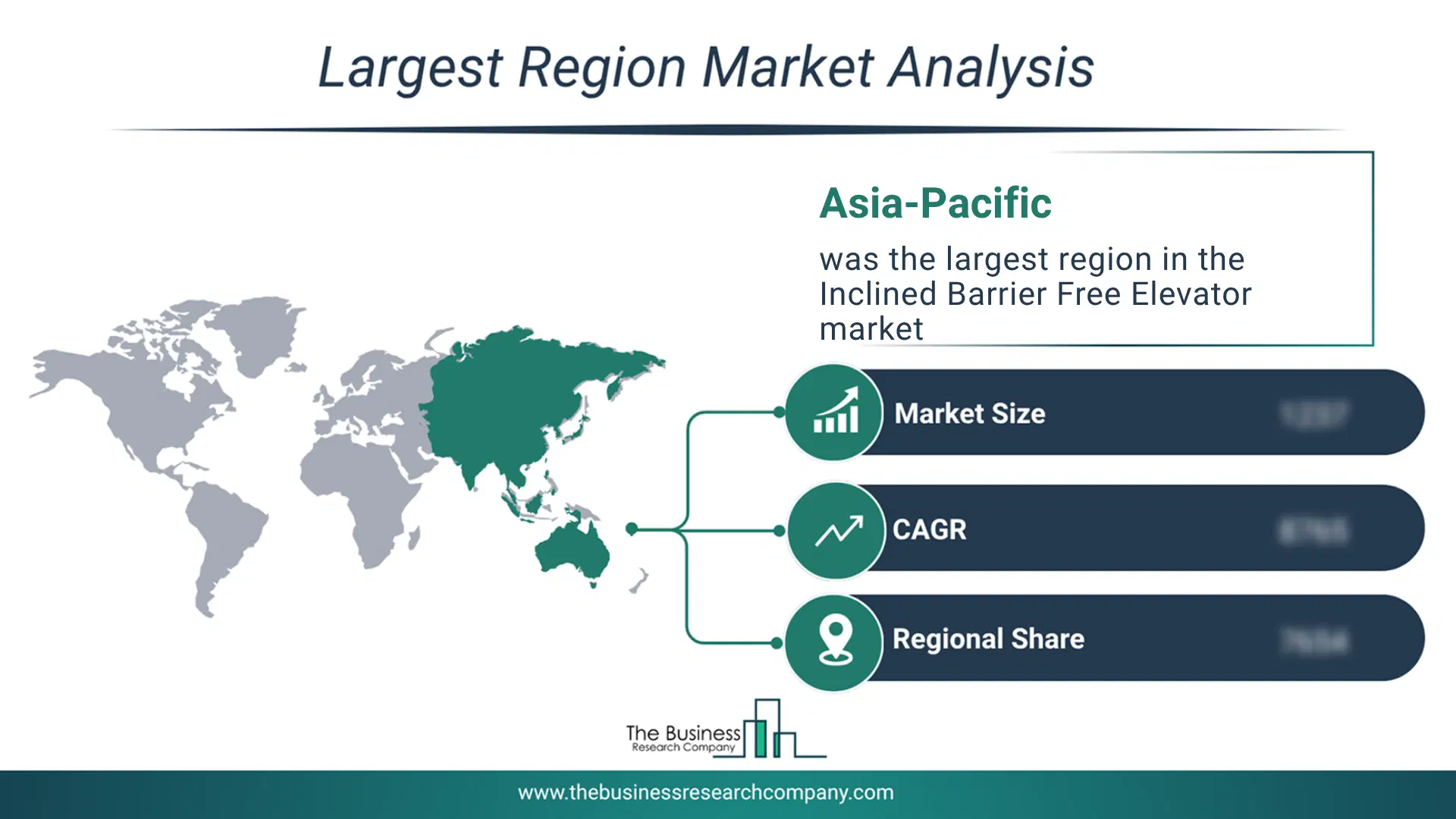
Regional Outlook
Asia-Pacific was the largest region in the inclined barrier free elevator market in 2025, and it is expected to be the fastest-growing region in the forecast period. The regions covered in this market report are Asia-Pacific, South East Asia, Western Europe, Eastern Europe, North America, South America, Middle East, Africa The countries covered in this market report are Australia, Brazil, China, France, Germany, India, Indonesia, Japan, Taiwan, Russia, South Korea, UK, USA, Canada, Italy, Spain.What Defines the Inclined Barrier Free Elevator Market?
The inclined barrier-free elevator market consists of sales of inclined platform lifts, inclined stair lifts, and rail systems and tracks. Values in this market are ‘factory gate’ values, that is, the value of goods sold by the manufacturers or creators of the goods, whether to other entities (including downstream manufacturers, wholesalers, distributors, and retailers) or directly to end customers. The value of goods in this market includes related services sold by the creators of the goods.How is Market Value Defined and Measured?
The market value is defined as the revenues that enterprises gain from the sale of goods and/or services within the specified market and geography through sales, grants, or donations in terms of the currency (in USD unless otherwise specified). The revenues for a specified geography are consumption values that are revenues generated by organizations in the specified geography within the market, irrespective of where they are produced. It does not include revenues from resales along the supply chain, either further along the supply chain or as part of other products.
This chart presents market attractiveness based on a quantitative evaluation of growth, competition, strategic alignment, and risk, offering a clear view of opportunity areas for decision-making. This chart is for illustrative purposes; the full report contains the complete analysis.

This chart highlights the Total Addressable Market (TAM) by estimating the maximum revenue opportunity using an assumption-driven approach, supporting strategic planning and opportunity sizing across markets. The chart is illustrative; the full report provides a more comprehensive analysis.
What Key Data and Analysis Are Included in the Inclined Barrier Free Elevator Market Report 2026?
The inclined barrier free elevator market research report is one of a series of new reports from The Business Research Company that provides market statistics, including industry global market size, regional shares, competitors with the market share, detailed market segments, market trends and opportunities, and any further data you may need to thrive in the inclined barrier free elevator industry. The market research report delivers a complete perspective of everything you need, with an in-depth analysis of the current and future state of the industry.Inclined Barrier Free Elevator Market Report Forecast Analysis
| Report Attribute | Details |
|---|---|
| Market Size Value In 2026 | $2.57 billion |
| Revenue Forecast In 2030 | $3.55 billion |
| Growth Rate | CAGR of 8.4% from 2026 to 2030 |
| Base Year For Estimation | 2025 |
| Actual Estimates/Historical Data | 2020-2025 |
| Forecast Period | 2026 - 2030 |
| Market Representation | Revenue in USD Billion and CAGR from 2026 to 2030 |
| Segments Covered | Type, Technology Used, Application Sector, End User |
| Regional Scope | Asia-Pacific, Western Europe, Eastern Europe, North America, South America, Middle East, Africa |
| Key Companies Profiled | KONE Corporation, Savaria Corporation, Stannah Lift Services Limited, Garaventa Lift GmbH, Handicare Group AB, Lifeway Mobility LLC, Cibes Lift International AB, AOYAMA Elevator Global Ltd., Terry Lifts, Vimec Srl, Pollock Lifts Limited, Ascendor GmbH, GARTEC Ltd., APLUS Elevator, Clark Elevator Service Company, Lehner Lifttechnik GmbH, Liftup A/S, Nationwide Lifts & Escalators LTD., Schindler India Private Limited, TK Access Solutions Ltd., AGUSTIN Electric, Extrema Srl, Forstor, INVALIFTS LIMITED. |
| Customization Scope | Request for Customization |
| Pricing And Purchase Options | Explore Purchase Options |