
Industrial Enzymes Market Report 2026
Global Outlook – By Type (Carbohydrases, Proteases, Phytases, Polymerases And Nucleases, Lipases, Other Types ), By Form (Liquid, Dry ), By Source (Plant, Animal, Micro-Organism ), By Application (Food Processing, Animal Feed, Healthcare, Textiles, Leather Processing, Detergents And Cleaners, Bio-Fuel, Other Applications) – Market Size, Trends, Strategies, and Forecast to 2030
Industrial Enzymes Market Overview
• Industrial Enzymes market size has reached to $7.66 billion in 2025 • Expected to grow to $10.39 billion in 2030 at a compound annual growth rate (CAGR) of 6.2% • Growth Driver: Rising Demand In The Food And Beverage Industry Drives Growth In The Industrial Enzymes Market • Market Trend: Innovation In High-Efficiency Cellulase Enzymes In The Industrial Enzymes Market • North America was the largest region in 2025 and Asia-Pacific is the fastest growing region.What Is Covered Under Industrial Enzymes Market?
Industrial enzymes are biological catalysts used in various industrial processes to accelerate chemical reactions. These enzymes are derived from microorganisms, plants, or animals and are employed in various industries to improve efficiency, reduce costs, and minimize environmental impact. The main types of industrial enzymes are carbohydrases, proteases, phytases, polymerases and nucleases, lipases, and other types. Carbohydrases are enzymes that break down carbohydrates into simpler sugars, helping in the digestion of starches and sugars in food products. The various forms are liquid and dry extracted from various sources such as plants, animals, and micro-organisms and used in various applications including food processing, animal feed, healthcare, textiles, leather processing, detergents and cleaners, bio-fuel, and other applications.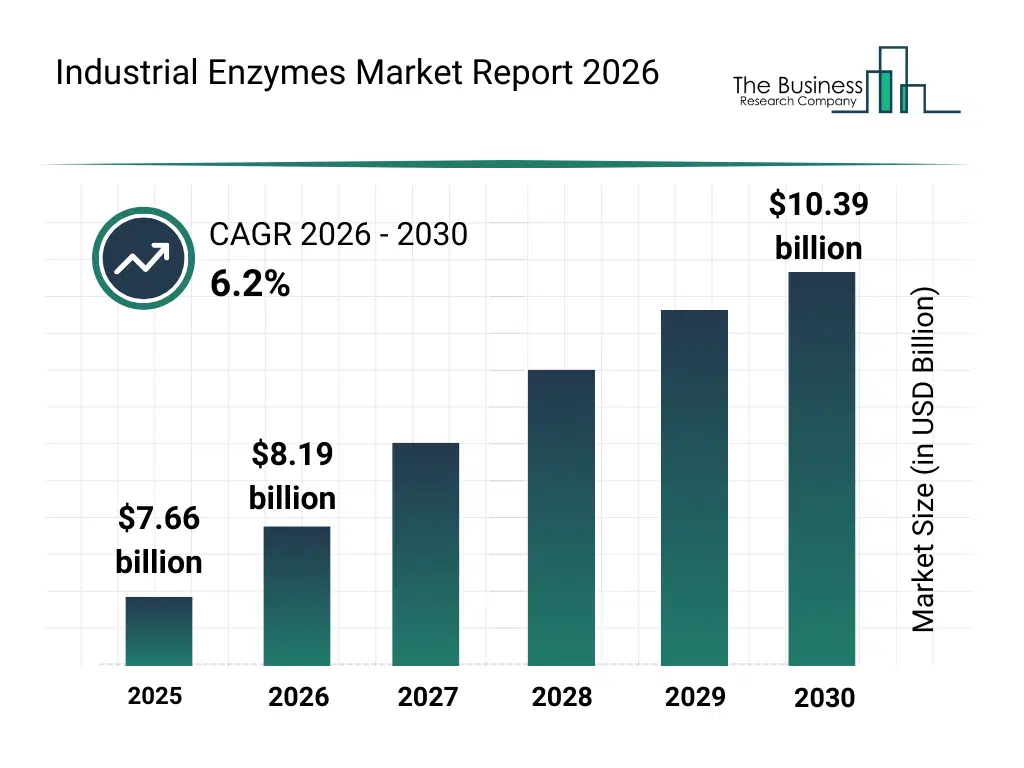
What Is The Industrial Enzymes Market Size and Share 2026?
The industrial enzymes market size has grown strongly in recent years. It will grow from $7.66 billion in 2025 to $8.19 billion in 2026 at a compound annual growth rate (CAGR) of 6.9%. The growth in the historic period can be attributed to growth of food processing industry, expansion of textile manufacturing, early adoption of fermentation technologies, demand for cost efficient processing, growth of industrial biotechnology.What Is The Industrial Enzymes Market Growth Forecast?
The industrial enzymes market size is expected to see strong growth in the next few years. It will grow to $10.39 billion in 2030 at a compound annual growth rate (CAGR) of 6.2%. The growth in the forecast period can be attributed to expansion of biofuel industry, rising demand for sustainable processing, advancements in enzyme engineering, growth of animal feed sector, increased industrial automation. Major trends in the forecast period include rising use in biofuel production, growing adoption in food processing, expansion of enzyme use in animal feed, increasing demand from textile processing, higher focus on enzyme efficiency optimization.
Global Industrial Enzymes Market Segmentation
1) By Type: Carbohydrases, Proteases, Phytases, Polymerases And Nucleases, Lipases, Other Types 2) By Form: Liquid, Dry 3) By Source: Plant, Animal, Micro-Organism 4) By Application: Food Processing, Animal Feed, Healthcare, Textiles, Leather Processing, Detergents And Cleaners, Bio-Fuel, Other Applications Subsegments: 1) By Carbohydrases: Amylases, Cellulases, Glucanases, Xylanases 2) By Proteases: Alkaline Proteases, Acid Proteases, Neutral Proteases 3) By Phytases: 3-Phytase, 6-Phytase, 5-Phytase 4) By Polymerases And Nucleases: DNA Polymerases, RNA Polymerases, Restriction Endonucleases, Exonucleases 5) By Lipases: Fungal Lipases, Bacterial Lipases, Animal Lipases 6) By Other Types: Laccases, Peroxidases, Pectinases, Chitinases, GlucosidasesWhat Is The Driver Of The Industrial Enzymes Market?
The rising demand for the food and beverage industry is expected to propel the growth of the industrial enzymes market going forward. The food and beverage industry encompasses all businesses producing, processing, packaging, distributing, and selling food and drink products. The expansion of the food and beverage industry is due to changing consumer preferences, globalization, technological advancements, e-commerce, health and wellness trends, sustainability initiatives, and regulatory factors. Industrial enzymes are essential for enhancing product quality, shelf life, cost-effectiveness, and clean label credentials in the food and beverage industry. For instance, in April 2024, according to media published by Convenience, a US-based organization, in 2022, total industry foodservice sales, including prepared food, commissary items, and dispensed beverages, represented 25.6% of in-store sales. This figure rose to 26.9% in 2023. Therefore, the rising demand for the food and beverage industry is driving the growth of the industrial enzymes industry.Key Players In The Global Industrial Enzymes Market
Major companies operating in the industrial enzymes market are Advanced Enzyme Technologies Limited, BASF SE, Roche Holding AG, Associated British Foods plc, DuPont de Nemours Inc., Kerry Group plc, DSM Nutritional Products AG, Novozymes A/S, Lallemand Inc., Chr. Hansen Holding A/S, Novus International Inc., Jiangsu Boli Bioproducts Co. Ltd., Amano Enzyme Inc., BBI Solutions, AB Enzymes GmbH, Biocatalysts Ltd., Enzyme Supplies Limited, Enzyme Development Corporation, Dyadic International Inc., Longda Bio-products Co. Ltd., Maps Enzymes Ltd.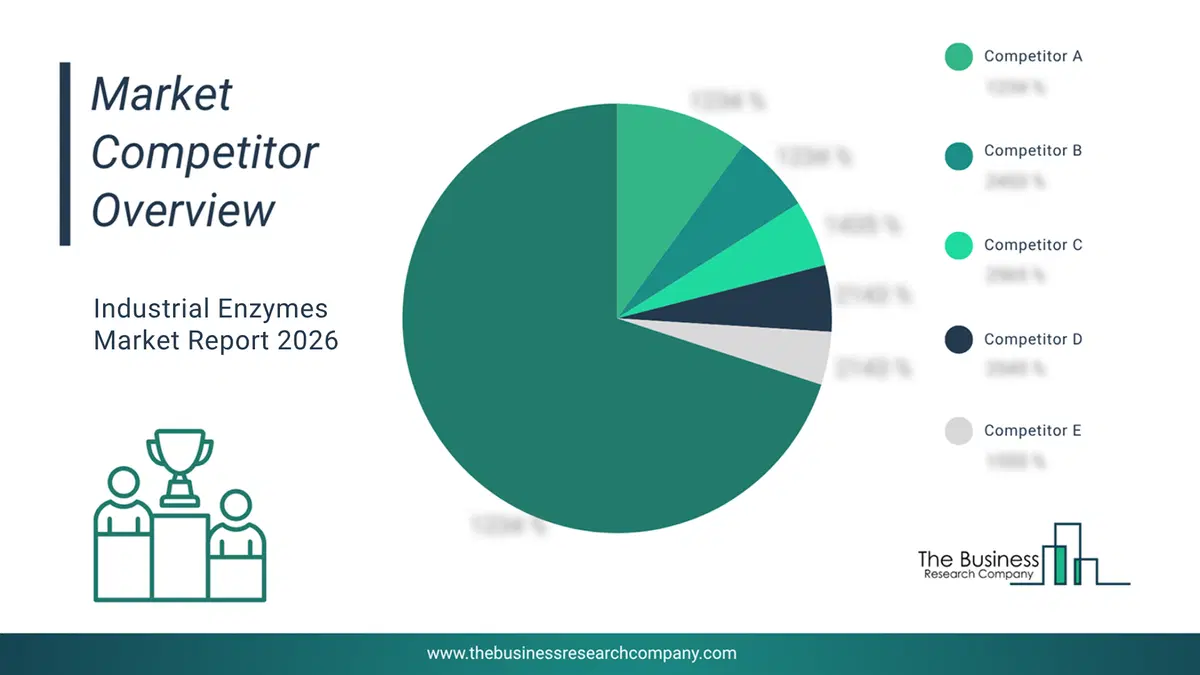
This chart is for illustrative purposes; the full report includes a detailed competitor analysis and comprehensive overview of the top 10 companies in the market.
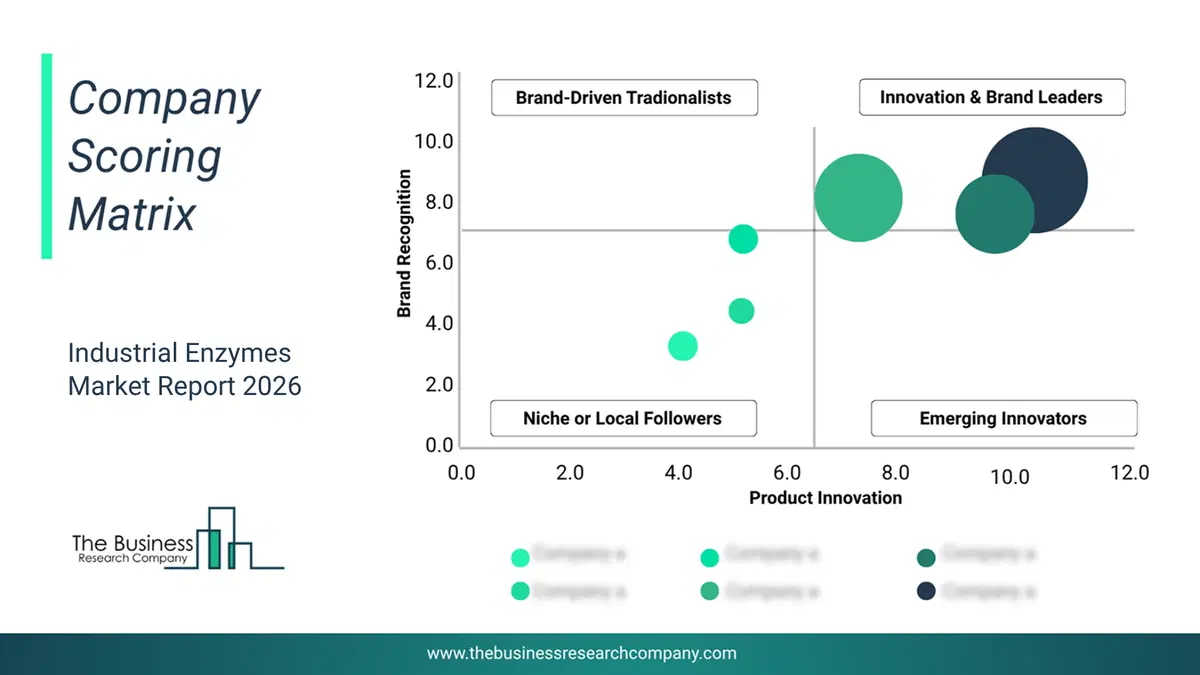
This chart maps companies by product innovation and brand strength, with bubble size indicating relative revenue, helping identify market leaders, challengers, and niche players. This is an illustrative chart; the full report provides a complete and accurate competitive analysis.
Global Industrial Enzymes Market Trends and Insights
Major companies operating in the industrial enzymes market are focusing on developing innovative technologies, such as high-efficiency cellulase enzymes, to expand their offerings and stay competitive. A high-efficiency cellulase enzyme is an optimized mixture of overexpressed cellulase components that can break down cellulose into fermentable sugars more effectively and at a lower enzyme cost. For instance, in May 2024, Bionetix International, a Canada-based biopharmaceutical company, launched a new line of enzyme concentrates, ECL3000. This enzyme line targets cellulose, a complex carbohydrate in plant cell walls, and various everyday items such as food, clothing, and paper. ECL3000 is a high-efficiency cellulase enzyme produced by non-pathogenic fungi, exhibiting robust performance, and is involved in the breakdown of cellulose into smaller sugars such as glucose.What Are Latest Mergers And Acquisitions In The Industrial Enzymes Market?
In March 2024, Novus International Inc., a US-based animal health and nutrition company, acquired BioResource International Inc. for an undisclosed amount. With this acquisition, Novus aims to expand its portfolio and enzyme technology capabilities, enhance its animal nutrition solutions offerings, and strengthen its position in the market. BioResource International Inc. is a US-based company that researches, develops, and manufactures enzyme feed additives for poultry.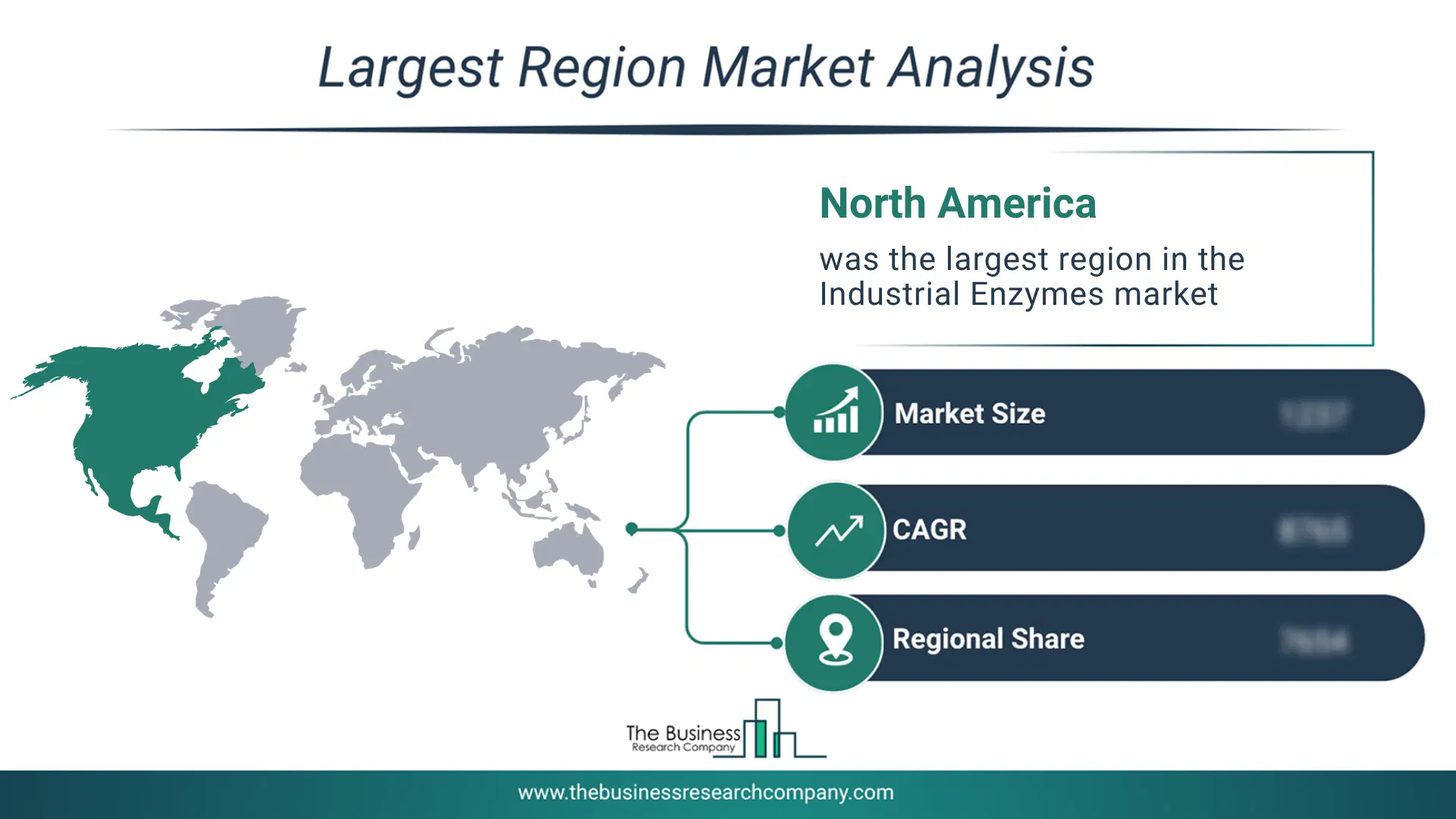
Regional Insights
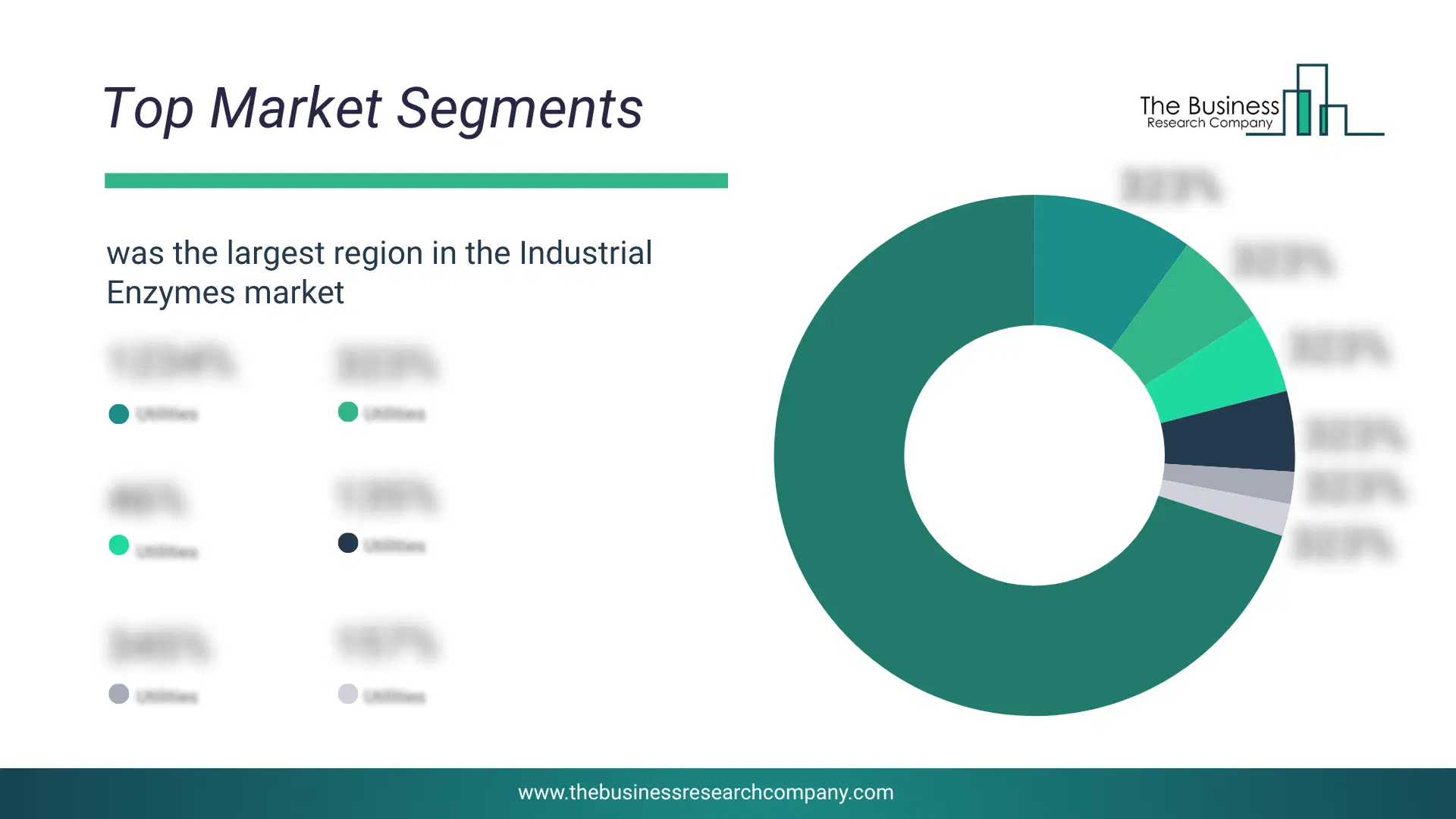
North America was the largest region in the industrial enzymes market in 2025. The regions covered in this market report are Asia-Pacific, South East Asia, Western Europe, Eastern Europe, North America, South America, Middle East, Africa The countries covered in this market report are Australia, Brazil, China, France, Germany, India, Indonesia, Japan, Taiwan, Russia, South Korea, UK, USA, Canada, Italy, SpainWhat Defines the Industrial Enzymes Market?
The industrial enzymes market consist of revenues earned by entities by providing services such as enzyme engineering and optimization, process optimization and consulting, analytical services, and enzyme production and supply. The market value includes the value of related goods sold by the service provider or included within the service offering. The industrial enzymes market also includes sales of cellulase-like enzymes, pectinases, xylanases, cellulases, and amylases. Values in this market are ‘factory gate’ values, that is the value of goods sold by the manufacturers or creators of the goods, whether to other entities (including downstream manufacturers, wholesalers, distributors and retailers) or directly to end customers. The value of goods in this market includes related services sold by the creators of the goods.How is Market Value Defined and Measured?
The market value is defined as the revenues that enterprises gain from the sale of goods and/or services within the specified market and geography through sales, grants, or donations in terms of the currency (in USD unless otherwise specified). The revenues for a specified geography are consumption values that are revenues generated by organizations in the specified geography within the market, irrespective of where they are produced. It does not include revenues from resales along the supply chain, either further along the supply chain or as part of other products.
This chart presents market attractiveness based on a quantitative evaluation of growth, competition, strategic alignment, and risk, offering a clear view of opportunity areas for decision-making. This chart is for illustrative purposes; the full report contains the complete analysis.

This chart highlights the Total Addressable Market (TAM) by estimating the maximum revenue opportunity using an assumption-driven approach, supporting strategic planning and opportunity sizing across markets. The chart is illustrative; the full report provides a more comprehensive analysis.
What Key Data and Analysis Are Included in the Industrial Enzymes Market Report 2026?
The industrial enzymes market research report is one of a series of new reports from The Business Research Company that provides market statistics, including industry global market size, regional shares, competitors with the market share, detailed market segments, market trends and opportunities, and any further data you may need to thrive in the industrial enzymes industry. The market research report delivers a complete perspective of everything you need, with an in-depth analysis of the current and future state of the industry.Industrial Enzymes Market Report Forecast Analysis
| Report Attribute | Details |
|---|---|
| Market Size Value In 2026 | $8.19 billion |
| Revenue Forecast In 2030 | $10.39 billion |
| Growth Rate | CAGR of 6.9% from 2026 to 2030 |
| Base Year For Estimation | 2025 |
| Actual Estimates/Historical Data | 2020-2025 |
| Forecast Period | 2026 - 2030 |
| Market Representation | Revenue in USD Billion and CAGR from 2026 to 2030 |
| Segments Covered | Type, Form, Source, Application |
| Regional Scope | Asia-Pacific, Western Europe, Eastern Europe, North America, South America, Middle East, Africa |
| Country Scope | The countries covered in this market report are Australia, Brazil, China, France, Germany, India, Indonesia, Japan, Taiwan, Russia, South Korea, UK, USA, Canada, Italy, Spain |
| Key Companies Profiled | Advanced Enzyme Technologies Limited, BASF SE, Roche Holding AG, Associated British Foods plc, DuPont de Nemours Inc., Kerry Group plc, DSM Nutritional Products AG, Novozymes A/S, Lallemand Inc., Chr. Hansen Holding A/S, Novus International Inc., Jiangsu Boli Bioproducts Co. Ltd., Amano Enzyme Inc., BBI Solutions, AB Enzymes GmbH, Biocatalysts Ltd., Enzyme Supplies Limited, Enzyme Development Corporation, Dyadic International Inc., Longda Bio-products Co. Ltd., Maps Enzymes Ltd. |
| Customization Scope | Request for Customization |
| Pricing And Purchase Options | Explore Purchase Options |