
Industrial Internet Of Things (IIoT) Market Report 2026
Global Outlook – By Component (Hardware, Software, Services), By Deployment (On-Cloud, On-Premises, Hybrid), By Connectivity (Wired, Wireless), By End-User (Information Technology And Telecommunication, Manufacturing, Healthcare, Retail, Oil And Gas, Energy And Power, Automotive, Other End-Users) – Market Size, Trends, Strategies, and Forecast to 2030
Industrial Internet Of Things (IIoT) Market Overview
• Industrial Internet Of Things (IIoT) market size has reached to $277.35 billion in 2025 • Expected to grow to $537.39 billion in 2030 at a compound annual growth rate (CAGR) of 14.1% • Growth Driver: Increasing Adoption Of Automation Fueling The Growth Of The Market Due To Rising Demand For Operational Efficiency And Productivity • Market Trend: Adoption of Advanced IIoT Sensor Platforms for Predictive Maintenance • North America was the largest region in 2025 and Asia-Pacific is the fastest growing region.Market Gains By 2030 – Top Opportunities By Segment
Market Gain identifies the most promising market opportunities by highlighting the segments or products expected to generate the highest incremental revenue growth over the next five years.
What Is Covered Under Industrial Internet Of Things (IIoT) Market?
The industrial internet of things (IIoT) refers to the integration of interconnected sensors, instruments, and devices with industrial systems. It enables real-time data collection, analysis, and communication across machines and infrastructure. It focuses on enhancing operational efficiency, automation, and decision-making in industrial environments. The main components involved in the industrial internet of things (IIoT) are hardware, software, and services. Hardware in the industrial internet of things refers to the physical devices and equipment that collect, transmit, and sometimes process data within industrial environments. The various deployment modes consist of on-cloud, on-premise, and hybrid, with the connectivity including wired and wireless utilized by end-users, including information technology and telecom, manufacturing, healthcare, retail, oil and gas, energy and power, automotive, and others.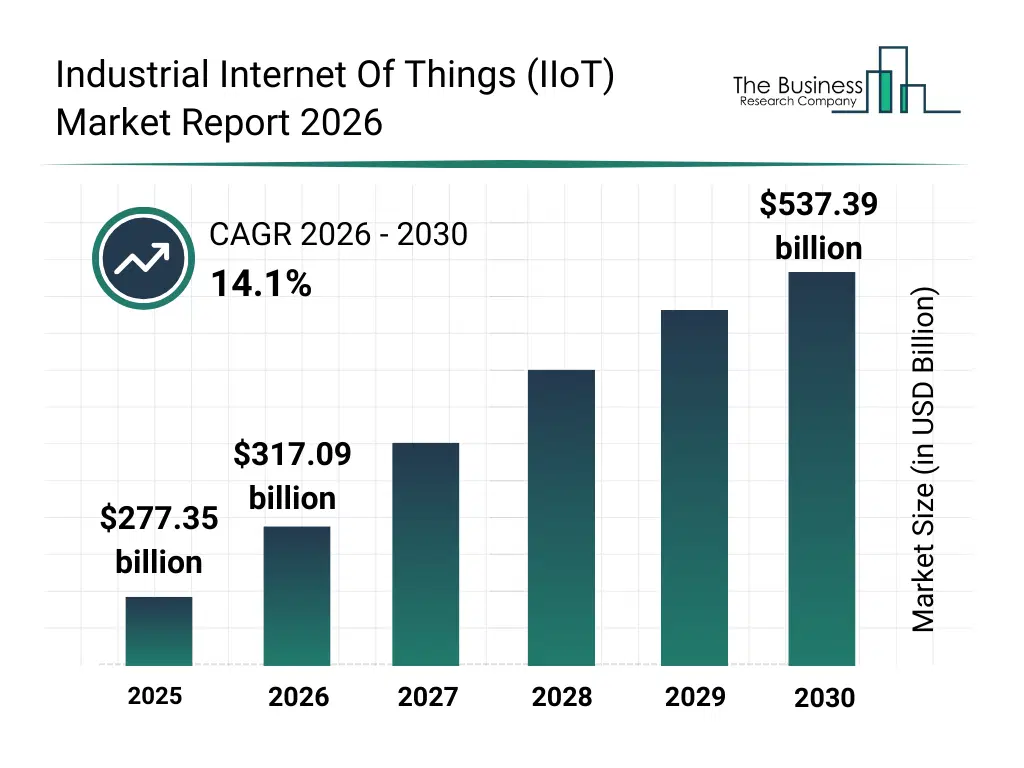
What Is The Industrial Internet Of Things (IIoT) Market Size and Share 2026?
The industrial internet of things (iiot) market size has grown rapidly in recent years. It will grow from $277.35 billion in 2025 to $317.09 billion in 2026 at a compound annual growth rate (CAGR) of 14.3%. The growth in the historic period can be attributed to growth in industrial automation adoption, expansion of smart manufacturing facilities, rising demand for operational efficiency, increase in sensor deployment, adoption of cloud industrial platforms.What Is The Industrial Internet Of Things (IIoT) Market Growth Forecast?
The industrial internet of things (iiot) market size is expected to see rapid growth in the next few years. It will grow to $537.39 billion in 2030 at a compound annual growth rate (CAGR) of 14.1%. The growth in the forecast period can be attributed to integration of AI-based industrial analytics, expansion of 5G-enabled factories, adoption of autonomous production systems, growth in industrial cybersecurity solutions, rising investment in smart infrastructure. Major trends in the forecast period include real-time industrial monitoring, predictive maintenance integration, connected factory ecosystems, edge computing deployment, remote asset management.
Global Industrial Internet Of Things (IIoT) Market Segmentation
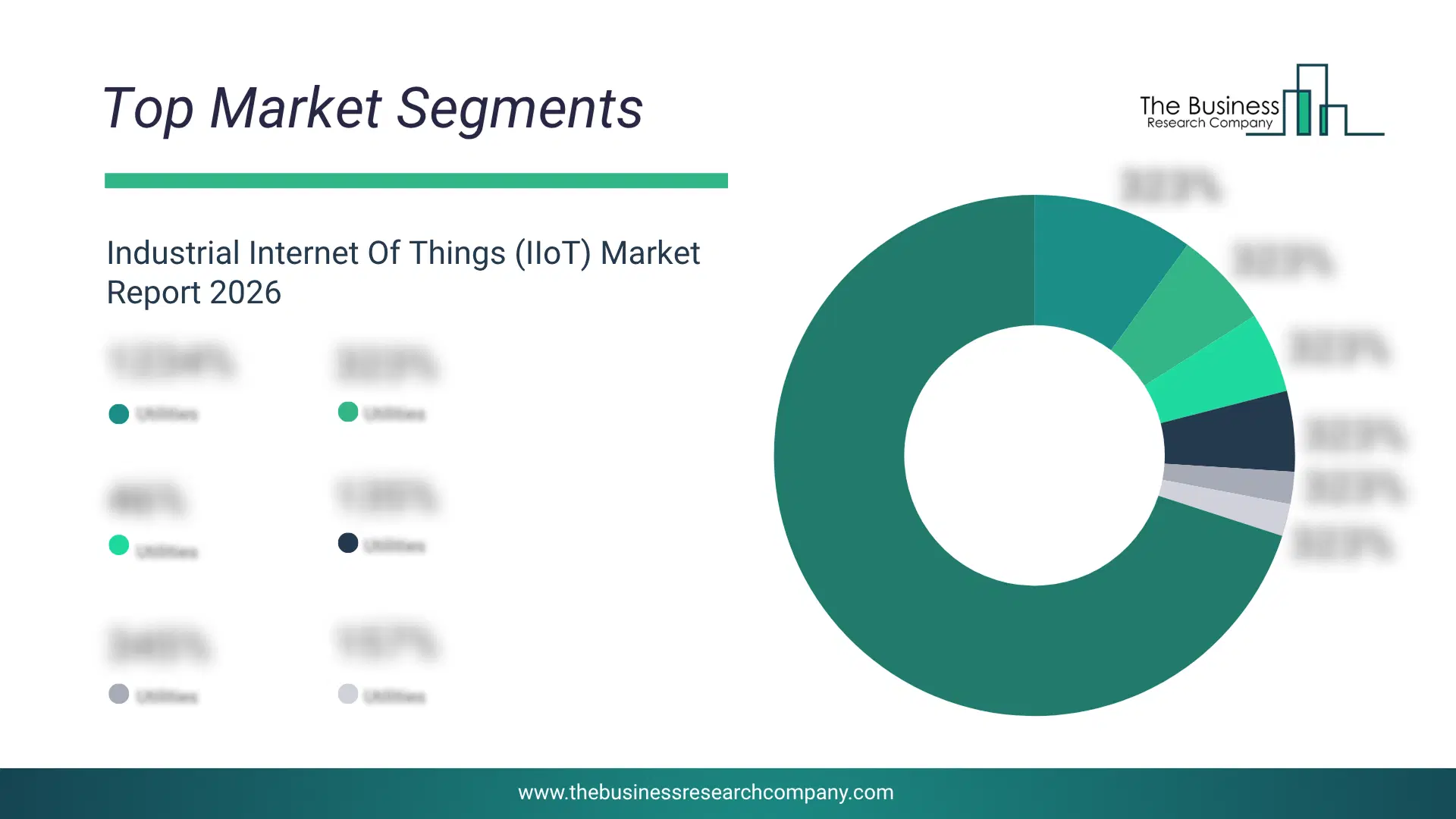
1) By Component: Hardware, Software, Services 2) By Deployment: On-Cloud, On-Premises, Hybrid 3) By Connectivity: Wired, Wireless 4) By End-User: Information Technology And Telecommunication, Manufacturing, Healthcare, Retail, Oil And Gas, Energy And Power, Automotive, Other End-Users Subsegments: 1) By Hardware: Sensors, Actuators, Embedded Systems, Communication and Network Devices, Industrial Personal Computers, Cameras 2) By Solution: Network and Connectivity Solutions, Data Management and Analytics, Remote Monitoring Solutions, Industrial Automation Solutions, Security Solutions, Predictive Maintenance Solutions, Asset Management Solutions 3) By Service: Consulting Services, System Integration Services, Managed Services, Support and Maintenance Services The top segments in the industrial internet of things (iiot) market will be: • Software will reach $209.87 Billion by 2030. • Hardware will reach $199.73 Billion by 2030. • Services will reach $126.41 Billion by 2030.What Is The Driver Of The Industrial Internet Of Things (IIoT) Market?
The increasing adoption of automation is expected to propel the growth of the industrial internet of things (IIoT) market going forward. Automation is the use of technology to perform tasks with minimal human intervention. It involves the application of control systems, software, and machines to operate equipment, processes, or systems in a way that increases efficiency, accuracy, and consistency. Adoption of automation is growing as it helps businesses save time and reduce operational costs by minimizing manual efforts. The industrial internet of things (IIoT) helps industries by enabling real-time data collection and analysis to optimize operations and reduce downtime. It enhances efficiency, predictive maintenance, and decision-making through connected devices and automation. For instance, in April 2024, the International Federation of Robotics, a Germany-based non-governmental organization, reported 44,303 industrial robot installations in 2023, a rise of 12% from the previous year. Therefore, the increasing adoption of automation is driving the growth of the industrial internet of things (IIoT) industry.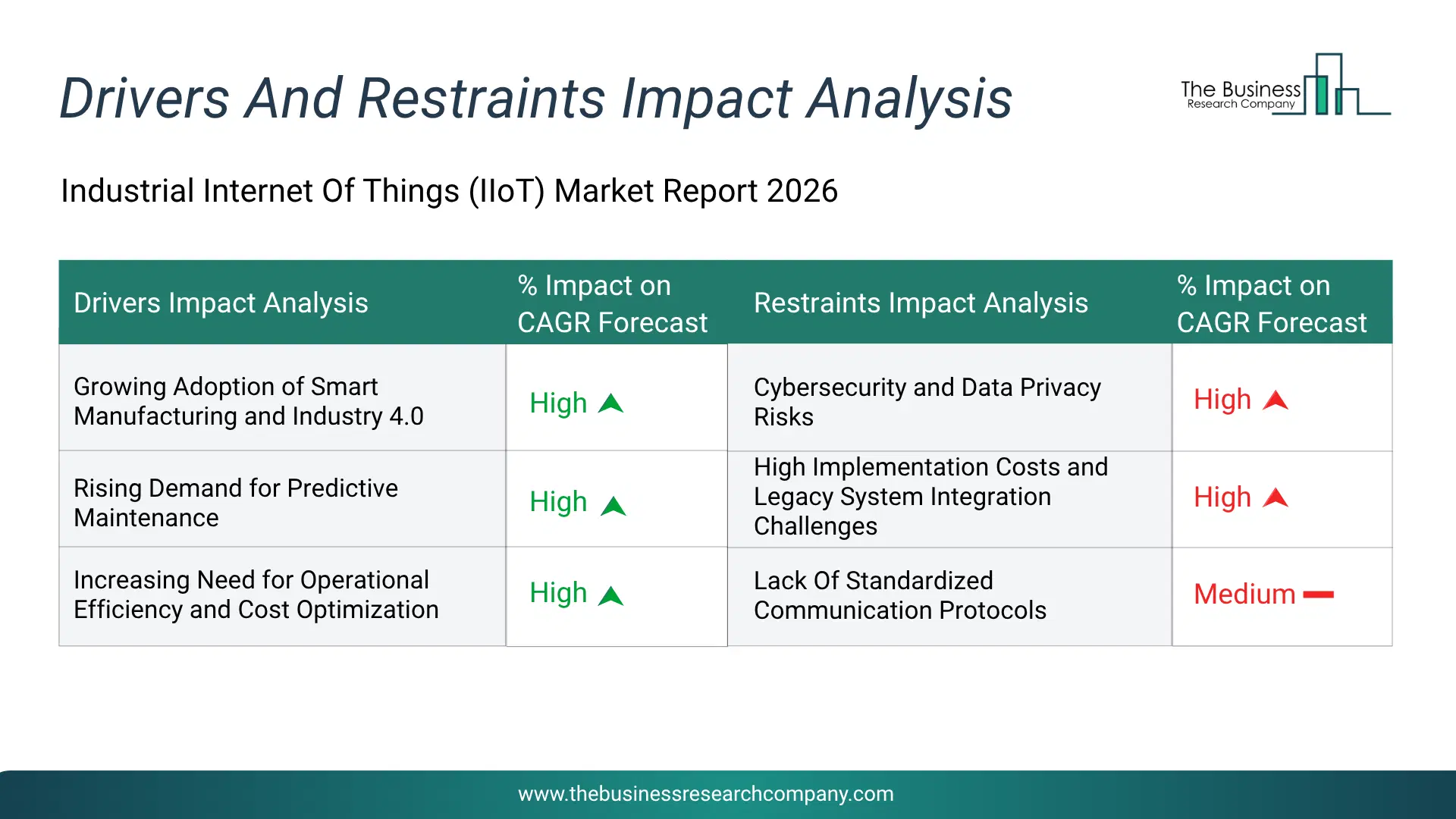
Infographic Chart Showing Key Market Drivers Analysis And Restraints For Industrial Internet Of Things (Iiot) Market
The chart presents an impact analysis of key drivers and restraints, quantifying their relative influence on the market's growth rate and helping assess the balance between growth enablers and limiting factors. This chart offers a high-level perspective; the full report contains more detailed insights.
How Will The Drivers Impact Growth In The Global Industrial Internet Of Things (IIoT) Market?
• Growing Adoption of Smart Manufacturing and Industry 4.0 (High) – During the forecast period, the growing adoption of smart manufacturing and industry 4.0 is expected to become a key growth driver for the industrial internet of things (IIoT) market by 2030. The increasing shift toward smart manufacturing and Industry 4.0 is a major driver for the industrial internet of things (IIoT) market. Manufacturers are integrating connected sensors, machines, and automation systems to improve production efficiency and reduce operational costs. IIoT enables real-time monitoring, predictive analytics, and intelligent decision-making across production lines. These capabilities help minimize downtime, optimize resource utilization, and improve product quality. • Rising Demand for Predictive Maintenance (High) – During the forecast period, the rising demand for predictive maintenance is expected to emerge as a major factor driving the expansion of the industrial internet of things (IIoT) market by 2030. Industries are increasingly adopting predictive maintenance solutions to reduce unexpected equipment failures and maintenance expenses. IIoT sensors continuously monitor machine health by collecting operational data such as temperature, vibration, and pressure. Advanced analytics identify potential failures before they occur, allowing timely maintenance interventions. This approach extends equipment lifespan, improves asset reliability, and minimizes costly production disruptions. • Increasing Need for Operational Efficiency and Cost Optimization (High) – During the forecast period, the increasing need for operational efficiency and cost optimization is expected to act as a key growth catalyst for the industrial internet of things (IIoT) market by 2030. Industrial organizations are under constant pressure to improve productivity while lowering operational costs. IIoT enables continuous monitoring of industrial assets, energy consumption, and production processes to identify inefficiencies. Real-time insights help optimize workflows, reduce waste, and enhance resource utilization across facilities. Automated data collection also minimizes manual intervention and improves process accuracy. These efficiency gains are accelerating investment in IIoT technologies across multiple industries.How Will The Restraints Impact Growth In The Global Industrial Internet Of Things (IIoT) Market?
• Cybersecurity and Data Privacy Risks (High) – During the forecast period, the increasing connectivity of industrial systems exposes critical infrastructure to cybersecurity threats and unauthorized access. IIoT devices generate and exchange large volumes of operational data that can become targets for cyberattacks. Security breaches may disrupt production, compromise sensitive information, and cause significant financial losses. Organizations must invest heavily in cybersecurity technologies, network protection, and compliance measures. These concerns can delay IIoT implementation, particularly in critical industries. • High Implementation Costs and Legacy System Integration Challenges (High) – During the forecast period, the deploying IIoT solutions often requires significant investment in sensors, connectivity infrastructure, software platforms, and skilled personnel. Many industrial facilities still operate legacy equipment that lacks compatibility with modern IIoT technologies. Integrating older systems with connected platforms can be technically complex, time-consuming, and expensive. Organizations may also face operational disruptions during system upgrades and deployment. These cost and integration challenges can limit IIoT adoption, especially among small and medium-sized enterprises. • Lack Of Standardized Communication Protocols (High) – During the forecast period, the lack of standardized communication protocols acts as a significant restraint for the industrial internet of things (IIoT) market because industrial environments often use equipment from multiple vendors that operate on different communication protocols and proprietary standards. Achieving seamless interoperability between machines, sensors, controllers, and software platforms requires additional integration efforts, protocol converters, and customized solutions. These compatibility issues increase deployment complexity, implementation costs, and project timelines. As a result, the absence of common standards slows the adoption of IIoT solutions across industrial sectors.Key Players In The Global Industrial Internet Of Things (IIoT) Market
Major companies operating in the industrial internet of things (iiot) market are Samsung Electronics Co. Ltd., Microsoft Corporation, Amazon Web Services Inc., Bosch Global Software Technologies GmbH, Huawei Technologies Co. Ltd., Hitachi Ltd., Siemens AG, Lenovo Group Limited, Intel Corporation, Accenture plc, International Business Machines Corporation, Panasonic Holdings Corporation, Cisco Systems Inc., Oracle Corporation, Mitsubishi Electric Corporation, Honeywell International Inc., SAP SE, Johnson Controls International plc, Alibaba Cloud, Toshiba Corporation, ARM Holdings.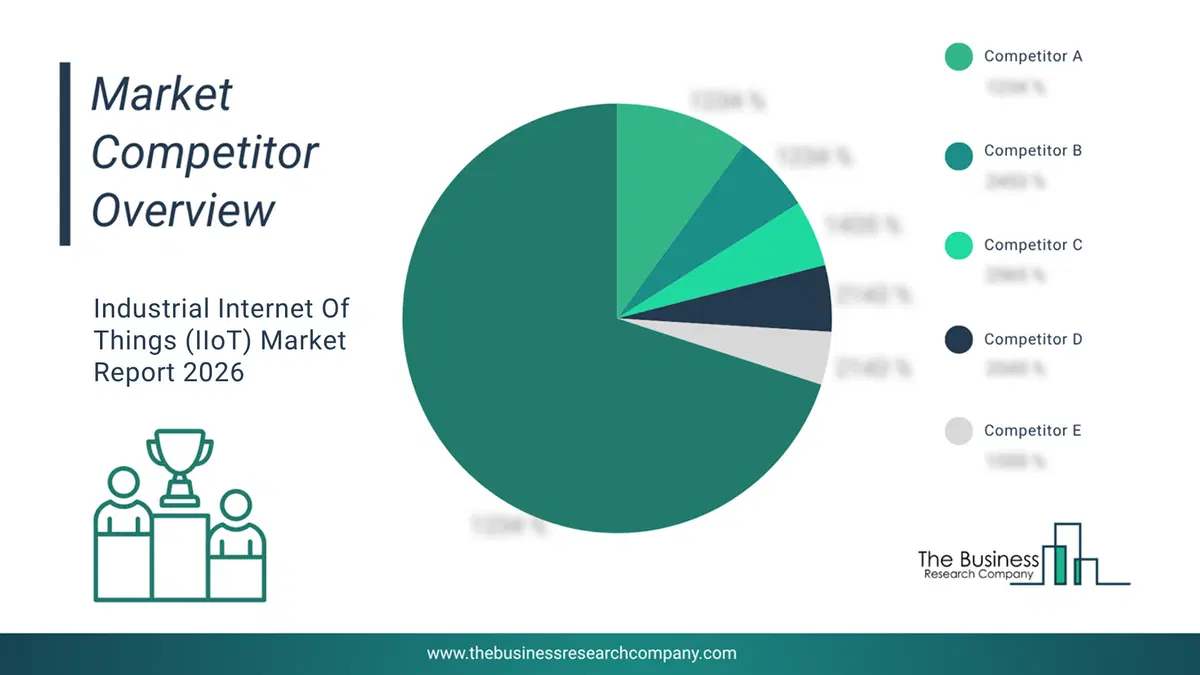
This chart is for illustrative purposes; the full report includes a detailed competitor analysis and comprehensive overview of the top 10 companies in the market.
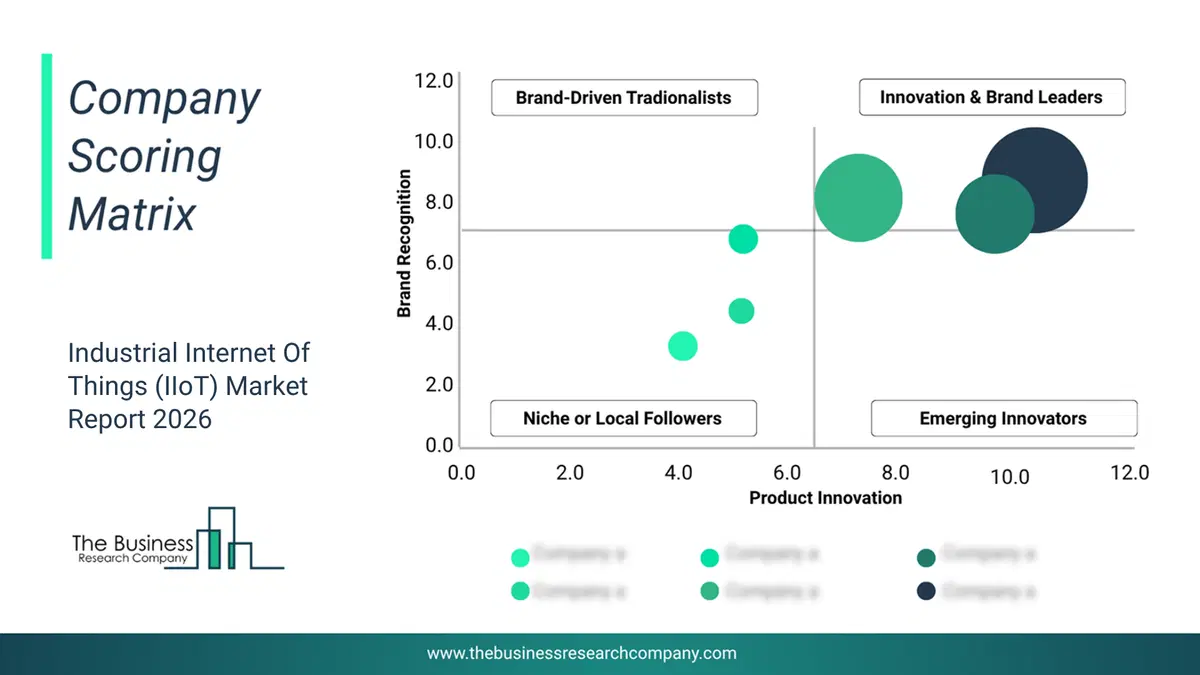
This chart maps companies by product innovation and brand strength, with bubble size indicating relative revenue, helping identify market leaders, challengers, and niche players. This is an illustrative chart; the full report provides a complete and accurate competitive analysis.
Global Industrial Internet Of Things (IIoT) Market Trends and Insights
Major companies operating in the industrial internet of things market are focusing on developing technological advancements such as 6-in-1 plug-and-play IIoT sensor platforms for predictive maintenance to address growing demand for reduced downtime, enhanced asset reliability, and energy efficiency. A 6-in-1 IIoT sensor platform consolidates multiple measurements like 3D vibration, magnetic flux, acoustic emissions, temperature, humidity, and RPM into a single compact device, enabling continuous, real-time monitoring of equipment health as opposed to traditional single-parameter sensors or periodic manual inspections. For instance, in June 2024, Henkel Adhesive Technologies, a Germany-based specialty chemicals and MRO company, launched its Loctite Pulse Smart Rotating Equipment Monitoring solution a plug-and-play sensor that simultaneously tracks six critical parameters, transmits data over wireless networks to the Loctite Pulse app without heavy IT integration, and uses AI-driven analytics to predict asset degradation in rotating equipment like motors, gearboxes, and pumps. This solution helps industrial customers spot early signs of wear, prioritize maintenance, and prevent unplanned downtime, integrating seamlessly with Henkel’s MRO repair products for quick corrective action.What Are Latest Mergers And Acquisitions In The Industrial Internet Of Things (IIoT) Market?
In July 2023, Honeywell International Inc., a US-based advanced-technology company that manufactures aerospace and automotive products, acquired SCADAfence for an undisclosed amount. The acquisition strengthens cybersecurity capabilities by integrating advanced SCADAfence technologies into an existing cybersecurity suite. By combining SCADAfence’s OT security products with current offerings, the goal is to enhance security measures and help customers safeguard their OT environments from disruptions. SCADAfence is a US-based company that provides comprehensive cybersecurity solutions specifically designed for industrial internet of things (IIoT) environments.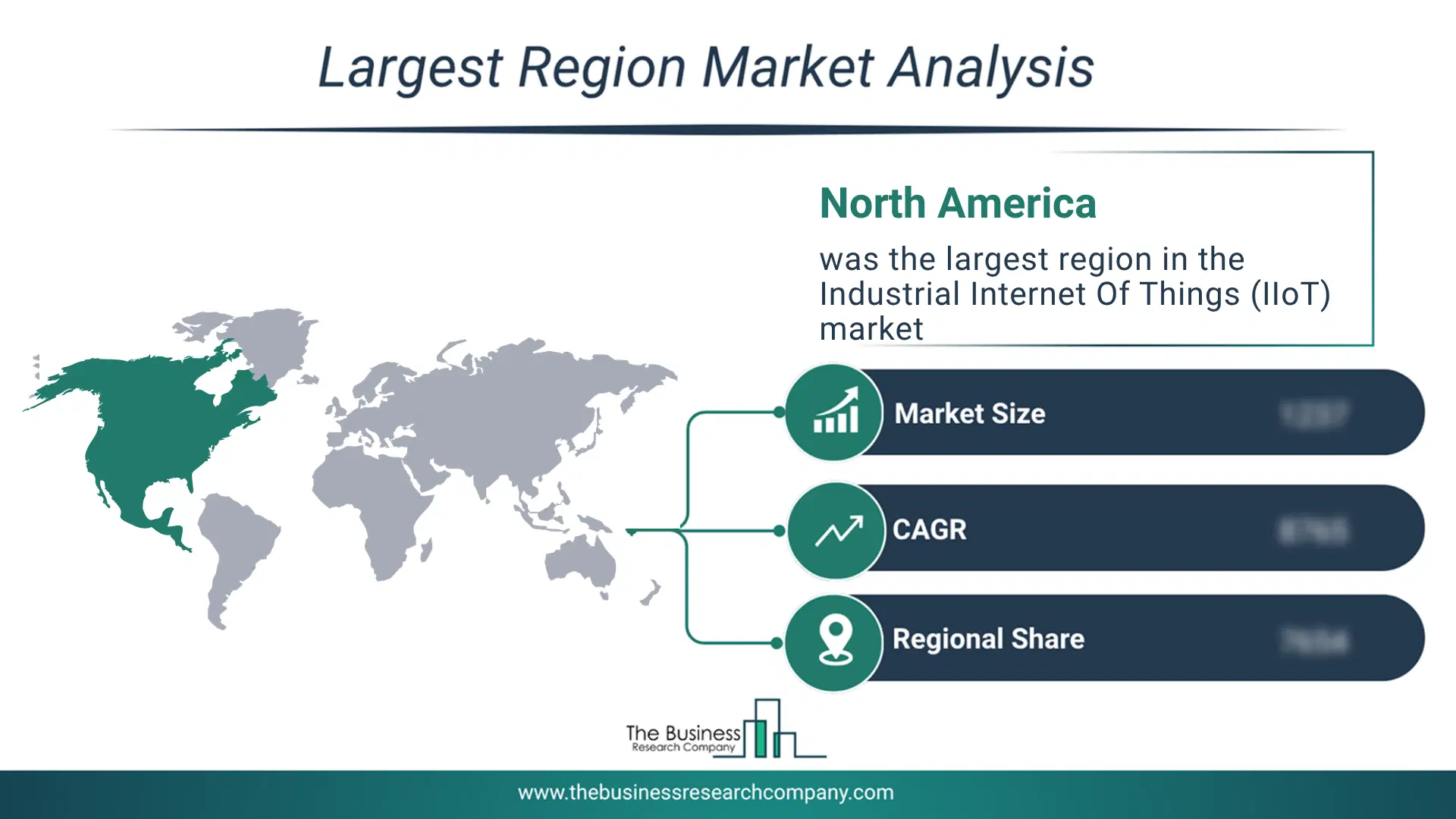
Regional Insights
North America was the largest region in the industrial internet of things (IIoT) market in 2025. Asia-Pacific is expected to be the fastest-growing region in the forecast period. The regions covered in this market report are Asia-Pacific, South East Asia, Western Europe, Eastern Europe, North America, South America, Middle East, Africa. The countries covered in this market report are Australia, Brazil, China, France, Germany, India, Indonesia, Japan, Taiwan, Russia, South Korea, UK, USA, Canada, Italy, Spain.What Defines the Industrial Internet Of Things (IIoT) Market?
The industrial internet of things (IIoT) market consists of revenues earned by entities providing services such as predictive maintenance, remote monitoring, supply chain and inventory management, and asset tracking and management. The market value includes the value of related goods sold by the service provider or included within the service offering. The industrial internet of things market also includes sales of products such as internet of things (IoT) sensors and devices, connectivity devices, edge computing devices, industrial controllers, and robots and automated systems. Values in this market are ‘factory gate’ values, that is, the value of goods sold by the manufacturers or creators of the goods, whether to other entities (including downstream manufacturers, wholesalers, distributors, and retailers) or directly to end customers. The value of goods in this market includes related services sold by the creators of the goods.How is Market Value Defined and Measured?
The market value is defined as the revenues that enterprises gain from the sale of goods and/or services within the specified market and geography through sales, grants, or donations in terms of the currency (in USD unless otherwise specified). The revenues for a specified geography are consumption values that are revenues generated by organizations in the specified geography within the market, irrespective of where they are produced. It does not include revenues from resales along the supply chain, either further along the supply chain or as part of other products.
This chart presents market attractiveness based on a quantitative evaluation of growth, competition, strategic alignment, and risk, offering a clear view of opportunity areas for decision-making. This chart is for illustrative purposes; the full report contains the complete analysis.

This chart highlights the Total Addressable Market (TAM) by estimating the maximum revenue opportunity using an assumption-driven approach, supporting strategic planning and opportunity sizing across markets. The chart is illustrative; the full report provides a more comprehensive analysis.
What Key Data and Analysis Are Included in the Industrial Internet Of Things (IIoT) Market Report 2026?
The industrial internet of things (iiot) market research report is one of a series of new reports from The Business Research Company that provides market statistics, including industry global market size, regional shares, competitors with the market share, detailed market segments, market trends and opportunities, and any further data you may need to thrive in the industrial internet of things (iiot) industry. The market research report delivers a complete perspective of everything you need, with an in-depth analysis of the current and future state of the industry.Industrial Internet Of Things (IIoT) Market Report Forecast Analysis
| Report Attribute | Details |
|---|---|
| Market Size Value In 2026 | $317.09 billion |
| Revenue Forecast In 2030 | $537.39 billion |
| Growth Rate | CAGR of 14.3% from 2026 to 2030 |
| Base Year For Estimation | 2025 |
| Actual Estimates/Historical Data | 2020-2025 |
| Forecast Period | 2026 - 2030 |
| Market Representation | Revenue in USD Billion and CAGR from 2026 to 2030 |
| Segments Covered | Component, Deployment, Connectivity, End-User |
| Regional Scope | Asia-Pacific, Western Europe, Eastern Europe, North America, South America, Middle East, Africa |
| Country Scope | The countries covered in the report are Australia, Brazil, China, France, Germany, India, ... |
| Key Companies Profiled | Samsung Electronics Co. Ltd., Microsoft Corporation, Amazon Web Services Inc., Bosch Global Software Technologies GmbH, Huawei Technologies Co. Ltd., Hitachi Ltd., Siemens AG, Lenovo Group Limited, Intel Corporation, Accenture plc, International Business Machines Corporation, Panasonic Holdings Corporation, Cisco Systems Inc., Oracle Corporation, Mitsubishi Electric Corporation, Honeywell International Inc., SAP SE, Johnson Controls International plc, Alibaba Cloud, Toshiba Corporation, ARM Holdings. |
| Customization Scope | Request for Customization |
| Pricing And Purchase Options | Explore Purchase Options |