

Industrial Rectifiers Market Report 2026
Global Outlook – By Type (Single Phase, Three Phase), By Control Type (Controlled, Uncontrolled), By Application (Electroplating, Smelting, Welding, Power Supply), By End-User Industry (Automotive, Electronics, Power And Utilities, Chemicals, Other End-User Industries) – Market Size, Trends, Strategies, and Forecast to 2035
Industrial Rectifiers Market Overview
• Industrial Rectifiers market size has reached to $1.28 billion in 2025 • Expected to grow to $1.72 billion in 2030 at a compound annual growth rate (CAGR) of 6% • Growth Driver: Increasing Industrial Automation Across Process And Discrete Manufacturing Fueling The Growth Of The Market Due To Rising Deployment Of Industrial Robots • Market Trend: Innovations In Silicon Carbide-Based Power Semiconductor Technology Enhance Efficiency And Power Density In Industrial Rectifiers • North America was the largest region in 2025 and Asia-Pacific is the fastest growing region.What Is Covered Under Industrial Rectifiers Market?
Industrial rectifiers are power electronic devices or assemblies that convert alternating current (AC) into direct current (DC) for industrial equipment and processes. They are widely used in applications such as electroplating, welding, battery charging, DC power supplies, and industrial power-conversion systems where stable or controlled DC power is required. The main types of industrial rectifiers include single phase and three phase. Single phase refer to electrical devices that convert single phase alternating current into direct current for use in industrial electrical and electronic systems. These rectifiers are available as controlled and uncontrolled rectifiers. The various applications involved are electroplating, smelting, welding, and power supply and they are utilized by end user industries including automotive, electronics, power and utilities, chemicals, and others.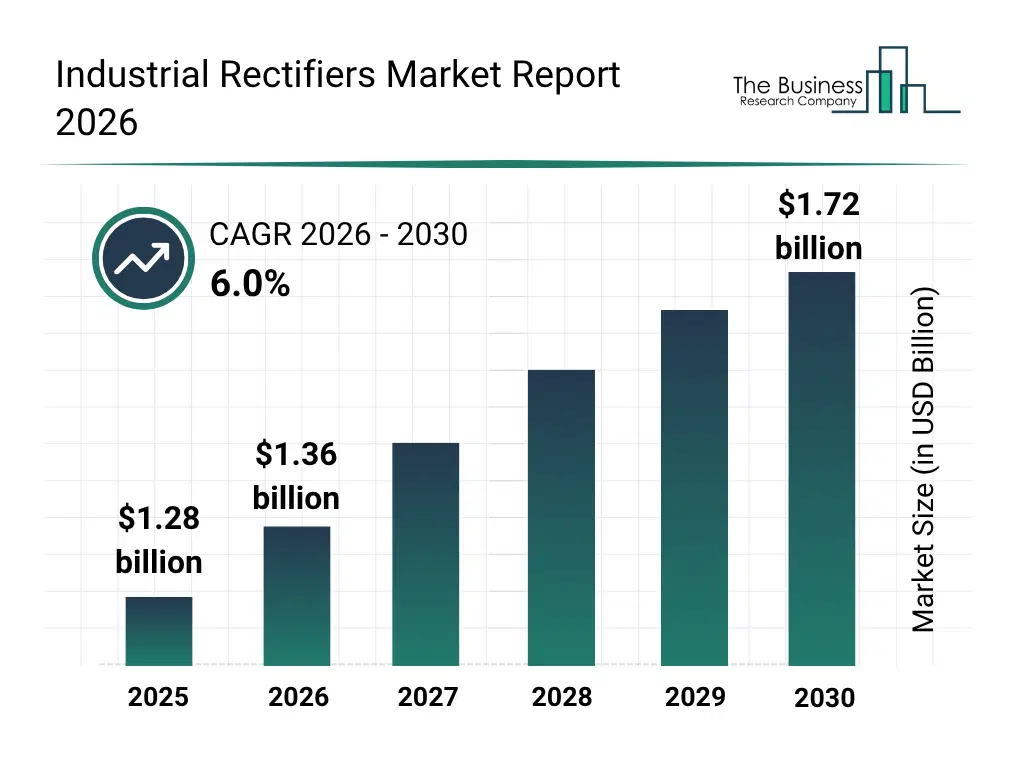
What Is The Industrial Rectifiers Market Size and Share 2026?
The industrial rectifiers market size has grown strongly in recent years. It will grow from $1.28 billion in 2025 to $1.36 billion in 2026 at a compound annual growth rate (CAGR) of 6.4%. The growth in the historic period can be attributed to increasing demand for reliable industrial DC power, rising adoption of electroplating processes, growing use of rectifiers in battery charging applications, expanding industrial welding activities, increasing demand for stable power supplies.What Is The Industrial Rectifiers Market Growth Forecast?
The industrial rectifiers market size is expected to see strong growth in the next few years. It will grow to $1.72 billion in 2030 at a compound annual growth rate (CAGR) of 6.0%. The growth in the forecast period can be attributed to rising demand for higher power-density rectifiers, increasing adoption of advanced controlled rectifiers, growing demand for high-current DC power systems, expanding use of rectifiers in industrial motor drives, increasing demand for energy-efficient power conversion. Major trends in the forecast period include increasing demand for high-efficiency industrial rectifiers, rising preference for high-power DC conversion systems, growing adoption of modular rectifier configurations, increasing demand for stable DC power in industrial processes, rising use of multi-pulse rectifiers in high-power applications.Tariff Impact On Industrial Rectifiers Market
Tariffs are impacting the Industrial Rectifiers Market by increasing the cost of imported power semiconductors, transformers, electronic components, heat-management systems, and other equipment required for rectifier manufacturing. This is raising production costs and equipment prices, particularly across high-power three-phase rectifiers and controlled rectifier systems used in electroplating, smelting, welding, and industrial power supplies. Component-intensive segments such as three-phase and controlled rectifiers are most affected due to global supply chain dependencies, with manufacturing regions across Asia-Pacific, Europe, and North America facing varying degrees of cost pressure. However, tariffs are also encouraging local component sourcing, regional supplier diversification, and increased investment in domestic power electronics manufacturing, supporting greater long-term supply chain resilience.
Global Industrial Rectifiers Market Segmentation
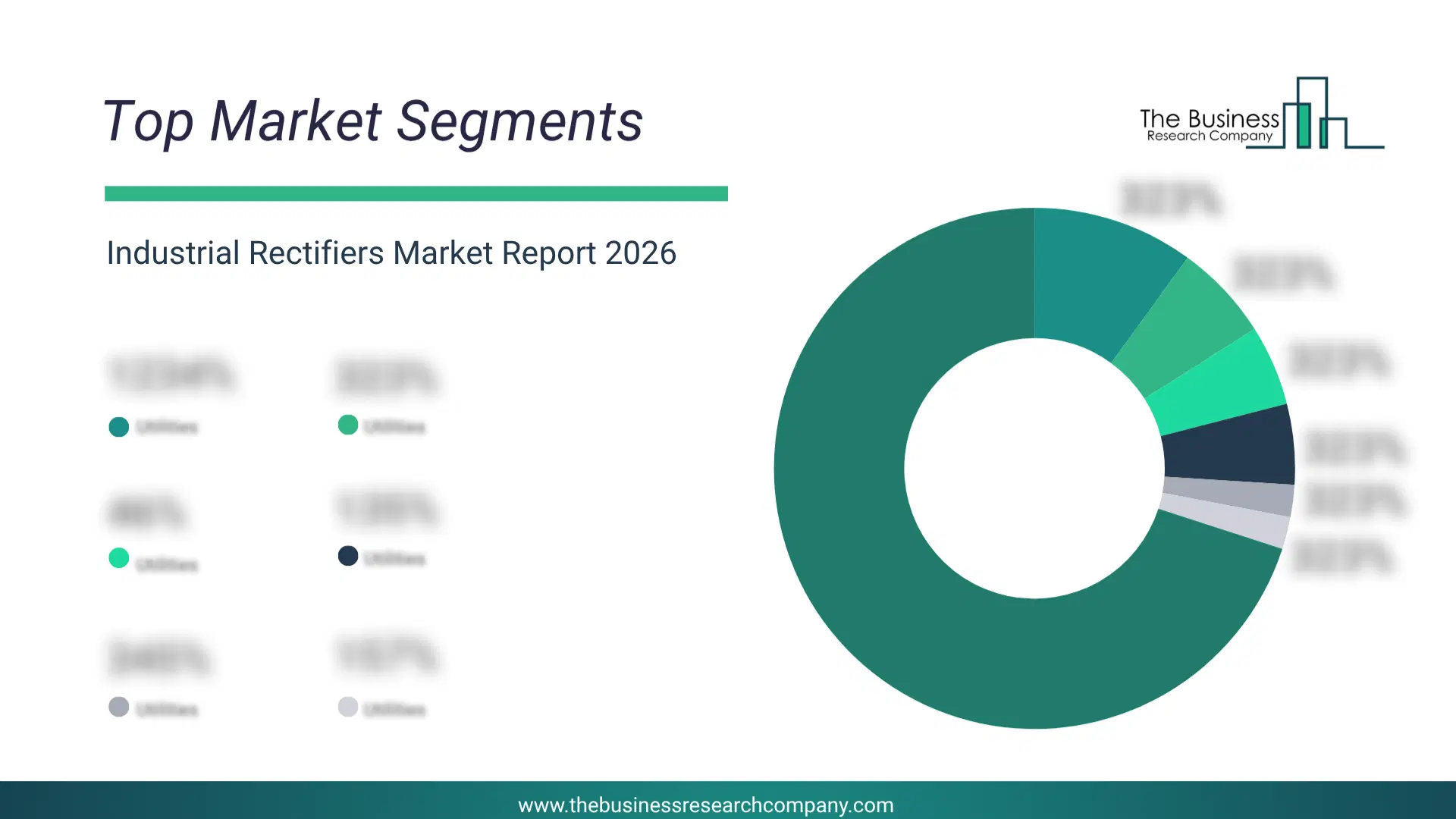
2) By Control Type: Controlled, Uncontrolled 3) By Application: Electroplating, Smelting, Welding, Power Supply 4) By End-User Industry: Automotive, Electronics, Power And Utilities, Chemicals, Other End-User Industries Subsegments: 1) By Single Phase: Half-Wave Rectifier, Full-Wave Rectifier, Bridge Rectifier, Center-Tapped Rectifier, Controlled Rectifier, Uncontrolled Rectifier 2) By Three Phase: Half-Wave Three-Phase Rectifier, Full-Wave Three-Phase Rectifier, Bridge Three-Phase Rectifier, Controlled Three-Phase Rectifier, Uncontrolled Three-Phase Rectifier, Twelve-Pulse RectifierWhat Is The Driver Of The Industrial Rectifiers Market?
The increasing industrial automation across process and discrete manufacturing is expected to propel the growth of the industrial rectifiers market going forward. Industrial automation refers to the use of advanced control systems, robotics, and digital technologies to automate manufacturing processes while improving productivity, quality, and operational efficiency. Industrial automation is increasing because manufacturers continue to invest in robotics and smart production systems to improve output, reduce operating costs, and address labor shortages. Industrial rectifiers market supports industrial automation by providing stable direct current power for industrial robots, programmable logic controllers, motor drives, automated welding equipment, and other factory automation systems that require reliable power conversion. For instance, in February 2026, according to the Association for Advancing Automation (A3), a US-based industry association, companies across North America ordered 36,766 robots in 2025, an increase of 6.6% from 2024, while the value of robot orders increased by 10.1% to $2.25 billion. Therefore, the increasing industrial automation across process and discrete manufacturing is driving the growth of the industrial rectifiers industry.Key Players In The Global Industrial Rectifiers Market
Major companies operating in the industrial rectifiers market are Siemens AG, ABB Ltd., Schneider Electric SE, Eaton Corporation plc, Fuji Electric Co. Ltd., Delta Electronics Inc., TMEIC Corporation, AMETEK Inc., Chroma ATE Inc., GE Vernova Inc., TRUMPF Hüttinger GmbH + Co. KG, Powerex Inc., Spang & Company, KraftPowercon Sweden AB, American Rectifier Corporation, Micropower Group AB, ENAG SAS, Hind Rectifiers Limited, Analytic Systems Ware Ltd., ABSOPULSE Electronics Ltd., Matsusada Precision Inc.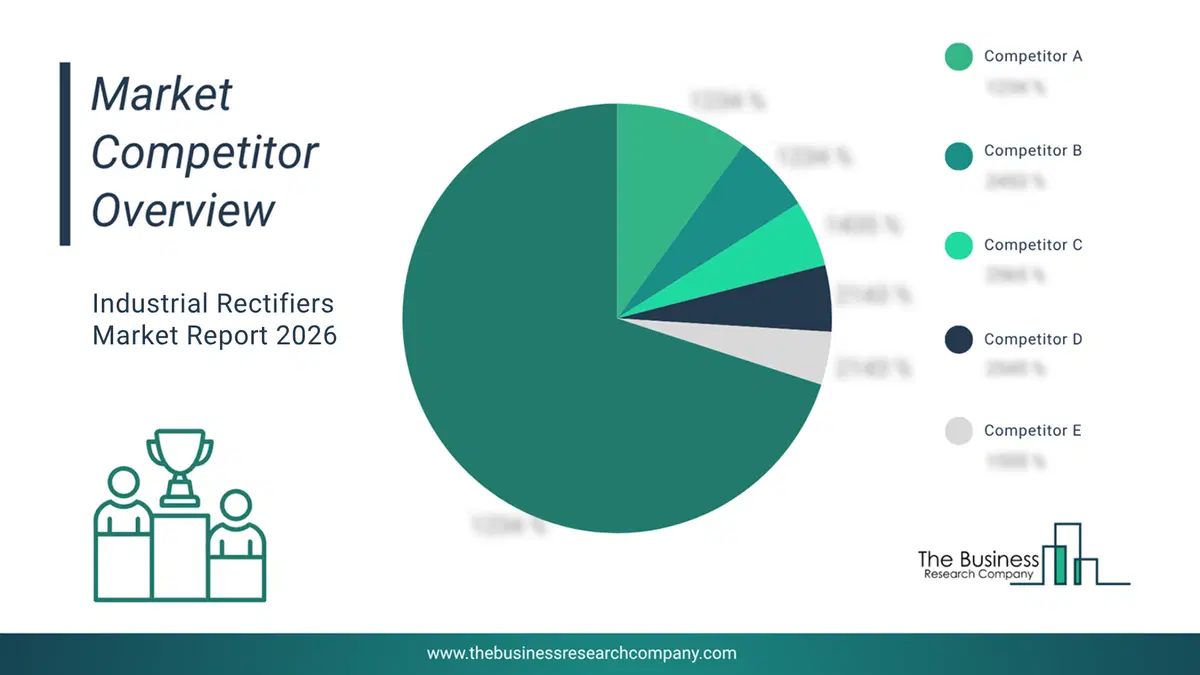
This chart is for illustrative purposes; the full report includes a detailed competitor analysis and comprehensive overview of the top 10 companies in the market.
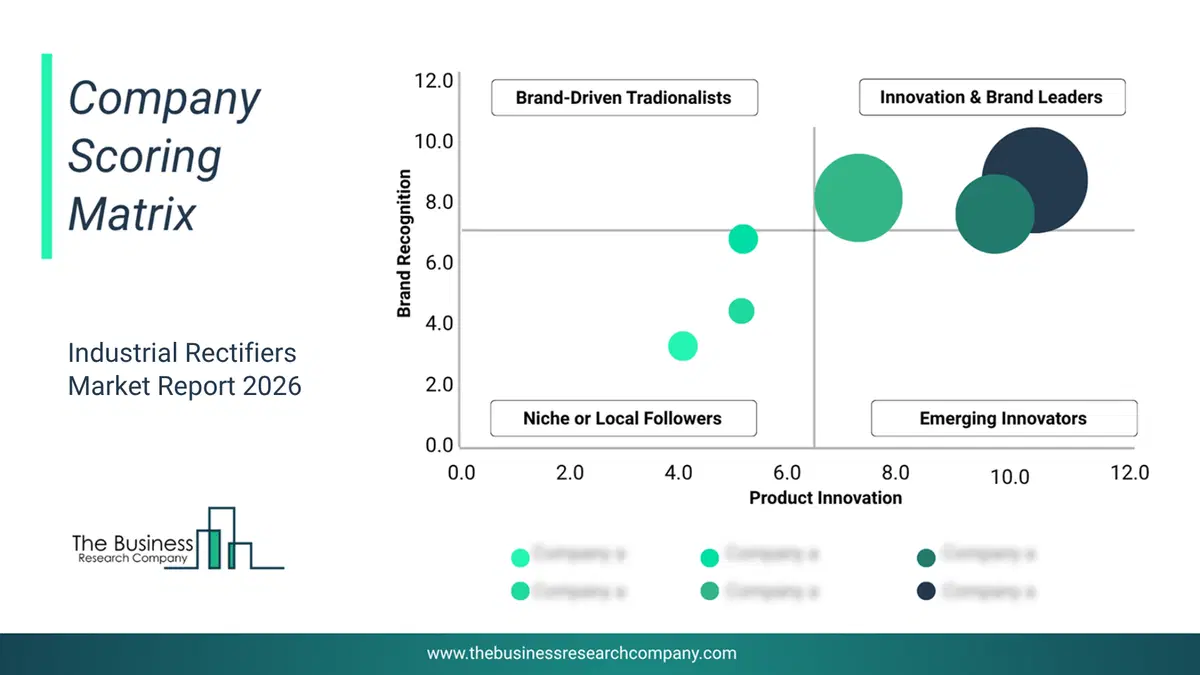
This chart maps companies by product innovation and brand strength, with bubble size indicating relative revenue, helping identify market leaders, challengers, and niche players. This is an illustrative chart; the full report provides a complete and accurate competitive analysis.
Global Industrial Rectifiers Market Trends and Insights
Major companies operating in the industrial rectifiers market are focusing on innovations in wide-bandgap semiconductor materials, such as silicon carbide (SiC)-based power semiconductor technology, to improve conversion efficiency, minimize switching losses, and enhance power density in industrial power conversion systems. Silicon carbide-based power semiconductor technology refers to power electronic devices that use wide-bandgap semiconductor materials instead of conventional silicon, enabling higher operating temperatures, faster switching frequencies, and reduced energy losses in industrial rectifiers. For instance, in April 2025, Vishay Intertechnology, Inc., a US-based manufacturer of discrete semiconductors and passive electronic components, launched 27 standard 600V rectifiers and 60V–200V Trench MOS Barrier Schottky (TMBS) rectifiers in the compact DFN33A package. Designed to provide space-efficient and high-performance solutions for industrial, commercial, telecommunications, and automotive applications, the new rectifiers deliver improved thermal performance, support current ratings of up to 6A for standard rectifiers and up to 9A for TMBS rectifiers, and reduce PCB space requirements through a low-profile 0.88 mm package design.What Are Latest Mergers And Acquisitions In The Industrial Rectifiers Market?
In January 2026, GPT Industries LLC, a US-based manufacturer of engineered industrial products, acquired Integrated Rectifier Technologies Inc. (IRT) for an undisclosed amount. Through this acquisition, GPT Industries aims to strengthen its industrial rectifier solutions by integrating IRT’s expertise in cathodic protection rectifiers, transformer rectifiers, and DC power conversion systems, expanding its capabilities for corrosion prevention and infrastructure protection applications. Integrated Rectifier Technologies Inc. is a US-based company that manufactures industrial rectifier systems, including transformer rectifiers, silicon-controlled rectifier (SCR) units, and power supply solutions used for cathodic protection applications in pipelines, utilities, and industrial infrastructure.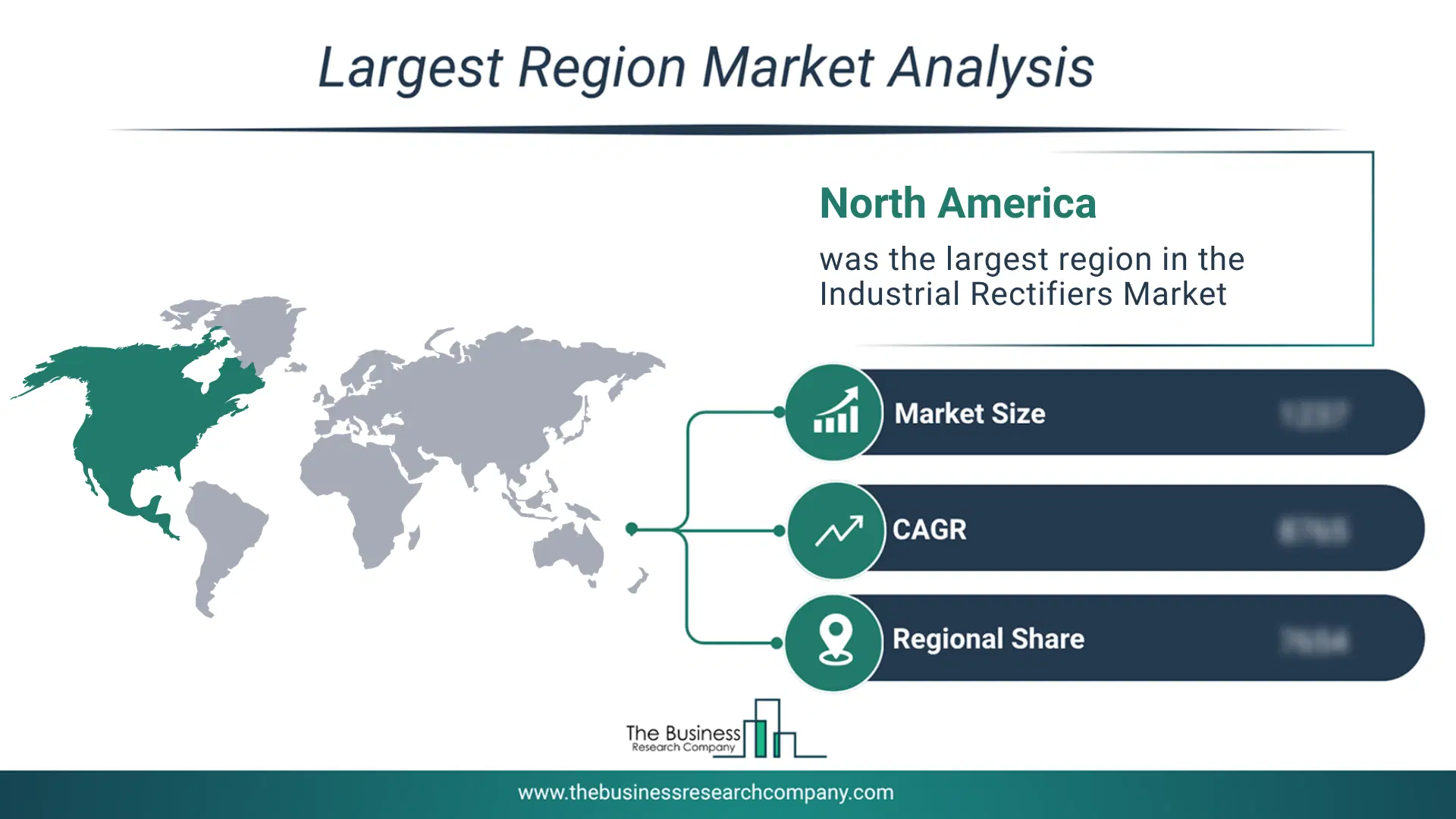
Regional Outlook/Insights
North America was the largest region in the industrial rectifiers market in 2025. Asia-Pacific is expected to be the fastest-growing region in the forecast period. The regions covered in this market report are Asia-Pacific, South East Asia, Western Europe, Eastern Europe, North America, South America, Middle East, Africa. The countries covered in this market report are Australia, Brazil, China, France, Germany, India, Indonesia, Japan, Taiwan, Russia, South Korea, UK, USA, Canada, Italy, Spain.What Defines the Industrial Rectifiers Market?
The industrial rectifiers market consists of sales of industrial diode rectifiers, bridge rectifiers, controlled rectifiers, silicon-controlled rectifiers, high-current rectifier units, and industrial power rectifiers. Values in this market are ‘factory gate’ values, that is, the value of goods sold by the manufacturers or creators of the goods, whether to other entities (including downstream manufacturers, wholesalers, distributors, and retailers) or directly to end customers. The value of goods in this market includes related services sold by the creators of the goods.How is Market Value Defined and Measured?
The market value is defined as the revenues that enterprises gain from the sale of goods and/or services within the specified market and geography through sales, grants, or donations in terms of the currency (in USD unless otherwise specified). The revenues for a specified geography are consumption values that are revenues generated by organizations in the specified geography within the market, irrespective of where they are produced. It does not include revenues from resales along the supply chain, either further along the supply chain or as part of other products.
This chart presents market attractiveness based on a quantitative evaluation of growth, competition, strategic alignment, and risk, offering a clear view of opportunity areas for decision-making. This chart is for illustrative purposes; the full report contains the complete analysis.

This chart highlights the Total Addressable Market (TAM) by estimating the maximum revenue opportunity using an assumption-driven approach, supporting strategic planning and opportunity sizing across markets. The chart is illustrative; the full report provides a more comprehensive analysis.
What Key Data and Analysis Are Included in the Industrial Rectifiers Market Report 2026?
The industrial rectifiers market research report is one of a series of new reports from The Business Research Company that provides market statistics, including industry global market size, regional shares, competitors with the market share, detailed market segments, market trends and opportunities, and any further data you may need to thrive in the industrial rectifiers industry. The market research report delivers a complete perspective of everything you need, with an in-depth analysis of the current and future state of the industry.Industrial Rectifiers Market Report Forecast Analysis
| Report Attribute | Details |
|---|---|
| Market Size Value In 2026 | $1.36 billion |
| Revenue Forecast In 2030 | $1.72 billion |
| Growth Rate | CAGR of 6.0% from 2026 to 2035 |
| Base Year For Estimation | 2025 |
| Actual Estimates/Historical Data | 2020-2025 |
| Forecast Period | 2026 - 2030 |
| Market Representation | Revenue in USD Billion and CAGR from 2026 to 2030 |
| Segments Covered | Type, Control Type, Application, End-User Industry |
| Regional Scope | Asia-Pacific, Western Europe, Eastern Europe, North America, South America, Middle East, Africa |
| Country Scope | The countries covered in the report are Australia, Brazil, China, France, Germany, India, Indonesia, Japan, Taiwan, Russia, South Korea, UK, USA, Canada, Italy, Spain. |
| Customization Scope | Request for Customization |
| Pricing And Purchase Options | Explore Purchase Options |