
Industrial Refrigeration Systems Market Report 2026
Global Outlook – By Component (Compressors, Rotary Screw Compressors, Centrifugal Compressors, Reciprocating Compressors, Evaporators, Condensers, Controls), By Refrigerant (Ammonia, Carbon Dioxide), By Application (Refrigerated Warehouse, Refrigerated Transportation, Beverage Processing, Dairy And Ice Cream Processing) – Market Size, Trends, Strategies, and Forecast to 2030
Industrial Refrigeration Systems Market Overview
• Industrial Refrigeration Systems market size has reached to $24.3 billion in 2025 • Expected to grow to $33.01 billion in 2030 at a compound annual growth rate (CAGR) of 6.3% • Growth Driver: Surging Demand For Frozen And Processed Food Boosts Growth In The Industrial Refrigeration System Market • Market Trend: Technological Innovations Revolutionizing The Industrial Refrigeration System Market • North America was the largest region in 2025.Market Gains By 2030 – Top Opportunities By Segment
Market Gain identifies the most promising market opportunities by highlighting the segments or products expected to generate the highest incremental revenue growth over the next five years.
What Is Covered Under Industrial Refrigeration Systems Market?
Industrial refrigeration system refers to tools and accessories designed to take heat away from big operations or big materials, bringing the temperature down to a suitable level. They are commonly used in cold storage, dairy processing, and beverage production. The main components of an industrial refrigeration system are compressors, rotary screw compressors, centrifugal compressors, reciprocating compressors, diaphragm compressors, evaporators, condensers, and controls. Compressors refer to products that are particularly made to mechanically increase a refrigerant vapor’s pressure, temperature, and energy level as part of a transcritical CO2 refrigeration cycle or an economized vapor compression cycle. The refrigerants used are ammonia and carbon dioxide for various applications such as refrigerated warehouses, refrigerated transportation, beverage processing, and dairy and ice cream processing.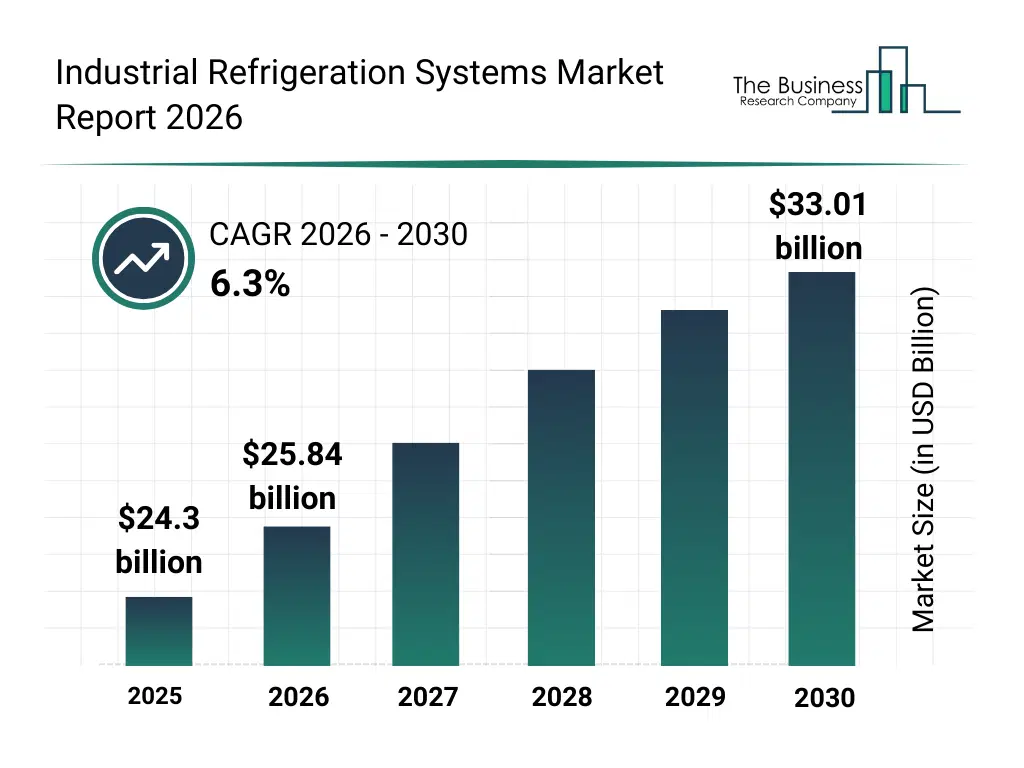
What Is The Industrial Refrigeration Systems Market Size and Share 2026?
The industrial refrigeration systems market size has grown strongly in recent years. It will grow from $24.3 billion in 2025 to $25.84 billion in 2026 at a compound annual growth rate (CAGR) of 6.3%. The growth in the historic period can be attributed to growth of dairy and beverage industries, expansion of cold warehouses, reliance on centralized refrigeration, industrial food preservation needs.What Is The Industrial Refrigeration Systems Market Growth Forecast?
The industrial refrigeration systems market size is expected to see strong growth in the next few years. It will grow to $33.01 billion in 2030 at a compound annual growth rate (CAGR) of 6.3%. The growth in the forecast period can be attributed to environmental compliance pressure, cold chain expansion, energy optimization initiatives, smart control integration, demand for high-capacity systems. Major trends in the forecast period include adoption of integrated refrigeration systems, rising demand for large-scale cold storage, shift toward ammonia and CO₂ systems, automation of refrigeration operations, expansion of beverage and dairy processing.
Global Industrial Refrigeration Systems Market Segmentation
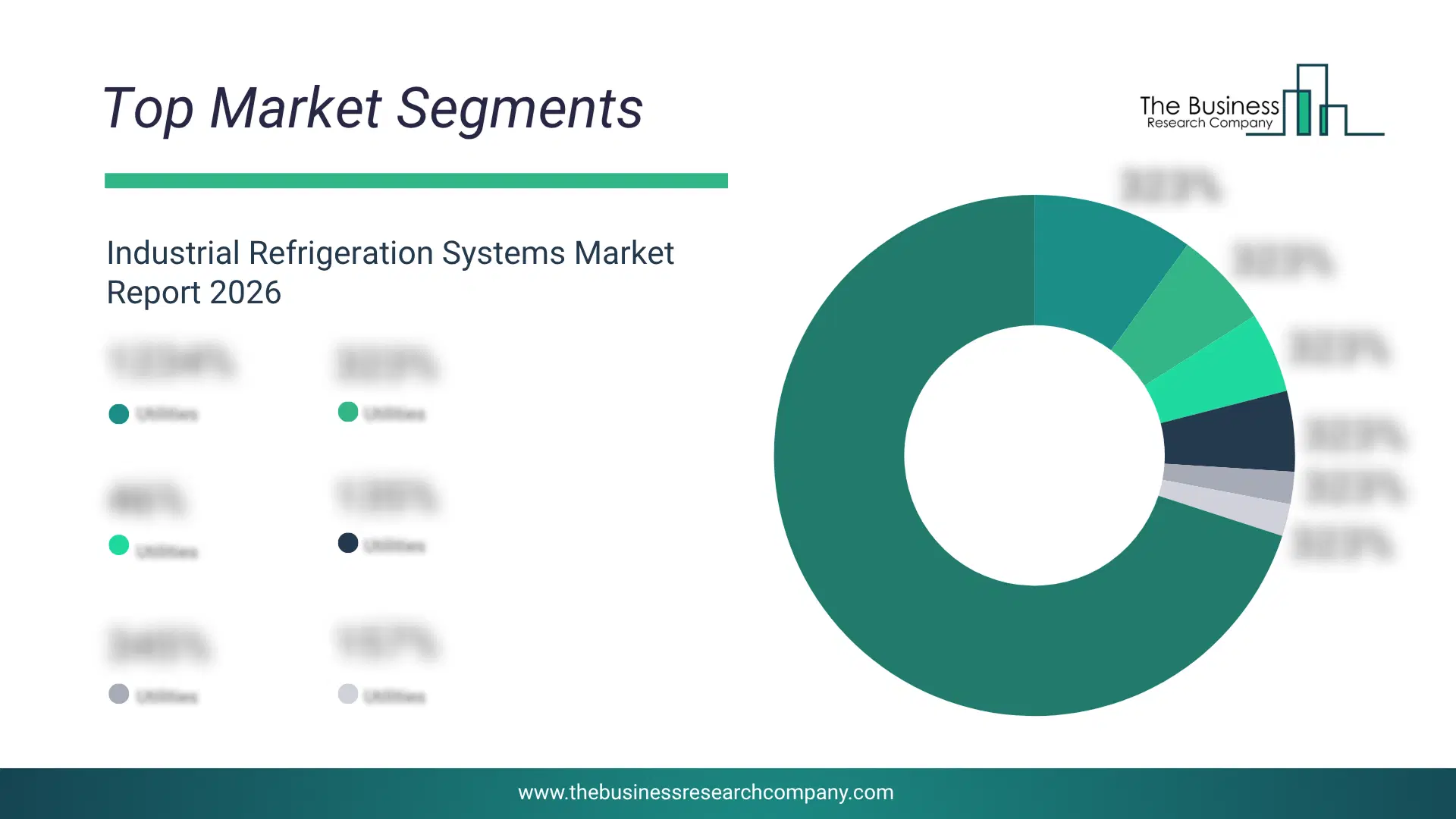
1) By Component: Compressors, Rotary Screw Compressors, Centrifugal Compressors, Reciprocating Compressors, Evaporators, Condensers, Controls 2) By Refrigerant: Ammonia, Carbon Dioxide 3) By Application: Refrigerated Warehouse, Refrigerated Transportation, Beverage Processing, Dairy And Ice Cream Processing Subsegments: 1) By Compressors: Technology, Refrigerant Type, Capacity 2) By Rotary Screw Compressors: Oil-Flooded, Dry Screw 3) By Centrifugal Compressors: Radial Flow, Axial Flow 4) By Reciprocating Compressors: Open-Type Compressors, Hermetic Compressors, Semi-Hermetic Compressors 5) By Evaporators: Direct Expansion Evaporators, Flooded Evaporators, Shell And Tube Evaporators 6) By Condensers: Air-Cooled Condensers, Water-Cooled Condensers, Evaporative Condensers 7) By Controls: Electronic Controllers, Mechanical Controllers, Pressure Controls, Temperature Controls The top segments in the predictive maintenance market will be: • Solutions will reach $26.79 Billion by 2030. • Service will reach $14.91 Billion by 2030. The top segments in the industrial refrigeration systems market will be: • Compressors will reach $9.74 Billion by 2030. • Evaporators will reach $4.83 Billion by 2030. • Condensers will reach $4.83 Billion by 2030. • Controls will reach $4.29 Billion by 2030. • Rotary Screw Compressors will reach $4.02 Billion by 2030.What Is The Driver Of The Industrial Refrigeration Systems Market?
Growing demand for frozen and processed food is expected to propel the growth of the industrial refrigeration system market going forward. "Frozen food" refers to food that has been frozen quickly and is maintained frozen until it is used, whereas "processed food" refers to a food item that has gone through several mechanical or chemical processes to change or preserve it. Industrial refrigeration systems are used in food processing for cooling large amounts of water used in the process. For instance, in October 2023, according to the American Frozen Food Institute, a US-based national trade association for the frozen food industry, frozen food sales reached $74.2 billion, indicating strong consumer demand and market stability. Over 38% of shoppers purchase frozen foods regularly, valuing their convenience and nutritional benefits. Additionally, a healthier 66% of core consumers perceive the frozen food aisle as offering better-for-you products, highlighting an increasing focus on health among consumers. Therefore, the growing demand for frozen and processed food is driving the industrial refrigeration system industry.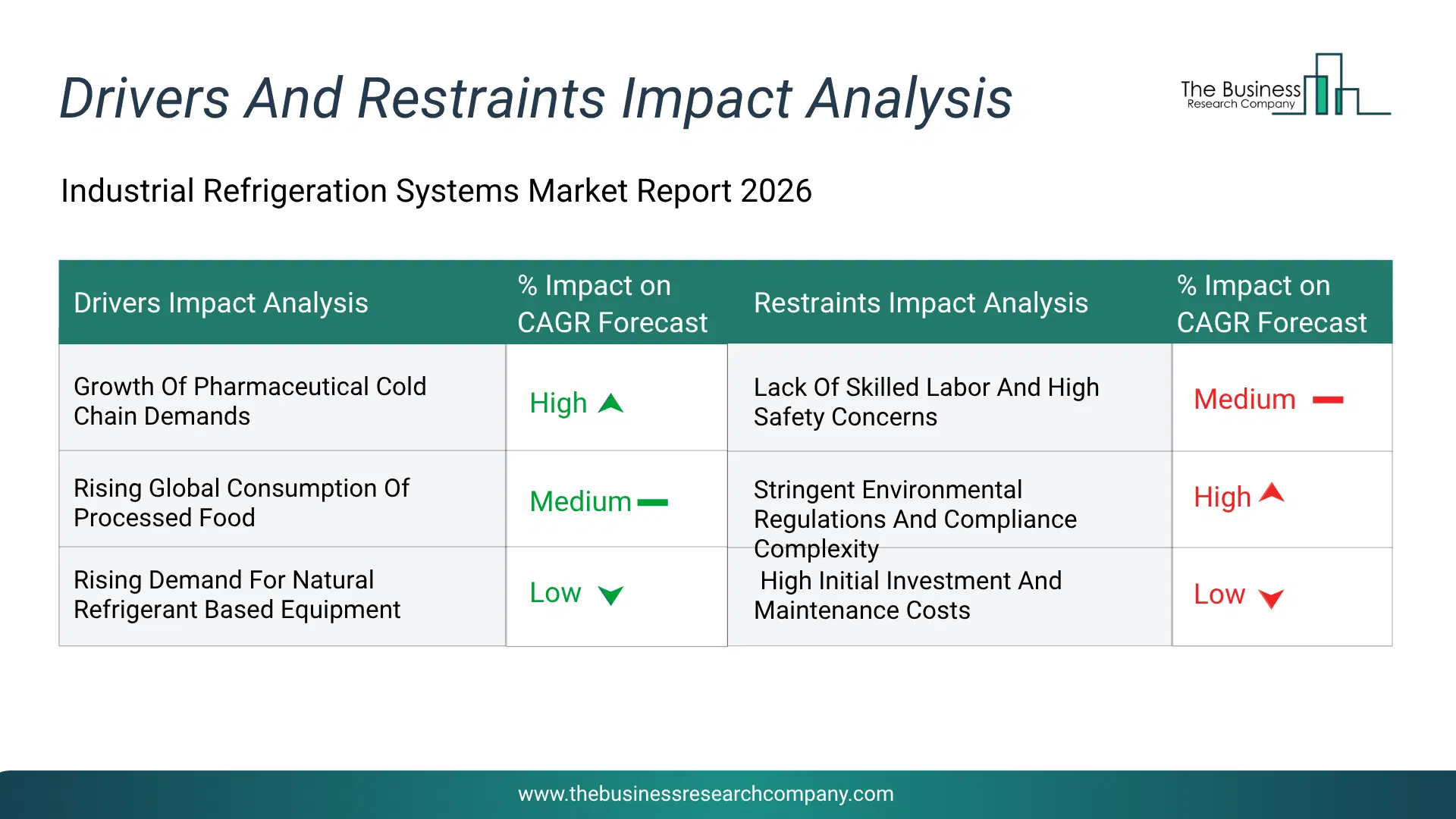
Infographic Chart Showing Key Market Drivers Analysis And Restraints For Industrial Refrigeration Systems Market
The chart presents an impact analysis of key drivers and restraints, quantifying their relative influence on the market's growth rate and helping assess the balance between growth enablers and limiting factors. This chart offers a high-level perspective; the full report contains more detailed insights.
How Will The Drivers Impact Growth In The Global Industrial Refrigeration Systems Market?
• Growth Of Pharmaceutical Cold Chain Demands (High) – During the forecast period, the growth of pharmaceutical cold chain demands is expected to become a key growth driver for the industrial refrigeration systems market by 2030. The rising need for temperature-controlled storage and transportation of pharmaceuticals, especially vaccines, biologics, and specialty drugs, is a major factor driving the industrial refrigeration system market. These products require strict and consistent temperature conditions to maintain efficacy and safety throughout the supply chain. As global healthcare access expands and pharmaceutical production increases, investments in reliable cold chain infrastructure are also growing. This, in turn, boosts demand for advanced and energy-efficient industrial refrigeration systems across storage facilities and logistics networks. • Rising Global Consumption Of Processed Food (Medium) – During the forecast period, the rising global consumption of processed food is expected to emerge as a major factor driving the expansion of the industrial refrigeration systems market by 2030. Rising global consumption of processed food is a major driver for the industrial refrigeration system market, as these products require controlled temperature environments to maintain quality, safety, and shelf life. Increasing urbanization, busy lifestyles, and higher disposable incomes are encouraging demand for ready-to-eat and packaged foods. This, in turn, expands the need for cold storage, refrigerated transportation, and food processing facilities. Industrial refrigeration systems play a crucial role in preserving freshness and preventing spoilage across the supply chain. As food demand continues to grow worldwide, investments in advanced refrigeration infrastructure are also increasing. • Rising Demand For Natural Refrigerant Based Equipment (Low) – During the forecast period, the rising demand for natural refrigerant based equipment is expected to act as a key growth catalyst for the industrial refrigeration systems market by 2030. The increasing shift toward natural refrigerants such as ammonia, carbon dioxide, and hydrocarbons is acting as a key driver for the industrial refrigeration system market. These alternatives are gaining traction due to their low environmental impact and compliance with global sustainability regulations. Industries are adopting such systems to reduce carbon emissions while improving energy efficiency and long-term operational performance. This transition is encouraging technological advancements and equipment upgrades, thereby accelerating overall market growth.How Will The Restraints Impact Growth In The Global Industrial Refrigeration Systems Market?
• Lack Of Skilled Labor And High Safety Concerns (High) – During the forecast period, the the shortage of trained technicians and engineers acts as a major restraint for the industrial refrigeration system market, as these systems require specialized expertise for proper installation, operation, and maintenance. Inadequate skill levels can lead to inefficiencies, system failures, or improper handling of refrigerants, increasing operational risks. Additionally, safety concerns—especially when working with high-pressure systems or substances like ammonia—create hesitation among end users. These challenges raise training costs and limit adoption, particularly in developing regions. • Stringent Environmental Regulations And Compliance Complexity (Medium) – During the forecast period, the strict environmental regulations governing refrigerant usage, emissions, and energy efficiency create significant challenges for market participants. Companies are often required to upgrade or replace existing systems to comply with evolving standards, leading to increased capital and operational costs. The complexity of meeting diverse regional regulations further adds to administrative and technical burdens. As a result, these factors can slow down adoption rates and act as a restraint on overall market growth. • High Initial Investment And Maintenance Costs (Low) – During the forecast period, the high capital requirements for purchasing, installing, and integrating industrial refrigeration systems act as a major barrier to market growth. These systems often require specialized infrastructure, advanced components, and compliance with safety standards, which significantly increases upfront expenditure. In addition, ongoing maintenance, energy consumption, and periodic upgrades add to the total cost of ownership. Such financial burden can discourage small and medium enterprises from adopting these systems, thereby restraining overall market expansion.Key Players In The Global Industrial Refrigeration Systems Market
Major companies operating in the industrial refrigeration systems market are Johnson Controls International plc, GEA Group Aktiengesellschaft, Daikin Industries, Ltd., EVAPCO, Inc., Bitzer Kühlmaschinenbau GmbH, LU-VE Group, Güntner GmbH And Co. KG, Star Refrigeration Limited, Emerson Electric Co., Mayekawa Manufacturing Co., Ltd., Dover Corporation, Ingersoll Rand plc, MAN Energy Solutions SE, Mark Refrigeration Equipment Company, MTI Micro-Tech International Inc., Polycold Systems Inc., Enviro Tech International Inc., Refrigeration Engineering Corporation, Rivacold S.r.l., SCM Frigo Group S.r.l., Sterling Cryogenics B.V., Trane Technologies plc, Vilter Manufacturing Corporation, Vogt Ice Machine Company, Weiss Umwelttechnik GmbH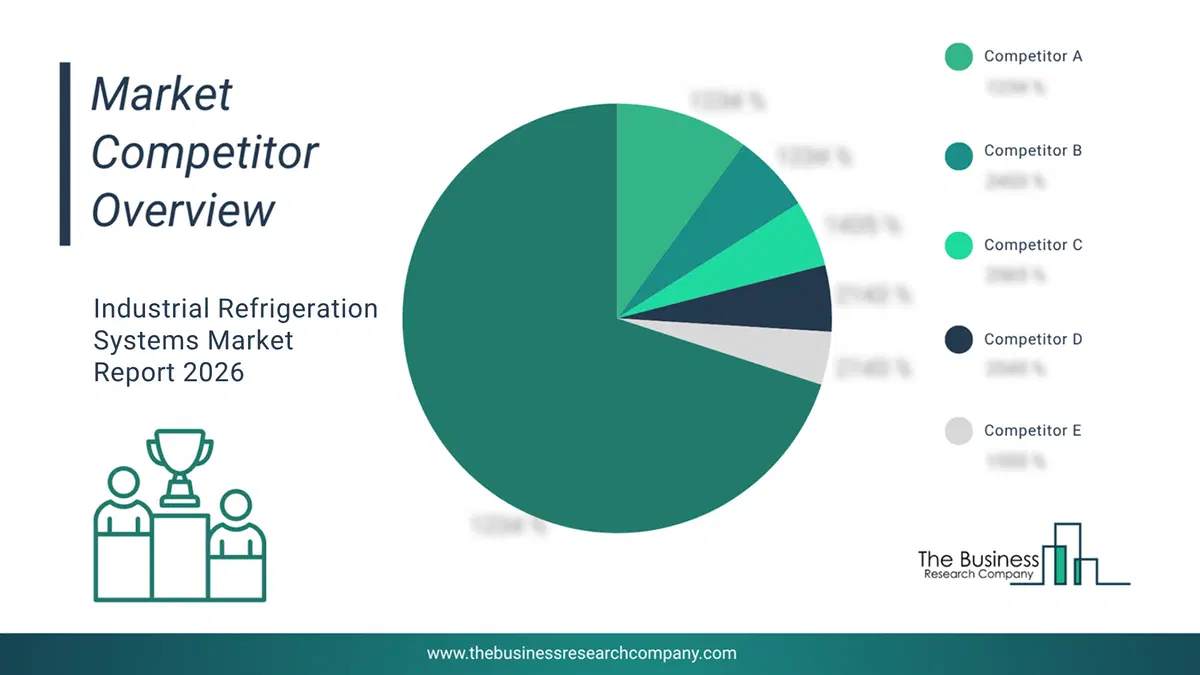
This chart is for illustrative purposes; the full report includes a detailed competitor analysis and comprehensive overview of the top 10 companies in the market.
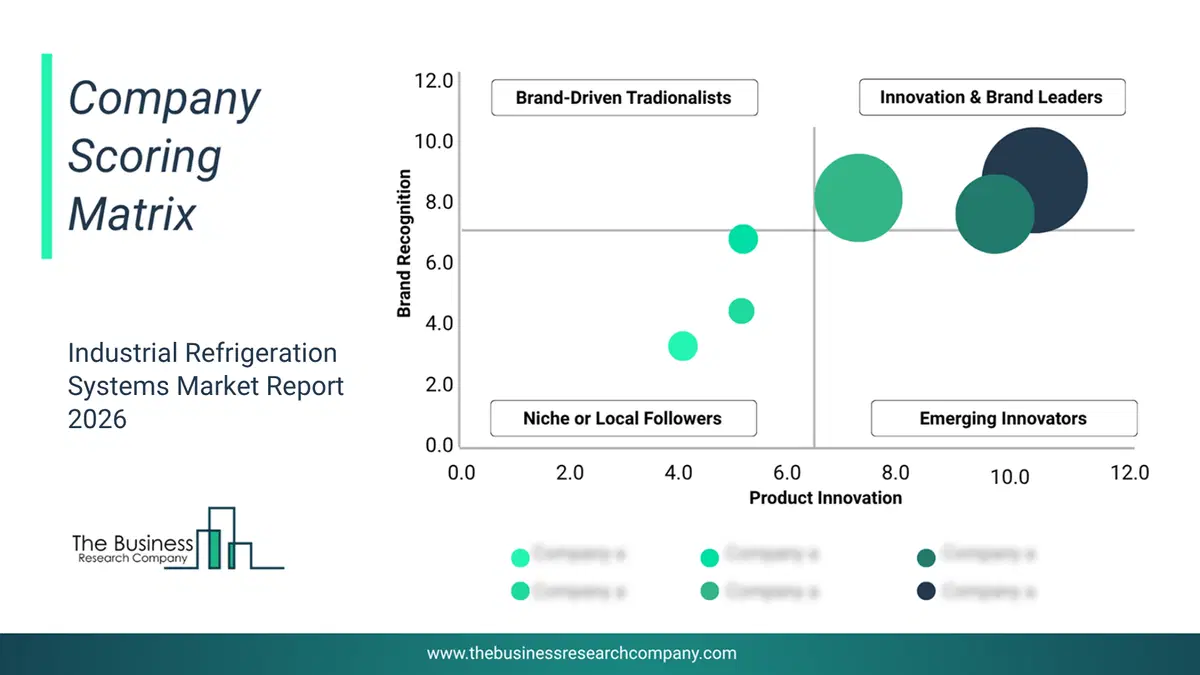
This chart maps companies by product innovation and brand strength, with bubble size indicating relative revenue, helping identify market leaders, challengers, and niche players. This is an illustrative chart; the full report provides a complete and accurate competitive analysis.
Global Industrial Refrigeration Systems Market Trends and Insights
Major companies operating in the industrial refrigeration system market are focused on developing technological innovations, such as refrigeration-as-a-service (RaaS), to gain a competitive edge in the market. Refrigeration-as-a-Service (RaaS) is a subscription-based model where businesses rent refrigeration equipment and services from a provider instead of purchasing and maintaining them themselves. For instance, in September 2023, Carrier Corporation, a US-based provider of intelligent climate and energy solutions, launched a Refrigeration-as-a-Service (RaaS) solution. The RaaS solution is designed to help food retailers of all sizes improve efficiency, reliability, cost performance, and overall business resilience. It is also backed by a novel performance guarantee, which ensures that customers receive the refrigeration performance they need to keep the food products fresh and safe. Customers only pay for refrigeration performance when it is being used, which can help to reduce energy costs and improve overall efficiency.What Are Latest Mergers And Acquisitions In The Industrial Refrigeration Systems Market?
In June 2023, Johnson Controls International, a US-based provider of industrial refrigeration equipment, HVAC units, chillers, and compressors for commercial and industrial clients, acquired M&M Carnot for an undisclosed amount. With this acquisition, Johnson Controls significantly enhanced its portfolio by integrating natural refrigerant (CO₂ and low-charge ammonia) industrial and commercial refrigeration systems, thereby positioning itself for growing demand for sustainable refrigeration across cold storage, food processing, and supermarket segments. M&M Carnot is a US-based provider of industrial and commercial CO₂-based refrigeration systems, low-charge ammonia packages, and related services for cold storage, data centers, ice rinks, food processing, and supermarket applications.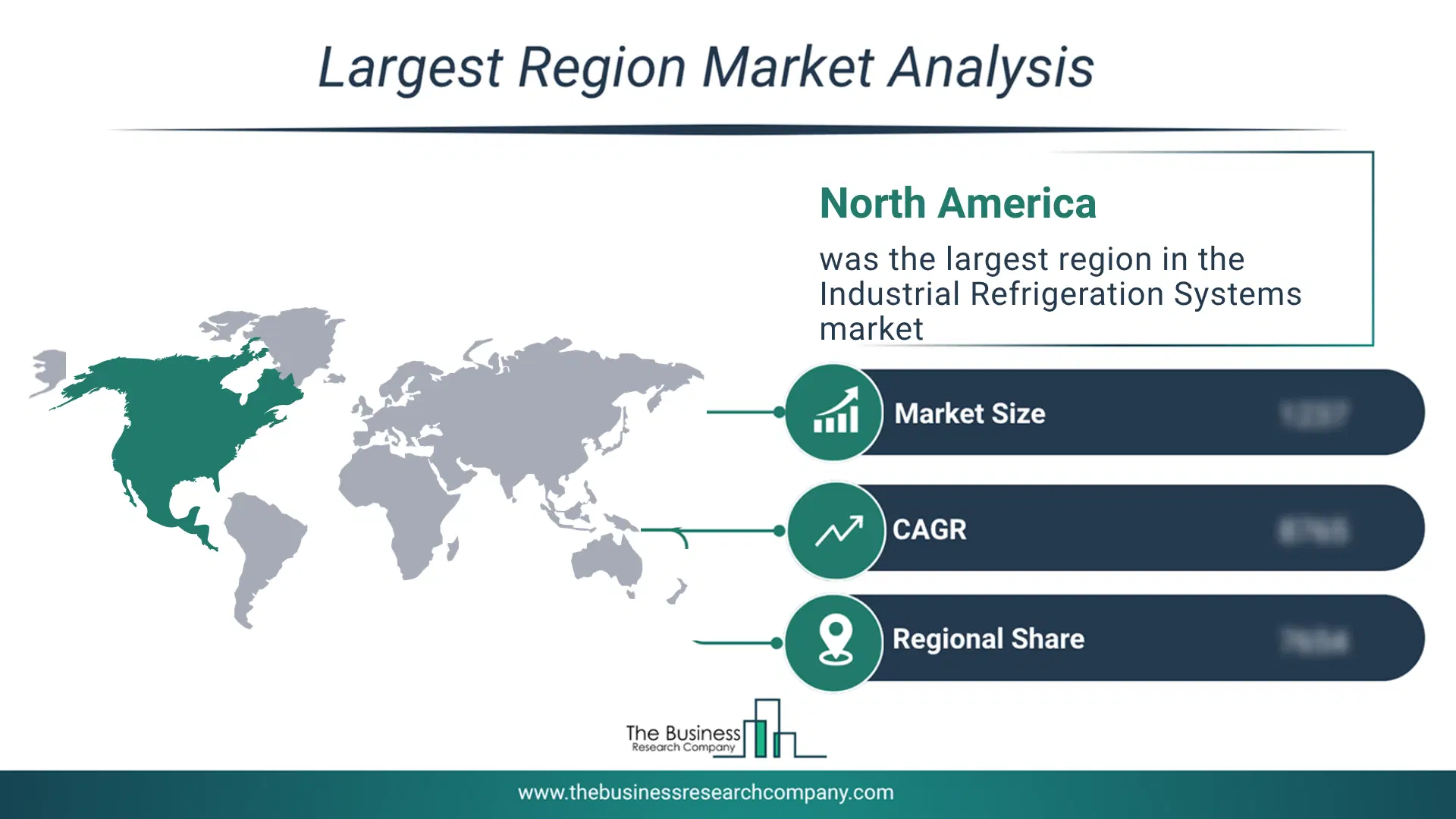
Regional Outlook
North America was the largest region in the Industrial Refrigeration System in 2025. The regions covered in this market report are Asia-Pacific, South East Asia, Western Europe, Eastern Europe, North America, South America, Middle East, Africa The countries covered in this market report are Australia, Brazil, China, France, Germany, India, Indonesia, Japan, Taiwan, Russia, South Korea, UK, USA, Canada, Italy, Spain.What Defines the Industrial Refrigeration Systems Market?
The industrial refrigeration system market consists of revenues earned by entities by providing industrial refrigeration system services such as equipment repair and personnel training. The market value includes the value of related goods sold by the service provider or included within the service offering. The industrial refrigeration system market consists of sales of industrial refrigeration system equipment such as compressors, condensers, evaporators, and heat pumps, which are used in providing industrial refrigeration system services. Values in this market are ‘factory gate’ values, that is the value of goods sold by the manufacturers or creators of the goods, whether to other entities (including downstream manufacturers, wholesalers, distributors and retailers) or directly to end customers. The value of goods in this market includes related services sold by the creators of the goods.How is Market Value Defined and Measured?
The market value is defined as the revenues that enterprises gain from the sale of goods and/or services within the specified market and geography through sales, grants, or donations in terms of the currency (in USD unless otherwise specified). The revenues for a specified geography are consumption values that are revenues generated by organizations in the specified geography within the market, irrespective of where they are produced. It does not include revenues from resales along the supply chain, either further along the supply chain or as part of other products.
This chart presents market attractiveness based on a quantitative evaluation of growth, competition, strategic alignment, and risk, offering a clear view of opportunity areas for decision-making. This chart is for illustrative purposes; the full report contains the complete analysis.

This chart highlights the Total Addressable Market (TAM) by estimating the maximum revenue opportunity using an assumption-driven approach, supporting strategic planning and opportunity sizing across markets. The chart is illustrative; the full report provides a more comprehensive analysis.
What Key Data and Analysis Are Included in the Industrial Refrigeration Systems Market Report 2026?
The industrial refrigeration systems market research report is one of a series of new reports from The Business Research Company that provides market statistics, including industry global market size, regional shares, competitors with the market share, detailed market segments, market trends and opportunities, and any further data you may need to thrive in the industrial refrigeration systems industry. The market research report delivers a complete perspective of everything you need, with an in-depth analysis of the current and future state of the industry.Industrial Refrigeration Systems Market Report Forecast Analysis
| Report Attribute | Details |
|---|---|
| Market Size Value In 2026 | $25.84 billion |
| Revenue Forecast In 2030 | $33.01 billion |
| Growth Rate | CAGR of 6.3% from 2026 to 2030 |
| Base Year For Estimation | 2025 |
| Actual Estimates/Historical Data | 2020-2025 |
| Forecast Period | 2026 - 2030 |
| Market Representation | Revenue in USD Billion and CAGR from 2026 to 2030 |
| Segments Covered | Component, Refrigerant, Application |
| Regional Scope | Asia-Pacific, Western Europe, Eastern Europe, North America, South America, Middle East, Africa |
| Country Scope | The countries covered in the report are Australia, Brazil, China, France, Germany, India, Indonesia, Japan, Taiwan, Russia, South Korea, UK, USA, Canada, Italy, Spain. |
| Key Companies Profiled | Johnson Controls International plc, GEA Group Aktiengesellschaft, Daikin Industries, Ltd., EVAPCO, Inc., Bitzer Kühlmaschinenbau GmbH, LU-VE Group, Güntner GmbH And Co. KG, Star Refrigeration Limited, Emerson Electric Co., Mayekawa Manufacturing Co., Ltd., Dover Corporation, Ingersoll Rand plc, MAN Energy Solutions SE, Mark Refrigeration Equipment Company, MTI Micro-Tech International Inc., Polycold Systems Inc., Enviro Tech International Inc., Refrigeration Engineering Corporation, Rivacold S.r.l., SCM Frigo Group S.r.l., Sterling Cryogenics B.V., Trane Technologies plc, Vilter Manufacturing Corporation, Vogt Ice Machine Company, Weiss Umwelttechnik GmbH |
| Customization Scope | Request for Customization |
| Pricing And Purchase Options | Explore Purchase Options |