

Industrial Wireless Automation Market Report 2026
Global Outlook – By Product (Process Industry, Discrete Industry), By Organization (Large Enterprise, Small And Medium-sized Enterprises (SMEs)), By Application (Oil And Gas, Petrochemical, Water And Wastewater, Energy, Other Applications) – Market Size, Trends, Strategies, and Forecast to 2030
Industrial Wireless Automation Market Overview
• Industrial Wireless Automation market size has reached to $5.58 billion in 2025 • Expected to grow to $7.78 billion in 2030 at a compound annual growth rate (CAGR) of 6.6% • Growth Driver: Automotive Industry Drives Expansion Of Industrial Wireless Automation Market • Market Trend: Advancements In Industrial Wireless Automation With Focus On IoT Controllers • North America was the largest region in 2025 and Asia-Pacific is the fastest growing region.What Is Covered Under Industrial Wireless Automation Market?
Industrial wireless automation refers to the use of wireless technology to automate and control industrial processes, enabling remote monitoring, data collection, and operation without the need for physical connections or wires. It enhances flexibility, scalability, and efficiency in industrial operations while reducing installation costs and enabling real-time decision-making. The main products of industrial wireless automation are process industries and discrete industries. The process industry refers to a sector of the economy that involves the production and processing of raw materials or chemicals into finished products through a series of continuous or batch processes. The organizations include large enterprises and small and medium-sized enterprises (SMEs) and applications such as oil and gas, petrochemicals, water and wastewater, energy, and others.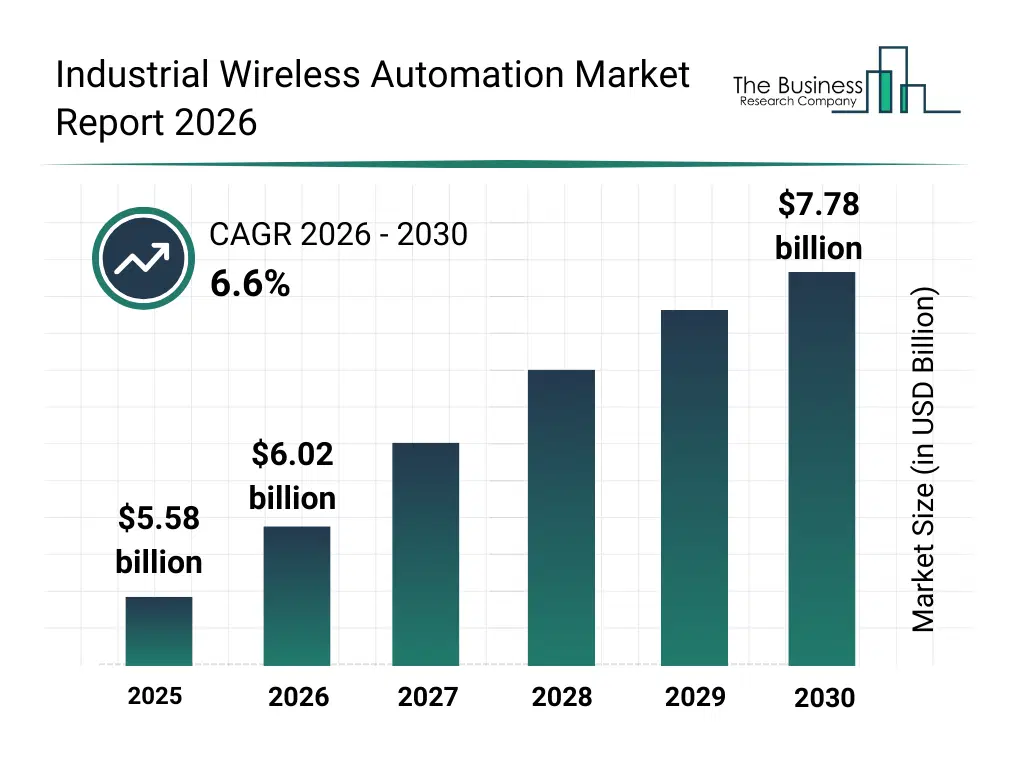
What Is The Industrial Wireless Automation Market Size and Share 2026?
The industrial wireless automation market size has grown strongly in recent years. It will grow from $5.58 billion in 2025 to $6.02 billion in 2026 at a compound annual growth rate (CAGR) of 7.8%. The growth in the historic period can be attributed to need for flexible automation systems, high cost of wired installations, adoption of wireless sensors, demand for remote monitoring, expansion of industrial networking.What Is The Industrial Wireless Automation Market Growth Forecast?
The industrial wireless automation market size is expected to see strong growth in the next few years. It will grow to $7.78 billion in 2030 at a compound annual growth rate (CAGR) of 6.6%. The growth in the forecast period can be attributed to advancements in wireless communication protocols, rising adoption of smart factories, increasing demand for scalable automation, growth of industrial iot deployments, expansion of autonomous industrial operations. Major trends in the forecast period include adoption of wireless process control systems, expansion of remote industrial monitoring, growth of wireless sensor networks, increased use of industrial iot connectivity, integration of wireless automation in hazardous environments.
Global Industrial Wireless Automation Market Segmentation
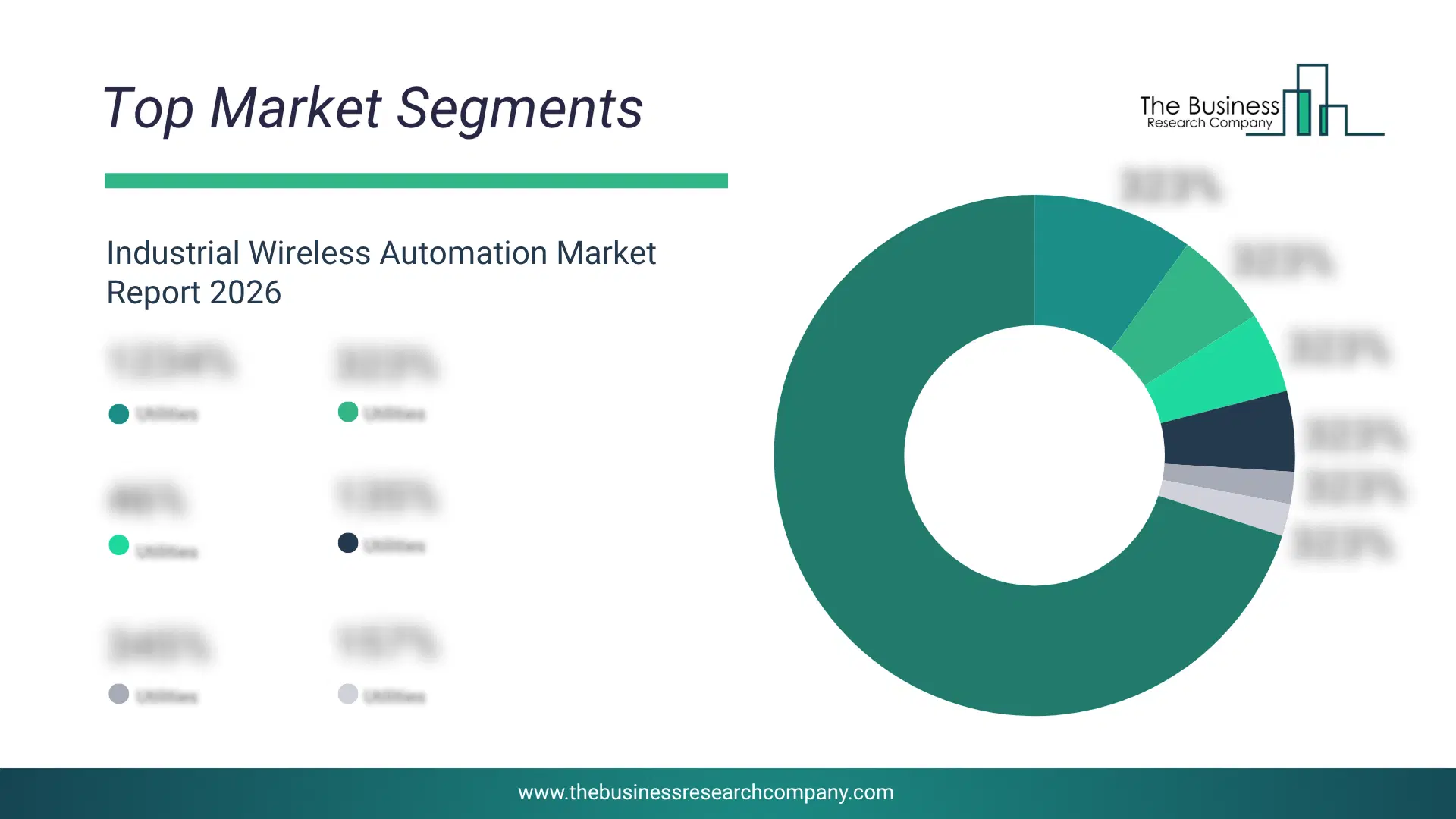
1) By Product: Process Industry, Discrete Industry 2) By Organization: Large Enterprise, Small And Medium-sized Enterprises (SMEs) 3) By Application: Oil And Gas, Petrochemical, Water And Wastewater, Energy, Other Applications Subsegments: 1) By Process Industry: Oil And Gas, Chemicals, Pharmaceuticals, Food And Beverage, Pulp And Paper, Water And Wastewater Treatment, Mining And Metals, Power Generation 2) By Discrete Industry: Automotive, Electronics, Aerospace And Defense, Machinery AndEquipment, Consumer Goods, Semiconductor Manufacturing, Metalworking, PackagingWhat Is The Driver Of The Industrial Wireless Automation Market?
The rising automotive industry is expected to propel the growth of the industrial wireless automation market going forward. The rising automotive industry is due to a combination of economic, technological, regulatory, and societal factors and the adoption of cleaner and more efficient vehicles. Wireless automation systems can facilitate real-time monitoring and control of manufacturing equipment and processes. This enables manufacturers to optimize production throughput, minimize downtime, and identify and address issues promptly. For instance, in December 2023, according to the report published by MarkLines Co, a Japan-based advertising agency company, UK passenger car sales saw a 17.9% increase in 2023 compared to 2022. In December 2023 alone, sales rose by 9.8%, totaling 141,092 units. For the entire year, a total of 1,903,054 cars were registered, marking a 17.9% year-to-date growth. Therefore, the rising automotive industry is driving the growth of the market.Key Players In The Global Industrial Wireless Automation Market
Major companies operating in the industrial wireless automation market are Siemens AG; Cisco Systems Inc.; Mitsubishi Electric Corporation; Schneider Electric SE; Honeywell International Inc.; ABB Ltd.; Eaton Corporation plc; Emerson Electric Co.; Rockwell Automation Inc.; Omron Corporation; Phoenix Contact GmbH & Co KG; Endress+Hauser AG; Yokogawa Corporation of America; Belden Inc; Rittal GmbH & Co KG; Advantech Co Ltd; Sick AG; Weidmüller Interface GmbH & Co KG; HARTING Technology Group; Pepperl+Fuchs AG; B&R Industrial Automation GmbH; Digi International Inc; Moxa; Turck Holding GmbH; Banner Engineering Corp.; OleumTech Corporation; ProSoft Technology Inc.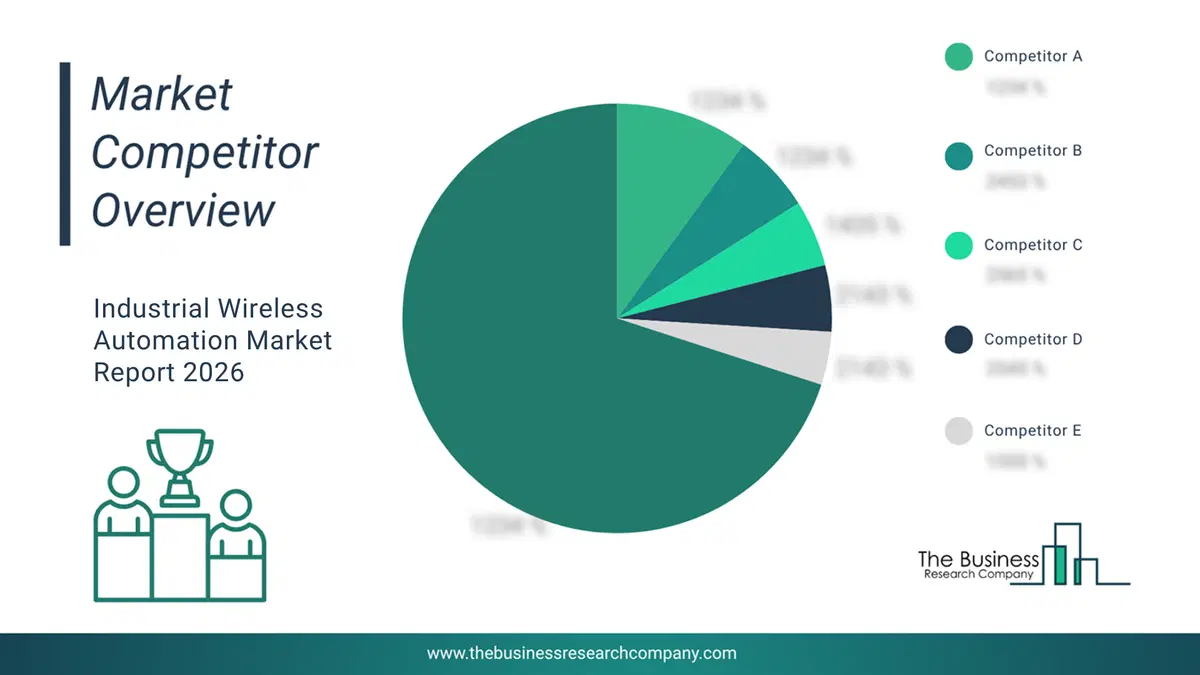
This chart is for illustrative purposes; the full report includes a detailed competitor analysis and comprehensive overview of the top 10 companies in the market.
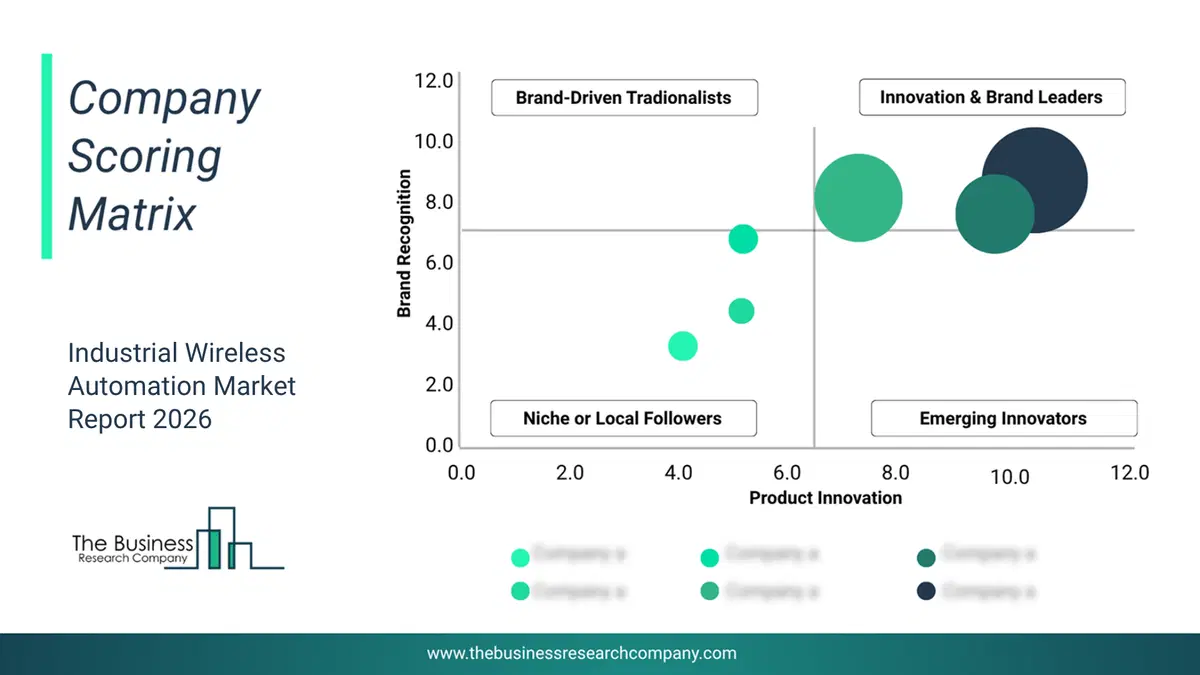
This chart maps companies by product innovation and brand strength, with bubble size indicating relative revenue, helping identify market leaders, challengers, and niche players. This is an illustrative chart; the full report provides a complete and accurate competitive analysis.
Global Industrial Wireless Automation Market Trends and Insights
Major companies operating in the industrial wireless automation market are focusing on developing IoT-enabled devices such as IoT controller N20K48, to gain a competitive edge and enhance customer offerings. An IoT (Internet of Things) controller is a device or gateway that is a centralized control point for managing and coordinating IoT devices and systems within a networked environment. The IoT controller acts as a central hub, facilitating communication, data processing, and control within industrial wireless automation systems, optimizing operational efficiency and enabling real-time decision-making in industrial environments. For instance, in May 2023, Novus International, Inc., a US-based industrial automation and control solutions company, launched an IoT controller, N20K48. This controller features a Wi-Fi micromodule that simplifies the integration of legacy devices, making communication between devices affordable and straightforward. The micro module, which uses four slots of the N20K48 controller dock, includes an RP-SMA connector compatible with the panel and magnetic antennas for communication within panels.What Are Latest Mergers And Acquisitions In The Industrial Wireless Automation Market?
In December 2023, Foodmate B.V., a China-based poultry processing equipment provider, acquired Barth Industrial Automation for an undisclosed amount. Through this acquisition, Foodmate aims to expand its automation hardware and software solutions. The acquisition strengthened Foodmate's design and development capabilities, particularly in weighing, grading, cutting, and deboning technologies, allowing for a broader set of integrated solutions. Barth Industrial Automation is a Netherland-based company that offers industrial wireless automation solutions.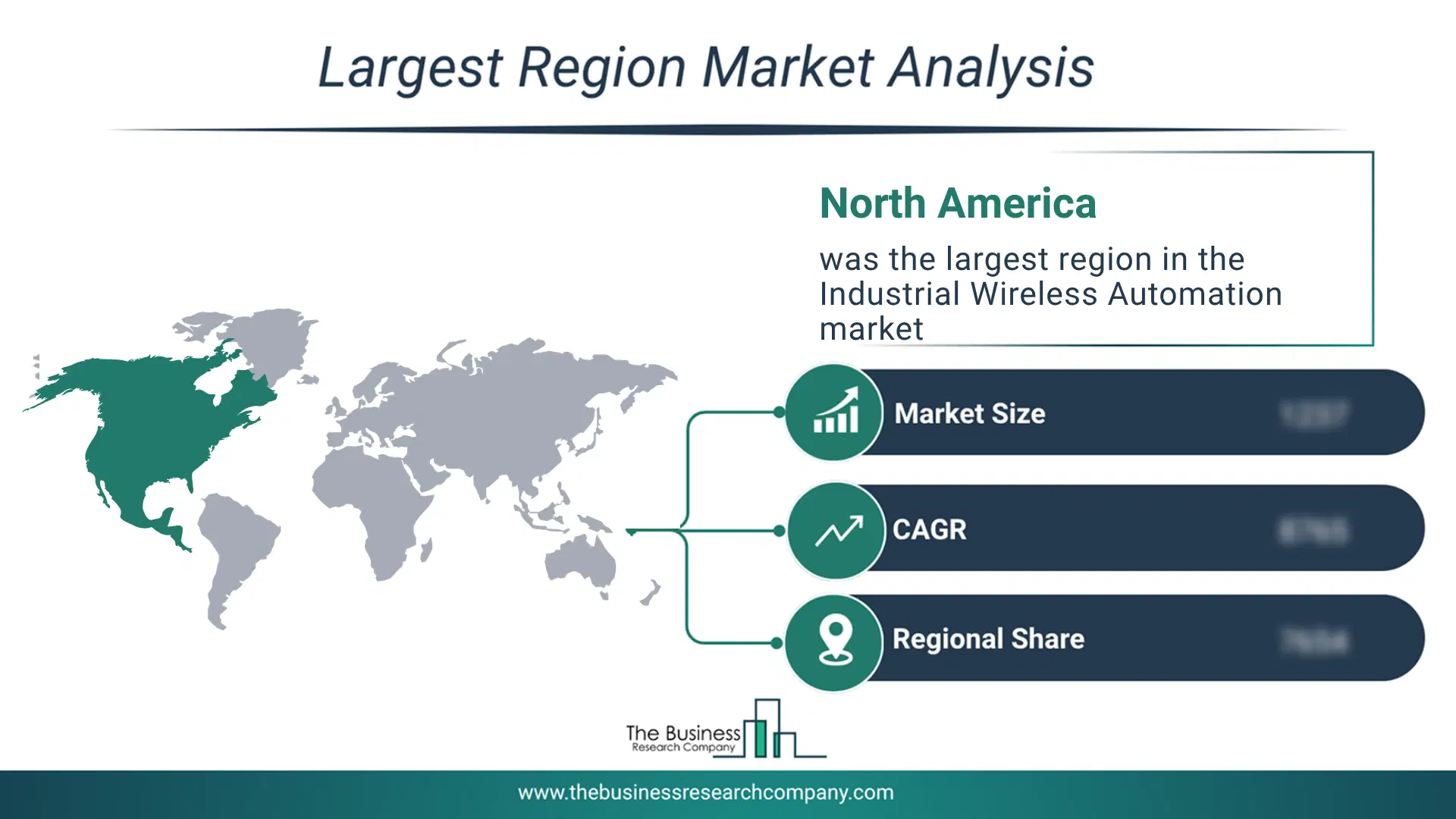
Regional Insights
North America was the largest region in the industrial wireless automation market in 2025. Asia-Pacific is expected to be the fastest-growing region in the forecast period. The regions covered in this market report are Asia-Pacific, South East Asia, Western Europe, Eastern Europe, North America, South America, Middle East, Africa. The countries covered in this market report are Australia, Brazil, China, France, Germany, India, Indonesia, Japan, Taiwan, Russia, South Korea, UK, USA, Canada, Italy, SpainWhat Defines the Industrial Wireless Automation Market?
The industrial wireless automation market consists of revenues earned by entities by providing services such as consulting and system design, installation and deployment, sensor deployment and calibration, security and compliance, system integration, and interoperability. The market value includes the value of related goods sold by the service provider or included within the service offering. The industrial wireless automation market also includes sales of wireless sensors, wireless transmitters and actuators, wireless control systems, and industrial wireless networks. Values in this market are ‘factory gate’ values, that is the value of goods sold by the manufacturers or creators of the goods, whether to other entities (including downstream manufacturers, wholesalers, distributors, and retailers) or directly to end customers. The value of goods in this market includes related services sold by the creators of the goods.How is Market Value Defined and Measured?
The market value is defined as the revenues that enterprises gain from the sale of goods and/or services within the specified market and geography through sales, grants, or donations in terms of the currency (in USD unless otherwise specified). The revenues for a specified geography are consumption values that are revenues generated by organizations in the specified geography within the market, irrespective of where they are produced. It does not include revenues from resales along the supply chain, either further along the supply chain or as part of other products.
This chart presents market attractiveness based on a quantitative evaluation of growth, competition, strategic alignment, and risk, offering a clear view of opportunity areas for decision-making. This chart is for illustrative purposes; the full report contains the complete analysis.

This chart highlights the Total Addressable Market (TAM) by estimating the maximum revenue opportunity using an assumption-driven approach, supporting strategic planning and opportunity sizing across markets. The chart is illustrative; the full report provides a more comprehensive analysis.
What Key Data and Analysis Are Included in the Industrial Wireless Automation Market Report 2026?
The industrial wireless automation market research report is one of a series of new reports from The Business Research Company that provides market statistics, including industry global market size, regional shares, competitors with the market share, detailed market segments, market trends and opportunities, and any further data you may need to thrive in the industrial wireless automation industry. The market research report delivers a complete perspective of everything you need, with an in-depth analysis of the current and future state of the industry.Industrial Wireless Automation Market Report Forecast Analysis
| Report Attribute | Details |
|---|---|
| Market Size Value In 2026 | $6.02 billion |
| Revenue Forecast In 2030 | $7.78 billion |
| Growth Rate | CAGR of 6.6% from 2026 to 2030 |
| Base Year For Estimation | 2025 |
| Actual Estimates/Historical Data | 2020-2025 |
| Forecast Period | 2026 - 2030 |
| Market Representation | Revenue in USD Billion and CAGR from 2026 to 2030 |
| Segments Covered | Product, Organization, Application |
| Regional Scope | Asia-Pacific, Western Europe, Eastern Europe, North America, South America, Middle East, Africa |
| Country Scope | The Countries Covered In This Market Report Are Australia, Brazil, China, France, Germany, India, Indonesia, Japan, Taiwan, Russia, South Korea, Uk, Usa, Canada, Italy, Spain. |
| Key Companies Profiled | Siemens AG, Cisco Systems Inc., Mitsubishi Electric Corporation, Schneider Electric SE, Honeywell International Inc., ABB Ltd., Eaton Corporation plc, Emerson Electric Co., Rockwell Automation Inc., Omron Corporation, Phoenix Contact GmbH & Co KG, Endress+Hauser AG, Yokogawa Corporation of America, Belden Inc, Rittal GmbH & Co KG, Advantech Co Ltd, Sick AG, Weidmüller Interface GmbH & Co KG, HARTING Technology Group, Pepperl+Fuchs AG, B&R Industrial Automation GmbH, Digi International Inc, Moxa, Turck Holding GmbH, Banner Engineering Corp., OleumTech Corporation, ProSoft Technology Inc. |
| Customization Scope | Request for Customization |
| Pricing And Purchase Options | Explore Purchase Options |