

Inertial Navigation Systems Global Market Opportunities And Strategies To 2035
By Component (Accelerometers, Gyroscopes, Other Components), By Technology (Mechanical, Ring Laser, Fiber Optics, Micro-Electro-Mechanical Systems, Other Technologies), By Grade (Aircraft Grade, Marine Grade, Space Grade, Tactical Grade, Other Grades), By Application (Air Based, Sea Based, Land Based), By End User (Automotive, Commercial Aviation, Shipping, Military And Defense, Other End User Industries), And By Region, Opportunities And Strategies – Global Forecast To 2035
Inertial Navigation Systems Market Definition
An inertial navigation system (INS) is a self-contained navigation technology that determines an object’s position, velocity and orientation by using onboard sensors such as accelerometers and gyroscopes to measure motion and rotation and then continuously calculating its movement over time without relying on external signals like GPS. Its primary purpose is to provide continuous and reliable navigation in environments where external positioning systems are unavailable, unreliable, or intentionally disrupted, such as in aerospace, defense, marine and autonomous systems. The inertial navigation systems market consists of revenues generated by entities (organizations, sole traders and partnerships) by providing navigation systems and related components that enable autonomous motion tracking using inertial sensing technologies. The market includes complete INS units, inertial measurement units (IMUs) and individual components such as accelerometers and gyroscopes used in navigation, stabilization and control applications.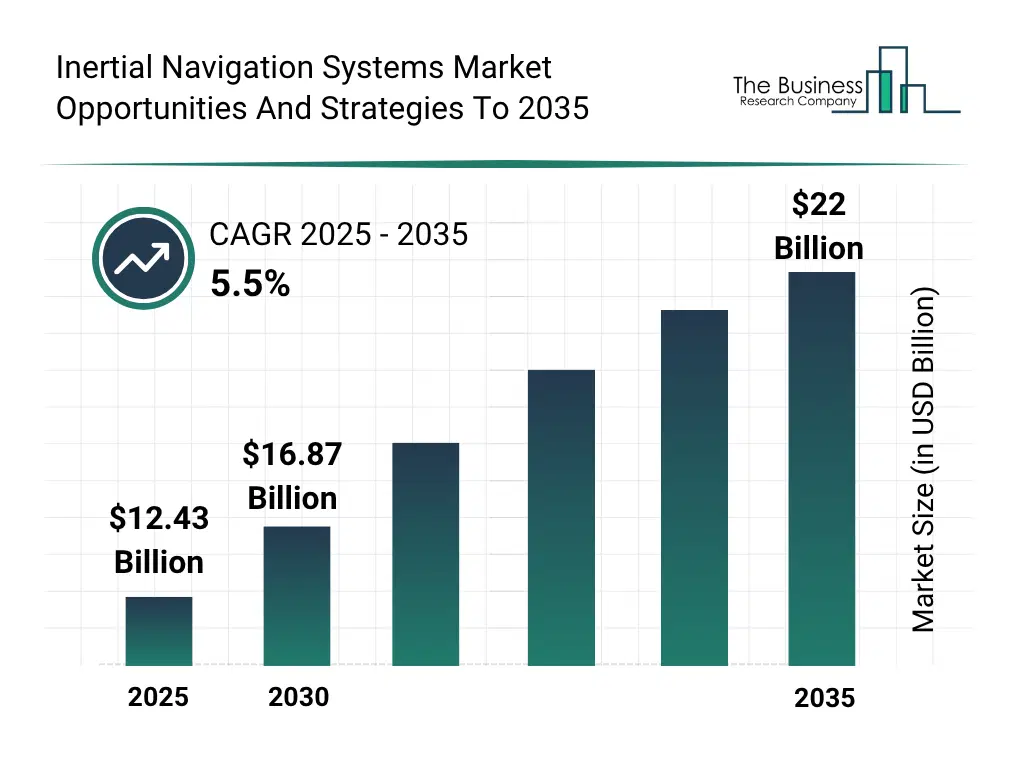
Inertial Navigation Systems Market Size
The global inertial navigation systems market reached a value of nearly $12,430.0 million in 2025, having grown at a compound annual growth rate (CAGR) of 6.7% since 2020. The market is expected to grow from $ 12,430.0 million in 2025 to $16,868.8 million in 2030 at a rate of 6.3%. The market is then expected to grow at a CAGR of 5.5% from 2030 and reach $22,000.3 million in 2035. Growth in the historic period resulted from rising global defense spending, increasing frequency of space exploration missions and satellite launches, growth in industrial automation and robotics and expansion of maritime navigation and naval modernization programs. Factors that negatively affected growth in the historic period were shortage of trained personnel and high maintenance and lifecycle costs. Going forward, rising need for real-time navigation and control, increasing demand for precision-guided weapons, growth in underground mining and tunneling activities and expansion of autonomous and unmanned systems (UAVs, UGVs and USVs) will drive the growth. Factors that could hinder the growth of the inertial navigation systems market in the future include sensitivity to environmental conditions, system complexity and integration challenges and impact of trade war and tariffs.
Inertial Navigation Systems Market Segmentation
The inertial navigation systems market is segmented by component, by technology, by grade, by application and by end user.By Component –
The inertial navigation systems market is segmented by component into:
- a) Accelerometers
- b) Gyroscopes
- c) Other Components
By Technology –
The inertial navigation systems market is segmented by technology into:
- a) Mechanical
- b) Ring Laser
- c) Fiber Optics
- d) Micro-Electro-Mechanical Systems
- e) Other Technologies
By Grade –
The inertial navigation systems market is segmented by grade into:
- a) Aircraft Grade
- b) Marine Grade
- c) Space Grade
- d) Tactical Grade
- e) Other Grades
By Application –
The inertial navigation systems market is segmented by application into:
- a) Air Based
- b) Sea Based
- c) Land Based
By End User –
The inertial navigation systems market is segmented by end user into:
- a) Automotive
- b) Commercial Aviation
- c) Shipping
- d) Military And Defense
- e) Other End User Industries
By Geography - The inertial navigation systems market is segmented by geography into:
- China
- India
- Japan
- Australia
- Taiwan
- South Korea
- Indonesia
- USA
- Canada
- Brazil
- France
- Germany
- UK
- Italy
- Spain
- Russia
-
o Asia Pacific
o Africa