

Influenza Vaccines Market Report 2026
Global Outlook – By Vaccine Type (Inactivated, Live Attenuated), By Valency (Quadrivalent, Trivalent), By Route Of Administration (Injection, Nasal Spray), By Age Group (Pediatric, Adult), By Distribution Channel (Hospitals And Pharmacies, Government And Institutional Supply, Other Distribution Channels) – Market Size, Trends, Strategies, and Forecast to 2030
Influenza Vaccines Market Overview
• Influenza Vaccines market size has reached to $9.04 billion in 2025 • Expected to grow to $13.13 billion in 2030 at a compound annual growth rate (CAGR) of 7.8% • Growth Driver: The Rising Incidences Of Seasonal Influenza Drive Growth In The Influenza Vaccine Market • Market Trend: Clover Biopharmaceuticals Introduces Adimflu-S (QIS) • North America was the largest region in 2025 and Asia-Pacific is the fastest growing region.Market Gains By 2030 – Top Opportunities By Segment
Market Gain identifies the most promising market opportunities by highlighting the segments or products expected to generate the highest incremental revenue growth over the next five years.
What Is Covered Under Influenza Vaccines Market?
Influenza vaccines refer to flu vaccines designed to provide immunity against influenza viruses. These are quadrivalent vaccines, designed to protect against four different flu viruses, including two influenza A viruses and two influenza B viruses. The main types of influenza vaccines are inactivated and live attenuated vaccines. An inactivated refers to a type of vaccine that contains killed or inactivated microorganisms or viruses to stimulate an immune response without causing disease and is used to prevent infection and reduce the severity of illness caused by influenza viruses. They are available as quadrivalent and trivalent and are administered as injections and nasal sprays for people aged pediatric and adult. These are distributed through hospitals and pharmacies, government and institutional supply, and other distribution channels.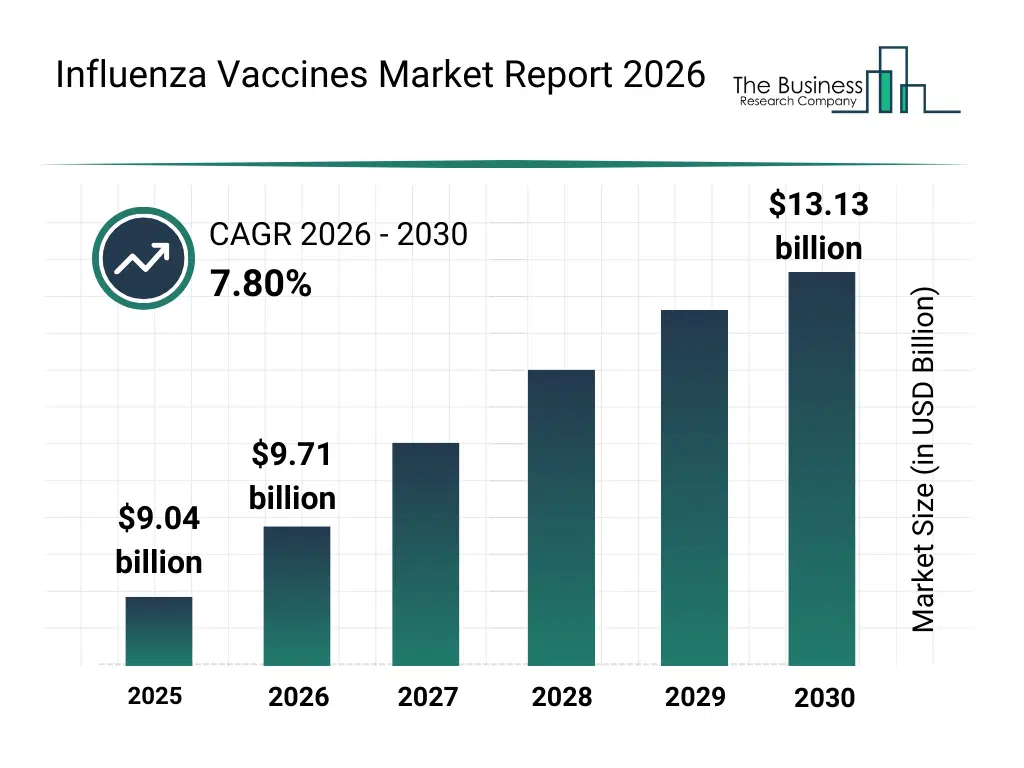
What Is The Influenza Vaccines Market Size and Share 2026?
The influenza vaccines market size has grown strongly in recent years. It will grow from $9.04 billion in 2025 to $9.71 billion in 2026 at a compound annual growth rate (CAGR) of 7.4%. The growth in the historic period can be attributed to rising prevalence of seasonal influenza, limited public awareness in early 2000s, predominance of trivalent vaccines, low global manufacturing capacity, reliance on traditional egg-based production methods.What Is The Influenza Vaccines Market Growth Forecast?
The influenza vaccines market size is expected to see strong growth in the next few years. It will grow to $13.13 billion in 2030 at a compound annual growth rate (CAGR) of 7.8%. The growth in the forecast period can be attributed to increasing adoption of quadrivalent vaccines, expansion of precision medicine approaches, growing government vaccination initiatives, development of cell-based and recombinant vaccines, enhanced cold chain and distribution infrastructure. Major trends in the forecast period include seasonal vaccine formulation optimization, expansion of pediatric immunization programs, increase in government-funded flu vaccination campaigns, adoption of novel adjuvants for enhanced immunogenicity, growth in home-based and outpatient vaccine delivery.
Global Influenza Vaccines Market Segmentation
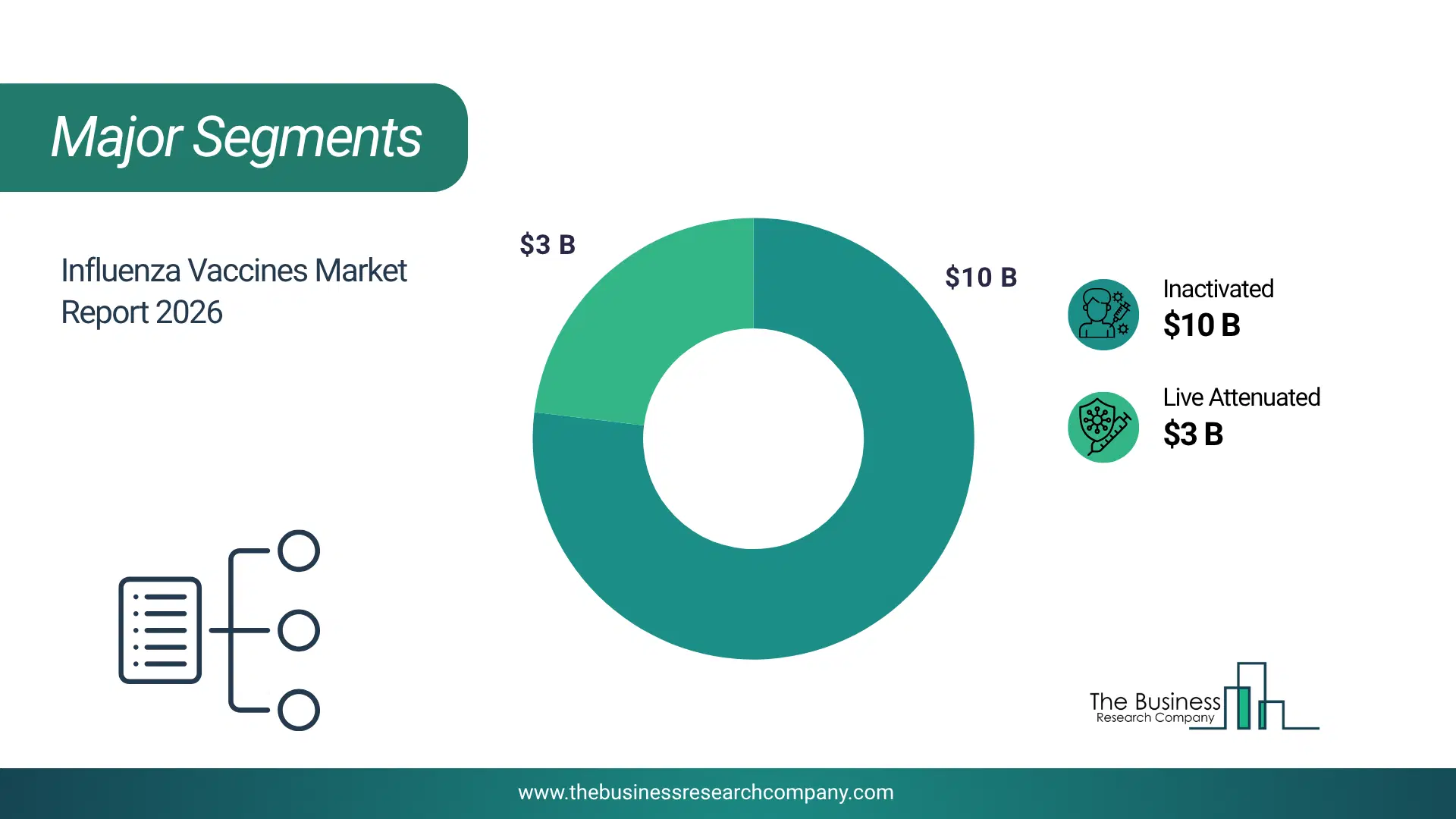
1) By Vaccine Type: Inactivated, Live Attenuated 2) By Valency: Quadrivalent, Trivalent 3) By Route Of Administration: Injection, Nasal Spray 4) By Age Group: Pediatric, Adult 5) By Distribution Channel: Hospitals And Pharmacies, Government And Institutional Supply, Other Distribution Channels Subsegments: 1) By Inactivated: Trivalent Inactivated Vaccines (TIV), Quadrivalent Inactivated Vaccines (QIV) 2) By Live Attenuated: Live Attenuated Influenza Vaccines (LAIV), Quadrivalent Live Attenuated Influenza Vaccines (QLAIV) The top segments in the influenza vaccines market will be: • Inactivated will reach $10.33 Billion by 2030. • Live Attenuated will reach $2.71 Billion by 2030.What Is The Driver Of The Influenza Vaccines Market?
The rising incidences of seasonal influenza are expected to propel the growth of the influenza vaccine market going forward. Seasonal influenza refers to a respiratory illness caused by influenza viruses that typically circulate and cause infections during specific times of the year, usually in the colder months. This shift has resulted from antigenic drift, population susceptibility, environmental factors, incomplete vaccine coverage, and lack of universal vaccination. Influenza vaccines help in reducing the incidences of seasonal influenza by providing immunization against the circulating strains of the virus. For example, in November 2023, the Centers for Disease Control and Prevention (CDC), a US-based government agency, reported that during the 2022-2023 flu season, there were approximately 31 million flu-related illnesses, 14 million flu-related medical visits, 360,000 flu-related hospitalizations, and 21,000 flu-related deaths. Therefore, the rising incidences of seasons of influenza are driving the growth of the influenza vaccines industry.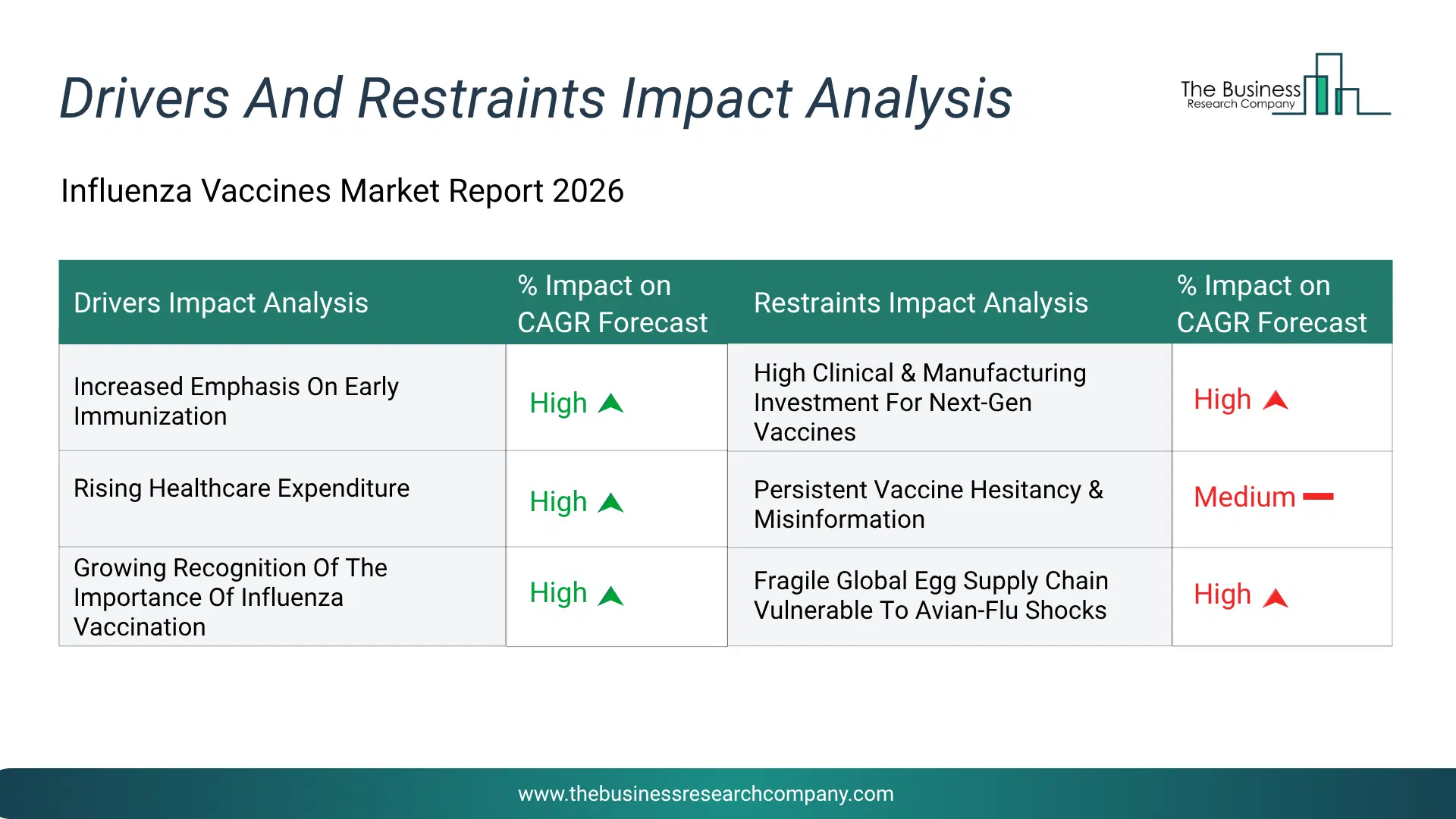
Infographic Chart Showing Key Market Drivers Analysis And Restraints For Influenza Vaccines Market
The chart presents an impact analysis of key drivers and restraints, quantifying their relative influence on the market's growth rate and helping assess the balance between growth enablers and limiting factors. This chart offers a high-level perspective; the full report contains more detailed insights.
How Will The Drivers Impact Growth In The Global Influenza Vaccines Market?
• Increased Emphasis On Early Immunization (High) – During the forecast period, the increased emphasis on early immunization is expected to become a key growth driver for the influenza vaccines market by 2030. Increased Emphasis on Early Immunization is a major driver of the Influenza Vaccines market as governments and healthcare organizations continue promoting preventive healthcare strategies. Public health agencies are encouraging annual flu vaccination before the start of influenza seasons to reduce infection rates and hospitalizations. Schools, workplaces, and community healthcare centers are also expanding awareness campaigns focused on timely vaccination for children, adults, and elderly populations. Early immunization programs help reduce the spread of influenza viruses, particularly among high-risk groups with weakened immunity. In addition, healthcare providers are increasingly recommending quadrivalent vaccines to ensure broader protection against multiple virus strains. The growing focus on preventive care is encouraging higher vaccine adoption across developed and emerging economies. • Rising Healthcare Expenditure (High) – During the forecast period, the rising healthcare expenditure is expected to emerge as a major factor driving the expansion of the influenza vaccines market by 2030. Rising Healthcare Expenditure is significantly contributing to the growth of the Influenza Vaccines market by enabling greater investment in immunization infrastructure and vaccine accessibility. Governments and private healthcare institutions are allocating larger budgets toward vaccination campaigns, disease prevention initiatives, and public healthcare preparedness. Increased healthcare spending also supports the procurement of advanced influenza vaccines such as recombinant, high-dose, and cell-based vaccines that offer improved effectiveness for vulnerable populations. In many countries, reimbursement programs and insurance coverage for flu vaccines are expanding, making vaccination more affordable for patients. Healthcare providers are also investing in cold-chain logistics, digital monitoring systems, and pharmacy-based vaccination services to improve vaccine distribution. Furthermore, rising expenditure on healthcare research is accelerating innovation in vaccine production technologies and strain development. • Growing Recognition Of The Importance Of Influenza Vaccination (High) – During the forecast period, the growing recognition of the importance of influenza vaccination is expected to act as a key growth catalyst for the influenza vaccines market by 2030. Growing Recognition of the Importance of Influenza Vaccination is driving the Influenza Vaccines market as awareness regarding flu-related health complications continues to increase globally. Consumers are becoming more conscious of the benefits of annual vaccination in preventing severe influenza infections, reducing hospitalization risks, and protecting vulnerable family members. Educational campaigns by healthcare authorities and international health organizations are improving public understanding of the importance of routine immunization. The experience of recent global viral outbreaks has further strengthened awareness regarding infectious disease prevention and vaccination preparedness. Employers, educational institutions, and healthcare facilities are increasingly encouraging seasonal flu vaccination to minimize absenteeism and maintain productivity. In addition, growing media coverage and physician recommendations are positively influencing vaccination acceptance among adults and elderly populations.How Will The Restraints Impact Growth In The Global Influenza Vaccines Market?
• High Clinical & Manufacturing Investment For Next-Gen Vaccines (High) – During the forecast period, the high Clinical & Manufacturing Investment for Next-Gen Vaccines is acting as a significant driver for the Influenza Vaccines market by accelerating the development of advanced and more effective vaccine technologies. Pharmaceutical companies and biotechnology firms are increasing investments in recombinant, cell-based, and mRNA influenza vaccines to improve efficacy, production speed, and strain coverage. These investments are supporting large-scale clinical trials aimed at developing vaccines with broader and longer-lasting immunity against evolving influenza viruses. In addition, manufacturers are expanding production facilities and adopting advanced manufacturing technologies to ensure faster vaccine availability during seasonal outbreaks. Increased funding from governments and global health organizations is also encouraging innovation in pandemic preparedness and universal influenza vaccine research. The growing focus on next-generation vaccine platforms is improving product quality and strengthening consumer confidence in vaccination programs. As a result, continuous investment in vaccine innovation and manufacturing capacity is driving long-term expansion of the Influenza Vaccines market. • Persistent Vaccine Hesitancy & Misinformation (High) – During the forecast period, the persistent Vaccine Hesitancy & Misinformation is acting as a restraint for the Influenza Vaccines market by reducing public confidence and limiting vaccination rates across several regions. Misleading information regarding vaccine safety, side effects, and effectiveness spreads rapidly through digital platforms and social media channels, creating uncertainty among consumers. This hesitation is particularly common among populations with limited healthcare awareness or low trust in medical institutions. As a result, many individuals delay or avoid annual influenza vaccination despite recommendations from healthcare authorities. Lower vaccination participation weakens herd immunity and affects the overall success of seasonal immunization programs. Healthcare providers and governments are therefore required to spend additional resources on awareness campaigns and educational initiatives to counter misinformation. The continued presence of vaccine skepticism creates challenges for manufacturers and healthcare systems, slowing the full growth potential of the Influenza Vaccines market. • Fragile Global Egg Supply Chain Vulnerable To Avian-Flu Shocks (High) – During the forecast period, the fragile Global Egg Supply Chain Vulnerable to Avian-Flu Shocks is restraining the Influenza Vaccines market because traditional egg-based vaccine production heavily depends on a stable poultry supply. Outbreaks of avian influenza in poultry farms can disrupt egg availability, increase raw material costs, and delay vaccine manufacturing timelines. Since a large portion of seasonal influenza vaccines are still produced using fertilized chicken eggs, supply chain instability directly affects production capacity and timely distribution. These disruptions can create shortages during peak influenza seasons when vaccine demand is highest. In addition, fluctuations in egg supply may increase manufacturing expenses and create pricing pressures for healthcare providers and governments. Manufacturers are therefore facing increased operational risks associated with biological raw material dependency. This vulnerability in the supply chain highlights the need for alternative production technologies, but in the short term it continues to challenge the steady growth of the Influenza Vaccines market.Key Players In The Global Influenza Vaccines Market
Major companies operating in the influenza vaccines market are Pfizer Inc., Merck & Co Inc., Sanofi-Aventis LLC, GlaxoSmithKline plc, Serum Institute of India Private Limited, Seqirus Inc., CSL Limited, Daiichi Sankyo Company Limited, Moderna Inc., Novavax AB, Bharat Biotech International Limited, Valneva SE, Shionogi & Co Ltd., Sinovac Biotech Co Ltd., Walvax Biotechnology Co Ltd., Hualan Biological Engineering Inc., China National Pharmaceutical Group Corporation, Green Cross Corporation, Mitsubishi Tanabe Pharma Corporation, Osivax, Vaxess Technologies Inc., Gamma Vaccines Pty Ltd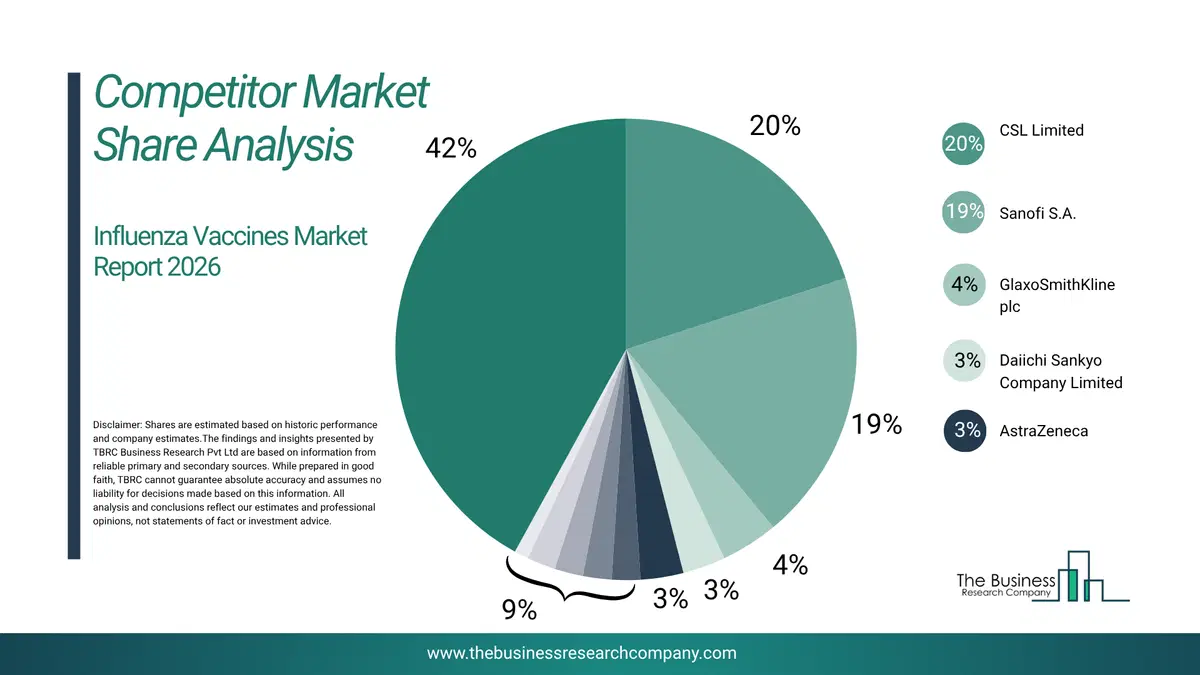
This chart is for illustrative purposes; the full report includes a detailed competitor analysis and comprehensive overview of the top 10 companies in the market.
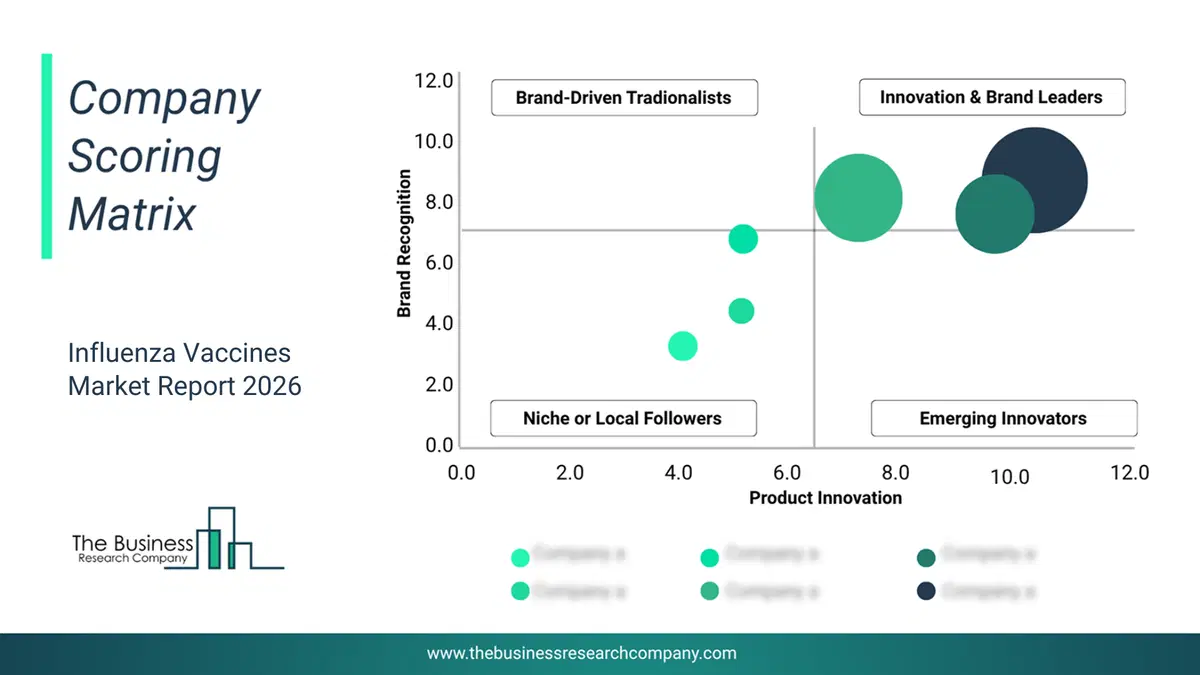
This chart maps companies by product innovation and brand strength, with bubble size indicating relative revenue, helping identify market leaders, challengers, and niche players. This is an illustrative chart; the full report provides a complete and accurate competitive analysis.
Global Influenza Vaccines Market Trends and Insights
Major companies operating in the influenza vaccine market are adopting advanced product innovations, such as quadrivalent seasonal influenza vaccines, to strengthen the company's respiratory vaccine franchise and financial profile. A quadrivalent seasonal influenza vaccine is designed to protect against four different flu viruses, including two influenza A viruses and two influenza B viruses. For instance, in September 2023, Clover Biopharmaceuticals Ltd., a China-based biotechnology company, launched AdimFlu-S (QIS), a quadrivalent seasonal influenza vaccine. This vaccine is the only imported quadrivalent seasonal influenza vaccine approved for use in individuals aged three years and older in China. The quadrivalent make-up of the vaccine improves its ability to achieve high vaccine effectiveness, regardless of which influenza B strain becomes seasonally prevalent, when compared to trivalent options.What Are Latest Mergers And Acquisitions In The Influenza Vaccines Market?
In February 2023, Clover Biopharmaceuticals, a China-based biotechnology company specializing in vaccine research, development, manufacturing, and commercialization, partnered with Adimmune Corporation to exclusively commercialize AdimFlu-S (QIS), a quadrivalent seasonal influenza vaccine, in mainland China. With this partnership, Clover aims to expand its respiratory vaccine franchise by leveraging its established commercial infrastructure to distribute a high-quality quadrivalent influenza vaccine and address growing demand in the Chinese market. Adimmune Corporation is a Taiwan-based vaccine manufacturer that develops and produces critical vaccines.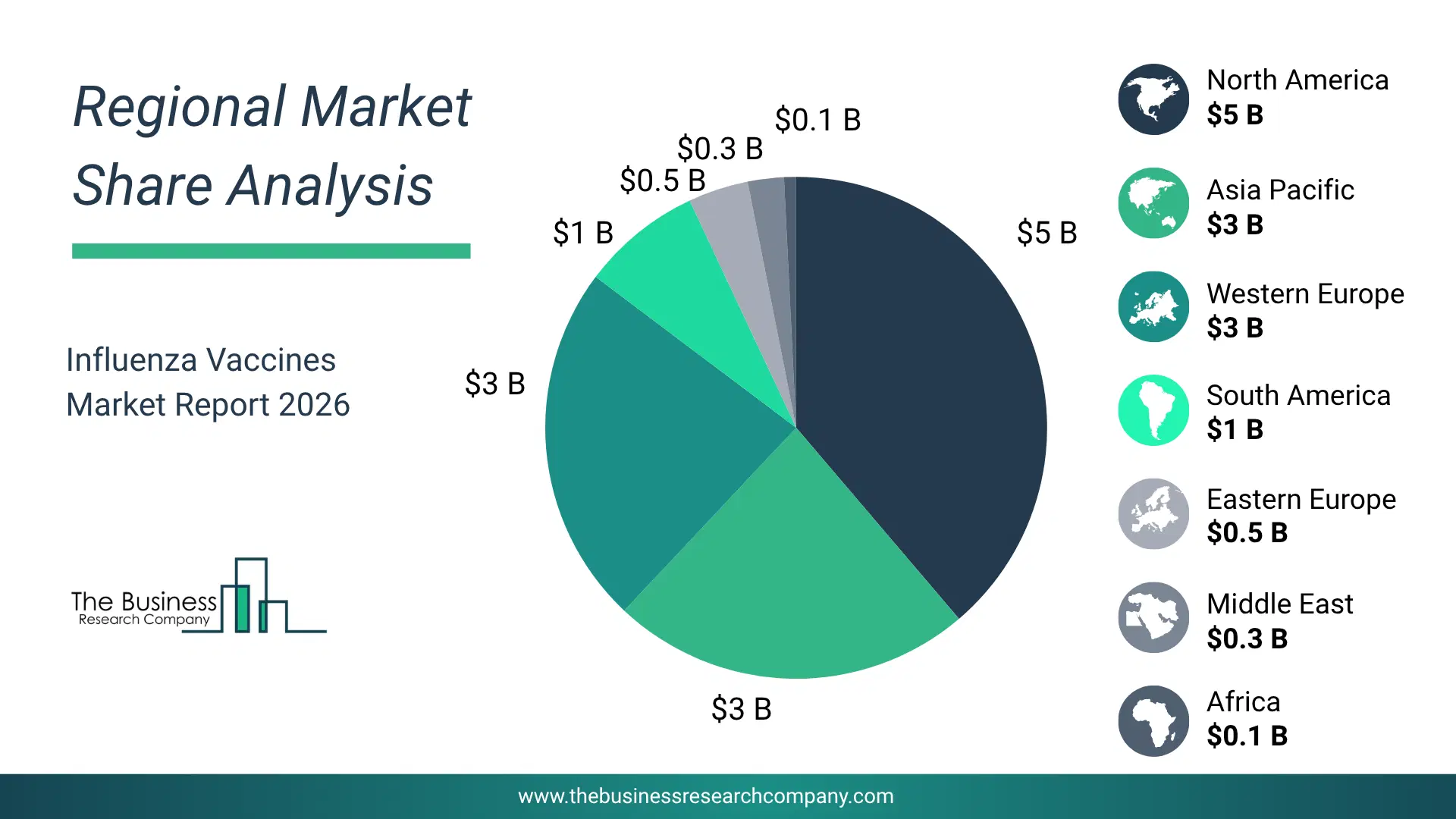
Regional Insights
North America was the largest region in the influenza vaccines market in 2025. Asia-Pacific is expected to be the fastest-growing region in the forecast period. The regions covered in this market report are Asia-Pacific, South East Asia, Western Europe, Eastern Europe, North America, South America, Middle East, Africa. The countries covered in this market report are Australia, Brazil, China, France, Germany, India, Indonesia, Japan, Taiwan, Russia, South Korea, UK, USA, Canada, Italy, Spain.What Defines the Influenza Vaccines Market?
The influenza vaccines market consists of sales of recombinant influenza vaccines, high-dose influenza vaccines, cell-based influenza vaccines, and egg-based influenza vaccines. Values in this market are ‘factory gate’ values, that is the value of goods sold by the manufacturers or creators of the goods, whether to other entities (including downstream manufacturers, wholesalers, distributors, and retailers) or directly to end customers. The value of goods in this market includes related services sold by the creators of the goods.How is Market Value Defined and Measured?
The market value is defined as the revenues that enterprises gain from the sale of goods and/or services within the specified market and geography through sales, grants, or donations in terms of the currency (in USD unless otherwise specified). The revenues for a specified geography are consumption values that are revenues generated by organizations in the specified geography within the market, irrespective of where they are produced. It does not include revenues from resales along the supply chain, either further along the supply chain or as part of other products.
This chart presents market attractiveness based on a quantitative evaluation of growth, competition, strategic alignment, and risk, offering a clear view of opportunity areas for decision-making. This chart is for illustrative purposes; the full report contains the complete analysis.

This chart highlights the Total Addressable Market (TAM) by estimating the maximum revenue opportunity using an assumption-driven approach, supporting strategic planning and opportunity sizing across markets. The chart is illustrative; the full report provides a more comprehensive analysis.
What Key Data and Analysis Are Included in the Influenza Vaccines Market Report 2026?
The influenza vaccines market research report is one of a series of new reports from The Business Research Company that provides market statistics, including industry global market size, regional shares, competitors with the market share, detailed market segments, market trends and opportunities, and any further data you may need to thrive in the influenza vaccines industry. The market research report delivers a complete perspective of everything you need, with an in-depth analysis of the current and future state of the industry.Influenza Vaccines Market Report Forecast Analysis
| Report Attribute | Details |
|---|---|
| Market Size Value In 2026 | $9.71 billion |
| Revenue Forecast In 2030 | $13.13 billion |
| Growth Rate | CAGR of 7.4% from 2026 to 2030 |
| Base Year For Estimation | 2025 |
| Actual Estimates/Historical Data | 2020-2025 |
| Forecast Period | 2026 - 2030 |
| Market Representation | Revenue in USD Billion and CAGR from 2026 to 2030 |
| Segments Covered | Vaccine Type, Valency, Route Of Administration, Age Group, Distribution Channel |
| Regional Scope | Asia-Pacific, Western Europe, Eastern Europe, North America, South America, Middle East, Africa |
| Country Scope | The countries covered in the report are Australia, Brazil, China, France, Germany, India, Indonesia, Japan, Taiwan, Russia, South Korea, UK, USA, Canada, Italy, Spain. |
| Key Companies Profiled | Pfizer Inc., Merck & Co Inc., Sanofi-Aventis LLC, GlaxoSmithKline plc, Serum Institute of India Private Limited, Seqirus Inc., CSL Limited, Daiichi Sankyo Company Limited, Moderna Inc., Novavax AB, Bharat Biotech International Limited, Valneva SE, Shionogi & Co Ltd., Sinovac Biotech Co Ltd., Walvax Biotechnology Co Ltd., Hualan Biological Engineering Inc., China National Pharmaceutical Group Corporation, Green Cross Corporation, Mitsubishi Tanabe Pharma Corporation, Osivax, Vaxess Technologies Inc., Gamma Vaccines Pty Ltd |
| Customization Scope | Request for Customization |
| Pricing And Purchase Options | Explore Purchase Options |