
Information Technology (IT) And Telecom Cyber Security Market Report 2026
Global Outlook – By Security Type (Network Security, Endpoint Security, Application Security, Cloud Security, Other Security Types), By Organization Size (Small And Medium Enterprises, Large Enterprises), By Deployment Mode (On-Premises, Cloud-Based), By End-User Industry (Telecom Service Providers, E-commerce, Enterprises, Utilities, Government And Defense) – Market Size, Trends, Strategies, and Forecast to 2030
Information Technology (IT) And Telecom Cyber Security Market Overview
• Information Technology (IT) And Telecom Cyber Security market size has reached to $49.6 billion in 2025 • Expected to grow to $90.12 billion in 2030 at a compound annual growth rate (CAGR) of 12.7% • Growth Driver: Growing Adoption Of Cloud Computing Fuels IT And Telecom Cyber Security Market Growth • Market Trend: Major Cyber Security Companies Embrace Generative AI Solutions For Competitive Edge • North America was the largest region in 2025 and Asia-Pacific is the fastest growing region.Market Gains By 2030 – Top Opportunities By Segment
Market Gain identifies the most promising market opportunities by highlighting the segments or products expected to generate the highest incremental revenue growth over the next five years.
What Is Covered Under Information Technology (IT) And Telecom Cyber Security Market?
Information technology (IT) and telecom cyber security refers to the set of measures, practices, and technologies designed to protect information technology systems, networks, devices, and data within the telecommunications industry from cyber threats and unauthorized access. It safeguards telecommunications infrastructure, networks, and services against cyber threats and ensures the privacy, integrity, and availability of sensitive information and communications through a multi-layered approach that integrates technology, processes, and people to identify, assess, and mitigate security risks effectively. The main security types of information technology (IT) and telecom cyber security are network security, endpoint security, application security, cloud security, and others. Network security involves the implementation of measures to protect a computer network infrastructure from unauthorized access, misuse, modification, or denial of service, ensuring the confidentiality, integrity, and availability of data transmitted over the network. The organizations involved are small and medium enterprises and large enterprises, which are deployed on-premises and cloud-based models for telecom service providers, e-commerce, enterprises, utilities, and government and defense end users.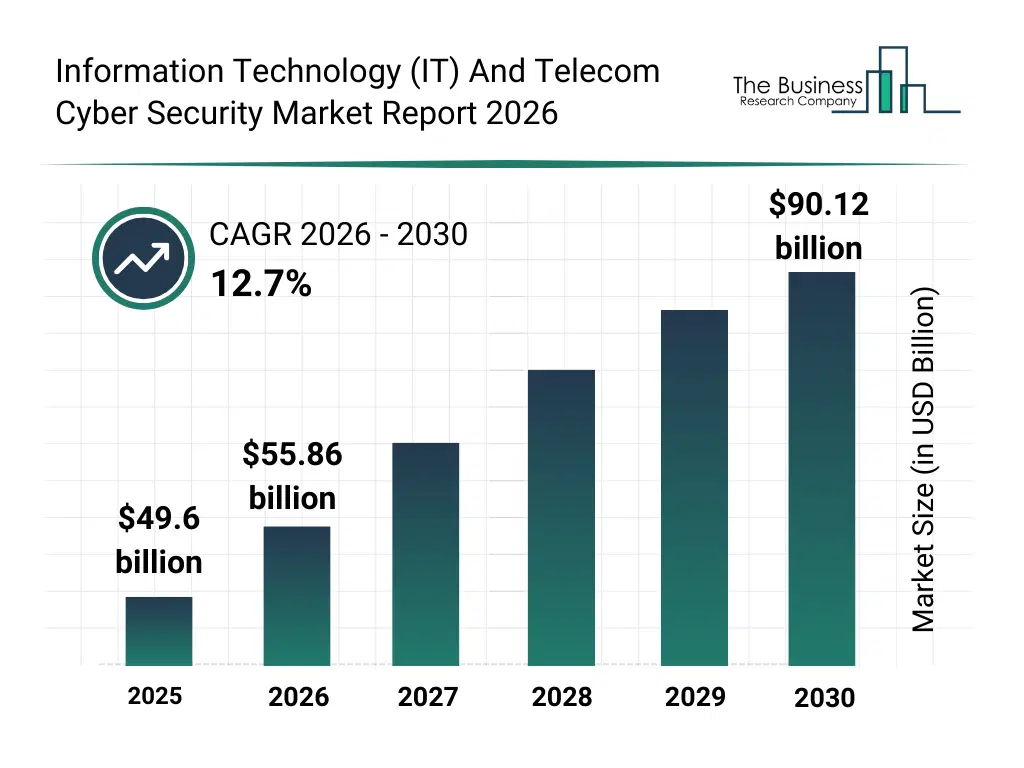
What Is The Information Technology (IT) And Telecom Cyber Security Market Size and Share 2026?
The information technology (it) and telecom cyber security market size has grown rapidly in recent years. It will grow from $49.6 billion in 2025 to $55.86 billion in 2026 at a compound annual growth rate (CAGR) of 12.6%. The growth in the historic period can be attributed to rise in cyber attacks targeting telecom networks, increasing adoption of cloud services, growing regulatory compliance requirements, proliferation of mobile and IoT devices, rising concerns over data privacy.What Is The Information Technology (IT) And Telecom Cyber Security Market Growth Forecast?
The information technology (it) and telecom cyber security market size is expected to see rapid growth in the next few years. It will grow to $90.12 billion in 2030 at a compound annual growth rate (CAGR) of 12.7%. The growth in the forecast period can be attributed to advancements in ai-driven security solutions, expansion of 5G networks, increasing enterprise digital transformation, adoption of zero trust and hybrid cloud security models, growth in remote work and mobile workforce. Major trends in the forecast period include zero trust security implementation, cloud-native security solutions, endpoint threat detection & response, api security & identity management, security automation & orchestration.
Global Information Technology (IT) And Telecom Cyber Security Market Segmentation
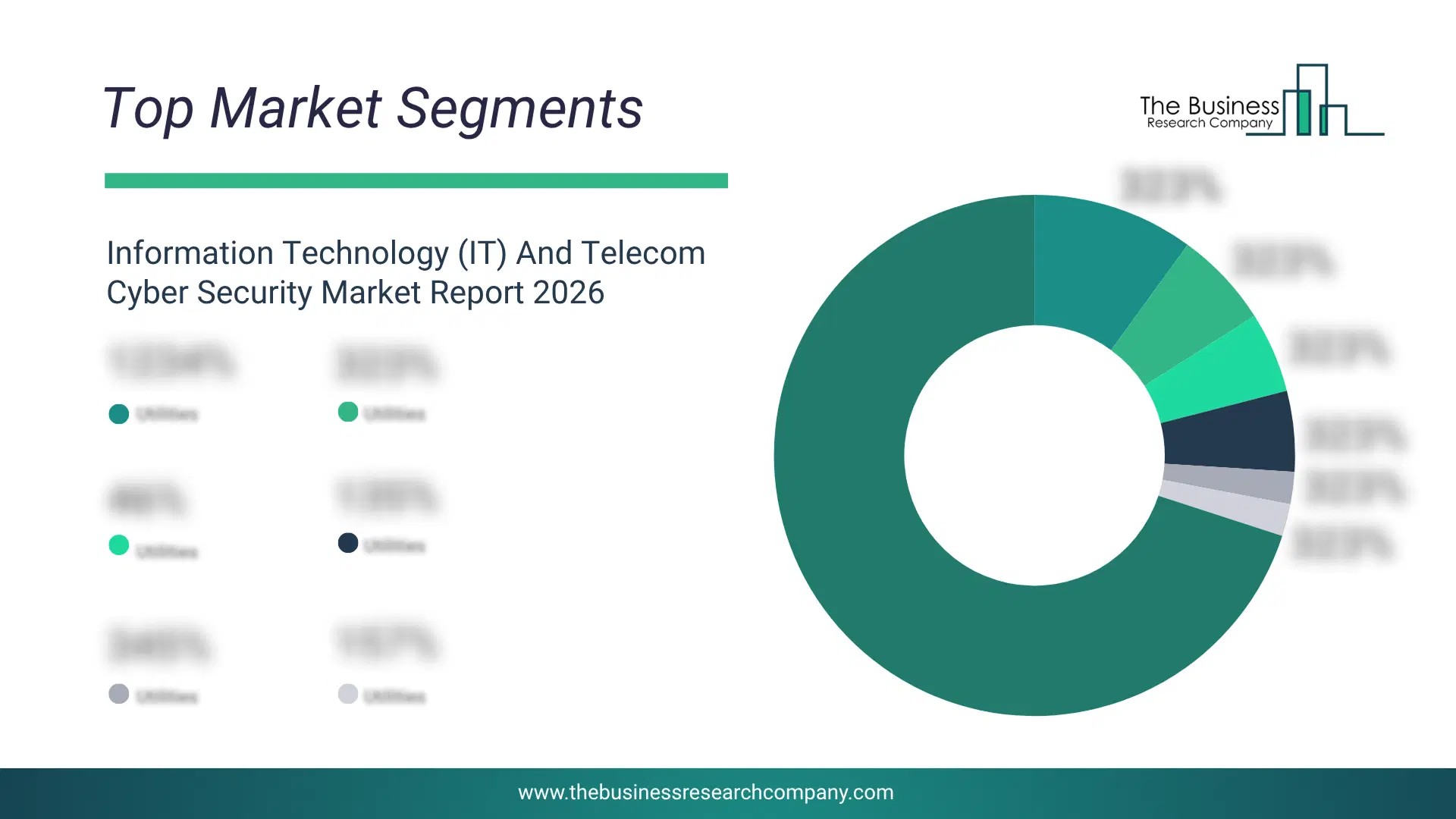
1) By Security Type: Network Security, Endpoint Security, Application Security, Cloud Security, Other Security Types 2) By Organization Size: Small And Medium Enterprises, Large Enterprises 3) By Deployment Mode: On-Premises, Cloud-Based 4) By End-User Industry: Telecom Service Providers, E-commerce, Enterprises, Utilities, Government And Defense Subsegments: 1) By Network Security: Firewalls, Intrusion Detection Systems (IDS), Intrusion Prevention Systems (IPS), Virtual Private Network (VPN), Network Access Control (NAC), Distributed Denial Of Service (DDoS) Protection, Unified Threat Management (UTM) 2) By Endpoint Security: Antivirus Or Antimalware Software, Endpoint Detection and Response (EDR), Mobile Device Management (MDM), Data Loss Prevention (DLP), Encryption, Application Control, Device Control 3) By Application Security: Web Application Firewalls (WAF), Secure Software Development Life Cycle (SDLC), Application Security Testing, Code Review Tools, API Security, Identity And Access Management (IAM) For Applications 4) By Cloud Security: Cloud Access Security Brokers (CASBs), Cloud Encryption, Identity and Access Management (IAM) For Cloud, Security Information And Event Management (SIEM) For Cloud, Cloud Security Posture Management (CSPM), Multi-Factor Authentication (MFA), Cloud Workload Protection 5) By Other Security Types: Data Security And Privacy, Identity And Access Management (IAM), Security Orchestration, Automation, And Response (SOAR), Blockchain Security, Zero Trust Security Model, Threat Intelligence, Security Information And Event Management (SIEM) The top segments in the information technology (it) and telecom cyber security market will be: • Network Security will reach $27.89 Billion by 2030. • Endpoint Security will reach $20.1 Billion by 2030. • Cloud Security will reach $19.46 Billion by 2030. • Application Security will reach $14.66 Billion by 2030. • Other Security Types will reach $7.18 Billion by 2030.What Is The Driver Of The Information Technology (IT) And Telecom Cyber Security Market?
The growing adoption of cloud computing is expected to propel the growth of the information technology (IT) and telecom cyber security market going forward. Cloud computing is a technology that allows users to access and utilize computing resources, such as storage, processing power, and applications, over the internet on a pay-per-use basis. The growing adoption of cloud computing is driven by its ability to deliver cost-effective, scalable, flexible, accessible, and secure IT solutions that support business agility, innovation, and growth in an increasingly digital and interconnected world. Adopting cloud computing raises concerns about data privacy, compliance, and regulatory requirements, especially in industries with stringent data protection regulations, such as healthcare, finance, and government. Organizations implement cybersecurity solutions that ensure data privacy, compliance with regulations, and protection against data breaches and unauthorized access within the cloud and during data transfer. For instance, according to the statistics published by the European Commission (EC), the Belgium-based executive body of the European Union (EU), the adoption of cloud-based solutions in the European Union increased by 4.2% in 2023, with 45.2% of enterprises purchasing cloud computing services, indicating a significant surge compared to 2021. Therefore, the growing adoption of cloud computing drives the growth of the information technology (IT) and telecom cyber security markets.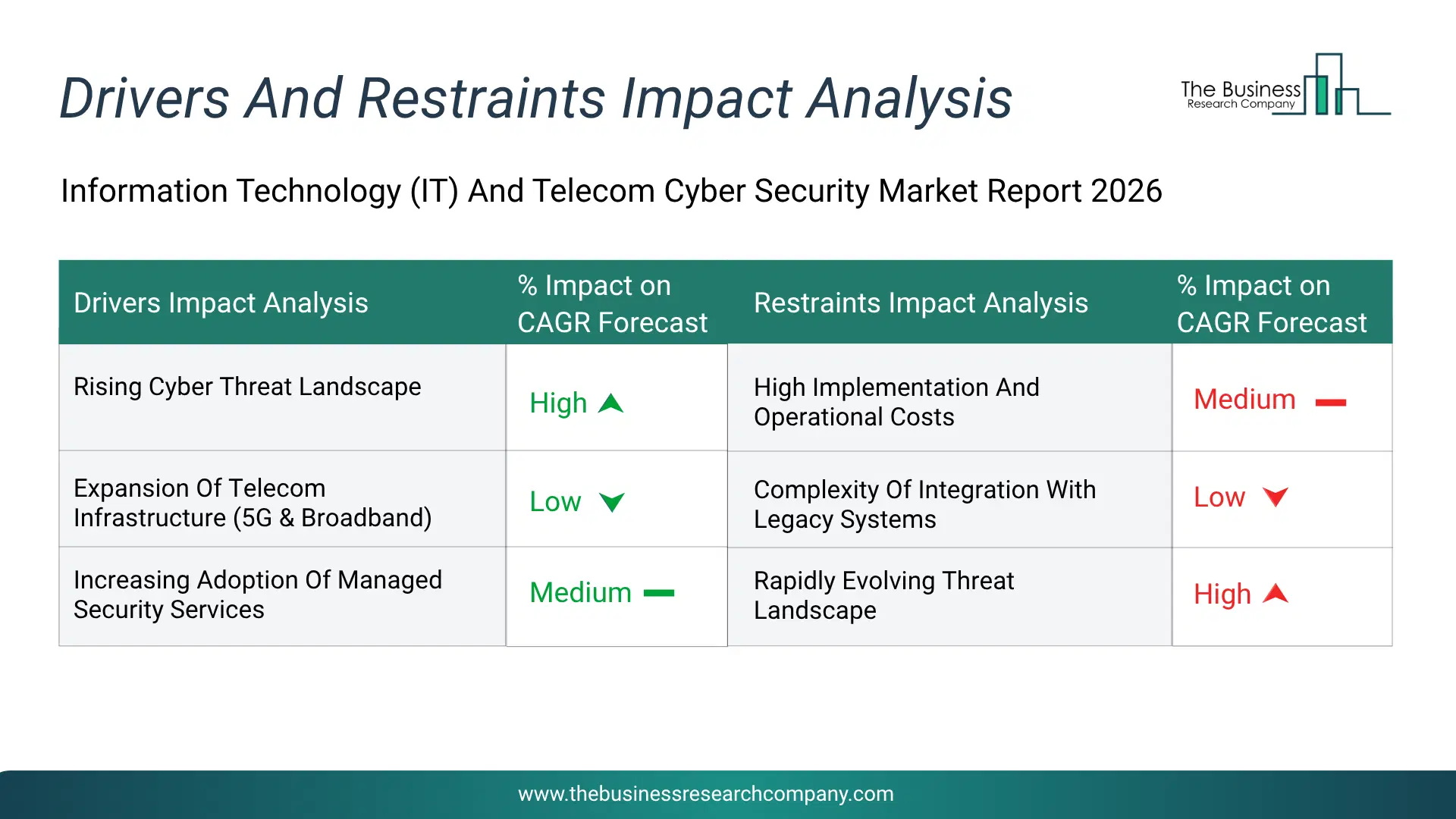
Infographic Chart Showing Key Market Drivers Analysis And Restraints For Information Technology (It) And Telecom Cyber Security Market
The chart presents an impact analysis of key drivers and restraints, quantifying their relative influence on the market's growth rate and helping assess the balance between growth enablers and limiting factors. This chart offers a high-level perspective; the full report contains more detailed insights.
How Will The Drivers Impact Growth In The Global Information Technology (IT) And Telecom Cyber Security Market?
• Rising Cyber Threat Landscape (High) – During the forecast period, the rising cyber threat landscape is expected to become a key growth driver for the information technology (IT) and telecom cyber security market by 2030. The increasing frequency and sophistication of cyberattacks are accelerating demand for advanced cybersecurity solutions across IT and telecom networks. As organizations face growing risks from ransomware, phishing, malware, and distributed denial-of-service attacks, they are investing heavily in robust security systems to protect critical infrastructure and sensitive data. This trend is encouraging the adoption of next-generation firewalls, threat intelligence platforms, endpoint detection tools, and real-time monitoring systems. Additionally, the growing complexity of interconnected digital ecosystems is increasing the need for proactive and adaptive security frameworks capable of ensuring continuous protection. Collectively, these factors support sustained market expansion by directly linking rising cyber risks with increased cybersecurity technology adoption. • Expansion Of Telecom Infrastructure (5G & Broadband) (Low) – During the forecast period, the expansion of telecom infrastructure, including 5G and broadband networks, is expected to emerge as a major factor driving the growth of the information technology (IT) and telecom cyber security market by 2030. The rapid deployment of advanced telecom networks is increasing the demand for sophisticated cybersecurity systems capable of protecting high-speed digital communication environments. As telecom operators expand 5G coverage and fiber-optic broadband infrastructure, the number of connected devices and data traffic volumes continue to rise significantly, creating greater exposure to cyber threats. This expansion is driving investments in secure network management platforms, encryption technologies, and intrusion prevention systems to ensure network reliability and operational continuity. Furthermore, the growing integration of cloud computing, IoT devices, and edge technologies within telecom ecosystems is reinforcing the need for stronger cybersecurity frameworks. • Increasing Adoption Of Managed Security Services (Medium) – During the forecast period, the increasing adoption of managed security services is expected to act as a key growth catalyst for the information technology (IT) and telecom cyber security market by 2030. The growing reliance on outsourced cybersecurity services is accelerating market demand as organizations seek cost-effective and scalable solutions to manage evolving cyber risks. Businesses across IT and telecom sectors are increasingly partnering with managed security service providers to gain access to advanced threat monitoring, incident response, vulnerability management, and compliance support without maintaining large in-house security teams. This trend is particularly strong among enterprises handling complex multi-cloud and hybrid IT environments that require continuous surveillance and rapid threat mitigation capabilities. Moreover, the rising shortage of skilled cybersecurity professionals is encouraging organizations to adopt managed services for improved operational efficiency and security performance.How Will The Restraints Impact Growth In The Global Information Technology (IT) And Telecom Cyber Security Market?
• High Implementation And Operational Costs (High) – During the forecast period, high implementation and operational costs act as a major restraint in the IT and telecom cybersecurity market because deploying comprehensive security solutions requires significant financial investment. Organizations must spend on advanced technologies such as firewalls, intrusion detection systems, encryption tools, and identity and access management platforms, along with ongoing costs for maintenance, upgrades, and monitoring. In telecom environments, where networks are large and complex, the cost of securing infrastructure across multiple layers further increases. Small and medium-sized enterprises, in particular, may find it difficult to allocate sufficient budgets for such investments, leading to partial or delayed adoption of cybersecurity measures. Additionally, the need for continuous updates to address new vulnerabilities adds recurring expenses. These financial barriers can limit the widespread adoption of cybersecurity solutions and services, thereby slowing overall market growth despite increasing demand. • Complexity Of Integration With Legacy Systems (Low) – During the forecast period, the complexity of integrating modern cybersecurity solutions with legacy telecom and IT systems is another significant restraint for the market. Many telecom operators still rely on outdated infrastructure that was not designed to handle today’s sophisticated cyber threats. Integrating advanced security technologies into these legacy systems often requires extensive customization, system upgrades, and sometimes complete overhauls, which can be time-consuming and costly. Compatibility issues between old and new systems can create operational disruptions and increase the risk of system failures. Moreover, legacy systems may lack the flexibility to support modern security frameworks such as zero trust or real-time threat detection. This makes it difficult for organizations to implement a unified and effective cybersecurity strategy. As a result, companies may delay or limit investments in new cybersecurity solutions, which restrains market expansion. • Rapidly Evolving Threat Landscape (Medium) – During the forecast period, the rapidly evolving nature of cyber threats poses a continuous challenge and acts as a restraint on the IT and telecom cybersecurity market. Cyber attackers are constantly developing new techniques, such as advanced persistent threats, ransomware variants, and AI-driven attacks, which can quickly bypass existing security measures. This forces organizations to continuously upgrade their cybersecurity systems, making it difficult to maintain long-term effectiveness of deployed solutions. The constant need for innovation increases pressure on both solution providers and end users, as they must stay ahead of emerging threats. Additionally, the unpredictability of cyber risks makes it challenging for organizations to plan and allocate resources efficiently. Even with significant investments, there is no guarantee of complete protection, which can create hesitation among businesses. This dynamic environment increases complexity and cost, thereby acting as a restraint on steady market growth.Key Players In The Global Information Technology (IT) And Telecom Cyber Security Market
Major companies operating in the information technology (it) and telecom cyber security market are Dell Technologies Inc.; Intel Corporation; International Business Machines Corporation; Cisco Systems Inc.; Broadcom; Telefonaktiebolaget Lm Ericsson; Bae Systems Inc.; Palo Alto Networks Inc.; Juniper Networks Inc.; Fortinet Inc.; AkamAI Technologies Inc.; Symantec Corporation; Splunk Inc.; Micro Focus International; Check Point Software Technology Ltd.; CrowdStrike; McAfee LLC; Trend Micro Incorporated; Zscaler Inc.; Proofpoint Inc.; AO Kaspersky Lab; Tenable Holdings Inc.; Rapid7; Sophos; CyberArk Software Ltd.; FireEye Inc.; SecureWorks Corp.; Qualys Inc.; Varonis Systems Inc.; Mimecast Ltd.; Okta Inc.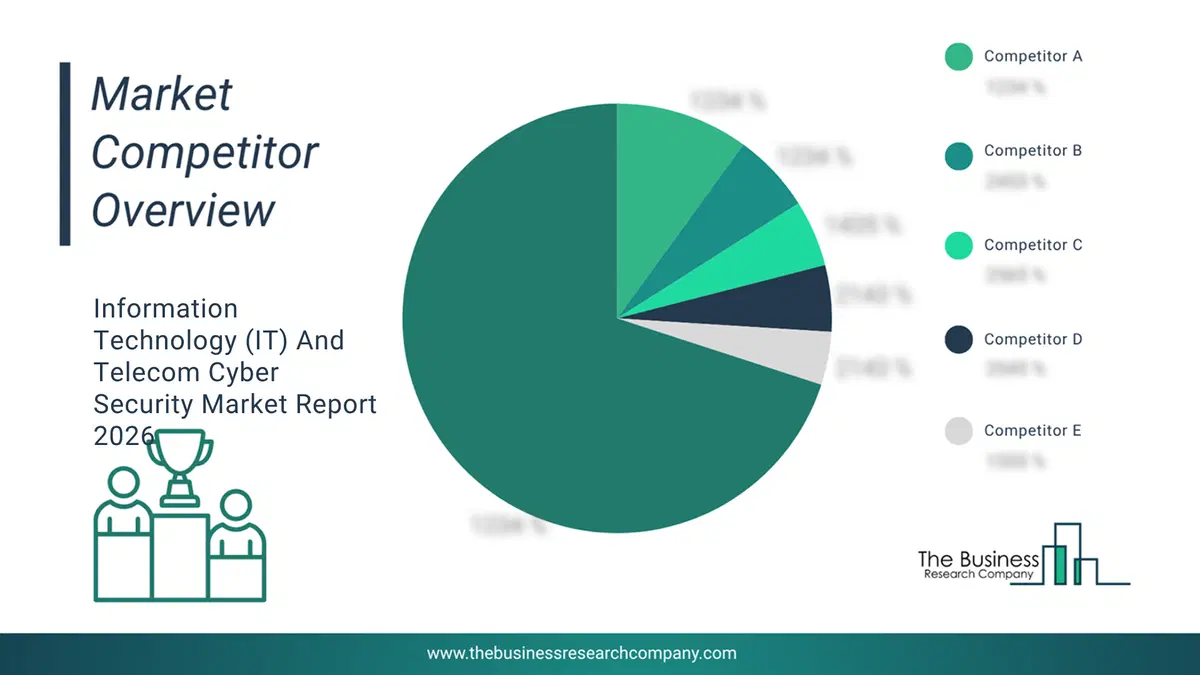
This chart is for illustrative purposes; the full report includes a detailed competitor analysis and comprehensive overview of the top 10 companies in the market.
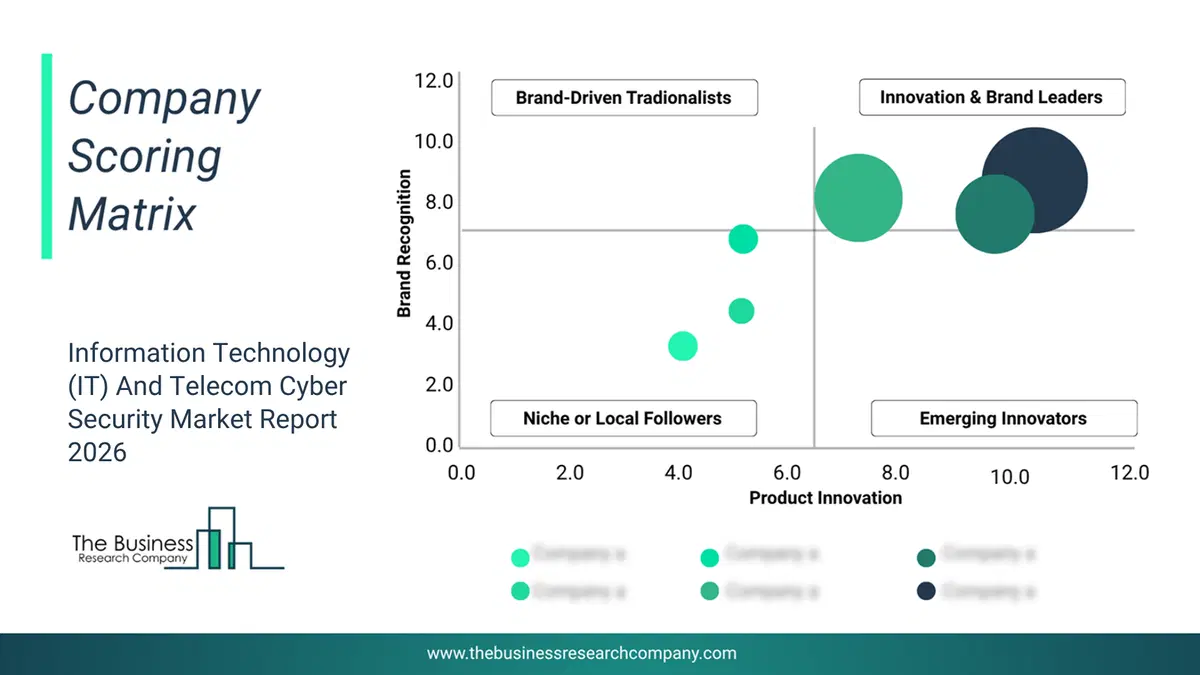
This chart maps companies by product innovation and brand strength, with bubble size indicating relative revenue, helping identify market leaders, challengers, and niche players. This is an illustrative chart; the full report provides a complete and accurate competitive analysis.
Global Information Technology (IT) And Telecom Cyber Security Market Trends and Insights
Major companies operating in the information technology (IT) and telecom cyber security market are increasing their focus on developing advanced solutions, such as Sentra Jagger, a generative AI (artificial intelligence) assistant for cloud data security, to gain a competitive edge in the market. This generative AI assistant for cloud data security is a software solution that utilizes artificial intelligence techniques to autonomously generate and implement security measures, policies, and protocols to protect data stored in cloud environments. For instance, in March 2024, Sentra, an Israel-based cloud data security company, launched the Sentra Jagger. This platform boasts features such as swift threat analysis and rapid incident response, reducing response times by up to 80% and fortifying cybersecurity operations in the IT (information technology) and telecom sectors. This highlights a pivotal shift towards artificial intelligence (AI) and automation in cybersecurity, enabling advanced threat analysis, real-time insights, and heightened efficiency in addressing evolving cyber threats and safeguarding critical data assets in information technology (IT) and telecom cyber security.What Are Latest Mergers And Acquisitions In The Information Technology (IT) And Telecom Cyber Security Market?
In December 2023, Thales Group, a France-based technology company, acquired Imperva, Inc. for $3.6 billion. This acquisition bolsters cybersecurity solutions, expands market presence, and solidifies Thales' leadership in the information technology (IT) and telecom cyber security markets, offering enhanced data protection capabilities against evolving cyber threats. Imperva, Inc. is a US-based cybersecurity company that protects data and application software.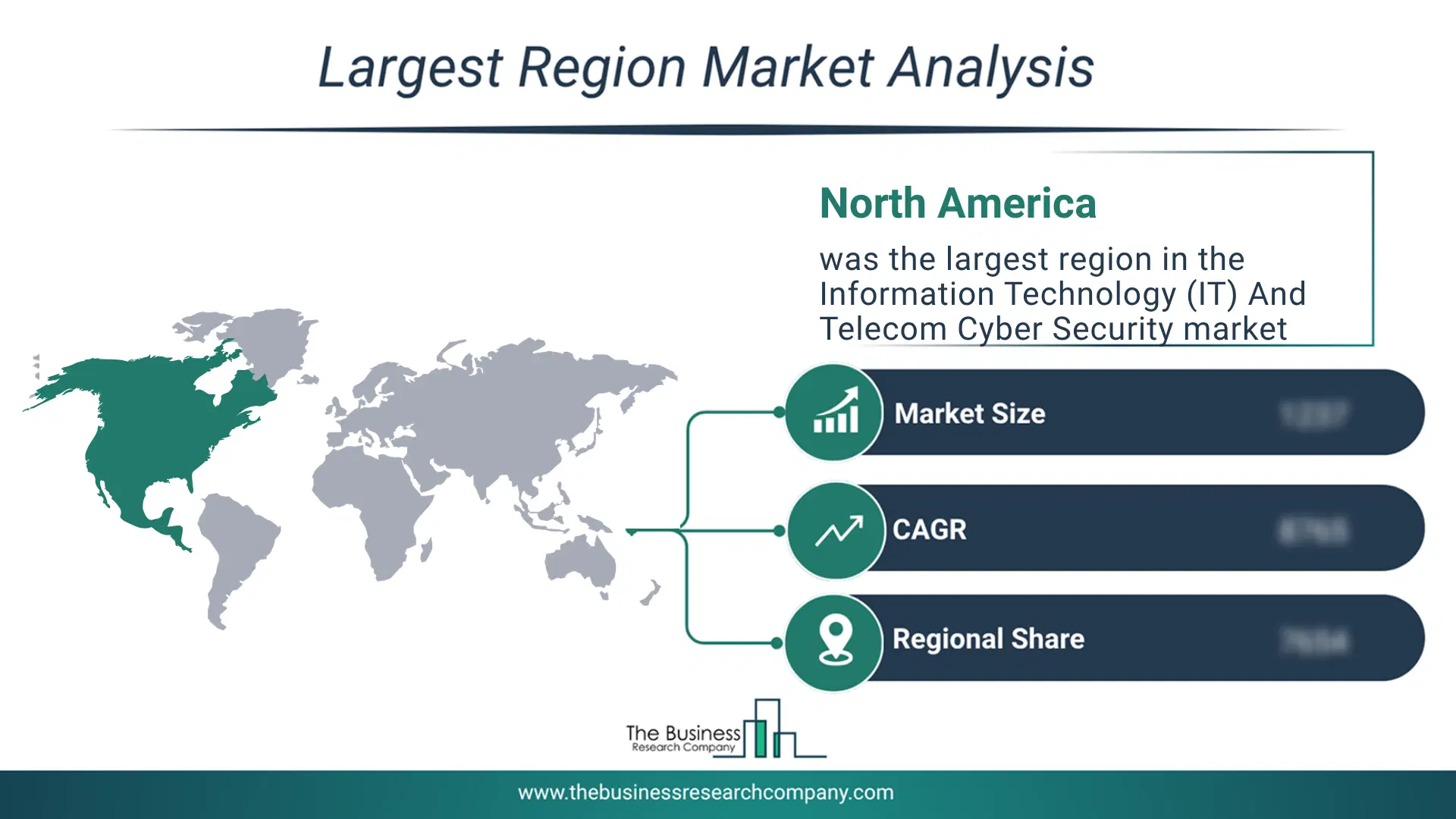
Regional Insights
North America was the largest region in the information technology (IT) and telecom cyber security market in 2025. Asia-Pacific is expected to be the fastest-growing region in the forecast period. The regions covered in this market report are Asia-Pacific, South East Asia, Western Europe, Eastern Europe, North America, South America, Middle East, Africa. The countries covered in this market report are Australia, Brazil, China, France, Germany, India, Indonesia, Japan, Taiwan, Russia, South Korea, UK, USA, Canada, Italy, SpainWhat Defines the Information Technology (IT) And Telecom Cyber Security Market?
The information technology (IT) and telecom cyber security market consists of revenues earned by entities by providing services such as cybersecurity consulting, incident response, penetration testing, vulnerability assessments, and managed security services. The market value includes the value of related goods sold by the service provider or included within the service offering. The information technology (IT) and telecom cyber security market also includes sales of products such as firewall systems, antivirus software, intrusion detection systems, encryption solutions, and identity and access management platforms. Values in this market are ‘factory gate’ values, that is the value of goods sold by the manufacturers or creators of the goods, whether to other entities (including downstream manufacturers, wholesalers, distributors and retailers) or directly to end customers. The value of goods in this market includes related services sold by the creators of the goods.How is Market Value Defined and Measured?
The market value is defined as the revenues that enterprises gain from the sale of goods and/or services within the specified market and geography through sales, grants, or donations in terms of the currency (in USD unless otherwise specified). The revenues for a specified geography are consumption values that are revenues generated by organizations in the specified geography within the market, irrespective of where they are produced. It does not include revenues from resales along the supply chain, either further along the supply chain or as part of other products.
This chart presents market attractiveness based on a quantitative evaluation of growth, competition, strategic alignment, and risk, offering a clear view of opportunity areas for decision-making. This chart is for illustrative purposes; the full report contains the complete analysis.

This chart highlights the Total Addressable Market (TAM) by estimating the maximum revenue opportunity using an assumption-driven approach, supporting strategic planning and opportunity sizing across markets. The chart is illustrative; the full report provides a more comprehensive analysis.
What Key Data and Analysis Are Included in the Information Technology (IT) And Telecom Cyber Security Market Report 2026?
The information technology (it) and telecom cyber security market research report is one of a series of new reports from The Business Research Company that provides market statistics, including industry global market size, regional shares, competitors with the market share, detailed market segments, market trends and opportunities, and any further data you may need to thrive in the information technology (it) and telecom cyber security industry. The market research report delivers a complete perspective of everything you need, with an in-depth analysis of the current and future state of the industry.Information Technology (IT) And Telecom Cyber Security Market Report Forecast Analysis
| Report Attribute | Details |
|---|---|
| Market Size Value In 2026 | $55.86 billion |
| Revenue Forecast In 2030 | $90.12 billion |
| Growth Rate | CAGR of 12.6% from 2026 to 2030 |
| Base Year For Estimation | 2025 |
| Actual Estimates/Historical Data | 2020-2025 |
| Forecast Period | 2026 - 2030 |
| Market Representation | Revenue in USD Billion and CAGR from 2026 to 2030 |
| Segments Covered | Security Type, Organization Size, Deployment Mode, End-User Industry |
| Regional Scope | Asia-Pacific, Western Europe, Eastern Europe, North America, South America, Middle East, Africa |
| Country Scope | The countries covered in the report are Australia, Brazil, China, France, Germany, India, Indonesia, Japan, Taiwan, Russia, South Korea, UK, USA, Canada, Italy, Spain. |
| Key Companies Profiled | Dell Technologies Inc.; Intel Corporation; International Business Machines Corporation; Cisco Systems Inc.; Broadcom; Telefonaktiebolaget Lm Ericsson; Bae Systems Inc.; Palo Alto Networks Inc.; Juniper Networks Inc.; Fortinet Inc.; AkamAI Technologies Inc.; Symantec Corporation; Splunk Inc.; Micro Focus International; Check Point Software Technology Ltd.; CrowdStrike; McAfee LLC; Trend Micro Incorporated; Zscaler Inc.; Proofpoint Inc.; AO Kaspersky Lab; Tenable Holdings Inc.; Rapid7; Sophos; CyberArk Software Ltd.; FireEye Inc.; SecureWorks Corp.; Qualys Inc.; Varonis Systems Inc.; Mimecast Ltd.; Okta Inc. |
| Customization Scope | Request for Customization |
| Pricing And Purchase Options | Explore Purchase Options |