
Injection Human Interleukin 2 Market Report 2026
Global Outlook – By Product Type (Recombinant Human Interleukin 2, Natural Human Interleukin 2), By Route Of Administration (Subcutaneous Injection, Intravenous Injection, Intramuscular Injection), By Distribution Channel (Direct Sales, Pharmacies, Online Sales), By Application (Oncology, Immunotherapy, Autoimmune Diseases), By End-User (Hospitals, Clinics, Research Institutes, Other End-Users) – Market Size, Trends, Strategies, and Forecast to 2030
Injection Human Interleukin 2 Market Overview
• Injection Human Interleukin 2 market size has reached to $1.21 billion in 2025 • Expected to grow to $1.96 billion in 2030 at a compound annual growth rate (CAGR) of 10.2% • Growth Driver: Rising Adoption Of Personalized Medicine Fueling The Growth Of The Market Due To Increasing Demand For Tailored Immunotherapy Solutions • Market Trend: Advancements In Low-Dose Interleukin-2 For Long-Term Treatment And Neurodegenerative Disease Modulation • North America was the largest region in 2025 and Asia-Pacific is the fastest growing region.What Is Covered Under Injection Human Interleukin 2 Market?
Injection human interleukin 2 is a biologic drug used primarily in immunotherapy to stimulate the growth and activity of immune cells, particularly T-cells and natural killer (NK) cells. It is a recombinant form of a naturally occurring cytokine, interleukin-2, which plays a vital role in regulating immune responses. By enhancing the body's natural immune defense mechanisms, IL-2 injection can help recognize and attack cancer cells more effectively. The main product types of injection human interleukin 2 include recombinant human interleukin 2 and natural human interleukin 2. Recombinant human interleukin 2 is a synthetic version of interleukin 2 that is produced through recombinant deoxyribonucleic acid technology. It can be administered through subcutaneous injection, intravenous injection, and intramuscular injection and is distributed through direct sales, pharmacies, and online sales. It is applied for oncology, immunotherapy, and autoimmune diseases by various end-users such as hospitals, clinics, research institutes, and others.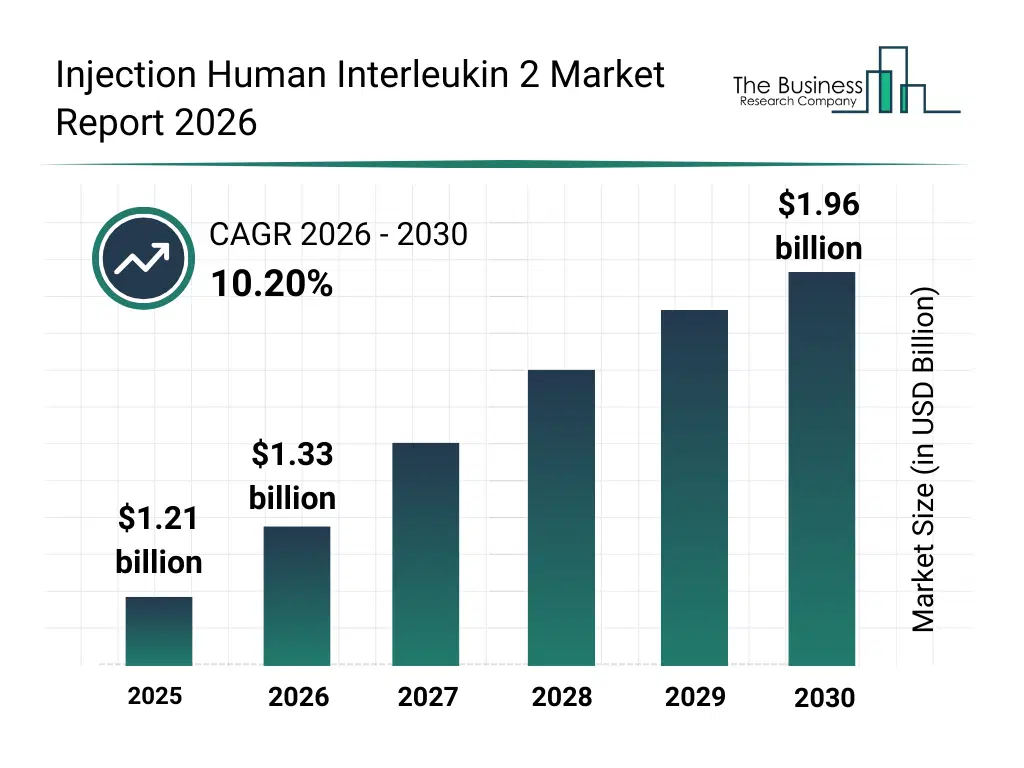
What Is The Injection Human Interleukin 2 Market Size and Share 2026?
The injection human interleukin 2 market size has grown rapidly in recent years. It will grow from $1.21 billion in 2025 to $1.33 billion in 2026 at a compound annual growth rate (CAGR) of 10.2%. The growth in the historic period can be attributed to early success of cytokine-based immunotherapy, rising cancer incidence, advancement in recombinant protein production, increased hospital-based oncology treatments, regulatory approvals for il-2 therapies.What Is The Injection Human Interleukin 2 Market Growth Forecast?
The injection human interleukin 2 market size is expected to see rapid growth in the next few years. It will grow to $1.96 billion in 2030 at a compound annual growth rate (CAGR) of 10.2%. The growth in the forecast period can be attributed to growth in cancer immunotherapy pipelines, increasing use of il-2 with checkpoint inhibitors, advancements in targeted immune activation, rising investment in biologic oncology drugs, expansion of precision immunotherapy approaches. Major trends in the forecast period include increasing use of il-2 in combination immunotherapies, growing adoption of recombinant human interleukin 2, expansion of il-2 applications in oncology, rising focus on dose optimization to reduce toxicity, increasing clinical research in immune modulation.
Global Injection Human Interleukin 2 Market Segmentation
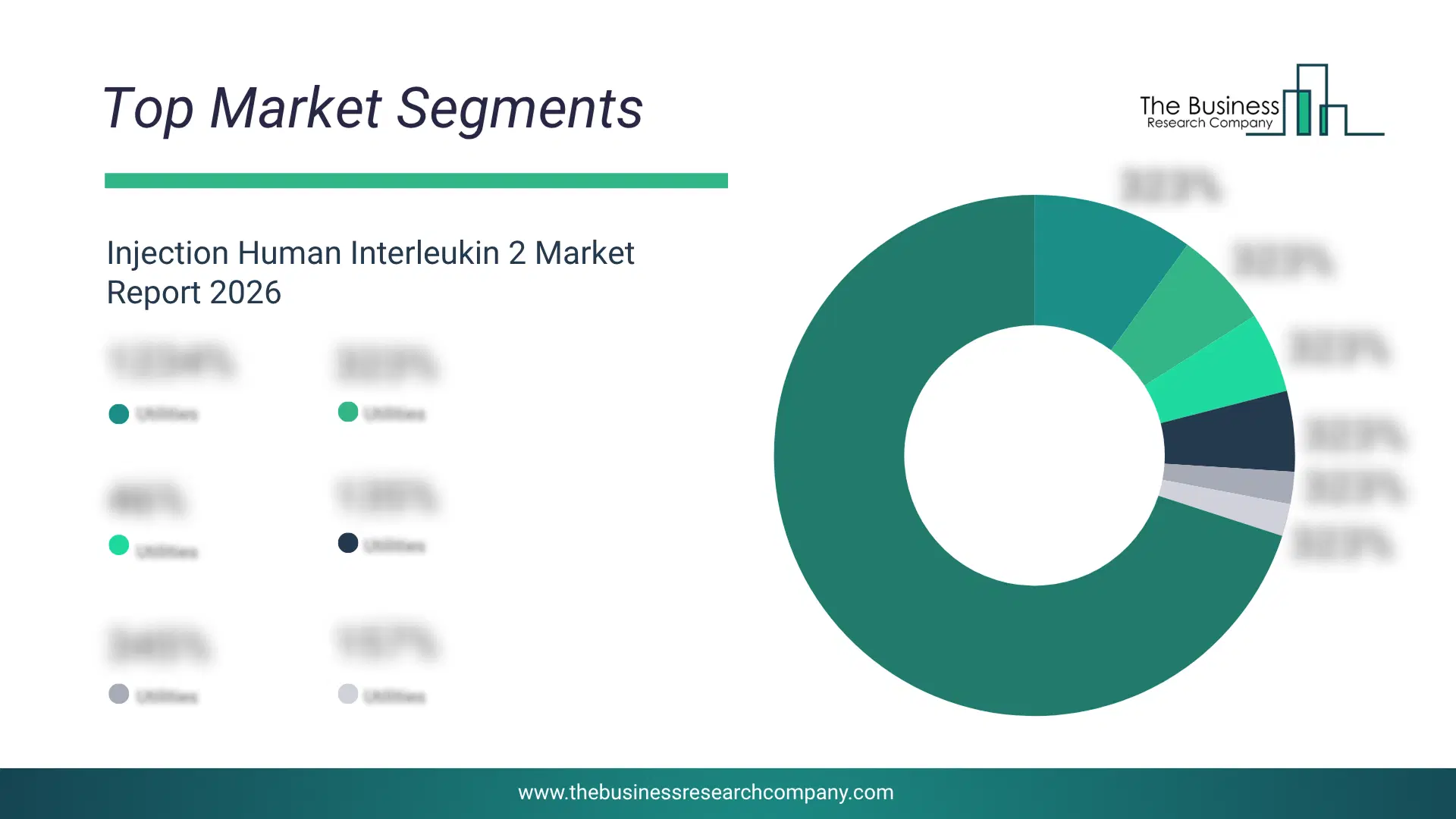
1) By Product Type: Recombinant Human Interleukin 2, Natural Human Interleukin 2 2) By Route Of Administration: Subcutaneous Injection, Intravenous Injection, Intramuscular Injection 3) By Distribution Channel: Direct Sales, Pharmacies, Online Sales 4) By Application: Oncology, Immunotherapy, Autoimmune Diseases 5) By End-User: Hospitals, Clinics, Research Institutes, Other End-Users Subsegments: 1) By Recombinant Human Interleukin 2: Escherichia Coli Derived Interleukin 2, Yeast Derived Interleukin 2, Mammalian Cell Derived Interleukin 2 2) By Natural Human Interleukin 2: Plasma Derived Interleukin 2, Peripheral Blood Mononuclear Cell Derived Interleukin 2What Is The Driver Of The Injection Human Interleukin 2 Market?
The increasing focus on personalized medicine is anticipated to fuel the growth of the injection human interleukin 2 market going forward. Personalized medicine is a medical approach that tailors’ treatment and prevention strategies to an individual’s unique genetic makeup, lifestyle, and environment. The rise in demand for personalized medicine is due to advances in genetic testing, which allow more accurate diagnoses and targeted treatments tailored to individual patient profiles, improving outcomes and reducing side effects. Injection Human Interleukin 2 supports personalized medicine by enabling its use in tailored immunotherapy regimens, where IL-2 is administered based on a patient’s specific immune profile to maximize therapeutic effectiveness and minimize adverse effects. For instance, in February 2024, according to a report published by the Personalized Medicine Coalition, a US-based non-profit organization, the FDA authorized 16 novel customized medicines for patients with rare diseases in 2023, compared to just six in 2022. Therefore, the increasing focus on personalized medicine will boost the growth of the injection human interleukin 2 industry.Key Players In The Global Injection Human Interleukin 2 Market
Major companies operating in the injection human interleukin 2 market are F. Hoffmann-La Roche AG, Novartis AG, Merck & Co. Inc., Bristol Myers Squibb, Sanofi S.A., Pfizer Inc., Amgen Inc., Nektar Therapeutics, Synthekine Inc., Xilio Therapeutics Inc., Iovance Biotherapeutics Inc., Clinigen Group plc, BeiGene Ltd., Shanghai Fosun Pharmaceutical Group Co. Ltd., Beijing SL Pharmaceutical Co. Ltd., Shandong Quangang Pharmaceutical Co. Ltd., PeproTech Inc., Qkine Ltd., Akron Biotechnology LLC, Thermo Fisher Scientific Inc.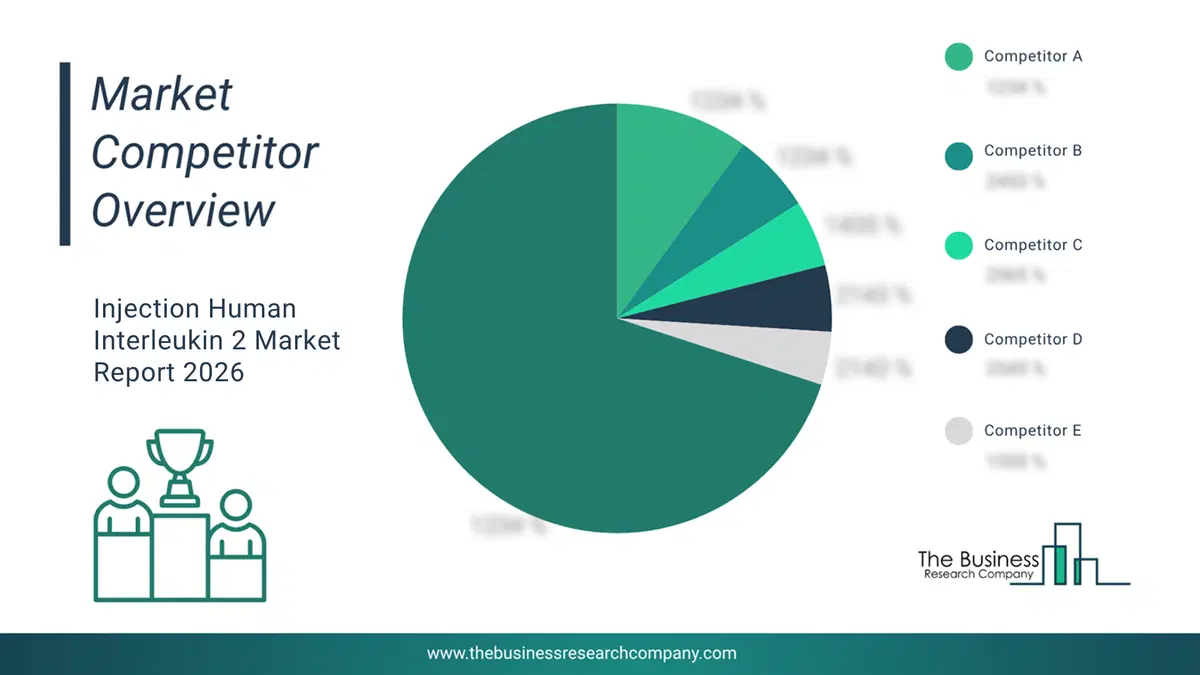
This chart is for illustrative purposes; the full report includes a detailed competitor analysis and comprehensive overview of the top 10 companies in the market.
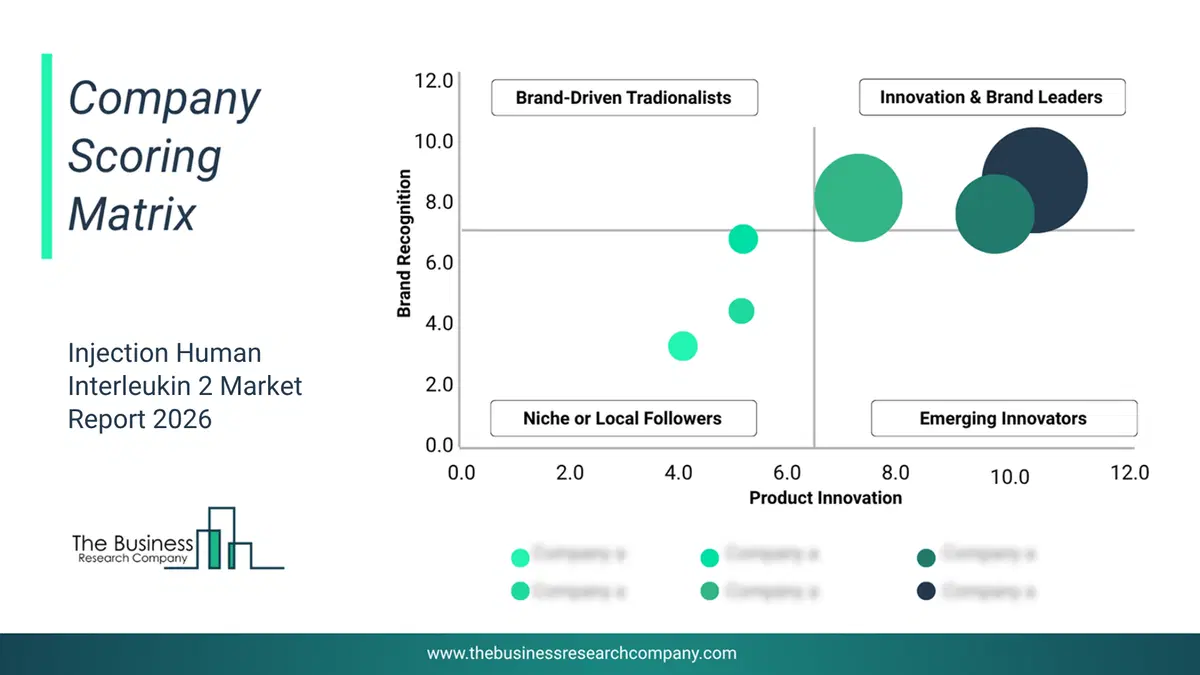
This chart maps companies by product innovation and brand strength, with bubble size indicating relative revenue, helping identify market leaders, challengers, and niche players. This is an illustrative chart; the full report provides a complete and accurate competitive analysis.
Global Injection Human Interleukin 2 Market Trends and Insights
Major companies operating in the injection human interleukin-2 market are focusing on developing innovative solutions, such as low-dose interleukin-2, to allow for longer-term treatment regimens. Low-dose interleukin-2 is a therapeutic approach that administers small amounts of IL-2 to selectively stimulate regulatory T cells, enhancing immune tolerance while minimizing inflammation and adverse effects. For instance, in October 2024, Coya Therapeutics Inc., a US-based biotechnology company, declared the findings of a double-blind investigation on the effects of subcutaneous low-dose interleukin-2 (LD IL-2) in Alzheimer's disease (AD). The study successfully met its primary and secondary endpoints, enhancing regulatory T cells (Tregs) without affecting T effector lymphocytes. Exploratory results showed that low-dose IL-2 (LD IL-2) every four weeks stabilized cognition, improved cerebrospinal fluid (CSF) soluble Aβ42 levels, and stabilized CSF Neurofilament Light Chain (NfL). These findings strengthen the confidence in using Treg modulation for neurodegenerative diseases, particularly Alzheimer’s. COYA 301, an investigational low-dose IL-2, aims to enhance Treg function through subcutaneous administration for inflammatory modulation.What Are Latest Mergers And Acquisitions In The Injection Human Interleukin 2 Market?
In May 2023, Iovance Biotherapeutics, a U.S.-based provider of T-cell immunotherapies including tumor-infiltrating lymphocyte (TIL) and peripheral-blood lymphocyte (PBL) therapies, acquired Proleukin (aldesleukin) from Clinigen Limited for £166.7 million upfront plus £41.7 million milestone payments and global sales royalties. With this acquisition, Iovance aimed to secure its IL-2 supply chain, reduce costs for clinical trials and manufacturing of TIL therapies, and generate a steady revenue stream. Clinigen Limited is a UK-based company that provides interleukin-2 cytokine therapy to stimulate T-cell activity in adoptive immunotherapy treatments.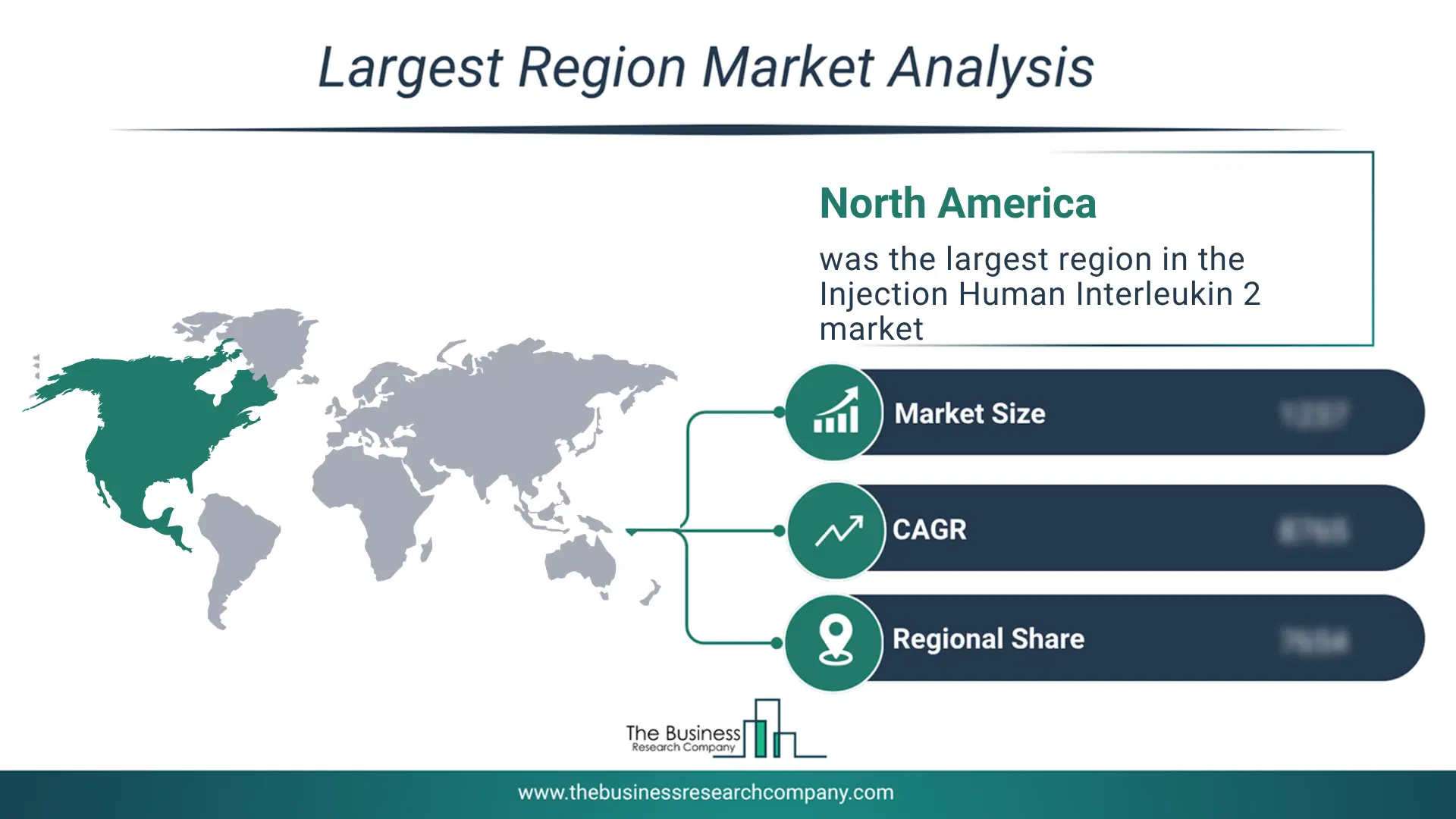
Regional Insights
North America was the largest region in the injection human interleukin 2 market in 2025. Asia-Pacific is expected to be the fastest-growing region in the forecast period. The regions covered in this market report are Asia-Pacific, South East Asia, Western Europe, Eastern Europe, North America, South America, Middle East, Africa. The countries covered in this market report are Australia, Brazil, China, France, Germany, India, Indonesia, Japan, Taiwan, Russia, South Korea, UK, USA, Canada, Italy, Spain.What Defines the Injection Human Interleukin 2 Market?
The injection human interleukin 2 market consists of sales of monoclonal antibodies, checkpoint inhibitors, cancer vaccines and immune modulators. Values in this market are ‘factory gate’ values, that is the value of goods sold by the manufacturers or creators of the goods, whether to other entities (including downstream manufacturers, wholesalers, distributors and retailers) or directly to end customers. The value of goods in this market includes related services sold by the creators of the goods.How is Market Value Defined and Measured?
The market value is defined as the revenues that enterprises gain from the sale of goods and/or services within the specified market and geography through sales, grants, or donations in terms of the currency (in USD unless otherwise specified). The revenues for a specified geography are consumption values that are revenues generated by organizations in the specified geography within the market, irrespective of where they are produced. It does not include revenues from resales along the supply chain, either further along the supply chain or as part of other products.
This chart presents market attractiveness based on a quantitative evaluation of growth, competition, strategic alignment, and risk, offering a clear view of opportunity areas for decision-making. This chart is for illustrative purposes; the full report contains the complete analysis.

This chart highlights the Total Addressable Market (TAM) by estimating the maximum revenue opportunity using an assumption-driven approach, supporting strategic planning and opportunity sizing across markets. The chart is illustrative; the full report provides a more comprehensive analysis.
What Key Data and Analysis Are Included in the Injection Human Interleukin 2 Market Report 2026?
The injection human interleukin 2 market research report is one of a series of new reports from The Business Research Company that provides market statistics, including industry global market size, regional shares, competitors with the market share, detailed market segments, market trends and opportunities, and any further data you may need to thrive in the injection human interleukin 2 industry. The market research report delivers a complete perspective of everything you need, with an in-depth analysis of the current and future state of the industry.Injection Human Interleukin 2 Market Report Forecast Analysis
| Report Attribute | Details |
|---|---|
| Market Size Value In 2026 | $1.33 billion |
| Revenue Forecast In 2030 | $1.96 billion |
| Growth Rate | CAGR of 10.2% from 2026 to 2030 |
| Base Year For Estimation | 2025 |
| Actual Estimates/Historical Data | 2020-2025 |
| Forecast Period | 2026 - 2030 |
| Market Representation | Revenue in USD Billion and CAGR from 2026 to 2030 |
| Segments Covered | Product Type, Route Of Administration, Distribution Channel, Application, End-User |
| Regional Scope | Asia-Pacific, Western Europe, Eastern Europe, North America, South America, Middle East, Africa |
| Country Scope | The countries covered in the report are Australia, Brazil, China, France, Germany, India, Indonesia, Japan, Taiwan, Russia, South Korea, UK, USA, Canada, Italy, Spain. |
| Key Companies Profiled | F. Hoffmann-La Roche AG, Novartis AG, Merck & Co. Inc., Bristol Myers Squibb, Sanofi S.A., Pfizer Inc., Amgen Inc., Nektar Therapeutics, Synthekine Inc., Xilio Therapeutics Inc., Iovance Biotherapeutics Inc., Clinigen Group plc, BeiGene Ltd., Shanghai Fosun Pharmaceutical Group Co. Ltd., Beijing SL Pharmaceutical Co. Ltd., Shandong Quangang Pharmaceutical Co. Ltd., PeproTech Inc., Qkine Ltd., Akron Biotechnology LLC, Thermo Fisher Scientific Inc. |
| Customization Scope | Request for Customization |
| Pricing And Purchase Options | Explore Purchase Options |