
Injury Prediction Wearable Sensor Market Report 2026
Global Outlook – By Sensor Type (Accelerometers, Gyroscopes, Heart Rate Sensors, Electromyography (EMG) Sensors, Global Positioning System (GPS)), By Application (Sports And Fitness, Military, Workplace Safety), By Distribution Channel (Online, Offline), By End Users (Athletes, Industrial Workers, Military Personnel, Others End Users) – Market Size, Trends, Strategies, and Forecast to 2030
Injury Prediction Wearable Sensor Market Overview
• Injury Prediction Wearable Sensor market size has reached to $2.28 billion in 2025 • Expected to grow to $4.82 billion in 2030 at a compound annual growth rate (CAGR) of 16% • Growth Driver: Rising Burden Of Musculoskeletal Disorders Driving The Growth Of The Market Due To Aging Population And Increasing Risk Of Movement-Related Injuries • Market Trend: AI-Driven Multi-Sensor Wearables Revolutionize Real-Time Worker Health and Safety • North America was the largest region in 2025 and Asia-Pacific is the fastest growing region.What Is Covered Under Injury Prediction Wearable Sensor Market?
An injury prediction wearable sensor is a smart device designed to be worn on the body that continuously monitors an individual’s physiological and biomechanical data, such as movement patterns, heart rate, muscle activity, and workload. By analyzing these data points with predictive algorithms, the sensor helps identify risk factors and provides early warnings of potential injuries before they occur. Its purpose is to support athlete safety, optimize training loads, and reduce downtime by enabling proactive intervention. The main types of injury prediction wearable sensors are accelerometers, gyroscopes, heart rate sensors, electromyography (EMG) sensors, global positioning systems (GPS), and others. An accelerometer is a device that measures the proper acceleration of an object relative to free fall. It is applied for sports and fitness, healthcare, the military, workplace safety, and others and is distributed through online and offline channels. It is used by several end-users, including athletes, patients, industrial workers, military personnel, and others.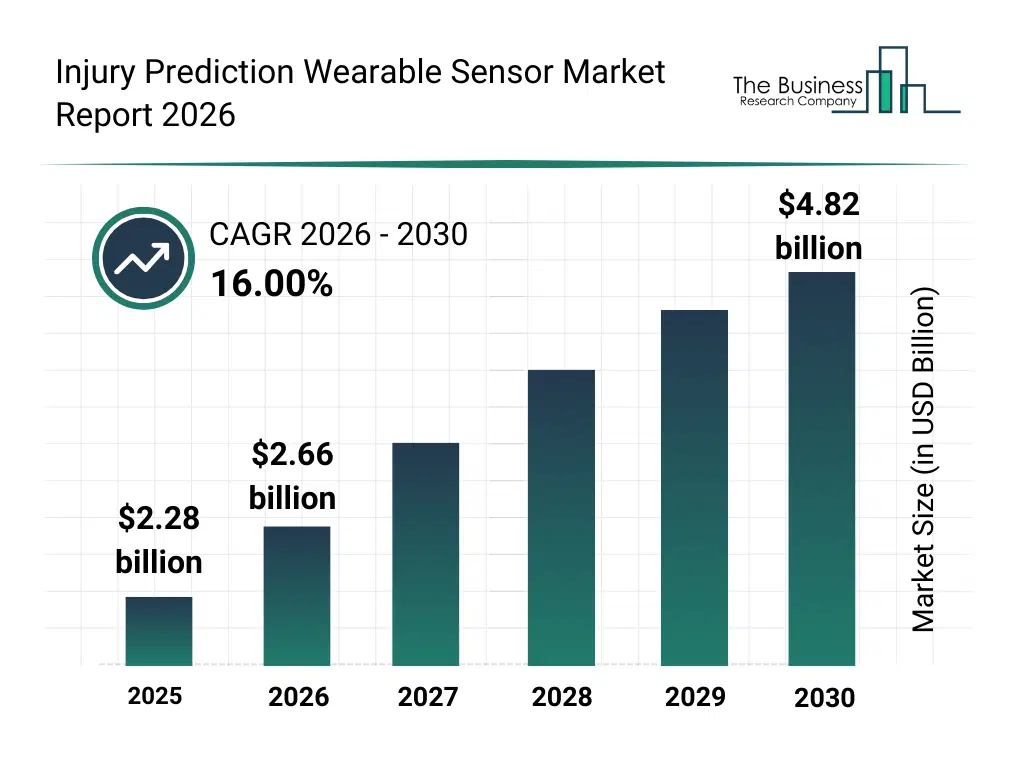
What Is The Injury Prediction Wearable Sensor Market Size and Share 2026?
The injury prediction wearable sensor market size has grown rapidly in recent years. It will grow from $2.28 billion in 2025 to $2.66 billion in 2026 at a compound annual growth rate (CAGR) of 16.3%. The growth in the historic period can be attributed to adoption in professional sports, growth in wearable sensor technology, development of accelerometers and gyroscopes, integration with fitness apps, rising awareness of athlete safety.What Is The Injury Prediction Wearable Sensor Market Growth Forecast?
The injury prediction wearable sensor market size is expected to see rapid growth in the next few years. It will grow to $4.82 billion in 2030 at a compound annual growth rate (CAGR) of 16.0%. The growth in the forecast period can be attributed to AI-driven predictive algorithms, expansion into workplace safety and military applications, adoption in rehabilitation programs, development of multi-sensor platforms, integration with cloud-based health monitoring. Major trends in the forecast period include real-time biomechanical monitoring, ai-powered injury prediction, wearable motion analytics, muscle load and fatigue assessment, remote health alerts.
Global Injury Prediction Wearable Sensor Market Segmentation
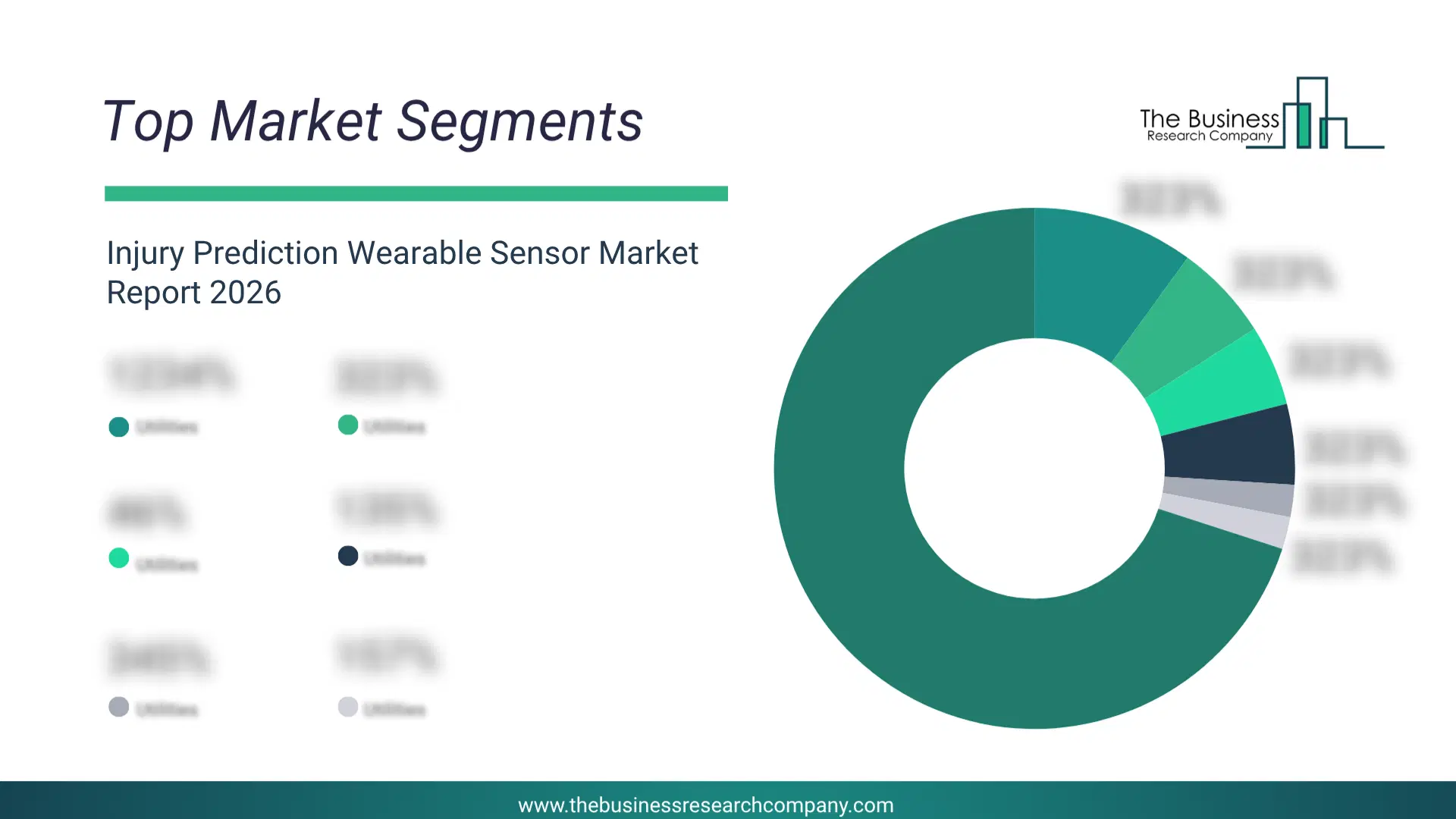
1) By Sensor Type: Accelerometers, Gyroscopes, Heart Rate Sensors, Electromyography (EMG) Sensors, Global Positioning System (GPS) 2) By Application: Sports And Fitness, Military, Workplace Safety 3) By Distribution Channel: Online, Offline 4) By End Users: Athletes, Industrial Workers, Military Personnel, Others End Users Subsegments: 1) By Accelerometers: Triaxial Accelerometers, Wearable-Grade MEMS Accelerometers 2) By Gyroscopes: Microelectromechanical (MEMS) Gyroscopes, Vibrating Structure Gyroscopes 3) By Heart Rate Sensors: Photoplethysmography (PPG) Sensors, Electrocardiography (ECG) Sensors, Optical Heart Rate Sensors 4) By Electromyography (EMG) Sensors: Surface Electromyography Sensors, Wireless Electromyography Sensors 5) By Global Positioning System (GPS): Standard GPS Sensors, High-Precision GPS Sensors, Multi-Constellation GPS SensorsWhat Is The Driver Of The Injury Prediction Wearable Sensor Market?
The increasing burden of musculoskeletal disorders is expected to propel the growth of the injury prediction wearable sensor market going forward. Musculoskeletal disorders refer to injuries or conditions that affect the muscles, bones, joints, tendons, ligaments, or nerves, often causing pain, discomfort, and limited mobility. The increasing burden of musculoskeletal disorders is due to the aging population, as older adults are more prone to joint degeneration, osteoporosis, and related mobility issues. Injury prediction wearable sensor helps to address musculoskeletal disorders by enabling early detection of movement risks, supporting preventive measures, and reducing the likelihood of severe injuries. For instance, in January 2024, according to GOV.UK a UK-based government agency, the prevalence of people aged 16 and over self-reporting a long term MSK condition was 18.4% in 2023. Therefore, the increasing burden of musculoskeletal disorders is driving the growth of the injury prediction wearable sensor industry.Key Players In The Global Injury Prediction Wearable Sensor Market
Major companies operating in the injury prediction wearable sensor market are Catapult Sports, STATSports, PlayerTek, GPSports, Dyamotech, ActiGraph, Biostrap, WHOOP, Oura Health, Garmin, Polar Electro, Zephyr Technology, Kinetisense, Physimax Technologies, Orreco, Sensoria Health, Athlete Intelligence, Hykso, VERT Wearable, Stryd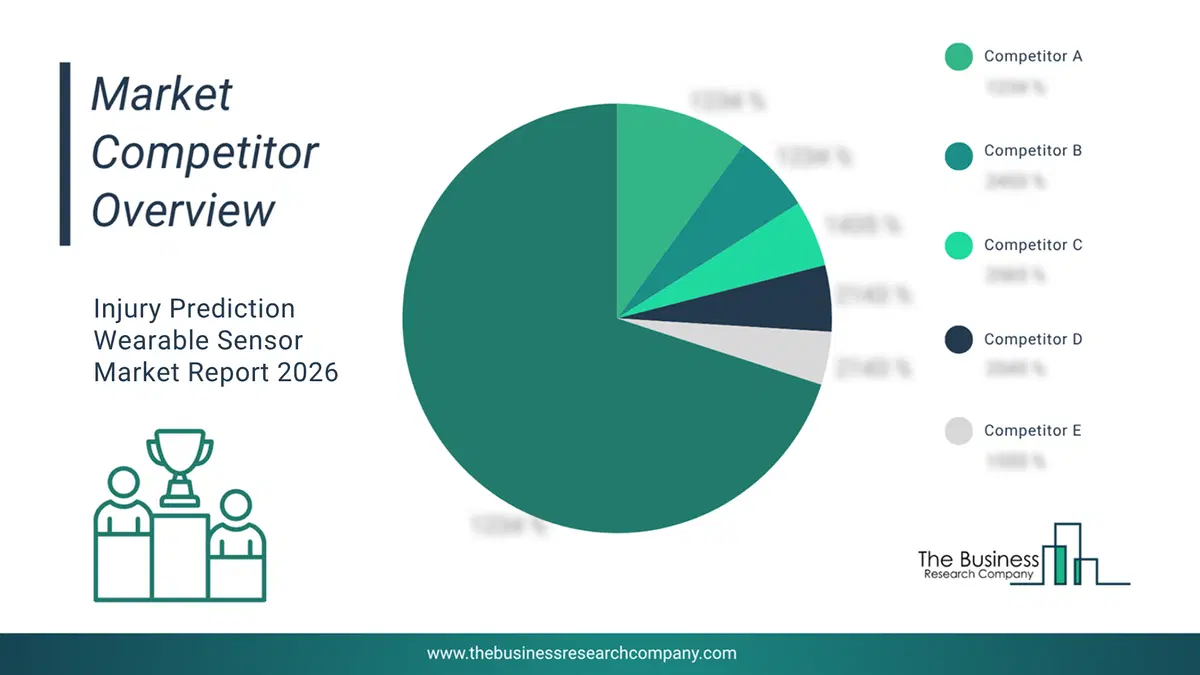
This chart is for illustrative purposes; the full report includes a detailed competitor analysis and comprehensive overview of the top 10 companies in the market.
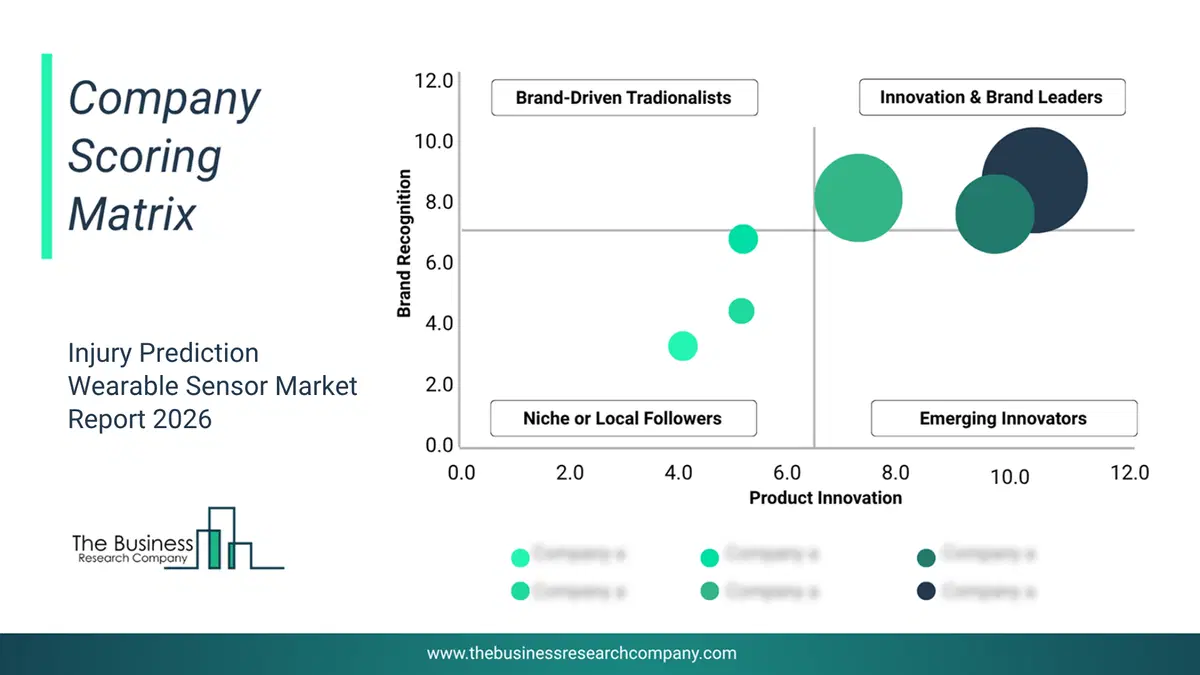
This chart maps companies by product innovation and brand strength, with bubble size indicating relative revenue, helping identify market leaders, challengers, and niche players. This is an illustrative chart; the full report provides a complete and accurate competitive analysis.
Global Injury Prediction Wearable Sensor Market Trends and Insights
Major companies operating in the injury prediction wearable sensor market are focusing on developing innovative products, such as wearable biopatches to monitor physiological and biomechanical data in real time to prevent injuries. Wearable biopatch are compact, sensor-equipped devices applied to the body to continuously monitor vital signs and biomechanical data for health and injury prevention. For instance, In September 2025, Emory University a US-based private research organization, in collaboration with the Georgia Institute of Technology, a US-based research organization, developed the SENSE Biopatch, a wearable device designed to monitor and protect the health of outdoor workers. The patch tracks multiple physiological signals, including skin temperature, heart rate, hydration, physical activity, and blood oxygen levels. Its AI algorithms analyze these signals in real time to detect early warning signs of heat stress and provide predictive alerts. The design emphasizes comfort and unobtrusiveness, ensuring that workers can wear it continuously without disruption.What Are Latest Mergers And Acquisitions In The Injury Prediction Wearable Sensor Market?
In June 2025, Nationwide Mutual Insurance Company, a US-based insurance and financial services company partnered with KINETIC Technologies to enhance workplace safety at food bank. Through this partnership, KINETIC’s wearable sensors (REFLEX devices) will be deployed to track workers’ movements, posture, and ergonomics in real time, with the goal of preventing musculoskeletal injuries before they happen. KINETIC Technologies is a US-based company specialized in wearable technology solutions aimed at reducing workplace injuries.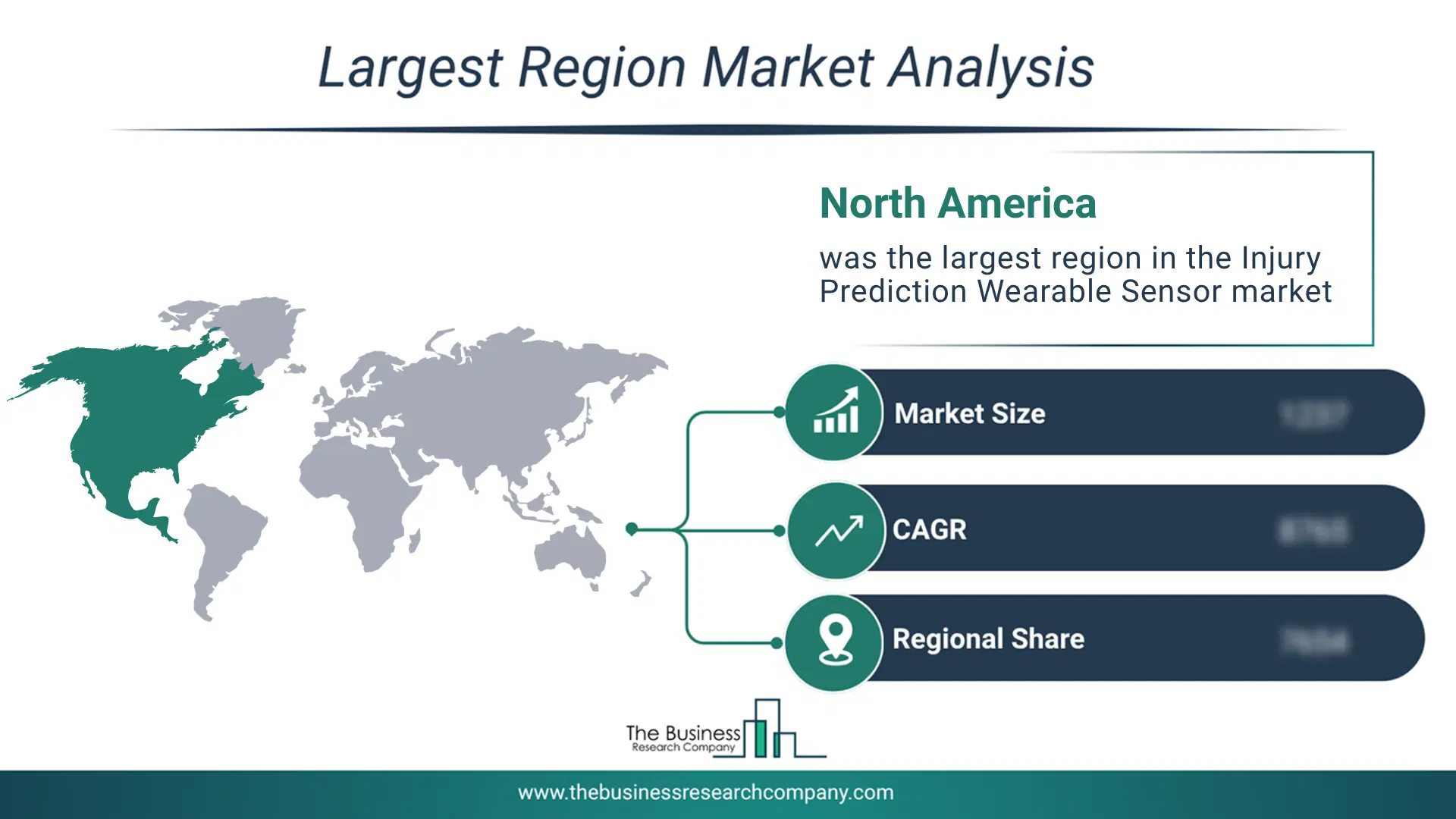
Regional Outlook
North America was the largest region in the injury prediction wearable sensor market in 2025. Asia-Pacific is expected to be the fastest-growing region in the forecast period. The regions covered in this market report are Asia-Pacific, South East Asia, Western Europe, Eastern Europe, North America, South America, Middle East, Africa. The countries covered in this market report are Australia, Brazil, China, France, Germany, India, Indonesia, Japan, Taiwan, Russia, South Korea, UK, USA, Canada, Italy, SpainWhat Defines the Injury Prediction Wearable Sensor Market?
The injury prediction wearable sensor market consists of sales of blood oxygen sensors, smart insoles, brainwave wrist sensors, and vital sign monitoring patches. Values in this market are ‘factory gate’ values, that is the value of goods sold by the manufacturers or creators of the goods, whether to other entities (including downstream manufacturers, wholesalers, distributors and retailers) or directly to end customers. The value of goods in this market includes related services sold by the creators of the goods.How is Market Value Defined and Measured?
The market value is defined as the revenues that enterprises gain from the sale of goods and/or services within the specified market and geography through sales, grants, or donations in terms of the currency (in USD unless otherwise specified). The revenues for a specified geography are consumption values that are revenues generated by organizations in the specified geography within the market, irrespective of where they are produced. It does not include revenues from resales along the supply chain, either further along the supply chain or as part of other products.
This chart presents market attractiveness based on a quantitative evaluation of growth, competition, strategic alignment, and risk, offering a clear view of opportunity areas for decision-making. This chart is for illustrative purposes; the full report contains the complete analysis.

This chart highlights the Total Addressable Market (TAM) by estimating the maximum revenue opportunity using an assumption-driven approach, supporting strategic planning and opportunity sizing across markets. The chart is illustrative; the full report provides a more comprehensive analysis.
What Key Data and Analysis Are Included in the Injury Prediction Wearable Sensor Market Report 2026?
The injury prediction wearable sensor market research report is one of a series of new reports from The Business Research Company that provides market statistics, including industry global market size, regional shares, competitors with the market share, detailed market segments, market trends and opportunities, and any further data you may need to thrive in the injury prediction wearable sensor industry. The market research report delivers a complete perspective of everything you need, with an in-depth analysis of the current and future state of the industry.Injury Prediction Wearable Sensor Market Report Forecast Analysis
| Report Attribute | Details |
|---|---|
| Market Size Value In 2026 | $2.66 billion |
| Revenue Forecast In 2030 | $4.82 billion |
| Growth Rate | CAGR of 16% from 2026 to 2030 |
| Base Year For Estimation | 2025 |
| Actual Estimates/Historical Data | 2020-2025 |
| Forecast Period | 2026 - 2030 |
| Market Representation | Revenue in USD Billion and CAGR from 2026 to 2030 |
| Segments Covered | Sensor Type, Application, Distribution Channel, End Users |
| Regional Scope | Asia-Pacific, Western Europe, Eastern Europe, North America, South America, Middle East, Africa |
| Country Scope | The countries covered in the report are Australia, Brazil, China, France, Germany, India, Indonesia, Japan, Taiwan, Russia, South Korea, UK, USA, Canada, Italy, Spain. |
| Key Companies Profiled | Catapult Sports, STATSports, PlayerTek, GPSports, Dyamotech, ActiGraph, Biostrap, WHOOP, Oura Health, Garmin, Polar Electro, Zephyr Technology, Kinetisense, Physimax Technologies, Orreco, Sensoria Health, Athlete Intelligence, Hykso, VERT Wearable, Stryd |
| Customization Scope | Request for Customization |
| Pricing And Purchase Options | Explore Purchase Options |