Inorganic Chemical Packaging Market Report 2026
Global Outlook – By Packaging Type (Drums, Intermediate Bulk Containers, Bags And Sacks), By Material Type (Plastic, Metal, Glass), By Chemical Type (Acids, Alkalis, Salts), By Capacity (Small, Medium, Large, Bulk), By End-Use Industry (Agrochemicals And Fertilizers, Industrial And Water Treatment, Electronics And Semiconductors) – Market Size, Trends, Strategies, and Forecast to 2030
Inorganic Chemical Packaging Market Overview
• Inorganic Chemical Packaging market size has reached to $16.98 billion in 2025 • Expected to grow to $23.52 billion in 2030 at a compound annual growth rate (CAGR) of 6.7% • Growth Driver: Rising Construction Activities Fueling The Growth Of The Market Due To Increasing Demand For Paints, Coatings, And Industrial Applications • Market Trend: Paper-Based Innovations Improve Sustainability In Chemical Packaging • Asia-Pacific was the largest region and fastest growing region.What Is Covered Under Inorganic Chemical Packaging Market?
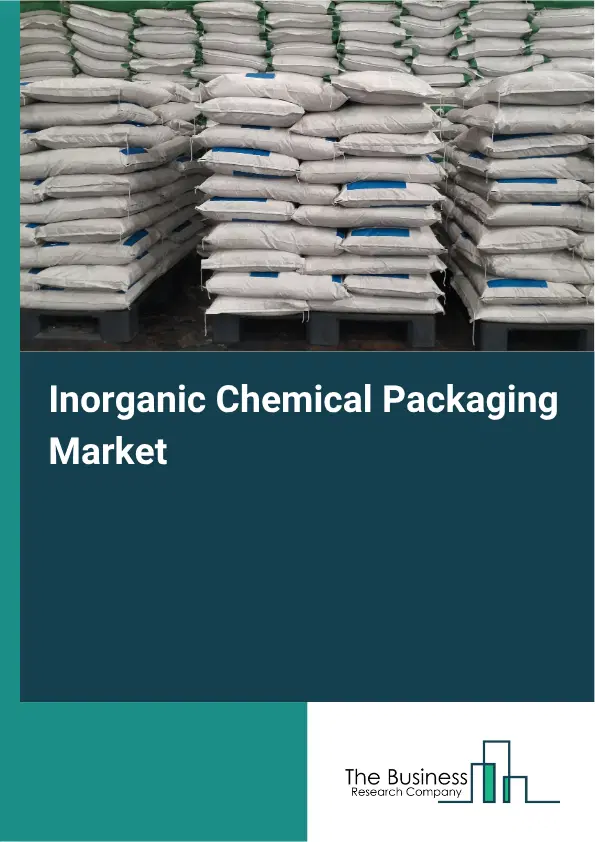
Inorganic chemical packaging refers to specialized packaging solutions designed for the safe storage, handling, transportation, and distribution of inorganic chemical products. These packaging systems are engineered to provide chemical resistance, prevent leakage and contamination, ensure product integrity, and comply with applicable safety and regulatory requirements throughout the supply chain. The main packaging types of inorganic chemical packaging include drums, intermediate bulk containers, and bags and sacks. Drums refer to rigid cylindrical containers designed to safely store, handle, and transport inorganic chemicals while providing protection against leakage, contamination, and environmental exposure. These packaging products are made from materials such as plastic, metal, and glass, and are used for chemical types such as acids, alkalis, and salts, available in capacities such as small, medium, large, and bulk, and are used across end-use industries such as agrochemicals and fertilizers, industrial and water treatment, and electronics and semiconductors.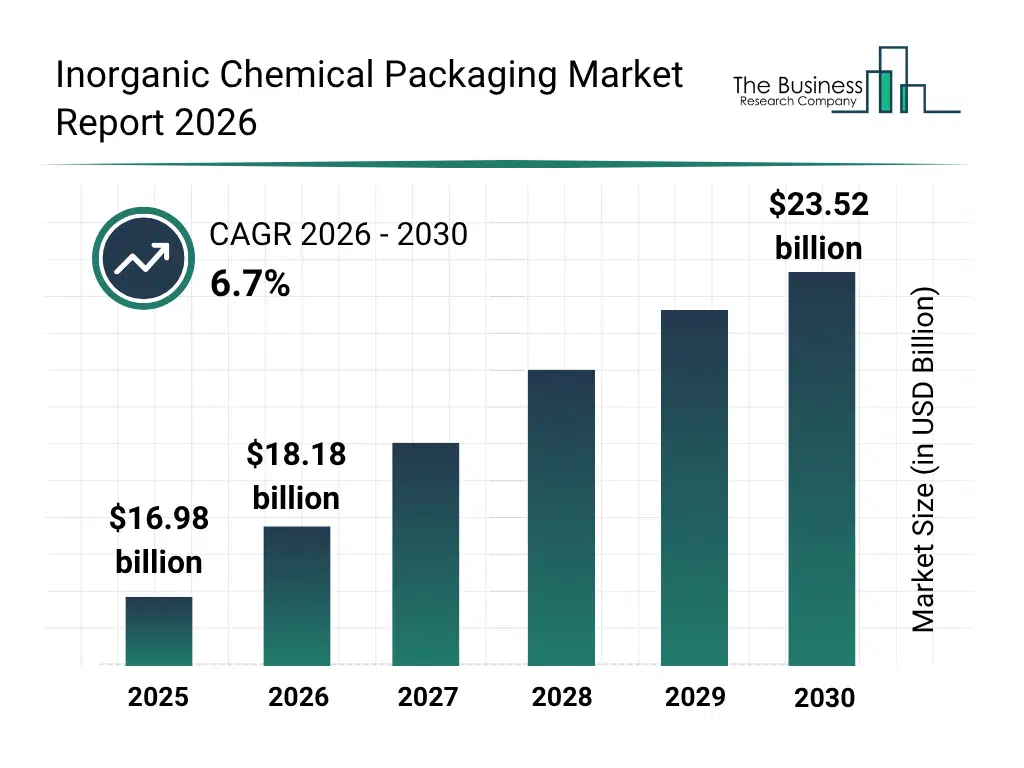
What Is The Inorganic Chemical Packaging Market Size and Share 2026?
The inorganic chemical packaging market size has grown strongly in recent years. It will grow from $16.98 billion in 2025 to $18.18 billion in 2026 at a compound annual growth rate (CAGR) of 7.1%. The growth in the historic period can be attributed to growth in inorganic chemical production, expansion of agrochemical manufacturing, rising industrial chemical consumption, increasing water treatment activities, growth in electronics and semiconductor manufacturing.What Is The Inorganic Chemical Packaging Market Growth Forecast?
The inorganic chemical packaging market size is expected to see strong growth in the next few years. It will grow to $23.52 billion in 2030 at a compound annual growth rate (CAGR) of 6.7%. The growth in the forecast period can be attributed to stricter chemical packaging safety regulations, increasing demand for sustainable packaging materials, expansion of specialty inorganic chemicals, growth in cross-border chemical transportation, rising adoption of reusable bulk packaging. Major trends in the forecast period include chemical-resistant and high-barrier packaging materials, un-certified and safety-compliant chemical packaging, leak-proof closures and enhanced containment systems, lightweight and material-efficient packaging designs, reusable and reconditioned chemical packaging solutions.Tariff Impact On Inorganic Chemical Packaging Market
Tariffs are impacting the inorganic chemical packaging market by increasing the cost of imported packaging materials, specialty polymers, steel, glass, and packaging components required for drums, intermediate bulk containers, bags, and sacks. This is increasing packaging costs and creating supply chain pressures, particularly in regions dependent on imported materials such as Asia-Pacific and Europe. Packaging segments such as plastic and metal containers are most affected due to their dependence on imported raw materials and components, while end-use industries such as agrochemicals, industrial and water treatment, and electronics and semiconductors also face higher costs. However, tariffs are also encouraging local manufacturing, regional supplier diversification, and increased investment in domestic packaging production, creating greater supply chain resilience in the market.
Global Inorganic Chemical Packaging Market Segmentation
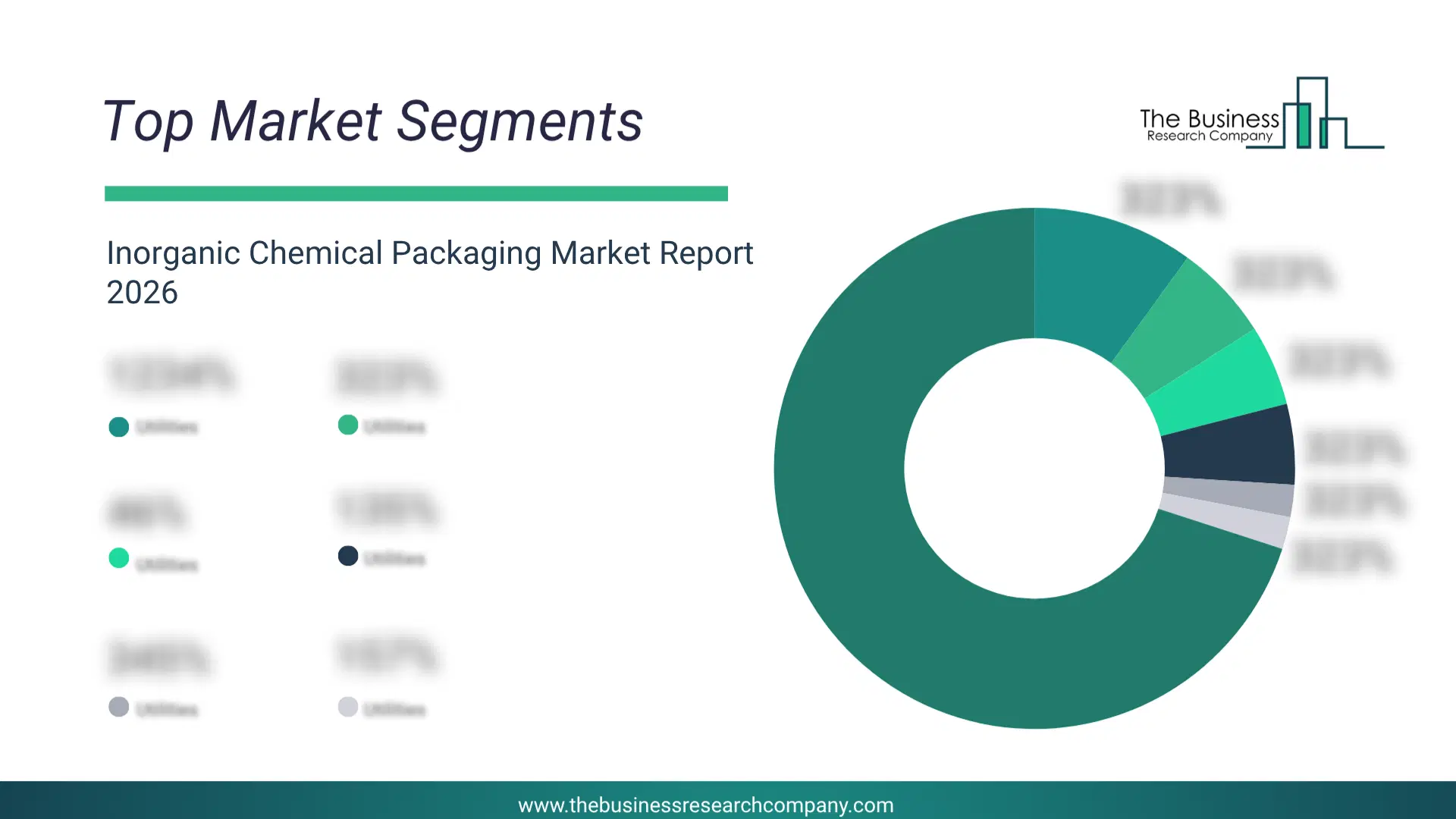
1) By Packaging Type: Drums, Intermediate Bulk Containers, Bags And Sacks 2) By Material Type: Plastic, Metal, Glass 3) By Chemical Type: Acids, Alkalis, Salts 4) By Capacity: Small, Medium, Large, Bulk 5) By End-Use Industry: Agrochemicals And Fertilizers, Industrial And Water Treatment, Electronics And Semiconductors Subsegments: 1) By Drums: Steel Drums, Plastic Drums, Fiber Drums, Open Head Drums, Tight Head Drums 2) By Intermediate Bulk Containers: Rigid Intermediate Bulk Containers, Flexible Intermediate Bulk Containers, Composite Intermediate Bulk Containers, Stainless Steel Intermediate Bulk Containers, Reusable Intermediate Bulk Containers 3) By Bags And Sacks: Paper Bags, Plastic Bags, Woven Polypropylene Sacks, Multiwall Paper Sacks, Valve BagsWhat Is The Driver Of The Inorganic Chemical Packaging Market?
The expansion of the construction sector is expected to propel the growth of the inorganic chemical packaging market going forward. The construction sector refers to the part of the economy that is involved in building, repairing, and maintaining structures such as houses, buildings, roads, bridges, and other infrastructure. The construction sector is growing due to rapid urbanization, as more people are moving to cities, which increases the demand for houses, roads, buildings, and other infrastructure to support the expanding urban population. Expansion of the construction sector drives demand for inorganic chemicals such as cement additives, mineral-based compounds, and specialty chemicals, thereby increasing the need for durable and reliable packaging solutions for safe storage and transportation of these materials. For instance, in July 2026, according to the U.S. Census Bureau, a US-based government department, U.S. construction spending reached a seasonally adjusted annual rate of $2,210.2 billion in May 2026, while spending during the first five months of the year totaled $858.4 billion, representing a 2.7% increase compared with the same period in 2025. Therefore, the expansion of the construction sector is driving the growth of the inorganic chemical packaging industry.Key Players In The Global Inorganic Chemical Packaging Market
Major companies operating in the inorganic chemical packaging market are Amcor plc, Mondi plc, Sonoco Products Company, Greif Inc., ALPLA Group, Mauser Packaging Solutions, SCHÜTZ GmbH & Co. KGaA, ProAmpac, Time Technoplast Limited, Nefab AB, Schoeller Allibert AG, Novvia Group, Balmer Lawrie & Company Limited, LC Packaging International B.V., THIELMANN AG, Hoover Container Solutions, Snyder Industries Inc., CurTec Holding B.V., Qingdao LAF Packaging Co. Ltd., SIA Flexitanks Ltd.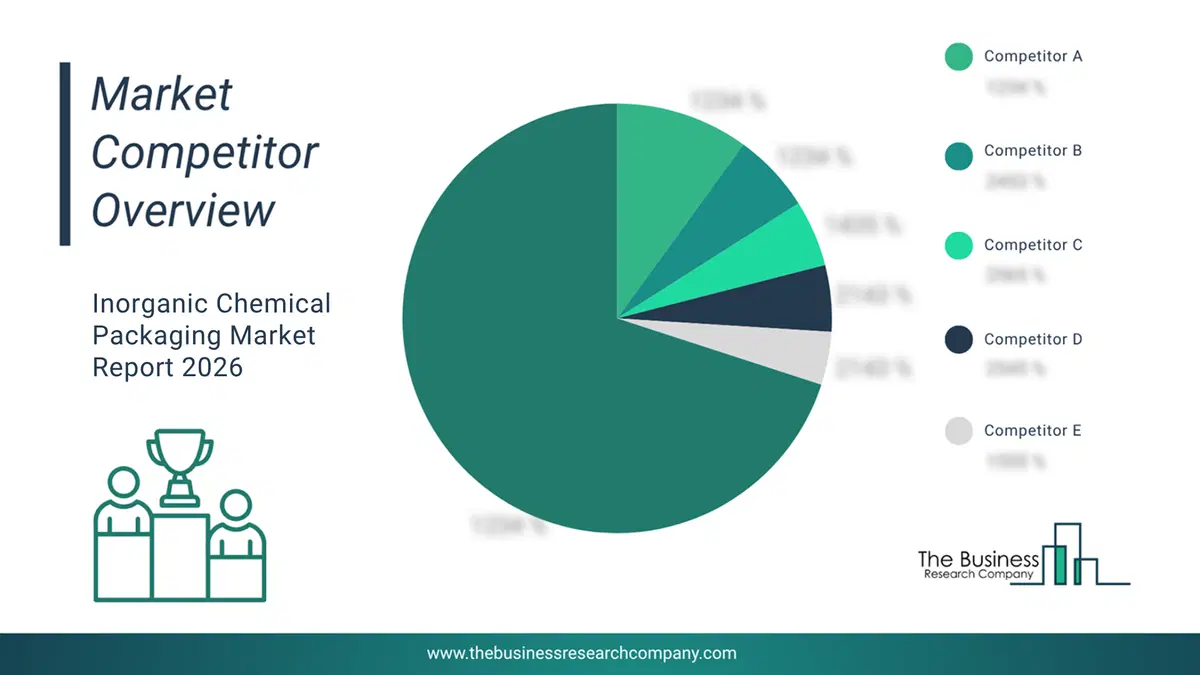
This chart is for illustrative purposes; the full report includes a detailed competitor analysis and comprehensive overview of the top 10 companies in the market.
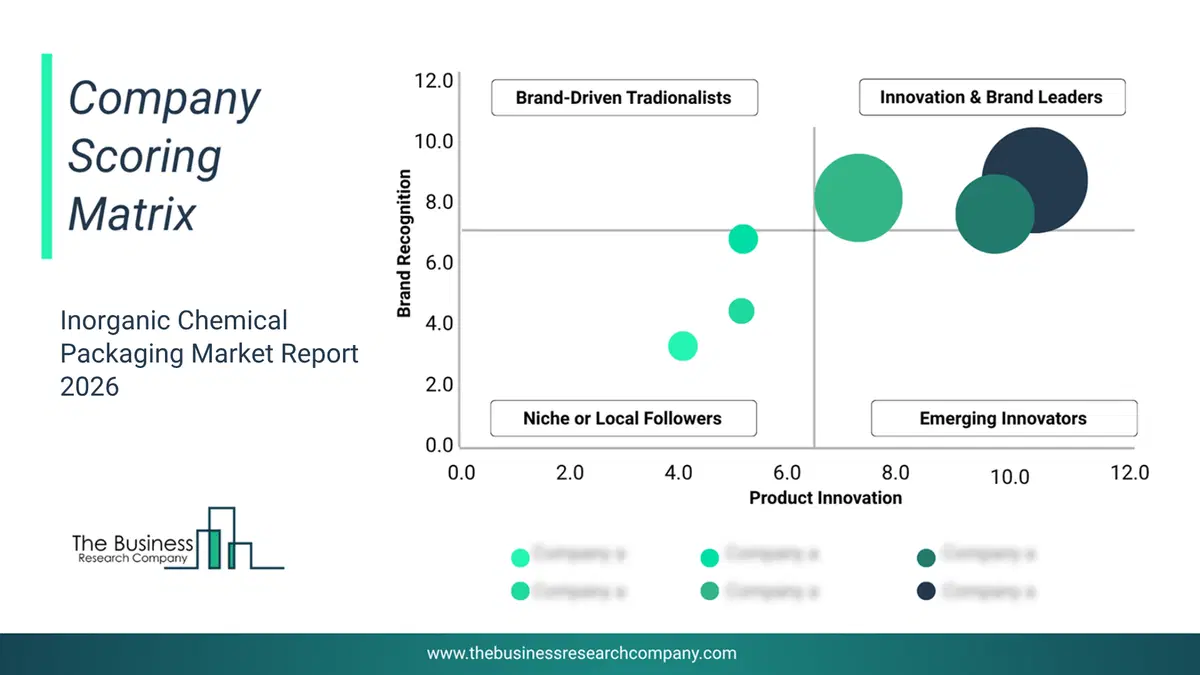
This chart maps companies by product innovation and brand strength, with bubble size indicating relative revenue, helping identify market leaders, challengers, and niche players. This is an illustrative chart; the full report provides a complete and accurate competitive analysis.
Global Inorganic Chemical Packaging Market Trends and Insights
Major companies operating in the inorganic chemical packaging market are focusing on developing innovative solutions, such as sustainable paper-based packaging for chemical powders, to reduce carbon emissions, improve recyclability, and enhance environmental performance. Sustainable paper-based packaging for chemical powders is a packaging solution made primarily from renewable, recyclable paper materials that safely contains and transports chemical powders while reducing plastic use and lowering environmental impact. For instance, in April 2025, Mondi plc, a UK-based packaging and paper manufacturer, partnered with Evonik Industries AG, a Germany-based specialty chemicals company, to launch a recyclable paper bag for chemical powders. The innovative two-ply paper bag was designed for packaging fumed silica and other industrial chemical powders, offering a sustainable alternative to conventional plastic-coated paper bags. The solution reduces material consumption by around 30%, lowers the product's carbon footprint, and is fully recyclable through existing paper recycling streams. It also delivers the strength, durability, and barrier protection required for the safe transportation and storage of fine inorganic chemical powders while supporting circular economy goals and enabling chemical manufacturers to advance their sustainability objectives.What Are Latest Mergers And Acquisitions In The Inorganic Chemical Packaging Market?
In March 2026, SCHÜTZ GmbH, a Germany-based provides high-performance packaging systems engineered for inorganic chemicals partnered with BASF SE to establish a state-of-the-art IBC production facility at BASF’s main plant in Ludwigshafen. Through this partnership, SCHÜTZ and BASF aim to establish a state-of-the-art IBC production facility to improve the efficient packaging, storage, and transport of chemical products. BASF SE, a Germany-based provides specialized packaging solutions for its Inorganic Chemicals.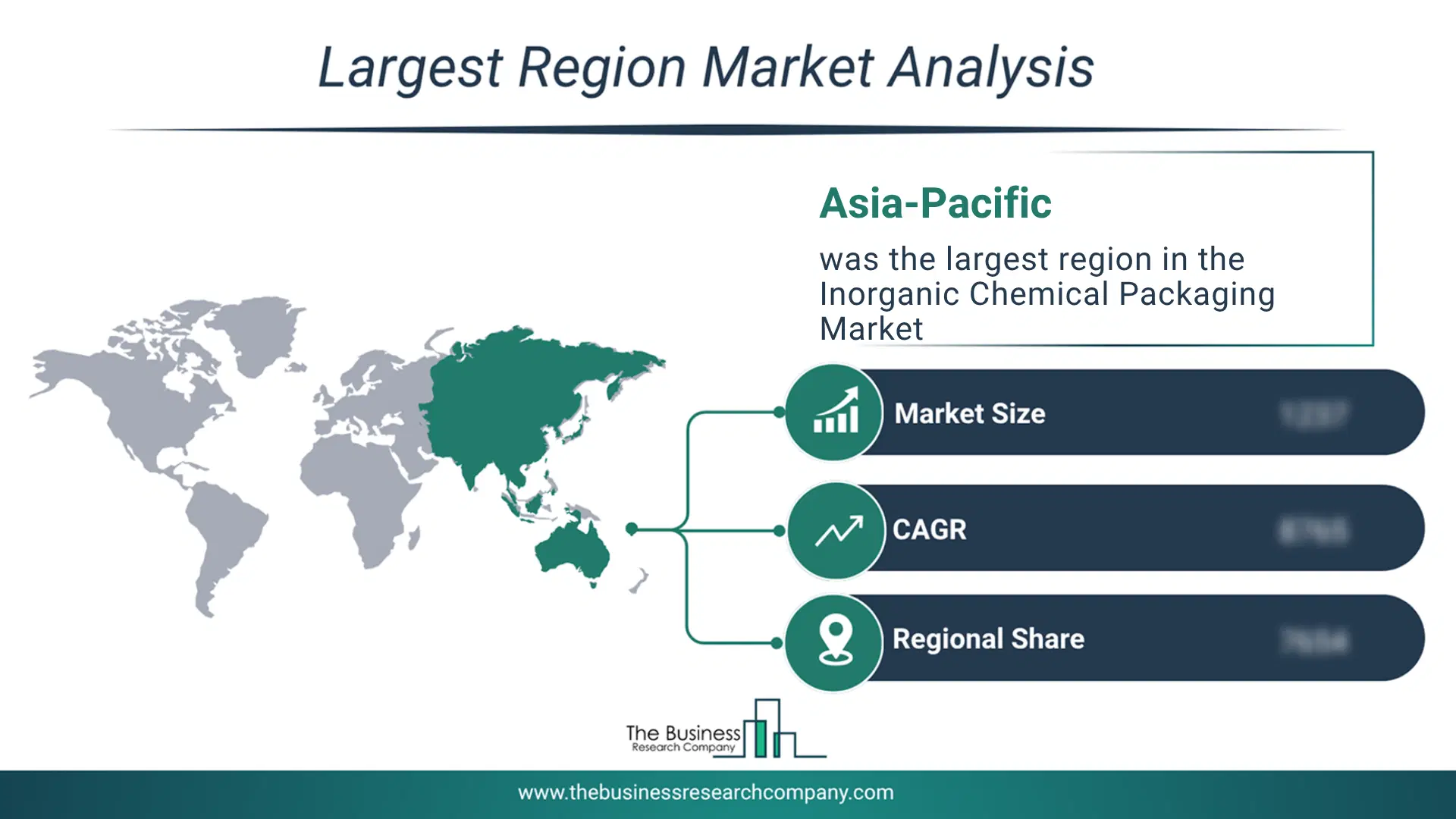
Regional Outlook
Asia-Pacific was the largest region in the inorganic chemical packaging market in 2025. Asia-Pacific is expected to be the fastest-growing region in the forecast period. The regions covered in this market report are Asia-Pacific, South East Asia, Western Europe, Eastern Europe, North America, South America, Middle East, Africa. The countries covered in this market report are Australia, Brazil, China, France, Germany, India, Indonesia, Japan, Taiwan, Russia, South Korea, UK, USA, Canada, Italy, Spain.What Defines the Inorganic Chemical Packaging Market?
The inorganic chemical packaging market consists of sales of bottles and containers, pails and buckets, jerry cans, carboys, and chemical storage tanks. Values in this market are ‘factory gate’ values, that is, the value of goods sold by the manufacturers or creators of the goods, whether to other entities (including downstream manufacturers, wholesalers, distributors, and retailers) or directly to end customers. The value of goods in this market includes related services sold by the creators of the goods.How is Market Value Defined and Measured?
The market value is defined as the revenues that enterprises gain from the sale of goods and/or services within the specified market and geography through sales, grants, or donations in terms of the currency (in USD unless otherwise specified). The revenues for a specified geography are consumption values that are revenues generated by organizations in the specified geography within the market, irrespective of where they are produced. It does not include revenues from resales along the supply chain, either further along the supply chain or as part of other products.
This chart presents market attractiveness based on a quantitative evaluation of growth, competition, strategic alignment, and risk, offering a clear view of opportunity areas for decision-making. This chart is for illustrative purposes; the full report contains the complete analysis.

This chart highlights the Total Addressable Market (TAM) by estimating the maximum revenue opportunity using an assumption-driven approach, supporting strategic planning and opportunity sizing across markets. The chart is illustrative; the full report provides a more comprehensive analysis.
What Key Data and Analysis Are Included in the Inorganic Chemical Packaging Market Report 2026?
The inorganic chemical packaging market research report is one of a series of new reports from The Business Research Company that provides market statistics, including industry global market size, regional shares, competitors with the market share, detailed market segments, market trends and opportunities, and any further data you may need to thrive in the inorganic chemical packaging industry. The market research report delivers a complete perspective of everything you need, with an in-depth analysis of the current and future state of the industry.Inorganic Chemical Packaging Market Report Forecast Analysis
| Report Attribute | Details |
|---|---|
| Market Size Value In 2026 | $18.18 billion |
| Revenue Forecast In 2030 | $23.52 billion |
| Growth Rate | CAGR of 6.7% from 2026 to 2030 |
| Base Year For Estimation | 2025 |
| Actual Estimates/Historical Data | 2020-2025 |
| Forecast Period | 2026 - 2030 |
| Market Representation | Revenue in USD Billion and CAGR from 2026 to 2030 |
| Segments Covered | Packaging Type, Material Type, Chemical Type, Capacity, End-Use Industry |
| Regional Scope | Asia-Pacific, Western Europe, Eastern Europe, North America, South America, Middle East, Africa |
| Country Scope | The countries covered in the report are Australia, Brazil, China, France, Germany, India, Indonesia, Japan, Taiwan, Russia, South Korea, UK, USA, Canada, Italy, Spain. |
| Key Companies Profiled | Amcor plc, Mondi plc, Sonoco Products Company, Greif Inc., ALPLA Group, Mauser Packaging Solutions, SCHÜTZ GmbH & Co. KGaA, ProAmpac, Time Technoplast Limited, Nefab AB, Schoeller Allibert AG, Novvia Group, Balmer Lawrie & Company Limited, LC Packaging International B.V., THIELMANN AG, Hoover Container Solutions, Snyder Industries Inc., CurTec Holding B.V., Qingdao LAF Packaging Co. Ltd., SIA Flexitanks Ltd. |
| Customization Scope | Request for Customization |
| Pricing And Purchase Options | Explore Purchase Options |