
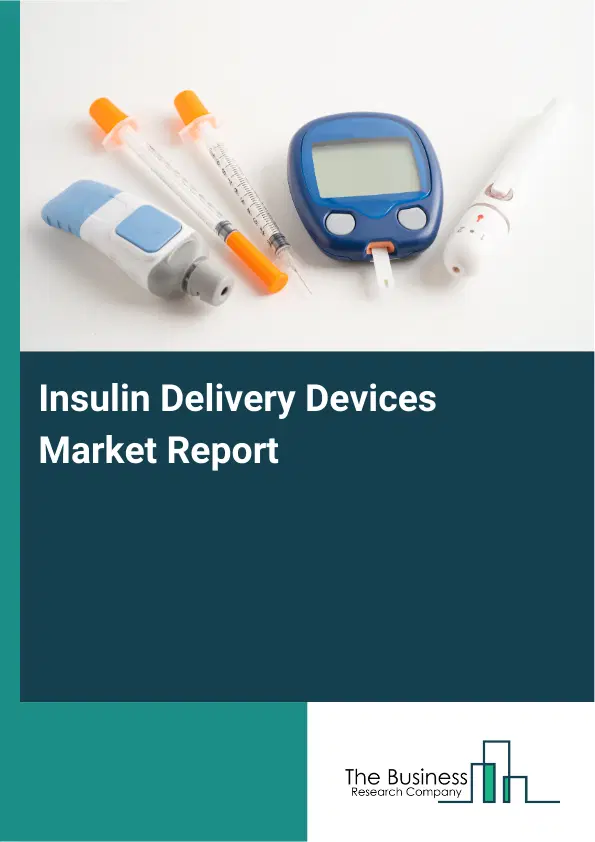
Insulin Delivery Devices Market Report 2026
Global Outlook – By Type (Insulin Syringes, Insulin Jet Injectors, Pen Needles, Reusable Insulin Pens, Disposable Insulin Pens), By Disease Indication (Type 1, Type 2), By Distribution Channels (Hospital Pharmacies, Retail Pharmacies, Online Sales, Diabetes Clinics Or Centers) – Market Size, Trends, Strategies, and Forecast to 2030
Insulin Delivery Devices Market Overview
• Insulin Delivery Devices market size has reached to $19.07 billion in 2025 • Expected to grow to $28.03 billion in 2030 at a compound annual growth rate (CAGR) of 8% • Growth Driver: Impact Of Diabetes Prevalence On The Insulin Delivery Devices Market • Market Trend: Innovative Developments In Insulin Delivery Devices • North America was the largest region in 2025 and Asia-Pacific is the fastest growing region.What Is Covered Under Insulin Delivery Devices Market?
Insulin delivery devices refer to medical tools designed to administer insulin into the body of a person with diabetes. These devices are crucial for managing blood glucose levels in individuals who cannot produce sufficient insulin naturally. These devices are used to manage blood sugar levels effectively, providing flexibility and convenience in insulin administration. The main insulin delivery devices are insulin syringes, insulin jet injectors, pen needles, reusable insulin pens, disposable insulin pens, insulin pumps, external or tethered pumps, and patch pumps. Insulin syringes are medical devices designed specifically for the subcutaneous injection of insulin, featuring fine, short needles and precise, easy-to-read dosage markings to ensure accurate delivery of the hormone. It is used for type 1 and type 2 diseases, and it is distributed through various channels such as hospital pharmacies, retail pharmacies, online sales, and diabetes clinics or centers.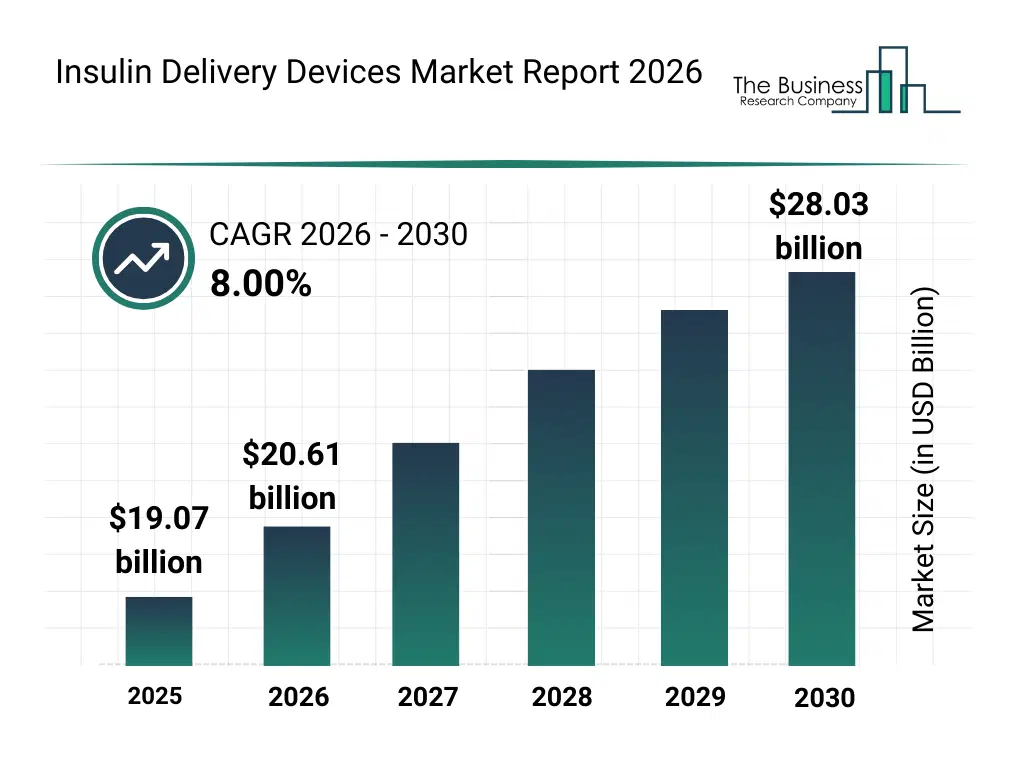
What Is The Insulin Delivery Devices Market Size and Share 2026?
The insulin delivery devices market size has grown strongly in recent years. It will grow from $19.07 billion in 2025 to $20.61 billion in 2026 at a compound annual growth rate (CAGR) of 8.1%. The growth in the historic period can be attributed to rising prevalence of diabetes, growing awareness of diabetes management, increased availability of insulin therapies, expansion of healthcare access, rising adoption of self-injection practices.What Is The Insulin Delivery Devices Market Growth Forecast?
The insulin delivery devices market size is expected to see strong growth in the next few years. It will grow to $28.03 billion in 2030 at a compound annual growth rate (CAGR) of 8.0%. The growth in the forecast period can be attributed to increasing global diabetic population, rising demand for convenient insulin delivery methods, growing focus on long-term diabetes management, expanding access to diabetes care in emerging markets, increasing adoption of home healthcare solutions. Major trends in the forecast period include rising adoption of insulin pens over traditional syringes, growing demand for insulin pumps for continuous insulin delivery, increasing preference for user-friendly and portable insulin devices, expansion of home-based diabetes management solutions, growing use of disposable and pre-filled insulin delivery devices.
Global Insulin Delivery Devices Market Segmentation
1) By Type: Insulin Syringes, Insulin Jet Injectors, Pen Needles, Reusable Insulin Pens, Disposable Insulin Pens 2) By Disease Indication: Type 1, Type 2 3) By Distribution Channels: Hospital Pharmacies, Retail Pharmacies, Online Sales, Diabetes Clinics Or Centers Subsegments: 1) By Insulin Syringes: Standard Insulin Syringes, Insulin Syringes With Fixed Or Adjustable Needle Length 2) By Insulin Jet Injectors: Needle-Free Insulin Jet Injectors, High-Pressure Insulin Jet Injectors 3) By Pen Needles: Short Pen Needles, Long Pen Needles 4) By Reusable Insulin Pens: Reusable Pens With Replaceable Cartridges, Refillable Insulin Pens 5) By Disposable Insulin Pens: Single-Use Disposable Insulin Pens, Pre-Filled Disposable Insulin PensWhat Is The Driver Of The Insulin Delivery Devices Market?
The growing prevalence of diabetes is expected to propel the growth of the insulin delivery devices market going forward. Diabetes is a chronic condition marked by high blood sugar levels caused by either inadequate insulin production from the pancreas or the body's inability to effectively utilize insulin. Diabetes rates are increasing primarily due to factors such as sedentary lifestyles, unhealthy diets, and rising obesity rates globally. Insulin delivery devices are required for diabetes to help individuals manage their blood sugar levels effectively by administering insulin in a controlled and convenient manner, thereby preventing complications and promoting health. For instance, according to the International Diabetes Federation, a Belgium-based non-governmental organization, in 2024, approximately 589 million adults aged 20–79 are living with diabetes worldwide. This number is projected to increase to 853 million by 2050. Therefore, the growing prevalence of diabetes is driving the growth of the insulin delivery devices industry.Key Players In The Global Insulin Delivery Devices Market
Major companies operating in the insulin delivery devices market are Novo Nordisk A/S, Medtronic Plc, Insulet Corporation, Tandem Diabetes Care Inc., Ypsomed Holding AG, Becton Dickinson and Company, Sanofi SA, Eli Lilly and Company, Abbott Laboratories, EOFlow Co. Ltd., Beta Bionics Inc., Bigfoot Biomedical Inc., CeQur Corporation, Emperra GmbH, Debiotech SA, AMF Medical SA, Aerami Therapeutics Inc., Andain Inc., Apex Medical Devices, Animas Corporation
This chart is for illustrative purposes; the full report includes a detailed competitor analysis and comprehensive overview of the top 10 companies in the market.
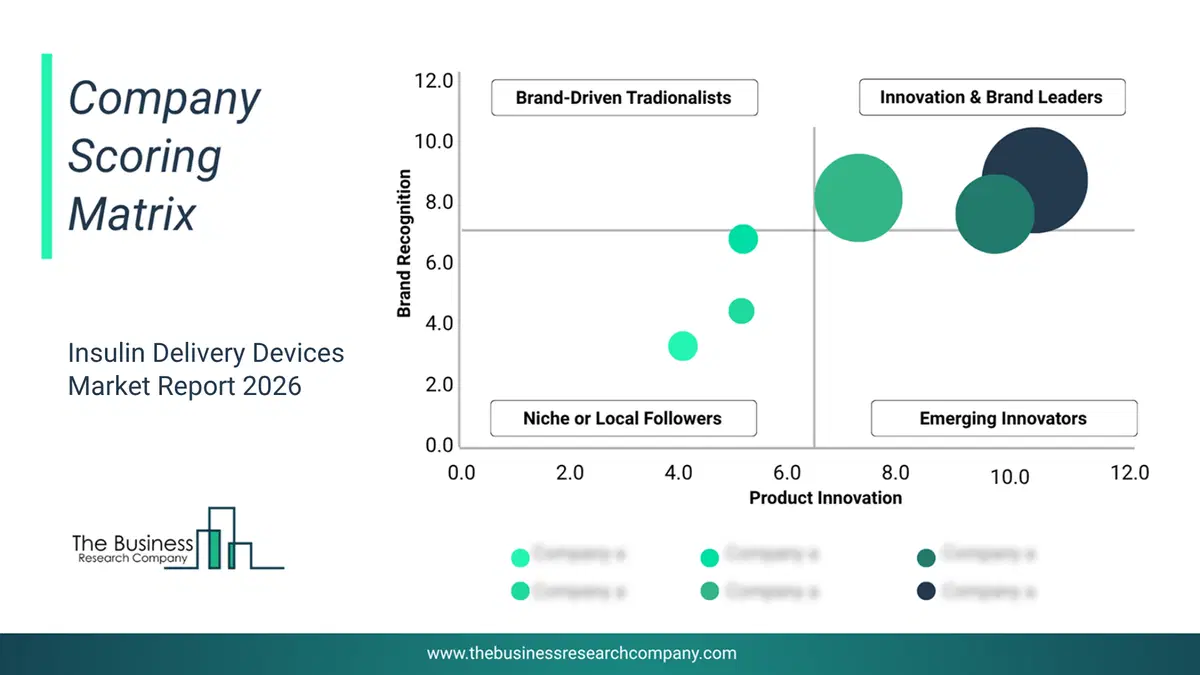
This chart maps companies by product innovation and brand strength, with bubble size indicating relative revenue, helping identify market leaders, challengers, and niche players. This is an illustrative chart; the full report provides a complete and accurate competitive analysis.
Global Insulin Delivery Devices Market Trends and Insights
Major companies operating in the insulin delivery devices market are developing innovative products, such as insulin pumps, to provide continuous or customizable insulin delivery. Insulin pumps are programmable medical devices that deliver insulin continuously or as needed through a catheter placed under the skin. For instance, in May 2023, Beta Bionics, a US-based medical technology company, announced U.S. Food and Drug Administration approval for the iLet ACE Pump and the iLet Dosing Decision Software. The iLet Bionic Pancreas system is designed for individuals aged six and older with type 1 diabetes, combining two devices with a compatible FDA-cleared integrated continuous glucose monitor (iCGM). It operates using an automated insulin dosing (AID) system driven by an adaptive closed-loop algorithm, which initially uses only the user’s body weight for setup and eliminates the need for additional insulin dosing parameters. Unlike traditional pump therapy, this system requires no manual adjustment of settings, making it easier to initiate and manage. The iLet device also introduces a meal announcement feature that simplifies mealtime insulin dosing by categorizing meals as small, medium, or large, with the algorithm learning and adapting to individual insulin requirements over time.What Are Latest Mergers And Acquisitions In The Insulin Delivery Devices Market?
In September 2023, Abbott, a US-based healthcare company, acquired Bigfoot Biomedical for an undisclosed amount. As a result of the acquisition, Abbott enhances its footprint in diabetes care, bolstering its renowned FreeStyle Libre portfolio of continuous glucose monitoring technology. This move aligns with Abbott's strategy to advance connected solutions, aiming to personalize and refine diabetes management. Bigfoot Biomedical is a US-based manufacturer of insulin delivery devices.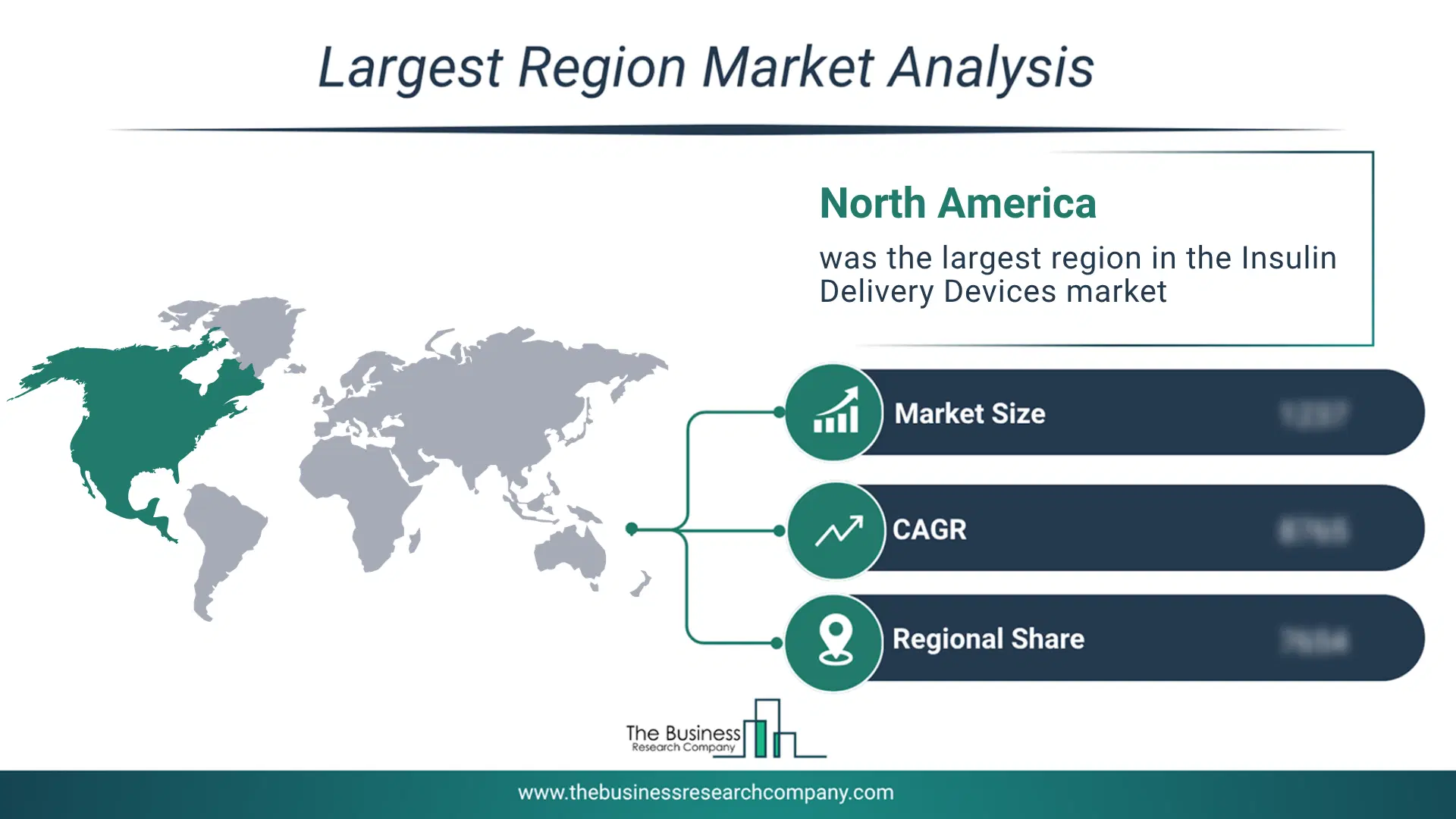
Regional Outlook
North America was the largest region in the insulin delivery devices market in 2025. Asia-Pacific is expected to be the fastest-growing region in the forecast period. The regions covered in this market report are Asia-Pacific, South East Asia, Western Europe, Eastern Europe, North America, South America, Middle East, Africa. The countries covered in this market report are Australia, Brazil, China, France, Germany, India, Indonesia, Japan, Taiwan, Russia, South Korea, UK, USA, Canada, Italy, SpainWhat Defines the Insulin Delivery Devices Market?
The insulin delivery devices market consists of sales of insulin infusion sets, insulin reservoirs, insulin pump accessories, and insulin cartridges. Values in this market are ‘factory gate’ values, that is the value of goods sold by the manufacturers or creators of the goods, whether to other entities (including downstream manufacturers, wholesalers, distributors and retailers) or directly to end customers. The value of goods in this market includes related services sold by the creators of the goods.How is Market Value Defined and Measured?
The market value is defined as the revenues that enterprises gain from the sale of goods and/or services within the specified market and geography through sales, grants, or donations in terms of the currency (in USD unless otherwise specified). The revenues for a specified geography are consumption values that are revenues generated by organizations in the specified geography within the market, irrespective of where they are produced. It does not include revenues from resales along the supply chain, either further along the supply chain or as part of other products.
This chart presents market attractiveness based on a quantitative evaluation of growth, competition, strategic alignment, and risk, offering a clear view of opportunity areas for decision-making. This chart is for illustrative purposes; the full report contains the complete analysis.

This chart highlights the Total Addressable Market (TAM) by estimating the maximum revenue opportunity using an assumption-driven approach, supporting strategic planning and opportunity sizing across markets. The chart is illustrative; the full report provides a more comprehensive analysis.
What Key Data and Analysis Are Included in the Insulin Delivery Devices Market Report 2026?
The insulin delivery devices market research report is one of a series of new reports from The Business Research Company that provides market statistics, including industry global market size, regional shares, competitors with the market share, detailed market segments, market trends and opportunities, and any further data you may need to thrive in the insulin delivery devices industry. The market research report delivers a complete perspective of everything you need, with an in-depth analysis of the current and future state of the industry.Insulin Delivery Devices Market Report Forecast Analysis
| Report Attribute | Details |
|---|---|
| Market Size Value In 2026 | $20.61 billion |
| Revenue Forecast In 2030 | $28.03 billion |
| Growth Rate | CAGR of 8% from 2026 to 2030 |
| Base Year For Estimation | 2025 |
| Actual Estimates/Historical Data | 2020-2025 |
| Forecast Period | 2026 - 2030 |
| Market Representation | Revenue in USD Billion and CAGR from 2026 to 2030 |
| Segments Covered | Type, Disease Indication, Distribution Channels |
| Regional Scope | Asia-Pacific, Western Europe, Eastern Europe, North America, South America, Middle East, Africa |
| Country Scope | The countries covered in the report are Australia, Brazil, China, France, Germany, India, Indonesia, Japan, Taiwan, Russia, South Korea, UK, USA, Canada, Italy, Spain. |
| Key Companies Profiled | Novo Nordisk A/S, Medtronic Plc, Insulet Corporation, Tandem Diabetes Care Inc., Ypsomed Holding AG, Becton Dickinson and Company, Sanofi SA, Eli Lilly and Company, Abbott Laboratories, EOFlow Co. Ltd., Beta Bionics Inc., Bigfoot Biomedical Inc., CeQur Corporation, Emperra GmbH, Debiotech SA, AMF Medical SA, Aerami Therapeutics Inc., Andain Inc., Apex Medical Devices, Animas Corporation |
| Customization Scope | Request for Customization |
| Pricing And Purchase Options | Explore Purchase Options |