

Insurance Telematics Market Report 2026
Global Outlook – By Type (Pay-As-You-Drive (PAYD), Pay-How-you-Drive (PHYD), Manage-How-You- Drive (MHYD)), By Technology (On-Board Diagnostic II (OBD-ll), Smartphone, Hybrid, Black-Box), By Deployment (On-Premise, Cloud), By Organization Size (Large Enterprises, Small And Medium-Sized Enterprises), By Vehicle Type (Light-Duty Vehicles (LDV), Heavy-Duty Vehicles (HDV)) – Market Size, Trends, Strategies, and Forecast to 2030
Insurance Telematics Market Overview
• Insurance Telematics market size has reached to $4.68 billion in 2025 • Expected to grow to $10.21 billion in 2030 at a compound annual growth rate (CAGR) of 16.8% • Growth Driver: Increasing Adoption Of Connected Cars Fuels Growth In The Insurance Telematics Market • Market Trend: Emergence Of Mobile Telematics-Based Motor Telematics Safety Platforms Drive Innovation In Auto Insurance • Europe was the largest region in 2025 and Asia-Pacific is the fastest growing region.Market Gains By 2030 – Top Opportunities By Segment
Market Gain identifies the most promising market opportunities by highlighting the segments or products expected to generate the highest incremental revenue growth over the next five years.
What Is Covered Under Insurance Telematics Market?
Insurance telematics refers to the use of technology, such as GPS-based devices or mobile apps, to monitor and assess the driving behavior and patterns of policyholders. It is utilized to allow insurance companies to create usage-based insurance (UBI) schemes that appropriately price premiums and policies based on individual driving behaviors. The main types of insurance telematics are pay-as-you-drive (PAYD), pay-how-you-drive (PHYD), and manage-how-you-drive (MHYD). Pay-as-you-drive (PAYD) refers to a usage-based insurance model where premiums are determined by the actual distance driven by the policyholder, typically measured through telematics devices installed in vehicles. It is based on several technologies, including on-board diagnostic II (OBD-ll), smartphones, hybrids, and black boxes, and can be deployed on-premise and in the cloud. It is used in large enterprises and small and medium-sized enterprise organizations for several types of vehicles, such as light-duty vehicles (LDV) and heavy-duty vehicles (HDV).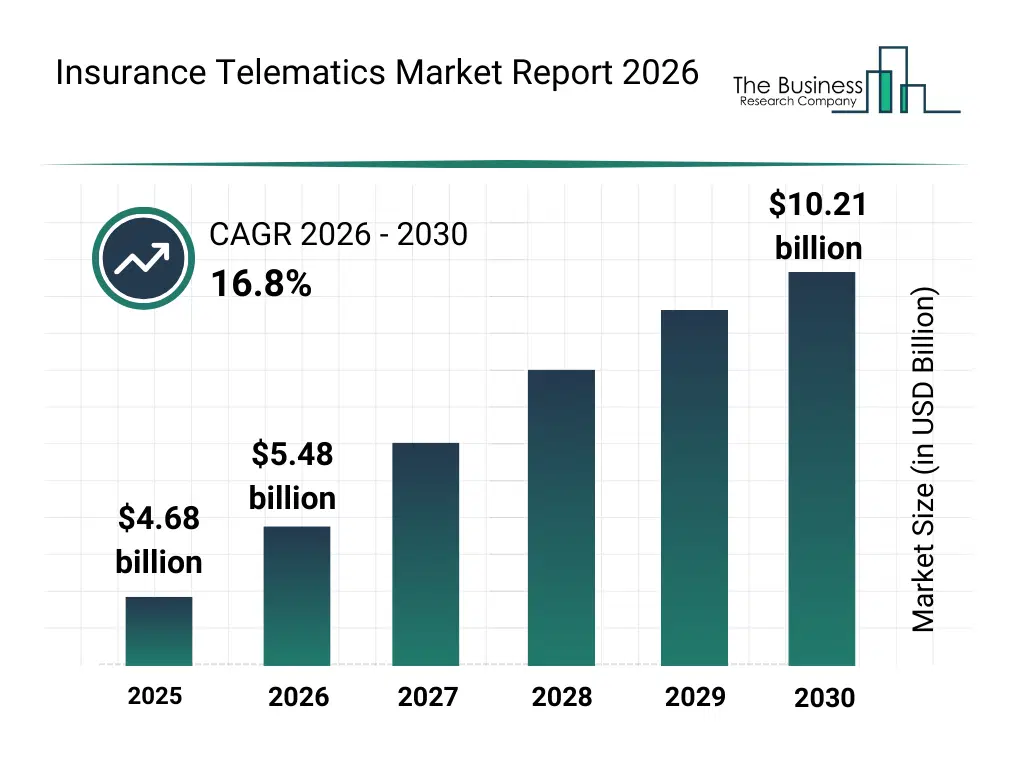
What Is The Insurance Telematics Market Size and Share 2026?
The insurance telematics market size has grown rapidly in recent years. It will grow from $4.68 billion in 2025 to $5.48 billion in 2026 at a compound annual growth rate (CAGR) of 17.0%. The growth in the historic period can be attributed to rising vehicle ownership levels, growing availability of onboard diagnostics devices, expansion of mobile connectivity, increased insurer focus on risk segmentation, early adoption of pay-as-you-drive models.What Is The Insurance Telematics Market Growth Forecast?
The insurance telematics market size is expected to see rapid growth in the next few years. It will grow to $10.21 billion in 2030 at a compound annual growth rate (CAGR) of 16.8%. The growth in the forecast period can be attributed to expansion of connected car ecosystems, increasing adoption of electric and autonomous vehicles, growing demand for personalized insurance products, rising integration of AI-based risk analytics, increasing regulatory acceptance of telematics-based pricing. Major trends in the forecast period include increasing adoption of usage-based insurance models, rising integration of smartphone-based telematics, growing use of real-time driving behavior analytics, expansion of connected vehicle insurance platforms, enhanced focus on risk-based pricing.
Global Insurance Telematics Market Segmentation
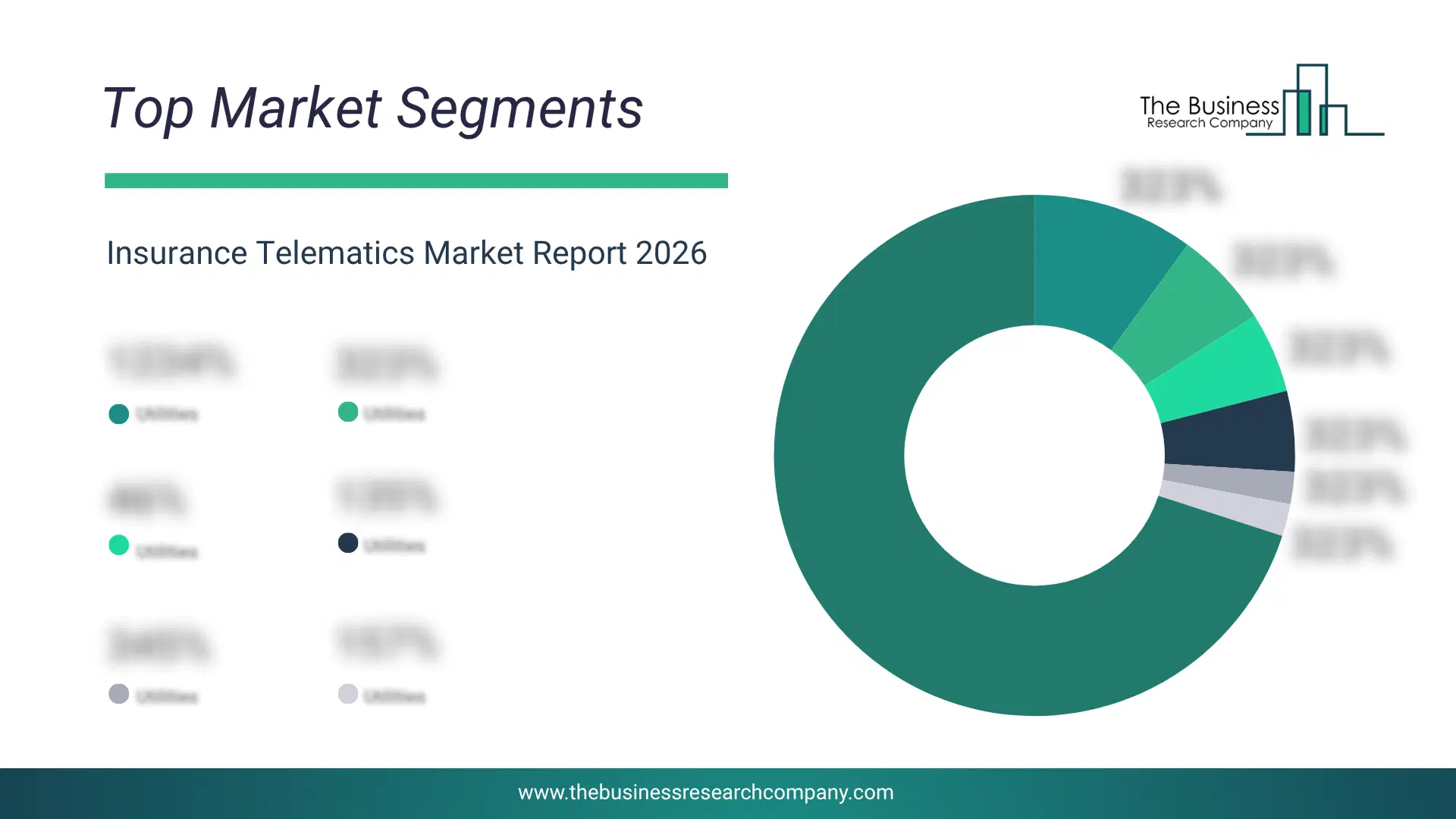
1) By Type: Pay-As-You-Drive (PAYD), Pay-How-you-Drive (PHYD), Manage-How-You- Drive (MHYD) 2) By Technology: On-Board Diagnostic II (OBD-ll), Smartphone, Hybrid, Black-Box 3) By Deployment: On-Premise, Cloud 4) By Organization Size: Large Enterprises, Small And Medium-Sized Enterprises 5) By Vehicle Type: Light-Duty Vehicles (LDV), Heavy-Duty Vehicles (HDV) Subsegments: 1) By Pay-As-You-Drive (PAYD): Distance-Based PAYD, Time-Based PAYD, Location-Based PAYD 2) By Pay-How-You-Drive (PHYD): Behavior-Based PHYD, Risk-Profile Based PHYD, Driving Habits Monitoring (Speed, Acceleration, Braking) 3) By Manage-How-You-Drive (MHYD): Driver Performance Monitoring, Vehicle Maintenance And Usage Monitoring, Safety And Security Features Integration The top segments in the insurance telematics market will be: • Pay-How-you-Drive (PHYD) will reach $4.08 Billion by 2030. • Pay-As-You-Drive (PAYD) will reach $3.84 Billion by 2030. • Manage-How-You- Drive (MHYD) will reach $2.3 Billion by 2030.What Is The Driver Of The Insurance Telematics Market?
The rising adoption of connected cars is expected to propel the growth of the insurance telematics market going forward. Connected cars refer to vehicles equipped with advanced communication systems and internet connectivity, enabling them to interact with other devices, networks, and services both within and outside the vehicle. The factors driving the rise of connected cars include the continuous advancements in mobile technology and their ability to collect and utilize data for predictive maintenance. Connected cars give a multitude of real-time information about driving behaviors and factors like speed, distance, location, braking, and acceleration. This data, obtained via connected car systems and telematics technology, allows insurers to assess individual driver behavior correctly, modify insurance premiums based on actual driving behaviors, and provide usage-based insurance (UBI) programs. For instance, in January 2023, according to the IEEE Communications Society, a US-based technical professional organization, the number of connected vehicles globally is set to grow from 192 million this year to more than 367 million in 2027. Therefore, the rising adoption of connected cars is driving the growth of the insurance telematics industry.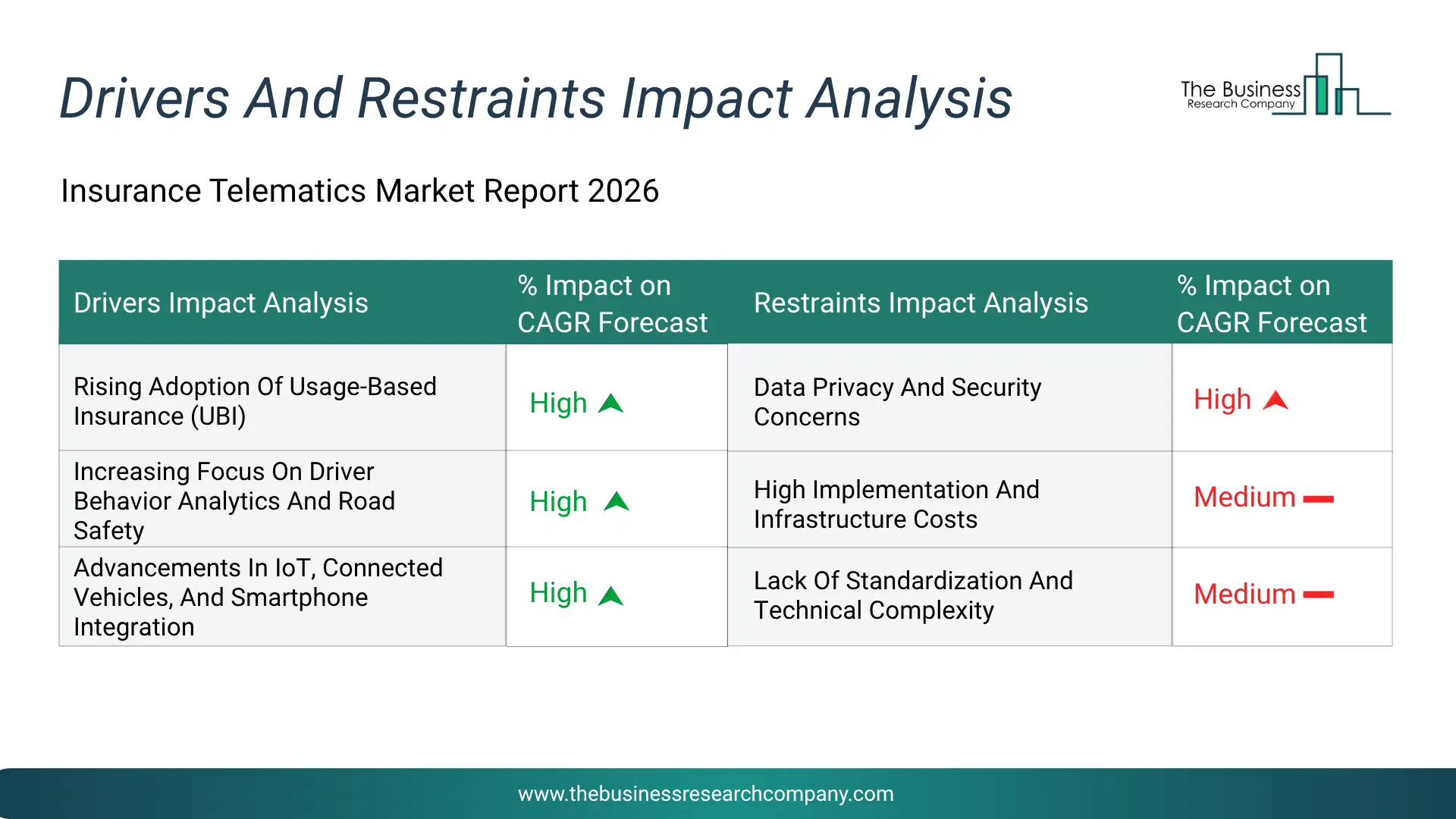
Infographic Chart Showing Key Market Drivers Analysis And Restraints For Insurance Telematics Market
The chart presents an impact analysis of key drivers and restraints, quantifying their relative influence on the market's growth rate and helping assess the balance between growth enablers and limiting factors. This chart offers a high-level perspective; the full report contains more detailed insights.
How Will The Drivers Impact Growth In The Global Insurance Telematics Market?
• Rising Adoption Of Usage-Based Insurance (UBI) (High) – During the forecast period, the rising adoption of usage-based insurance (UBI) is expected to become a key growth driver for the insurance telematics market by 2030. Rising adoption of usage-based insurance (UBI) acts as a major driver for the insurance telematics market because insurers increasingly shift from traditional fixed-premium models to behavior-based pricing systems. Telematics enables continuous monitoring of driving patterns such as speed, mileage, and braking, allowing insurers to price policies more accurately based on real risk. This improves transparency and fairness, attracting customers who prefer personalized and cost-effective insurance solutions. Additionally, safe drivers benefit from discounts, which strengthens customer engagement and retention. As demand for tailored insurance products rises, UBI significantly accelerates the adoption of telematics solutions and overall market growth. • Increasing Focus On Driver Behavior Analytics And Road Safety (High) – During the forecast period, the increasing focus on driver behavior analytics and road safety is expected to emerge as a major factor driving the expansion of the insurance telematics market by 2030. Increasing focus on driver behavior analytics and road safety acts as a major driver for the insurance telematics market because insurers and regulators aim to reduce accident rates and associated claim costs. Telematics systems capture real-time data on risky driving behaviors such as harsh braking, overspeeding, and sudden acceleration, enabling proactive risk management. These insights allow insurers to incentivize safer driving through rewards and feedback mechanisms, improving overall road safety outcomes. Reduced accidents directly lower claim expenses and enhance insurer profitability. This growing emphasis on safety and behavioral monitoring drives widespread adoption of telematics-based insurance solutions. • Advancements In IoT, Connected Vehicles, And Smartphone Integration (High) – During the forecast period, the advancements in IoT, connected vehicles, and smartphone integration is expected to act as a key growth catalyst for the insurance telematics market by 2030. Advancements in IoT, connected vehicles, and smartphone integration act as a major driver for the insurance telematics market because modern technologies enable seamless and real-time data collection from vehicles. Built-in sensors, GPS systems, and mobile applications simplify deployment and reduce dependence on additional hardware devices. These innovations enhance data accuracy, enable real-time analytics, and support dynamic policy adjustments by insurers. Furthermore, increasing vehicle connectivity and digital transformation across the insurance sector improve scalability and operational efficiency. As a result, continuous technological advancements significantly boost the expansion and adoption of insurance telematics globally.How Will The Restraints Impact Growth In The Global Insurance Telematics Market?
• Data Privacy And Security Concerns (High) – During the forecast period, the data privacy and security concerns act as a major restraint in the insurance telematics market by limiting customer willingness to share sensitive driving and location data. Telematics systems continuously collect personal information such as speed, routes, and driving habits, raising fears of data misuse or unauthorized access. Regulatory frameworks like GDPR and similar data protection laws increase compliance costs for insurers and technology providers. These concerns reduce adoption rates, especially among privacy-conscious consumers, thereby slowing market penetration. As a result, insurers face challenges in scaling usage-based insurance models effectively. • High Implementation And Infrastructure Costs (High) – During the forecast period, the high implementation and infrastructure costs restrain the insurance telematics market by creating financial barriers for insurers and fleet operators. The deployment of telematics systems requires investment in hardware such as GPS devices, sensors, and onboard diagnostics, along with software platforms and analytics capabilities. Small and mid-sized insurers often struggle to justify these upfront costs, particularly in price-sensitive markets. Additionally, ongoing maintenance, data storage, and system integration expenses further increase the total cost of ownership. This cost burden limits widespread adoption and slows down the expansion of telematics-based insurance offerings. • Lack Of Standardization And Technical Complexity (High) – During the forecast period, the lack of standardization and technical complexity act as significant restraints by creating interoperability challenges across different telematics platforms and devices. The absence of uniform data formats and communication protocols makes integration with existing insurance systems difficult and time-consuming. Insurers often face issues in analyzing and interpreting large volumes of telematics data due to varying data quality and formats. This complexity increases operational inefficiencies and delays product development cycles. Consequently, it hinders seamless implementation and reduces the overall effectiveness of telematics-driven insurance solutions.Key Players In The Global Insurance Telematics Market
Major companies operating in the insurance telematics market are Verizon Communications Inc., Axa SA, Vodafone Group Plc, AllState Insurance Company, Progressive Corporation, Liberty Mutual Insurance Company, Zurich Insurance Group, Unipolsai Assicurazioni S.p.A., Trimble Inc., LexisNexis Risk Solutions, Viasat Group, Agero Inc., TomTom International BV., Sierra Wireless Inc., MiX Telematics, Octo Telematics S.p.A., Meta System S.p.A., Intelligent Mechatronic Systems Inc., Masternaut Limited, Cambridge Mobile Telematics, Imertik Global Inc., Otonomo, Aplicom Oy, DriveQuant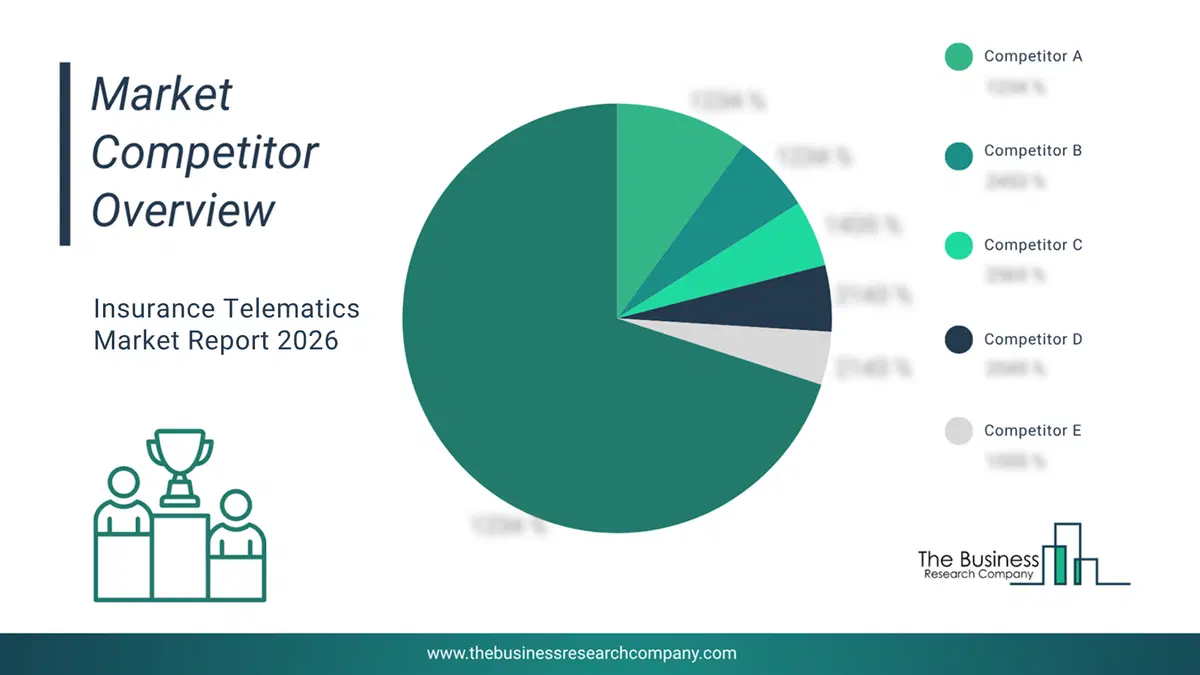
This chart is for illustrative purposes; the full report includes a detailed competitor analysis and comprehensive overview of the top 10 companies in the market.
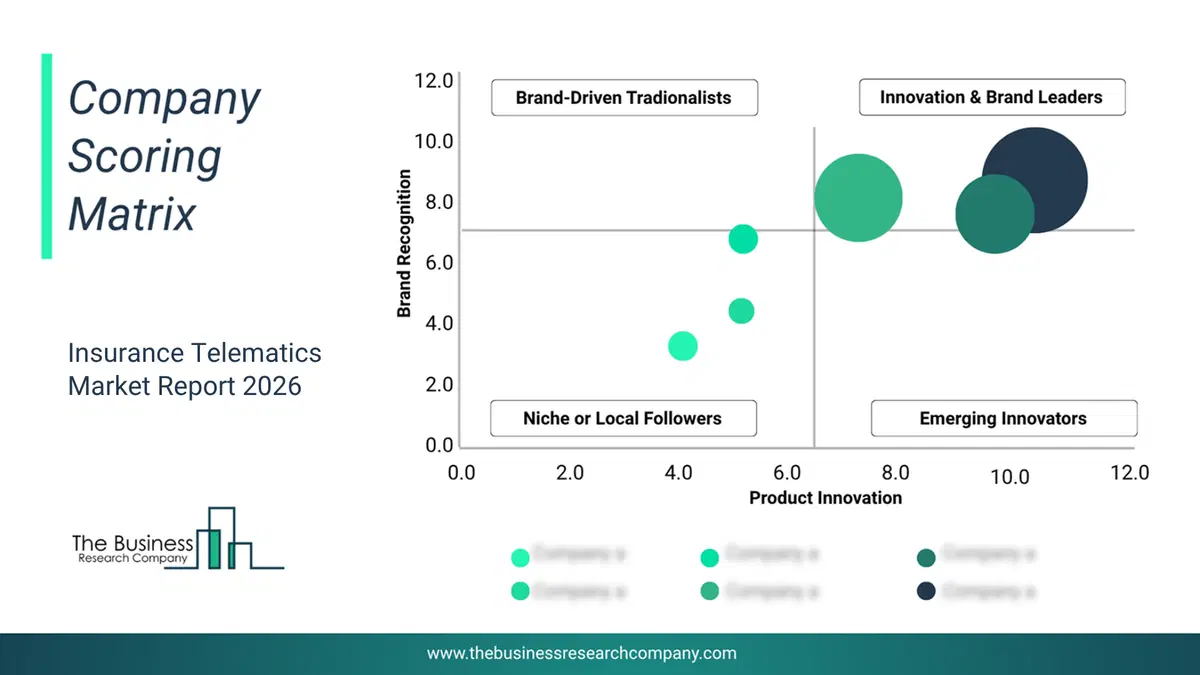
This chart maps companies by product innovation and brand strength, with bubble size indicating relative revenue, helping identify market leaders, challengers, and niche players. This is an illustrative chart; the full report provides a complete and accurate competitive analysis.
Global Insurance Telematics Market Trends and Insights
Major companies operating in the insurance telematics market are focusing on developing innovative solutions such as app-based safe-driving platforms to enhance risk assessment, monitor driver behavior, and strengthen their competitive position. App-based safe-driving platforms are mobile applications that use smartphone sensors and telematics to track driving behavior, provide real-time feedback and alerts, and promote safer driving habits for both drivers and insurers. For instance, in February 2025, PT Lippo General Insurance Tbk, an Indonesia-based general insurance company, launched a telematics-powered safe-driving application. The app uses sensors to analyze driving patterns, monitor vehicle movement, and encourage safer driving habits. Users receive insights into their driving behavior, enabling them to improve safety and reduce risk on the road. The solution supports applications such as usage-based insurance models, driver performance analytics, and accident prevention, while offering benefits like improved underwriting accuracy, reduced claims frequency, enhanced customer engagement, and safer driving outcomes.What Are Latest Mergers And Acquisitions In The Insurance Telematics Market?
In March 2023, PowerFleet, a US-based telematics and IoT solutions company, acquired Movingdots GmbH for an undisclosed amount. With this acquisition, Powerfleet has significantly strengthened its position in the fleet management industry by gaining access to cutting-edge insurance-approved telematics solutions, expanding its global reach, and enhancing its talent pool, thus enabling the company to provide even more comprehensive and advanced offerings focused on safety and sustainability. Movingdots GmbH is a Germany-based fleet management solutions company that develops insurance telematics and sustainable mobility solutions.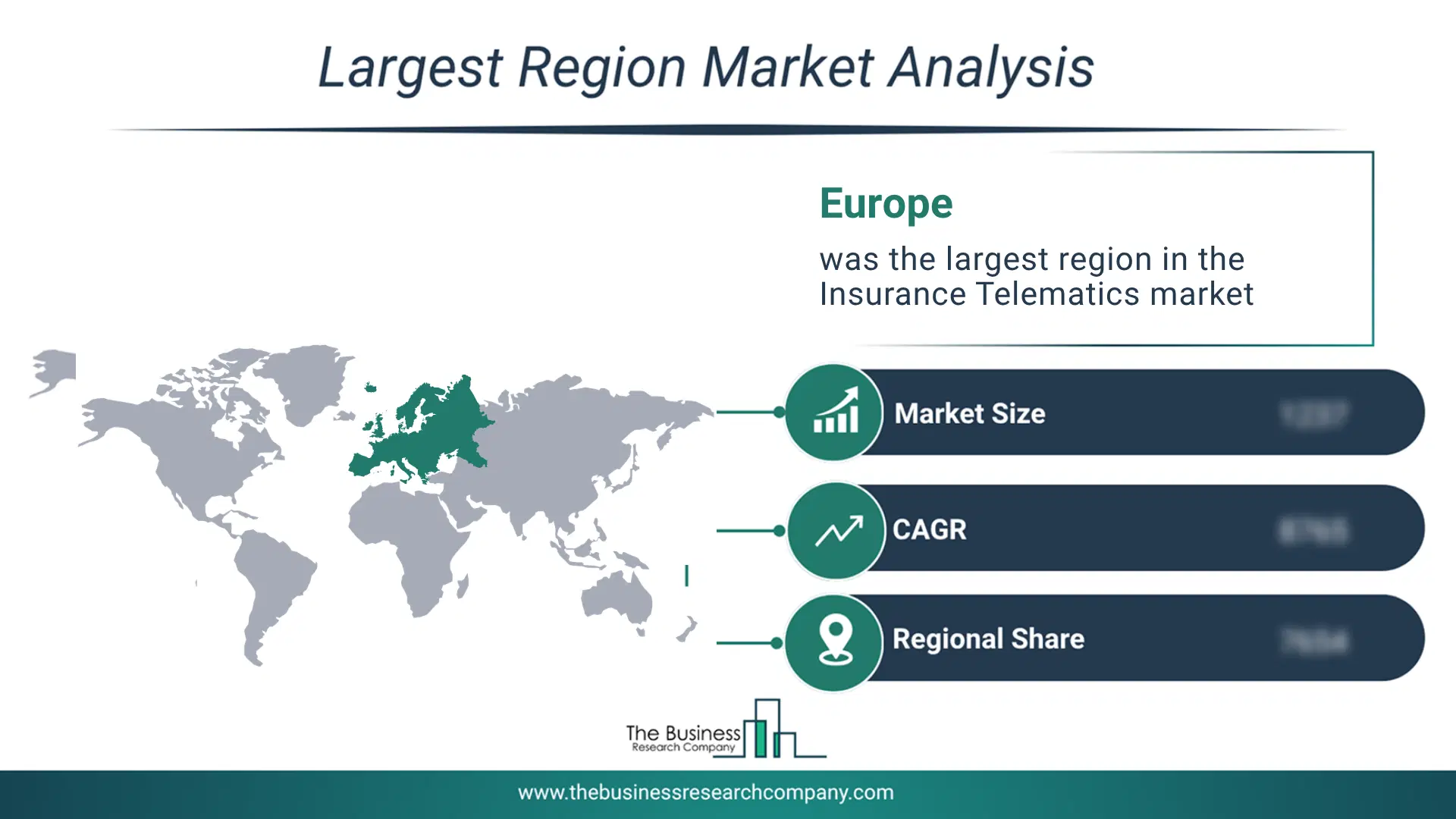
Regional Outlook
Europe was the largest region in the insurance telematics market in 2025. Asia-Pacific is expected to be the fastest-growing region in the forecast period. The regions covered in this market report are Asia-Pacific, South East Asia, Western Europe, Eastern Europe, North America, South America, Middle East, Africa. The countries covered in this market report are Australia, Brazil, China, France, Germany, India, Indonesia, Japan, Taiwan, Russia, South Korea, UK, USA, Canada, Italy, Spain.What Defines the Insurance Telematics Market?
The insurance telematics market consists of revenues earned by entities by providing services such as claims management services, fleet management services, data aggregation and analytics services. The market value includes the value of related goods sold by the service provider or included within the service offering. The insurance telematics market also includes sales of telematics devices, GPS receivers, accelerometers, gyroscopes, batteries and dashboards. Values in this market are ‘factory gate’ values, that is the value of goods sold by the manufacturers or creators of the goods, whether to other entities (including downstream manufacturers, wholesalers, distributors and retailers) or directly to end customers. The value of goods in this market includes related services sold by the creators of the goods.How is Market Value Defined and Measured?
The market value is defined as the revenues that enterprises gain from the sale of goods and/or services within the specified market and geography through sales, grants, or donations in terms of the currency (in USD unless otherwise specified). The revenues for a specified geography are consumption values that are revenues generated by organizations in the specified geography within the market, irrespective of where they are produced. It does not include revenues from resales along the supply chain, either further along the supply chain or as part of other products.
This chart presents market attractiveness based on a quantitative evaluation of growth, competition, strategic alignment, and risk, offering a clear view of opportunity areas for decision-making. This chart is for illustrative purposes; the full report contains the complete analysis.

This chart highlights the Total Addressable Market (TAM) by estimating the maximum revenue opportunity using an assumption-driven approach, supporting strategic planning and opportunity sizing across markets. The chart is illustrative; the full report provides a more comprehensive analysis.
What Key Data and Analysis Are Included in the Insurance Telematics Market Report 2026?
The insurance telematics market research report is one of a series of new reports from The Business Research Company that provides market statistics, including Market Report 2026?global market size, regional shares, competitors with the market share, detailed market segments, market trends and opportunities, and any further data you may need to thrive in the insurance telematics Market Report 2026? The market research report delivers a complete perspective of everything you need, with an in-depth analysis of the current and future state of the Market Report 2026?Insurance Telematics Market Report Forecast Analysis
| Report Attribute | Details |
|---|---|
| Market Size Value In 2026 | $5.48 billion |
| Revenue Forecast In 2030 | $10.21 billion |
| Growth Rate | CAGR of 17.0% from 2026 to 2030 |
| Base Year For Estimation | 2025 |
| Actual Estimates/Historical Data | 2020-2025 |
| Forecast Period | 2026 - 2030 |
| Market Representation | Revenue in USD Billion and CAGR from 2026 to 2030 |
| Segments Covered | Type, Technology, Deployment, Organization Size, Vehicle Type |
| Regional Scope | Asia-Pacific, Western Europe, Eastern Europe, North America, South America, Middle East, Africa |
| Country Scope | The countries covered in the report are Australia, Brazil, China, France, Germany, India, Indonesia, Japan, Taiwan, Russia, South Korea, UK, USA, Canada, Italy, Spain. |
| Key Companies Profiled | Verizon Communications Inc., Axa SA, Vodafone Group Plc, AllState Insurance Company, Progressive Corporation, Liberty Mutual Insurance Company, Zurich Insurance Group, Unipolsai Assicurazioni S.p.A., Trimble Inc., LexisNexis Risk Solutions, Viasat Group, Agero Inc., TomTom International BV., Sierra Wireless Inc., MiX Telematics, Octo Telematics S.p.A., Meta System S.p.A., Intelligent Mechatronic Systems Inc., Masternaut Limited, Cambridge Mobile Telematics, Imertik Global Inc., Otonomo, Aplicom Oy, DriveQuant |
| Customization Scope | Request for Customization |
| Pricing And Purchase Options | Explore Purchase Options |