
Integrated Pest Management (IPM) Market Report 2026
Global Outlook – By Pest Type (Weeds, Invertebrates, Pathogens, Vertebrates), By Control Method (Biological Control, Chemical Control, Cultural Controls, Mechanical and Physical Controls, Other Control Methods), By Application (Agriculture, Commercial buildings, Industrial, Residential, Other Applications) – Market Size, Trends, Strategies, and Forecast to 2030
Integrated Pest Management (IPM) Market Overview
• Integrated Pest Management (IPM) market size has reached to $143.64 billion in 2025 • Expected to grow to $217.05 billion in 2030 at a compound annual growth rate (CAGR) of 8.5% • Growth Driver: Climate-Driven Pest Population Growth And The Booming Integrated Pest Management Market • Market Trend: Innovations In Pest Management Products And Services • North America was the largest region in 2025 and Asia-Pacific is the fastest growing region.What Is Covered Under Integrated Pest Management (IPM) Market?
Integrated pest management (IPM) refers to an ecosystem-based approach that emphasizes long-term pest avoidance or damage reduction using a variety of methods, including biological control, habitat management, alteration of cultural practices, and the use of resistant cultivars. It encourages strong buildings, flourishing plants, and environmentally friendly, bio-based pest control options. The main types of integrated pest management (IPM) are weeds, invertebrates, pathogens, and vertebrates. Weed management of integrated pest management (IPM) is used to control weeds in agriculture fields, parks, and other places. Weeds are unwanted and undesirable plants grown on agricultural land, which hamper the growth of producing crops and affect the yield. The different control methods include chemical control, cultural controls, mechanical and physical controls, and others and are used in agriculture, commercial buildings, industrial, residential, and other applications.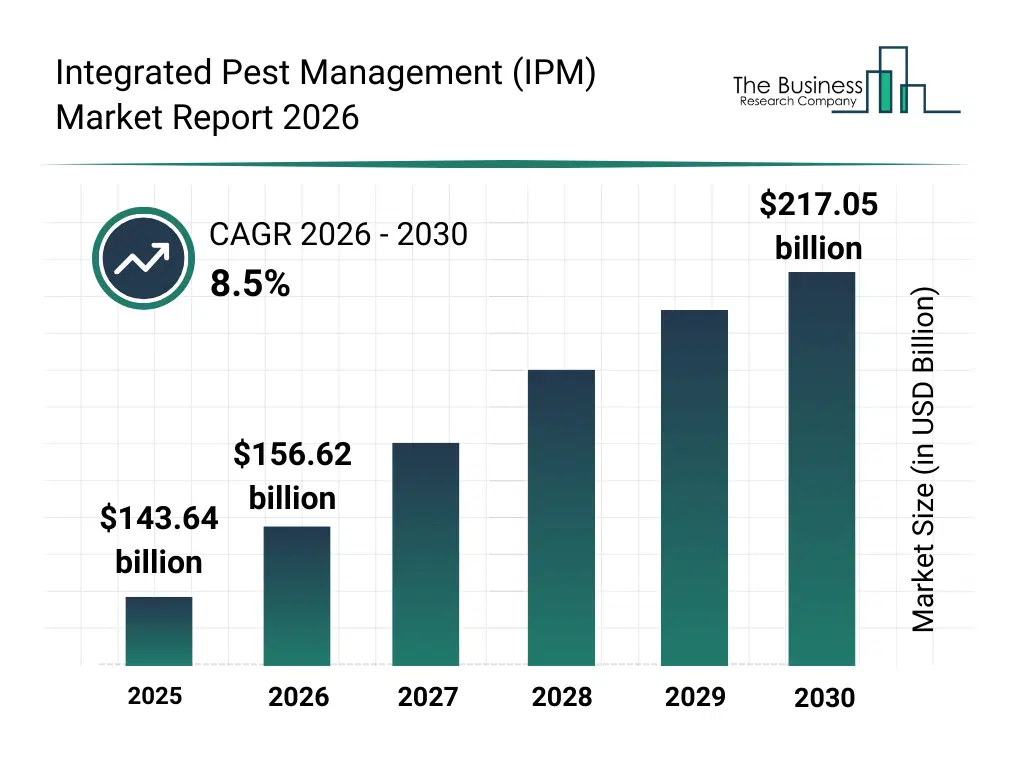
What Is The Integrated Pest Management (IPM) Market Size and Share 2026?
The integrated pest management (IPM) market size has grown strongly in recent years. It will grow from $143.64 billion in 2025 to $156.62 billion in 2026 at a compound annual growth rate (CAGR) of 9.0%. The growth in the historic period can be attributed to increasing reliance on chemical pesticides, rising pest resistance issues, expansion of monoculture farming, higher crop loss due to pests, early regulatory pressure for sustainable pest management.What Is The Integrated Pest Management (IPM) Market Growth Forecast?
The integrated pest management (IPM) market size is expected to see strong growth in the next few years. It will grow to $217.05 billion in 2030 at a compound annual growth rate (CAGR) of 8.5%. The growth in the forecast period can be attributed to growing demand for eco-safe agricultural practices, increasing adoption of biological pest control, rising investment in cultural and habitat management, growth in resistant cultivar development, expanding regulatory incentives for ipm adoption. Major trends in the forecast period include growing preference for eco-friendly pest control, increasing adoption of resistant crop varieties, expansion of habitat and cultural control practices, rising use of biological predators and beneficial organisms, growth in integrated multi-method pest suppression programs.
Global Integrated Pest Management (IPM) Market Segmentation
1) By Pest Type: Weeds, Invertebrates, Pathogens, Vertebrates 2) By Control Method: Biological Control, Chemical Control, Cultural Controls, Mechanical and Physical Controls, Other Control Methods 3) By Application: Agriculture, Commercial buildings, Industrial, Residential, Other Applications Subsegments: 1) By Weeds: Annual Weeds, Perennial Weeds 2) By Invertebrates: Insects, Nematodes 3) By Pathogens: Bacterial Pathogens, Fungal Pathogens, Viral Pathogens 4) By Vertebrates: Rodents, Birds, Other VertebratesWhat Is Driver Of The Integrated Pest Management (IPM) Market?
An increase in the pest population owing to climate change is expected to propel the growth of the integrated pest management market going forward. The physiology and metabolism of insects are regulated by temperature. The metabolic rate increases as temperature rises because of increased physiological activity. That leads insect herbivores to consume more and grow more quickly because insects need to eat more to survive. Chemical and nonchemical methods are used in integrated pest management to prevent and control pest populations from reaching economically destructive levels. For instance, in February 2023, according to the United States Department of Agriculture, a US-based government agency, 20% to 40% of crop production is lost to pests each year. Plant diseases cost around $220 billion annually, with invasive insects adding another $70 billion. Weeds also significantly impact food production worldwide. Therefore, it is anticipated that rising temperatures will result in an increase in insect populations, which will fuel the growth of the integrated pest management market.Key Players In The Global Integrated Pest Management (IPM) Market
Major companies operating in the integrated pest management (IPM) market are BASF SE, Integrated Pest Management Inc., Bayer CropScience Limited, Ecolab Inc., Hercon Environmental Corporation, Suterra LLC, AgBiTech Pty Ltd., Russell IPM Ltd., AgrichemBio, Atlas Agro Products Pvt Ltd, Laboratorio Agrochem SRL, Atgc Biotech Private Limited, Agrisense BCS Ltd., Syngenta Group Co. Ltd., Corteva Agriscience, FMC Corporation, Sumitomo Chemical Co. Ltd., ADAMA India Pvt Ltd., Nufarm Limited, Valent BioSciences LLC, Certis USA LLC, BioWorks Inc., Koppert Biological Systems, ISCA Technologies Inc., BioTEPP Inc., Vestaron Corporation, Andermatt Biocontrol AG, Marrone Bio Innovations Inc., BioSafe Systems LLC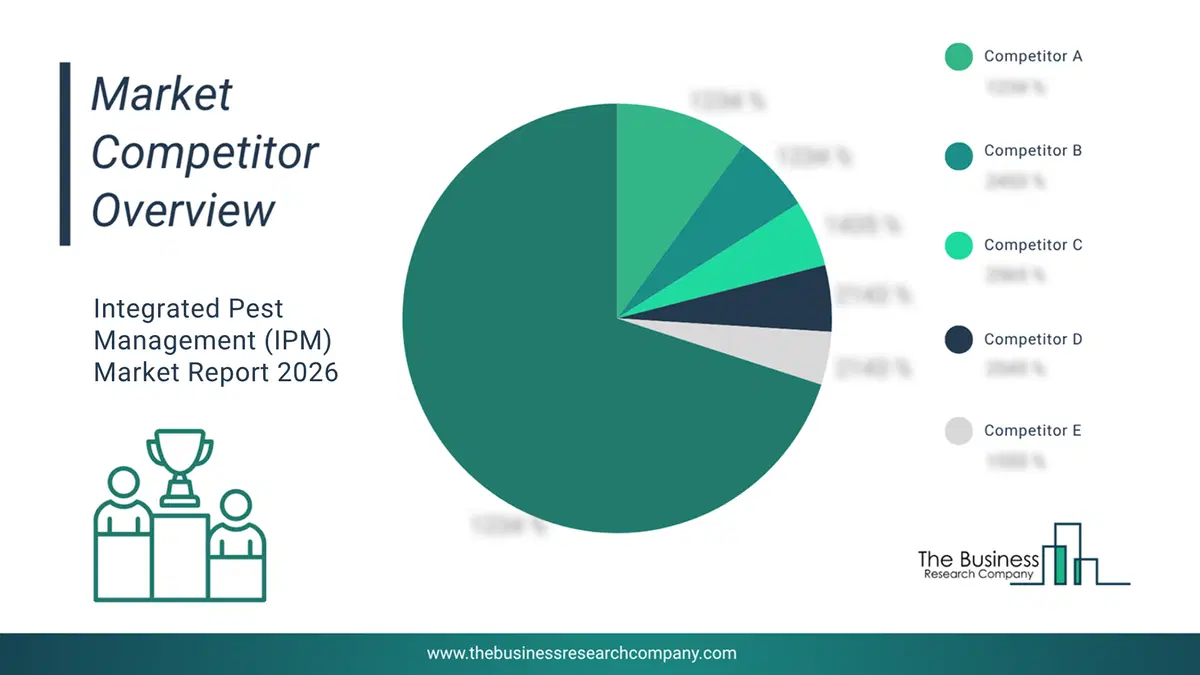
This chart is for illustrative purposes; the full report includes a detailed competitor analysis and comprehensive overview of the top 10 companies in the market.
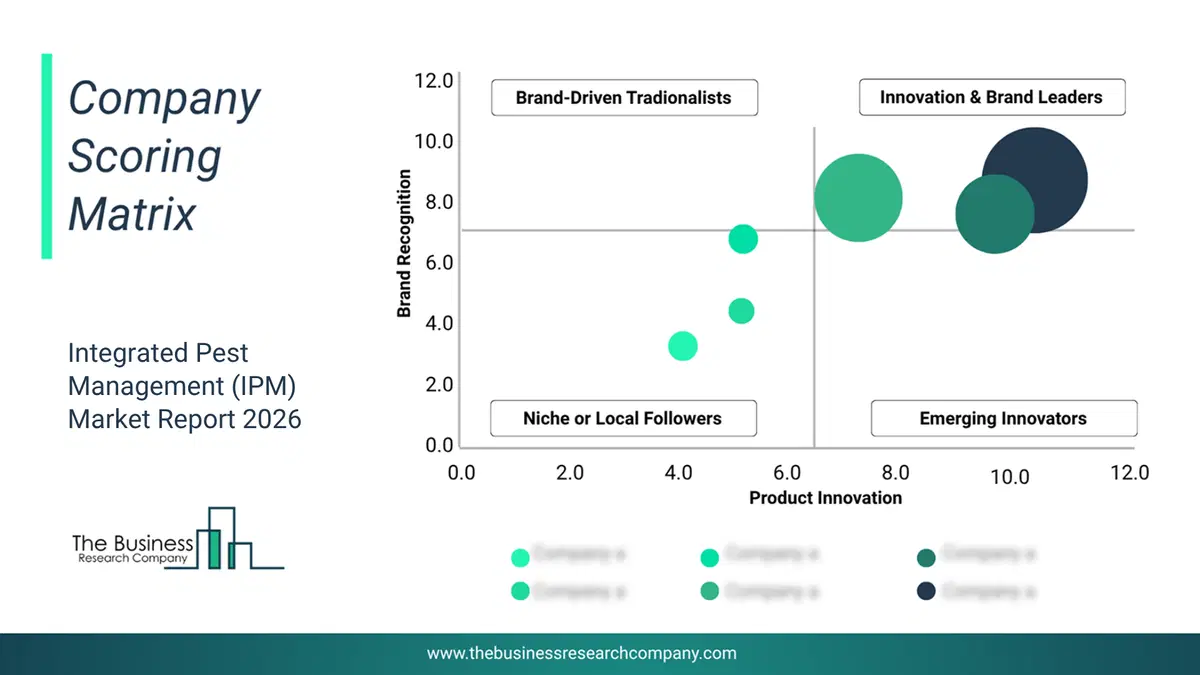
This chart maps companies by product innovation and brand strength, with bubble size indicating relative revenue, helping identify market leaders, challengers, and niche players. This is an illustrative chart; the full report provides a complete and accurate competitive analysis.
Global Integrated Pest Management (IPM) Market Trends and Insights
Major companies operating in the integrated pest management market are developing innovative products such as professional pest management solutions to meet larger customer bases, more sales, and increase revenue. A professional pest management solution refers to a comprehensive and specialized service provided by trained and certified pest control professionals or companies to address and manage pest infestations in residential, commercial, agricultural, or industrial settings. For instance, in September 2023, Neogen Corporation, a US-based food safety company, launched SureKill Evolve SC. SureKill Evolve SC stands out as a suspension concentrate insecticide renowned for its exceptional performance in swiftly knocking down a wide range of targeted pests and providing extended residual control. These pests include but are not limited to ants, bedbugs, cockroaches, fleas, flies, silverfish, spiders, and various others. This remarkable product incorporates the industry-standard active ingredient, deltamethrin, which makes it suitable for extensive outdoor applications. Notably, SureKill Evolve SC delivers a remarkable up to 90 days of sustained control over the mentioned pests in both residential and commercial structures. SureKill Evolve SC is a flexible and user-friendly solution, rendering it a top pick for pest control experts. The product's labeling permits applications in a wide array of settings, encompassing residential structures and buildings, even in sensitive areas such as kitchens and facilities involved in food and feed management.What Are Latest Mergers And Acquisitions In The Integrated Pest Management (IPM) Market? Rollins, Inc. Completes Acquistion Of Saela Holdings, Llc, A Leading Pest Management Company
In April 2025, Rollins, Inc., a US-based provider of residential and commercial pest control services through a global network of brands, acquired Saela Holdings, LLC, for an undisclosed amount. With this acquisition, Rollins aims to accelerate its long-term growth strategy by expanding its presence in key geographies, including the Pacific Northwest, Mountain West, and Midwestern United States. Saela Holdings is a US-based provider of residential and commercial pest management services across nine states, employing over 250 teammates and generating more than US$65 million in annual revenue.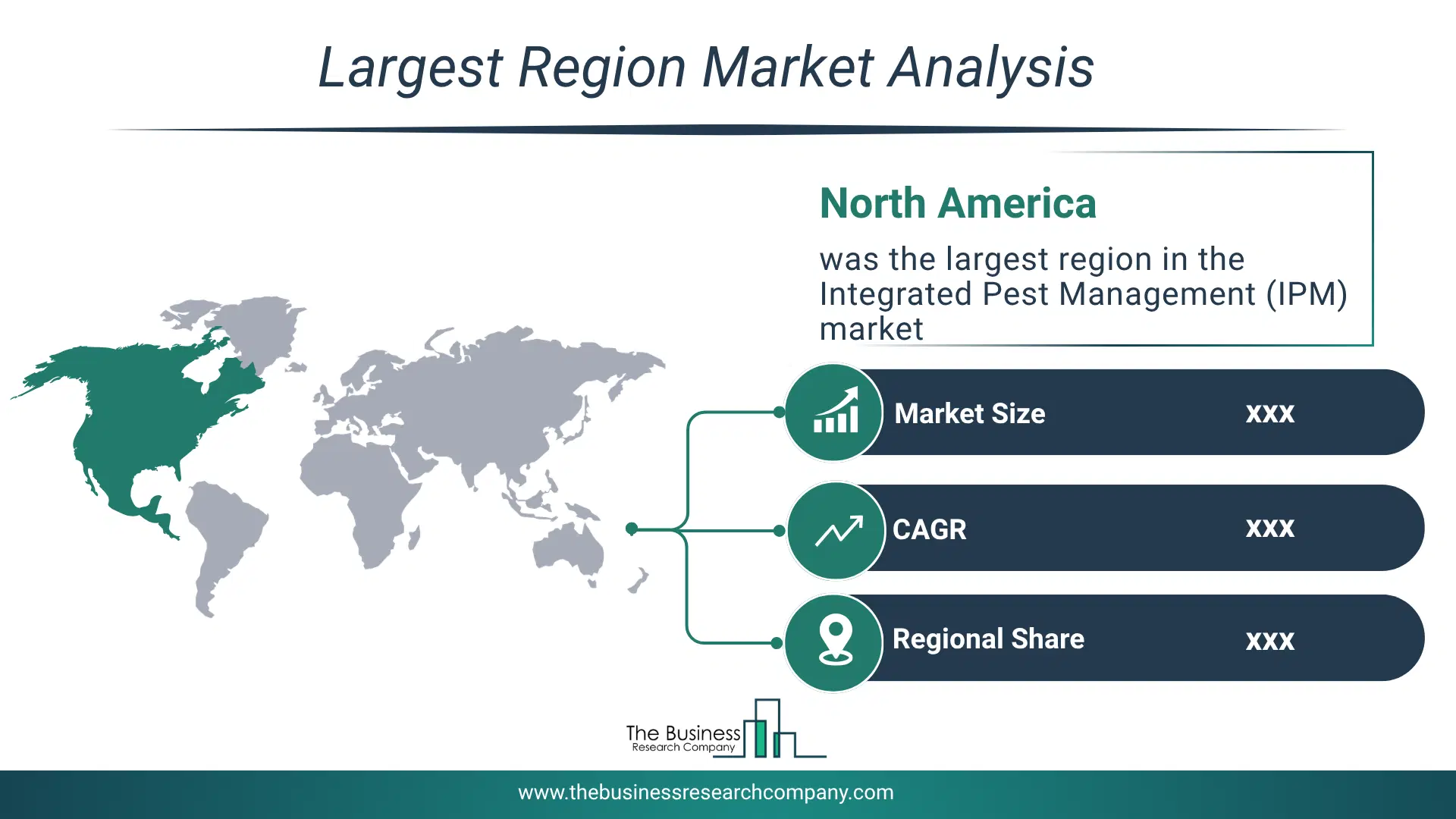
Regional Outlook
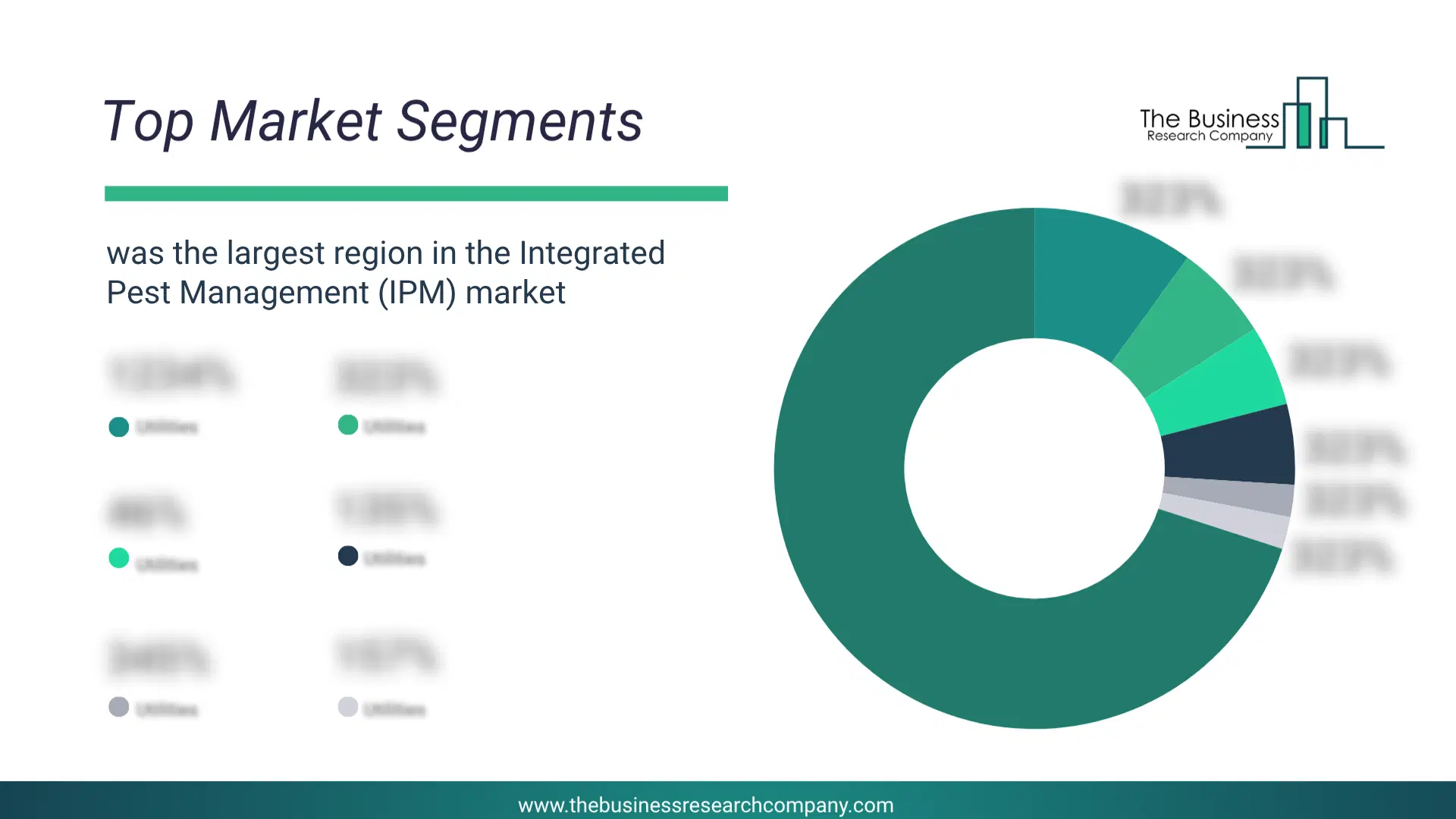
North America was the largest region in the integrated pest management (IPM) market in 2025. Asia-Pacific is expected to be the fastest-growing region in the forecast period. The regions covered in this market report are Asia-Pacific, South East Asia, Western Europe, Eastern Europe, North America, South America, Middle East, Africa. The countries covered in this market report are Australia, Brazil, China, France, Germany, India, Indonesia, Japan, Taiwan, Russia, South Korea, UK, USA, Canada, Italy, SpainWhat Defines the Integrated Pest Management (IPM) Market?
The integrated pest management (IPM) market includes revenues earned by entities by rodents, pathogens, insects, and birds. The market value includes the value of related goods sold by the service provider or included within the service offering. Only goods and services traded between entities or sold to end consumers are included.How is Market Value Defined and Measured?
The market value is defined as the revenues that enterprises gain from the sale of goods and/or services within the specified market and geography through sales, grants, or donations in terms of the currency (in USD unless otherwise specified). The revenues for a specified geography are consumption values that are revenues generated by organizations in the specified geography within the market, irrespective of where they are produced. It does not include revenues from resales along the supply chain, either further along the supply chain or as part of other products.
This chart presents market attractiveness based on a quantitative evaluation of growth, competition, strategic alignment, and risk, offering a clear view of opportunity areas for decision-making. This chart is for illustrative purposes; the full report contains the complete analysis.

This chart highlights the Total Addressable Market (TAM) by estimating the maximum revenue opportunity using an assumption-driven approach, supporting strategic planning and opportunity sizing across markets. The chart is illustrative; the full report provides a more comprehensive analysis.
What Key Data and Analysis Are Included in the Integrated Pest Management (IPM) Market Report 2026?
The integrated pest management (ipm) market research report is one of a series of new reports from The Business Research Company that provides market statistics, including industry global market size, regional shares, competitors with the market share, detailed market segments, market trends and opportunities, and any further data you may need to thrive in the integrated pest management (ipm) industry. The market research report delivers a complete perspective of everything you need, with an in-depth analysis of the current and future state of the industry.Integrated Pest Management (IPM) Market Report Forecast Analysis
| Report Attribute | Details |
|---|---|
| Market Size Value In 2026 | $156.62 billion |
| Revenue Forecast In 2030 | $217.05 billion |
| Growth Rate | CAGR of 8.5% from 2026 to 2030 |
| Base Year For Estimation | 2025 |
| Actual Estimates/Historical Data | 2020-2025 |
| Forecast Period | 2026 - 2030 |
| Market Representation | Revenue in USD Billion and CAGR from 2026 to 2030 |
| Segments Covered | Pest Type, Control Method, Application |
| Regional Scope | Asia-Pacific, Western Europe, Eastern Europe, North America, South America, Middle East, Africa |
| Country Scope | The countries covered in the report are Australia, Brazil, China, France, Germany, India, Indonesia, Japan, Taiwan, Russia, South Korea, UK, USA, Canada, Italy, Spain |
| Key Companies Profiled | BASF SE, Integrated Pest Management Inc., Bayer CropScience Limited, Ecolab Inc., Hercon Environmental Corporation, Suterra LLC, AgBiTech Pty Ltd., Russell IPM Ltd., AgrichemBio, Atlas Agro Products Pvt Ltd, Laboratorio Agrochem SRL, Atgc Biotech Private Limited, Agrisense BCS Ltd., Syngenta Group Co. Ltd., Corteva Agriscience, FMC Corporation, Sumitomo Chemical Co. Ltd., ADAMA India Pvt Ltd., Nufarm Limited, Valent BioSciences LLC, Certis USA LLC, BioWorks Inc., Koppert Biological Systems, ISCA Technologies Inc., BioTEPP Inc., Vestaron Corporation, Andermatt Biocontrol AG, Marrone Bio Innovations Inc., BioSafe Systems LLC |
| Customization Scope | Request for Customization |
| Pricing And Purchase Options | Explore Purchase Options |