
Internal Neuromodulation Devices Market Report 2026
Global Outlook – By Type (Spinal Cord Stimulator, Deep Brain Stimulator, Sacral Nerve Stimulator, Vagus Nerve Stimulator, Gastric Neuro Stimulator), By Biomaterial (Metallic Biomaterials, Polymeric Biomaterials, Ceramic Biomaterials), By Application (Failed Back Surgery Syndrome, Parkinson's Disease, Urinary Incontinence, Epilepsy, Gastroparesis), By End-User (Hospitals, Clinics) – Market Size, Trends, Strategies, and Forecast to 2035
Internal Neuromodulation Devices Market Overview
• Internal Neuromodulation Devices market size has reached to $2.75 billion in 2025 • Expected to grow to $4.24 billion in 2030 at a compound annual growth rate (CAGR) of 9.2% • Growth Driver: Rising Incidence Of Neurologic Diseases Fuels Growth In The Market Due To Increasing Alzheimer Cases • Market Trend: Digital-Health Innovations Enhance Remote Monitoring And Therapy Optimization In Neuromodulation • North America was the largest region in 2025 and Asia-Pacific is the fastest growing region.Market Gains By 2030 – Top Opportunities By Segment
Market Gain identifies the most promising market opportunities by highlighting the segments or products expected to generate the highest incremental revenue growth over the next five years.
What Is Covered Under Internal Neuromodulation Devices Market?
Internal neuromodulation devices refer to a type of medical devices that are implanted inside the body to provide electrical stimulation to specific areas of the nervous system. These devices are used to treat various neurological and psychiatric conditions and can significantly relieve patients. The main types of internal neuromodulation devices are spinal cord stimulators, deep brain stimulators, sacral nerve stimulators, vagus nerve stimulators, and gastric neurostimulators. The various types of technologies including internal neuromodulation and external neuromodulation, that includes biomaterials such as metallic biomaterials, polymeric biomaterials, and ceramic biomaterials. These are used for several applications, such as failed back surgery syndrome, Parkinson's disease, urinary incontinence, epilepsy, and gastroparesis, and are used by various end-users, including hospitals, clinics, home healthcare, and community healthcare.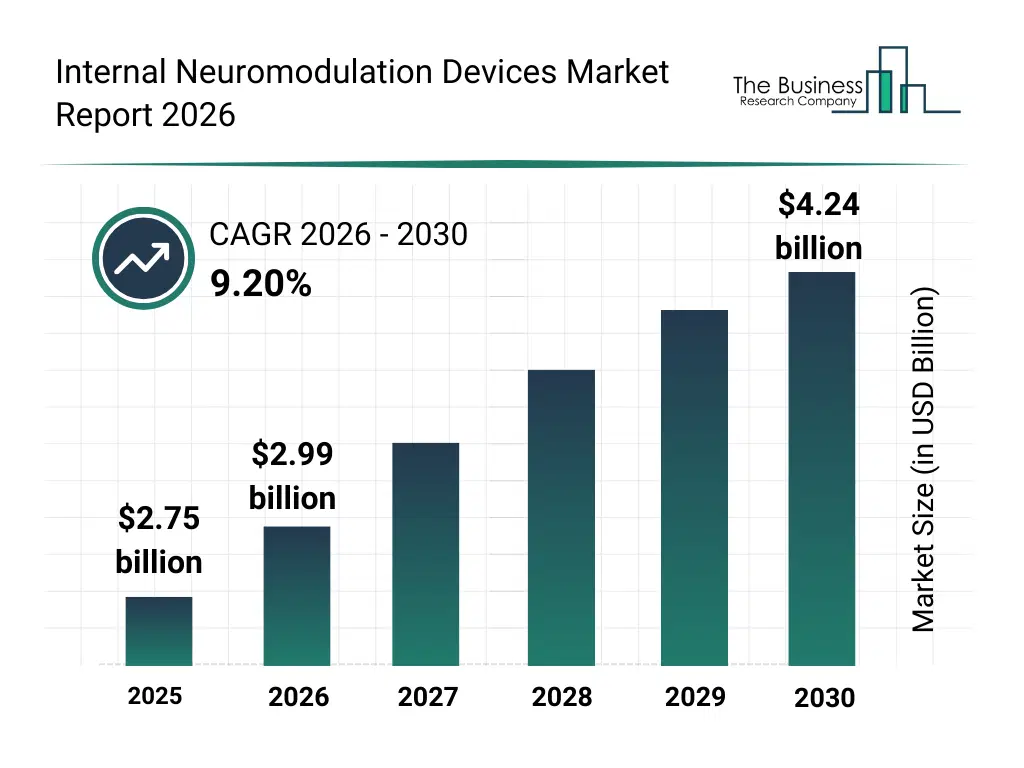
What Is The Internal Neuromodulation Devices Market Size and Share 2026?
The internal neuromodulation devices market size has grown strongly in recent years. It will grow from $2.75 billion in 2025 to $2.99 billion in 2026 at a compound annual growth rate (CAGR) of 8.6%. The growth in the historic period can be attributed to increasing prevalence of neurological disorders, expansion of pain management therapies, growth in movement disorder treatments, rising acceptance of implantable medical devices, advancements in neurostimulation technology.What Is The Internal Neuromodulation Devices Market Growth Forecast?
The internal neuromodulation devices market size is expected to see strong growth in the next few years. It will grow to $4.24 billion in 2030 at a compound annual growth rate (CAGR) of 9.2%. The growth in the forecast period can be attributed to increasing demand for personalized neuromodulation therapies, rising investments in neurotechnology research, expansion of minimally invasive implantation techniques, growing adoption of smart implantable devices, increasing focus on chronic disease management. Major trends in the forecast period include increasing adoption of implantable neuromodulation devices, rising use of rechargeable stimulators, growing integration of adaptive stimulation technologies, expansion of multi-indication neuromodulation applications, enhanced focus on long-term device performance.
Global Internal Neuromodulation Devices Market Segmentation
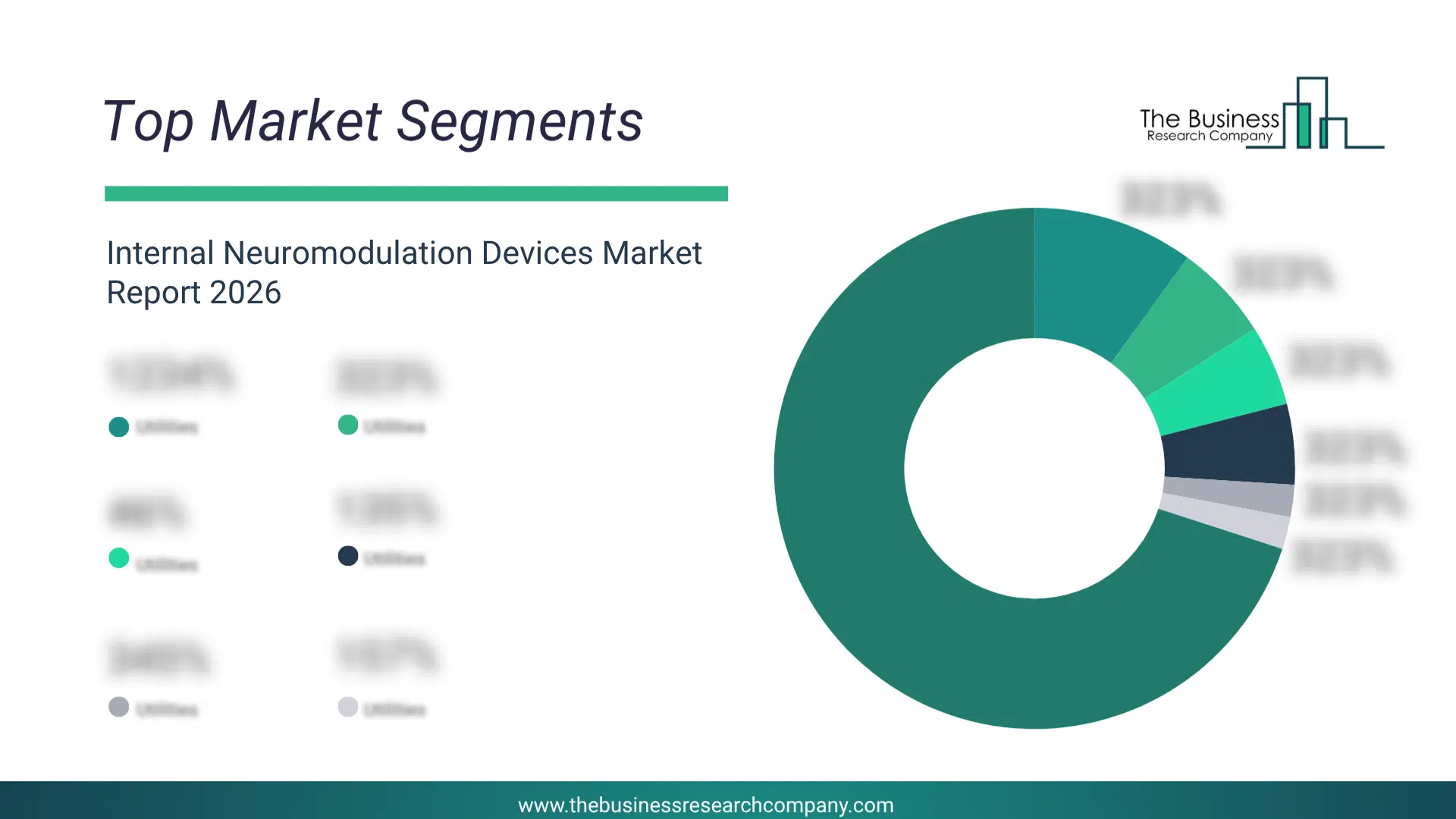
1) By Type: Spinal Cord Stimulator, Deep Brain Stimulator, Sacral Nerve Stimulator, Vagus Nerve Stimulator, Gastric Neuro Stimulator 2) By Biomaterial: Metallic Biomaterials, Polymeric Biomaterials, Ceramic Biomaterials 3) By Application: Failed Back Surgery Syndrome, Parkinson's Disease, Urinary Incontinence, Epilepsy, Gastroparesis 4) By End-User: Hospitals, Clinics Subsegments: 1) By Spinal Cord Stimulator: Traditional Spinal Cord Stimulator, Rechargeable Spinal Cord Stimulator, Non-Rechargeable Spinal Cord Stimulator 2) By Deep Brain Stimulator: Single Lead Deep Brain Stimulator, Dual Lead Deep Brain Stimulator, Adaptive Deep Brain Stimulator 3) By Sacral Nerve Stimulator: Implantable Sacral Nerve Stimulator, Rechargeable Implantable Sacral Nerve Stimulators, Non-Rechargeable Implantable Sacral Nerve Stimulators 4) By Vagus Nerve Stimulator: Implantable Vagus Nerve Stimulator, Closed-Loop Implantable Vagus Nerve Stimulators 5) By Gastric Neuro Stimulator: Implantable Gastric Neuro Stimulator, Programmable Gastric Neuro Stimulators The top segments in the internal neuromodulation devices market will be: • Hospitals will reach $1916 Million by 2025. • Metallic Biomaterials will reach $1737.6 Million by 2025. • Failed Back Surgery Syndrome will reach $1200.2 Million by 2025. • Spinal Cord Stimulator will reach $1099.9 Million by 2025. • Polymeric Biomaterials will reach $931.6 Million by 2025.What Is The Driver Of The Internal Neuromodulation Devices Market?
The increasing incidence of neurologic diseases is expected to boost the growth of the internal neuromodulation devices market going forward. Neurologic diseases are a broad category of disorders that affect the nervous system, including the brain, spinal cord, and nerves throughout the body. Internal neuromodulation devices are medical devices used to treat neurological and psychiatric disorders by delivering electrical stimulation to specific areas of the nervous system, which can relieve symptoms such as chronic pain, movement disorders, and mood disorders. They can improve patient quality of life by reducing symptoms and allowing them to perform daily activities more easily. For instance, in April 2023, National Library Medicine, a US-based biomedical library, reported that 6.7 million Americans are living with Alzheimer's in 2023, by 2060, this number is projected to rise to 13.8 million. Therefore, the increasing incidence of neurologic diseases is driving the growth of the internal neuromodulation devices industry.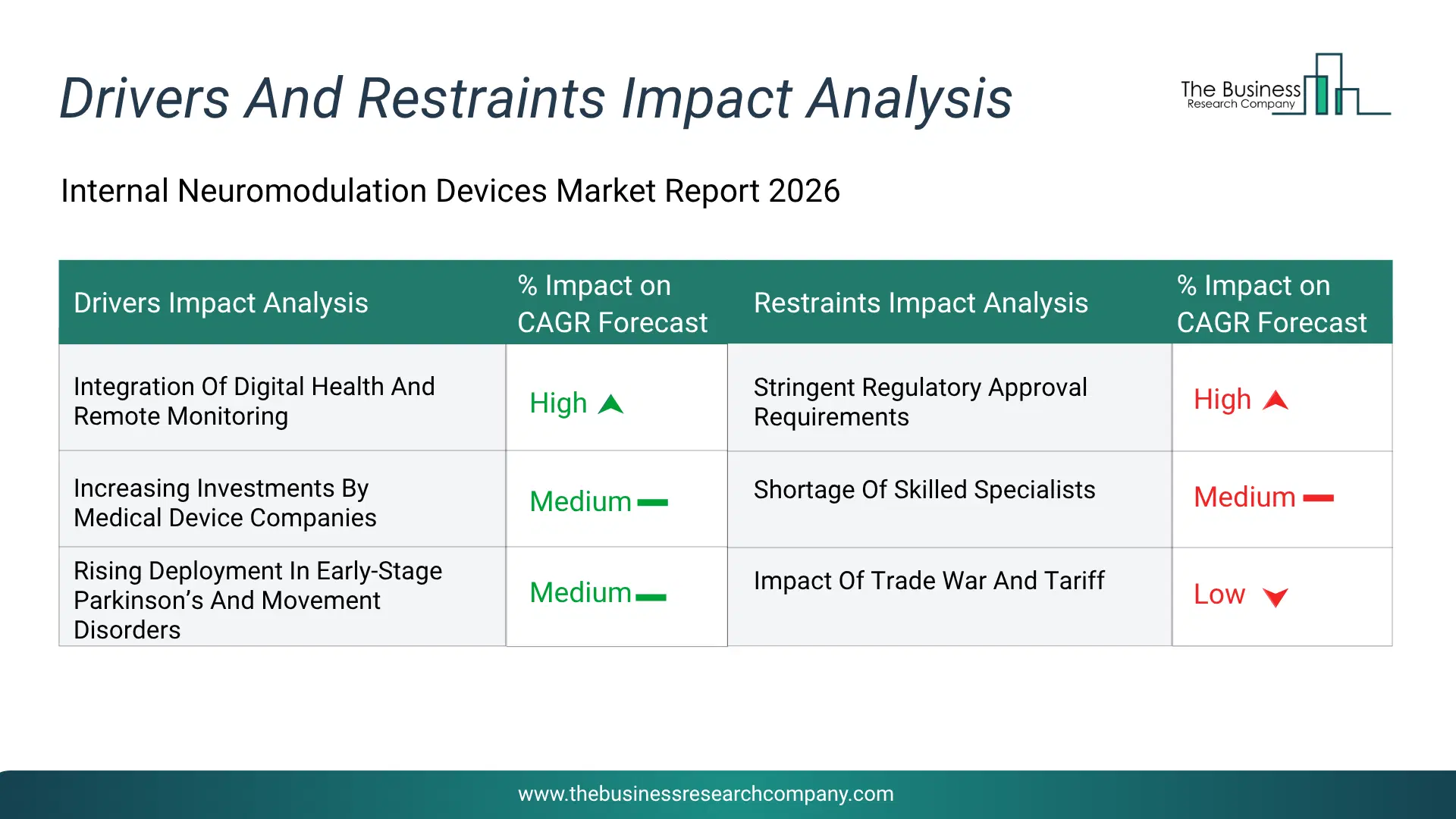
Infographic Chart Showing Key Market Drivers Analysis And Restraints For Internal Neuromodulation Devices Market
The chart presents an impact analysis of key drivers and restraints, quantifying their relative influence on the market's growth rate and helping assess the balance between growth enablers and limiting factors. This chart offers a high-level perspective; the full report contains more detailed insights.
How Will The Drivers Impact Growth In The Global Internal Neuromodulation Devices Market?
• Integration Of Digital Health And Remote Monitoring (High) – The integration of digital health and remote monitoring will become a key driver of growth in the internal neuromodulation devices market by 2029. Digital ecosystems allow clinicians to remotely track device performance, stimulation effectiveness, patient symptom changes, and biomarker trends, enabling more responsive and personalized therapy adjustments. This reduces the burden of in-person follow-ups and expands access for patients in remote or underserved regions, making neuromodulation therapy more scalable across healthcare systems. Remote device management also improves long-term adherence, as stimulation adjustments can be made proactively based on real-time data rather than waiting for clinical deterioration. Additionally, digital platforms increase the value proposition for providers and payers by enabling better outcomes tracking, reducing complications from poorly optimized programming, and supporting evidence-driven therapy pathways. As a result, the integration of digital health and remote monitoring is anticipated to contributing to a 1.8% annual growth in the market. • Increasing Investments By Medical Device Companies (Medium) – The increasing investments by medical device companies will emerge as a major factor driving the expansion of the internal neuromodulation devices market by 2029. Governments and industries are prioritizing low-carbon solutions to reduce greenhouse gas emissions, comply with environmental regulations, and transition away from fossil fuels. Internal Neuromodulation Devices, produced from organic waste through anaerobic digestion, offers a reliable alternative for electricity generation, transportation, and industrial applications. Technological advancements in internal neuromodulation devices upgrading and purification are further enhancing its efficiency, making it a viable substitute for natural gas. Consequently, the increasing investments by medical device companies is projected to contributing to a 1.3% annual growth in the market. • Rising Deployment In Early-Stage Parkinson’s And Movement Disorders (Medium) – The rising deployment in early-stage parkinson’s and movement disorders will serve as a key growth catalyst for the internal neuromodulation devices market by 2029. Governments and businesses are prioritizing renewable fuels to meet stringent emission regulations and sustainability targets. Compressed biomethane, derived from internal neuromodulation devices, is gaining traction as a clean alternative to conventional fossil fuels in heavy-duty vehicles, public transport, and logistics fleets. Advancements in internal neuromodulation devices upgrading technology are improving fuel efficiency and compatibility with existing natural gas infrastructure, further supporting market expansion. Therefore, this rising deployment in early-stage Parkinson’s and movement disorders is projected to supporting to a 1.0% annual growth in the market. • Rising Government Support For Neurological Health Programs (Medium) – The rising government support for neurological health programs will become a significant driver contributing to the growth of the internal neuromodulation devices market by 2029. Governments and industries are investing in cleaner alternatives to reduce carbon emissions, enhance energy security, and comply with environmental regulations. Internal Neuromodulation Devices, produced from organic waste, offers a renewable solution for power generation, heating, and transportation, reducing dependence on fossil fuels. Technological advancements in internal neuromodulation devices upgrading and integration with existing energy infrastructure are further driving market expansion. Consequently, the rising government support for neurological health programs is projected to contributing to a 0.5% annual growth in the market.How Will The Restraints Impact Growth In The Global Internal Neuromodulation Devices Market?
• Stringent Regulatory Approval Requirements (High) – Stringent regulatory approval requirements is expected to restrain market growth during the forecast period. It creates operational, financial, regulatory, or commercial challenges that can increase costs, delay projects, reduce investments, or discourage purchasing decisions depending on the market. These challenges can reduce product adoption, affect business confidence, and limit the ability of companies to expand efficiently across key regions. This can reduce operational efficiency, delay expansion plans, and affect the ability of companies to achieve sustainable business growth. • Shortage Of Skilled Specialists (Medium) – During the forecast period, shortage of skilled specialists is likely to limit market expansion. It creates operational, financial, regulatory, or commercial challenges that can increase costs, delay projects, reduce investments, or discourage purchasing decisions depending on the market. These challenges can reduce product adoption, affect business confidence, and limit the ability of companies to expand efficiently across key regions. As a result, businesses may face increased cost pressures, slower commercial adoption, and reduced revenue opportunities. • Impact Of Trade War And Tariff (Medium) – The market is expected to face challenges due to impact of trade war and tariff over the forecast period. It creates operational, financial, regulatory, or commercial challenges that can increase costs, delay projects, reduce investments, or discourage purchasing decisions depending on the market. These challenges can reduce product adoption, affect business confidence, and limit the ability of companies to expand efficiently across key regions. This may discourage new investments, delay strategic expansion initiatives, and weaken the overall competitive position of market participants.Key Players In The Global Internal Neuromodulation Devices Market
Major companies operating in the internal neuromodulation devices market are Medtronic plc, Boston Scientific Corporation, Abbott Laboratories, LivaNova plc, Nevro Corp., Axonics Modulation Technologies Inc., Saluda Medical Pty Limited, NeuroPace Inc., Aleva Neurotherapeutics SA, EnteroMedics Inc., EndoStim Inc., MicroTransponder Inc., BioControl Medical Ltd., Synapse Biomedical Inc., Neuros Medical Inc., Stimwave Technologies Incorporated, Nuvectra Corporation, Uroplasty Inc., Second Sight Medical Products Inc., NeuroMetrix Inc.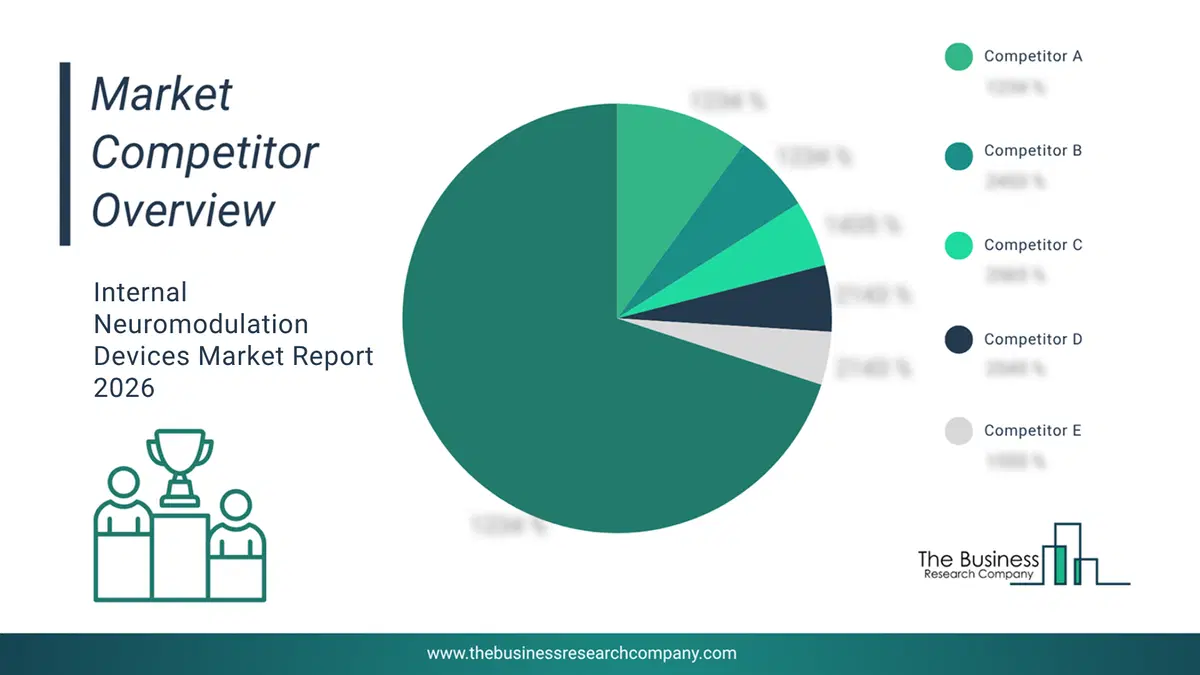
This chart is for illustrative purposes; the full report includes a detailed competitor analysis and comprehensive overview of the top 10 companies in the market.
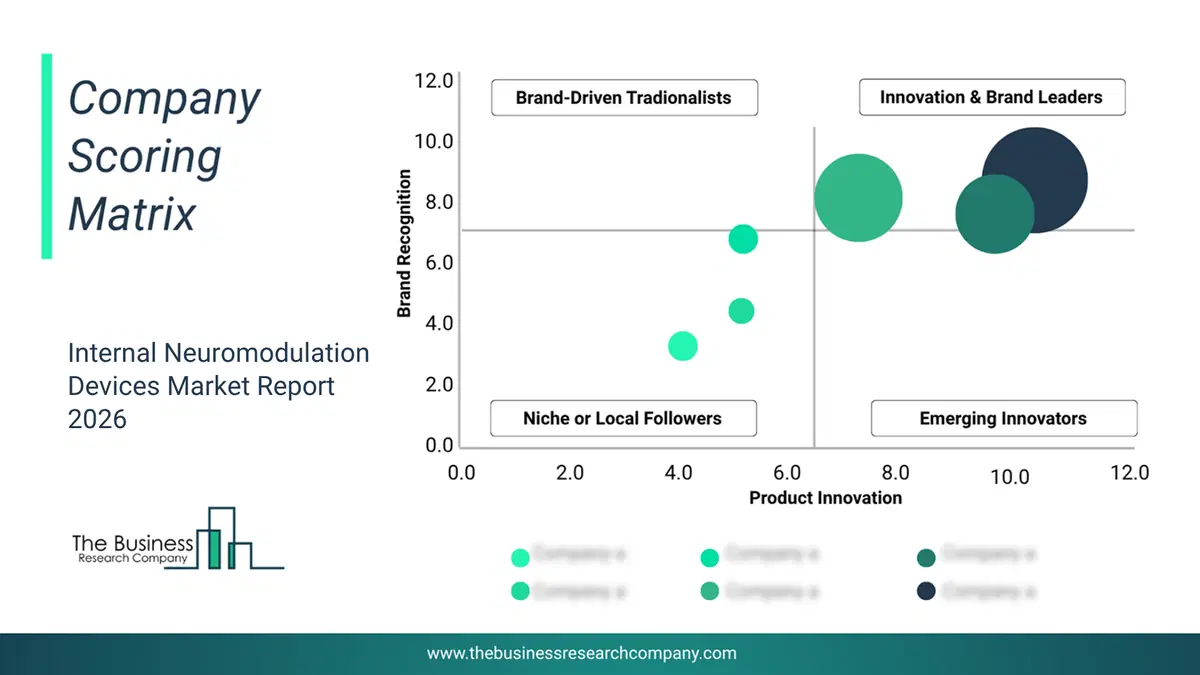
This chart maps companies by product innovation and brand strength, with bubble size indicating relative revenue, helping identify market leaders, challengers, and niche players. This is an illustrative chart; the full report provides a complete and accurate competitive analysis.
Global Internal Neuromodulation Devices Market Trends and Insights
Major companies operating in the internal neuromodulation devices market are focusing on developing advanced digital-health solutions, such as remote-care platforms, to improve continuous therapy management, reduce in-person clinical visits, and enhance patient safety. Remote-care platforms in neuromodulation refer to digital systems that allow clinicians to monitor device performance, assess patient status, and adjust therapy settings in real time through connected applications. For instance, in April 2023, Biotronik SE & Co. KG, a Germany-based medical technology company, received U.S. FDA approval for its Prospera spinal cord stimulation (SCS) system, which incorporates Embrace One, a next-generation remote-care model designed to deliver automatic, objective, daily remote monitoring and continuous therapy oversight. Designed to support proactive and responsive care, the platform enables clinicians to detect issues earlier, adjust therapy settings remotely, and minimize the need for frequent in-person evaluations. According to Biotronik, Embrace One makes proactive care possible by offering automatic, objective, daily remote monitoring and ongoing management and support, helping strengthen clinical decision-making and long-term patient outcomes.What Are Latest Mergers And Acquisitions In The Internal Neuromodulation Devices Market?
In April 2025, Globus Medical Inc., a US-based publicly traded musculoskeletal solutions company acquired Nevro Corp. for an undisclosed amount. With this acquisition, Globus Medical aims to expand into new markets for future growth, accelerate the market penetration of Nevro’s differentiated high-frequency spinal cord stimulation technology, and bring much-needed and clinically superior relief to patients suffering from chronic pain, while creating long-term value and enhanced profitability through operational capabilities and global infrastructure Nevro Corp. is a US-based provider of internal neuromodulation devices.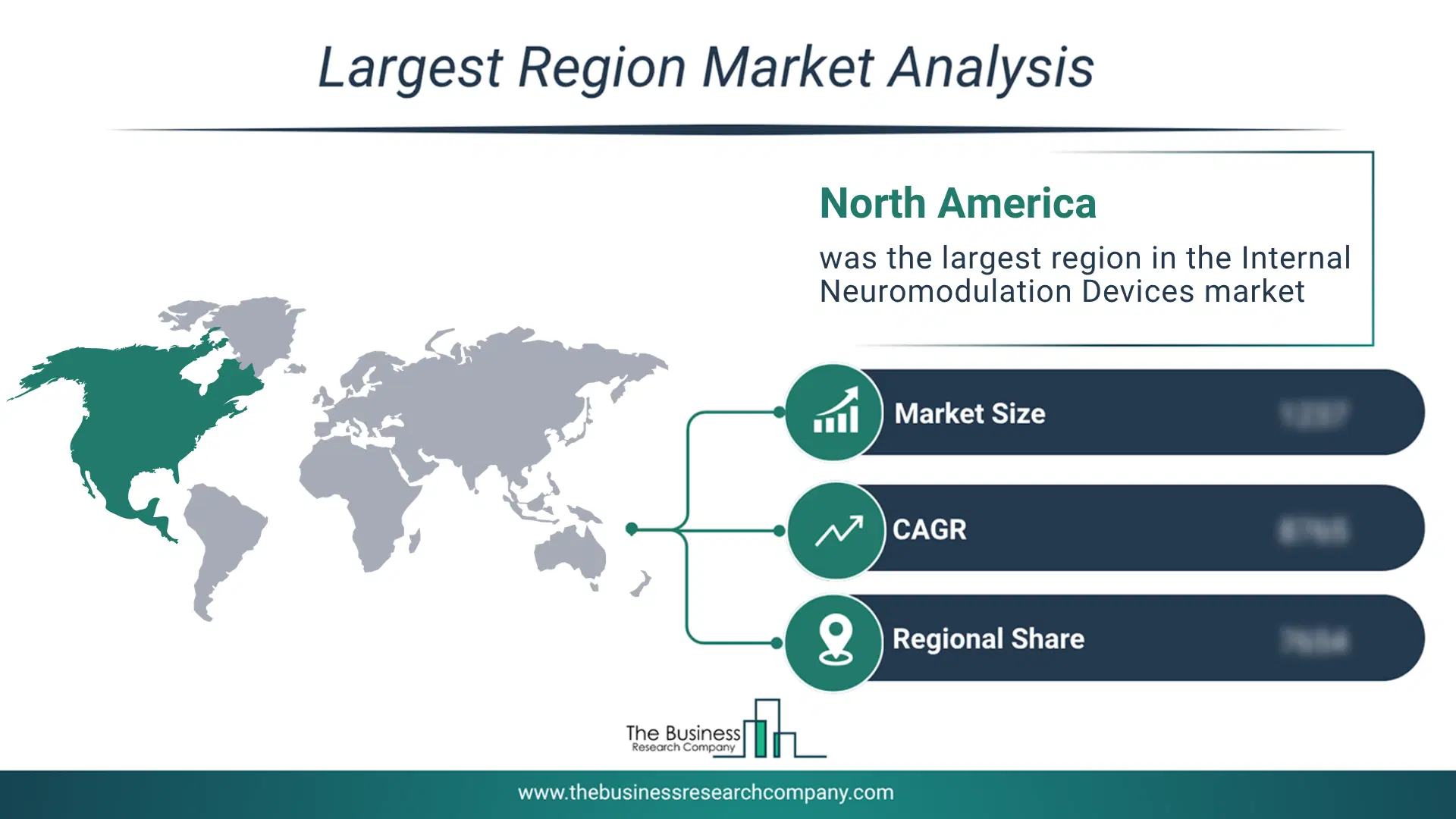
Regional Outlook
North America was the largest region in the internal neuromodulation devices market in 2025. Asia-Pacific is expected to be the fastest-growing region in the global internal neuromodulation devices market report during the forecast period. The regions covered in this market report are Asia-Pacific, South East Asia, Western Europe, Eastern Europe, North America, South America, Middle East, Africa. The countries covered in this market report are Australia, Brazil, China, France, Germany, India, Indonesia, Japan, Taiwan, Russia, South Korea, UK, USA, Canada, Italy, SpainWhat Defines the Internal Neuromodulation Devices Market?
The internal neuromodulation devices market consists of sales of electrodes, leads, receivers, and others. Values in this market are ‘factory gate’ values, that is the value of goods sold by the manufacturers or creators of the goods, whether to other entities (including downstream manufacturers, wholesalers, distributors and retailers) or directly to end customers. The value of goods in this market includes related services sold by the creators of the goods.How is Market Value Defined and Measured?
The market value is defined as the revenues that enterprises gain from the sale of goods and/or services within the specified market and geography through sales, grants, or donations in terms of the currency (in USD unless otherwise specified). The revenues for a specified geography are consumption values that are revenues generated by organizations in the specified geography within the market, irrespective of where they are produced. It does not include revenues from resales along the supply chain, either further along the supply chain or as part of other products.
This chart presents market attractiveness based on a quantitative evaluation of growth, competition, strategic alignment, and risk, offering a clear view of opportunity areas for decision-making. This chart is for illustrative purposes; the full report contains the complete analysis.

This chart highlights the Total Addressable Market (TAM) by estimating the maximum revenue opportunity using an assumption-driven approach, supporting strategic planning and opportunity sizing across markets. The chart is illustrative; the full report provides a more comprehensive analysis.
What Key Data and Analysis Are Included in the Internal Neuromodulation Devices Market Report 2026?
The internal neuromodulation devices market research report is one of a series of new reports from The Business Research Company that provides market statistics, including industry global market size, regional shares, competitors with the market share, detailed market segments, market trends and opportunities, and any further data you may need to thrive in the internal neuromodulation devices industry. The market research report delivers a complete perspective of everything you need, with an in-depth analysis of the current and future state of the industry.Internal Neuromodulation Devices Market Report Forecast Analysis
| Report Attribute | Details |
|---|---|
| Market Size Value In 2026 | $2.99 billion |
| Revenue Forecast In 2035 | $4.24 billion |
| Growth Rate | CAGR of 8.6% from 2026 to 2035 |
| Base Year For Estimation | 2025 |
| Actual Estimates/Historical Data | 2020-2025 |
| Forecast Period | 2026 - 2030 - 2035 |
| Market Representation | Revenue in USD Billion and CAGR from 2026 to 2035 |
| Segments Covered | Type, Biomaterial, Application, End-User |
| Regional Scope | Asia-Pacific, Western Europe, Eastern Europe, North America, South America, Middle East, Africa |
| Country Scope | The countries covered in the report are Australia, Brazil, China, France, Germany, India, ... |
| Key Companies Profiled | Medtronic plc, Boston Scientific Corporation, Abbott Laboratories, LivaNova plc, Nevro Corp., Axonics Modulation Technologies Inc., Saluda Medical Pty Limited, NeuroPace Inc., Aleva Neurotherapeutics SA, EnteroMedics Inc., EndoStim Inc., MicroTransponder Inc., BioControl Medical Ltd., Synapse Biomedical Inc., Neuros Medical Inc., Stimwave Technologies Incorporated, Nuvectra Corporation, Uroplasty Inc., Second Sight Medical Products Inc., NeuroMetrix Inc. |
| Customization Scope | Request for Customization |
| Pricing And Purchase Options | Explore Purchase Options |