
Internet Of Medical Things (IoMT) Market Report 2026
Global Outlook – By Device Type (Wearable Devices, Stationary Devices, Implantable Devices, Other Devices), By Application (Data Assortment And Analysis, Real-Time Monitoring, Remote Medical Assistance, Tracking And Alerts, Other Applications), By End User (Healthcare Providers, Patients, Government Authorities, Other End Users) – Market Size, Trends, Strategies, and Forecast to 2030
Internet Of Medical Things (IoMT) Market Overview
• Internet Of Medical Things (IoMT) market size has reached to $99.55 billion in 2025 • Expected to grow to $298.41 billion in 2030 at a compound annual growth rate (CAGR) of 24.5% • Growth Driver: IoT Adoption Fuels Growth Of The Internet Of Medical Things Market • Market Trend: Advancing Connected Patient Monitoring Through Innovation • North America was the largest region in 2025 and Asia-Pacific is the fastest growing region.Market Gains By 2030 – Top Opportunities By Segment
Market Gain identifies the most promising market opportunities by highlighting the segments or products expected to generate the highest incremental revenue growth over the next five years.
What Is Covered Under Internet Of Medical Things (IoMT) Market?
The internet of medical things (IoMT) refers to the interconnected network of medical devices, equipment, sensors and software applications that collect, transmit and exchange healthcare-related data through the internet. The internet of medical things (IoMT) leverages the principles of the broader internet of things (IoT) concept to enhance healthcare by enabling remote patient monitoring, real-time data analysis and improved patient care. The main types of devices included in the internet of medical things (IoMT) are wearable devices, stationary devices, implantable devices and others. Wearable devices are small electronic devices worn on the body, often in the form of accessories or clothing, designed to collect and transmit data for various purposes such as health monitoring, communication and activity tracking. It is used for several applications, including data assortment and analysis, real-time monitoring, remote medical assistance, tracking and alerts and others, which are used by various end users, such as healthcare providers, patients, government authorities and others.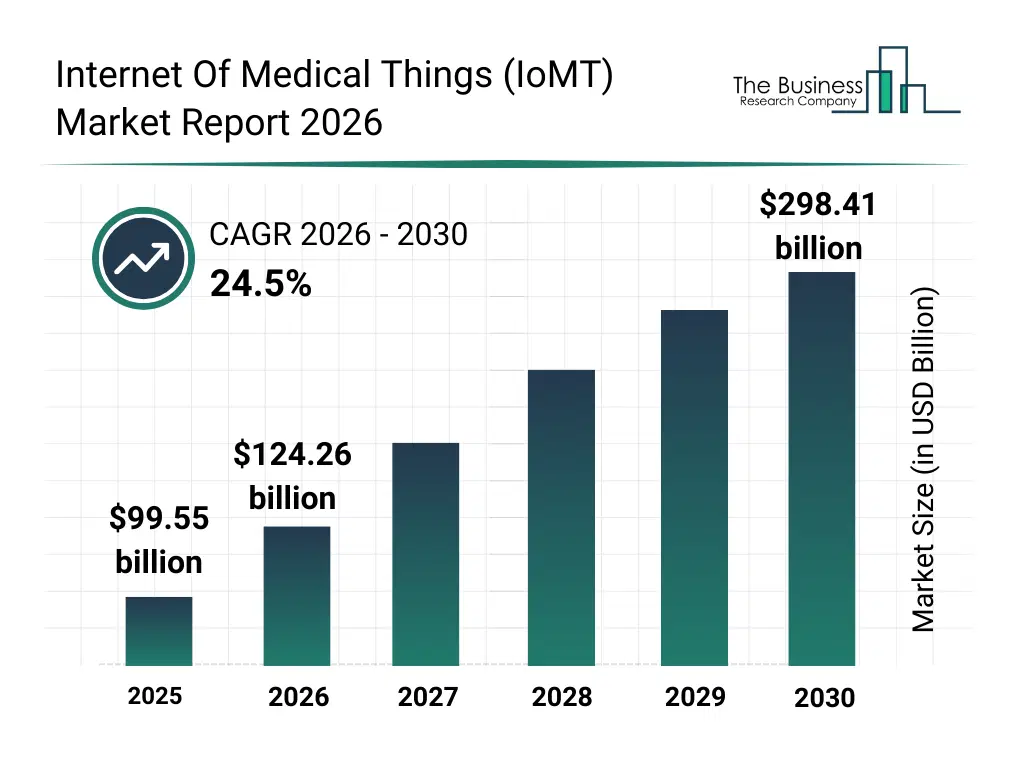
What Is The Internet Of Medical Things (IoMT) Market Size and Share 2026?
The internet of medical things (iomt) market size has grown exponentially in recent years. It will grow from $99.55 billion in 2025 to $124.26 billion in 2026 at a compound annual growth rate (CAGR) of 24.8%. The growth in the historic period can be attributed to rise of chronic diseases, increasing adoption of wearable devices, demand for remote patient monitoring, advancements in medical sensors, growth in connected healthcare infrastructure.What Is The Internet Of Medical Things (IoMT) Market Growth Forecast?
The internet of medical things (iomt) market size is expected to see exponential growth in the next few years. It will grow to $298.41 billion in 2030 at a compound annual growth rate (CAGR) of 24.5%. The growth in the forecast period can be attributed to integration with AI and predictive analytics, expansion of telehealth services, increasing use of cloud-based healthcare platforms, growing geriatric population, adoption of continuous monitoring devices. Major trends in the forecast period include remote patient monitoring, wearable health device integration, real-time data analytics, predictive healthcare alerts, telemedicine enablement.
Global Internet Of Medical Things (IoMT) Market Segmentation
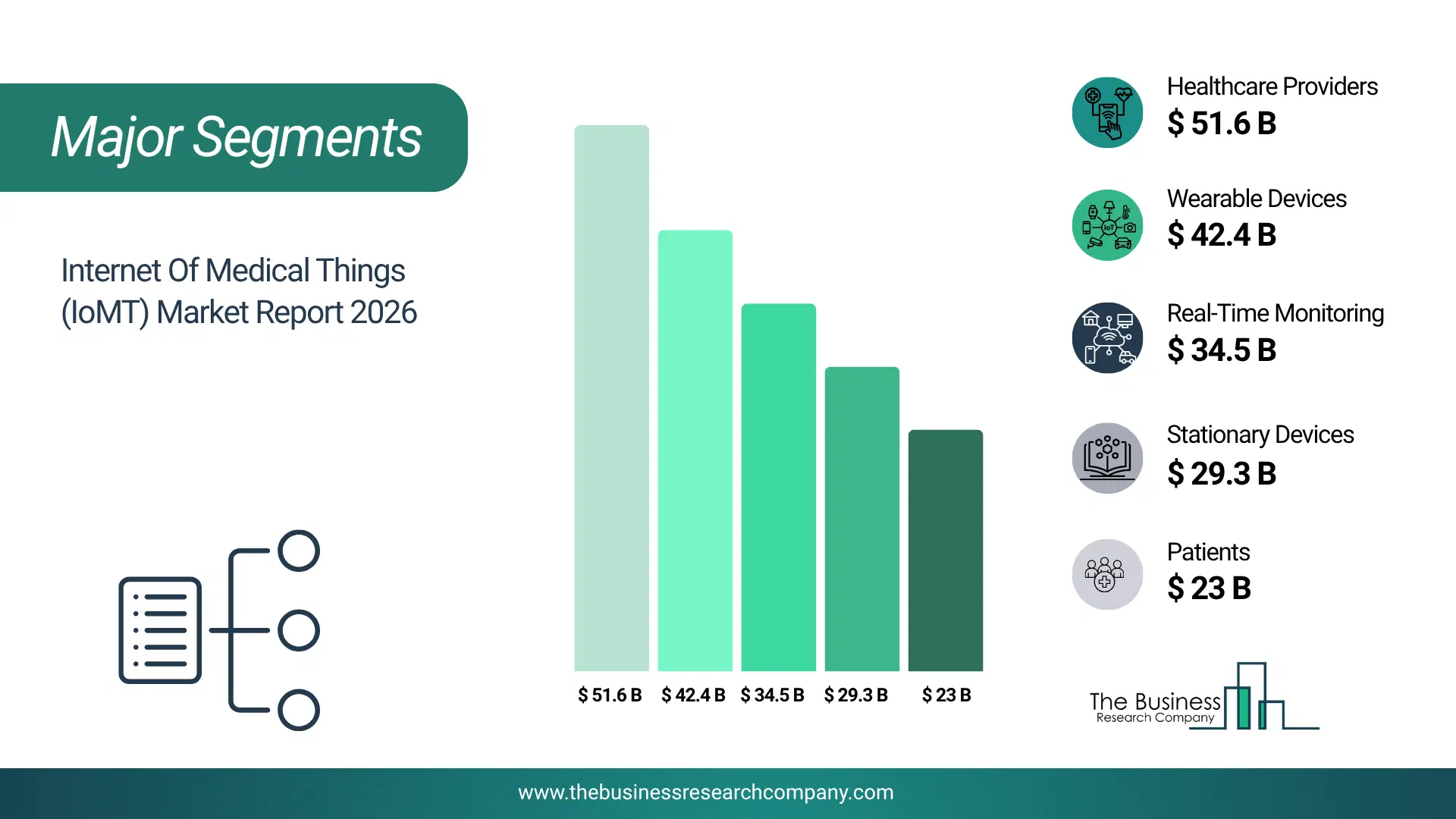
1) By Device Type: Wearable Devices, Stationary Devices, Implantable Devices, Other Devices 2) By Application: Data Assortment And Analysis, Real-Time Monitoring, Remote Medical Assistance, Tracking And Alerts, Other Applications 3) By End User: Healthcare Providers, Patients, Government Authorities, Other End Users Subsegments: 1) By Wearable Devices: Smartwatches, Fitness Trackers, Health Monitoring Patches, Wearable ECG Monitors 2) By Stationary Devices: Smart Beds, Vital Sign Monitors, Connected Diagnostic Equipment, Telehealth Stations 3) By Implantable Devices: Pacemakers, Continuous Glucose Monitors, Neurostimulators, Drug Delivery Systems 4) By Other Devices: Home Health Monitoring Devices, Connected Inhalers, Medication Adherence Devices, Smart Thermometers The top segments in the internet of medical things (iomt) market will be: • Healthcare Providers will reach $51678.59 Million by 2025. • Wearable Devices will reach $42494.33 Million by 2025. • Real-Time Monitoring will reach $34515.49 Million by 2025. • Stationary Devices will reach $29376.45 Million by 2025. • Patients will reach $23026.18 Million by 2025.What Is The Driver Of The Internet Of Medical Things (IoMT) Market?
The increasing adoption of internet of things (IoT) devices is expected to propel the growth of the internet of medical things (IoMT) market going forward. IoT devices refer to everyday objects and equipment embedded with sensors, software, and connectivity features that allow them to collect, transmit, and exchange data over the internet. Adoption of IoT devices is rising due to the growing need for real-time data collection that improves decision-making and operational efficiency. The internet of medical things (IoMT) grows as IoT adoption increases because it relies on the same connected technologies, so wider use of IoT devices naturally supports the expansion of connected medical devices in healthcare. For instance, in August 2025, according to Eurostat, a Luxembourg-based European Union (EU) statistical agency responsible for providing official data to inform policy and research, 70.9 percent of people in the EU used internet-connected devices in 2024. Therefore, the increasing adoption of IoT devices is driving the growth for the internet of medical things (IoMT) industry.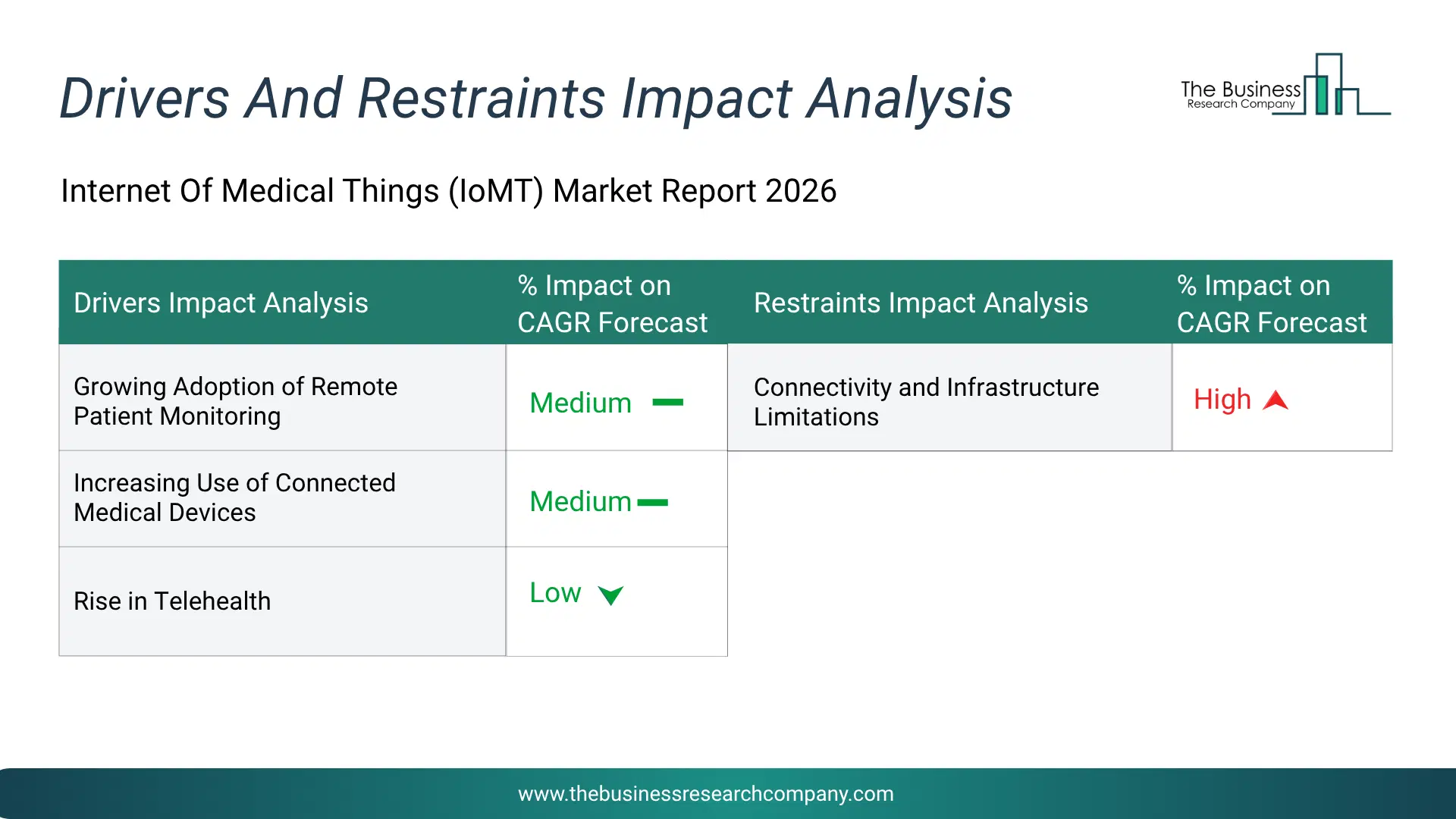
Infographic Chart Showing Key Market Drivers Analysis And Restraints For Internet Of Medical Things (Iomt) Market
The chart presents an impact analysis of key drivers and restraints, quantifying their relative influence on the market's growth rate and helping assess the balance between growth enablers and limiting factors. This chart offers a high-level perspective; the full report contains more detailed insights.
How Will The Drivers Impact Growth In The Global Internet Of Medical Things (IoMT) Market?
• Growing Adoption of Remote Patient Monitoring (Medium) – The growing adoption of remote patient monitoring will become a key driver of growth in the internet of medical things (IoMT) market by 2030. Remote patient monitoring (RPM) reduces hospital visits by allowing patients to be monitored from home, driving increased demand for IoMT devices like wearables and mobile health apps. It enhances patient engagement by enabling individuals to actively track their health, leading to better outcomes. RPM also improves healthcare efficiency by minimizing in-person check-ups and allowing healthcare providers to make timely decisions based on continuous patient data, optimizing treatment plans, especially for chronic conditions. As a result, the growing adoption of remote patient monitoring is anticipated to contributing to a 1.5% annual growth in the market. • Increasing Use of Connected Medical Devices (Medium) – The increasing use of connected medical devices will emerge as a major factor driving the expansion of the internet of medical things (IoMT) market by 2030. Connected medical devices enable real-time data collection and sharing, improving diagnostics and supporting timely clinical decisions. They allow remote monitoring, especially valuable for chronic care and elderly patients, reducing the need for physical visits. Mobile apps linked to these devices enhance patient engagement by providing access to personal health metrics. Integration with electronic health records ensures seamless data flow, improving care coordination across health systems. Consequently, the accelerating increasing use of connected medical devices capabilities is projected to contributing to a 1.2% annual growth in the market. • Rise in Telehealth (Low) – The rise in telehealth processes will serve as a key growth catalyst for the internet of medical things (IoMT) market by 2030. Telehealth requires accurate, real-time patient data, which is provided by IoMT devices like wearables and glucose meters. These devices enable continuous remote monitoring, facilitating home-based care for chronic conditions and driving demand for seamless integration with telehealth platforms. By transmitting health data during virtual consultations, IoMT ensures informed clinical decisions and enhances patient engagement. Additionally, IoMT allows for the integration of various devices into unified systems, enabling efficient patient monitoring and scalable telehealth services. Therefore, this rise in telehealth operations is projected to supporting to a 0.7% annual growth in the market. • Increased Focus on Preventive Healthcare (Low) – The increased focus on preventive healthcare will become a significant driver contributing to the growth of the internet of medical things (IoMT) market by 2030. Preventive healthcare focuses on early detection of health issues and IoMT devices like wearables and smart monitors enable continuous tracking of key metrics such as heart rate and activity levels. By providing real-time data, these devices offer personalized insights and support remote monitoring, allowing for timely interventions. IoMT data aids population health management by identifying at-risk groups and enabling targeted prevention strategies. These devices help reduce healthcare costs by promoting healthier lifestyles, preventing chronic conditions and enabling early intervention, ultimately minimizing the need for costly treatments and hospital visits. Consequently, the increased focus on preventive healthcare strategies is projected to contributing to a 0.5% annual growth in the market.How Will The Restraints Impact Growth In The Global Internet Of Medical Things (IoMT) Market?
• Concerns Over Device Accuracy and Reliability (Medium) – Concerns Over Device Accuracy and Reliability will restrict the growth of the Internet Of Medical Things (IoMT) market during the forecast period. IoMT devices face concerns about accuracy, reliability, and data integrity affecting clinical decisions and patient safety. Inaccurate or unreliable device readings can lead to misdiagnosis and inappropriate treatment. Concerns about device performance can limit healthcare provider adoption and patient trust in IoMT technologies. • Connectivity and Infrastructure Limitations (Low) – Connectivity and Infrastructure Limitations will restrict the growth of the Internet Of Medical Things (IoMT) market during the forecast period. IoMT device deployment requires reliable connectivity and network infrastructure that may be inadequate in many regions. Connectivity gaps can affect real-time monitoring and data transmission, reducing the effectiveness of IoMT solutions. Infrastructure limitations, particularly in rural and developing areas, restrict market reach and adoption.Key Players In The Global Internet Of Medical Things (IoMT) Market
Major companies operating in the internet of medical things (iomt) market are Google LLC; Microsoft Corporation; Johnson & Johnson Services Inc.; Siemens Healthineers AG; Roche Diagnostics Corporation; Cisco Systems Inc.; Qualcomm Life Inc.; Abbott Laboratories; Oracle Corporation; Honeywell International Inc.; Medtronic PLC; Becton Dickinson and Company; Koninklijke Philips N.V.; Stryker Corporation; GE HealthCare Technologies Inc.; Boston Scientific Corporation; Zimmer Biomet Holdings Inc.; Zebra Technologies Corp.; Smith & Nephew PLC; Otsuka America Pharmaceutical Inc.; ResMed Inc.; AptarGroup Inc.; DexCom Inc.; Masimo Corporation; iRhythm Technologies Inc.; Merative L.P.; Capsule Technologies Inc.; Owlet Baby Care Inc.; AgaMatrix Inc.; AliveCor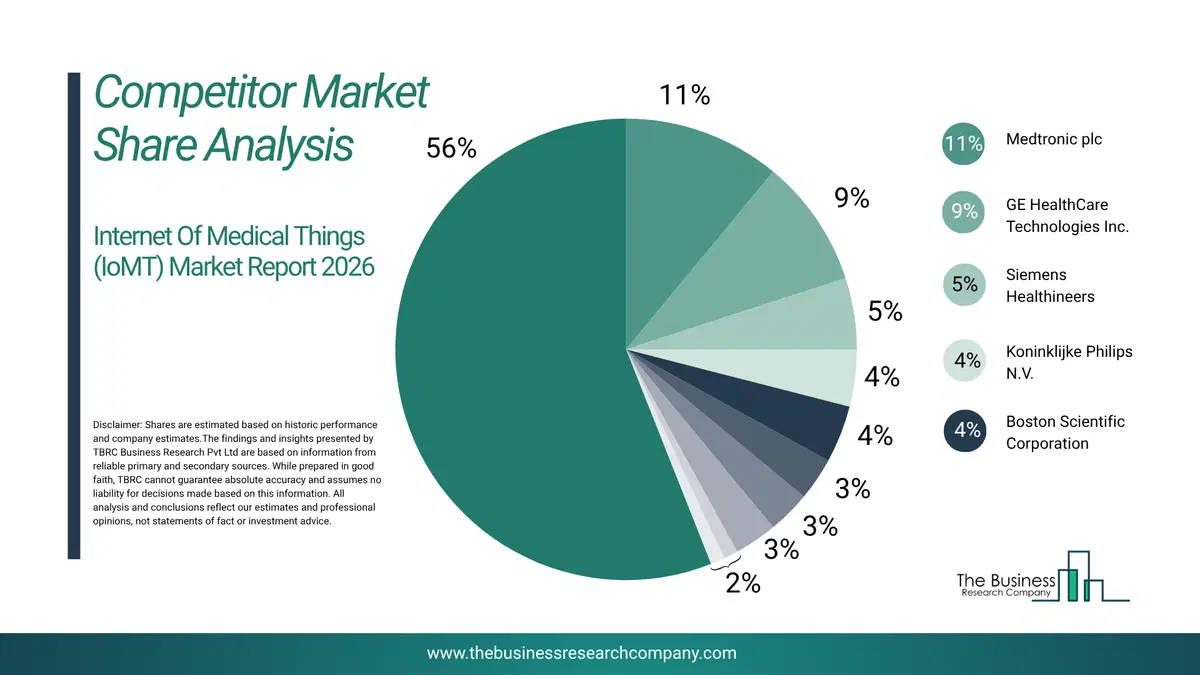
This chart is for illustrative purposes; the full report includes a detailed competitor analysis and comprehensive overview of the top 10 companies in the market.
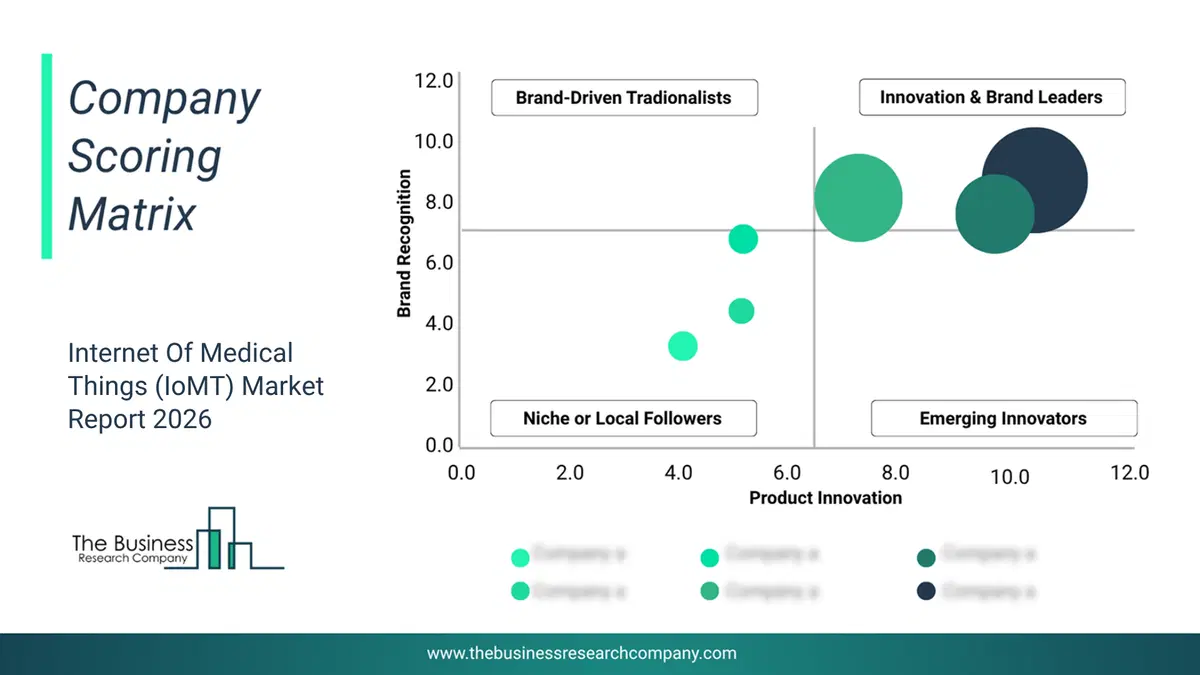
This chart maps companies by product innovation and brand strength, with bubble size indicating relative revenue, helping identify market leaders, challengers, and niche players. This is an illustrative chart; the full report provides a complete and accurate competitive analysis.
Global Internet Of Medical Things (IoMT) Market Trends and Insights
Major companies operating in the internet of medical things (IoMT) market are focusing on developing innovative solutions such as ambulatory connected patient-monitoring systems to meet the rising demand for continuous, real-time monitoring, early clinical-warning capabilities, and improved care delivery across hospital and home settings. Ambulatory connected monitoring systems use wireless sensors and cloud-based platforms to capture patient vitals continuously, unlike traditional manual spot-checks that provide limited and intermittent data. For instance, in October 2023, Dozee, an India-based medical technology company, launched Dozee Pro Ex, an advanced ambulatory connected patient-monitoring system designed for seamless hospital-to-home care. The device uses wireless wearable sensors to measure ECG rhythm, blood pressure, heart rate, oxygen saturation, respiration rate, and temperature. It is supported by an artificial intelligence (AI)-driven early warning system that analyzes trends and alerts clinicians to potential deterioration. The solution enables centralised remote monitoring via command-centre dashboards and mobile applications, offering continuous, connected, and automated tracking that significantly enhances patient management compared with traditional bedside monitoring.What Are Latest Mergers And Acquisitions In The Internet Of Medical Things (IoMT) Market?
In April 2024, Omron Healthcare Co., Ltd., a Japan-based healthcare technology company, acquired Luscii Healthtech B.V. for an undisclosed amount. With this acquisition, Omron aims to accelerate and scale its remote-patient-monitoring (RPM) capabilities and expand its presence across Europe and beyond within the Internet of Medical Things (IoMT) market. Luscii Healthtech is a Netherlands-based healthcare technology company, specialises in a fully customisable remote-monitoring platform and patient-app ecosystem that serves over 150 diseases and connects general practitioners, hospitals, community care and virtual-ward services.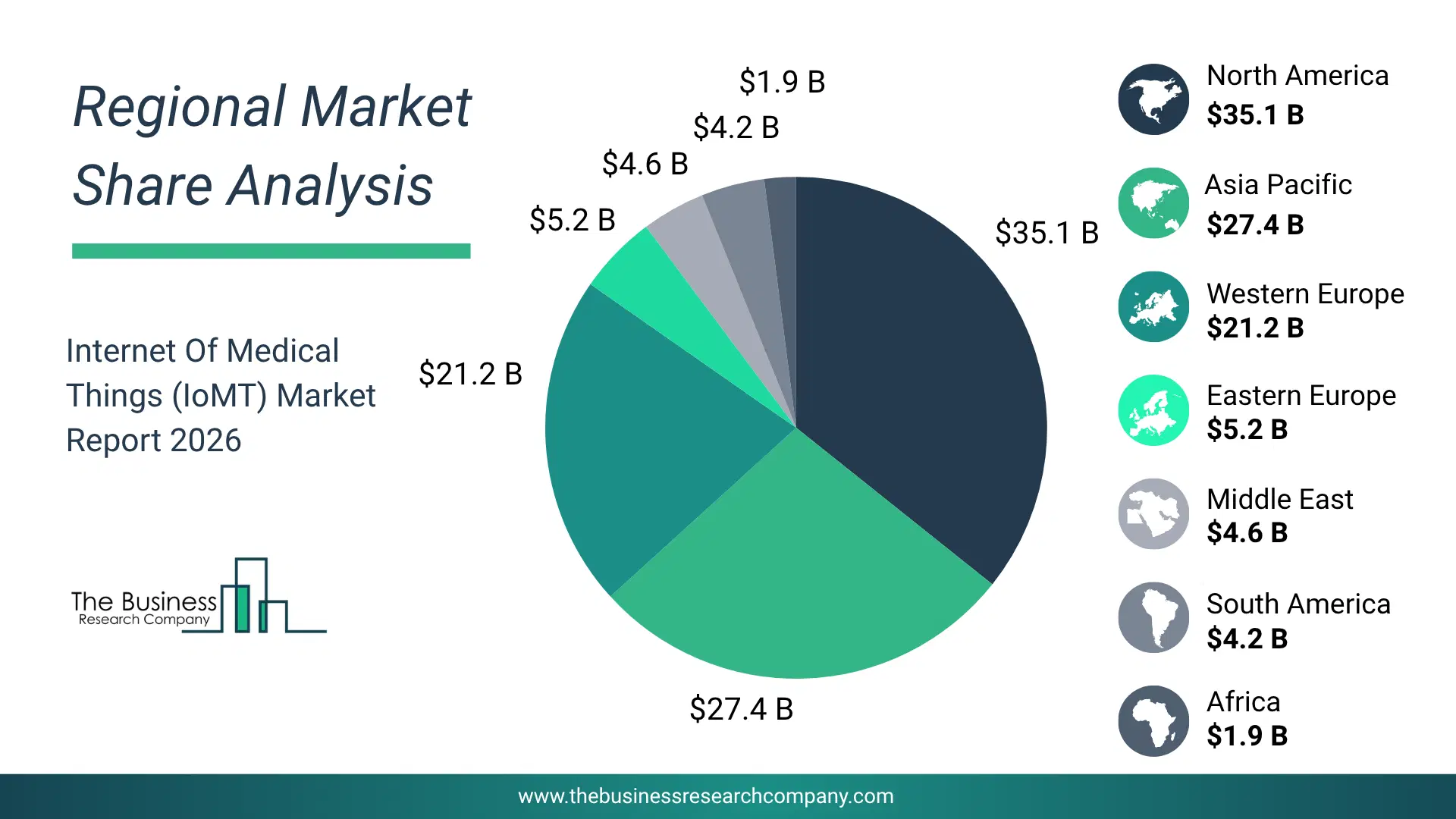
Regional Insights
North America was the largest region in the internet of medical things (IoMT) market in 2025. Asia-Pacific is expected to be the fastest-growing region in the forecast period. The regions covered in this market report are Asia-Pacific, South East Asia, Western Europe, Eastern Europe, North America, South America, Middle East, Africa. The countries covered in this market report are Australia, Brazil, China, France, Germany, India, Indonesia, Japan, Taiwan, Russia, South Korea, UK, USA, Canada, Italy, SpainWhat Defines the Internet Of Medical Things (IoMT) Market?
The internet of medical things (IoMT) market consists of revenues earned by entities by providing consulting and implementation services, patient engagement and telemedicine and virtual care. The market value includes the value of related goods sold by the service provider or included within the service offering. The internet of medical things (IoMT) market also includes sales of ECG (Electrocardiogram) monitors, neurostimulators and fitness trackers, which are used in providing internet of medical things (IoMT) services. Values in this market are ‘factory gate’ values, that is, the value of goods sold by the manufacturers or creators of the goods, whether to other entities (including downstream manufacturers, wholesalers, distributors and retailers) or directly to end customers. The value of goods in this market includes related services sold by the creators of the goods.How is Market Value Defined and Measured?
The market value is defined as the revenues that enterprises gain from the sale of goods and/or services within the specified market and geography through sales, grants, or donations in terms of the currency (in USD unless otherwise specified). The revenues for a specified geography are consumption values that are revenues generated by organizations in the specified geography within the market, irrespective of where they are produced. It does not include revenues from resales along the supply chain, either further along the supply chain or as part of other products.
This chart presents market attractiveness based on a quantitative evaluation of growth, competition, strategic alignment, and risk, offering a clear view of opportunity areas for decision-making. This chart is for illustrative purposes; the full report contains the complete analysis.

This chart highlights the Total Addressable Market (TAM) by estimating the maximum revenue opportunity using an assumption-driven approach, supporting strategic planning and opportunity sizing across markets. The chart is illustrative; the full report provides a more comprehensive analysis.
What Key Data and Analysis Are Included in the Internet Of Medical Things (IoMT) Market Report 2026?
The internet of medical things (iomt) market research report is one of a series of new reports from The Business Research Company that provides market statistics, including industry global market size, regional shares, competitors with the market share, detailed market segments, market trends and opportunities, and any further data you may need to thrive in the internet of medical things (iomt) industry. The market research report delivers a complete perspective of everything you need, with an in-depth analysis of the current and future state of the industry.Internet Of Medical Things (IoMT) Market Report Forecast Analysis
| Report Attribute | Details |
|---|---|
| Market Size Value In 2026 | $124.26 billion |
| Revenue Forecast In 2030 | $298.41 billion |
| Growth Rate | CAGR of 24.8% from 2026 to 2030 |
| Base Year For Estimation | 2025 |
| Actual Estimates/Historical Data | 2020-2025 |
| Forecast Period | 2026 - 2030 |
| Market Representation | Revenue in USD Billion and CAGR from 2026 to 2030 |
| Segments Covered | Device Type, Application, End User |
| Regional Scope | Asia-Pacific, Western Europe, Eastern Europe, North America, South America, Middle East, Africa |
| Country Scope | The countries covered in the report are Australia, Brazil, China, France, Germany, India, Indonesia, Japan, Taiwan, Russia, South Korea, UK, USA, Canada, Italy, Spain. |
| Key Companies Profiled | Google LLC; Microsoft Corporation; Johnson & Johnson Services Inc.; Siemens Healthineers AG; Roche Diagnostics Corporation; Cisco Systems Inc.; Qualcomm Life Inc.; Abbott Laboratories; Oracle Corporation; Honeywell International Inc.; Medtronic PLC; Becton Dickinson and Company; Koninklijke Philips N.V.; Stryker Corporation; GE HealthCare Technologies Inc.; Boston Scientific Corporation; Zimmer Biomet Holdings Inc.; Zebra Technologies Corp.; Smith & Nephew PLC; Otsuka America Pharmaceutical Inc.; ResMed Inc.; AptarGroup Inc.; DexCom Inc.; Masimo Corporation; iRhythm Technologies Inc.; Merative L.P.; Capsule Technologies Inc.; Owlet Baby Care Inc.; AgaMatrix Inc.; AliveCor |
| Customization Scope | Request for Customization |
| Pricing And Purchase Options | Explore Purchase Options |