
Internet Of Things (IoT) In Healthcare Market Report 2026
Global Outlook – By Component (Medical Devices, Systems and Software, Services), By Connectivity Technology (Cellular, Wi-Fi, Near Field Communications, Satellite, Bluetooth, Zigbee), By Application (Telemedicine, Clinical Operations and Workflow Management, Inpatient Monitoring, Medication Management, Connected Imaging, Other Applications), By End Users (Clinical Research Organizations, Government Institutions, Research and Diagnostic Laboratories, Hospitals and Clinics, Other End Users) – Market Size, Trends, Strategies, and Forecast to 2030
Internet Of Things (IoT) In Healthcare Market Overview
• Internet Of Things (IoT) In Healthcare market size has reached to $280.79 billion in 2025 • Expected to grow to $716.8 billion in 2030 at a compound annual growth rate (CAGR) of 20.3% • Growth Driver: Digital Transformation Accelerates Growth In Internet Of Things In Healthcare Market • Market Trend: Cloud-Based Innovations Transforming IoT in Healthcare • North America was the largest region in 2025 and Asia-Pacific is the fastest growing region.Market Gains By 2030 – Top Opportunities By Segment
Market Gain identifies the most promising market opportunities by highlighting the segments or products expected to generate the highest incremental revenue growth over the next five years.
What Is Covered Under Internet Of Things (IoT) In Healthcare Market?
The Internet of Things (IoT) in healthcare refers to a solution that combines wireless communication, sensing and positioning technologies, the cloud, and data and security services to provide improved preventative healthcare as well as the diagnosis, cure, treatment, and monitoring of health conditions. IoT in healthcare helps in the remote monitoring of the patients to smart sensors integration into medical devices by keeping the patients safe and healthy and helps the physician to deliver proper care to the patients. The main types of Internet of Things in the healthcare market are medical devices, systems and software, and services. Medical devices refer to any instrument or a related object that the producer intends to be used in combination for a medical purpose. The various connectivity technologies include cellular, wi-fi, near-field communications, satellite, Bluetooth, and zigbee. The various applications include telemedicine, clinical operations, workflow management, inpatient monitoring, medication management, connected imaging, and other applications used by clinical research organizations, government institutions, research and diagnostic laboratories, hospitals and clinics, and other end-users.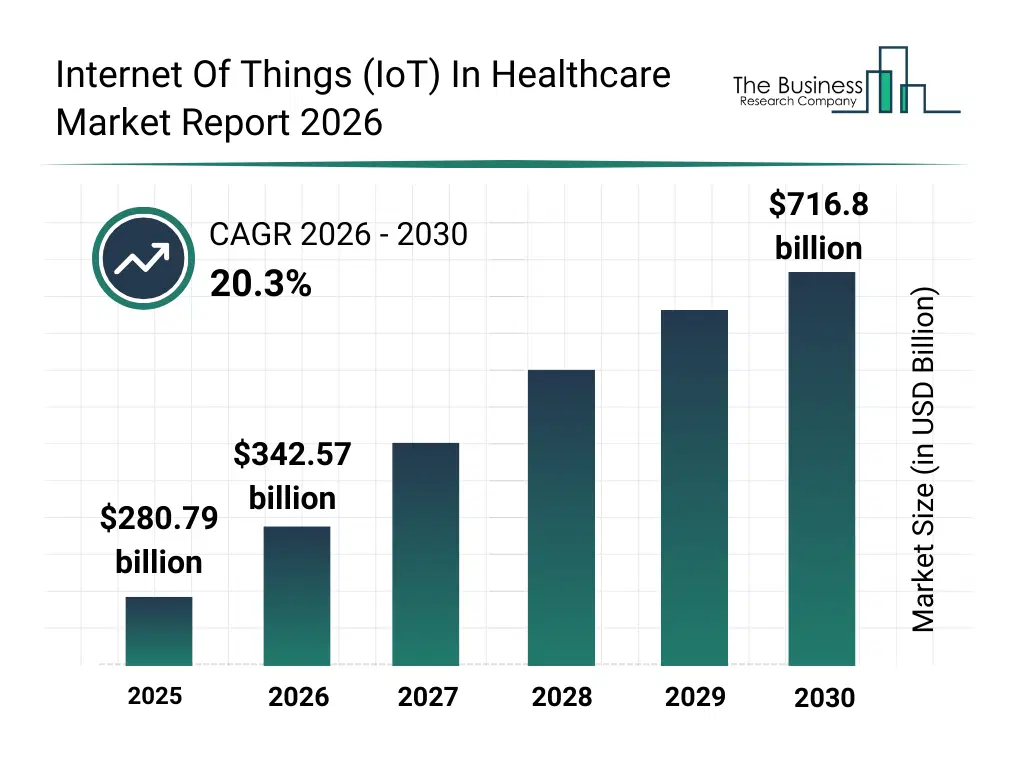
What Is The Internet Of Things (IoT) In Healthcare Market Size and Share 2026?
The internet of things (iot) in healthcare market size has grown exponentially in recent years. It will grow from $280.79 billion in 2025 to $342.57 billion in 2026 at a compound annual growth rate (CAGR) of 22.0%. The growth in the historic period can be attributed to chronic disease prevalence, hospital capacity constraints, early adoption of connected devices, healthcare digitization initiatives, demand for continuous patient monitoring.What Is The Internet Of Things (IoT) In Healthcare Market Growth Forecast?
The internet of things (iot) in healthcare market size is expected to see exponential growth in the next few years. It will grow to $716.8 billion in 2030 at a compound annual growth rate (CAGR) of 20.3%. The growth in the forecast period can be attributed to AI enabled clinical decision support, expansion of telemedicine services, growth of home healthcare models, investment in smart healthcare infrastructure, rising focus on preventive care. Major trends in the forecast period include remote patient monitoring expansion, connected medical devices integration, real time health data analytics, smart hospital infrastructure, wearable health technology adoption.
Global Internet Of Things (IoT) In Healthcare Market Segmentation
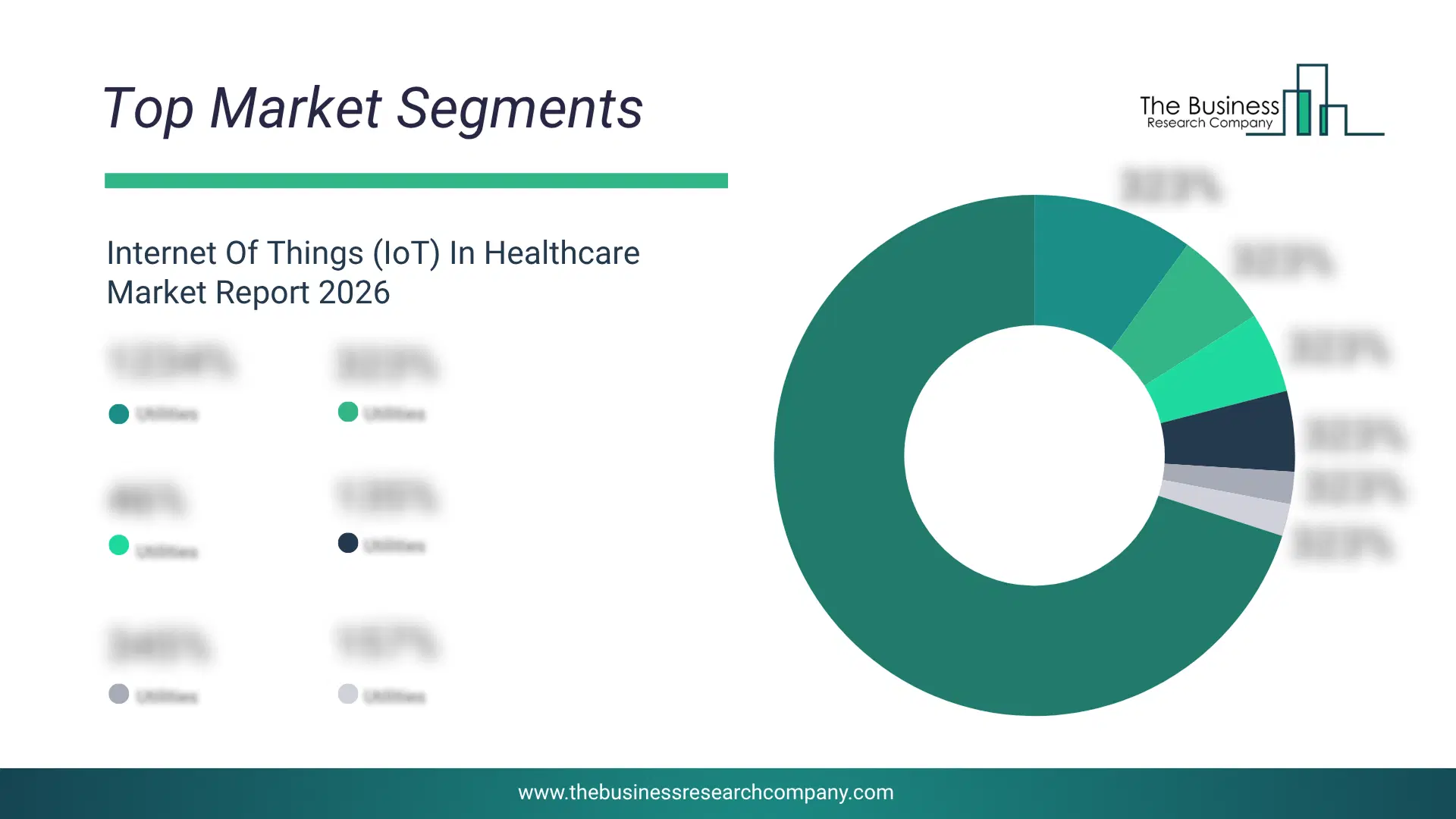
1) By Component: Medical Devices, Systems and Software, Services 2) By Connectivity Technology: Cellular, Wi-Fi, Near Field Communications, Satellite, Bluetooth, Zigbee 3) By Application: Telemedicine, Clinical Operations and Workflow Management, Inpatient Monitoring, Medication Management, Connected Imaging, Other Applications 4) By End Users: Clinical Research Organizations, Government Institutions, Research and Diagnostic Laboratories, Hospitals and Clinics, Other End Users Subsegments: 1) By Medical Devices: Wearable Devices, Remote Patient Monitoring Devices, Implantable Devices, Diagnostic Equipment 2) By Systems And Software: Health Information Systems (HIS), Electronic Health Records (EHR), Cloud-based IoT Platforms, Data Analytics Software 3) By Services: Consulting Services, Integration Services, Maintenance And Support Services, Training And Education Service The top segments in the internet of things (iot) in healthcare market will be: • Medical Devices will reach $377.5 Billion by 2030. • Systems and Software will reach $221.98 Billion by 2030. • Services will reach $114.65 Billion by 2030.What Is The Driver Of The Internet Of Things (IoT) In Healthcare Market?
The growing adoption of digital transformation is expected to contribute to the growth of the Internet of things in the healthcare market. Digital Transformation of the healthcare industry refers to the transformation through various technologies and digital care programs to serve patients better with advancements in healthcare. The increase in digital transformation in healthcare increased the use of various technologies, such as artificial intelligence in healthcare. 81% of healthcare executives say the pace of digital transformation for their organization is accelerating, and 93% report that they are innovating with a sense of urgency and call to action this year. For instance, in November 2023, according to the GOV.UK, the government digital and data profession experienced a 19% growth between April 2022 and April 2023, successfully meeting crucial digital skills demands. Therefore, the growing adoption of digital transformation in healthcare will promote the growth of the Internet of things in the healthcare market.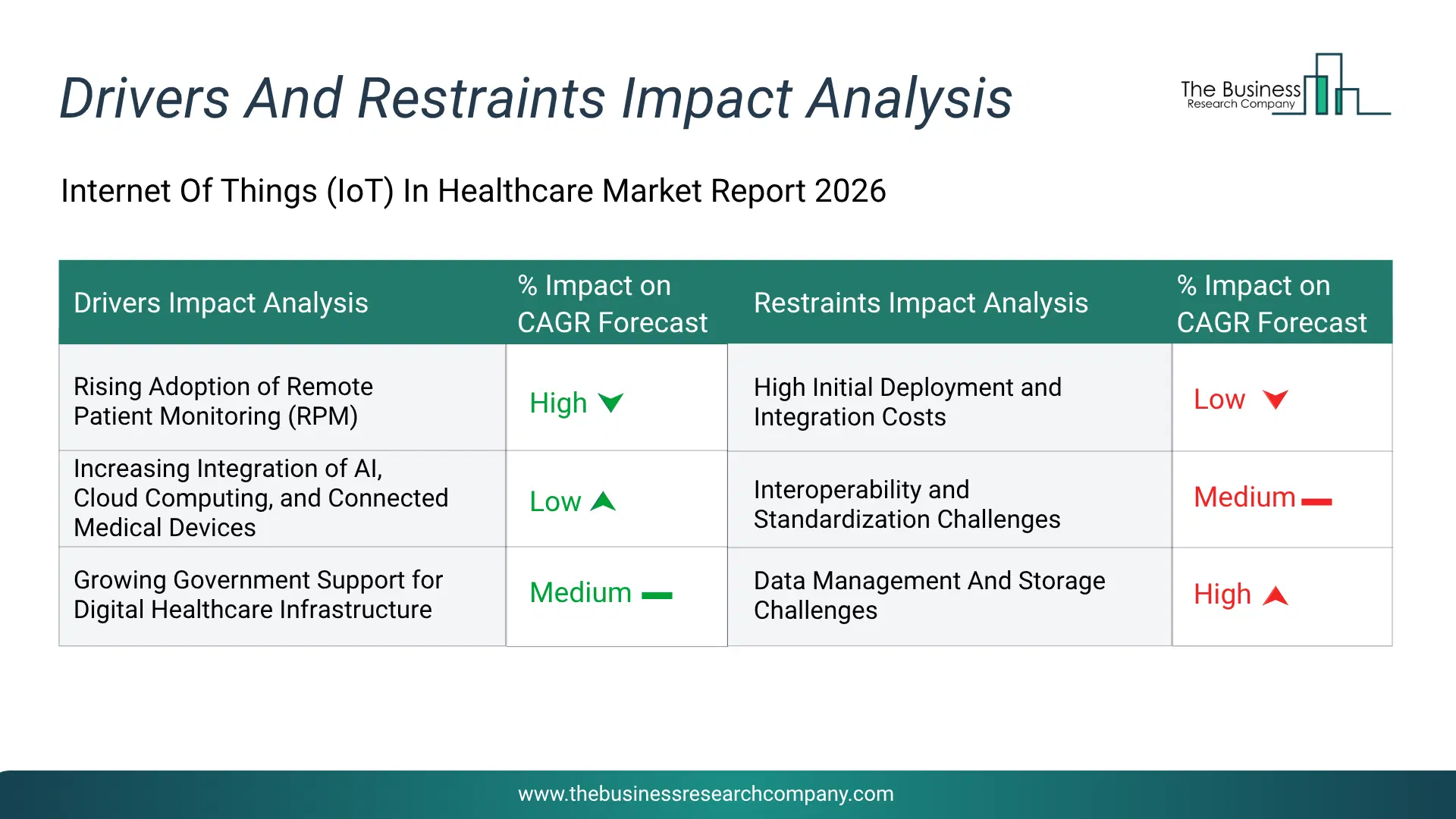
Infographic Chart Showing Key Market Drivers Analysis And Restraints For Internet Of Things (Iot) In Healthcare Market
The chart presents an impact analysis of key drivers and restraints, quantifying their relative influence on the market's growth rate and helping assess the balance between growth enablers and limiting factors. This chart offers a high-level perspective; the full report contains more detailed insights.
How Will The Drivers Impact Growth In The Global Internet Of Things (IoT) In Healthcare Market?
• Rising Adoption of Remote Patient Monitoring (RPM) (High) – During the forecast period, the rising adoption of remote patient monitoring (RPM) is expected to become a key growth driver for the internet of things (IoT) in healthcare market by 2030. The growing prevalence of chronic diseases and aging populations is increasing the demand for continuous patient monitoring outside traditional healthcare settings. IoT-enabled wearable and connected medical devices allow healthcare providers to track patients in real time, reducing hospital admissions and emergency visits. Remote monitoring improves treatment adherence and enables early detection of health complications. Healthcare systems are increasingly investing in RPM programs to lower healthcare costs while improving patient outcomes. This trend is significantly accelerating the adoption of IoT technologies across hospitals, clinics, and home healthcare environments. • Increasing Integration of AI, Cloud Computing, and Connected Medical Devices (Low) – During the forecast period, the increasing integration of AI, cloud computing, and connected medical devices is expected to emerge as a major factor driving the expansion of the internet of things (IoT) in healthcare market by 2030. Healthcare organizations are rapidly integrating IoT with artificial intelligence, cloud computing, and advanced analytics to improve clinical decision-making. Connected devices generate continuous streams of patient data that can be securely stored and analyzed through cloud platforms. AI-powered analytics help identify disease risks, predict adverse events, and optimize treatment plans. This integration enhances operational efficiency while enabling personalized healthcare services. The growing digital transformation of healthcare is driving strong demand for comprehensive IoT ecosystems. • Growing Government Support for Digital Healthcare Infrastructure (Medium) – During the forecast period, the growing government support for digital healthcare infrastructure is expected to act as a key growth catalyst for the internet of things (IoT) in healthcare market by 2030. Governments worldwide are promoting digital health initiatives to improve healthcare accessibility, efficiency, and quality of care. Funding programs, favorable reimbursement policies for telehealth, and investments in smart hospitals are encouraging the deployment of IoT-enabled healthcare solutions. National strategies focused on electronic health records and connected healthcare infrastructure further support market expansion. Public-private collaborations are also accelerating innovation in connected medical technologies. These initiatives create a favorable environment for widespread IoT adoption across healthcare systems.How Will The Restraints Impact Growth In The Global Internet Of Things (IoT) In Healthcare Market?
• High Initial Deployment and Integration Costs (High) – During the forecast period, the implementing IoT healthcare infrastructure requires substantial investment in connected medical devices, network infrastructure, cloud platforms, and software integration. Many healthcare providers, particularly small hospitals and clinics, face budget limitations that delay adoption. Additional expenses for system maintenance, employee training, and cybersecurity further increase the total cost of ownership. Integrating IoT solutions with existing hospital information systems can also be technically challenging. These financial and operational hurdles restrict faster market growth. • Interoperability and Standardization Challenges (Low) – During the forecast period, the healthcare organizations often use medical devices and software from multiple vendors that operate on different communication protocols and data formats. The lack of standardized interoperability makes seamless data exchange difficult across healthcare systems. Integration issues can reduce operational efficiency and limit the effectiveness of connected healthcare solutions. Inconsistent standards also complicate large-scale deployments and increase implementation costs. Addressing interoperability remains a key challenge for expanding IoT adoption in the healthcare sector. • Data Management And Storage Challenges (Medium) – During the forecast period, the data management and storage challenges act as a significant restraint on the Internet Of Things (IoT) In Healthcare market because connected medical devices generate large volumes of real-time patient and operational data that require efficient storage, processing, and analysis. Healthcare organizations need advanced data management platforms and secure cloud infrastructure to handle this increasing data volume. Managing data accuracy, accessibility, and integration across multiple healthcare systems can be complex and resource-intensive. Poor data management can reduce the effectiveness of IoT-enabled healthcare solutions and impact decision-making processes. These challenges increase implementation complexity and operational costs, limiting wider adoption of IoT technologies in healthcare.Key Players In The Global Internet Of Things (IoT) In Healthcare Market
Major companies operating in the internet of things (iot) in healthcare market are IBM Corporation; Microsoft Corporation; Koninklijke Philips N.V; GE Healthcare; Cisco Systems Inc.; SAP SE; Medtronic PLC; Siemens Healthiness GmbH; Intel Corporation; Lenovo Healthcare Information Technology; MyrIoTa; HCL Technologies; Aeron Systems; Bioserenity; STANLEY Healthcare; Senseonics Holdings Inc.; Babylon Health; Hill-Rom Services Inc.; Dacadoo; Healthbank; Diagnocat; Renalytix AI; Exscientia; Cambridge Cognition; BenevolentAI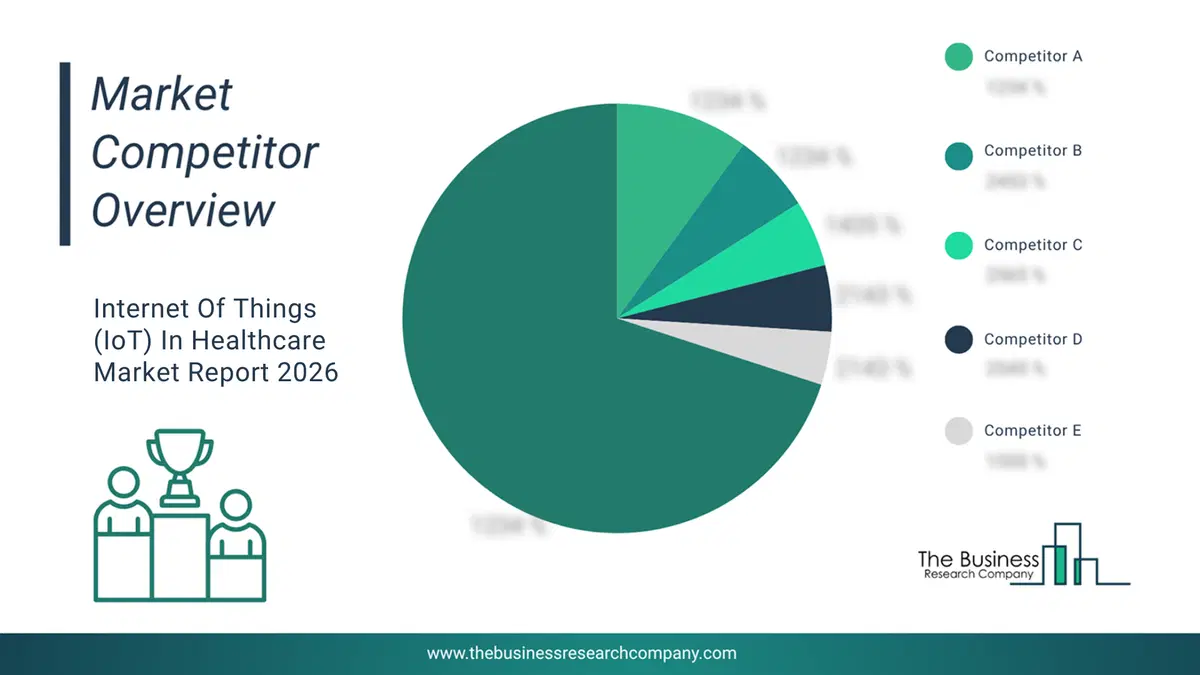
This chart is for illustrative purposes; the full report includes a detailed competitor analysis and comprehensive overview of the top 10 companies in the market.
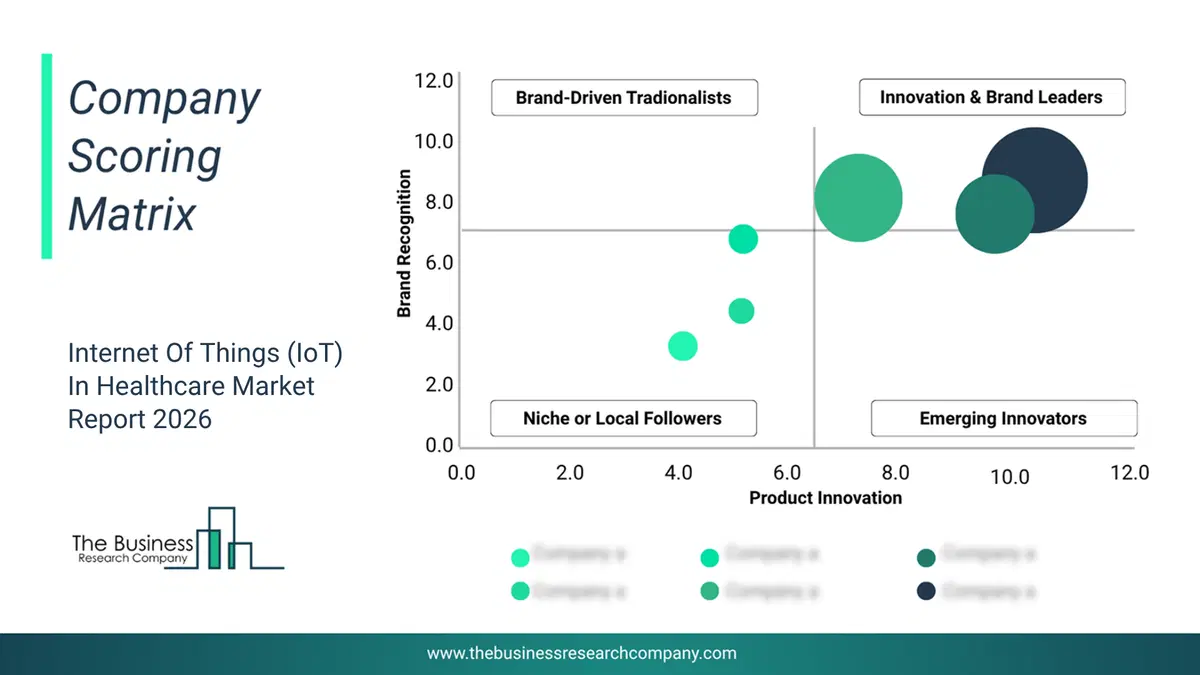
This chart maps companies by product innovation and brand strength, with bubble size indicating relative revenue, helping identify market leaders, challengers, and niche players. This is an illustrative chart; the full report provides a complete and accurate competitive analysis.
Global Internet Of Things (IoT) In Healthcare Market Trends and Insights
Major companies operating in the internet of things (IoT) in the healthcare market are developing innovative solutions such as cloud-based platforms to improve patient monitoring, enhance data management, and enable remote healthcare services Cloud-based platforms refer to online services that store and manage data on remote servers, allowing users to access applications and information over the internet, facilitating collaboration, scalability, and real-time data sharing without the need for local infrastructure. For instance, in November 2023, Philips, a Netherlands-based technology company, launched HealthSuite Imaging, a next-generation cloud-based PACS platform at #RSNA23. Philips HealthSuite Imaging is a cloud-based next-generation PACS (Picture Archiving and Communication System) that enables radiologists to access diagnostic tools and reports securely from anywhere. It features AI-enabled workflow orchestration, streamlining clinical processes to enhance operational efficiency and patient care.What Are Latest Mergers And Acquisitions In The Internet Of Things (IoT) In Healthcare Market?
In January 2023, Cognizant Technology Solutions Corporation, a US-based provider of IT services and digital engineering solutions, acquired Mobica Limited for an undisclosed amount. Through this acquisition, Cognizant aims to enhance its IoT embedded software engineering capabilities in connected devices and digital transformation, supporting the development of advanced healthcare and other IoT applications. Mobica Limited is a UK-based company that offers a variety of Internet of Things (IoT) solutions tailored for the healthcare sector.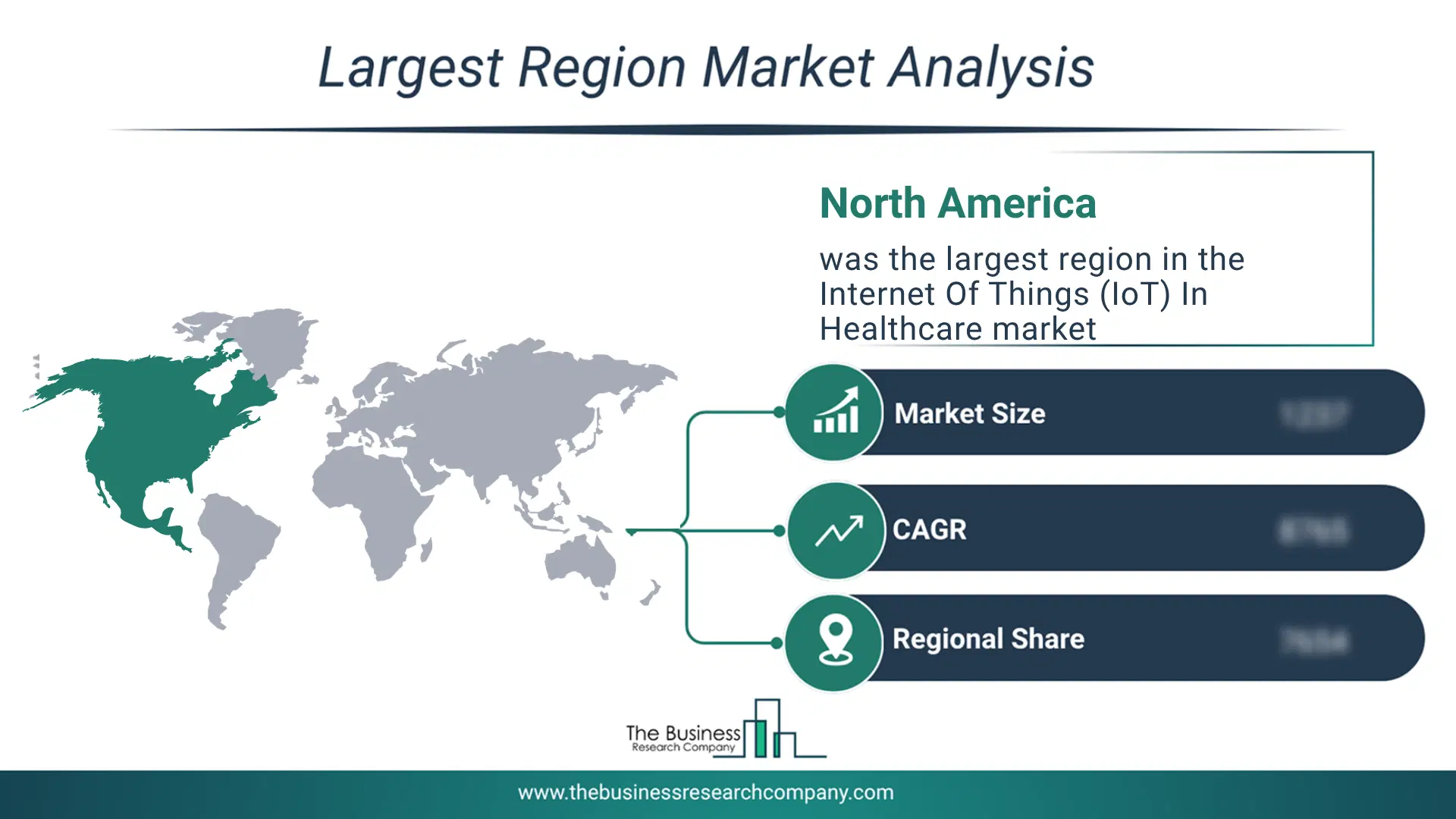
Regional Insights
North America was the largest region in the Internet of Things (IoT) in the healthcare market in 2025. Asia-Pacific is expected to be the fastest-growing region in the forecast period. The regions covered in this market report are Asia-Pacific, South East Asia, Western Europe, Eastern Europe, North America, South America, Middle East, Africa. The countries covered in this market report are Australia, Brazil, China, France, Germany, India, Indonesia, Japan, Taiwan, Russia, South Korea, UK, USA, Canada, Italy, SpainWhat Defines the Internet Of Things (IoT) In Healthcare Market?
The Internet of things (IoT) in the healthcare market consists of revenues earned by entities by providing wearable external medical devices and stationary medical devices. Values in this market are ‘factory gate’ values, that is, the value of goods sold by the manufacturers or creators of the goods, whether to other entities (including downstream manufacturers, wholesalers, distributors, and retailers) or directly to end customers. The value of goods in this market includes related services sold by the creators of the goods.How is Market Value Defined and Measured?
The market value is defined as the revenues that enterprises gain from the sale of goods and/or services within the specified market and geography through sales, grants, or donations in terms of the currency (in USD unless otherwise specified). The revenues for a specified geography are consumption values that are revenues generated by organizations in the specified geography within the market, irrespective of where they are produced. It does not include revenues from resales along the supply chain, either further along the supply chain or as part of other products.
This chart presents market attractiveness based on a quantitative evaluation of growth, competition, strategic alignment, and risk, offering a clear view of opportunity areas for decision-making. This chart is for illustrative purposes; the full report contains the complete analysis.

This chart highlights the Total Addressable Market (TAM) by estimating the maximum revenue opportunity using an assumption-driven approach, supporting strategic planning and opportunity sizing across markets. The chart is illustrative; the full report provides a more comprehensive analysis.
What Key Data and Analysis Are Included in the Internet Of Things (IoT) In Healthcare Market Report 2026?
The internet of things (iot) in healthcare market research report is one of a series of new reports from The Business Research Company that provides market statistics, including industry global market size, regional shares, competitors with the market share, detailed market segments, market trends and opportunities, and any further data you may need to thrive in the internet of things (iot) in healthcare industry. The market research report delivers a complete perspective of everything you need, with an in-depth analysis of the current and future state of the industry.Internet Of Things (IoT) In Healthcare Market Report Forecast Analysis
| Report Attribute | Details |
|---|---|
| Market Size Value In 2026 | $342.57 billion |
| Revenue Forecast In 2030 | $716.8 billion |
| Growth Rate | CAGR of 22.0% from 2026 to 2030 |
| Base Year For Estimation | 2025 |
| Actual Estimates/Historical Data | 2020-2025 |
| Forecast Period | 2026 - 2030 |
| Market Representation | Revenue in USD Billion and CAGR from 2026 to 2030 |
| Segments Covered | Component, Connectivity Technology, Application, End Users |
| Regional Scope | Asia-Pacific, Western Europe, Eastern Europe, North America, South America, Middle East, Africa |
| Country Scope | The countries covered in the report are Australia, Brazil, China, France, Germany, India, ... |
| Key Companies Profiled | IBM Corporation; Microsoft Corporation; Koninklijke Philips N.V; GE Healthcare; Cisco Systems Inc.; SAP SE; Medtronic PLC; Siemens Healthiness GmbH; Intel Corporation; Lenovo Healthcare Information Technology; MyrIoTa; HCL Technologies; Aeron Systems; Bioserenity; STANLEY Healthcare; Senseonics Holdings Inc.; Babylon Health; Hill-Rom Services Inc.; Dacadoo; Healthbank; Diagnocat; Renalytix AI; Exscientia; Cambridge Cognition; BenevolentAI |
| Customization Scope | Request for Customization |
| Pricing And Purchase Options | Explore Purchase Options |