
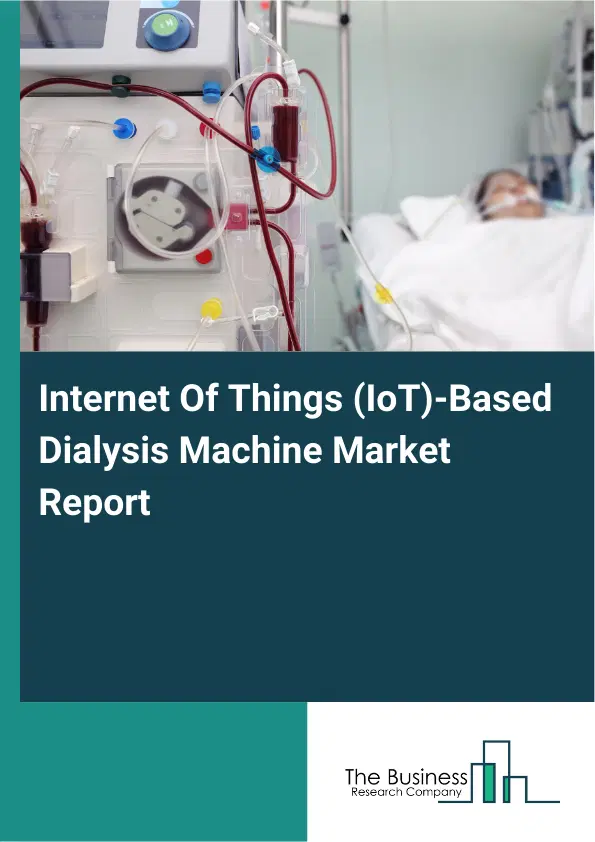
Internet Of Things (IoT)-Based Dialysis Machine Market Report 2026
Global Outlook – By Component (Hardware, Software, Services, Consumables), By Product Type (IoT-Enabled Hemodialysis Machines, IoT-Enabled Peritoneal Dialysis Machines, Portable And Wearable IoT-Based Dialysis Devices, Software Platforms And Connectivity Solutions, Accessories And Consumables), By Connectivity (Wi-Fi And Broadband-Connected Dialysis Machines, Cellular Enabled Dialysis Devices, Cloud-Based Data Management And Analytics Platforms, Decision-Support Modules), By Application (Chronic Kidney Disease Management, End-Stage Renal Disease Treatment, Acute Kidney Injury Management), By End User (Hospitals, Dialysis Centers, Home Care Settings, Ambulatory Care Centers, Specialty Clinics) – Market Size, Trends, Strategies, and Forecast to 2030
Internet Of Things (IoT)-Based Dialysis Machine Market Overview
• Internet Of Things (IoT)-Based Dialysis Machine market size has reached to $1.75 billion in 2025 • Expected to grow to $3.76 billion in 2030 at a compound annual growth rate (CAGR) of 16.5% • Growth Driver: Rising Prevalence Of Chronic Kidney Disease Fueling The Growth Of The Market Due To Need For Continuous Monitoring And Personalized Long-Term Care • Market Trend: Connected Home Hemodialysis Systems Expand Patient Access To Care • North America was the largest region in 2025 and Asia-Pacific is the fastest growing region.What Is Covered Under Internet Of Things (IoT)-Based Dialysis Machine Market?
Internet of things (IoT)-based dialysis machine are dialysis systems integrated with Internet of Things (IoT) technologies to enable real-time data collection, remote monitoring, automated control, and intelligent decision support during dialysis treatment. These systems use connected sensors, cloud computing, wireless communication, and data analytics to continuously track patient parameters such as blood pressure, flow rates, ultrafiltration volume, and machine performance. The goal is to improve treatment accuracy, enhance patient safety, enable predictive maintenance, and support personalized dialysis care while reducing clinical workload. The main components of IoT-based dialysis machines are hardware, software, services, and consumables. Hardware includes connected dialysis machines and embedded sensor systems that enable real-time monitoring, data capture, and automated therapy adjustments during dialysis procedures. The product types of these include IoT-enabled hemodialysis machines, IoT-enabled peritoneal dialysis machines, portable and wearable IoT-based dialysis devices, software platforms and connectivity solutions, and accessories and consumables, supported by connectivity such as Wi-Fi and broadband-connected dialysis machines, cellular enabled dialysis devices, cloud-based data management and analytics platforms, and decision-support modules, used in applications including chronic kidney disease management, end-stage renal disease treatment, acute kidney injury management, and remote patient monitoring and therapy optimization, among end users such as hospitals, dialysis centers, home care settings, ambulatory care centers, and specialty clinics.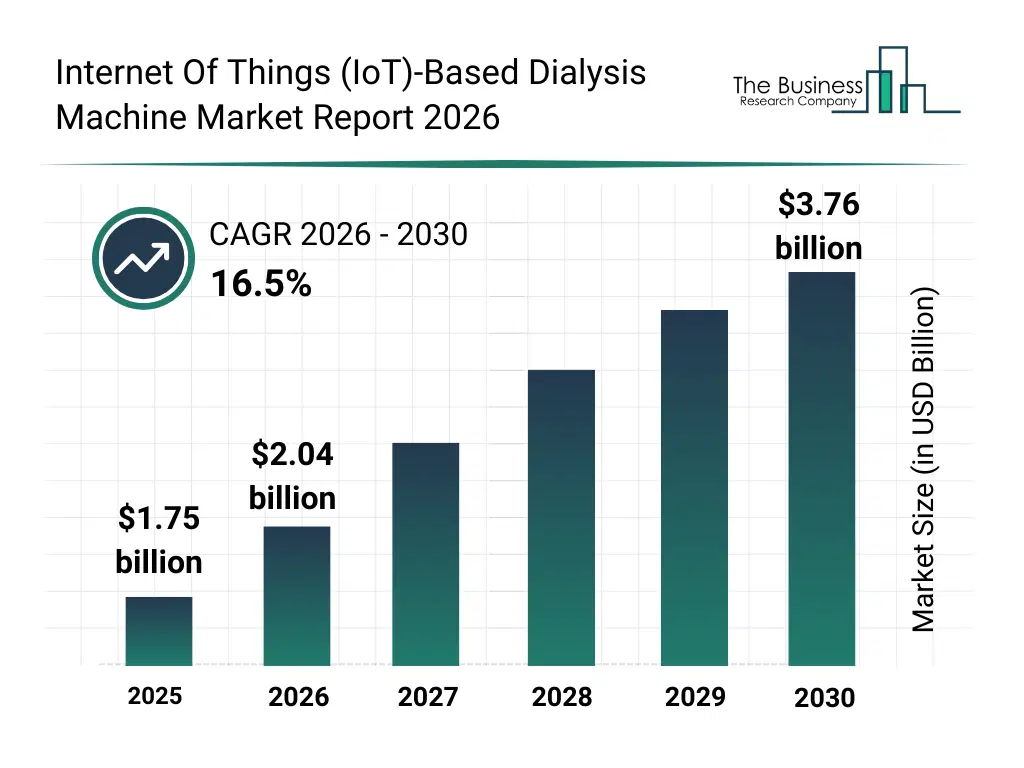
What Is The Internet Of Things (IoT)-Based Dialysis Machine Market Size and Share 2026?
The IoT-based dialysis machine market size has grown rapidly in recent years. It will grow from $1.75 billion in 2025 to $2.04 billion in 2026 at a compound annual growth rate (CAGR) of 16.8%. The growth in the historic period can be attributed to rising prevalence of chronic kidney disease, growing adoption of home-based dialysis, increasing demand for remote patient monitoring, expansion of digital health infrastructure, and rising healthcare expenditure on renal care.What Is The Internet Of Things (IoT)-Based Dialysis Machine Market Growth Forecast?
The IoT-based dialysis machine market size is expected to see rapid growth in the next few years. It will grow to $3.76 billion in 2030 at a compound annual growth rate (CAGR) of 16.5%. The growth in the forecast period can be attributed to increasing penetration of iot-enabled medical devices, growing preference for home and portable dialysis solutions, rising adoption of telehealth and connected care, expansion of value-based renal care models,and increasing government support for digital healthcare. Major trends in the forecast period include technology advancements in connected dialysis systems, innovations in sensor-based real-time monitoring, developments in artificial intelligence and data analytics, research and development of portable and wearable dialysis devices, and integration of cloud platforms and electronic health records.
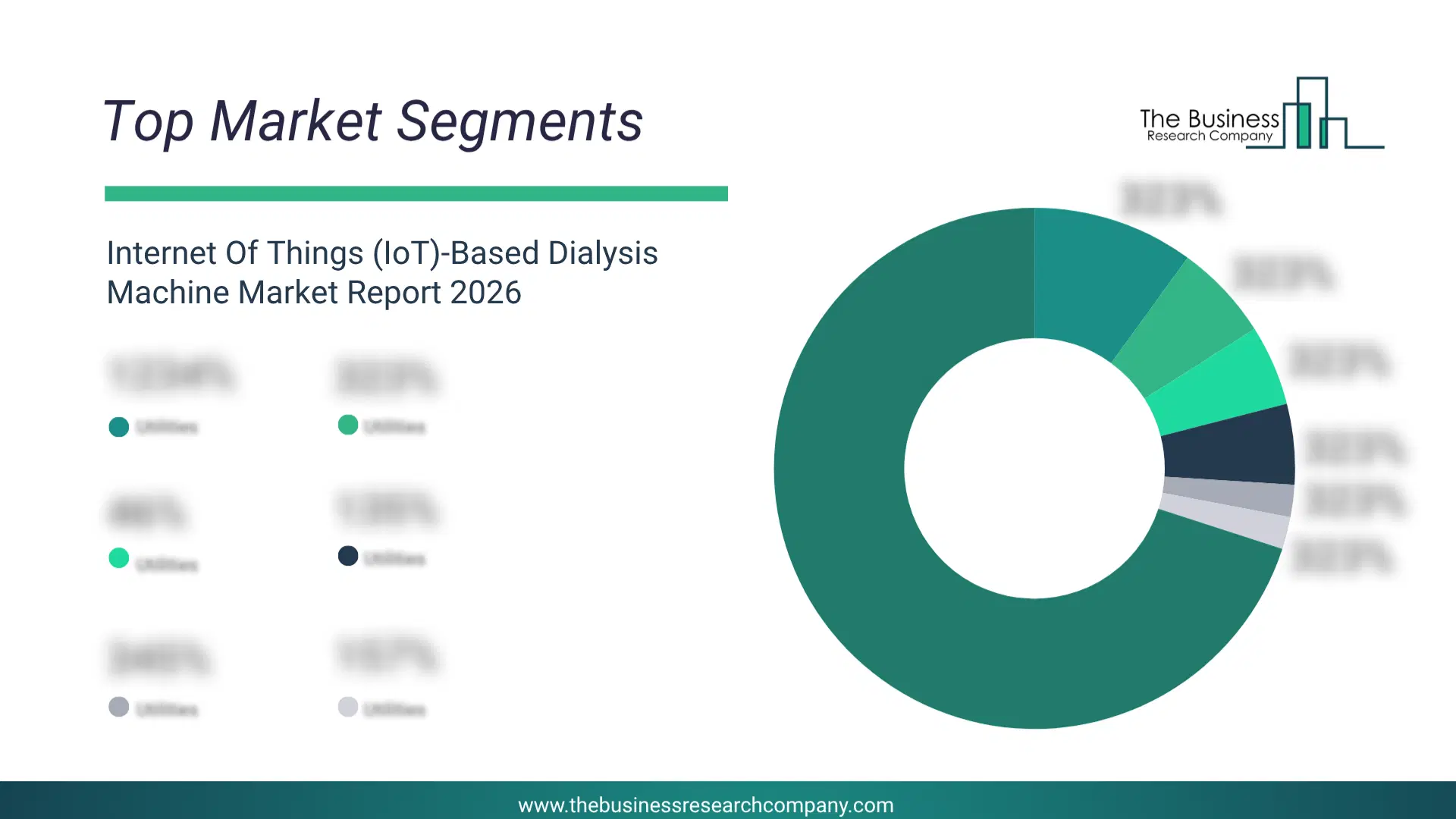
Global Internet Of Things (IoT)-Based Dialysis Machine Market Segmentation
1) By Component: Hardware, Software, Services, Consumables 2) By Product Type: IoT-Enabled Hemodialysis Machines, IoT-Enabled Peritoneal Dialysis Machines, Portable And Wearable IoT-Based Dialysis Devices, Software Platforms And Connectivity Solutions, Accessories And Consumables 3) By Connectivity: Wi-Fi And Broadband-Connected Dialysis Machines, Cellular Enabled Dialysis Devices, Cloud-Based Data Management And Analytics Platforms, Decision-Support Modules 4) By Application: Chronic Kidney Disease Management, End-Stage Renal Disease Treatment, Acute Kidney Injury Management, Remote Patient Monitoring And Therapy Optimization 5) By End User: Hospitals, Dialysis Centers, Home Care Settings, Ambulatory Care Centers, Specialty Clinics Subsegments: 1) By Hardware: Dialysis Machine Units, Sensors And Monitoring Devices, Connectivity Modules, Embedded Control Systems, Power Supply Components 2) By Software: Remote Monitoring Platforms, Data Analytics Software, Treatment Management Systems, Device Management Applications, Cloud Based Control Dashboards 3) By Services: Installation And Integration Services, Maintenance And Support Services, Remote Monitoring Services, Training And Education Services, Data Management Services 4) By Consumables: Dialyzers, Blood Tubing Sets, Dialysis Solutions, Filters And Cartridges, Disposable SensorsWhat Is The Driver Of The Internet Of Things (IoT)-Based Dialysis Machine Market?
The rising prevalence of chronic kidney disease is expected to propel the growth of the internet of things (IoT)-based dialysis machine market going forward. Chronic kidney disease refers to a long-term condition where the kidneys do not work as well as they should, leading to the accumulation of waste and fluids in the body. The prevalence of chronic kidney disease is rising largely due to the increasing incidence of diabetes and high blood pressure, as these conditions damage kidney blood vessels over time and impair the organs’ ability to filter waste effectively. IoT-based dialysis machines help manage chronic kidney disease by enabling real-time monitoring of treatment parameters and patient vitals with remote data connectivity. They improve patient outcomes by supporting personalized therapy adjustments, early detection of complications, and more efficient long-term care. For instance, in June 2023, according to Kidney Research UK, a United Kingdom based non profit organization, approximately 7.2 million people in the United Kingdom were living with chronic kidney disease representing over 10% of the population, of which 3.25 million were in advanced stages and 3.9 million were in early stages, with the total number of affected individuals projected to rise to 7.61 million by 2033. Therefore, the rising prevalence of chronic kidney disease is driving the growth of the internet of things (IoT)-based dialysis machine industry.Key Players In The Global Internet Of Things (IoT)-Based Dialysis Machine Market
Major companies operating in the internet of things (iot)-based dialysis machine market are Medtronic plc, Fresenius Medical Care AG & Co. KGaA, Toray Industries Inc., Toray Medical Co. Ltd., Baxter International Inc., B. Braun Melsungen AG, Nipro Corporation, Wego Group, Bellco S.p.A., Mar Cor Purification, Mozarc Medical Holding LLC, Poly Medicure Limited, Outset Medical Inc., Quanta Dialysis Technologies Ltd., Infomed SA, Allmed Medical Care Holdings Limited, Innovative Renal Care, Gambro, Nextkidney BV, Newsol Technologies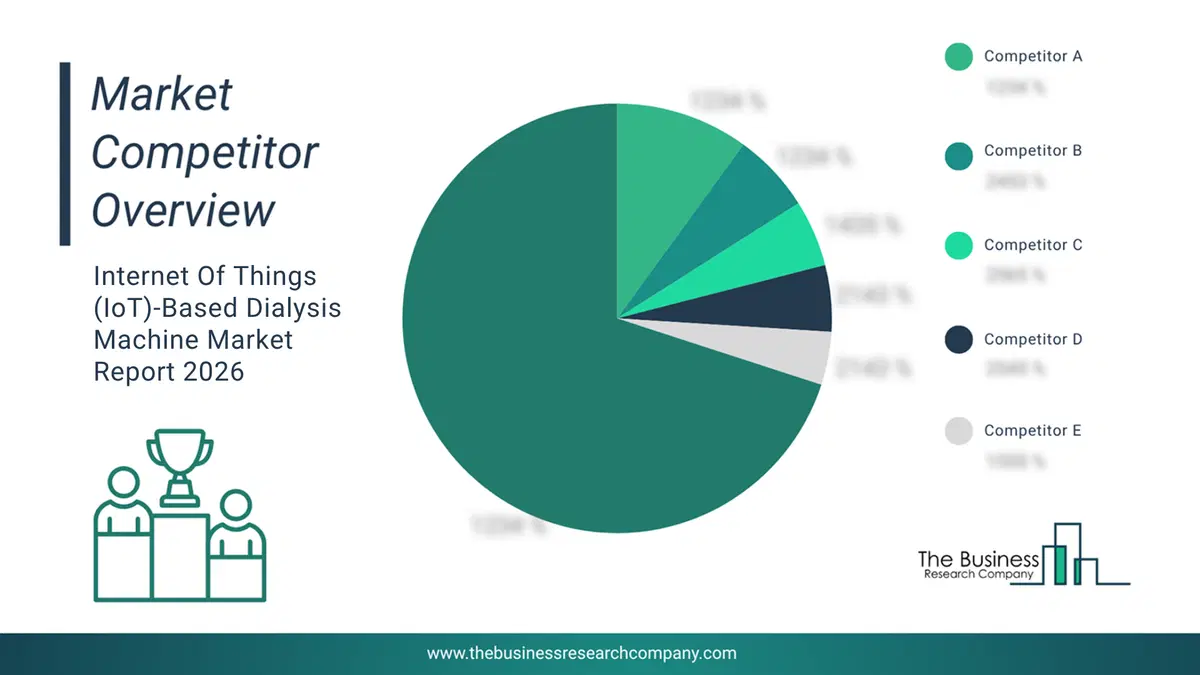
This chart is for illustrative purposes; the full report includes a detailed competitor analysis and comprehensive overview of the top 10 companies in the market.
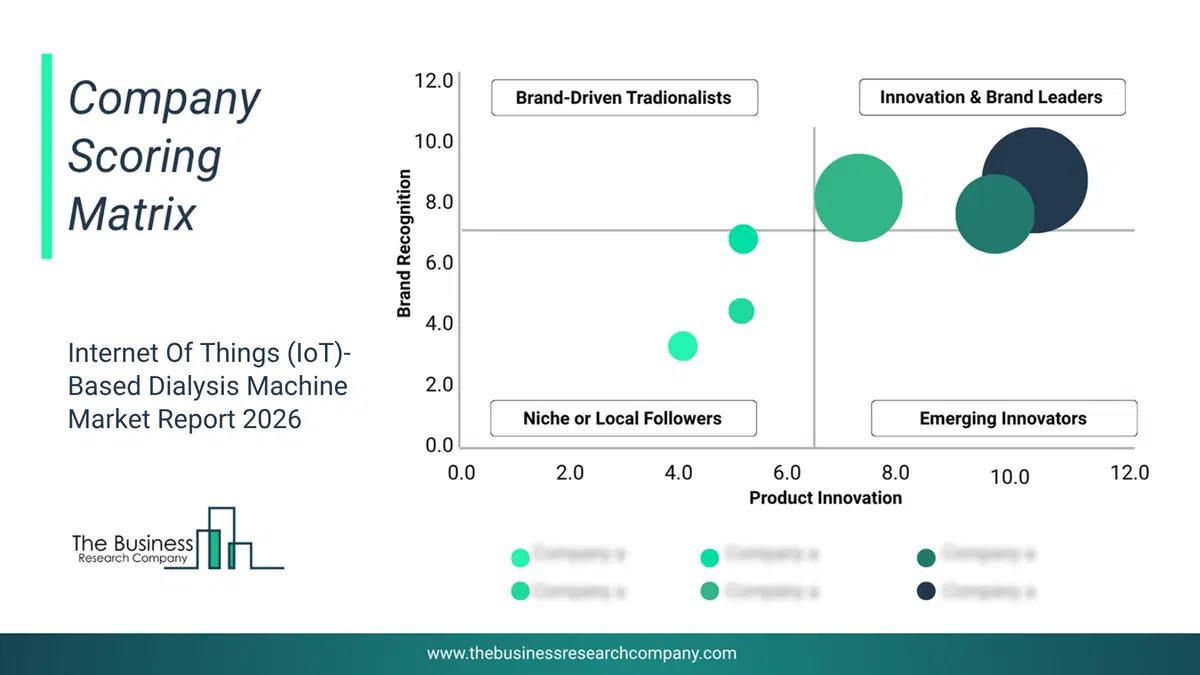
This chart maps companies by product innovation and brand strength, with bubble size indicating relative revenue, helping identify market leaders, challengers, and niche players. This is an illustrative chart; the full report provides a complete and accurate competitive analysis.
Global Internet Of Things (IoT)-Based Dialysis Machine Market Trends and Insights
Major companies operating in the internet of things (IoT)-based dialysis machine market are focusing on developing advanced products, such as connected home hemodialysis systems, to increase patient access and treatment adherence. Connected home hemodialysis systems integrates smart software that guides patients through setup and treatment processes, simplifying the learning curve and enabling remote monitoring by healthcare providers, which fosters greater confidence and independence for patients managing kidney failure at home. For instance, in September 2024, Fresenius Medical Care, a Germany-based healthcare company, launched its NxStage VersiHD with GuideMe Software. The platform is designed to simplify connected home hemodialysis treatment by providing visual guidance and ease of learning, incorporating features that allow patients to complete training 7 to 10 days sooner than traditional methods. The solution also provides connected capabilities that support a growing network of over 14,000 U.S. patients to accelerate the adoption of home therapies and improve the overall user experience for those requiring chronic renal replacement therapy.What Are Latest Mergers And Acquisitions In The Internet Of Things (IoT)-Based Dialysis Machine Market?
In July 2025, Vantive Medical Technologies LLC, a US‑based innovator in home dialysis systems, partnered with Innovative Renal Care Inc. to enhance the use of technology in expanding home dialysis therapies. Through this partnership, Vantive Medical Technologies LLC and Innovative Renal Care Inc. aim to integrate connected digital tools, remote monitoring, and IoT‑enabled device capabilities into home dialysis workflows to improve patient outcomes, support care teams, and enable more personalised therapy management. Innovative Renal Care Inc. is a US‑based provider of end‑to‑end kidney care.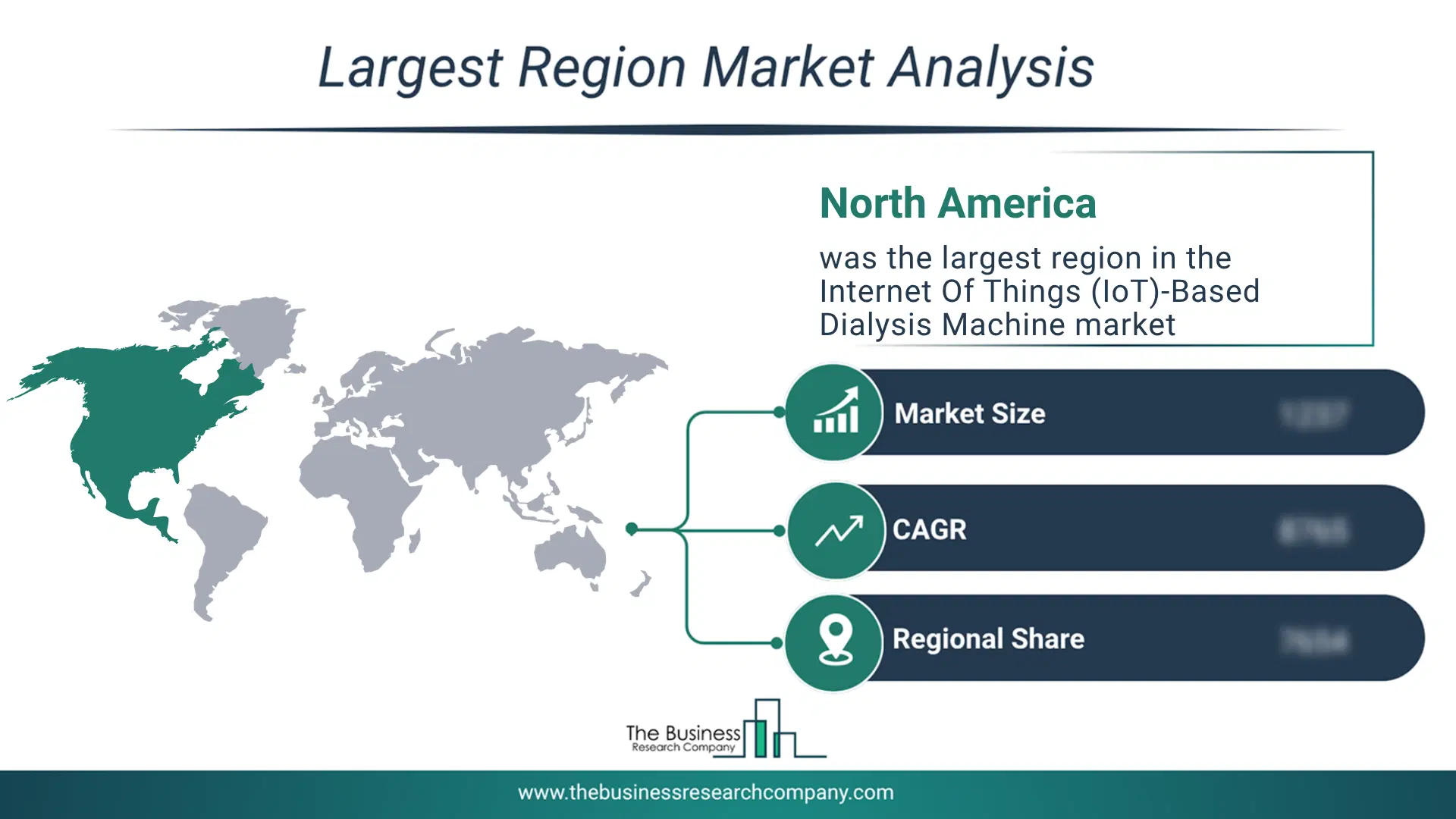
Regional Insights
North America was the largest region in the IoT-based dialysis machine market in 2025. Asia-Pacific is expected to be the fastest-growing region in the forecast period. The regions covered in this market report are Asia-Pacific, South East Asia, Western Europe, Eastern Europe, North America, South America, Middle East, Africa. The countries covered in this market report are Australia, Brazil, China, France, Germany, India, Indonesia, Japan, Taiwan, Russia, South Korea, UK, USA, Canada, Italy, Spain.What Defines the Internet Of Things (IoT)-Based Dialysis Machine Market?
The internet of things (IoT)-based dialysis machine market includes revenues earned by entities through remote patient monitoring, real-time machine performance tracking, predictive maintenance, treatment data analytics, automated alerts for anomalies, telehealth integration, and personalized dialysis therapy management. The market value includes the value of hardware, embedded software, connectivity solutions, and associated digital health platforms sold by manufacturers or incorporated into dialysis service offerings. Only goods and services traded between entities or sold to end users such as hospitals, dialysis centers, and home-care providers are included.How is Market Value Defined and Measured?
The market value is defined as the revenues that enterprises gain from the sale of goods and/or services within the specified market and geography through sales, grants, or donations in terms of the currency (in USD unless otherwise specified). The revenues for a specified geography are consumption values that are revenues generated by organizations in the specified geography within the market, irrespective of where they are produced. It does not include revenues from resales along the supply chain, either further along the supply chain or as part of other products.
This chart presents market attractiveness based on a quantitative evaluation of growth, competition, strategic alignment, and risk, offering a clear view of opportunity areas for decision-making. This chart is for illustrative purposes; the full report contains the complete analysis.

This chart highlights the Total Addressable Market (TAM) by estimating the maximum revenue opportunity using an assumption-driven approach, supporting strategic planning and opportunity sizing across markets. The chart is illustrative; the full report provides a more comprehensive analysis.
What Key Data and Analysis Are Included in the Internet Of Things (IoT)-Based Dialysis Machine Market Report 2026?
The internet of things (iot)-based dialysis machine market research report is one of a series of new reports from The Business Research Company that provides market statistics, including industry global market size, regional shares, competitors with the market share, detailed market segments, market trends and opportunities, and any further data you may need to thrive in the internet of things (iot)-based dialysis machine industry. The market research report delivers a complete perspective of everything you need, with an in-depth analysis of the current and future state of the industry.Internet Of Things (IoT)-Based Dialysis Machine Market Report Forecast Analysis
| Report Attribute | Details |
|---|---|
| Market Size Value In 2026 | $2.04 billion |
| Revenue Forecast In 2030 | $3.76 billion |
| Growth Rate | CAGR of 16.5% from 2026 to 2030 |
| Base Year For Estimation | 2025 |
| Actual Estimates/Historical Data | 2020-2025 |
| Forecast Period | 2026 - 2030 |
| Market Representation | Revenue in USD Billion and CAGR from 2026 to 2030 |
| Segments Covered | Component, Product Type, Connectivity, Application, End User |
| Regional Scope | Asia-Pacific, Western Europe, Eastern Europe, North America, South America, Middle East, Africa |
| Country Scope | The countries covered in the report are Australia, Brazil, China, France, Germany, India, Indonesia, Japan, Taiwan, Russia, South Korea, UK, USA, Canada, Italy, Spain. |
| Key Companies Profiled | Medtronic plc, Fresenius Medical Care AG & Co. KGaA, Toray Industries Inc., Toray Medical Co. Ltd., Baxter International Inc., B. Braun Melsungen AG, Nipro Corporation, Wego Group, Bellco S.p.A., Mar Cor Purification, Mozarc Medical Holding LLC, Poly Medicure Limited, Outset Medical Inc., Quanta Dialysis Technologies Ltd., Infomed SA, Allmed Medical Care Holdings Limited, Innovative Renal Care, Gambro, Nextkidney BV, Newsol Technologies |
| Customization Scope | Request for Customization |
| Pricing And Purchase Options | Explore Purchase Options |