
Internet Of Things (IoT) In Energy Market Report 2026
Global Outlook – By Component (Solution, Platforms, Services), By Technology (Cellular Network, Satellite Network, Radio Network, Other Technologies), By Application (Energy Generation, Energy Consumption, Database And Cloud Security, Other Applications) – Market Size, Trends, Strategies, and Forecast to 2030
Internet Of Things (IoT) In Energy Market Overview
• Internet Of Things (IoT) In Energy market size has reached to $28.56 billion in 2025 • Expected to grow to $52.76 billion in 2030 at a compound annual growth rate (CAGR) of 13% • Growth Driver: Rising Cyber Threats Propel Surge In Internet Of Things (IOT) Adoption For Enhanced Security In The Energy Sector • Market Trend: Repos Energy Launches Datum, Transforming Diesel Management In The Internet Of Things (IOT) Driven Energy Market • North America was the largest region in 2025 and Asia-Pacific is the fastest growing region.Market Gains By 2030 – Top Opportunities By Segment
Market Gain identifies the most promising market opportunities by highlighting the segments or products expected to generate the highest incremental revenue growth over the next five years.
What Is Covered Under Internet Of Things (IoT) In Energy Market?
The Internet of Things (IoT) in energy encompasses a network of interconnected devices and systems that gather, transmit, and analyze data on energy generation, distribution, and consumption. Equipped with sensors and communication capabilities, these IoT devices enable real-time monitoring and management of energy resources, leading to smarter and more efficient energy systems. By offering real-time insights and analytics, IoT technologies help both consumers and utilities identify usage patterns and minimize waste. The component of the internet of things (IoT) in energy are the solution, platforms, and services. Solution refers to the use of bundles of devices or technology that enable IoT solutions to a user. The various technologies involved are cellular network, satellite network, radio network, and others that are used for energy generation, energy consumption, network security, email security, database, and cloud security, and other applications.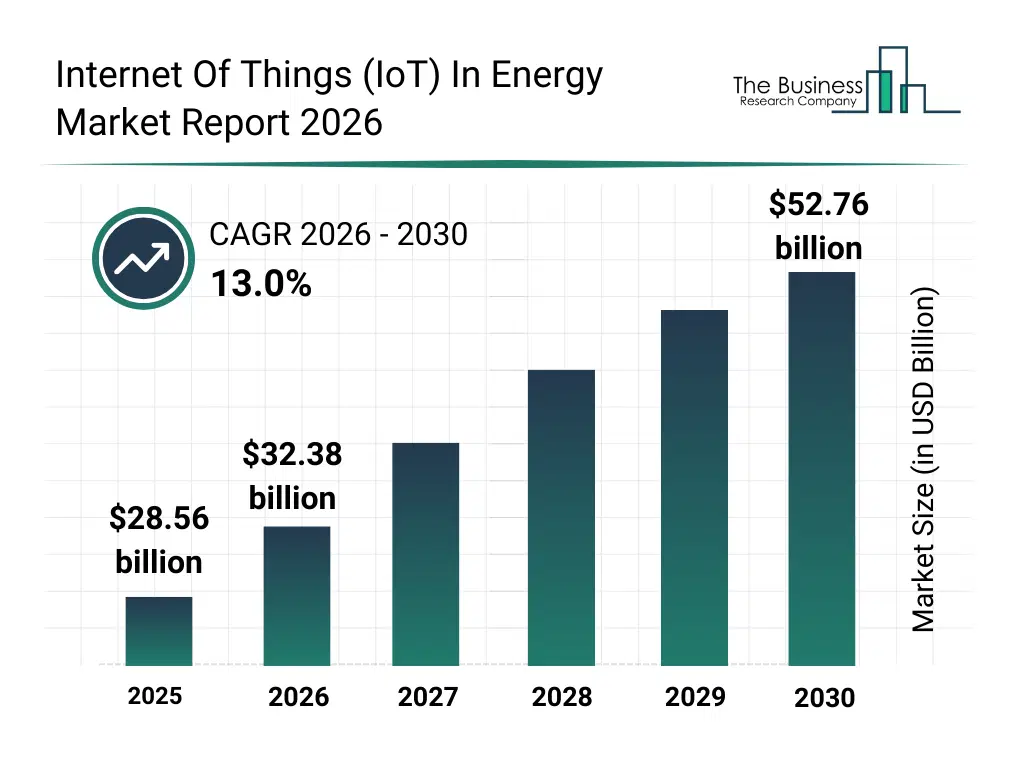
What Is The Internet Of Things (IoT) In Energy Market Size and Share 2026?
The internet of things (iot) in energy market size has grown rapidly in recent years. It will grow from $28.56 billion in 2025 to $32.38 billion in 2026 at a compound annual growth rate (CAGR) of 13.4%. The growth in the historic period can be attributed to expansion of smart grid initiatives, rising energy consumption monitoring needs, increasing integration of renewable power sources, adoption of digital utility management systems, growth in connected energy infrastructure.What Is The Internet Of Things (IoT) In Energy Market Growth Forecast?
The internet of things (iot) in energy market size is expected to see rapid growth in the next few years. It will grow to $52.76 billion in 2030 at a compound annual growth rate (CAGR) of 13.0%. The growth in the forecast period can be attributed to increasing investments in intelligent energy management platforms, rising adoption of demand response solutions, expansion of decentralized energy systems, growing focus on energy efficiency optimization, increasing use of cloud-based energy analytics. Major trends in the forecast period include increasing deployment of smart metering infrastructure, rising adoption of real-time energy monitoring systems, growing integration of iot with renewable energy assets, expansion of predictive maintenance in energy networks, enhanced focus on grid optimization.
Global Internet Of Things (IoT) In Energy Market Segmentation
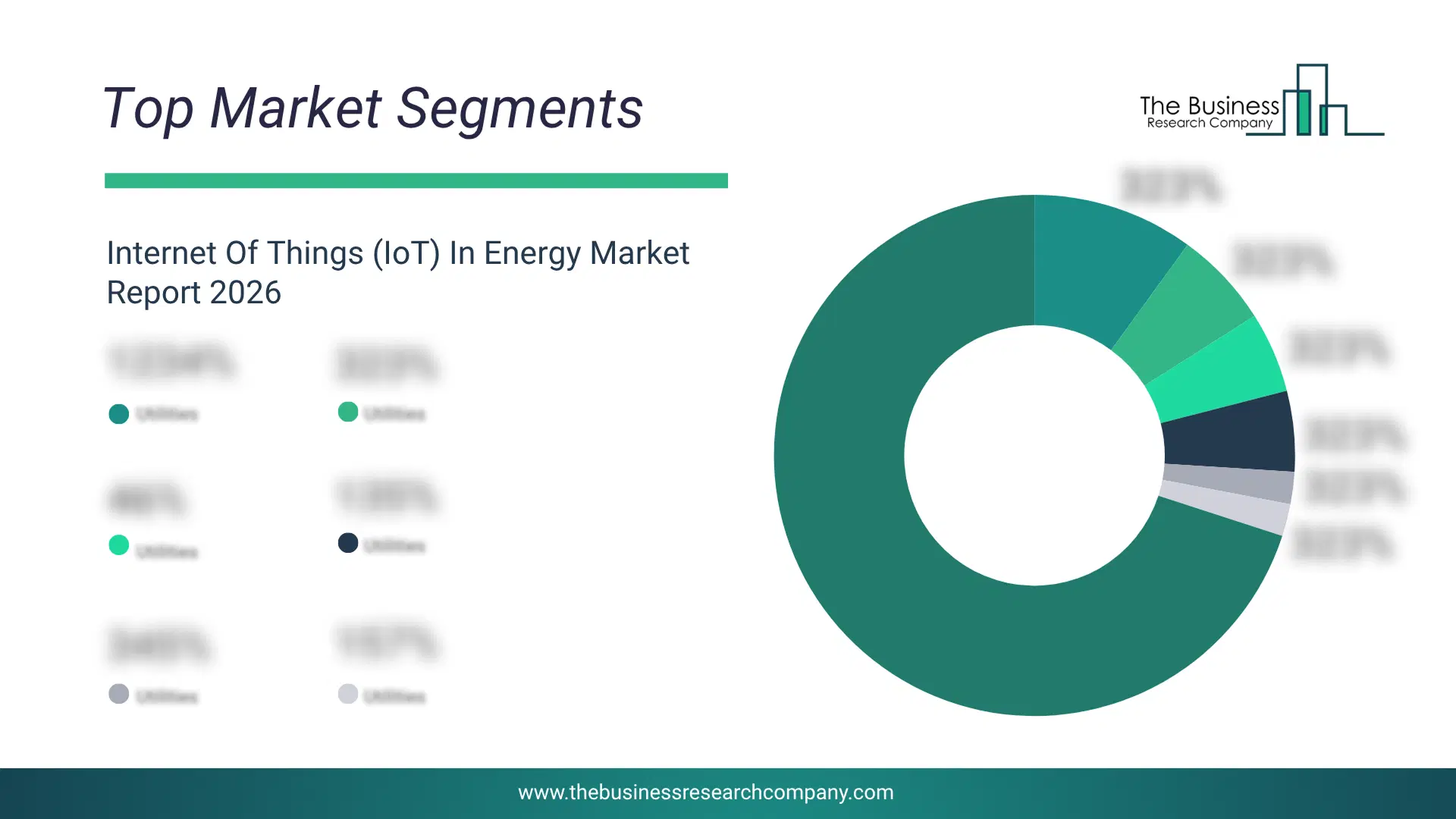
1) By Component: Solution, Platforms, Services 2) By Technology: Cellular Network, Satellite Network, Radio Network, Other Technologies 3) By Application: Energy Generation, Energy Consumption, Database And Cloud Security, Other Applications Subsegments: 1) By Solution: Smart Metering Solutions, Energy Management Solutions, Predictive Maintenance Solutions, Demand Response Solutions 2) By Platforms: IoT Platforms For Energy Management, Data Analytics Platforms, Cloud-Based Platforms, Connectivity Platforms 3) By Services: Consulting Services, Implementation Services, Maintenance And Support Services, Training And Education Services The top segments in the internet of things (iot) in energy market will be: • Solution will reach $29.03 Billion by 2030. • Platforms will reach $9.68 Billion by 2030. • Services will reach $7.57 Billion by 2030.What Is The Driver Of The Internet Of Things (IoT) In Energy Market?
The increase in cyber threats is anticipated to drive the growth of the internet of things (IoT) in the energy market going forward. Cyber threats refer to potential dangers or risks posed by malicious activities to damage data through a wide range of activities and tactics that target computer systems, networks, and digital information. Internet of Things (IoT) devices in the energy sector handle sensitive data related to power consumption, grid operations, and user behavior and are prone to cyberattacks that result in unauthorized access and privacy breaches. For instance, in October 2024, according to Check Point Software Technologies Ltd., an Israel-based cybersecurity company, in the U.S., cyberattacks have risen by 56% year-over-year, with a weekly average of 1,300 attacks per organization, 10% higher than the previous quarter. Therefore, the increase in cyber threats is driving the growth of the internet of things (IoT) in the energy market.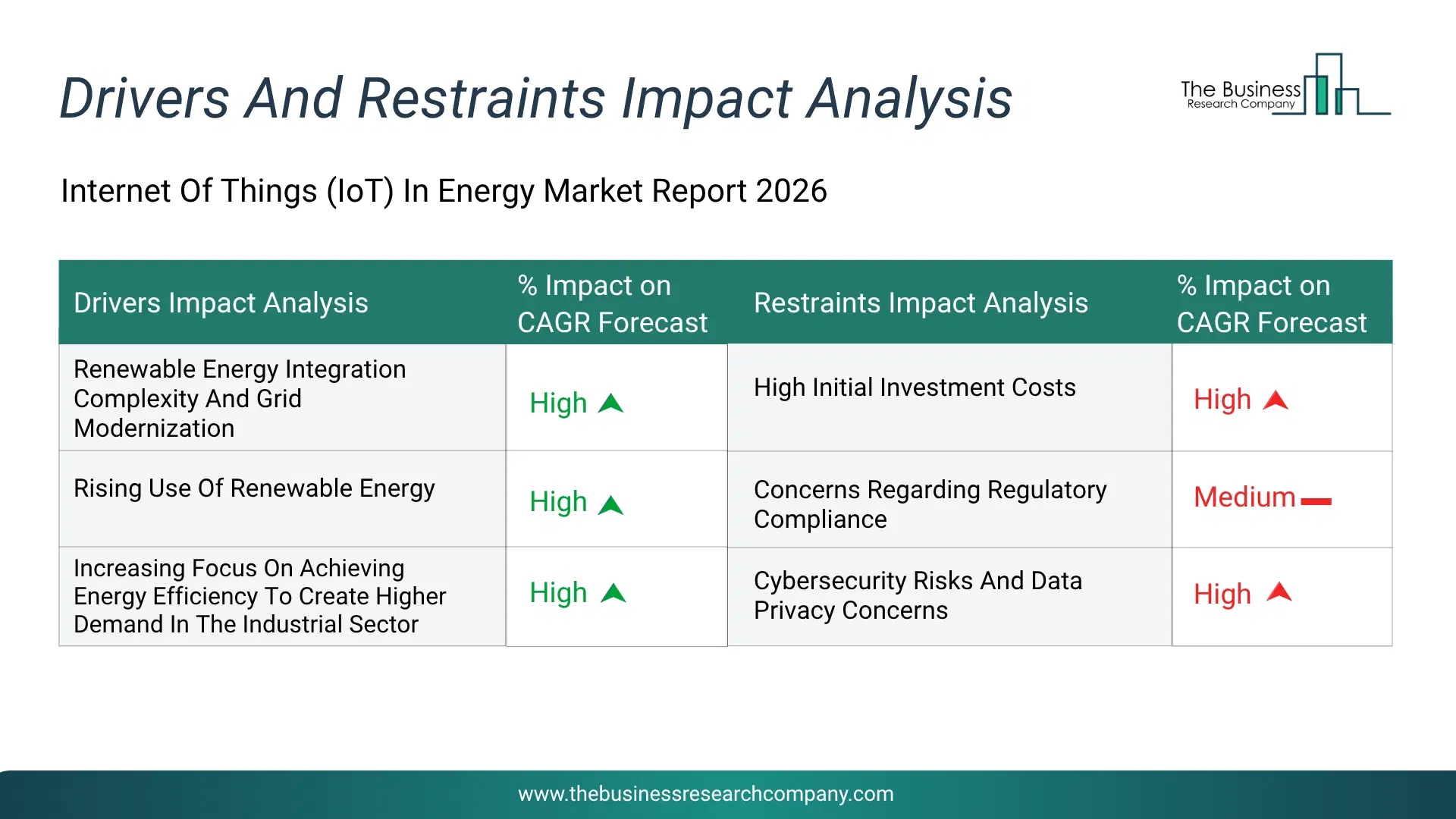
Infographic Chart Showing Key Market Drivers Analysis And Restraints For Internet Of Things (Iot) In Energy Market
The chart presents an impact analysis of key drivers and restraints, quantifying their relative influence on the market's growth rate and helping assess the balance between growth enablers and limiting factors. This chart offers a high-level perspective; the full report contains more detailed insights.
How Will The Drivers Impact Growth In The Global Internet Of Things (IoT) In Energy Market?
• Renewable Energy Integration Complexity And Grid Modernization (High) – During the forecast period, the increasing complexity of integrating renewable energy into modern power grids is expected to become a key growth driver for the internet of things (IoT) in energy market by 2030. Utilities are deploying connected sensors, intelligent control systems, and digital communication networks to manage fluctuating power generation from renewable sources while maintaining grid stability. IoT technologies enable real-time monitoring, automated grid balancing, and faster response to operational disruptions across transmission and distribution networks. Growing investments in smart grid infrastructure and digital substations are further strengthening the adoption of IoT-enabled energy solutions. • Rising Use Of Renewable Energy (High) – During the forecast period, the rising use of renewable energy is expected to emerge as a major factor driving the expansion of the internet of things (IoT) in energy market by 2030. Expanding deployment of solar, wind, and battery energy storage projects is increasing the need for intelligent monitoring systems capable of optimizing asset performance across geographically distributed facilities. Connected IoT devices support remote operations, improve equipment availability, and enhance energy output through continuous performance tracking. Accelerating clean energy investments and the transition toward low-carbon electricity generation are further strengthening demand for advanced IoT solutions. • Increasing Focus On Achieving Energy Efficiency To Create Higher Demand In The Industrial Sector (High) – During the forecast period, the increasing focus on achieving energy efficiency to create higher demand in the industrial sector is expected to act as a key growth catalyst for the internet of things (IoT) in energy market by 2030. Industrial enterprises are adopting connected energy management systems to optimize electricity consumption, improve operational performance, and reduce production costs across energy-intensive processes. IoT-enabled monitoring solutions provide continuous insights into equipment performance, enabling automated optimization and proactive maintenance strategies that improve resource utilization. The growing emphasis on sustainable manufacturing and compliance with corporate energy efficiency objectives is expected to accelerate deployment of intelligent energy technologies.How Will The Restraints Impact Growth In The Global Internet Of Things (IoT) In Energy Market?
• High Initial Investment Costs (High) – During the forecast period, high initial investment costs are a significant restraint for the Internet of Things (IoT) in the energy market because implementing IoT solutions requires substantial capital expenditure on hardware, software, communication infrastructure, cloud platforms, cybersecurity, and system integration. Energy companies must also invest in installing smart sensors, gateways, SCADA upgrades, data analytics platforms, and reliable network connectivity across geographically distributed assets. In addition, deployment often involves upgrading legacy infrastructure, training personnel, and ensuring compatibility with existing operational technologies. Small and medium-sized utilities and energy providers may find these upfront expenses difficult to justify, particularly when operating under budget constraints. The complexity of integrating multiple technologies further increases implementation costs and project timelines. Ongoing maintenance, software updates, and cybersecurity management also add to the total cost of ownership. These financial barriers can delay adoption decisions, limit deployment to large enterprises, and reduce the pace of market expansion, especially in developing regions where infrastructure investment budgets are more constrained. • Concerns Regarding Regulatory Compliance (High) – During the forecast period, concerns regarding regulatory compliance act as a significant restraint for the Internet of Things (IoT) in the energy market because energy companies must comply with evolving regulations related to data privacy, cybersecurity, grid reliability, critical infrastructure protection, and environmental standards. IoT deployments involve collecting and transmitting large volumes of operational and consumer data, requiring adherence to strict regulatory frameworks across different jurisdictions. Compliance with varying regional standards can increase implementation complexity, prolong project timelines, and raise operational costs. Utilities may also need to conduct regular audits, upgrade security measures, and modify systems to meet changing regulatory requirements. Failure to comply can result in financial penalties, reputational damage, and operational disruptions. Consequently, regulatory and compliance challenges can delay IoT deployment decisions and restrain the growth of the Internet of Things (IoT) in the energy market. • Cybersecurity Risks And Data Privacy Concerns (High) – During the forecast period, cybersecurity risks and data privacy concerns can act as a significant restraint on the Internet of Things (IoT) in the energy market because connected energy systems rely on continuous data exchange between smart meters, sensors, substations, and cloud-based platforms. These interconnected networks are vulnerable to cyberattacks, unauthorized access, ransomware, and data breaches that can disrupt critical energy infrastructure and compromise sensitive operational information. Energy providers must invest heavily in advanced cybersecurity solutions, encryption technologies, and continuous network monitoring to protect IoT ecosystems from evolving threats. The increasing sophistication of cyberattacks and concerns over data privacy can reduce confidence in large-scale IoT deployments. Additionally, maintaining robust cybersecurity frameworks increases operational costs and implementation complexity. Consequently, cybersecurity risks and data privacy concerns can delay IoT adoption and restrain the growth of the Internet of Things (IoT) in the energy market.Key Players In The Global Internet Of Things (IoT) In Energy Market
Major companies operating in the internet of things (iot) in energy market are Siemens AG; Schneider Electric SE; Rockwell Automation Inc.; Honeywell International Inc.; Aclara Technologies LLC; C3.AI Inc.; Davra Networks; AGT International; Duke Energy Corporation; Enel S.p.A.; Électricité de France; Pacific Gas and Electric Company; National Grid PLC; Southern Company; Asea Brown Boveri Ltd.; General Electric Company; ABB Ltd.; Itron Inc.; Landis+Gyr AG; GridPoint Inc.; Johnson Controls International PLC; Microsoft Corporation; Oracle Corporation; Eaton Corporation plc; Carrier Global Corporation; IoT.nxt; WebNMS; EcoEnergy Insights; Tantalus Systems Corp.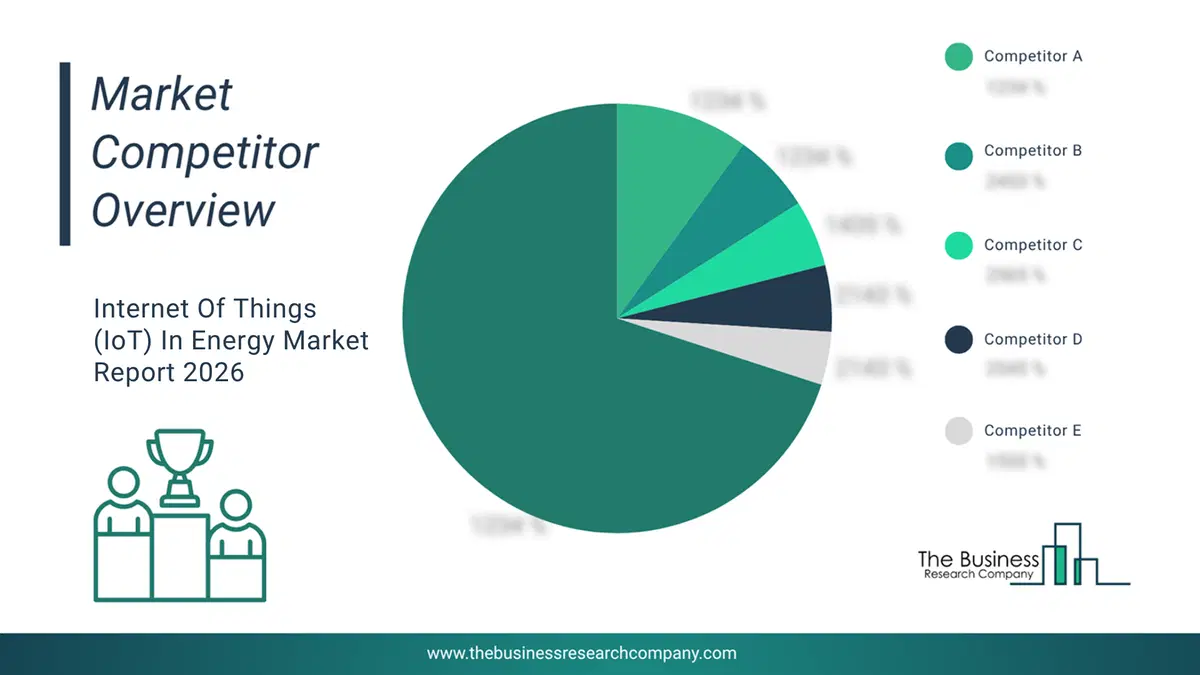
This chart is for illustrative purposes; the full report includes a detailed competitor analysis and comprehensive overview of the top 10 companies in the market.
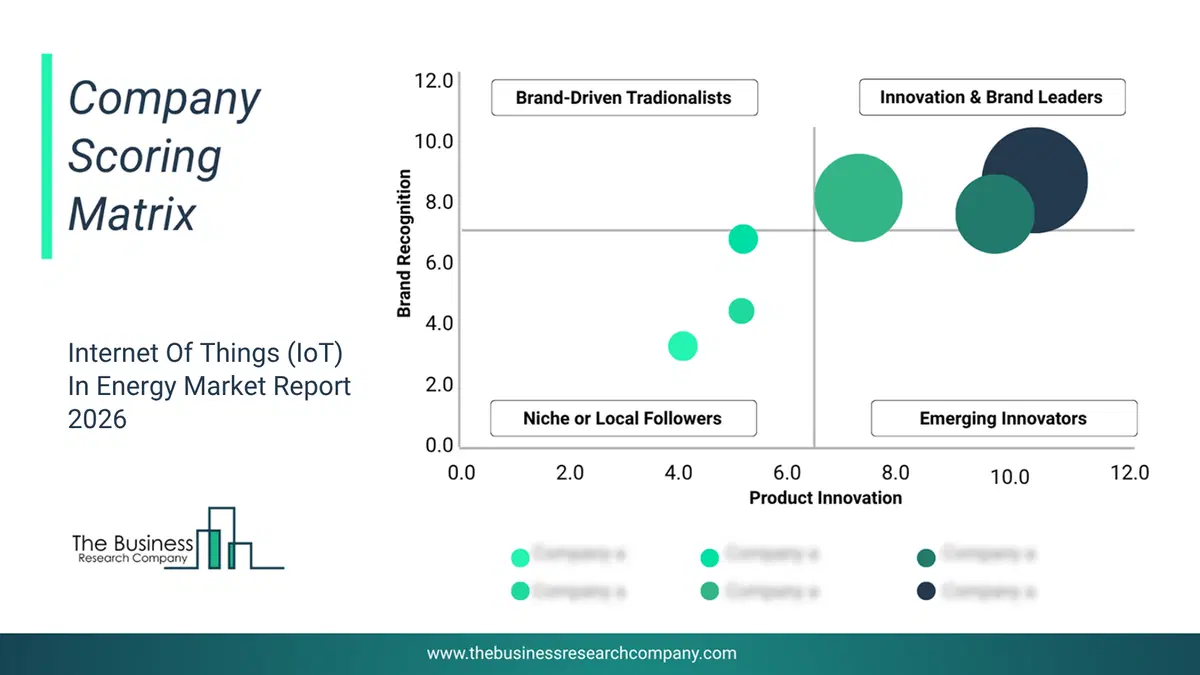
This chart maps companies by product innovation and brand strength, with bubble size indicating relative revenue, helping identify market leaders, challengers, and niche players. This is an illustrative chart; the full report provides a complete and accurate competitive analysis.
Global Internet Of Things (IoT) In Energy Market Trends and Insights
Major companies operating on the internet of things (IoT) in the energy market are focusing on innovating products with technology, such as DATUM, to provide a competitive edge in the market. DATUM is a smart storage and diesel management tool that provides businesses with complete control over their diesel usage, allowing them to make informed decisions to optimize operations. For instance, in June 2023, Repos Energy, an India-based energy distribution company, launched DATUM. DATUM provides real-time data on the availability, quality, quantity, and usage of fuel, enabling businesses to monitor diesel consumption and access records daily, weekly, monthly, and yearly. It is equipped with an anti-theft mechanism, aims to prevent fuel theft, and is available to consumer's doorsteps with just a click of the phone.What Are Latest Mergers And Acquisitions In The Internet Of Things (IoT) In Energy Market?
In September 2024, Kaynes Technology, an India-based end-to-end and IoT solutions-enabled integrated electronics manufacturer acquired Iskraemeco for $ 5.11 million. The acquisitions aim to expand Kaynes's energy management product lineup and strengthen its competitive position in the rapidly evolving smart meter market. This acquisition is a strategic effort to enhance Kaynes' presence in the energy sector, addressing the rising demand for advanced energy management solutions across various industries. Iskraemeco is an India-based provider of energy IoT solutions for smart transition.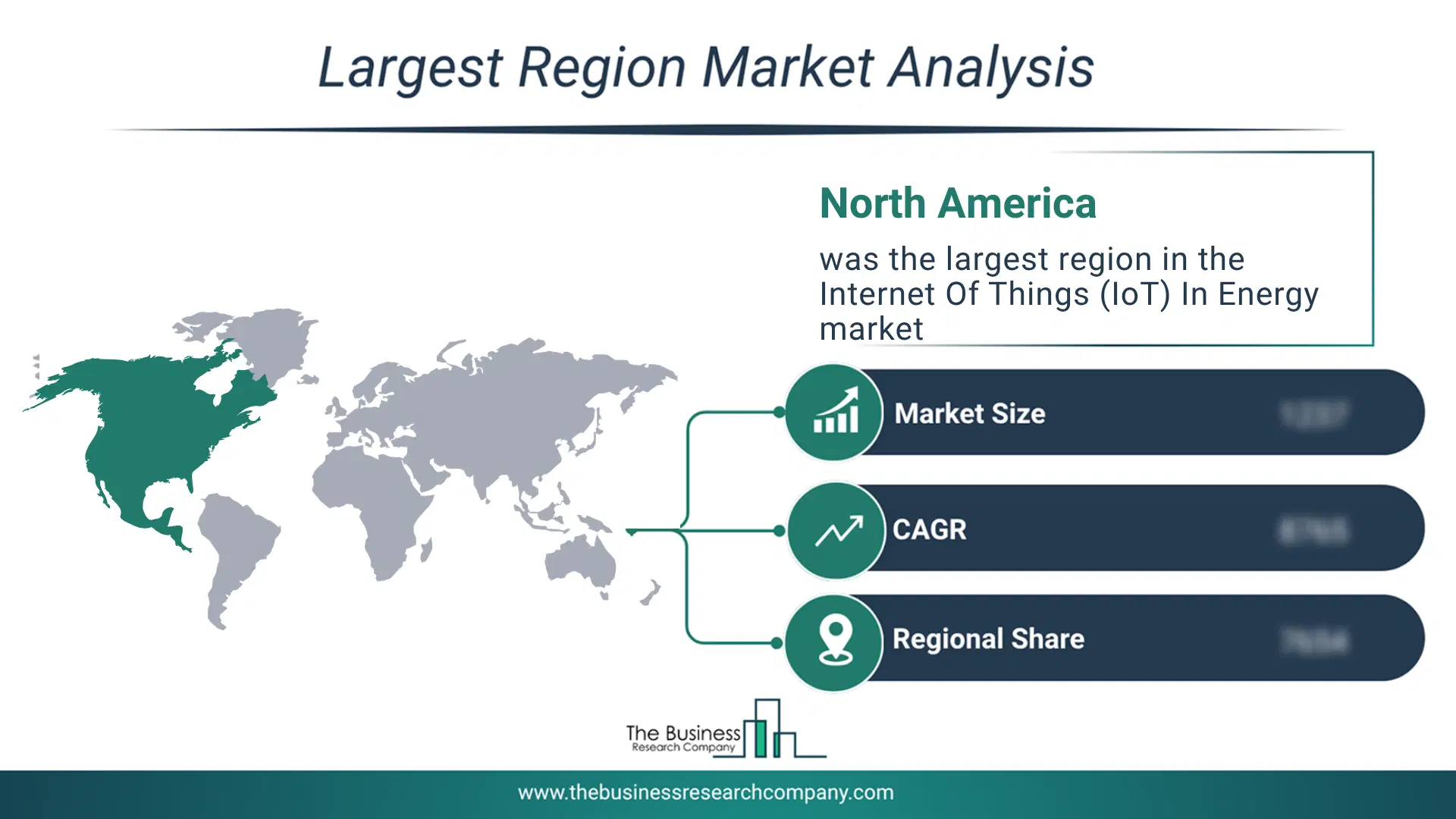
Regional Insights
North America was the largest region in the k market in 2025. Asia-Pacific is expected to be the fastest-growing region in the global internet of things (IoT) in energy market during the forecast period. The regions covered in this market report are Asia-Pacific, South East Asia, Western Europe, Eastern Europe, North America, South America, Middle East, Africa. The countries covered in this market report are Australia, Brazil, China, France, Germany, India, Indonesia, Japan, Taiwan, Russia, South Korea, UK, USA, Canada, Italy, SpainWhat Defines the Internet Of Things (IoT) In Energy Market?
The internet of things (IoT) in energy market consists of revenues earned by entities by providing connected logistics, risk management, data management and analytics, supervisory control and data acquisition, mobile workforce management and energy management services in the energy industry. The market value includes the value of related goods sold by the service provider or included within the service offering. The internet of things (IoT) in energy market also includes sales of IoT sensors, computer chips, actuators, cables, and smart devices used in providing IoT services in the energy industry. Values in this market are ‘factory gate’ values, that is the value of goods sold by the manufacturers or creators of the goods, whether to other entities (including downstream manufacturers, wholesalers, distributors and retailers) or directly to end customers. The value of goods in this market includes related services sold by the creators of the goods.How is Market Value Defined and Measured?
The market value is defined as the revenues that enterprises gain from the sale of goods and/or services within the specified market and geography through sales, grants, or donations in terms of the currency (in USD unless otherwise specified). The revenues for a specified geography are consumption values that are revenues generated by organizations in the specified geography within the market, irrespective of where they are produced. It does not include revenues from resales along the supply chain, either further along the supply chain or as part of other products.
This chart presents market attractiveness based on a quantitative evaluation of growth, competition, strategic alignment, and risk, offering a clear view of opportunity areas for decision-making. This chart is for illustrative purposes; the full report contains the complete analysis.

This chart highlights the Total Addressable Market (TAM) by estimating the maximum revenue opportunity using an assumption-driven approach, supporting strategic planning and opportunity sizing across markets. The chart is illustrative; the full report provides a more comprehensive analysis.
What Key Data and Analysis Are Included in the Internet Of Things (IoT) In Energy Market Report 2026?
The internet of things (iot) in energy market research report is one of a series of new reports from The Business Research Company that provides market statistics, including industry global market size, regional shares, competitors with the market share, detailed market segments, market trends and opportunities, and any further data you may need to thrive in the internet of things (iot) in energy industry. The market research report delivers a complete perspective of everything you need, with an in-depth analysis of the current and future state of the industry.Internet Of Things (IoT) In Energy Market Report Forecast Analysis
| Report Attribute | Details |
|---|---|
| Market Size Value In 2026 | $32.38 billion |
| Revenue Forecast In 2030 | $52.76 billion |
| Growth Rate | CAGR of 13.4% from 2026 to 2030 |
| Base Year For Estimation | 2025 |
| Actual Estimates/Historical Data | 2020-2025 |
| Forecast Period | 2026 - 2030 |
| Market Representation | Revenue in USD Billion and CAGR from 2026 to 2030 |
| Segments Covered | Component, Technology, Application |
| Regional Scope | Asia-Pacific, Western Europe, Eastern Europe, North America, South America, Middle East, Africa |
| Country Scope | The countries covered in the report are Australia, Brazil, China, France, Germany, India, ... |
| Key Companies Profiled | Siemens AG; Schneider Electric SE; Rockwell Automation Inc.; Honeywell International Inc.; Aclara Technologies LLC; C3.AI Inc.; Davra Networks; AGT International; Duke Energy Corporation; Enel S.p.A.; Électricité de France; Pacific Gas and Electric Company; National Grid PLC; Southern Company; Asea Brown Boveri Ltd.; General Electric Company; ABB Ltd.; Itron Inc.; Landis+Gyr AG; GridPoint Inc.; Johnson Controls International PLC; Microsoft Corporation; Oracle Corporation; Eaton Corporation plc; Carrier Global Corporation; IoT.nxt; WebNMS; EcoEnergy Insights; Tantalus Systems Corp. |
| Customization Scope | Request for Customization |
| Pricing And Purchase Options | Explore Purchase Options |