
Intraocular Lens Market Report 2026
Global Outlook – By Type (Monofocal Intraocular Lens, Multifocal Intraocular Lens, Toric Intraocular lens, Accommodating Intraocular Lens), By Material (Polymethylmethacrylate (PMMA), Silicone, Hydrophobic Acrylic), By End User (Hospitals, Ambulatory Surgery Centers, Ophthalmology Clinics, Eye Research Institutes) – Market Size, Trends, Strategies, and Forecast to 2030
Intraocular Lens Market Overview
• Intraocular Lens market size has reached to $5.74 billion in 2025 • Expected to grow to $9.5 billion in 2030 at a compound annual growth rate (CAGR) of 10.5% • Growth Driver: The Rising Number Of Ophthalmic Surgeries Fueling The Growth Of The Intraocular Lens Market Due To Aging Population And Vision Correction Needs • Market Trend: Adoption of Small-Aperture Intraocular Lenses To Enhance Vision Across Distances • North America was the largest region in 2025 and Asia-Pacific is the fastest growing region.What Is Covered Under Intraocular Lens Market?
Intraocular lens refers to the medical devices that are implanted inside the eye to replace the eye's natural lens when it is being removed during cataract surgery. An intraocular lens is an artificial replacement for the lens of the eye. ILOs are used for a type of vision correction surgery called refractive lens exchange. The main types of intraocular lenses are monofocal intraocular lenses, multifocal intraocular lenses, toric intraocular lenses, and accommodating intraocular lenses. Monofocal lenses are the most common type of IOL used in cataract surgery because of the consistent visual outcomes they produce and their relative affordability compared to premium alternatives. By material, the market is segmented into polymethylmethacrylate, silicone, and hydrophobic acrylic. Major end users of intraocular lenses include hospitals, ophthalmic clinics, ambulatory surgery centers, and eye research institutes.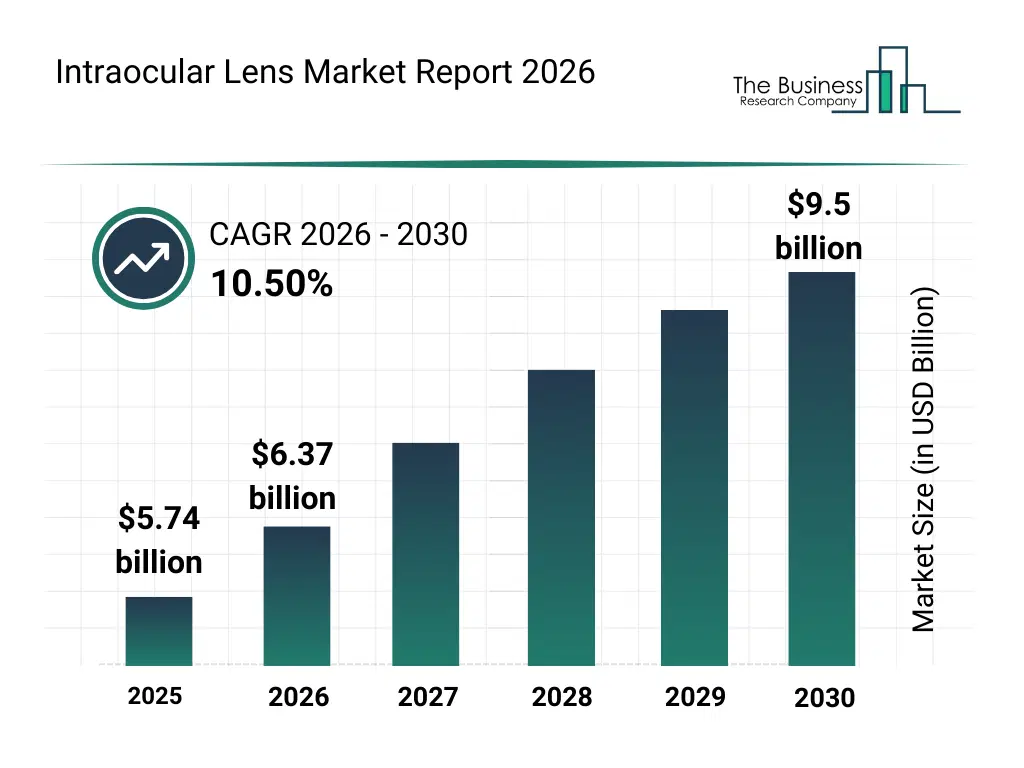
What Is The Intraocular Lens Market Size and Share 2026?
The intraocular lens market size has grown rapidly in recent years. It will grow from $5.74 billion in 2025 to $6.37 billion in 2026 at a compound annual growth rate (CAGR) of 10.9%. The growth in the historic period can be attributed to increasing aging population, rising cataract prevalence, expansion of ophthalmic surgical facilities, improvements in surgical techniques, availability of advanced intraocular lens designs.What Is The Intraocular Lens Market Growth Forecast?
The intraocular lens market size is expected to see rapid growth in the next few years. It will grow to $9.5 billion in 2030 at a compound annual growth rate (CAGR) of 10.5%. The growth in the forecast period can be attributed to increasing demand for spectacle-free vision correction, rising adoption of premium iols, expansion of ambulatory eye surgery centers, technological advancements in lens materials, growing investments in ophthalmic care infrastructure. Major trends in the forecast period include increasing adoption of premium multifocal and toric lenses, rising demand for cataract and refractive surgeries, growing use of hydrophobic acrylic lens materials, expansion of customized vision correction solutions, enhanced focus on post-surgery visual outcomes.
Global Intraocular Lens Market Segmentation
1) By Type: Monofocal Intraocular Lens, Multifocal Intraocular Lens, Toric Intraocular lens, Accommodating Intraocular Lens 2) By Material: Polymethylmethacrylate (PMMA), Silicone, Hydrophobic Acrylic 3) By End User: Hospitals, Ambulatory Surgery Centers, Ophthalmology Clinics, Eye Research Institutes Subsegments: 1) By Monofocal Intraocular Lens: Standard Monofocal Lens, Aspheric Monofocal Lens 2) By Multifocal Intraocular Lens: Diffractive Multifocal Lens, Refractive Multifocal Lens 3) By Toric Intraocular Lens: Toric Monofocal Lens, Toric Multifocal Lens 4) By Accommodating Intraocular Lens: Dual-Optic Accommodating Lens, Single-Optic Accommodating LensWhat Is The Driver Of The Intraocular Lens Market?
The number of ophthalmic surgeries is expected to propel the growth of the intraocular lens market going forward. Ophthalmic surgeries are medical procedures performed on the eye to treat vision problems, correct eye diseases, or improve visual function. The rising number of ophthalmic surgeries is driven by an aging population, as older adults experience higher rates of age-related eye conditions that require surgical intervention. The growing volume of ophthalmic surgeries increases the need for intraocular lenses, which are essential artificial implants used to replace the eye's natural lens during procedures. For instance, in May 2024, according to the Office for Health Improvement and Disparities, a UK-based government agency responsible for health data and population health improvement, hospital admissions for cataract surgery in England rose from 409,000 cases in the financial year ending 2022 to 516,073 cases in the financial year ending 2023, reflecting an increase of 107,073 cases. Therefore, the number of ophthalmic surgeries is driving the growth of the intraocular lens industry.Key Players In The Global Intraocular Lens Market
Major companies operating in the intraocular lens market are Abbott Medical Optics Inc., Alcon Inc., Johnson & Johnson Vision Care Inc., Carl Zeiss Meditec AG, Nidek CO. Ltd, Staar Surgical Company, Hoya Corporation, Rayner Intraocular Lenses Limited, SIFI S.p.A, Ophtec, RxSight, Aurolab, Hanita Lenses, Oculentis, Lenstec, EyeKon Medical Inc., Atia Vision, SAV-IOL SA, Biotech Healthcare Group, Physiol, LensGen Inc., Omega Ophthalmics, Ocumetics Technology Corporation, Calhoun Vision Inc., HOYA Surgical Optics
This chart is for illustrative purposes; the full report includes a detailed competitor analysis and comprehensive overview of the top 10 companies in the market.
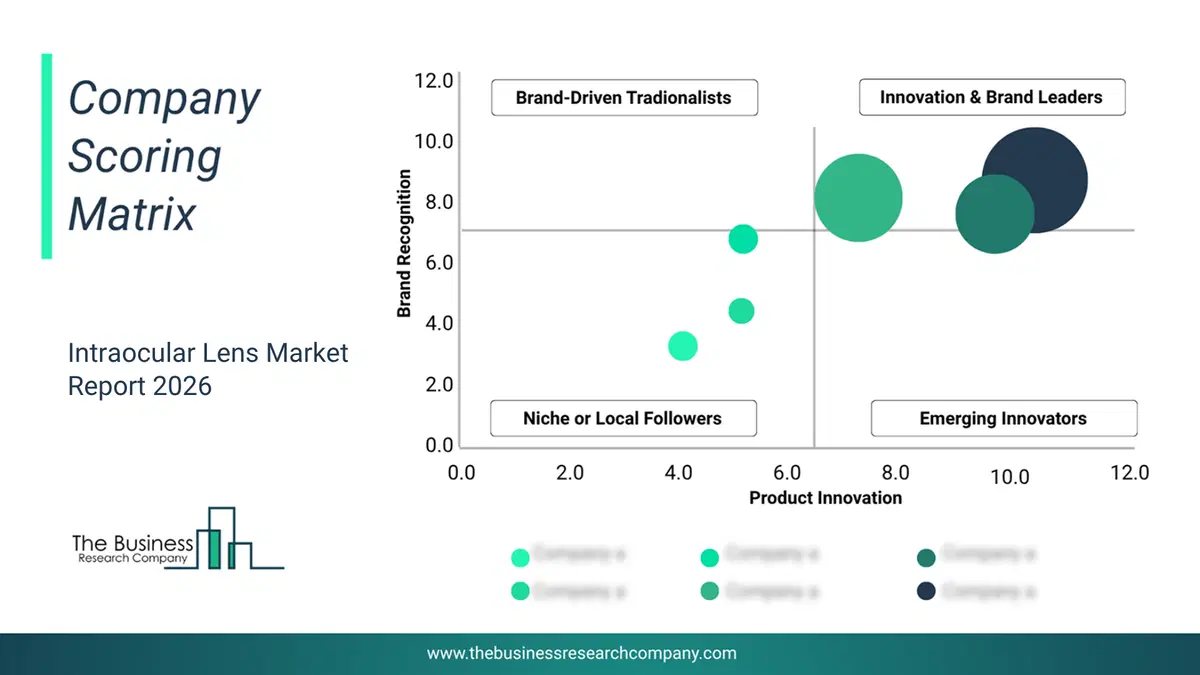
This chart maps companies by product innovation and brand strength, with bubble size indicating relative revenue, helping identify market leaders, challengers, and niche players. This is an illustrative chart; the full report provides a complete and accurate competitive analysis.
Global Intraocular Lens Market Trends and Insights
Major companies operating in the intraocular lens market are focusing on developing advanced solutions, such as small-aperture optics, to enhance visual outcomes, reduce dependence on corrective eyewear, and improve overall patient satisfaction. Small-aperture optics refers to a technological feature in IOLs that reduces the impact of aberrated peripheral light, providing a continuous range of focus and sharper image quality. For instance, in January 2023, AcuFocus, a US-based medical device company, treated its first commercial patients with the IC-8 Apthera IOL, featuring small-aperture technology. FDA-approved for patients with up to 1.5 diopters of corneal astigmatism, the lens is designed to enhance near and intermediate vision while maintaining excellent distance vision. It incorporates a proprietary FilterRing that improves image quality, integrates seamlessly into standard cataract procedures, and supports predictable outcomes, making it suitable for a wide range of patients.What Are Latest Mergers And Acquisitions In The Intraocular Lens Market?
In April 2024, Warburg Pincus LLC, a US-based private equity company acquired a stake in Appasamy Associates Pvt Ltd. for an undisclosed amount. With this acquisition, Warburg Pincus LLC aims to expand in the healthcare sector to enhance growth opportunities both domestically and internationally. Appasamy Associates Pvt Ltd. is an India-based medical equipment company that provides intraocular lenses.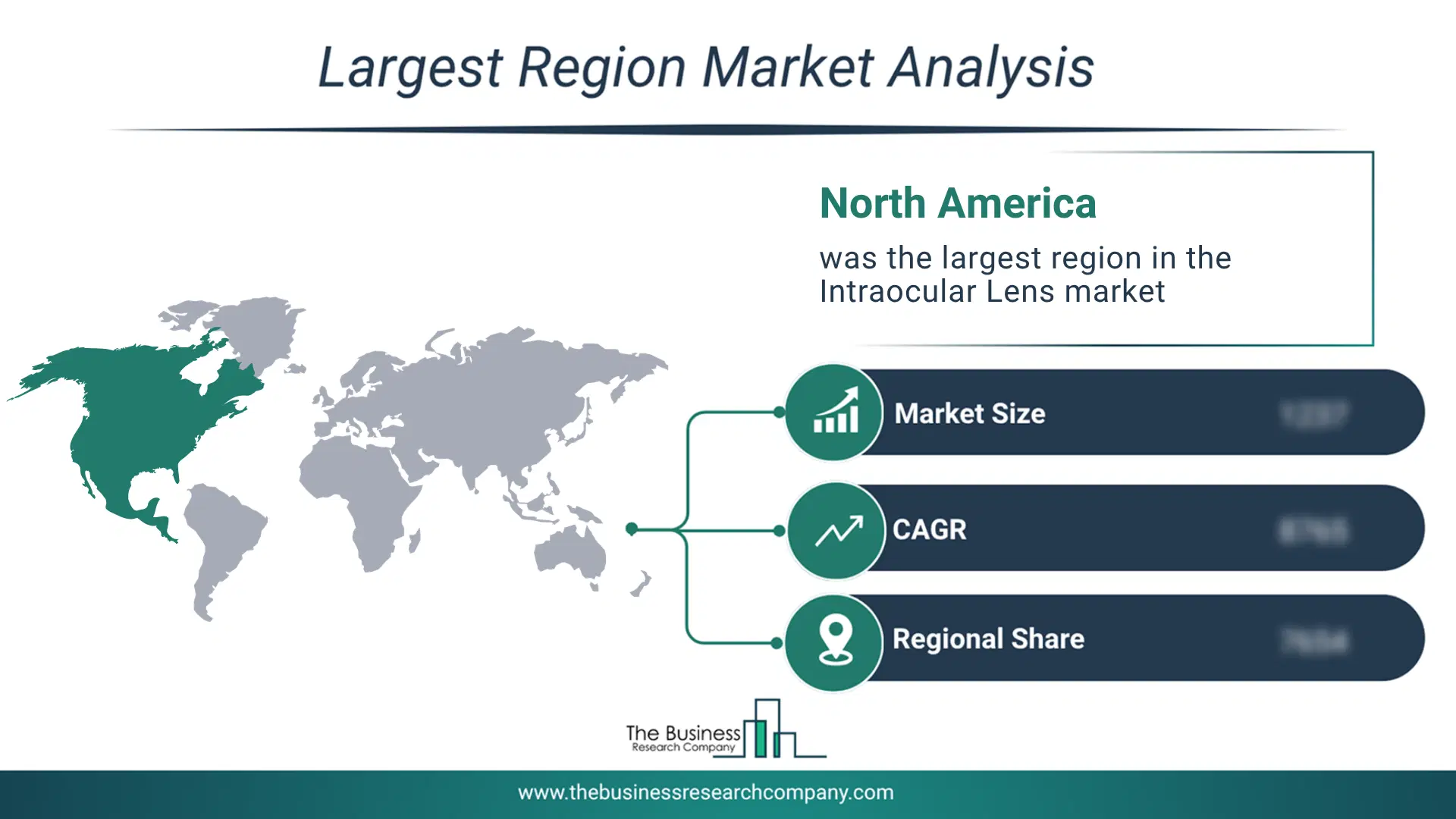
Regional Outlook
North America was the largest region in the intraocular lens market in 2025. Asia-Pacific is expected to be the fastest-growing region in the forecast period. The regions covered in this market report are Asia-Pacific, South East Asia, Western Europe, Eastern Europe, North America, South America, Middle East, Africa. The countries covered in this market report are Australia, Brazil, China, France, Germany, India, Indonesia, Japan, Taiwan, Russia, South Korea, UK, USA, Canada, Italy, SpainWhat Defines the Intraocular Lens Market?
The intraocular lens market consists of sales of monofocal intraocular lenses, multifocal intraocular lenses, toric intraocular lenses, and accommodative intraocular lenses that are used for replacing natural lens. Values in this market are ‘factory gate’ values, that is the value of goods sold by the manufacturers or creators of the goods, whether to other entities (including downstream manufacturers, wholesalers, distributors and retailers) or directly to end customers. The value of goods in this market includes related services sold by the creators of the goods.How is Market Value Defined and Measured?
The market value is defined as the revenues that enterprises gain from the sale of goods and/or services within the specified market and geography through sales, grants, or donations in terms of the currency (in USD unless otherwise specified). The revenues for a specified geography are consumption values that are revenues generated by organizations in the specified geography within the market, irrespective of where they are produced. It does not include revenues from resales along the supply chain, either further along the supply chain or as part of other products.
This chart presents market attractiveness based on a quantitative evaluation of growth, competition, strategic alignment, and risk, offering a clear view of opportunity areas for decision-making. This chart is for illustrative purposes; the full report contains the complete analysis.

This chart highlights the Total Addressable Market (TAM) by estimating the maximum revenue opportunity using an assumption-driven approach, supporting strategic planning and opportunity sizing across markets. The chart is illustrative; the full report provides a more comprehensive analysis.
What Key Data and Analysis Are Included in the Intraocular Lens Market Report 2026?
The intraocular lens market research report is one of a series of new reports from The Business Research Company that provides market statistics, including industry global market size, regional shares, competitors with the market share, detailed market segments, market trends and opportunities, and any further data you may need to thrive in the intraocular lens industry. The market research report delivers a complete perspective of everything you need, with an in-depth analysis of the current and future state of the industry.Intraocular Lens Market Report Forecast Analysis
| Report Attribute | Details |
|---|---|
| Market Size Value In 2026 | $6.37 billion |
| Revenue Forecast In 2030 | $9.5 billion |
| Growth Rate | CAGR of 10.5% from 2026 to 2030 |
| Base Year For Estimation | 2025 |
| Actual Estimates/Historical Data | 2020-2025 |
| Forecast Period | 2026 - 2030 |
| Market Representation | Revenue in USD Billion and CAGR from 2026 to 2030 |
| Segments Covered | Type, Material, End User |
| Regional Scope | Asia-Pacific, Western Europe, Eastern Europe, North America, South America, Middle East, Africa |
| Country Scope | The countries covered in the report are Australia, Brazil, China, France, Germany, India, Indonesia, Japan, Taiwan, Russia, South Korea, UK, USA, Canada, Italy, Spain. |
| Key Companies Profiled | Abbott Medical Optics Inc., Alcon Inc., Johnson & Johnson Vision Care Inc., Carl Zeiss Meditec AG, Nidek CO. Ltd, Staar Surgical Company, Hoya Corporation, Rayner Intraocular Lenses Limited, SIFI S.p.A, Ophtec, RxSight, Aurolab, Hanita Lenses, Oculentis, Lenstec, EyeKon Medical Inc., Atia Vision, SAV-IOL SA, Biotech Healthcare Group, Physiol, LensGen Inc., Omega Ophthalmics, Ocumetics Technology Corporation, Calhoun Vision Inc., HOYA Surgical Optics |
| Customization Scope | Request for Customization |
| Pricing And Purchase Options | Explore Purchase Options |