
Intraocular Lens (IOL) Implants Market Report 2026
Global Outlook – By Type (Non-Foldable Intraocular Lens (IOL) Implants, Foldable Intraocular Lens (IOL) Implants), By Material Of Intraocular Lens (IOL) (Silicone Intraocular Lens, Polymethyl Methacrylate (PMMA) Intraocular Lens, Hydrophilic Acrylic Intraocular Lens, Hydrophobic Acrylic Intraocular Lens, Combination Materials Intraocular Lens), By Surgical Technique (Phacoemulsification, Extracapsular Cataract Extraction (ECCE), Small Incision Cataract Surgery (SICS), Femtosecond Laser-Assisted Surgery), By Application (Cataract Surgery, Refractive Surgery, Presbyopia Correction, Secondary Intraocular Lens Implantation), By End User (Hospitals, Ambulatory Surgical Centers (ASCs), Ophthalmology Clinics, Other End Users) – Market Size, Trends, Strategies, and Forecast to 2030
Intraocular Lens (IOL) Implants Market Overview
• Intraocular Lens (IOL) Implants market size has reached to $5.03 billion in 2025 • Expected to grow to $6.93 billion in 2030 at a compound annual growth rate (CAGR) of 6.5% • Growth Driver: Growing Number Of Cataract Surgeries Driving The Market Growth Due To Increasing Demand For Vision Restoration Procedures • Market Trend: Next-Generation Presbyopia-Correcting IOLs Transform Cataract Care • North America was the largest region in 2025 and Asia-Pacific is the fastest growing region.What Is Covered Under Intraocular Lens (IOL) Implants Market?
Intraocular lens (IOL) implants are artificial lenses surgically implanted in the eye to replace the natural lens when it has been removed, most commonly during cataract surgery. These lenses restore vision by focusing light onto the retina, helping patients see clearly after the removal of a clouded natural lens. The main types of intraocular lens (IOL) implants are non-foldable intraocular lens implants and foldable intraocular lens implants. Non-foldable intraocular lenses are rigid implants, usually made of polymethyl methacrylate (PMMA), and require a larger surgical incision due to their inability to fold during cataract surgery. Intraocular lenses are made from various materials, including silicone, PMMA, hydrophilic acrylic, hydrophobic acrylic, and combination materials. It is used in varied surgical techniques, including phacoemulsification, extracapsular cataract extraction (ECCE), small incision cataract surgery (SICS), and femtosecond laser-assisted surgery. These lenses are used for several applications such as cataract surgery, refractive surgery, presbyopia correction, and secondary intraocular lens implantation. The major end users of intraocular lens implants include hospitals, ambulatory surgical centers (ASCs), ophthalmology clinics, eye research institutes, and others.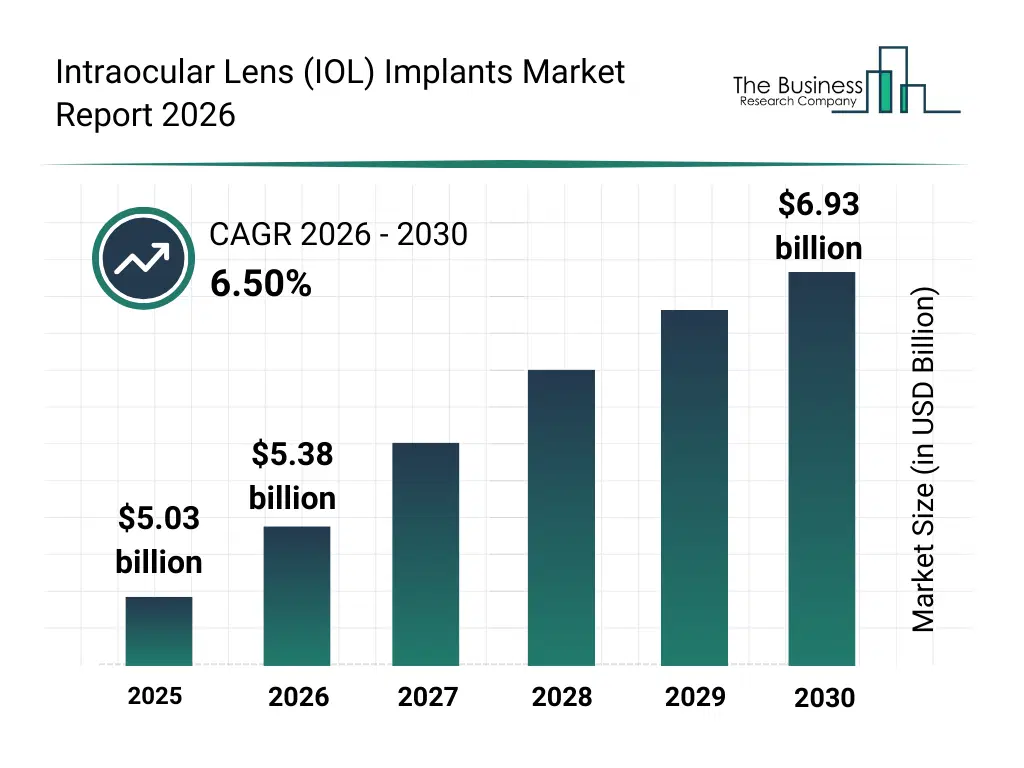
What Is The Intraocular Lens (IOL) Implants Market Size and Share 2026?
The intraocular lens (iol) implants market size has grown strongly in recent years. It will grow from $5.03 billion in 2025 to $5.38 billion in 2026 at a compound annual growth rate (CAGR) of 7.0%. The growth in the historic period can be attributed to limited surgical options, low patient awareness, slow technological adoption, restricted insurance coverage, high cost of conventional lenses.What Is The Intraocular Lens (IOL) Implants Market Growth Forecast?
The intraocular lens (iol) implants market size is expected to see strong growth in the next few years. It will grow to $6.93 billion in 2030 at a compound annual growth rate (CAGR) of 6.5%. The growth in the forecast period can be attributed to rise in geriatric population, increase in cataract surgeries, advancements in lens technology, growing adoption of premium lenses, expansion of ophthalmology clinics. Major trends in the forecast period include minimally invasive surgical techniques, customized & premium iol implants, aging population & increased cataract prevalence, growth of outpatient ophthalmology clinics, advanced lens materials and coatings.
Global Intraocular Lens (IOL) Implants Market Segmentation
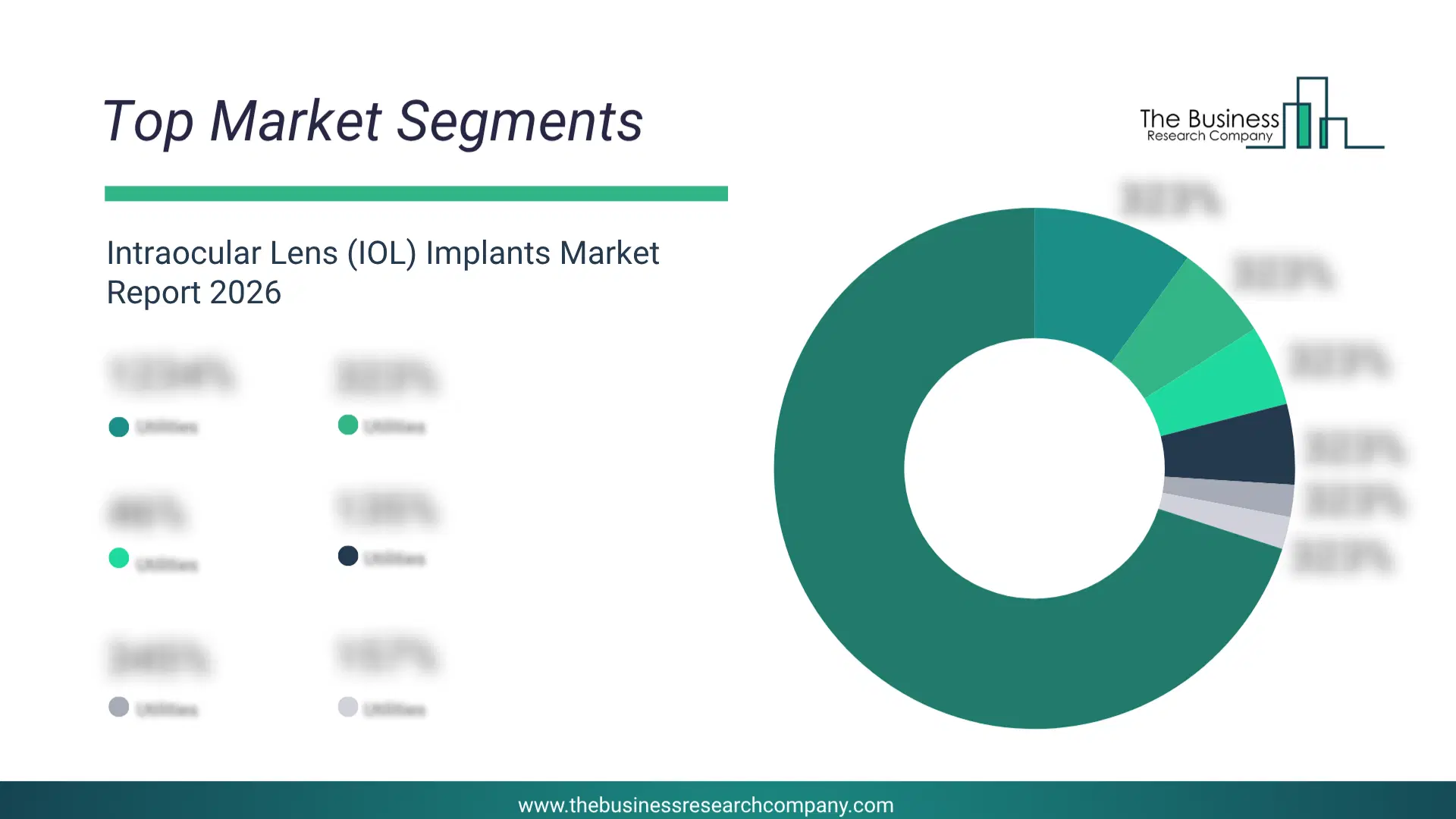
1) By Type: Non-Foldable Intraocular Lens (IOL) Implants, Foldable Intraocular Lens (IOL) Implants 2) By Material Of Intraocular Lens (IOL): Silicone Intraocular Lens, Polymethyl Methacrylate (PMMA) Intraocular Lens, Hydrophilic Acrylic Intraocular Lens, Hydrophobic Acrylic Intraocular Lens, Combination Materials Intraocular Lens 3) By Surgical Technique: Phacoemulsification, Extracapsular Cataract Extraction (ECCE), Small Incision Cataract Surgery (SICS), Femtosecond Laser-Assisted Surgery 4) By Application: Cataract Surgery, Refractive Surgery, Presbyopia Correction, Secondary Intraocular Lens Implantation 5) By End User: Hospitals, Ambulatory Surgical Centers (ASCs), Ophthalmology Clinics, Eye Research Institutes, Other End Users Subsegments: 1) By Non-Foldable Intraocular Lens (IOL) Implants: Rigid Polymethyl Methacrylate (PMMA) Intraocular Lenses, Anterior Chamber Intraocular Lenses, Posterior Chamber Intraocular Lenses 2) By Foldable Intraocular Lens (IOL) Implants: Hydrophilic Acrylic Intraocular Lenses, Hydrophobic Acrylic Intraocular Lenses, Silicone Intraocular Lenses, Collamer Intraocular LensesWhat Is The Driver Of The Intraocular Lens (IOL) Implants Market?
The growing number of cataract surgeries is expected to propel the growth of the intraocular lens (IOL) implants market going forward. Cataract surgery is a medical procedure that removes the eye’s cloudy lens and replaces it with an artificial intraocular lens to restore clear vision. The growing number of cataract surgeries is primarily due to the increasing aging population, as cataracts commonly develop with age, making older individuals more susceptible to vision impairment that requires surgical intervention. Intraocular lens (IOL) implants enhance cataract surgeries by replacing the eye's clouded natural lens with a clear artificial lens, restoring sharp vision and improving overall visual outcomes. This also reduces dependence on corrective eyewear and enables a faster recovery with long-term visual stability For instance, in April 2024, according to the Royal College of Ophthalmologists, a UK-based professional association, the number of cataract procedures in England increased to over 680,000 in 2023–24, marking a rise compared to the previous year. Therefore, the growing number of cataract surgeries is driving the growth of the intraocular lens (IOL) implants industry.Key Players In The Global Intraocular Lens (IOL) Implants Market
Major companies operating in the intraocular lens (iol) implants market are Bausch & Lomb Incorporated, Carl Zeiss Meditec AG, Appasamy Associates Private Limited, STAAR Surgical Company, Aurolab, Lenstec Inc., Rayner Intraocular Lenses Limited, Omni Lens Private Limited, Ophtec B.V., Hanita Lenses R.C.A Ltd., Shanghai Haohai Biological Technology Co. Ltd., Biotech Vision Care Pvt. Ltd., HumanOptics AG, Soleko S.p.A., Care Group Sight Solutions Private Limited, Cristalens Industrie SAS, SAV-IOL SA, Eyebright Medical Technology (Beijing) Co. Ltd., Eagle Optics Pvt. Ltd., SIFI S.p.A.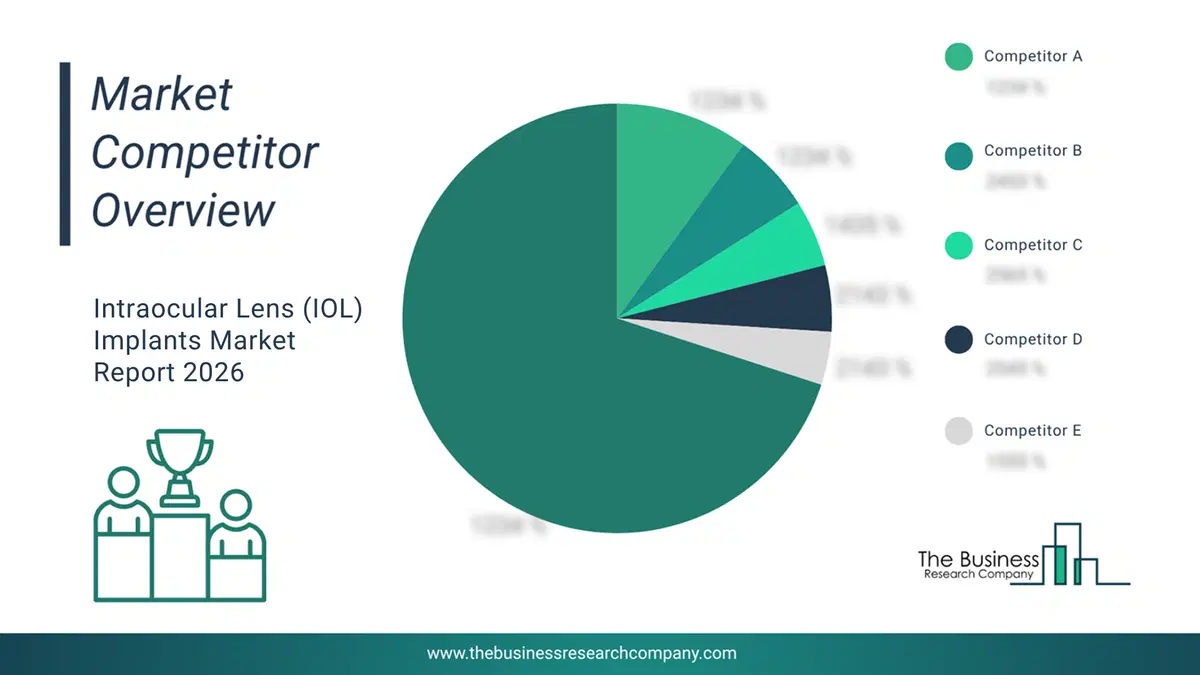
This chart is for illustrative purposes; the full report includes a detailed competitor analysis and comprehensive overview of the top 10 companies in the market.
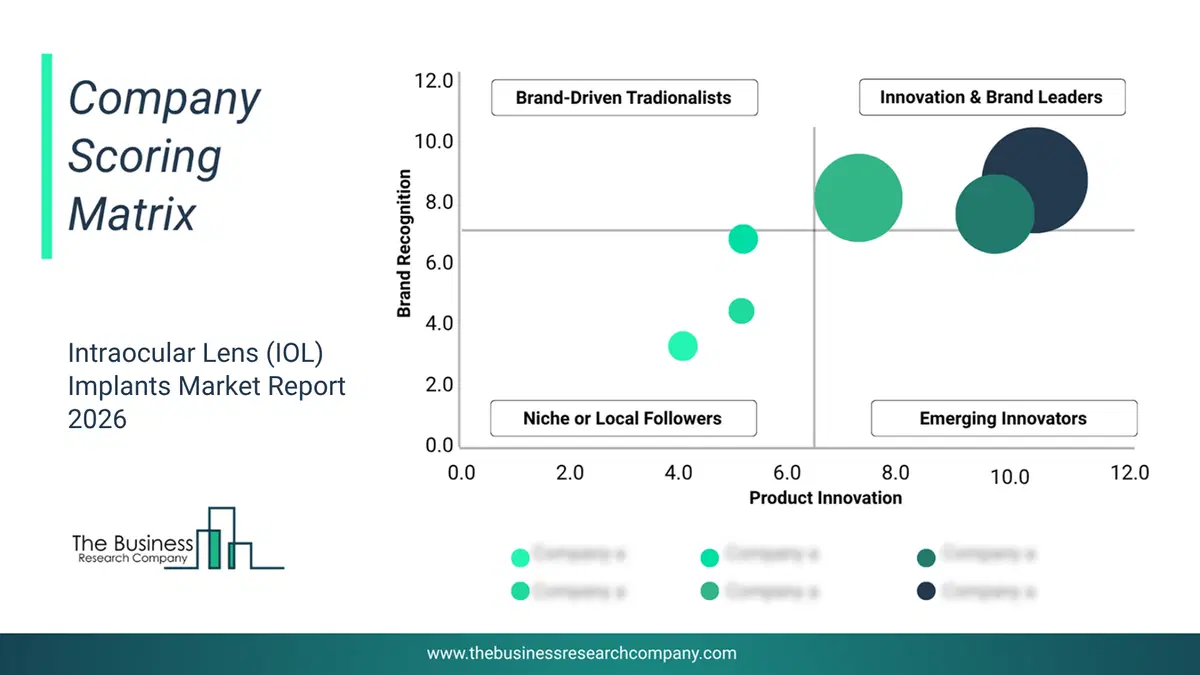
This chart maps companies by product innovation and brand strength, with bubble size indicating relative revenue, helping identify market leaders, challengers, and niche players. This is an illustrative chart; the full report provides a complete and accurate competitive analysis.
Global Intraocular Lens (IOL) Implants Market Trends and Insights
Major companies operating in the intraocular lens (IOL) implants market are focusing on developing innovative products such as next-generation presbyopia-correcting lenses to enhance visual outcomes and reduce patients’ dependence on glasses. Next-generation presbyopia-correcting lenses are advanced intraocular lenses designed to restore clear vision at multiple distances, such as near, intermediate, and far, for individuals with presbyopia. These lenses help by reducing or eliminating the need for reading glasses or bifocals after cataract surgery, offering patients greater visual independence and improved quality of life. For instance, in June 2025, Johnson & Johnson, a US-based pharmaceutical industry company, launched the Tecnis Odyssey next-generation intraocular lens (IOL), a full visual range presbyopia-correcting lens designed to provide clear vision at all distances and in various lighting conditions, aiming to improve visual outcomes and reduce patients’ dependence on glasses. This innovation combines advanced optics with a unique diffractive surface to deliver uninterrupted, high-contrast vision and is engineered to minimize night-time visual disturbances such as halos and glare, offering cataract patients greater visual freedom and a better quality of life.What Are Latest Mergers And Acquisitions In The Intraocular Lens (IOL) Implants Market?
In January 2023, Bausch + Lomb Corporation, a US-based eye health company, acquired AcuFocus Inc. for an undisclosed amount. With this acquisition, Bausch + Lomb aimed to expand its intraocular lens (IOL) portfolio by integrating AcuFocus’s small-aperture technology, particularly the IC-8 Apthera IOL, to better serve cataract patients with presbyopia and low levels of corneal astigmatism. AcuFocus Inc. is a US-based medical device company that specializes in developing innovative ophthalmic technologies, including small-aperture IOLs for presbyopia and cataract treatment.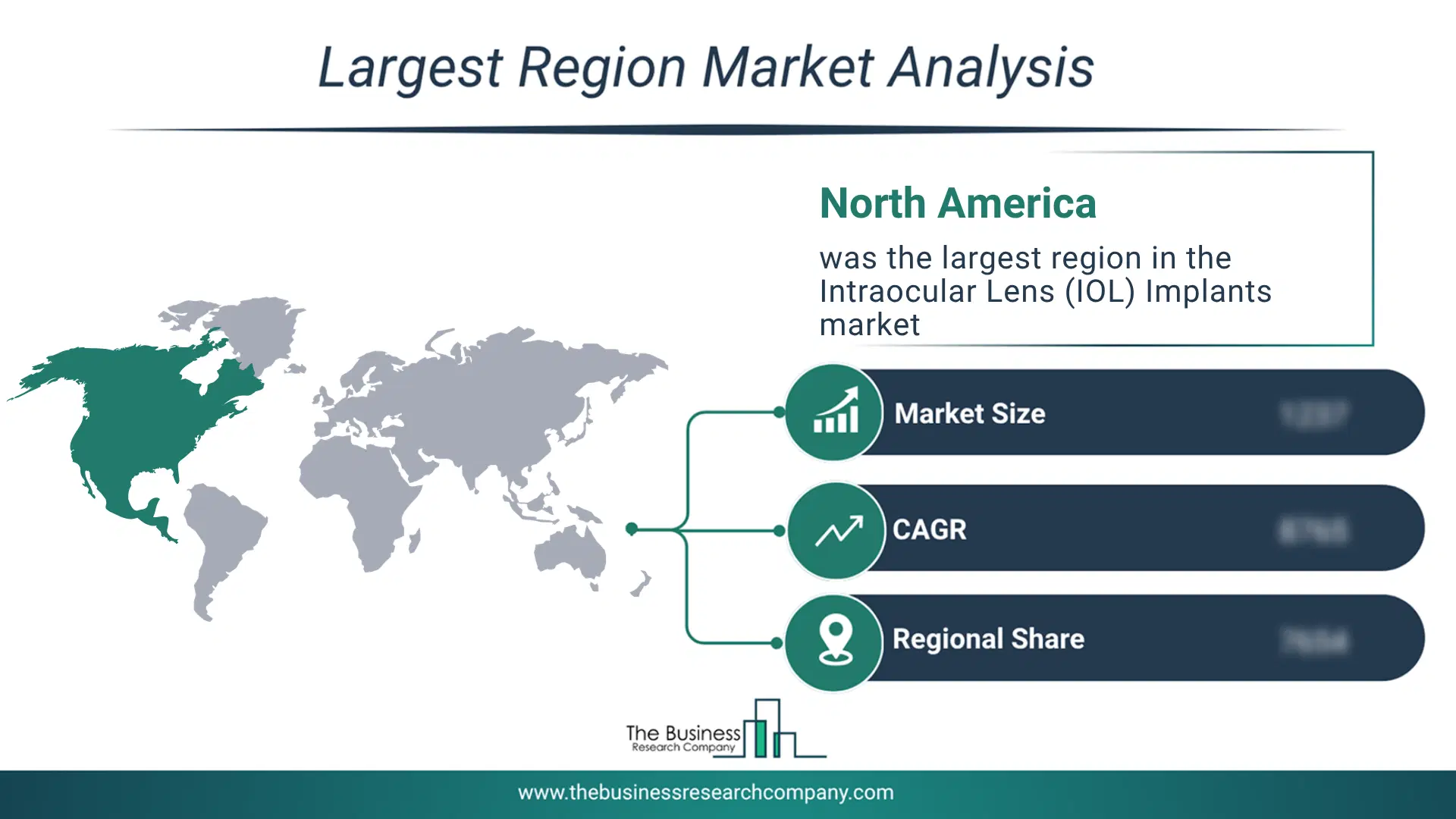
Regional Outlook
North America was the largest region in the intraocular lens (IOL) implants market in 2025. Asia-Pacific is expected to be the fastest-growing region in the forecast period. The regions covered in this market report are Asia-Pacific, South East Asia, Western Europe, Eastern Europe, North America, South America, Middle East, Africa. The countries covered in this market report are Australia, Brazil, China, France, Germany, India, Indonesia, Japan, Taiwan, Russia, South Korea, UK, USA, Canada, Italy, SpainWhat Defines the Intraocular Lens (IOL) Implants Market?
The intraocular lens (IOL) implants market consists of sales of monofocal intraocular lenses, multifocal intraocular lenses, toric intraocular lenses, accommodative intraocular lenses, extended depth of focus (EDOF) intraocular lenses, and phakic intraocular lenses. Values in this market are ‘factory gate’ values, that is the value of goods sold by the manufacturers or creators of the goods, whether to other entities (including downstream manufacturers, wholesalers, distributors and retailers) or directly to end customers. The value of goods in this market includes related services sold by the creators of the goods.How is Market Value Defined and Measured?
The market value is defined as the revenues that enterprises gain from the sale of goods and/or services within the specified market and geography through sales, grants, or donations in terms of the currency (in USD unless otherwise specified). The revenues for a specified geography are consumption values that are revenues generated by organizations in the specified geography within the market, irrespective of where they are produced. It does not include revenues from resales along the supply chain, either further along the supply chain or as part of other products.
This chart presents market attractiveness based on a quantitative evaluation of growth, competition, strategic alignment, and risk, offering a clear view of opportunity areas for decision-making. This chart is for illustrative purposes; the full report contains the complete analysis.

This chart highlights the Total Addressable Market (TAM) by estimating the maximum revenue opportunity using an assumption-driven approach, supporting strategic planning and opportunity sizing across markets. The chart is illustrative; the full report provides a more comprehensive analysis.
What Key Data and Analysis Are Included in the Intraocular Lens (IOL) Implants Market Report 2026?
The intraocular lens (iol) implants market research report is one of a series of new reports from The Business Research Company that provides market statistics, including industry global market size, regional shares, competitors with the market share, detailed market segments, market trends and opportunities, and any further data you may need to thrive in the intraocular lens (iol) implants industry. The market research report delivers a complete perspective of everything you need, with an in-depth analysis of the current and future state of the industry.Intraocular Lens (IOL) Implants Market Report Forecast Analysis
| Report Attribute | Details |
|---|---|
| Market Size Value In 2026 | $5.38 billion |
| Revenue Forecast In 2030 | $6.93 billion |
| Growth Rate | CAGR of 6.5% from 2026 to 2030 |
| Base Year For Estimation | 2025 |
| Actual Estimates/Historical Data | 2020-2025 |
| Forecast Period | 2026 - 2030 |
| Market Representation | Revenue in USD Billion and CAGR from 2026 to 2030 |
| Segments Covered | Type, Material Of Intraocular Lens (IOL), Surgical Technique, Application, End User |
| Regional Scope | Asia-Pacific, Western Europe, Eastern Europe, North America, South America, Middle East, Africa |
| Country Scope | The countries covered in the report are Australia, Brazil, China, France, Germany, India, Indonesia, Japan, Taiwan, Russia, South Korea, UK, USA, Canada, Italy, Spain. |
| Key Companies Profiled | Bausch & Lomb Incorporated, Carl Zeiss Meditec AG, Appasamy Associates Private Limited, STAAR Surgical Company, Aurolab, Lenstec Inc., Rayner Intraocular Lenses Limited, Omni Lens Private Limited, Ophtec B.V., Hanita Lenses R.C.A Ltd., Shanghai Haohai Biological Technology Co. Ltd., Biotech Vision Care Pvt. Ltd., HumanOptics AG, Soleko S.p.A., Care Group Sight Solutions Private Limited, Cristalens Industrie SAS, SAV-IOL SA, Eyebright Medical Technology (Beijing) Co. Ltd., Eagle Optics Pvt. Ltd., SIFI S.p.A. |
| Customization Scope | Request for Customization |
| Pricing And Purchase Options | Explore Purchase Options |