
Intravenous Immunoglobulin Market Report 2026
Global Outlook – By Type (IgG (Immunoglobulin G), IgM (Immunoglobulin M), IgA (Immunoglobulin A), IgE (Immunoglobulin E), IgD (Immunoglobulin D)), By Distribution Channel (Hospital Pharmacy, Retail Pharmacy, Other Distribution Channels), By Application (Hypogammaglobulinemia, Chronic Inflammatory Demyelinating Polyneuropathy (CIDP), Primary Immunodeficiency Diseases, Myasthenia Gravis, Multifocal Motor Neuropathy, Other Applications), By End-User (Hospitals, Clinics, Home Care) – Market Size, Trends, Strategies, and Forecast to 2030
Intravenous Immunoglobulin Market Overview
• Intravenous Immunoglobulin market size has reached to $15.57 billion in 2025 • Expected to grow to $23.44 billion in 2030 at a compound annual growth rate (CAGR) of 8.6% • Growth Driver: Rising Geriatric Population Fuels Growth In The Intravenous Immunoglobulin Market • Market Trend: A Breakthrough in Plasma-Derived Immunoglobulin Therapy • North America was the largest region in 2025 and Asia-Pacific is the fastest growing region.Market Gains By 2030 – Top Opportunities By Segment
Market Gain identifies the most promising market opportunities by highlighting the segments or products expected to generate the highest incremental revenue growth over the next five years.
What Is Covered Under Intravenous Immunoglobulin Market?
Intravenous immunoglobulin refers to a therapy used for the treatment of immunodeficient people. It is administered in the form of intravenous infusion. Infusion liquid is made from immunoglobulins collected from healthy individuals and purified to eliminate any blood-borne infection or impurity. The main types of intravenous immunoglobulin are Immunoglobulin G (IgE), Immunoglobulin M (IgM), Immunoglobulin A (IgA), (Immunoglobulin E (IgE), Immunoglobulin D (IgD). Immunoglobulin G refers to the most common immunoglobulin found in blood and other body fluids and defends the body against bacterial and viral infection. IgG is used to boost the body’s natural defense system. These are distributed through hospital pharmacy, retail pharmacy, and others, used in applications such as hypogammaglobulinemia, chronic inflammatory demyelinating polyneuropathy (CIDP), primary immunodeficiency diseases, myasthenia gravis, multifocal motor neuropathy, and others. The various end-users include hospitals, clinics, and home care.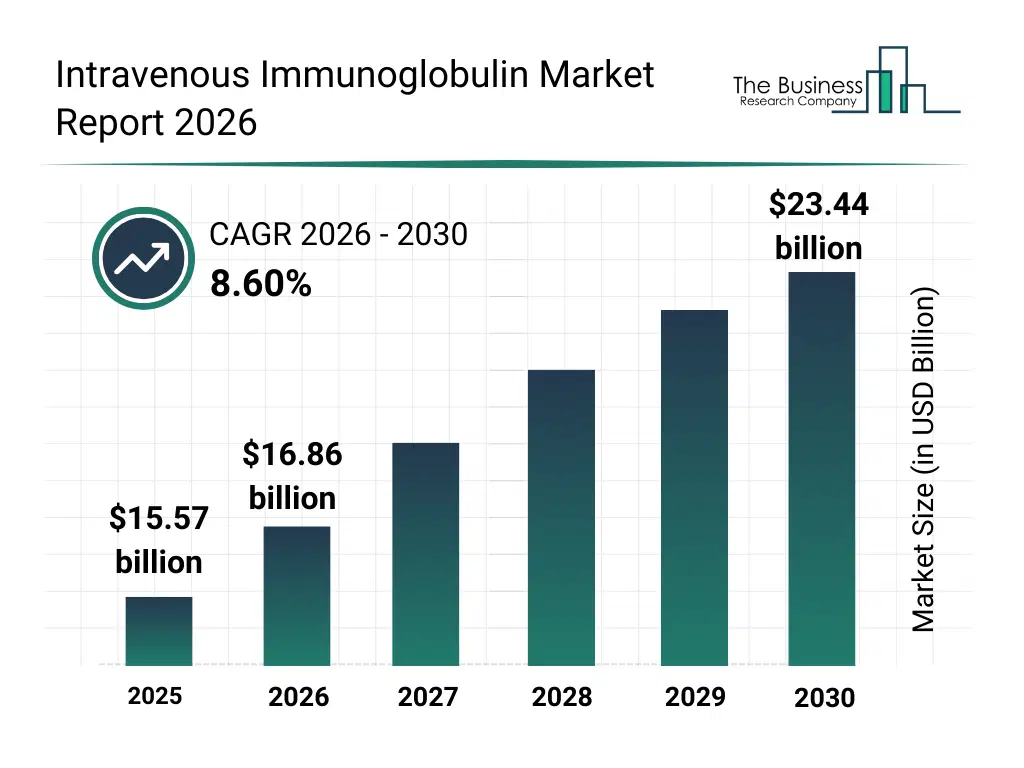
What Is The Intravenous Immunoglobulin Market Size and Share 2026?
The intravenous immunoglobulin market size has grown strongly in recent years. It will grow from $15.57 billion in 2025 to $16.86 billion in 2026 at a compound annual growth rate (CAGR) of 8.3%. The growth in the historic period can be attributed to rising prevalence of primary immunodeficiency diseases, advancements in immunoglobulin purification techniques, increased hospital-based ivig administration, growing awareness about autoimmune disorders, expansion of ivig production facilities.What Is The Intravenous Immunoglobulin Market Growth Forecast?
The intravenous immunoglobulin market size is expected to see strong growth in the next few years. It will grow to $23.44 billion in 2030 at a compound annual growth rate (CAGR) of 8.6%. The growth in the forecast period can be attributed to increasing demand for home-based ivig therapy, development of biosimilar ivig products, integration of automated infusion technologies, expanding applications in neurological disorders, growth in emerging markets for immunoglobulin therapies. Major trends in the forecast period include personalized immunoglobulin therapy, home-based ivig administration, biosimilar development and adoption, enhanced purification and safety protocols, automated infusion systems.
Global Intravenous Immunoglobulin Market Segmentation
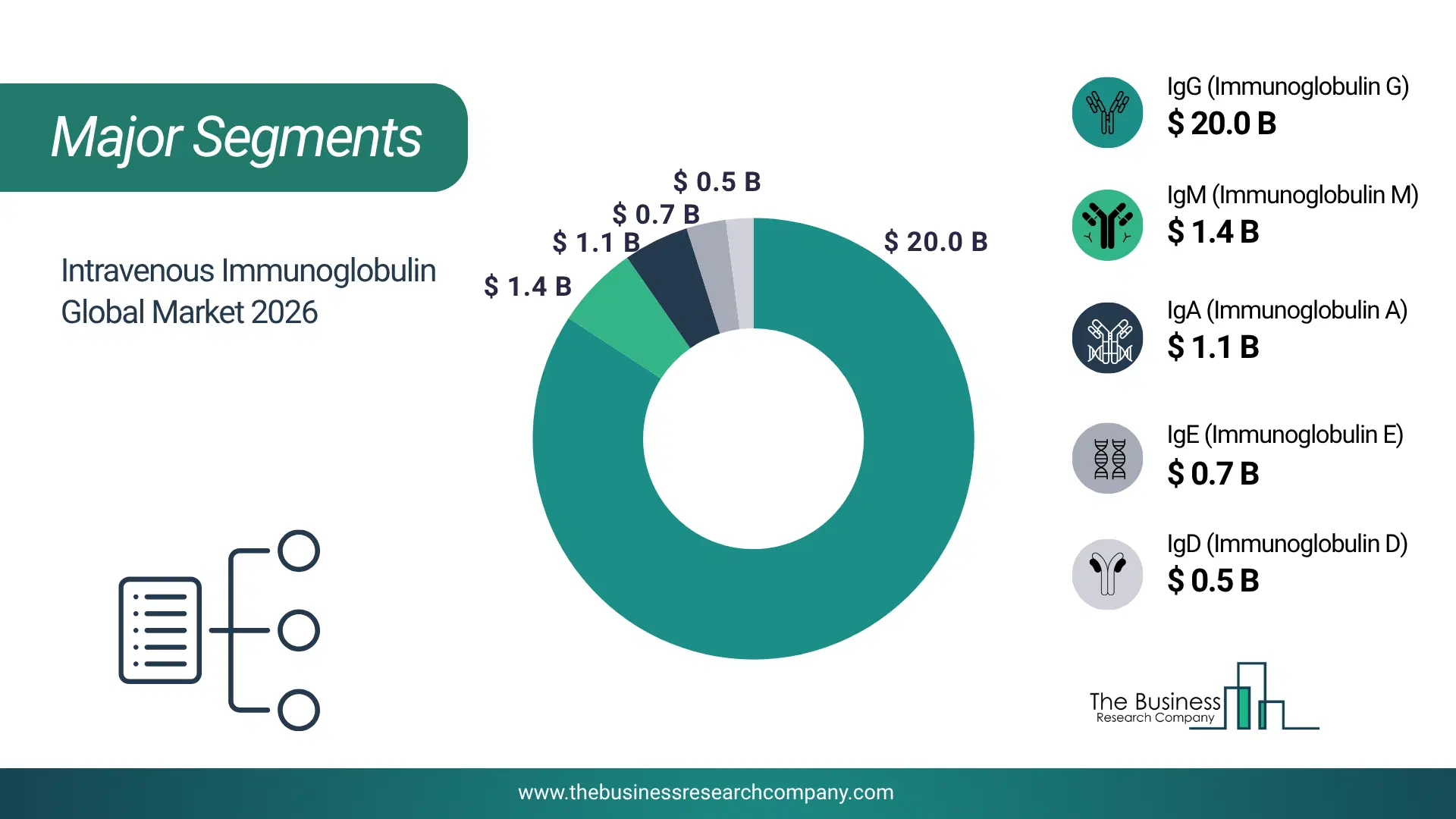
1) By Type: IgG (Immunoglobulin G), IgM (Immunoglobulin M), IgA (Immunoglobulin A), IgE (Immunoglobulin E), IgD (Immunoglobulin D) 2) By Distribution Channel: Hospital Pharmacy, Retail Pharmacy, Other Distribution Channels 3) By Application: Hypogammaglobulinemia, Chronic Inflammatory Demyelinating Polyneuropathy (CIDP), Primary Immunodeficiency Diseases, Myasthenia Gravis, Multifocal Motor Neuropathy, Other Applications 4) By End-User: Hospitals, Clinics, Home Care The top segments in the intravenous immunoglobulin market will be: • IgG (Immunoglobulin G) will reach $19.97 billion by 2030. • IgM (Immunoglobulin M) will reach $1.44 billion by 2030. • IgA (Immunoglobulin A) will reach $1.15 billion by 2030. • IgE (Immunoglobulin E) will reach $0.7 billion by 2030. • IgD (Immunoglobulin D) will reach $0.46 billion by 2030.What Is The Driver Of The Intravenous Immunoglobulin Market?
The increasing geriatric population is expected to drive the intravenous immunoglobulin market forward. The geriatric population refers to the population above 65 years of age. As people grow old, their immunity does not work properly and there is a lack of antibodies. Therefore, they need immunoglobulins to provide them with antibodies. This increases demand for intravenous immunoglobulins and drives the intravenous immunoglobulin market forward. For instance, in January 2024, according to the Population Reference Bureau, a Kenya-based Nonprofit organization, the population of Americans aged 65 and older is expected to grow from 58 million in 2022 to 82 million by 2050, a 47% increase. This age group’s share of the overall population is also projected to rise from 17% to 23% during the same period. As a result, the increasing geriatric population will drive the growth of the intravenous immunoglobulin industry forward.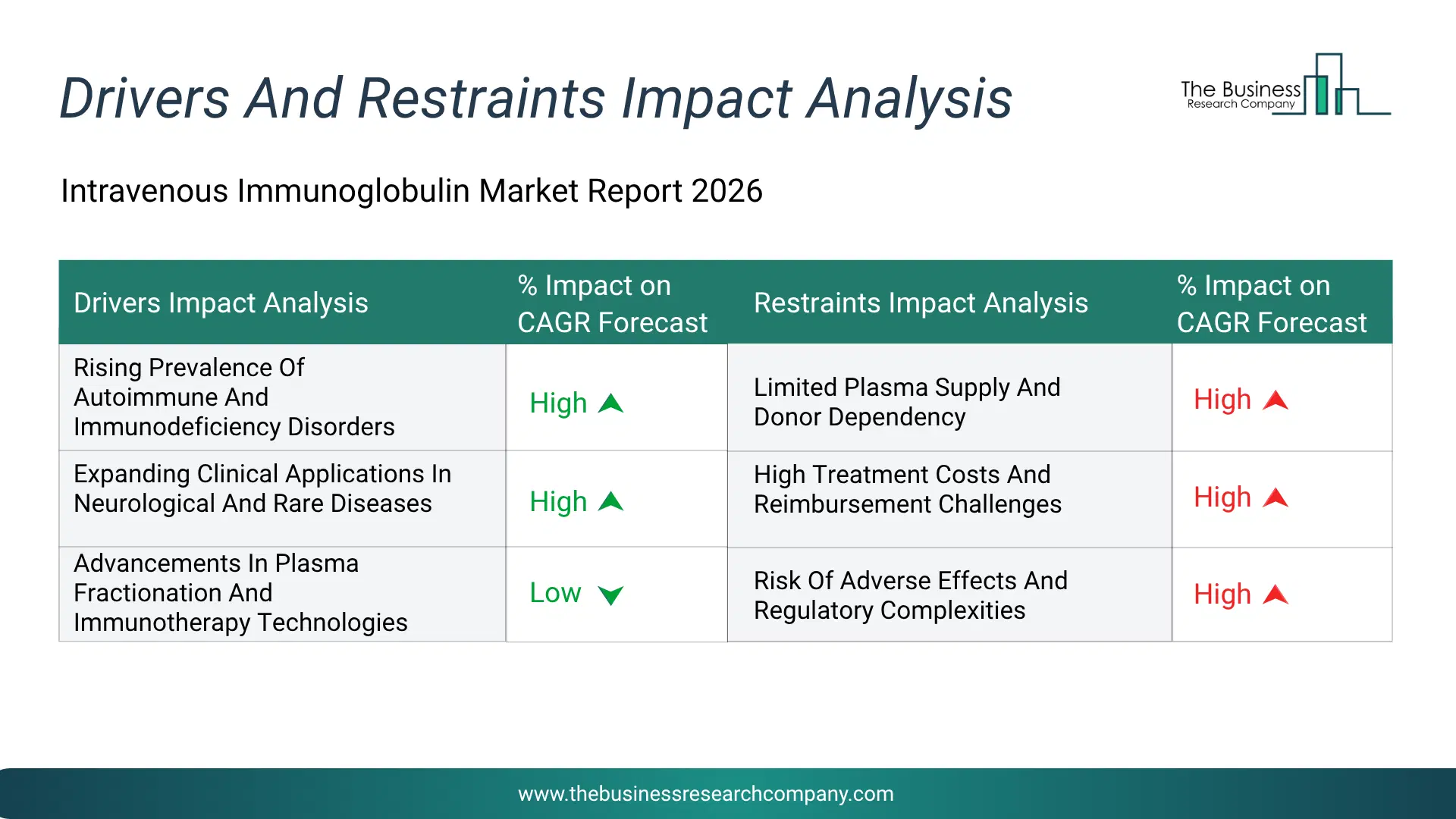
Infographic Chart Showing Key Market Drivers Analysis And Restraints For Intravenous Immunoglobulin Market
The chart presents an impact analysis of key drivers and restraints, quantifying their relative influence on the market's growth rate and helping assess the balance between growth enablers and limiting factors. This chart offers a high-level perspective; the full report contains more detailed insights.
How Will The Drivers Impact Growth In The Global Intravenous Immunoglobulin Market?
• Rising Prevalence Of Autoimmune And Immunodeficiency Disorders (High) – During the forecast period, the rising prevalence of autoimmune and immunodeficiency disorders is expected to become a key growth driver for the intravenous immunoglobulin market by 2030. The increasing incidence of conditions such as primary immunodeficiency diseases, guillain -barré syndrome, and chronic inflammatory demyelinating polyneuropathy is driving demand for effective immunoglobulin therapies. Early diagnosis and improved disease awareness are further contributing to higher treatment adoption rates. Healthcare providers are increasingly relying on ivig as a standard therapy due to its proven efficacy in modulating immune responses. • Expanding Clinical Applications In Neurological And Rare Diseases (High) – During the forecast period, the expanding clinical applications in neurological and rare diseases are expected to emerge as a major factor driving the expansion of the intravenous immunoglobulin market by 2030. Ongoing research is continuously identifying new therapeutic indications for ivig, particularly in rare and complex neurological disorders. This expansion is increasing the patient pool and boosting product demand across specialized treatment areas. Additionally, regulatory approvals for new indications are supporting wider clinical adoption. • Advancements In Plasma Fractionation And Immunotherapy Technologies (Low) – During the forecast period, advancements in plasma fractionation and immunotherapy technologies are expected to act as a key growth catalyst for the intravenous immunoglobulin market by 2030. Innovations in plasma collection, purification, and manufacturing processes are improving product yield, safety, and scalability. These technological advancements are enabling manufacturers to meet growing global demand while maintaining high-quality standards. Furthermore, the development of next-generation immunotherapies is enhancing treatment efficacy and patient outcomes.How Will The Restraints Impact Growth In The Global Intravenous Immunoglobulin Market?
• Limited Plasma Supply And Donor Dependency (High) – During the forecast period, the intravenous immunoglobulin (ivig) products are derived exclusively from human plasma, making production highly dependent on donor availability. Fluctuations in plasma collection volumes, donor recruitment challenges, and supply chain disruptions can restrict manufacturing output. Limited plasma availability often leads to supply shortages and increased treatment costs, constraining market growth. • High Treatment Costs And Reimbursement Challenges (High) – During the forecast period, the high treatment costs and reimbursement challenges act as a major restraint for the intravenous immunoglobulin (ivig) market, as the therapy is expensive due to complex plasma collection, purification, and manufacturing processes. The high cost of ivig limits accessibility, especially in low- and middle-income regions where patients may struggle to afford long-term treatment. In addition, inconsistent or inadequate reimbursement policies across healthcare systems can further restrict patient access and reduce treatment adoption. Hospitals and healthcare providers may also face financial pressure when coverage is limited or delayed. As a result, cost-related barriers and reimbursement uncertainties continue to hinder the widespread use of ivig therapy. • Risk Of Adverse Effects And Regulatory Complexities (High) – During the forecast period, the risk of adverse effects and regulatory complexities act as a key restraint for the intravenous immunoglobulin (ivig) market, as patients may experience side effects such as headaches, allergic reactions, thrombotic events, and kidney complications. These safety concerns can limit physician confidence and require careful monitoring during administration. Additionally, ivig products must comply with stringent regulatory standards for plasma sourcing, screening, and manufacturing to ensure safety and efficacy. The complex approval processes and varying regulations across regions can delay product launches and increase compliance costs for manufacturers. As a result, safety risks combined with regulatory hurdles continue to challenge the expansion of the ivig market.Key Players In The Global Intravenous Immunoglobulin Market
Major companies operating in the intravenous immunoglobulin market are Bio Products Laboratory Limited, Biotest AG, China Biologic Products Holdings Inc., CSL Behring, Grifols S.A., Kedrion SpA, Shanghai RAAS Blood Products Co. Ltd., Octapharma AG, Takeda Pharmaceutical Company Limited, Baxter International Inc., LFB Biotechnologies SAS, BDI Pharma Inc., Hualan Biological Engineering Inc., ADMA Biologics Inc., Bharat Serums and Vaccines Limited, Sanquin Plasma Products B.V., Prothya Biosolutions B.V., Sichuan Yuanda Shuyang Pharmaceutical Co. Ltd., Pfizer Inc., Kedrion Biopharma, Intas Pharmaceuticals, Octapharma Pharmazeutika Produktionsges.m.b.H., GC Pharma, Grifols Biologicals Inc., Kamada Ltd., LFB USA, Octapharma Plasma Inc., Panacea Biotec Ltd.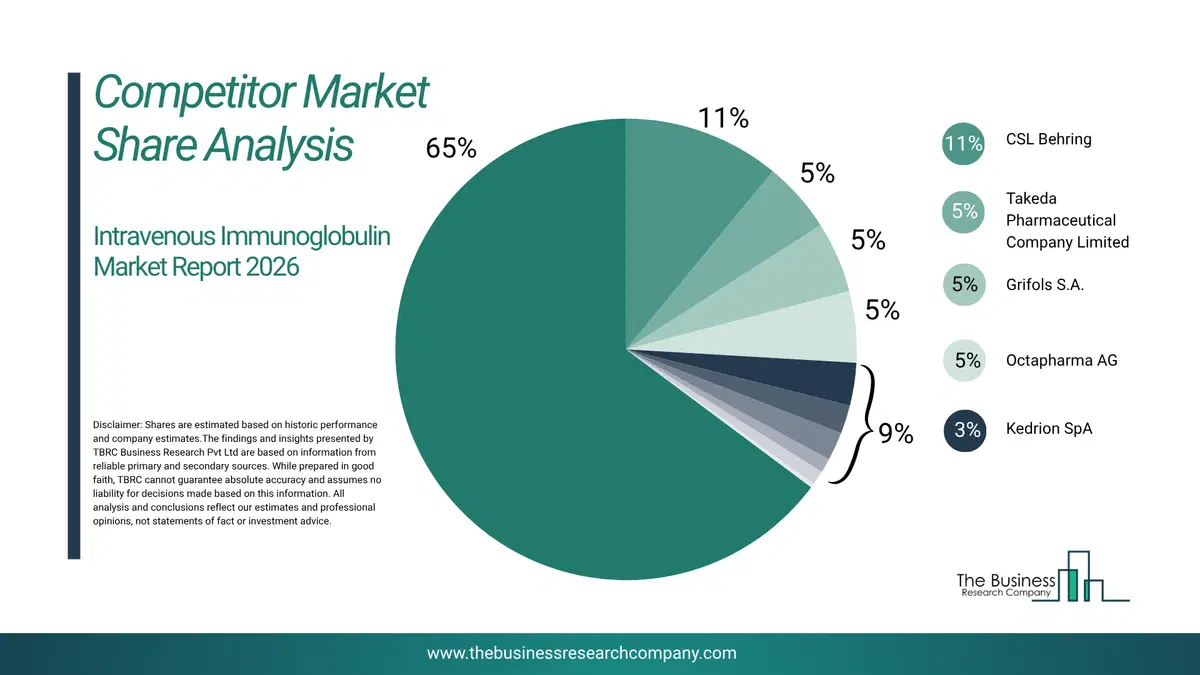
This chart is for illustrative purposes; the full report includes a detailed competitor analysis and comprehensive overview of the top 10 companies in the market.
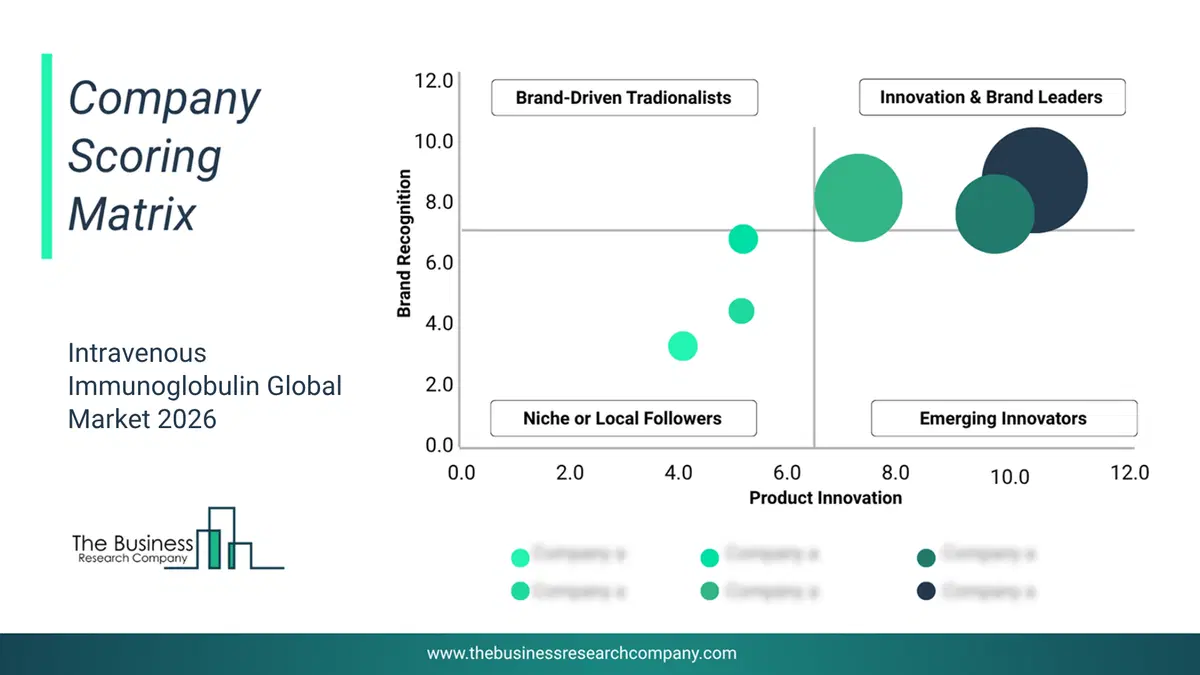
This chart maps companies by product innovation and brand strength, with bubble size indicating relative revenue, helping identify market leaders, challengers, and niche players. This is an illustrative chart; the full report provides a complete and accurate competitive analysis.
Global Intravenous Immunoglobulin Market Trends and Insights
Major companies operating in the intravenous immunoglobin market are focused on introducing innovative products, such as plasma-derived medicines, and getting them approved by federal agencies, including the US FDA, to gain a competitive edge in the market. The introduction of an FDA-approved innovative IVIG solution signifies the approval of a novel intravenous immunoglobulin (IVIG) therapy by the U.S. Food and Drug Administration for the treatment of specific medical conditions. For instance, in June 2024, Biotest AG, a Germany-based supplier of plasma proteins and products company announced its first U.S. Food and Drug Administration (FDA) approval Yimmugo for the treatment of primary immunodeficiencies. As an intravenous immunoglobulin, Yimmugo contains pooled human plasma-derived immunoglobulin G (IgG), which plays a crucial role in immune support for patients with PIDs. The approval comes amid increasing demand for plasma-derived therapies, highlighting the need for effective treatments for patients with compromised immune systems. Yimmugo adds to Grifols' existing range of intravenous and subcutaneous immunoglobulins, providing more options for patients reliant on these essential medicines.What Are Latest Mergers And Acquisitions In The Intravenous Immunoglobulin Market?
In February 2024, Ridgemont Equity Partners, a US-based equity investor company acquired American Outcomes Management for an undisclosed amount. This acquisition aligns with Ridgemont's strategic focus on the growing specialty infusion market, which is driven by an aging population with chronic conditions and a rising demand for at-home treatment options. American Outcomes Management is a US-based provider of intravenous immunoglobulin (IVIG) infusion therapy.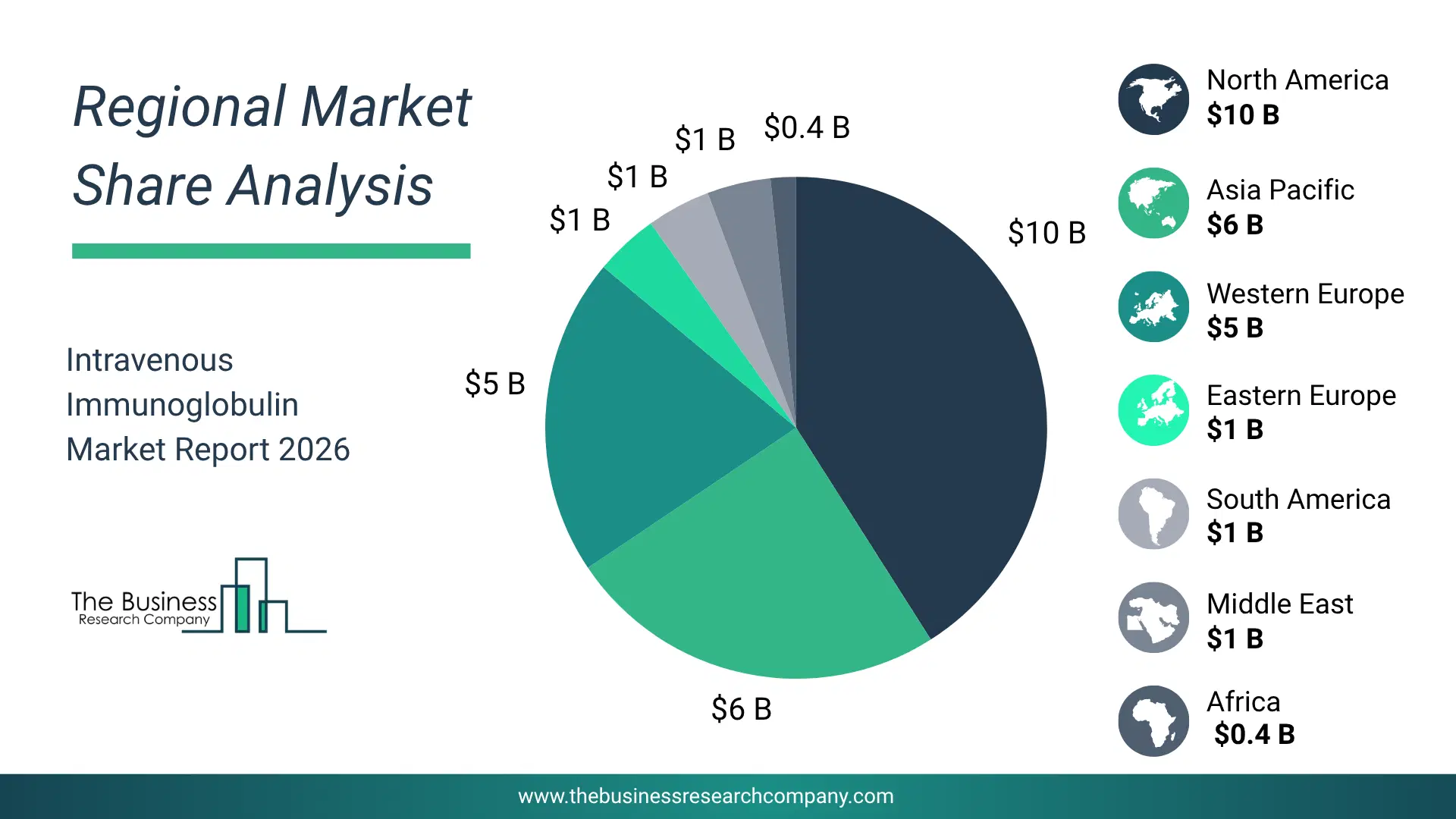
Regional Insights
North America was the largest region in the intravenous immunoglobulin market in 2025. Asia-Pacific is expected to be the fastest-growing region in the forecast period. The regions covered in this market report are Asia-Pacific, South East Asia, Western Europe, Eastern Europe, North America, South America, Middle East, Africa. The countries covered in this market report are Australia, Brazil, China, France, Germany, India, Indonesia, Japan, Taiwan, Russia, South Korea, UK, USA, Canada, Italy, Spain.What Defines the Intravenous Immunoglobulin Market?
The intravenous immunoglobulin market consists of sales of intravenous immunoglobulin used for treating people with antibody deficiencies. Values in this market are ‘factory gate’ values, that is the value of goods sold by the manufacturers or creators of the goods, whether to other entities (including downstream manufacturers, wholesalers, distributors, and retailers) or directly to end customers. The value of goods in this market includes related services sold by the creators of the goods.How is Market Value Defined and Measured?
The market value is defined as the revenues that enterprises gain from the sale of goods and/or services within the specified market and geography through sales, grants, or donations in terms of the currency (in USD unless otherwise specified). The revenues for a specified geography are consumption values that are revenues generated by organizations in the specified geography within the market, irrespective of where they are produced. It does not include revenues from resales along the supply chain, either further along the supply chain or as part of other products.
This chart presents market attractiveness based on a quantitative evaluation of growth, competition, strategic alignment, and risk, offering a clear view of opportunity areas for decision-making. This chart is for illustrative purposes; the full report contains the complete analysis.

This chart highlights the Total Addressable Market (TAM) by estimating the maximum revenue opportunity using an assumption-driven approach, supporting strategic planning and opportunity sizing across markets. The chart is illustrative; the full report provides a more comprehensive analysis.
What Key Data and Analysis Are Included in the Intravenous Immunoglobulin Market Report 2026?
The intravenous immunoglobulin market research report is one of a series of new reports from The Business Research Company that provides market statistics, including industry global market size, regional shares, competitors with the market share, detailed market segments, market trends and opportunities, and any further data you may need to thrive in the intravenous immunoglobulin industry. The market research report delivers a complete perspective of everything you need, with an in-depth analysis of the current and future state of the industry.Intravenous Immunoglobulin Market Report Forecast Analysis
| Report Attribute | Details |
|---|---|
| Market Size Value In 2026 | $16.86 billion |
| Revenue Forecast In 2030 | $23.44 billion |
| Growth Rate | CAGR of 8.3% from 2026 to 2030 |
| Base Year For Estimation | 2025 |
| Actual Estimates/Historical Data | 2020-2025 |
| Forecast Period | 2026 - 2030 |
| Market Representation | Revenue in USD Billion and CAGR from 2026 to 2030 |
| Segments Covered | Type, Distribution Channel, Application, End-User |
| Regional Scope | Asia-Pacific, Western Europe, Eastern Europe, North America, South America, Middle East, Africa |
| Country Scope | The countries covered in the report are Australia, Brazil, China, France, Germany, India, Indonesia, Japan, Taiwan, Russia, South Korea, UK, USA, Canada, Italy, Spain. |
| Key Companies Profiled | Bio Products Laboratory Limited, Biotest AG, China Biologic Products Holdings Inc., CSL Behring, Grifols S.A., Kedrion SpA, Shanghai RAAS Blood Products Co. Ltd., Octapharma AG, Takeda Pharmaceutical Company Limited, Baxter International Inc., LFB Biotechnologies SAS, BDI Pharma Inc., Hualan Biological Engineering Inc., ADMA Biologics Inc., Bharat Serums and Vaccines Limited, Sanquin Plasma Products B.V., Prothya Biosolutions B.V., Sichuan Yuanda Shuyang Pharmaceutical Co. Ltd., Pfizer Inc., Kedrion Biopharma, Intas Pharmaceuticals, Octapharma Pharmazeutika Produktionsges.m.b.H., GC Pharma, Grifols Biologicals Inc., Kamada Ltd., LFB USA, Octapharma Plasma Inc., Panacea Biotec Ltd. |
| Customization Scope | Request for Customization |
| Pricing And Purchase Options | Explore Purchase Options |