
Intravenous (IV) Compounding Robots Market Report 2026
Global Outlook – By Component (Hardware, Software, Consumables), By Product Type (Centralized Robots, Decentralized Robots), By Technology (Gravimetric Dosing Systems, Volumetric Dosing Systems, Hybrid Dosing Systems), By Application (Chemotherapy, Parenteral Nutrition, Monoclonal Antibodies, Other Applications), By End User (Hospitals, Oncology Centers, Compounding Pharmacies, Other End Users) – Market Size, Trends, Strategies, and Forecast to 2030
Intravenous (IV) Compounding Robots Market Overview
• Intravenous (IV) Compounding Robots market size has reached to $0.51 billion in 2025 • Expected to grow to $0.99 billion in 2030 at a compound annual growth rate (CAGR) of 14.2% • Growth Driver: Rising Pharmaceutical Clinical Trials Driving Growth In Market Due To Increasing Demand For Precision And Safety • Market Trend: Innovative Robots Enhance Accuracy And Safety In IV Drug Preparation • North America was the largest region in 2025 and Asia-Pacific is the fastest growing region.What Is Covered Under Intravenous (IV) Compounding Robots Market?
The intravenous (IV) compounding robots market refers to the use of automated robotic systems designed to accurately prepare intravenous (IV) medications through sterile and controlled compounding processes. Its primary purpose is to improve medication safety, dosing precision, and operational efficiency while reducing human error and contamination risks. It also supports consistent drug preparation, enhanced workflow automation, and compliance with strict pharmaceutical quality standards. The main components of intravenous (IV) compounding robots includes hardware, software, and consumables. Hardware refers to the physical robotic systems designed to automate the preparation of intravenous medications, ensuring high precision, accuracy, and sterility while minimizing human error. These product types such as centralized robots and decentralized robots. The leverage technologies like gravimetric, volumetric, and hybrid dosing systems. There are applications clinical areas including chemotherapy, parenteral nutrition, monoclonal antibody preparation, and others and the key end users such as hospitals, oncology centers, compounding pharmacies, and others.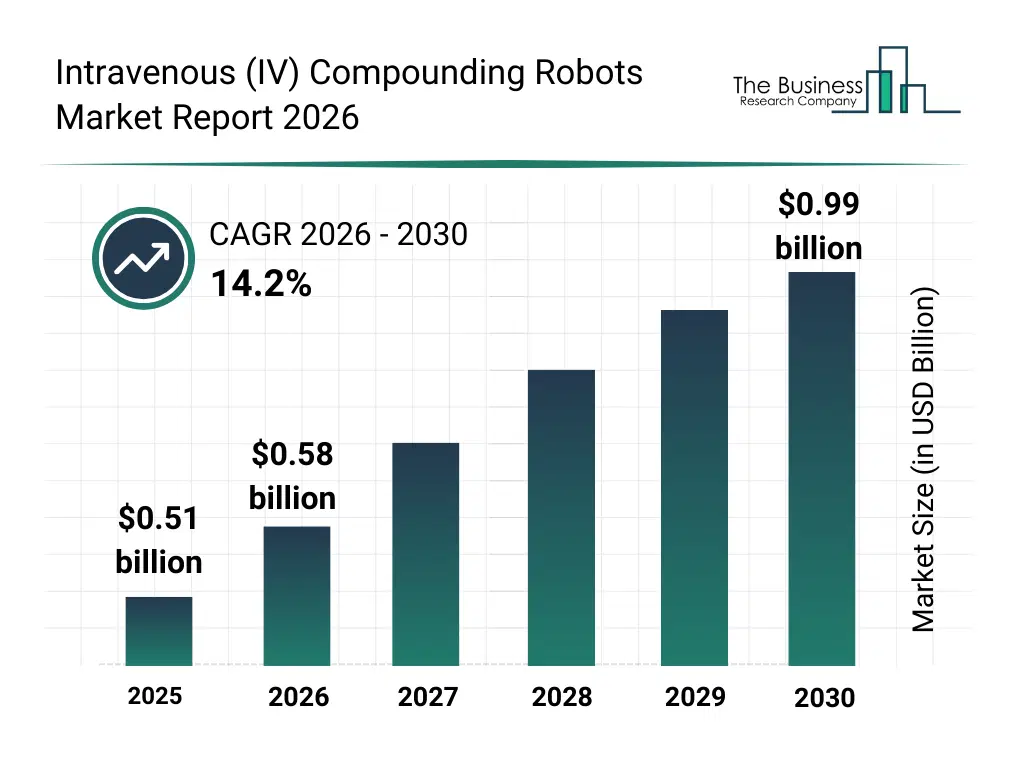
What Is The Intravenous (IV) Compounding Robots Market Size and Share 2026?
The intravenous (IV) compounding robots market size has grown rapidly in recent years. It will grow from $0.51 billion in 2025 to $0.58 billion in 2026 at a compound annual growth rate (CAGR) of 14.5%. The growth in the historic period can be attributed to growing focus on medication safety in hospitals, increasing incidence of chemotherapy drug preparation, rising adoption of pharmacy automation systems, expansion of centralized hospital pharmacies, and growing need to reduce human compounding errors.What Is The Intravenous (IV) Compounding Robots Market Growth Forecast?
The intravenous (IV) compounding robots market size is expected to see rapid growth in the next few years. It will grow to $0.99 billion in 2030 at a compound annual growth rate (CAGR) of 14.2%. The growth in the forecast period can be attributed to increasing demand for safe hazardous drug handling, growing adoption of automated sterile compounding, rising investments in hospital automation infrastructure, expansion of oncology treatment centers, and a rise in the need for operational efficiency in pharmacy workflows. Major trends in the forecast period include technology-driven innovations in robotic drug compounding, advancements in artificial intelligence (AI)-enabled dose verification, developments in closed system transfer integration, rising research and development in precision pharmacy robotics, and innovation in real-time monitoring and quality assurance systems.
Global Intravenous (IV) Compounding Robots Market Segmentation
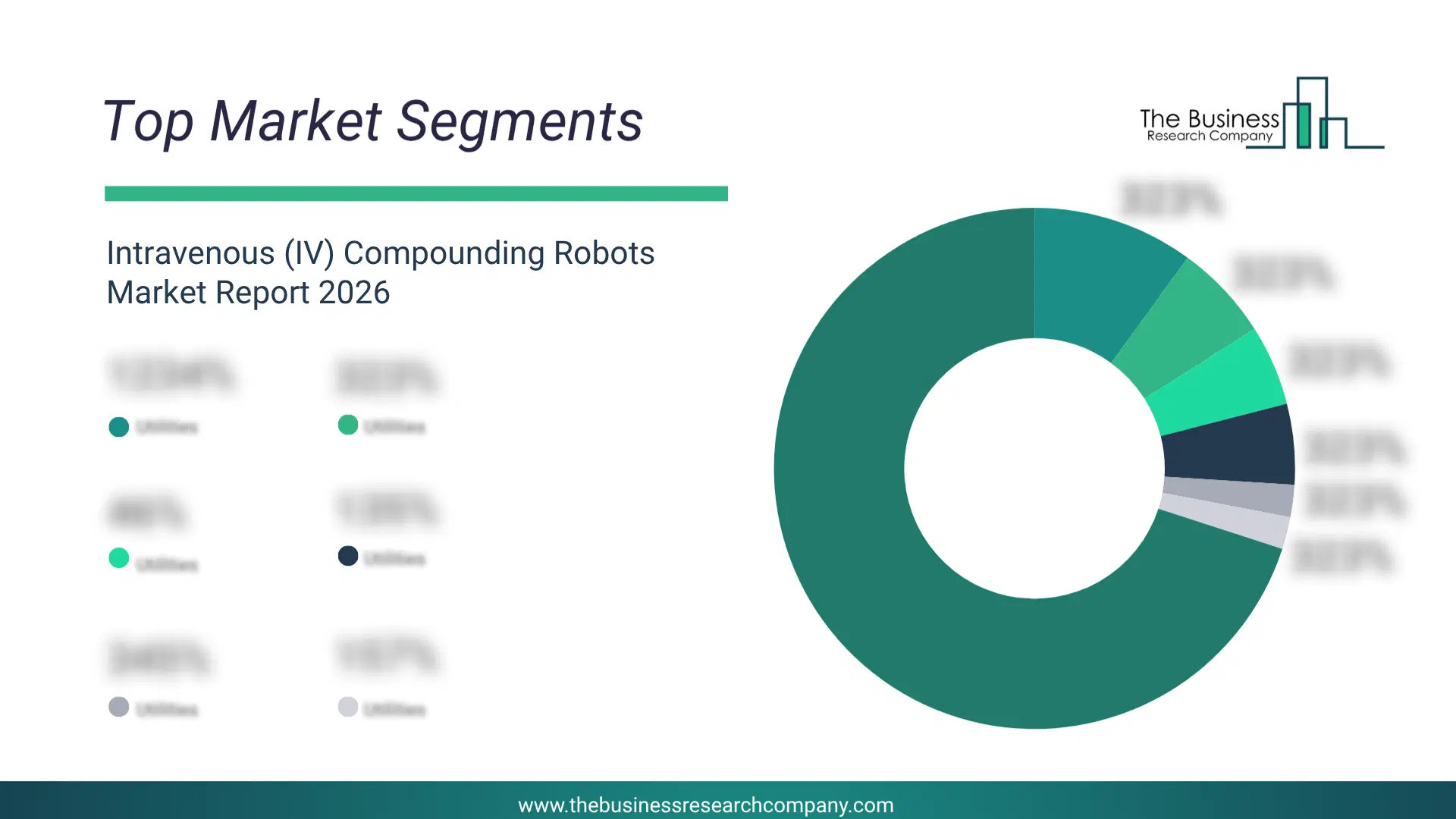
1) By Component: Hardware, Software, Consumables 2) By Product Type: Centralized Robots, Decentralized Robots 3) By Technology: Gravimetric Dosing Systems, Volumetric Dosing Systems, Hybrid Dosing Systems 4) By Application: Chemotherapy, Parenteral Nutrition, Monoclonal Antibodies, Other Applications 5) By End User: Hospitals, Oncology Centers, Compounding Pharmacies, Other End Users Subsegments: 1) By Hardware: Robotic Arms, Control Panels, Safety Enclosures, Sensors 2) By Software: Workflow Management Software, Dose Verification Software, Inventory Management Software, Reporting And Analytics Software 3) By Consumables: Syringes, Vials, NeedlesWhat Are The Drivers Of The Intravenous (IV) Compounding Robots Market?
The increasing number of pharmaceutical clinical trials is expected to propel the growth of theintravenous (IV) compounding robots market going forward. Pharmaceutical clinical trials are structured research studies conducted to evaluate the safety, efficacy, and optimal dosing of new drugs or therapies in human participants. The increasing number of pharmaceutical clinical trials is due to the growing demand for innovative treatments to address complex and emerging health conditions. IV compounding robots support clinical trials by ensuring precise and consistent preparation of investigational drugs, thereby enhancing the safety and reliability of study results. For instance, in December 2024, according to the Association of the British Pharmaceutical Industry (ABPI), a UK-based organization, the number of pharmaceutical industry trials launched in the UK increased for the second consecutive year, rising from 411 in 2022 to 426 in 2023. Therefore, the increasing number of pharmaceutical clinical trials is driving the growth of the intravenous (IV) compounding robots industry. The expanding use of personalized medicine and complex infusion protocols is expected to propel the growth of the intravenous (IV) compounding robots market going forward. Personalized medicine is the approach of tailoring medical treatments, including drug selection and dosing, to individual patient characteristics such as genetics, biomarkers, and disease profiles. The expansion of personalized medicine is driven by the increasing approval and clinical adoption of targeted therapies that require highly customized intravenous dosing and preparation. IV compounding robots support personalized medicine by automating the precise preparation and individualized dosing of high-potency therapies, ensuring accuracy, safety, and consistency for patient-specific treatment. For instance, in November 2025, according to the Personalized Medicine Coalition, a US-based nonprofit organization, the US Food and Drug Administration approved 18 new personalized medicines in 2024, accounting for more than 25% of all new drug approvals, following 20 personalized medicine approvals in 2023, many of which require individualized IV preparation. Therefore, the expanding use of personalized medicine and complex infusion protocols is driving the growth of the intravenous (IV) compounding robots industry.Key Players In The Global Intravenous (IV) Compounding Robots Market
Major companies operating in the intravenous (iv) compounding robots market are Becton Dickinson and Company, Baxa Corporation, Grifols Engineering S.A., IMA Life S.p.A., ICU Medical Inc., Syntegon Technology GmbH, Omnicell Inc., OPTIMA Pharma GmbH, Marchesini Group S.p.A., Romaco Group, Trasis S.A., APOTECA S.p.A., ARxIUM Inc., Health Robotics S.r.l., Steriline Robotics, PharmaSmart Robotics, iPharma Automation, Robotic Automation Systems, Pharma Automation Solutions, Aesynt Inc., Aseptio Technologies LLC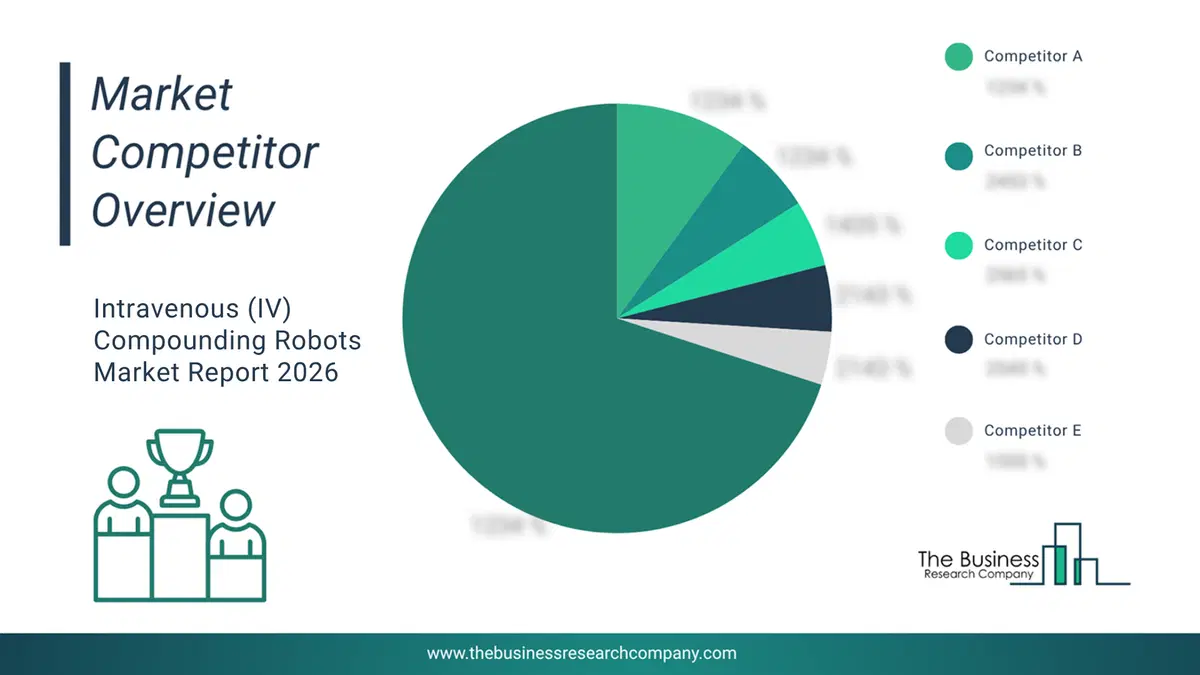
This chart is for illustrative purposes; the full report includes a detailed competitor analysis and comprehensive overview of the top 10 companies in the market.
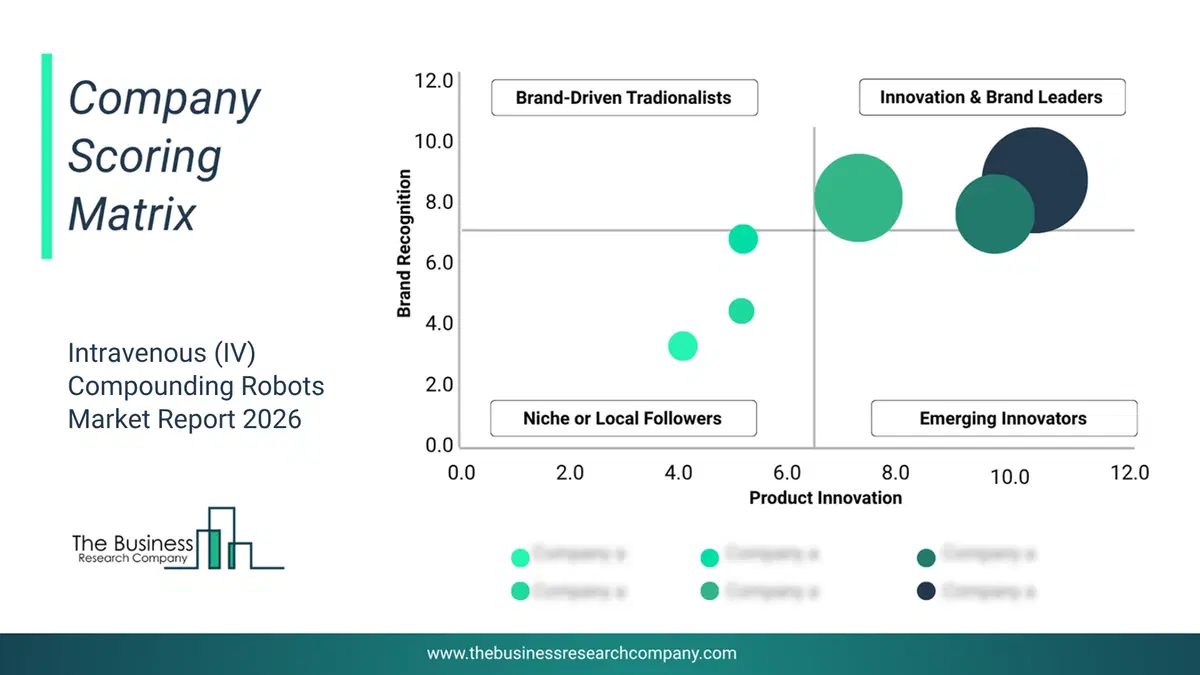
This chart maps companies by product innovation and brand strength, with bubble size indicating relative revenue, helping identify market leaders, challengers, and niche players. This is an illustrative chart; the full report provides a complete and accurate competitive analysis.
Global Intravenous (IV) Compounding Robots Market Trends and Insights
Major companies operating in the intravenous (IV) compounding robots market are developing innovative central pharmacy dispensing robots to enhance accuracy, safety, and efficiency in intravenous drug preparation, support personalized medicine, and reduce occupational exposure to high-potency and hazardous drugs. Central pharmacy dispensing robots are automated systems designed to store, retrieve, and dispense medications efficiently and accurately within a hospital or pharmacy setting, reducing errors and improving workflow. For instance, in October 2025, Ballad Health, a US-based healthcare company, launched three compounding robots to its central fill pharmacy at Bristol (Tenn.) Regional Medical Center. The implementation of these robots allows Ballad Health to streamline workflow, reduce turnaround time for IV medication preparation, and support personalized treatment protocols. This adoption also reinforces the hospital’s commitment to patient safety and regulatory compliance in handling hazardous drugs.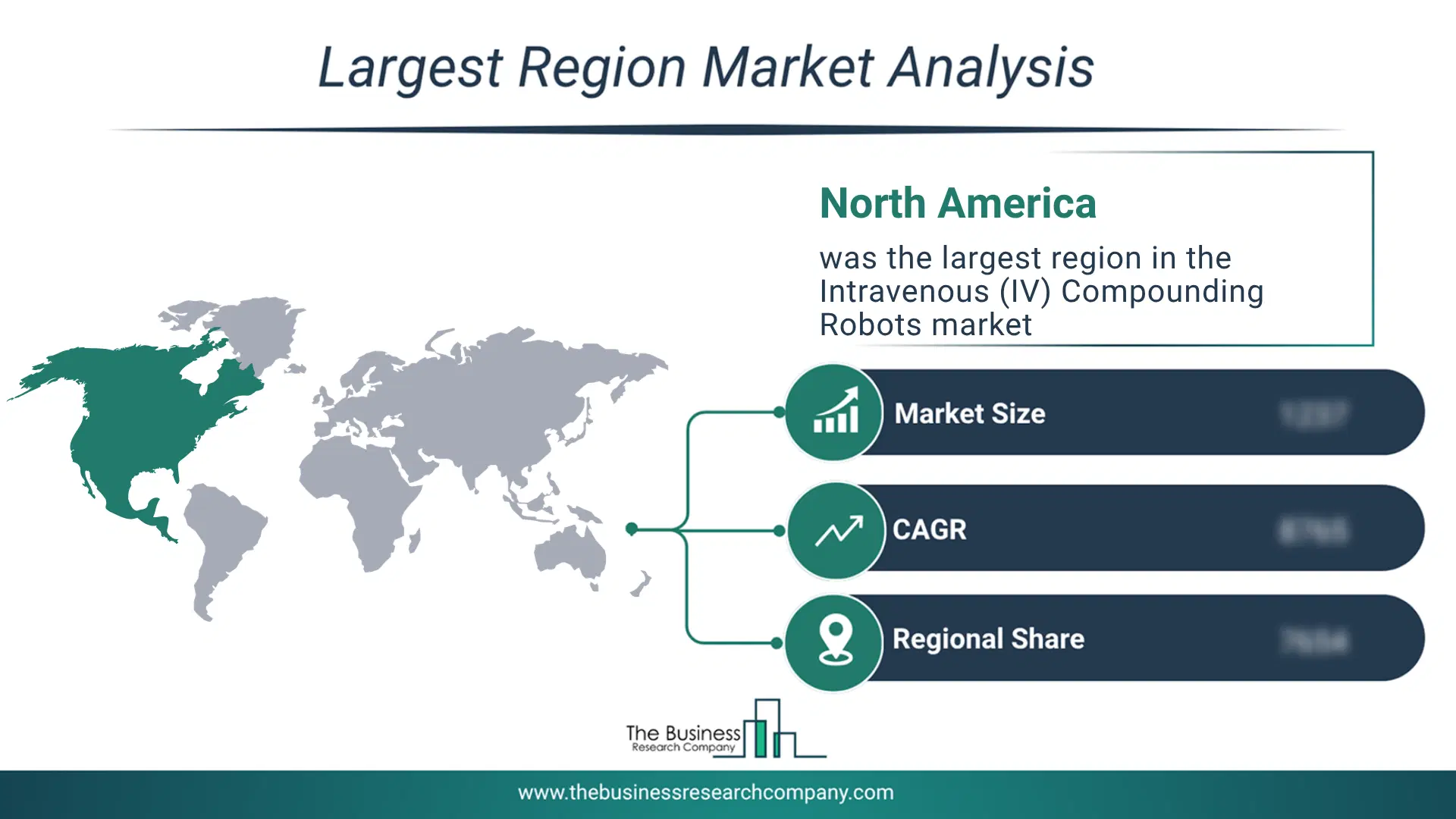
Regional Insights
North America was the largest region in the intravenous (IV) compounding robots market in 2025. Asia-Pacific is expected to be the fastest-growing region in the forecast period. The regions covered in this market report are Asia-Pacific, South East Asia, Western Europe, Eastern Europe, North America, South America, Middle East, Africa. The countries covered in this market report are Australia, Brazil, China, France, Germany, India, Indonesia, Japan, Taiwan, Russia, South Korea, UK, USA, Canada, Italy, Spain.What Defines the Intravenous (IV) Compounding Robots Market?
The intravenous (IV) compounding robots market consists of revenues earned by entities by providing products such as fully automated intravenous (IV) compounding robots, semi automated intravenous (IV) compounding systems, chemotherapy compounding robots, and sterile pharmacy robotic solutions. The market value includes the value of related goods sold by the service provider or included within the service offering. The intravenous (IV) compounding robots market includes sales of robotic arms, sterile compounding enclosures, automated dispensing units, and integrated software for workflow management. Values in this market are ‘factory gate’ values, that is, the value of goods sold by the manufacturers or creators of the goods, whether to other entities (including downstream manufacturers, wholesalers, distributors, and retailers) or directly to end customers. The value of goods in this market includes related services sold by the creators of the goods.How is Market Value Defined and Measured?
The market value is defined as the revenues that enterprises gain from the sale of goods and/or services within the specified market and geography through sales, grants, or donations in terms of the currency (in USD unless otherwise specified). The revenues for a specified geography are consumption values that are revenues generated by organizations in the specified geography within the market, irrespective of where they are produced. It does not include revenues from resales along the supply chain, either further along the supply chain or as part of other products.
This chart presents market attractiveness based on a quantitative evaluation of growth, competition, strategic alignment, and risk, offering a clear view of opportunity areas for decision-making. This chart is for illustrative purposes; the full report contains the complete analysis.

This chart highlights the Total Addressable Market (TAM) by estimating the maximum revenue opportunity using an assumption-driven approach, supporting strategic planning and opportunity sizing across markets. The chart is illustrative; the full report provides a more comprehensive analysis.
What Key Data and Analysis Are Included in the Intravenous (IV) Compounding Robots Market Report 2026?
The intravenous (iv) compounding robots market research report is one of a series of new reports from The Business Research Company that provides market statistics, including industry global market size, regional shares, competitors with the market share, detailed market segments, market trends and opportunities, and any further data you may need to thrive in the intravenous (iv) compounding robots industry. The market research report delivers a complete perspective of everything you need, with an in-depth analysis of the current and future state of the industry.Intravenous (IV) Compounding Robots Market Report Forecast Analysis
| Report Attribute | Details |
|---|---|
| Market Size Value In 2026 | $0.58 billion |
| Revenue Forecast In 2030 | $0.99 billion |
| Growth Rate | CAGR of 14.2% from 2026 to 2030 |
| Base Year For Estimation | 2025 |
| Actual Estimates/Historical Data | 2020-2025 |
| Forecast Period | 2026 - 2030 |
| Market Representation | Revenue in USD Billion and CAGR from 2026 to 2030 |
| Segments Covered | Component, Product Type, Technology, Application, End User |
| Regional Scope | Asia-Pacific, Western Europe, Eastern Europe, North America, South America, Middle East, Africa |
| Country Scope | The countries covered in the report are Australia, Brazil, China, France, Germany, India, Indonesia, Japan, Taiwan, Russia, South Korea, UK, USA, Canada, Italy, Spain. |
| Key Companies Profiled | Becton Dickinson and Company, Baxa Corporation, Grifols Engineering S.A., IMA Life S.p.A., ICU Medical Inc., Syntegon Technology GmbH, Omnicell Inc., OPTIMA Pharma GmbH, Marchesini Group S.p.A., Romaco Group, Trasis S.A., APOTECA S.p.A., ARxIUM Inc., Health Robotics S.r.l., Steriline Robotics, PharmaSmart Robotics, iPharma Automation, Robotic Automation Systems, Pharma Automation Solutions, Aesynt Inc., Aseptio Technologies LLC |
| Customization Scope | Request for Customization |
| Pricing And Purchase Options | Explore Purchase Options |