
IoT Telecom Services Market Report 2026
Global Outlook – By Service Type (Business Consulting Services, Device And Application Management Services, Installation And Integration Services, IoT Billing And Subscription Management, M2M Billing Management), By Connectivity (Cellular Technologies, LPWAN, NB-IoT, Radio Frequency-Based), By Network Management Solution (Network Performance Monitoring And Optimization, Network Traffic Management, Network Security Management), By Application (Smart Building And Home Automation, Capillary Networks Management, Industrial Manufacturing And Automation, Energy And Utilities, Smart Healthcare, Other Applications) – Market Size, Trends, Strategies, and Forecast to 2030
IoT Telecom Services Market Overview
• IoT Telecom Services market size has reached to $34.3 billion in 2025 • Expected to grow to $138.74 billion in 2030 at a compound annual growth rate (CAGR) of 31.9% • Growth Driver: Rapid Adoption Of 5G Networks Accelerates Growth In The IoT Telecom Services Market • Market Trend: everaging Artificial Intelligence For Smarter Service Monitoring • North America was the largest region in 2025.Market Gains By 2030 – Top Opportunities By Segment
Market Gain identifies the most promising market opportunities by highlighting the segments or products expected to generate the highest incremental revenue growth over the next five years.
What Is Covered Under IoT Telecom Services Market?
The IoT telecom services refer to asset management and remote system monitoring, the most prominent IoT telecom application cases. Telecom firms link their different physical assets to the cloud and remotely monitor their operations, conduct firmware upgrades, investigate problems, and keep track of inventories. They are used to connect diverse physical assets to the cloud and remotely manage their operations. The main IoT telecom service types include business consulting services, device and application management services, installation and integration services, IoT billing and subscription management, and M2M billing management. Business consulting services involved in business planning, implementation, and others for IoT in telecom. The different IoT telecom services connectivity include cellular technologies, LPWAN, NB-IoT, and radio frequency-based. The IoT telecom services network management solutions include network performance monitoring and optimization, network traffic management, and network security management for applications in smart building and home automation, capillary networks management, industrial manufacturing and automation, energy and utilities, healthcare, and other applications.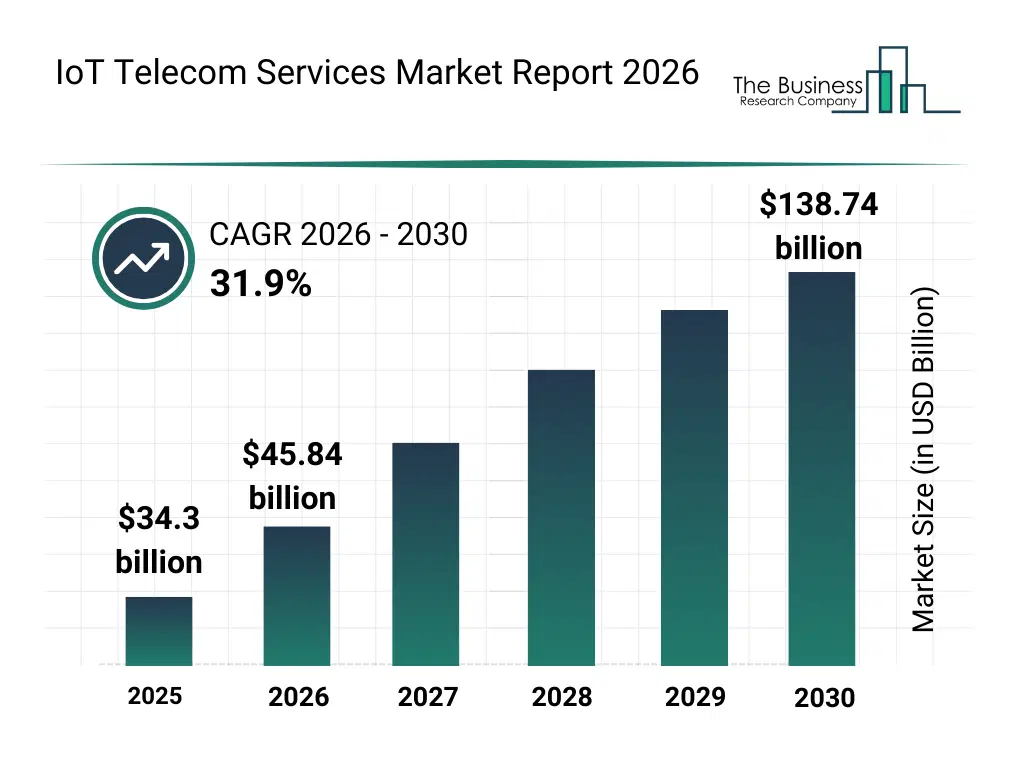
What Is The IoT Telecom Services Market Size and Share 2026?
The iot telecom services market size has grown exponentially in recent years. It will grow from $34.3 billion in 2025 to $45.84 billion in 2026 at a compound annual growth rate (CAGR) of 33.6%. The growth in the historic period can be attributed to early adoption of M2M connectivity, growth of telecom infrastructure, rising digital connectivity needs, expansion of enterprise automation, increasing remote monitoring requirements.What Is The IoT Telecom Services Market Growth Forecast?
The iot telecom services market size is expected to see exponential growth in the next few years. It will grow to $138.74 billion in 2030 at a compound annual growth rate (CAGR) of 31.9%. The growth in the forecast period can be attributed to growing need for secure and reliable connectivity, expansion of industrial IoT applications, rising demand for network performance optimization, increasing investments in smart infrastructure, continued shift toward cloud based telecom services. Major trends in the forecast period include increasing adoption of remote asset monitoring, growing demand for cloud connected telecom infrastructure, rising focus on network intelligence and optimization, expansion of smart connectivity solutions for enterprises, increasing use of subscription based IoT telecom models.
Global IoT Telecom Services Market Segmentation
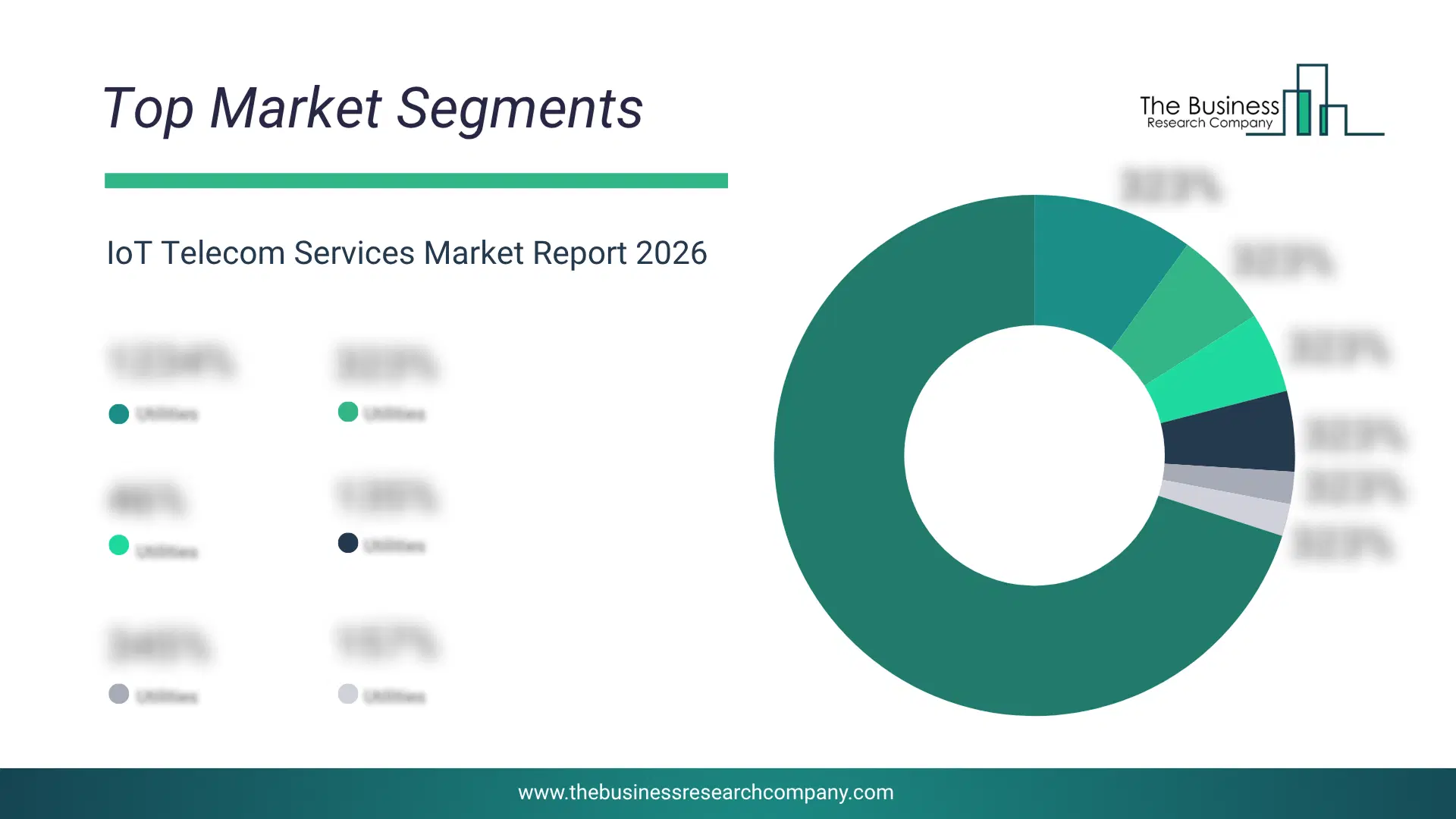
1) By Service Type: Business Consulting Services, Device And Application Management Services, Installation And Integration Services, IoT Billing And Subscription Management, M2M Billing Management 2) By Connectivity: Cellular Technologies, LPWAN, NB-IoT, Radio Frequency-Based 3) By Network Management Solution: Network Performance Monitoring And Optimization, Network Traffic Management, Network Security Management 4) By Application: Smart Building And Home Automation, Capillary Networks Management, Industrial Manufacturing And Automation, Energy And Utilities, Smart Healthcare, Other Applications Subsegments: 1) By Business Consulting Services: Strategy Development, Market Analysis, Technology Assessment 2) By Device And Application Management Services: Device Provisioning, Application Monitoring, Performance Management 3) By Installation And Integration Services: On-Site Installation, System Integration, Configuration Services 4) By IoT Billing And Subscription Management: Billing System Setup, Subscription Lifecycle Management, Revenue Assurance 5) By M2M Billing Management: Usage-Based Billing, Multi-Account Billing, Reporting And Analytics The top segments in the iot telecom services market will be: • Network Performance Monitoring And Optimization will reach $51835.15 Million by 2030. • Cellular Technologies will reach $48983.46 Million by 2030. • Network Traffic Management will reach $39072.89 Million by 2030. • Device And Application Management Services will reach $48379.9 Million by 2030. • Industrial Manufacturing And Automation will reach $27804.34 Million by 2030.What Is The Driver Of The IoT Telecom Services Market?
Rising adoption of 5G networks is expected to propel the growth of the IoT telecom services market going forward. 5G refers to the fifth generation of mobile network technology, designed to deliver much faster data speeds, lower latency, and greater network capacity. 5G is surging due to growing demand for high-speed, reliable connectivity across mobile and internet-of-things devices. IoT telecom services support 5G networks by enabling seamless connectivity, real-time data exchange, and advanced device management across massive IoT ecosystems, allowing 5G’s high speed, low latency, and network-slicing capabilities to be fully leveraged for smarter and more efficient operations. For instance, in March 2025, according to 5G Americas, a US-based industry trade association for mobile communications companies across the Americas, in 2024, North America reached approximately 289 million 5G connections, representing a nearly 67% jump from the previous year’s total of about 196 million. Therefore, rising adoption of 5G networks is driving growth for the IoT telecom services industry.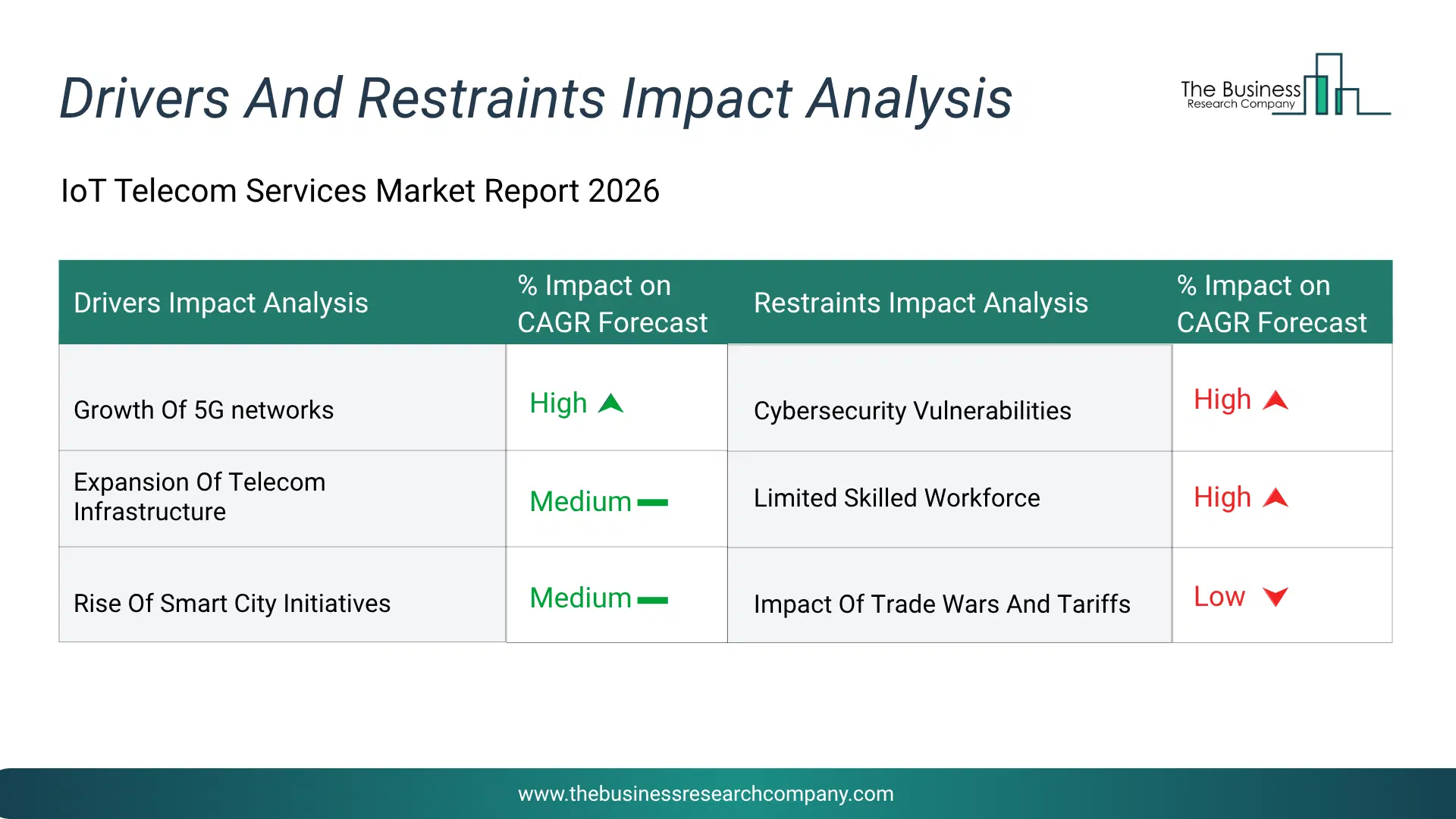
Infographic Chart Showing Key Market Drivers Analysis And Restraints For Iot Telecom Services Market
The chart presents an impact analysis of key drivers and restraints, quantifying their relative influence on the market's growth rate and helping assess the balance between growth enablers and limiting factors. This chart offers a high-level perspective; the full report contains more detailed insights.
How Will The Drivers Impact Growth In The Global IoT Telecom Services Market?
• Growth Of 5G networks (High) – During the forecast period, expansion of 5g networks is expected to propel the growth of the iot telecom services market in the forecast period. as governments and telecom operators continue to deploy advanced 5g infrastructure worldwide, there is a growing demand for high-speed, low-latency and reliable connectivity to support large-scale iot deployments. 5g networks enable faster data transmission, ultra-low latency communication and the ability to connect a massive number of devices simultaneously, making them well-suited for applications such as smart cities, autonomous vehicles, industrial automation and remote healthcare monitoring. these capabilities enhance real-time data processing, improve operational efficiency and support mission-critical iot applications. consequently, the rapid expansion of 5g connectivity is encouraging enterprises to adopt advanced iot telecom services for seamless device communication and data management. the expansion of 5g networks growth contribution during the forecast period in 2025 is 2.0%. • Expansion Of Telecom Infrastructure (Medium) – During the forecast period, expansion of telecom infrastructure is expected to propel the growth of the IoT telecom services market. Governments and telecommunications providers worldwide are significantly investing in the deployment of advanced network technologies such as 4G LTE, 5G, low-power wide-area networks (LPWAN) and satellite connectivity to support the increasing number of connected devices. These infrastructure developments enhance network coverage, improve data transmission speeds and enable reliable connectivity for IoT applications across industries such as smart cities, transportation, healthcare, agriculture and industrial automation. As telecom infrastructure expands, IoT devices can operate more efficiently in both urban and remote environments, enabling real-time data exchange and large-scale device management. Consequently, the ongoing expansion of telecom networks and connectivity technologies is encouraging enterprises to adopt IoT-based solutions, accelerating digital transformation and market demand for IoT telecom services. The expansion of telecom infrastructure growth contribution during the forecast period in 2025 is 1.5%. • Rise Of Smart City Initiatives (Medium) – During the forecast period, rise of smart city initiatives is expected to propel the growth of the iot telecom services market in the forecast period. governments and municipalities are increasingly investing in smart city infrastructure to improve urban mobility, public safety, energy efficiency and environmental monitoring. these initiatives rely on connected devices, sensors and communication networks to collect and transmit real-time data across systems such as smart traffic management, connected street lighting, waste management and public surveillance. iot telecom services provide the connectivity, device management and data communication capabilities required to support large-scale smart city deployments. consequently, the growing adoption of smart city projects is encouraging governments and enterprises to invest in robust iot telecom infrastructure, fueling market expansion. the rise of smart city initiatives growth contribution during the forecast period in 2025 is 1.0%. • Increasing Deployment Of LPWAN Technologies (Low) – During the forecast period, increasing deployment of LPWAN technologies is expected to propel the growth of the IoT telecom services market. As organizations increasingly deploy large-scale IoT devices across sectors such as smart cities, agriculture, utilities and logistics, there is a growing need for connectivity solutions that provide long-range communication with low power consumption and cost efficiency. LPWAN technologies such as NB-IoT, LTE-M and LoRaWAN enable IoT devices to transmit small amounts of data over long distances while operating on minimal battery power for extended periods. IoT telecom service providers integrate these technologies to support massive device connectivity, real-time monitoring and reliable communication across remote and urban environments. This enhances operational efficiency and supports large-scale IoT deployments. The increasing deployment of LPWAN technologies growth contribution during the forecast period in 2025 is 0.8%.How Will The Restraints Impact Growth In The Global IoT Telecom Services Market?
• Cybersecurity Vulnerabilities (High) – During the forecast period, cybersecurity vulnerabilities are expected to hinder the growth of the iot telecom services market in the forecast period. iot telecom services rely on interconnected networks of devices, sensors, gateways and communication platforms to transmit and manage large volumes of data. however, the rapid expansion of connected devices significantly increases the potential attack surface for cyber threats. many iot devices operate with limited processing power and are often deployed with weak authentication protocols, outdated firmware, or insufficient encryption mechanisms, making them vulnerable to hacking, malware attacks and unauthorized access. as a result, organizations must invest in advanced cybersecurity frameworks, device authentication technologies and continuous network monitoring, which increases operational complexity and deployment costs. growth affected by the cybersecurity vulnerabilities during the forecast period in 2025 is -2.5%. • Limited Skilled Workforce (Medium) – During the forecast period, limited skilled workforce is expected to restrain the growth of the iot telecom services market during the forecast period. iot telecom services require specialized expertise in areas such as cloud computing, network virtualization, cybersecurity, data analytics and iot device management. however, many telecom operators and technology providers face challenges in recruiting professionals with the necessary multidisciplinary skills to design, deploy and maintain complex iot connectivity solutions. the rapid evolution of technologies such as 5g, edge computing and ai-driven network management further increases the demand for highly trained engineers and system architects. in addition, the gap between academic training and industry requirements limits the availability of job-ready professionals, which can slow innovation and delay large-scale iot deployments. as organizations struggle to build and retain a skilled workforce capable of managing advanced telecom and iot ecosystems, operational inefficiencies and higher implementation costs may arise. growth affected by the limited skilled workforce during the forecast period in 2025 is -2.0%. • Impact Of Trade Wars And Tariffs (Medium) – During the forecast period, trade wars and tariffs are expected to restrain the growth of the iot telecom services market during the forecast period by increasing the cost of telecom infrastructure, network hardware and iot connectivity equipment used for device deployment and communication. iot telecom service providers rely heavily on imported components such as cellular modules, antennas, networking routers, gateways, semiconductor chips and base station equipment. when governments impose tariffs or trade restrictions on these imported technologies, procurement costs increase and supply chains become more complex. this can delay the rollout of iot-enabled connectivity services, including 5g iot networks, nb-iot platforms and large-scale device management solutions. higher infrastructure costs may also force telecom operators and service providers to raise service prices or postpone investment in iot connectivity expansion projects. as a result, enterprises may slow down iot adoption due to higher deployment costs and uncertain supply availability, which can limit the overall growth of the iot telecom services market. growth affected by the trade wars and tariffs during the forecast period in 2025 is -0.3%.Key Players In The Global IoT Telecom Services Market
Major companies operating in the iot telecom services market report are AT&T Intellectual Property, Verizon Communications Inc., Deutsche Telekom AG, Huawei Technologies Co. Ltd., Aeris Communications, Microsoft Corporation, Amazon Web Services Inc., International Business Machines Corporation, Cisco Systems Inc., Oracle Corporation, PTC Inc., Spectrum Enterprise, Samsara Networks Inc., Sierra Wireless Inc., GE Digital LLC, Telit Communications plc, Bosch IoT Sensor Company, SAP SE, Andersen Inc., ScienceSoft USA Corporation, Vention Inc., Altoros Americas LLC, Oxagile LLC, SumatoSoft LLC, Innowise Group LLC, Style Lab IoT Software Company, HQ Software Industrial IoT Company, ARM IoT Security Company, Siemens IoT Analytics Company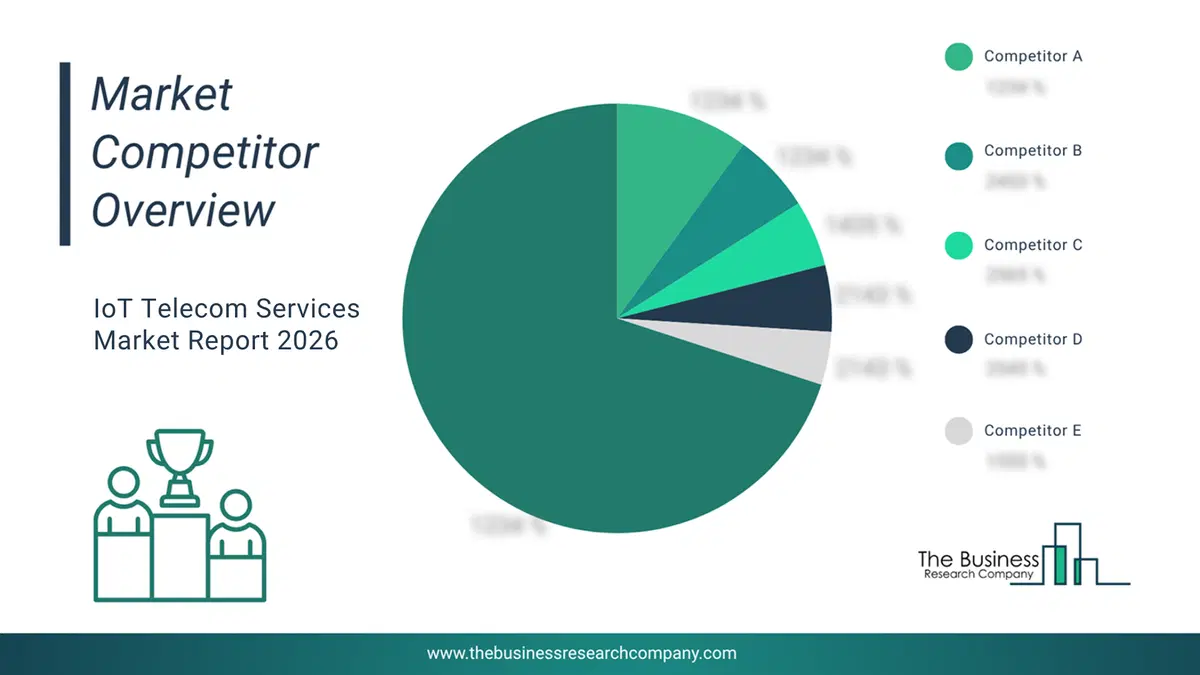
This chart is for illustrative purposes; the full report includes a detailed competitor analysis and comprehensive overview of the top 10 companies in the market.
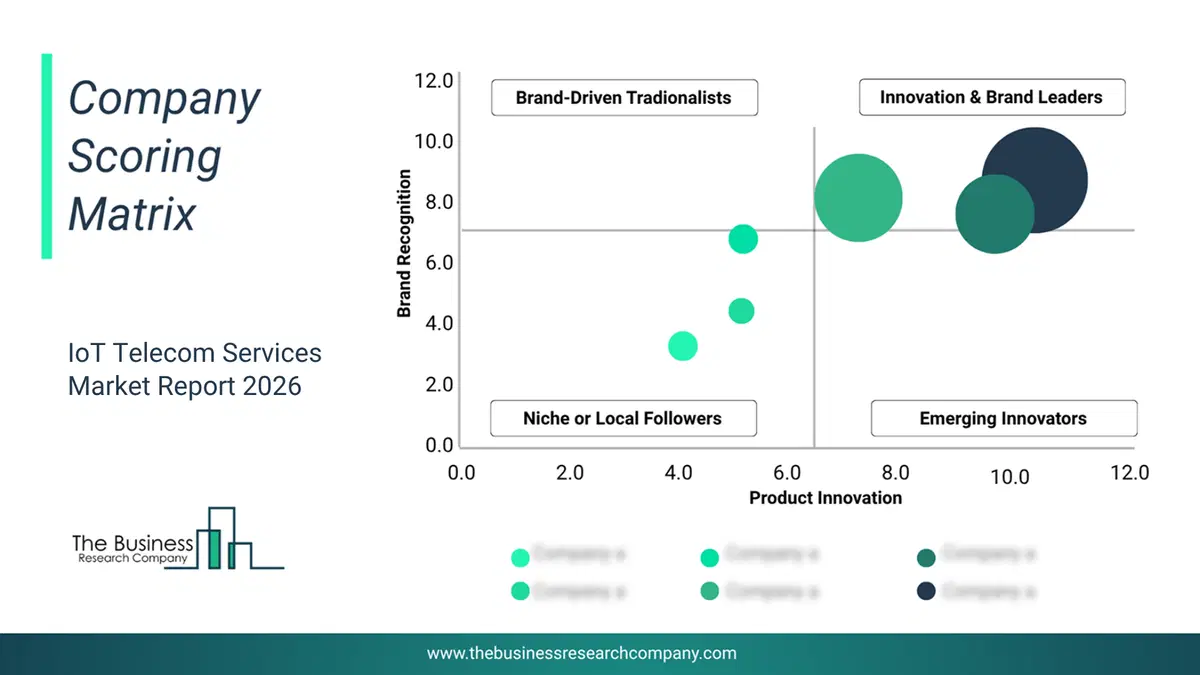
This chart maps companies by product innovation and brand strength, with bubble size indicating relative revenue, helping identify market leaders, challengers, and niche players. This is an illustrative chart; the full report provides a complete and accurate competitive analysis.
Global IoT Telecom Services Market Trends and Insights
Major companies operating in the IoT telecom services market are focusing on integrating advanced technology such as artificial intelligence (AI) to enhance reliability, monitoring and operational efficiency. Artificial intelligence is a technology that uses machine-learning algorithms to analyze data and detect patterns in real time enabling capabilities such as real-time anomaly detection and proactive service monitoring. For instance, in December 2024 Vodafone Group Plc., a UK-based telecommunications company, launched Vodafone Business IoT AI-powered anomaly detection tool, an AI-based service designed to monitor IoT connectivity and network performance across its global infrastructure, featuring rapid detection of service anomalies, early alerts to potential connectivity disruptions and coverage across more than 180 countries. Vodafone Business IoT AI-powered anomaly detection tool improves reliability of IoT connectivity, reduces fault detection time and strengthens service monitoring and operational efficiency.What Are Latest Mergers And Acquisitions In The IoT Telecom Services Market?
In January 2023, Semtech Corporation, a US-based semiconductor and mixed-signal technology company, acquired Sierra Wireless for approximately US $1.2 billion. With this acquisition Semtech aimed to enhance its IoT capabilities by integrating Sierra Wireless’s cellular connectivity, device hardware, and cloud management solutions to deliver a more comprehensive and scalable end-to-end IoT portfolio. Sierra Wireless Inc. is a Canada-based technology company that specializes in providing cellular IoT modules, gateways, routers, and managed connectivity services that enable reliable device-to-cloud communication for enterprises across multiple industries.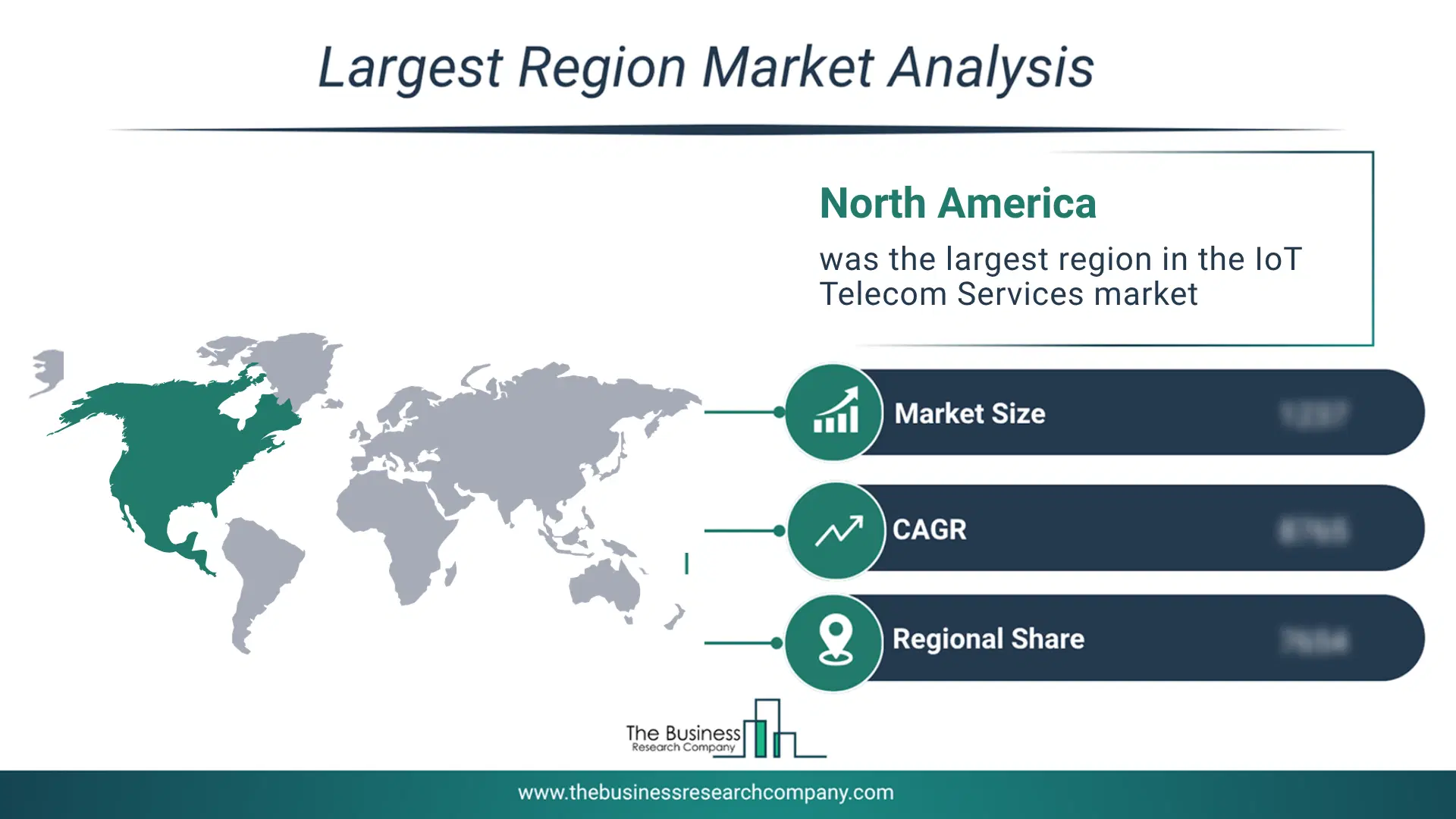
Regional Outlook
North America was the largest region in the IoT telecom services market in 2025. The regions covered in this market report are Asia-Pacific, South East Asia, Western Europe, Eastern Europe, North America, South America, Middle East, Africa. The countries covered in this market report are Australia, Brazil, China, France, Germany, India, Indonesia, Japan, Taiwan, Russia, South Korea, UK, USA, Canada, Italy, SpainWhat Defines the IoT Telecom Services Market?
The IoT telecom services market includes revenues earned by entities by providing services such as IoT connectivity services, data storage and management, asset monitoring, and PaaS and SaaS solutions. The market value includes the value of related goods sold by the service provider or included within the service offering. Only goods and services traded between entities or sold to end consumers are included.How is Market Value Defined and Measured?
The market value is defined as the revenues that enterprises gain from the sale of goods and/or services within the specified market and geography through sales, grants, or donations in terms of the currency (in USD unless otherwise specified). The revenues for a specified geography are consumption values that are revenues generated by organizations in the specified geography within the market, irrespective of where they are produced. It does not include revenues from resales along the supply chain, either further along the supply chain or as part of other products.
This chart presents market attractiveness based on a quantitative evaluation of growth, competition, strategic alignment, and risk, offering a clear view of opportunity areas for decision-making. This chart is for illustrative purposes; the full report contains the complete analysis.

This chart highlights the Total Addressable Market (TAM) by estimating the maximum revenue opportunity using an assumption-driven approach, supporting strategic planning and opportunity sizing across markets. The chart is illustrative; the full report provides a more comprehensive analysis.
What Key Data and Analysis Are Included in the IoT Telecom Services Market Report 2026?
The iot telecom services market research report is one of a series of new reports from The Business Research Company that provides market statistics, including industry global market size, regional shares, competitors with the market share, detailed market segments, market trends and opportunities, and any further data you may need to thrive in the iot telecom services industry. The market research report delivers a complete perspective of everything you need, with an in-depth analysis of the current and future state of the industry.IoT Telecom Services Market Report Forecast Analysis
| Report Attribute | Details |
|---|---|
| Market Size Value In 2026 | $45.84 billion |
| Revenue Forecast In 2030 | $138.74 billion |
| Growth Rate | CAGR of 33.6% from 2026 to 2030 |
| Base Year For Estimation | 2025 |
| Actual Estimates/Historical Data | 2020-2025 |
| Forecast Period | 2026 - 2030 - 2035 |
| Market Representation | Revenue in USD Billion and CAGR from 2026 to 2030 |
| Segments Covered | Service Type, Connectivity, Network Management Solution, Application |
| Regional Scope | Asia-Pacific, Western Europe, Eastern Europe, North America, South America, Middle East, Africa |
| Country Scope | The countries covered in the report are Australia, Brazil, China, France, Germany, India, Indonesia, Japan, Taiwan, Russia, South Korea, UK, USA, Canada, Italy, Spain. |
| Key Companies Profiled | AT&T Intellectual Property, Verizon Communications Inc., Deutsche Telekom AG, Huawei Technologies Co. Ltd., Aeris Communications, Microsoft Corporation, Amazon Web Services Inc., International Business Machines Corporation, Cisco Systems Inc., Oracle Corporation, PTC Inc., Spectrum Enterprise, Samsara Networks Inc., Sierra Wireless Inc., GE Digital LLC, Telit Communications plc, Bosch IoT Sensor Company, SAP SE, Andersen Inc., ScienceSoft USA Corporation, Vention Inc., Altoros Americas LLC, Oxagile LLC, SumatoSoft LLC, Innowise Group LLC, Style Lab IoT Software Company, HQ Software Industrial IoT Company, ARM IoT Security Company, Siemens IoT Analytics Company |
| Customization Scope | Request for Customization |
| Pricing And Purchase Options | Explore Purchase Options |