
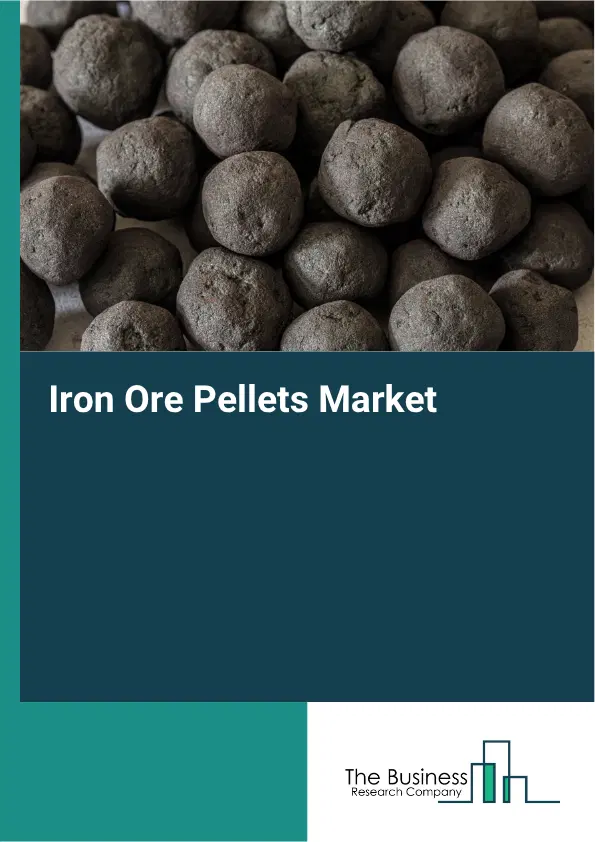
Iron Ore Pellets Global Market Opportunities And Strategies To 2035
By Product (Blast Furnace Iron Ore Pellet, Direct Reduced), By Technology (Oxygen-Based or Blast Furnace, Electric Induction Furnace, Electric Arc Furnace), By Application (Steel Production, Iron Based Chemicals, Other Applications), And By Region, Opportunities And Strategies – Global Forecast To 2035
Iron Ore Pellets Market Definition
Iron ore pellets are small, spherical agglomerates made by processing finely ground iron ore concentrate into uniform balls, typically ranging from 8 to 18 millimeters in diameter and then hardening them through a high-temperature induration process. These pellets are produced to improve the handling, transportation and metallurgical performance of iron ore during steelmaking. Their primary purpose is to serve as a high-grade, consistent and efficient feedstock for blast furnaces and direct reduced iron (DRI) plants. The iron ore pellets market consists of revenues generated by entities (organizations, sole traders and partnerships) that manufacture and sell iron ore pellets for ironmaking and steelmaking applications. Iron ore pellets are produced by concentrating iron ore fines, mixing them with binders and additives, forming green pellets and subsequently hardening them at high temperatures through induration. The pellets are used as an alternative to lump ore and sinter in steel production due to their superior physical and metallurgical characteristics. The market serves integrated steel producers, mini mills and direct reduced iron producers across various industrial sectors that depend on steel as a primary construction and manufacturing material.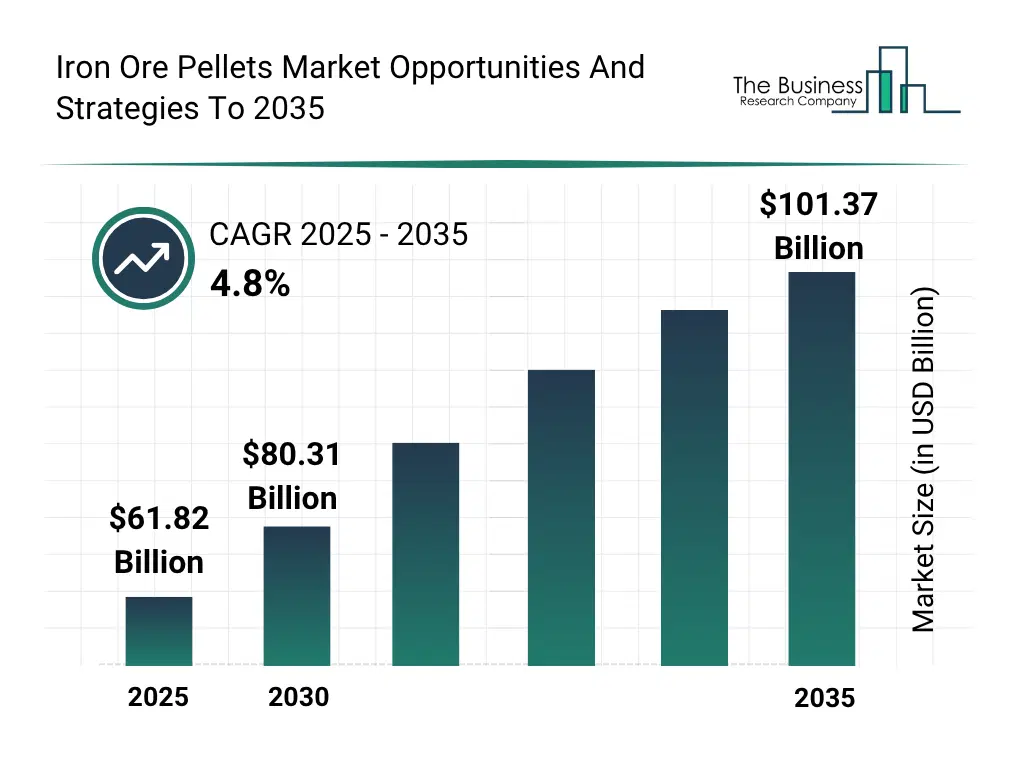
Iron Ore Pellets Market Size
The global iron ore pellets market reached a value of nearly $61,824.8 million in 2025, having grown at a compound annual growth rate (CAGR) of 5.7% since 2020. The market is expected to grow from $61,824.8 million in 2025 to $80,309.5 million in 2030 at a rate of 5.4%. The market is then expected to grow at a CAGR of 4.8% from 2030 and reach $101,374.4 million in 2035. Growth in the historic period resulted from rising global steel production, growing construction sector activity, growing investments in steel manufacturing capacity expansion and growing investments in pellet production facilities. Factors that negatively affected growth in the historic period were volatility in iron ore prices and fluctuations in steel production levels. Going forward, increasing focus on decarbonization of the steel industry, expansion of green steel projects worldwide, growing renewable energy infrastructure projects and rising adoption of direct reduced iron (DRI) production will drive the growth. Factors that could hinder the growth of the iron ore pellets market in the future include high capital requirements for pellet plant construction, supply chain and logistics constraints and impact of trade wars and tariffs.
Iron Ore Pellets Market Segmentation
The iron ore pellets market is segmented by product, by technology and by application.By Product –
The iron ore pellets market is segmented by product into:
- a) Blast Furnace Iron Ore Pellet
- b) Direct Reduced
By Technology –
The iron ore pellets market is segmented by technology into:
- a) Oxygen Based/Blast Furnace
- b) Electric Arc Furnace
- c) Electric Induction Furnace
By Application –
The iron ore pellets market is segmented by application into:
- a) Steel Production
- b) Iron Based Chemicals
- c) Other Applications
By Geography - The iron ore pellets market is segmented by geography into:
- China
- India
- Japan
- Australia
- Taiwan
- South Korea
- Indonesia
- USA
- Canada
- Brazil
- France
- Germany
- UK
- Italy
- Spain
- Russia
-
o Asia Pacific
o Africa