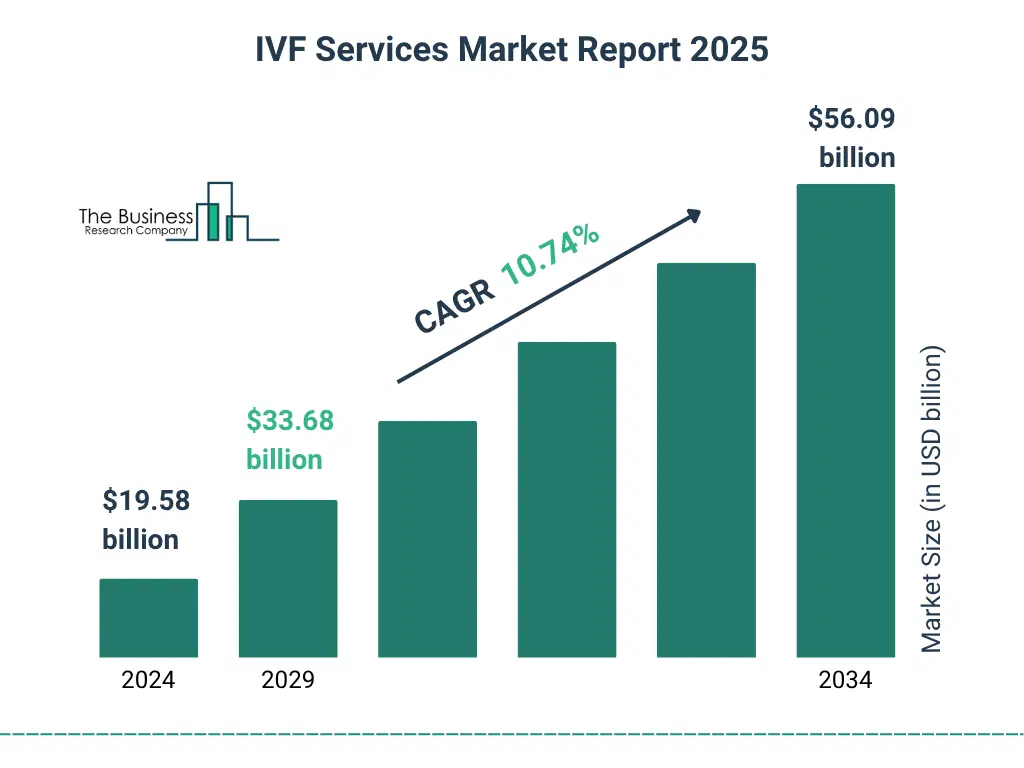
IVF services Market Trends
Major trends shaping the IVF services market include:
Expanding Fertility Access Through Strategic Partnerships In Regional Markets
Major companies operating in the in vitro fertilization (IVF) services market are focusing on strategic partnerships to expand their geographic reach, enhance service offerings and integrate advanced technologies. These collaborations enable providers to deliver more personalized and efficient fertility care while tapping into underserved regional markets. For example, in August 2024, Jindal IVF, an India-based fertility clinic, partnered with Mandav Hospital, an India-based hospital to expand its fertility services to Mandi, Himachal Pradesh. This collaboration aims to provide advanced reproductive healthcare to the local community, leveraging Jindal IVF's expertise in assisted reproductive technologies. By establishing a presence in Mandi, Jindal IVF continues its mission to make fertility treatments more accessible across Northern India. Moreover, in March 2024, Alife Health, a US-based fertility technology company, partnered with Boston IVF, a US-based fertility center, to pilot the country's first AI tool for IVF medication optimization. Boston IVF will implement Alife's Stim Assist software, which is designed to help IVF clinicians retrieve the optimal number of eggs for each patient and reduce overall medication costs. This collaboration aims to enhance IVF treatment protocols and improve success rates. Additionally, For example, in July 2023, Ivy Fertility Network, a US-based network of fertility clinics, expanded its partnership with TMRW Life Sciences, a US-based biotechnology company specializing in the automation and digitization of in vitro fertilization (IVF) laboratories, to implement TMRW's automated platform for specimen management across all 13 of its clinics in the United States. This technology reduces potential points of failure by 94% compared to manual systems, providing enhanced security and peace of mind to patients.
Advancing Embryo Selection with Whole Genome Sequencing in IVF Services
Major companies operating in the in vitro fertilization (IVF) services market are focusing on developing whole genome sequencing tests to enhance embryo selection and improve the success rates of IVF procedures. These advancements aim to minimize the risk of genetic disorders, ensuring better long-term health outcomes for both the child and the parents. For example, in January 2024, Orchid Health, a US-based clinic, offering personalized care in fertility and sexual health, launched whole genome sequencing (WGS) test for preimplantation embryos. This test sequences over 99% of an embryo's genome, a significant advancement compared to traditional preimplantation genetic testing (PGT) methods that analyze less than 1% of the genome. By providing a comprehensive genetic profile, the test enables prospective parents undergoing vitro fertilization (IVF) to identify potential risks for a wide range of genetic conditions, including neurodevelopmental disorders, congenital anomalies and various cancers, before embryo implantation.