
Janus Kinases (JAKs) Inhibitor Drug Market Report 2026
Global Outlook – By Type (JAK1 Inhibitor, JAK2 Inhibitor, JAK3 Inhibitor, Other Types), By Drug Type (Selective JAK Inhibitors, Non-Selective JAK Inhibitors, Oral JAK Inhibitors, Other Drug Types), By Route of Administration (Oral, Injectable, Topical), By Application (Rheumatoid Arthritis, Psoriatic Arthritis, Inflammatory Bowel Disease, Atopic Dermatitis, Ulcerative Colitis), By End User (Hospitals, Homecare, Specialty Clinics, Other End Users) – Market Size, Trends, Strategies, and Forecast to 2030
Janus Kinases (JAKs) Inhibitor Drug Market Overview
• Janus Kinases (JAKs) Inhibitor Drug market size has reached to $6.42 billion in 2025 • Expected to grow to $11.04 billion in 2030 at a compound annual growth rate (CAGR) of 11.4% • Growth Driver: Surge In Autoimmune Disease Prevalence Driving The Growth Of The Market Due To Increasing Hospitalization And Genetic Factors • Market Trend: Oral JAK Inhibitor RINVOQ Approved For Treating Giant Cell Arteritis • North America was the largest region in 2025.What Is Covered Under Janus Kinases (JAKs) Inhibitor Drug Market?
Janus kinase (JAK) inhibitor drugs are medications that block the activity of Janus kinases, enzymes involved in the signaling pathways that regulate immune responses and inflammation. These drugs help reduce excessive immune activity, making them useful in treating autoimmune diseases and certain inflammatory conditions. The main types of Janus kinase (JAK) inhibitor drugs are JAK1 inhibitors, JAK2 inhibitors, JAK3 inhibitors, and others. A JAK1 inhibitor is a type of drug that selectively blocks the JAK1 enzyme, which plays a key role in immune cell signaling, to treat autoimmune and inflammatory conditions. It includes various drug types such as selective JAK inhibitors, non-selective JAK inhibitors, oral JAK inhibitors, and others, and they are administered orally, injectably, or topically. It finds application in rheumatoid arthritis, psoriatic arthritis, inflammatory bowel disease, atopic dermatitis, and ulcerative colitis, catering to diverse end users including hospitals, home care, specialty clinics, and others.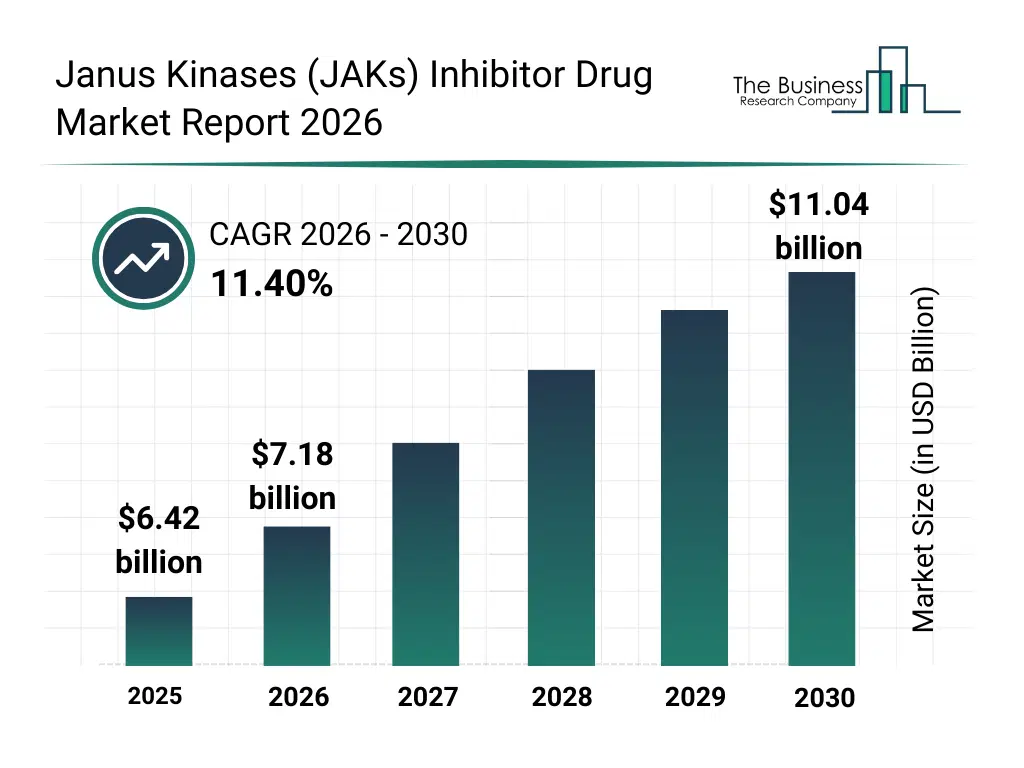
What Is The Janus Kinases (JAKs) Inhibitor Drug Market Size and Share 2026?
The janus kinases (jaks) inhibitor drug market size has grown rapidly in recent years. It will grow from $6.42 billion in 2025 to $7.18 billion in 2026 at a compound annual growth rate (CAGR) of 11.7%. The growth in the historic period can be attributed to increasing autoimmune disease prevalence, limitations of biologic therapies, hospital-based immunology treatments, early clinical success of jak inhibitors, demand for oral anti-inflammatory drugs.What Is The Janus Kinases (JAKs) Inhibitor Drug Market Growth Forecast?
The janus kinases (jaks) inhibitor drug market size is expected to see rapid growth in the next few years. It will grow to $11.04 billion in 2030 at a compound annual growth rate (CAGR) of 11.4%. The growth in the forecast period can be attributed to pipeline expansion of selective jak inhibitors, broader dermatology and gastroenterology applications, precision immune modulation demand, outpatient autoimmune disease management, favorable regulatory pathways for small molecules. Major trends in the forecast period include expanding use of JAK inhibitors in autoimmune disorders, rising preference for oral small molecule immunotherapies, increased adoption of selective JAK1 inhibitors, growing focus on long-term safety profiling, expansion of JAK inhibitors beyond rheumatology.
Global Janus Kinases (JAKs) Inhibitor Drug Market Segmentation
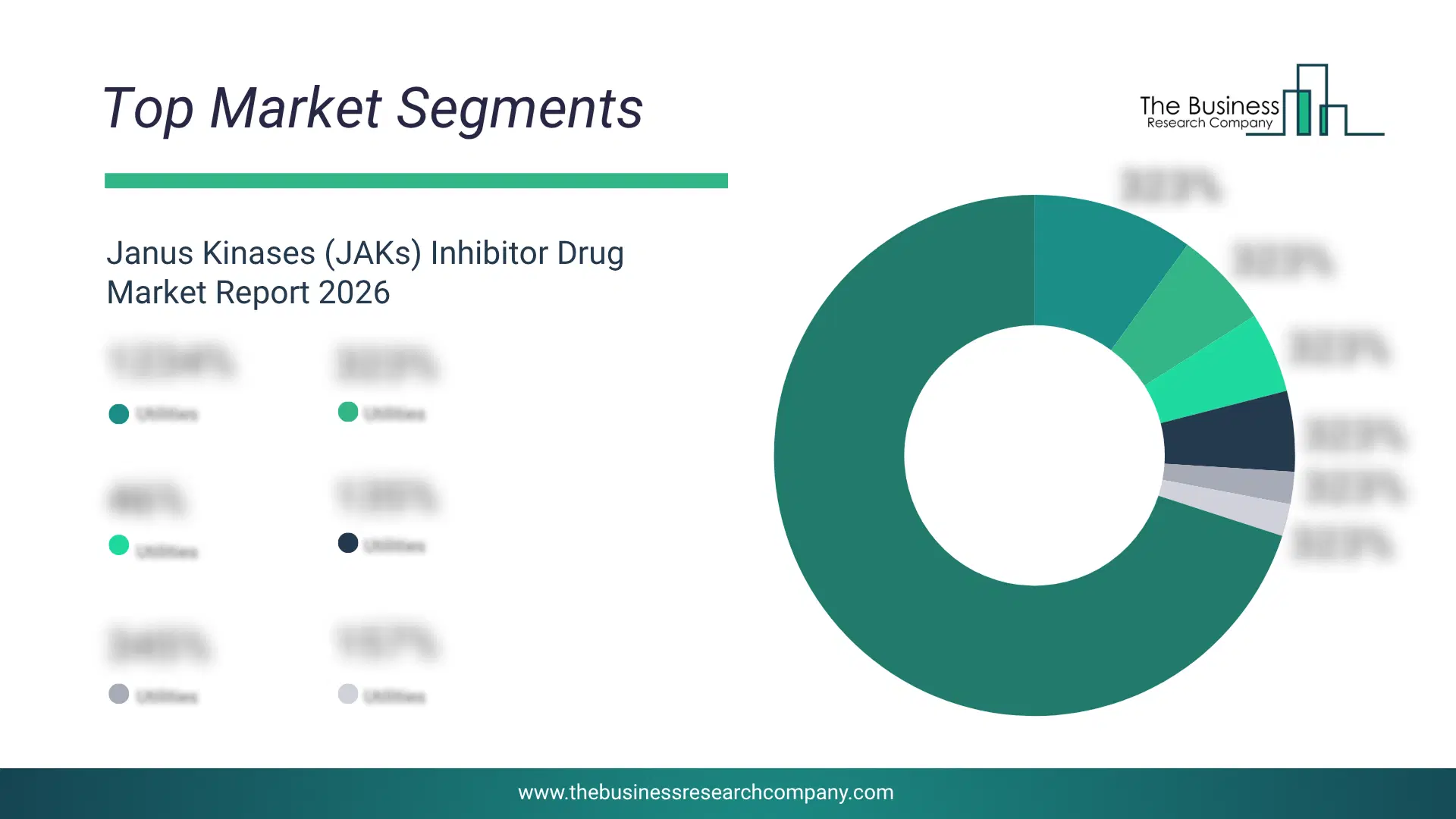
1) By Type: JAK1 Inhibitor, JAK2 Inhibitor, JAK3 Inhibitor, Other Types 2) By Drug Type: Selective JAK Inhibitors, Non-Selective JAK Inhibitors, Oral JAK Inhibitors, Other Drug Types 3) By Route of Administration: Oral, Injectable, Topical 4) By Application: Rheumatoid Arthritis, Psoriatic Arthritis, Inflammatory Bowel Disease, Atopic Dermatitis, Ulcerative Colitis 5) By End User: Hospitals, Homecare, Specialty Clinics, Other End Users Subsegments: 1) By JAK1 Inhibitor: Filgotinib, Upadacitinib, Itacitinib, Abrocitinib, Brepocitinib 2) By JAK2 Inhibitor: Fedratinib, Pacritinib, Momelotinib, Gandotinib, NS-018 3) By JAK3 Inhibitor: Tofacitinib, PF-06651600, Ritlecitinib 4) By Other Types: Baricitinib, Ruxolitinib, Oclacitinib, Delgocitinib, PeficitinibWhat Is The Driver Of The Janus Kinases (JAKs) Inhibitor Drug Market?
The rising prevalence of autoimmune diseases is expected to propel the growth of the janus kinases JAKs inhibitor drug market going forward. Autoimmune diseases are conditions where the immune system mistakenly attacks the body's healthy cells and tissues. The increasing prevalence of autoimmune diseases is due to genetic factors, as certain genetic predispositions can make individuals more susceptible to immune system dysfunction. Janus kinase (JAK) inhibitors are useful for autoimmune diseases to target and block specific enzymes involved in the immune response, reducing inflammation and preventing the immune system from attacking the body's tissues. For instance, in February 2024, according to the Arthritis Australia, an Australia-based non-profit organization, in 2025, it is estimated that 562,378 people in Australia will have rheumatoid arthritis (RA), accounting for 14% of the total arthritis population. By 2040, the number of Australians with RA is projected to rise by 33%, reaching 748,721 individuals. This represents an increase of 186,343 people living with RA compared to 2025. Therefore, the rising prevalence of autoimmune diseases drives the growth of the janus kinases JAKs inhibitor drug market.Key Players In The Global Janus Kinases (JAKs) Inhibitor Drug Market
Major companies operating in the janus kinases (jaks) inhibitor drug market are Novartis AG, Roche Holding AG, LEO Pharma A/S, Mitsubishi Tanabe Pharma Corporation, Sun Pharmaceutical Industries Ltd., Dr. Reddy’s Laboratories Ltd., Cipla Ltd., Glenmark Pharmaceuticals Ltd., Lupin Limited, Torrent Pharmaceuticals Ltd., Zydus Lifesciences Ltd., Almirall S.A., Kyowa Kirin Co. Ltd., Chugai Pharmaceutical Co. Ltd., Abbisko Therapeutics Co. Ltd., Concert Pharmaceuticals Inc., Jiangsu Hengrui Pharmaceuticals Co. Ltd., BioCryst Pharmaceuticals Inc., Priovant Therapeutics Ltd., Aclaris Therapeutics Inc.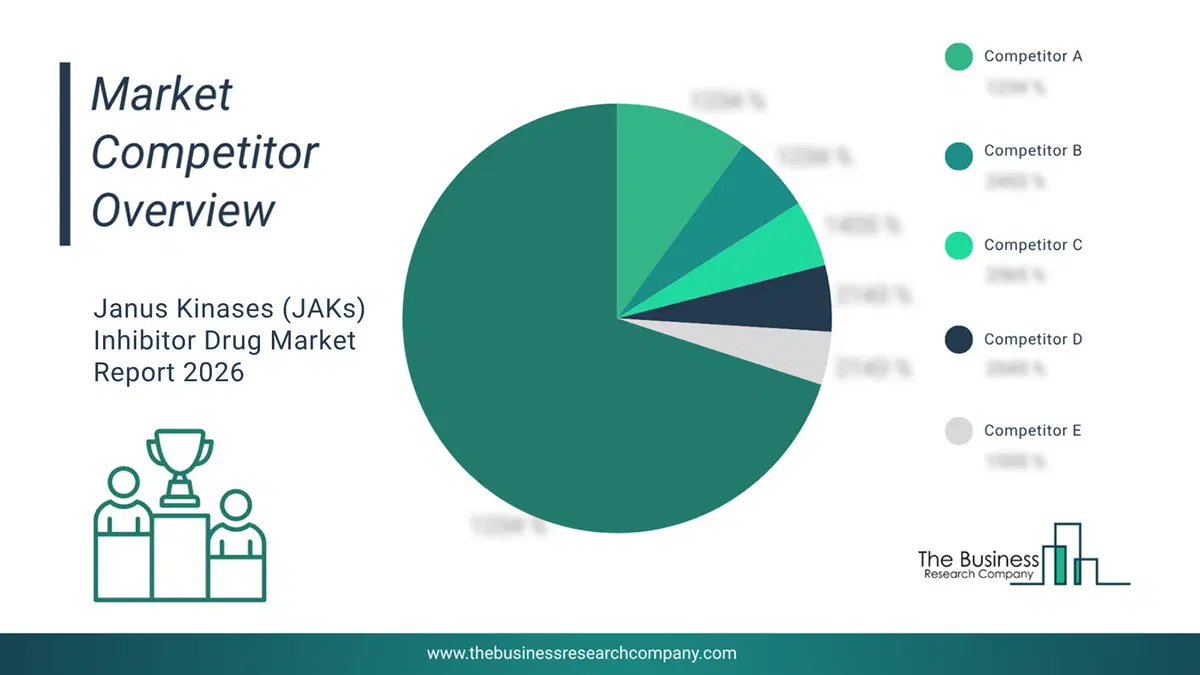
This chart is for illustrative purposes; the full report includes a detailed competitor analysis and comprehensive overview of the top 10 companies in the market.
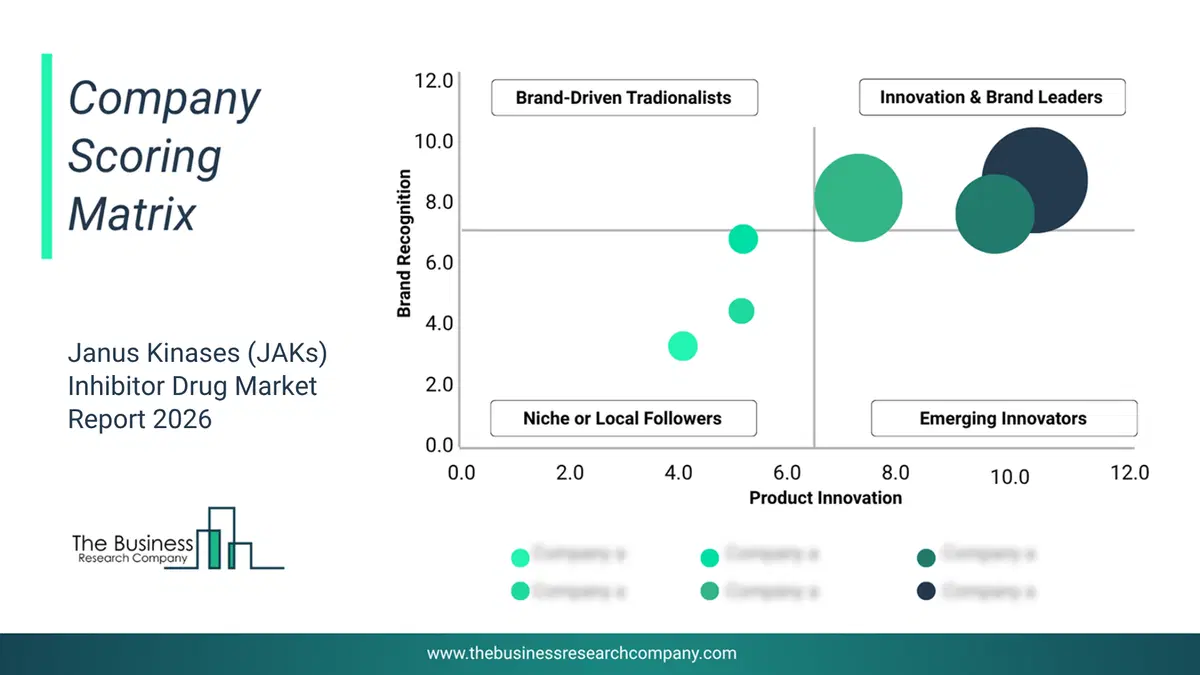
This chart maps companies by product innovation and brand strength, with bubble size indicating relative revenue, helping identify market leaders, challengers, and niche players. This is an illustrative chart; the full report provides a complete and accurate competitive analysis.
Global Janus Kinases (JAKs) Inhibitor Drug Market Trends and Insights
Major companies operating in the janus kinases (JAKs) inhibitor drug market are focusing on obtaining regulatory approvals to expand their therapeutic indications, accelerate market entry, and gain a competitive edge. Regulatory approvals refer to official authorizations granted by health authorities that allow pharmaceutical companies to market and sell a drug after demonstrating its safety and efficacy for specific medical conditions. For instance, in April 2025, AbbVie Inc., a US-based biopharmaceutical company, received Food and Drug Administration (FDA) approval for RINVOQ (upadacitinib), an oral Janus kinase (JAK) inhibitor, for the treatment of adults with giant cell arteritis (GCA). This targets JAK1 and upadacitinib and disrupts the JAK-STAT signaling pathway, critical for transmitting signals from pro-inflammatory cytokines involved in immune-mediated and inflammatory diseases. The approval offers a valuable new treatment option that can help reduce reliance on glucocorticoids associated with significant side effects, thereby addressing a critical unmet need in GCA management and improving patient outcomes.What Are Latest Mergers And Acquisitions In The Janus Kinases (JAKs) Inhibitor Drug Market?
In January 2024, Alfasigma S.p.A., an Italy based pharmaceutical company, acquired the Jyseleca (filgotinib) business from Galapagos N.V. for up to $184 million (€170 million). With this acquisition, Alfasigma aims to bolster its specialized portfolio in the gastrointestinal and rheumatological areas while significantly expanding its European commercial footprint. Galapagos N.V. is a Belgium based biotechnology company focused on the discovery and development of small-molecule medicines with novel modes of action for inflammatory and fibrotic diseases.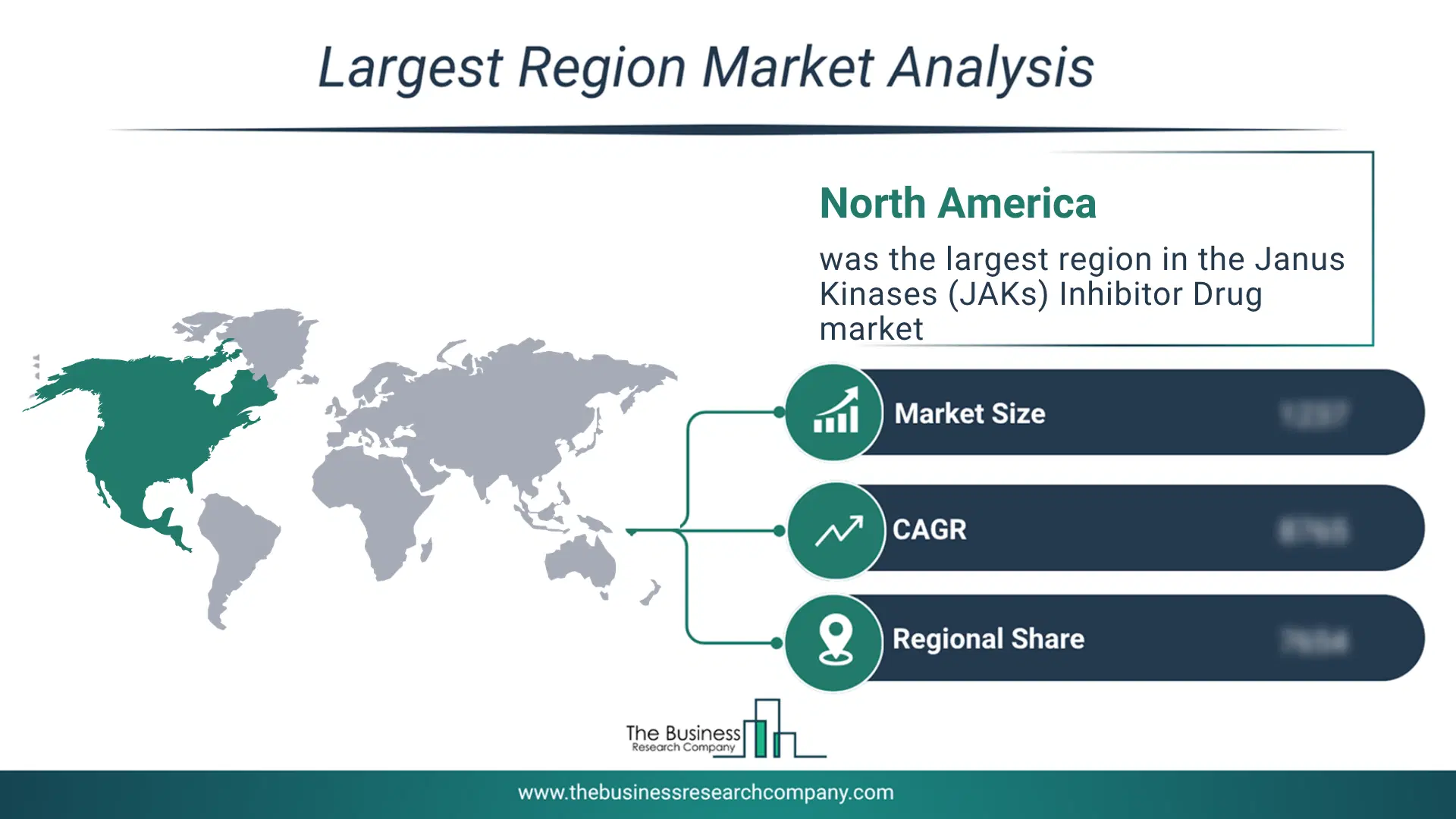
Regional Insights
North America was the largest region in the janus kinases (JAKs) inhibitor market in 2025. The regions covered in this market report are Asia-Pacific, South East Asia, Western Europe, Eastern Europe, North America, South America, Middle East, Africa. The countries covered in this market report are Australia, Brazil, China, France, Germany, India, Indonesia, Japan, Taiwan, Russia, South Korea, UK, USA, Canada, Italy, Spain.What Defines the Janus Kinases (JAKs) Inhibitor Drug Market?
The janus kinases (JAKs) inhibitor drug market consists of sales of oral tablets, oral capsules, topical formulations, injectable forms, and additional JAK inhibitors. Values in this market are ‘factory gate’ values, that is, the value of goods sold by the manufacturers or creators of the goods, whether to other entities (including downstream manufacturers, wholesalers, distributors, and retailers) or directly to end customers. The value of goods in this market includes related services sold by the creators of the goods.How is Market Value Defined and Measured?
The market value is defined as the revenues that enterprises gain from the sale of goods and/or services within the specified market and geography through sales, grants, or donations in terms of the currency (in USD unless otherwise specified). The revenues for a specified geography are consumption values that are revenues generated by organizations in the specified geography within the market, irrespective of where they are produced. It does not include revenues from resales along the supply chain, either further along the supply chain or as part of other products.
This chart presents market attractiveness based on a quantitative evaluation of growth, competition, strategic alignment, and risk, offering a clear view of opportunity areas for decision-making. This chart is for illustrative purposes; the full report contains the complete analysis.

This chart highlights the Total Addressable Market (TAM) by estimating the maximum revenue opportunity using an assumption-driven approach, supporting strategic planning and opportunity sizing across markets. The chart is illustrative; the full report provides a more comprehensive analysis.
What Key Data and Analysis Are Included in the Janus Kinases (JAKs) Inhibitor Drug Market Report 2026?
The janus kinases (jaks) inhibitor drug market research report is one of a series of new reports from The Business Research Company that provides market statistics, including industry global market size, regional shares, competitors with the market share, detailed market segments, market trends and opportunities, and any further data you may need to thrive in the janus kinases (jaks) inhibitor drug industry. The market research report delivers a complete perspective of everything you need, with an in-depth analysis of the current and future state of the industry.Janus Kinases (JAKs) Inhibitor Drug Market Report Forecast Analysis
| Report Attribute | Details |
|---|---|
| Market Size Value In 2026 | $7.18 billion |
| Revenue Forecast In 2030 | $11.04 billion |
| Growth Rate | CAGR of 11.7% from 2026 to 2030 |
| Base Year For Estimation | 2025 |
| Actual Estimates/Historical Data | 2020-2025 |
| Forecast Period | 2026 - 2030 |
| Market Representation | Revenue in USD Billion and CAGR from 2026 to 2030 |
| Segments Covered | Type, Drug Type, Route of Administration, Application, End User |
| Regional Scope | Asia-Pacific, Western Europe, Eastern Europe, North America, South America, Middle East, Africa |
| Country Scope | The countries covered in the report are Australia, Brazil, China, France, Germany, India, Indonesia, Japan, Taiwan, Russia, South Korea, UK, USA, Canada, Italy, Spain. |
| Key Companies Profiled | Novartis AG, Roche Holding AG, LEO Pharma A/S, Mitsubishi Tanabe Pharma Corporation, Sun Pharmaceutical Industries Ltd., Dr. Reddy’s Laboratories Ltd., Cipla Ltd., Glenmark Pharmaceuticals Ltd., Lupin Limited, Torrent Pharmaceuticals Ltd., Zydus Lifesciences Ltd., Almirall S.A., Kyowa Kirin Co. Ltd., Chugai Pharmaceutical Co. Ltd., Abbisko Therapeutics Co. Ltd., Concert Pharmaceuticals Inc., Jiangsu Hengrui Pharmaceuticals Co. Ltd., BioCryst Pharmaceuticals Inc., Priovant Therapeutics Ltd., Aclaris Therapeutics Inc. |
| Customization Scope | Request for Customization |
| Pricing And Purchase Options | Explore Purchase Options |