

Job Simulation Market Report 2026
Global Outlook – By Component (Software, Services), By Type (Cognitive Assessments, Behavioral Assessments, Technical Simulations, Situational Judgment Tests), By Deployment Mode (On-Premises, Cloud-Based, Hybrid), By Application (Recruitment, Training And Development, Assessment, Other Applications), By End-User (Banking Financial Services And Insurance, Healthcare, Retail, Information Technology And Telecommunications, Education, Other End-Users) – Market Size, Trends, Strategies, and Forecast to 2030
Job Simulation Market Overview
• Job Simulation market size has reached to $4.57 billion in 2025 • Expected to grow to $7.54 billion in 2030 at a compound annual growth rate (CAGR) of 10.6% • Growth Driver: Growing Adoption Of Hybrid Work Models Fueling The Growth Of The Market Due To Enhancing Employee Training And Workforce Adaptability • Market Trend: Virtual Job Simulators Provide Experiential Career Exploration • North America was the largest region in 2025 and Asia-Pacific is the fastest growing region.What Is Covered Under Job Simulation Market?
Job simulation is a training or assessment technique that replicates real-world job tasks and scenarios to evaluate an individual’s skills, decision-making, and performance in a controlled environment. The main purpose of job simulation is to prepare employees for actual work, assess candidate suitability during recruitment, and identify skill gaps for targeted training. It helps organizations improve workforce readiness, reduce onboarding time, and enhance overall productivity. The main components of job simulation include software and services. Software refers to platforms that facilitate the design, delivery, and evaluation of simulations and assessments to measure skills, behavior, and technical competence. They are classified into cognitive assessments, behavioral assessments, technical simulations, and situational judgment tests and are deployed through on-premises, cloud-based, and hybrid models. They find application in recruitment, training and development, assessment, and other applications, serving end users including banking financial services and insurance, healthcare, retail, information technology and telecommunications, education, and other end-users.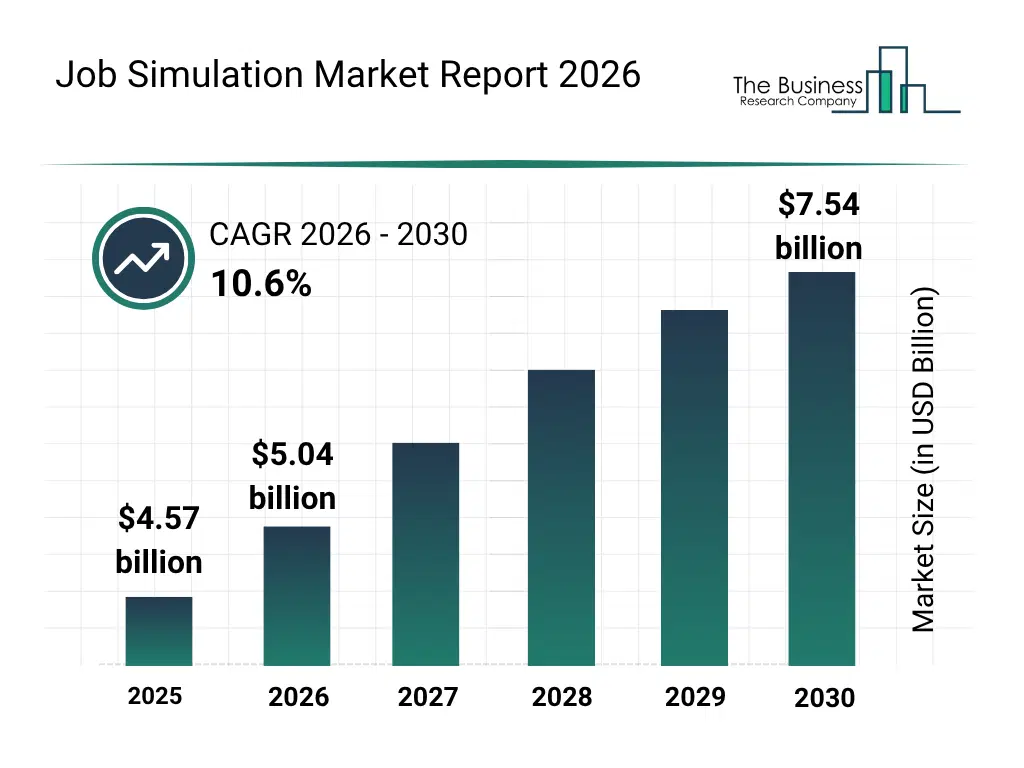
What Is The Job Simulation Market Size and Share 2026?
The job simulation market size has grown rapidly in recent years. It will grow from $4.57 billion in 2025 to $5.04 billion in 2026 at a compound annual growth rate (CAGR) of 10.4%. The growth in the historic period can be attributed to increasing focus on workforce skill development, growing adoption of digital recruitment platforms, rising demand for efficient onboarding processes, expansion of corporate training programs, increasing need for objective candidate assessment.What Is The Job Simulation Market Growth Forecast?
The job simulation market size is expected to see rapid growth in the next few years. It will grow to $7.54 billion in 2030 at a compound annual growth rate (CAGR) of 10.6%. The growth in the forecast period can be attributed to growing demand for remote workforce training solutions, increasing integration of immersive simulation technologies, rising adoption of data driven performance analytics, expanding use of gamified assessment tools, increasing investment in workforce upskilling initiatives. Major trends in the forecast period include increasing adoption of simulation based recruitment tools, rising demand for skill gap identification platforms, growing use of cloud based assessment solutions, expansion of technical and situational judgment simulations, rising integration of learning management systems with Simulation Software.
Global Job Simulation Market Segmentation
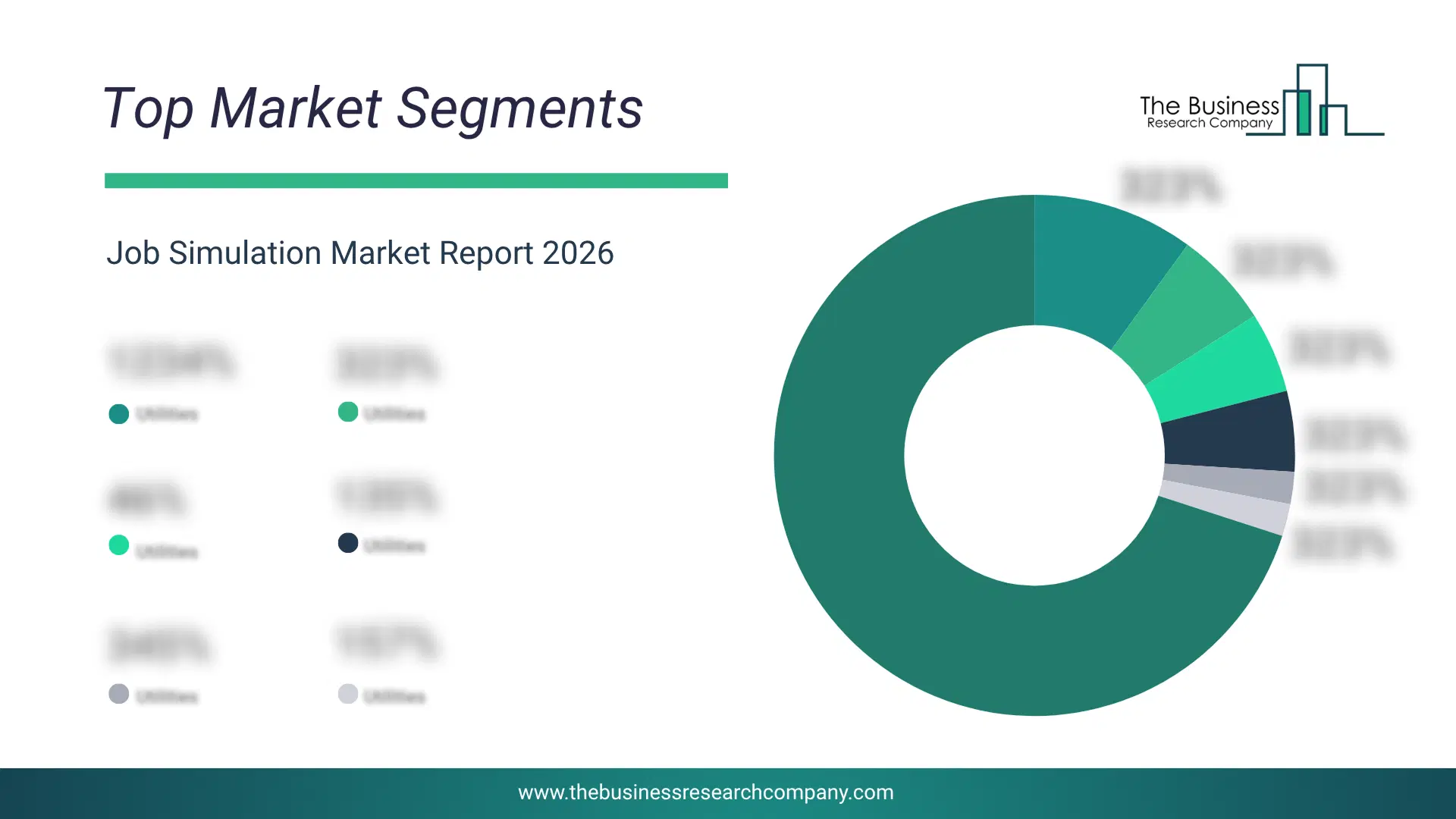
1) By Component: Software, Services 2) By Type: Cognitive Assessments, Behavioral Assessments, Technical Simulations, Situational Judgment Tests 3) By Deployment Mode: On-Premises, Cloud-Based, Hybrid 4) By Application: Recruitment, Training And Development, Assessment, Other Applications 5) By End-User: Banking Financial Services And Insurance, Healthcare, Retail, Information Technology And Telecommunications, Education, Other End-Users Subsegments: 1) By Software: Simulation Software, Assessment Software, Learning Management Software, Performance Evaluation Software 2) By Services: Implementation Services, Training And Support Services, Consulting Services, Maintenance ServicesWhat Is The Driver Of The Job Simulation Market?
The growing adoption of hybrid work models is expected to propel the growth of the job simulation market going forward. Hybrid work models refer to a flexible approach where employees divide their time between remote work and on-site office work. Hybrid work models are increasing due to employee demand for flexibility, as workers seek better work-life balance and the ability to reduce commuting time while maintaining productivity. Job simulation enhances hybrid work model adoption by providing realistic, technology-driven training and skill development experiences, making them ideal for preparing employees to work effectively in both remote and in-office settings. It reduces onboarding time and learning gaps while improving performance confidence and adaptability, enhancing overall workforce productivity and seamless hybrid collaboration. For instance, in June 2025, according to the Office for National Statistics, a UK-based government department, more than a quarter (28%) of working adults in Great Britain worked in a hybrid model between January and March 2025, with the share of hybrid workers steadily increasing since March 2022. Therefore, the growing adoption of hybrid work models is driving the growth of the job simulation industry.Key Players In The Global Job Simulation Market
Major companies operating in the job simulation market are SHL Group Ltd., HackerRank Inc., Mercer LLC, Criteria Corporation, Mursion Inc., Strivr Inc., iMocha Technologies Pvt. Ltd., Talview Inc., Codility Ltd., Zenarate Inc., Capsim Management Simulations Inc., Arctic Shores Ltd., Plum.io Inc., Vervoe Inc., Pymetrics Inc., TestGorilla B.V., Testlify Inc., HR Avatar Inc., Canditech Inc., and Coursevita Pvt. Ltd.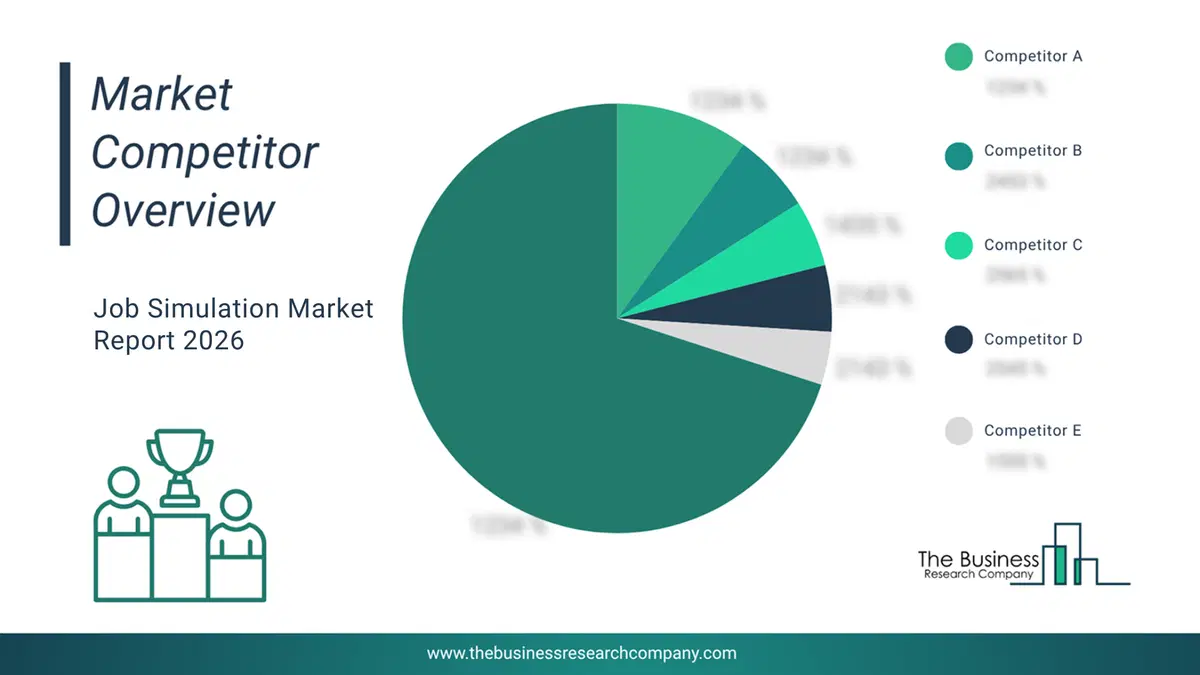
This chart is for illustrative purposes; the full report includes a detailed competitor analysis and comprehensive overview of the top 10 companies in the market.
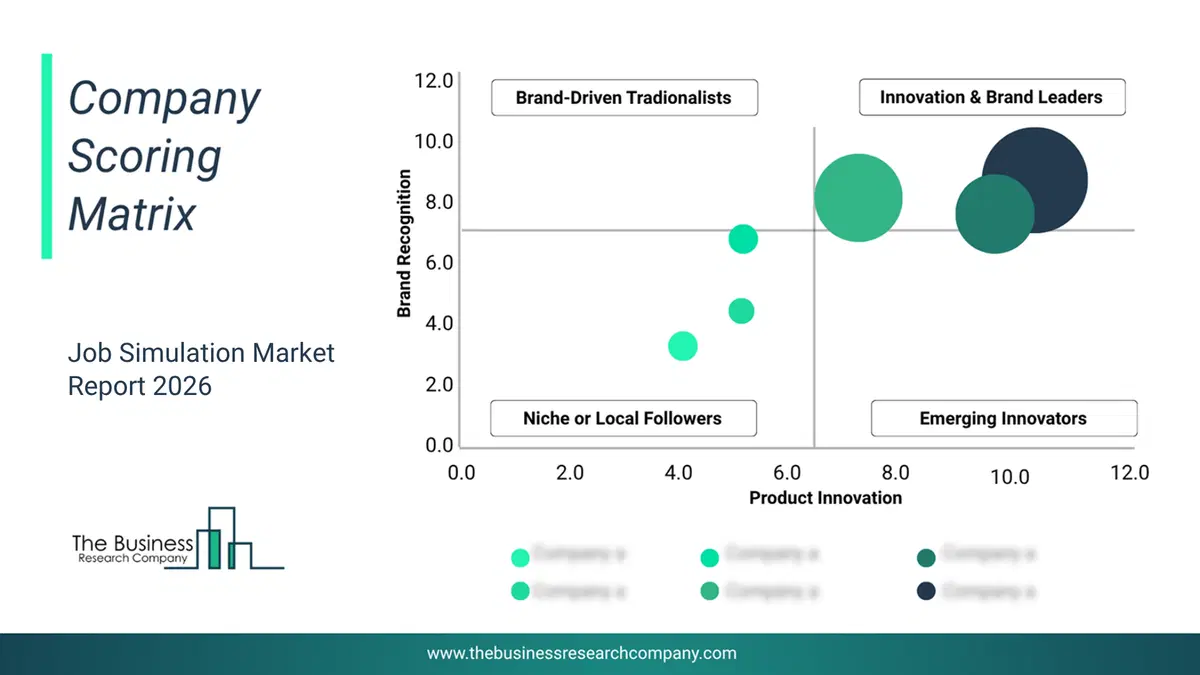
This chart maps companies by product innovation and brand strength, with bubble size indicating relative revenue, helping identify market leaders, challengers, and niche players. This is an illustrative chart; the full report provides a complete and accurate competitive analysis.
Global Job Simulation Market Trends and Insights
Major companies operating in the job simulation market are focusing on developing innovative solutions, such as virtual job experience simulators, to meet the rising demand for experiential career exploration, practical skills validation, and equitable access to professional exposure without requiring physical internships. Virtual job simulators are structured online platforms that guide participants through realistic assignments, casework, and scenario-based exercises reflective of actual job responsibilities, offering a scalable and accessible alternative to traditional in-person shadowing and internship programs. For instance, in March 2024, Browne Jacobson, a UK-based law firm, launched a free UK Law job simulation on the Forage platform. It is a self-paced, virtual work experience programme enabling aspiring barristers to step into the shoes of the firm's barrister team. It includes tasks such as conducting legal research, analysing documents, and providing written advice based on a theoretical client scenario involving a council. The programme features pre-recorded videos and worksheets, can be completed within approximately four hours, and provides a certificate of completion and personalised feedback.What Are Latest Mergers And Acquisitions In The Job Simulation Market?
In May 2023, HireVue Inc., a US-based human resources technology company, acquired Modern Hire Inc. for an undisclosed amount. With this acquisition, HireVue aimed to strengthen its position in the job simulation and virtual hiring market by integrating Modern Hire’s science-based assessments, automated interview simulations, and predictive analytics capabilities into its talent experience platform to enhance digital candidate evaluation and expand its enterprise customer base. Modern Hire, Inc. is a US-based human resources technology company providing job simulation, candidate assessment, and pre‑employment evaluation solutions.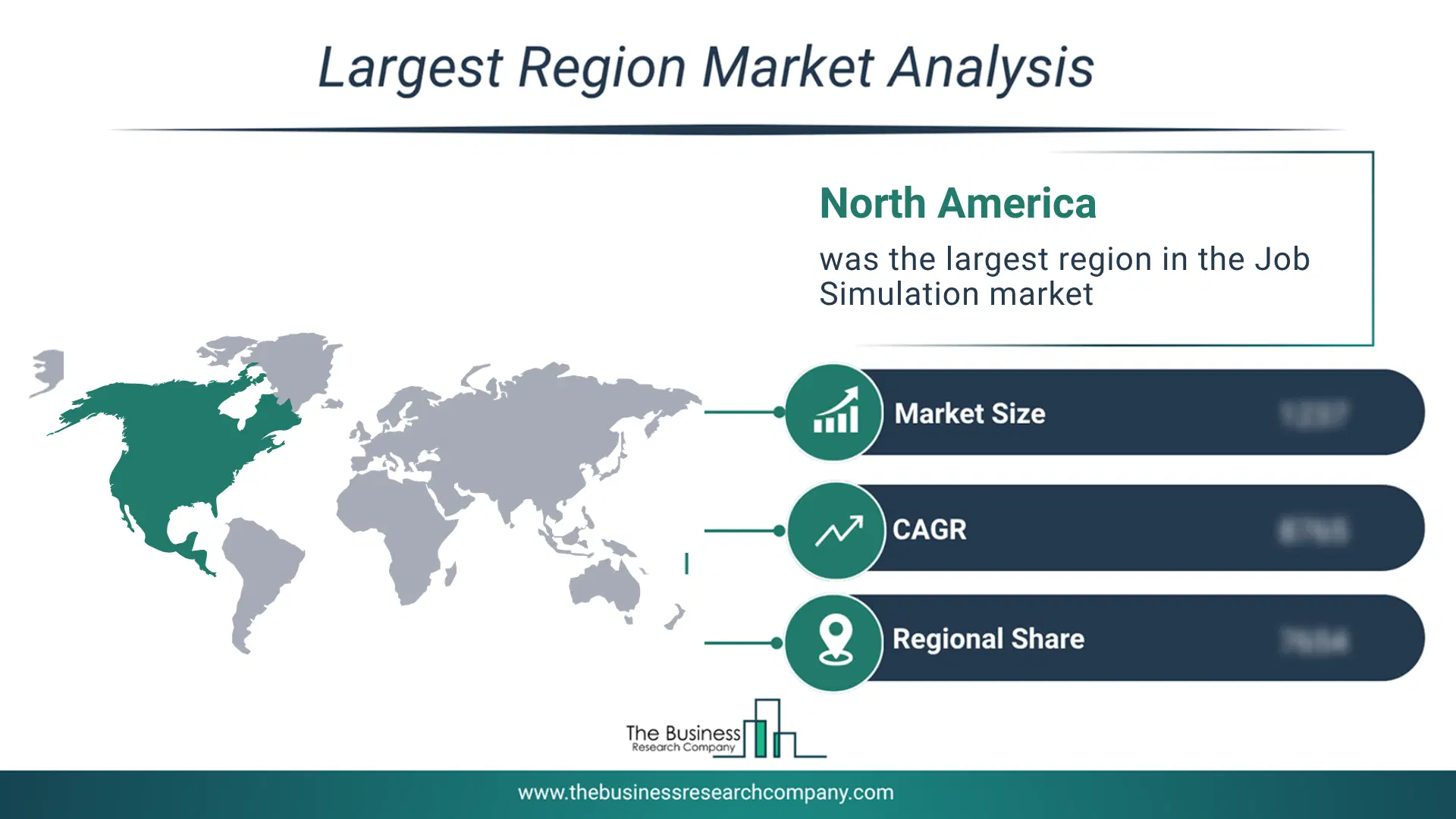
Regional Insights
North America was the largest region in the job simulation market in 2025. Asia-Pacific is expected to be the fastest-growing region in the forecast period. The regions covered in this market report are Asia-Pacific, South East Asia, Western Europe, Eastern Europe, North America, South America, Middle East, Africa. The countries covered in this market report are Australia, Brazil, China, France, Germany, India, Indonesia, Japan, Taiwan, Russia, South Korea, UK, USA, Canada, Italy, Spain.What Defines the Job Simulation Market?
The job simulation market includes revenues earned by entities through virtual assessments, interactive skill-based simulations, automated interviews, gamified evaluation, and candidate pre-employment testing. The market value includes the value of related goods sold by the service provider or included within the service offering. Only goods and services traded between entities or sold to end consumers are included.How is Market Value Defined and Measured?
The market value is defined as the revenues that enterprises gain from the sale of goods and/or services within the specified market and geography through sales, grants, or donations in terms of the currency (in USD unless otherwise specified). The revenues for a specified geography are consumption values that are revenues generated by organizations in the specified geography within the market, irrespective of where they are produced. It does not include revenues from resales along the supply chain, either further along the supply chain or as part of other products.
This chart presents market attractiveness based on a quantitative evaluation of growth, competition, strategic alignment, and risk, offering a clear view of opportunity areas for decision-making. This chart is for illustrative purposes; the full report contains the complete analysis.

This chart highlights the Total Addressable Market (TAM) by estimating the maximum revenue opportunity using an assumption-driven approach, supporting strategic planning and opportunity sizing across markets. The chart is illustrative; the full report provides a more comprehensive analysis.
What Key Data And Analysis Are Included In The Job Simulation Market Report 2026?
The job simulation market research report is one of a series of new reports from The Business Research Company that provides market statistics, including industry global market size, regional shares, competitors with the market share, detailed market segments, market trends and opportunities, and any further data you may need to thrive in the job simulation industry. The market research report delivers a complete perspective of everything you need, with an in-depth analysis of the current and future state of the industry.Job Simulation Market Report Forecast Analysis
| Report Attribute | Details |
|---|---|
| Market Size Value In 2026 | $5.04 billion |
| Revenue Forecast In 2030 | $7.54 billion |
| Growth Rate | CAGR of 10.4% from 2026 to 2030 |
| Base Year For Estimation | 2025 |
| Actual Estimates/Historical Data | 2020-2025 |
| Forecast Period | 2026 - 2030 |
| Market Representation | Revenue in USD Billion and CAGR from 2026 to 2030 |
| Segments Covered | Component, Type, Deployment Mode, Application, End-User |
| Regional Scope | Asia-Pacific, Western Europe, Eastern Europe, North America, South America, Middle East, Africa |
| Country Scope | The countries covered in the report are Australia, Brazil, China, France, Germany, India, Indonesia, Japan, Taiwan, Russia, South Korea, UK, USA, Canada, Italy, Spain. |
| Key Companies Profiled | SHL Group Ltd., HackerRank Inc., Mercer LLC, Criteria Corporation, Mursion Inc., Strivr Inc., iMocha Technologies Pvt. Ltd., Talview Inc., Codility Ltd., Zenarate Inc., Capsim Management Simulations Inc., Arctic Shores Ltd., Plum.io Inc., Vervoe Inc., Pymetrics Inc., TestGorilla B.V., Testlify Inc., HR Avatar Inc., Canditech Inc., and Coursevita Pvt. Ltd. |
| Customization Scope | Request for Customization |
| Pricing And Purchase Options | Explore Purchase Options |