

Juvenile Macular Degeneration Treatment Market Report 2026
Global Outlook – By Type (Stargardt Disease (ABCA4-Associated), X-Linked Juvenile Retinoschisis, Best Vitelliform Macular Dystrophy, Cone or Cone-Rod Dystrophy, Other Types), By Treatment (Devices, Drugs, Surgery), By Application (Vision Preservation, Disease Management, Symptom Relief, Preventive Care, Clinical Trials), By Sales Channel (Hospitals, Ambulatory Surgical Centres, Other Sales Channels) - Market Size, Trends, Strategies, and Forecast to 2030
Juvenile Macular Degeneration Treatment Market Overview
• Juvenile Macular Degeneration Treatment market size has reached to $1.39 billion in 2025 • Expected to grow to $2.01 billion in 2030 at a compound annual growth rate (CAGR) of 7.7% • Growth Driver: Rising Retinal Disorders Driving The Growth Of The Market Due To Increasing Diabetes Prevalence • Market Trend: Innovative Gene Therapies Advance Treatment Options For Stargardt Disease • North America was the largest region in 2025.What Is Covered Under Juvenile Macular Degeneration Treatment Market?
Juvenile macular degeneration (stargardt disease) treatment refers to a range of strategies aimed at managing vision loss and improving quality of life for individuals affected by this genetic eye disorder. It is caused by genetic mutations that damage the macula, the central part of the retina, leading to gradual vision loss and difficulty with tasks like reading and recognizing faces. The main types of juvenile macular degeneration treatment are wet age-related macular degeneration and dry age-related macular degeneration. Wet age-related macular degeneration refers to a condition where abnormal blood vessels grow beneath the retina, leading to fluid or blood leakage and rapid central vision loss. Juvenile macular degeneration treatments include devices, drugs, and surgery. The associated applications encompass vision preservation, disease management, symptom relief, preventive care, and clinical trials, and these treatments are distributed through various channels such as hospitals, ambulatory surgical centers, and others.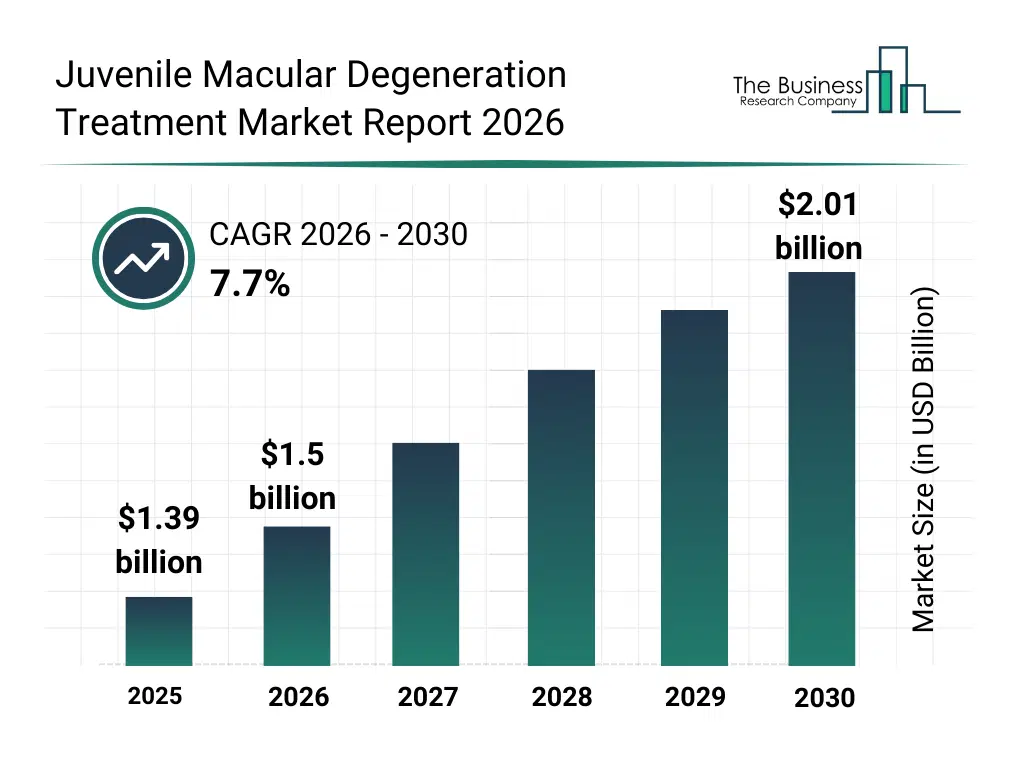
What Is The Juvenile Macular Degeneration Treatment Market Size and Share 2026?
The juvenile macular degeneration treatment market size has grown strongly in recent years. It will grow from $1.39 billion in 2025 to $1.5 billion in 2026 at a compound annual growth rate (CAGR) of 7.9%. The growth in the historic period can be attributed to limited treatment options for juvenile macular degeneration, increasing awareness of inherited retinal disorders, advancement in retinal imaging technologies, growth in ophthalmology specialty care, rising diagnosis rates of stargardt disease.What Is The Juvenile Macular Degeneration Treatment Market Growth Forecast?
The juvenile macular degeneration treatment market size is expected to see strong growth in the next few years. It will grow to $2.01 billion in 2030 at a compound annual growth rate (CAGR) of 7.7%. The growth in the forecast period can be attributed to advancements in gene and stem cell research, increasing investment in rare disease therapeutics, growing focus on early intervention in pediatric eye disorders, expansion of clinical research pipelines, improving access to specialized ophthalmic care. Major trends in the forecast period include rising focus on genetic eye disorder management, growing adoption of gene and stem cell therapies, increasing use of vision preservation and assistive devices, expansion of clinical trials for rare retinal diseases, improved patient support and low-vision rehabilitation programs.
Global Juvenile Macular Degeneration Treatment Market Segmentation
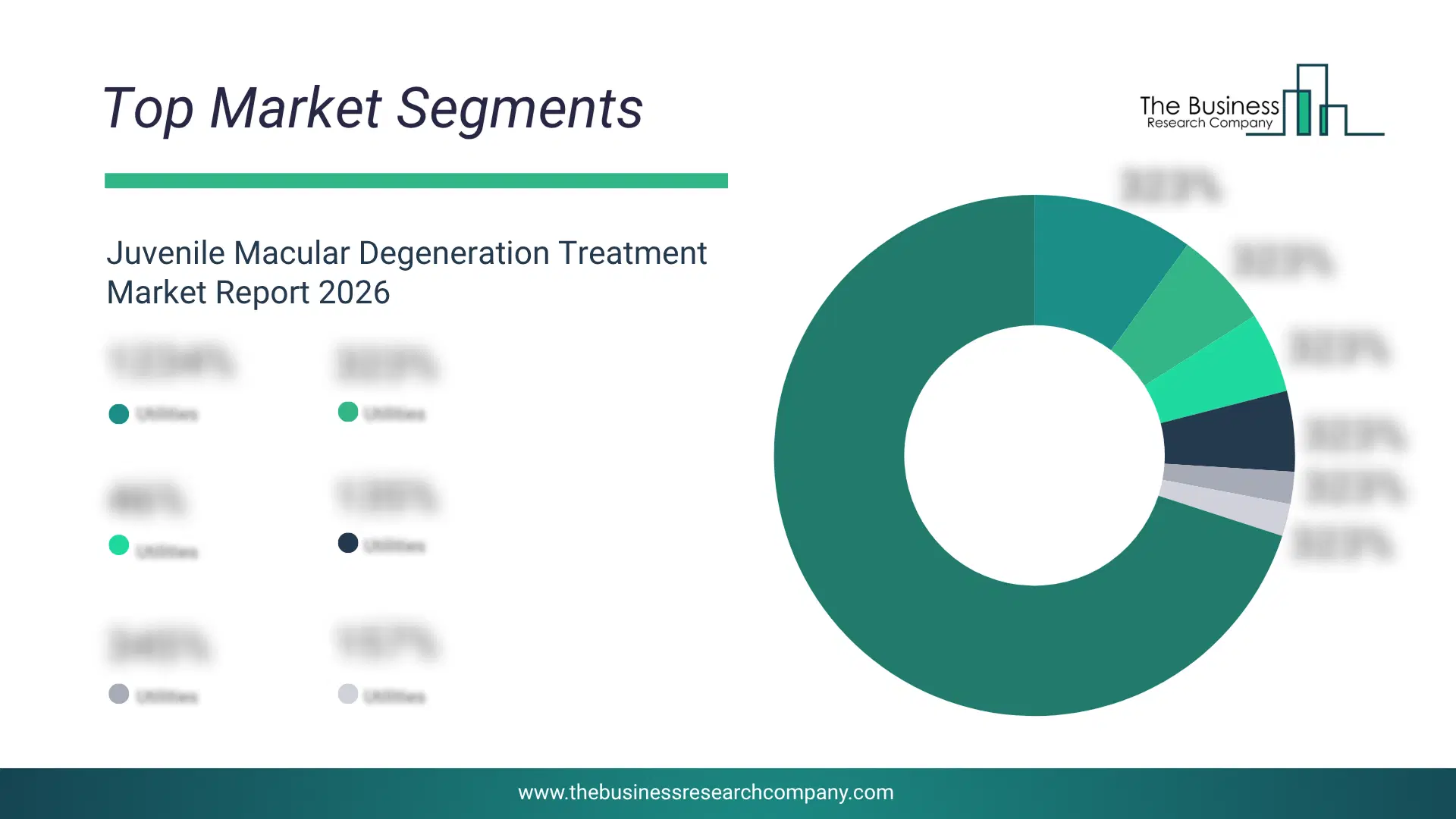
1) By Type: Stargardt Disease (ABCA4-Associated), X-Linked Juvenile Retinoschisis, Best Vitelliform Macular Dystrophy, Cone or Cone-Rod Dystrophy, Other Types 2) By Treatment: Devices, Drugs, Surgery 3) By Application: Vision Preservation, Disease Management, Symptom Relief, Preventive Care, Clinical Trials 4) By Sales Channel: Hospitals, Ambulatory Surgical Centres, Other Sales Channels Subsegments: 1) By Stargardt Disease (ABCA4-Associated): Juvenile Macular Degeneration, ABCA4 Gene Mutations, Visual Cycle Modulators, Stem Cell–Based Therapies 2) By X-Linked Juvenile Retinoschisis: RS1 Gene Mutations, Pediatric-Onset Cases, Central Vision Impairment, Gene Therapy Programs 3) By Best Vitelliform Macular Dystrophy: BEST1 Gene Mutations, Early-Onset BVMD, Late-Onset BVMD, Gene Therapy Approaches 4) By Cone Or Cone-Rod Dystrophy: Cone-Dominant Disorders, Cone-Rod Progressive Disorders, Syndromic Forms, Non-Syndromic Forms 5) By Other Types: Pattern Dystrophies, North Carolina Macular Dystrophy, Unclassified Juvenile Macular DystrophiesWhat Is The Driver Of The Juvenile Macular Degeneration Treatment Market?
The increasing prevalence of retinal disorders is expected to propel the growth of the juvenile macular degeneration treatment market going forward. Retinal disorders refer to a group of conditions that affect the retina, the light-sensitive layer at the back of the eye, leading to vision impairment or loss. Retinal disorders are increasing due to the rising prevalence of diabetes, leading to conditions such as diabetic retinopathy that damage the retina over time. Juvenile macular degeneration treatments enhance retinal disorder management by preserving vision through early intervention, making them crucial for young patients. For instance, in November 2024, according to the report published by Retina Australia, an Australia-based non-profit organization, in Australia, approximately 19,000 individuals, or about 1 in 1,380 people, are estimated to be living with an inherited retinal disease (IRD). Furthermore, according to the National Eye Institute, a US-based institute of health, the number of Americans with advanced age-related macular degeneration (AMD) is expected to increase from the current 2.1 million to 3.7 million by 2030. Therefore, the increasing prevalence of retinal disorders is driving the growth of the juvenile macular degeneration treatment industry.Key Players In The Global Juvenile Macular Degeneration Treatment Market
Major companies operating in the juvenile macular degeneration treatment market are Alkeus Pharmaceuticals Inc., MeiraGTx Holdings plc, Ocugen Inc., ProQR Therapeutics N.V., Applied Genetic Technologies Corporation, Lineage Cell Therapeutics Inc., jCyte Inc., Nanoscope Therapeutics Inc., Editas Medicine Inc., Beam Therapeutics Inc., ReNeuron Group plc, Astellas Institute for Regenerative Medicine, Kubota Vision Inc., Ionis Pharmaceuticals Inc., Atsena Therapeutics Inc., Vedere Bio Inc., GenSight Biologics S.A., ViGeneron GmbH, Sanofi Gene Therapy, Neurotech Pharmaceuticals Inc.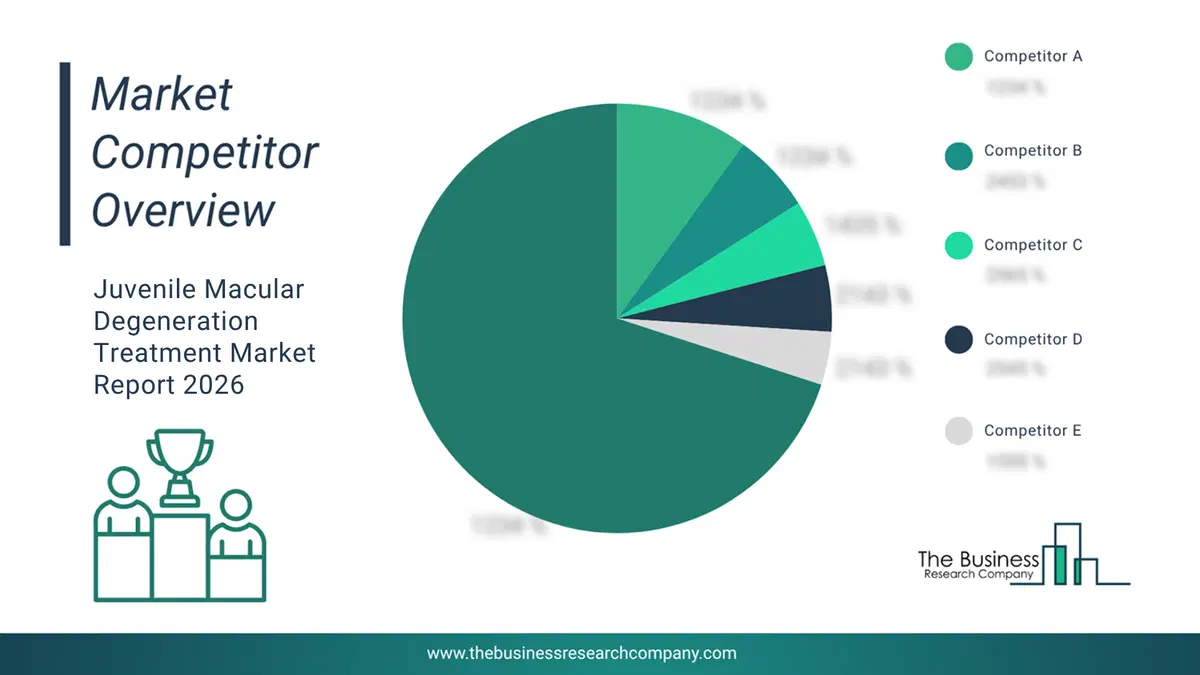
This chart is for illustrative purposes; the full report includes a detailed competitor analysis and comprehensive overview of the top 10 companies in the market.
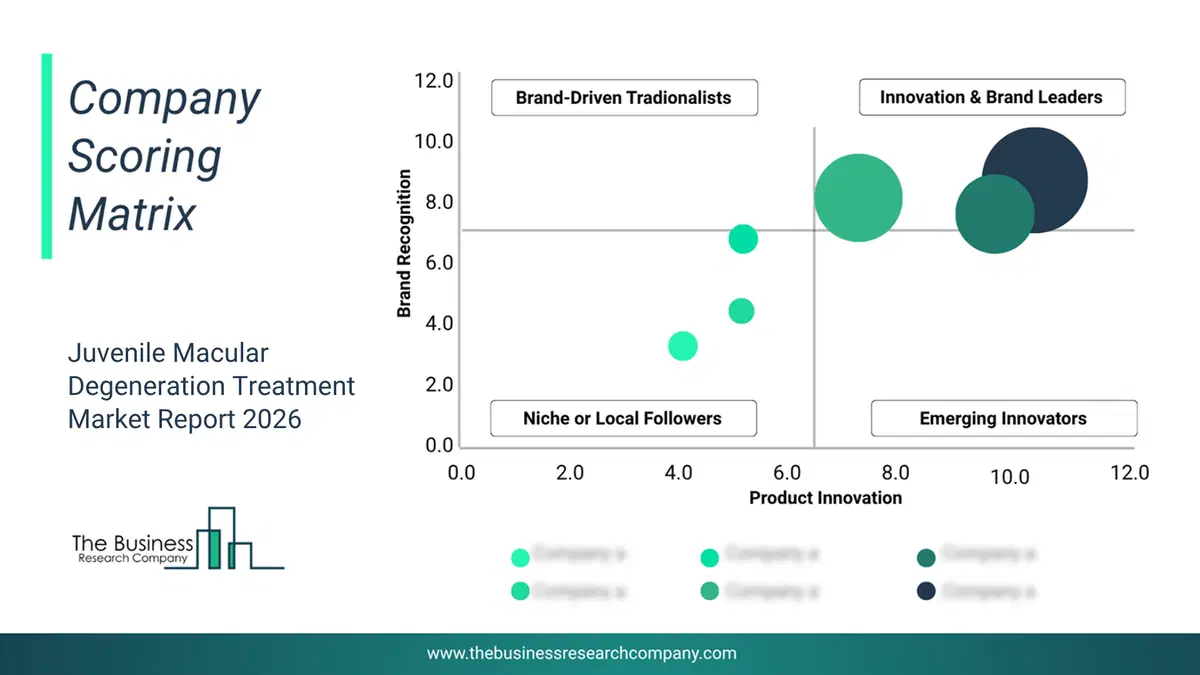
This chart maps companies by product innovation and brand strength, with bubble size indicating relative revenue, helping identify market leaders, challengers, and niche players. This is an illustrative chart; the full report provides a complete and accurate competitive analysis.
Global Juvenile Macular Degeneration Treatment Market Trends and Insights
Major companies operating in the juvenile macular degeneration treatment market are focusing on developing innovative solutions, such as dual adeno-associated viral (AAV) vectors, to enhance gene therapy delivery and improve treatment efficacy for patients with juvenile macular degeneration. A dual adeno-associated viral (AAV) vector is a gene therapy approach that uses two AAV vectors to deliver large therapeutic genes that exceed the packaging capacity of a single AAV. For instance, in March 2025, SpliceBio, a Spain-based biotechnology company, announced the first patient dosing in its Phase 1/2 ASTRA study for SB-007, a dual AAV vector gene therapy designed to restore full-length ABCA4 protein expression. The therapy aims to provide a potential treatment for juvenile macular degeneration (stargardt disease), an inherited retinal disorder with no approved treatments, by addressing all patients regardless of their mutations. This milestone marks a significant step toward developing effective gene therapies for rare retinal diseases.What Are Latest Mergers And Acquisitions In The Juvenile Macular Degeneration Treatment Market?
In July 2023, Astellas Pharma Inc., a Japan-based pharmaceutical company, acquired IVERIC bio Inc. for an undisclosed amount. Through this acquisition, Astellas aims to strengthen its ophthalmology portfolio, accelerate the development of innovative treatments for retinal diseases, and expand its capabilities in gene therapy and complement inhibition, particularly for conditions such as stargardt disease and geographic atrophy. IVERIC bio Inc. is a US-based company focused on developing treatments for juvenile macular degeneration, specifically Stargardt disease.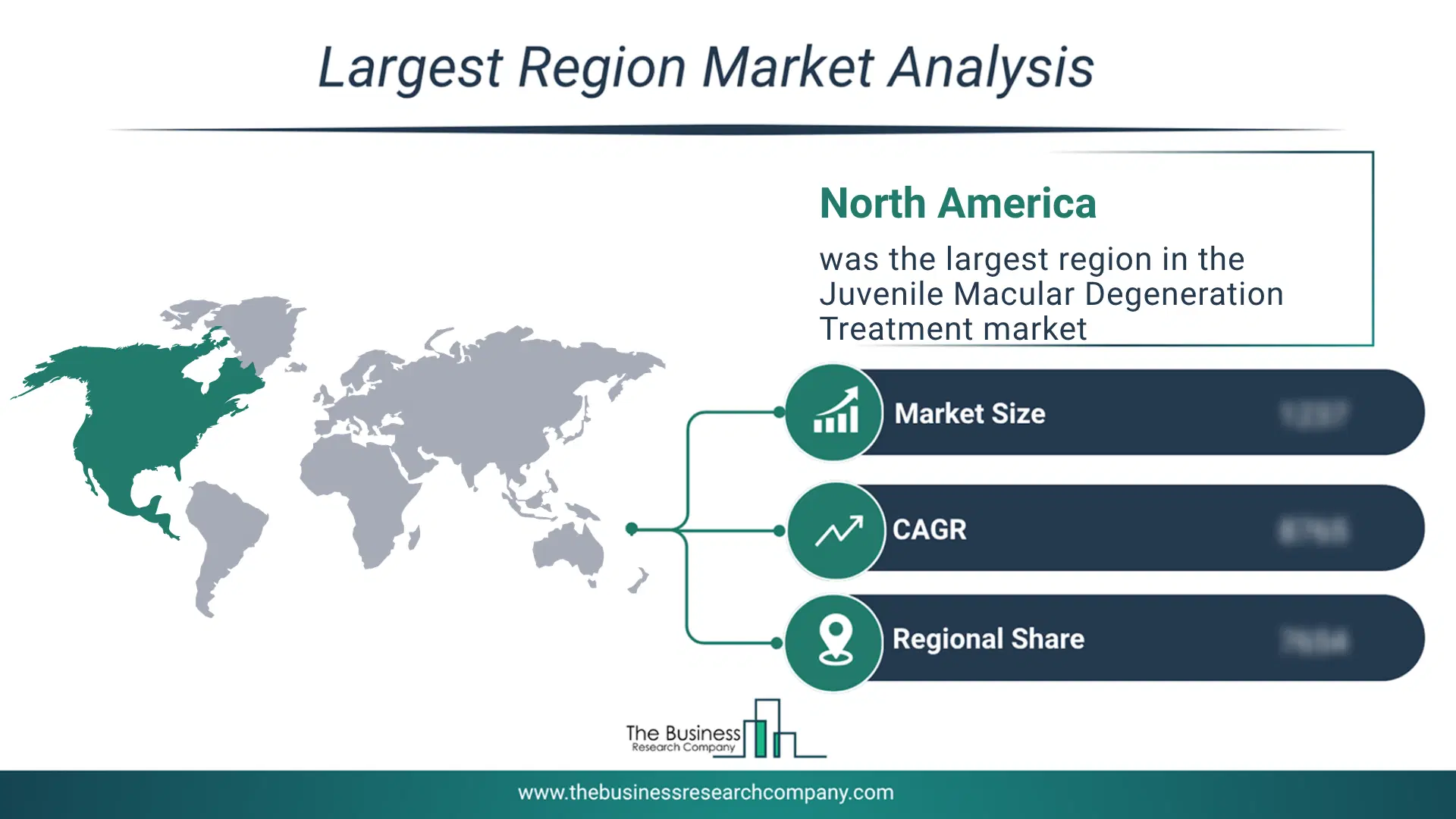
Regional Outlook
North America was the largest region in the juvenile macular degeneration treatment market in 2025. The regions covered in this market report are Asia-Pacific, South East Asia, Western Europe, Eastern Europe, North America, South America, Middle East, Africa. The countries covered in this market report are Australia, Brazil, China, France, Germany, India, Indonesia, Japan, Taiwan, Russia, South Korea, UK, USA, Canada, Italy, Spain.What Defines the Juvenile Macular Degeneration Treatment Market?
The juvenile macular degeneration treatment market consists of revenues earned by entities by providing services such as vision therapy, low vision rehabilitation, genetic counseling, nutritional counseling, and psychological support for vision loss management. The market value includes the value of related goods sold by the service provider or included within the service offering. The juvenile macular degeneration (JMD) treatment market also includes sales of prescription eyewear, low vision aids, braille displays, specialty lighting devices, and dietary supplements for eye health. Values in this market are ‘factory gate’ values, that is, the value of goods sold by the manufacturers or creators of the goods, whether to other entities (including downstream manufacturers, wholesalers, distributors, and retailers) or directly to end customers. The value of goods in this market includes related services sold by the creators of the goods.How is Market Value Defined and Measured?
The market value is defined as the revenues that enterprises gain from the sale of goods and/or services within the specified market and geography through sales, grants, or donations in terms of the currency (in USD unless otherwise specified). The revenues for a specified geography are consumption values that are revenues generated by organizations in the specified geography within the market, irrespective of where they are produced. It does not include revenues from resales along the supply chain, either further along the supply chain or as part of other products.
This chart presents market attractiveness based on a quantitative evaluation of growth, competition, strategic alignment, and risk, offering a clear view of opportunity areas for decision-making. This chart is for illustrative purposes; the full report contains the complete analysis.

This chart highlights the Total Addressable Market (TAM) by estimating the maximum revenue opportunity using an assumption-driven approach, supporting strategic planning and opportunity sizing across markets. The chart is illustrative; the full report provides a more comprehensive analysis.
What Key Data and Analysis Are Included in the Juvenile Macular Degeneration Treatment Market Report 2026?
The juvenile macular degeneration treatment market research report is one of a series of new reports from The Business Research Company that provides market statistics, including industry global market size, regional shares, competitors with the market share, detailed market segments, market trends and opportunities, and any further data you may need to thrive in the juvenile macular degeneration treatment industry. The market research report delivers a complete perspective of everything you need, with an in-depth analysis of the current and future state of the industry.Juvenile Macular Degeneration Treatment Market Report Forecast Analysis
| Report Attribute | Details |
|---|---|
| Market Size Value In 2026 | $1.5 billion |
| Revenue Forecast In 2030 | $2.01 billion |
| Growth Rate | CAGR of 7.7% from 2026 to 2030 |
| Base Year For Estimation | 2025 |
| Actual Estimates/Historical Data | 2020-2025 |
| Forecast Period | 2026 - 2030 |
| Market Representation | Revenue in USD Billion and CAGR from 2026 to 2030 |
| Segments Covered | Type, Treatment, Application, Sales Channel |
| Regional Scope | Asia-Pacific, Western Europe, Eastern Europe, North America, South America, Middle East, Africa |
| Country Scope | The countries covered in the report are Australia, Brazil, China, France, Germany, India, Indonesia, Japan, Taiwan, Russia, South Korea, UK, USA, Canada, Italy, Spain |
| Key Companies Profiled | Alkeus Pharmaceuticals Inc., MeiraGTx Holdings plc, Ocugen Inc., ProQR Therapeutics N.V., Applied Genetic Technologies Corporation, Lineage Cell Therapeutics Inc., jCyte Inc., Nanoscope Therapeutics Inc., Editas Medicine Inc., Beam Therapeutics Inc., ReNeuron Group plc, Astellas Institute for Regenerative Medicine, Kubota Vision Inc., Ionis Pharmaceuticals Inc., Atsena Therapeutics Inc., Vedere Bio Inc., GenSight Biologics S.A., ViGeneron GmbH, Sanofi Gene Therapy, Neurotech Pharmaceuticals Inc. |
| Customization Scope | Request for Customization |
| Pricing And Purchase Options | Explore Purchase Options |