
Keytruda Market Report 2026
Global Outlook – By Cancer Type (Melanoma, Lung Cancer, Head And Neck Cancer, Hodgkin Lymphoma, Stomach Cancer, Urothelial Carcinoma), By Payer Type (Commercial, Medicare, Medicaid), By Distribution Channel (Hospital Pharmacies, Specialty Pharmacies) - Market Size, Trends, And Global Forecast 2026-2030
Keytruda Market Overview
• Keytruda market size has reached to $23.73 billion in 2025 • Expected to grow to $36.32 billion in 2030 at a compound annual growth rate (CAGR) of 8.7% • Growth Driver: The Rising Prevalence Of Cancer Driving Growth In The Keytruda Market • Market Trend: Advancing Treatment Options With Pembrolizumab In Gastric Cancer • North America was the largest region in 2025.Market Gains By 2030 – Top Opportunities By Segment
Market Gain identifies the most promising market opportunities by highlighting the segments or products expected to generate the highest incremental revenue growth over the next five years.
What Is Covered Under Keytruda Market?
Keytruda is a brand name for pembrolizumab, a monoclonal antibody medication used in cancer treatment. Keytruda belongs to a class of drugs known as immune checkpoint inhibitors. It works by targeting and blocking a protein called PD-1 (programmed cell death protein 1) in immune cells, which helps the immune system recognize and attack cancer cells. The main cancer types of keytruda are melanoma, lung cancer, head and neck cancer, Hodgkin lymphoma, stomach cancer, and urothelial carcinoma. Melanoma is a type of skin cancer originating in melanocytes, the cells responsible for producing melanin, the pigment that gives skin color. The various payer types include commercial, medicare, and Medicaid and are distributed through various distribution channels such as hospital pharmacies, and specialty pharmacies.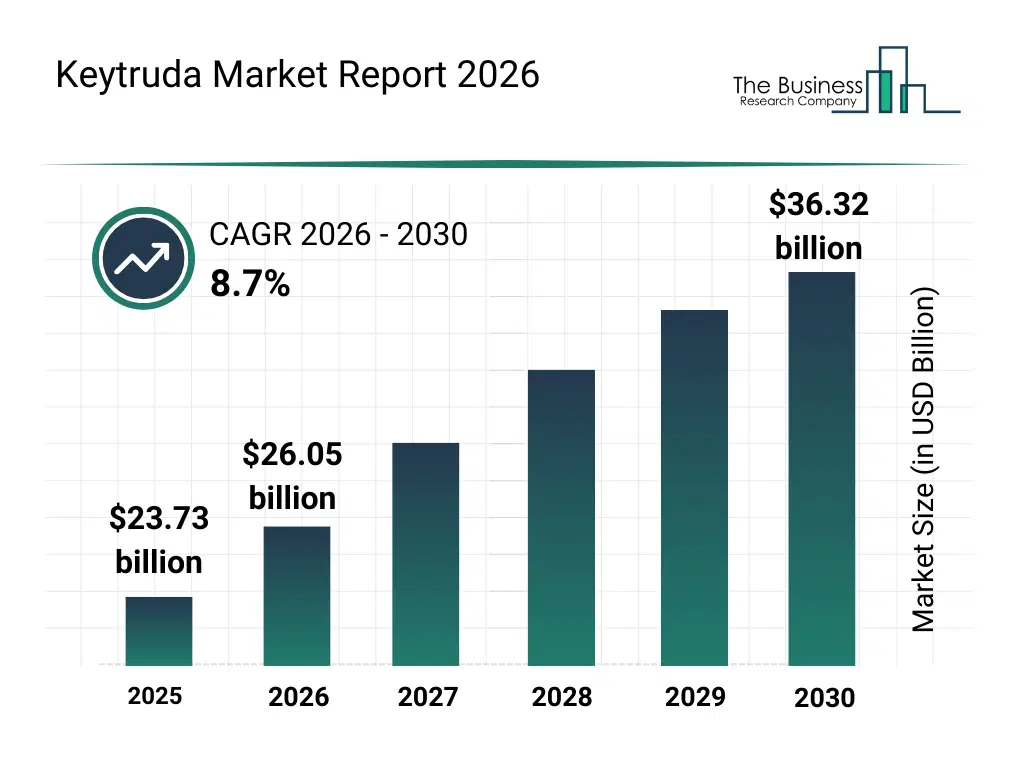
What Is The Keytruda Market Size and Share 2026?
The keytruda market size has grown strongly in recent years. It will grow from $23.73 billion in 2025 to $26.05 billion in 2026 at a compound annual growth rate (CAGR) of 9.8%. The growth in the historic period can be attributed to successful clinical trial outcomes across multiple cancers, regulatory approvals for new oncology indications, rising global cancer burden, increasing adoption of immunotherapy over chemotherapy, strong reimbursement support in developed markets.What Is The Keytruda Market Growth Forecast?
The keytruda market size is expected to see strong growth in the next few years. It will grow to $36.32 billion in 2030 at a compound annual growth rate (CAGR) of 8.7%. The growth in the forecast period can be attributed to expansion into additional cancer indications, increasing use of precision oncology diagnostics, growing oncology drug spending, rising awareness of immuno-oncology benefits, expansion of access in emerging markets. Major trends in the forecast period include expansion of immune checkpoint inhibitor indications, growing use of combination immunotherapy regimens, increasing adoption of biomarker-based patient selection, rising utilization of keytruda in earlier lines of therapy, improved clinical outcomes driving oncologist preference.
Global Keytruda Market Segmentation
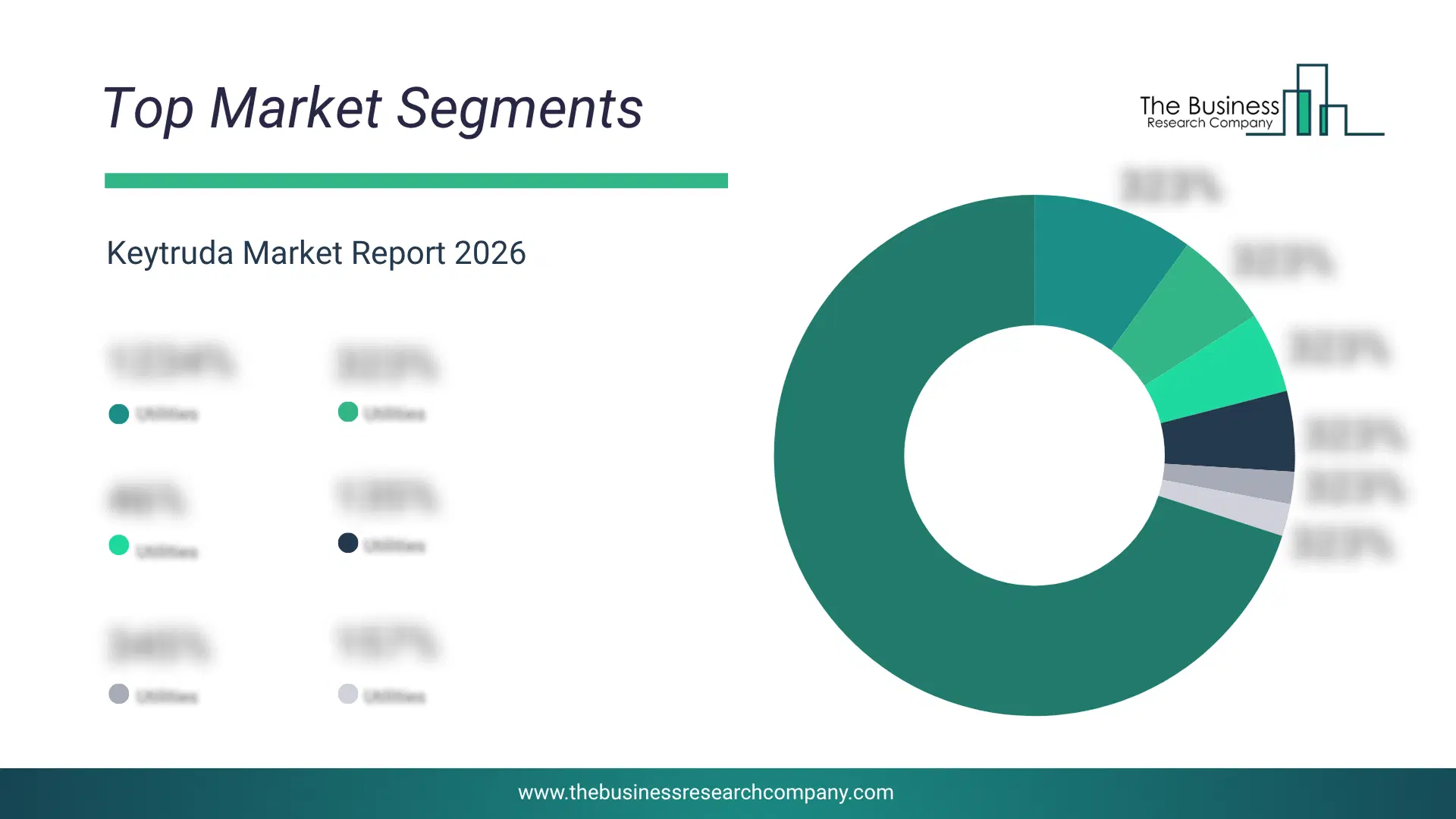
1) By Cancer Type: Melanoma, Lung Cancer, Head And Neck Cancer, Hodgkin Lymphoma, Stomach Cancer, Urothelial Carcinoma 2) By Payer Type: Commercial, Medicare, Medicaid 3) By Distribution Channel: Hospital Pharmacies, Specialty Pharmacies Subsegments: 1) By Melanoma: Advanced Or Unresectable Melanoma, Adjuvant Treatment For Melanoma 2) By Lung Cancer: Non-Small Cell Lung Cancer (NSCLC), Small Cell Lung Cancer (SCLC) 3) By Head And Neck Cancer: Squamous Cell Carcinoma Of The Head And Neck (SCCHN), Recurrent Or Metastatic Head And Neck Cancer 4) By Hodgkin Lymphoma: Classical Hodgkin Lymphoma, Relapsed Or Refractory Hodgkin Lymphoma 5) By Stomach Cancer: Advanced Or Metastatic Gastric Cancer, Esophagogastric Junction Cancer 6) By Urothelial Carcinoma: Advanced Or Metastatic Urothelial Carcinoma, Muscle-Invasive Bladder Cancer The top segments in the keytruda market will be: • Lung Cancer will reach $13.47 Billion by 2030. • Head And Neck Cancer will reach $11.04 Billion by 2030. • Other Types will reach $10.68 Billion by 2030. • Melanoma will reach $6.08 Billion by 2030. • Stomach Cancer will reach $4.84 Billion by 2030.What Is The Driver Of The Keytruda Market?
The increasing prevalence of cancer is expected to propel the growth of the keytruda market going forward. Cancer is a complex group of diseases characterized by the abnormal growth and spread of cells. The prevalence of cancer is due to genetic factors, lifestyle factors, environmental factors, and hormonal factors. Keytruda (pembrolizumab) helps in cancer treatment primarily by harnessing the body's immune system to fight cancer cells more effectively. It represents a significant advancement in cancer treatment by harnessing the power of the immune system to target and attack cancer cells, providing new hope for many patients with advanced or metastatic cancers. For instance, in January 2024, according to the American Cancer Society, a US-based nonprofit cancer advocacy organization, the number of cancer cases increased to 2,001,140 compared to 1,958,310 in 2023, reflecting a growth of 2.19%. Therefore, the increasing prevalence of cancer drives the keytruda industry.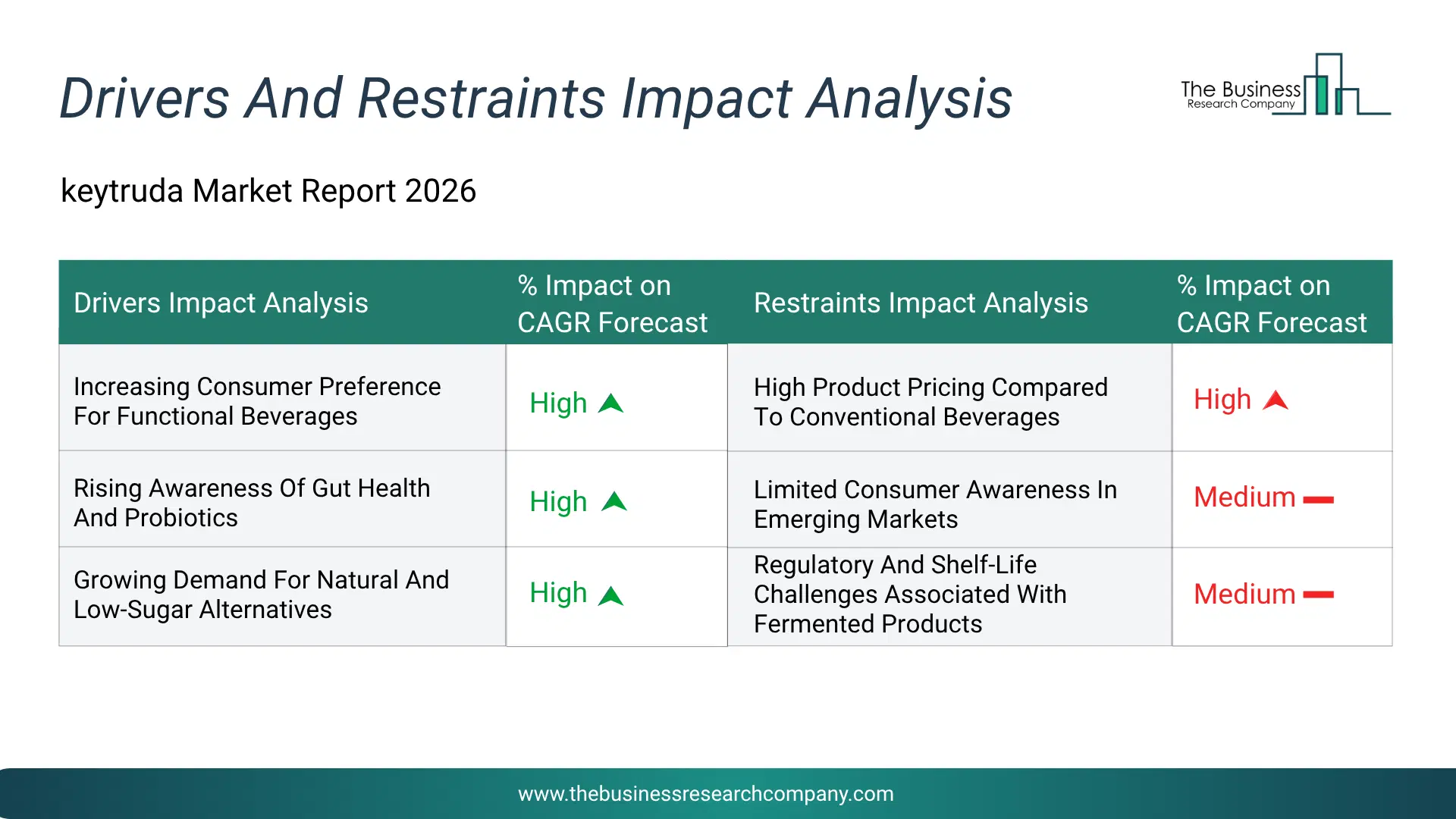
Infographic Chart Showing Key Market Drivers Analysis And Restraints For Keytruda Market
The chart presents an impact analysis of key drivers and restraints, quantifying their relative influence on the market's growth rate and helping assess the balance between growth enablers and limiting factors. This chart offers a high-level perspective; the full report contains more detailed insights.
How Will The Drivers Impact Growth In The Global Keytruda Market?
• Expanding Oncology Indications and Label Expansions (High) – During the forecast period, the expanding oncology indications and label expansions are expected to become a key growth driver for the keytruda market by 2030. Ongoing regulatory approvals across multiple tumor categories are broadening patient eligibility and strengthening the role of immunotherapy within oncology treatment protocols. Expansion into earlier treatment lines and additional cancer settings is increasing clinical utilization across healthcare systems. Pharmaceutical companies are also advancing clinical development strategies to unlock wider therapeutic applications and maximize treatment reach. This expansion of approved indications is reinforcing long-term market growth. • Rising Adoption of Combination Immunotherapy Regimens (Medium) – During the forecast period, the rising adoption of combination immunotherapy regimens is expected to emerge as a major factor driving the expansion of the keytruda market by 2030. Healthcare providers are increasingly incorporating immunotherapy combinations alongside chemotherapy, targeted therapies, and additional treatment modalities to enhance clinical outcomes across multiple cancer types. Combination approaches are improving treatment flexibility and expanding therapeutic applicability across diverse patient populations. Continued oncology innovation and growing clinical confidence in multi-modal cancer management are further accelerating adoption trends. • Growing Global Cancer Burden and Immunotherapy Penetration (High) – During the forecast period, the growing global cancer burden and immunotherapy penetration are expected to act as a key growth catalyst for the keytruda market by 2030. Rising cancer incidence across developed and emerging healthcare markets is strengthening demand for advanced oncology therapies with durable treatment responses. Expanding awareness surrounding immunotherapy benefits and improving healthcare infrastructure are supporting broader access to innovative cancer treatments. In parallel, healthcare systems are increasingly integrating immunotherapy into standard oncology care pathways.How Will The Restraints Impact Growth In The Global Keytruda Market?
• Patent Expiry and Biosimilar Competition Risks (High) – During the forecast period, the approaching Keytruda patent cliff, beginning in major markets from 2028 onward, poses a significant restraint on long-term growth. Biosimilar entry is expected to increase pricing competition, reduce margins, and erode branded market share. Anticipation of exclusivity loss is already influencing strategic shifts across the market. Even before full biosimilar penetration, competitive pressures may alter contracting dynamics and prescribing economics. This looming patent erosion represents one of the strongest restraints for the market outlook. • High Therapy Cost and Reimbursement Pressures (Medium) – During the forecast period, the keytruda’s premium pricing remains a major restraint, particularly in cost-sensitive healthcare systems and emerging markets. High treatment costs can limit patient access, trigger reimbursement restrictions, and increase payer scrutiny around cost-effectiveness. Governments and insurers are also intensifying pressure for oncology drug price negotiations, which can affect revenue growth. In some regions, broader indication approvals have already contributed to pricing pressures. These affordability and reimbursement challenges act as an important restraint on market expansion. • Increasing Competition from Next-Generation Immunotherapies and Targeted Oncology Treatments (High) – During the forecast period, the rapid advancement of next-generation immunotherapies and targeted oncology treatments is expected to restrain the growth of the Keytruda market. Pharmaceutical companies are introducing innovative therapies, including bispecific antibodies, antibody-drug conjugates, cell therapies, and precision medicine approaches that offer alternative treatment options across multiple cancer indications. Some emerging therapies may demonstrate improved efficacy, enhanced patient stratification, or differentiated clinical benefits in specific tumor types. As oncologists gain access to a broader range of treatment choices and clinical guidelines evolve, prescribing patterns may become more diversified. This intensifying competitive landscape could limit market share expansion and moderate the long-term growth trajectory of Keytruda.Key Players In The Global Keytruda Market
Major companies operating in the keytruda market are Merck & Co. Inc., Eisai Co. Ltd., Pfizer Inc., AstraZeneca plc, Roche Holding AG, Novartis AG, Sanofi S.A., Amgen Inc., Gilead Sciences Inc., AbbVie Inc., Bristol Myers Squibb, Eli Lilly and Company, Regeneron Pharmaceuticals Inc., BeiGene Ltd., Incyte Corporation, Takeda Pharmaceutical Company Limited, Chugai Pharmaceutical Co. Ltd., Bayer AG, Boehringer Ingelheim, Seagen Inc.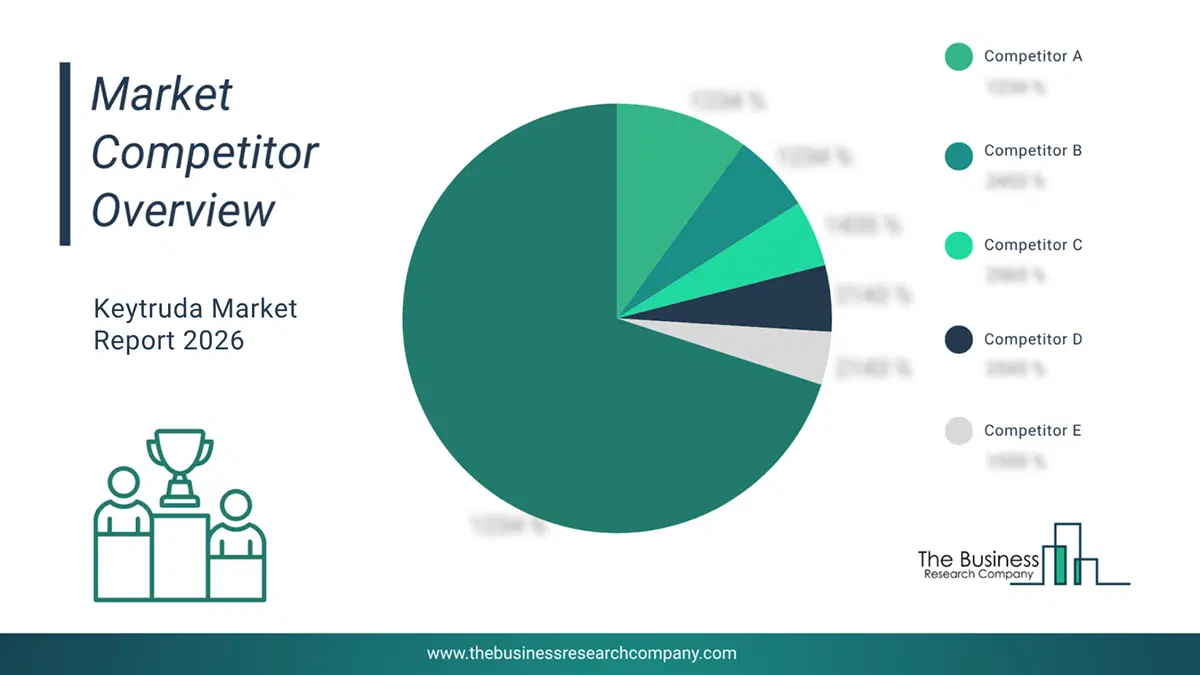
This chart is for illustrative purposes; the full report includes a detailed competitor analysis and comprehensive overview of the top 10 companies in the market.
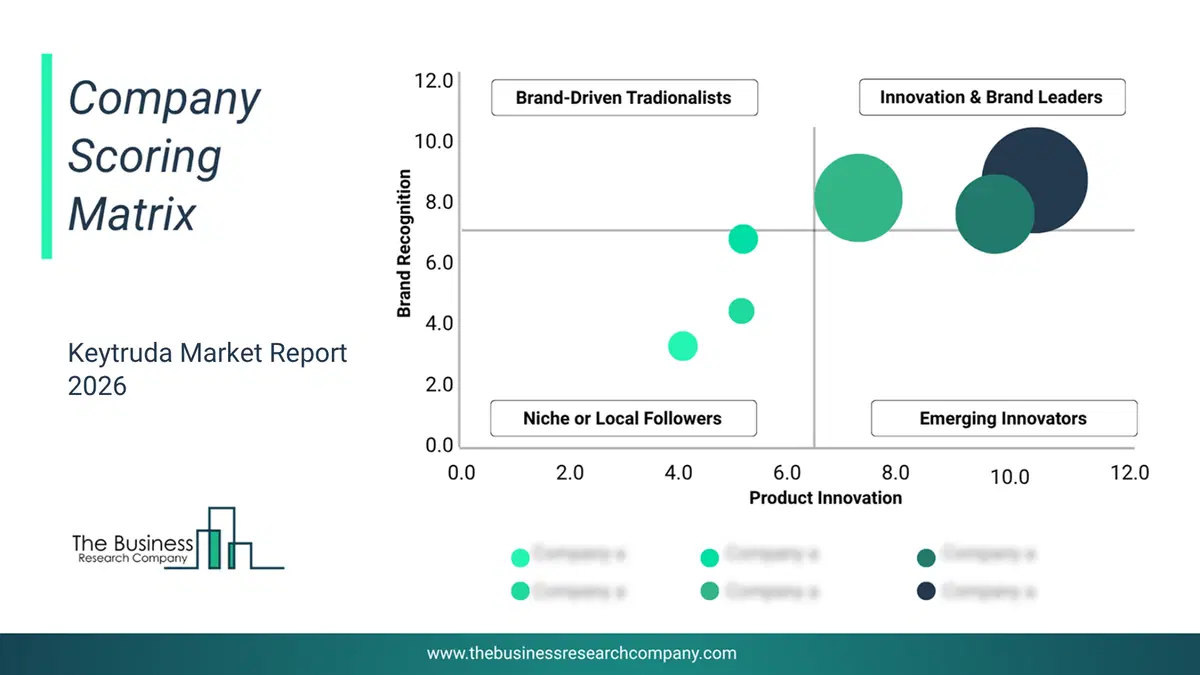
This chart maps companies by product innovation and brand strength, with bubble size indicating relative revenue, helping identify market leaders, challengers, and niche players. This is an illustrative chart; the full report provides a complete and accurate competitive analysis.
Global Keytruda Market Trends and Insights
Major companies operating in keytruda market are developing innovative products such as pembrolizumab to expand treatment options. Pembrolizumab is a monoclonal antibody medication that belongs to a class of drugs known as immune checkpoint inhibitors. It is marketed under the brand name Keytruda. Pembrolizumab targets and blocks a protein called PD-1 (programmed cell death protein 1) on immune cells known as T cells. For instance, in November 2023, Merck, a US-based company that manufactures keytruda launched KEYTRUDA (pembrolizumab) in combination with fluoropyrimidine- and platinum-containing chemotherapy approved by the Food and Drug Administration, a US-based government agency. The combination has shown significant improvements in overall survival and progression-free survival compared to chemotherapy alone, making it a promising advancement in the treatment of gastric cancer. In clinical trials, this combination therapy has demonstrated enhancements in overall survival (OS), progression-free survival (PFS), and overall response rate (ORR) compared to chemotherapy used as a standalone treatment.What Are Latest Mergers And Acquisitions In The Keytruda Market?
In May 2024, CytomX Therapeutics, a US-based biotechnology company, collaborated with Merck to evaluate CX-801 with KEYTRUDA (pembrolizumab) in patients with advanced metastatic solid tumors. The collaboration between CytomX Therapeutics and Merck aims to evaluate the safety, tolerability, and preliminary efficacy of CX-801 in combination with KEYTRUDA in patients with advanced metastatic solid tumors. Merck is a US-based company that offers keytruda.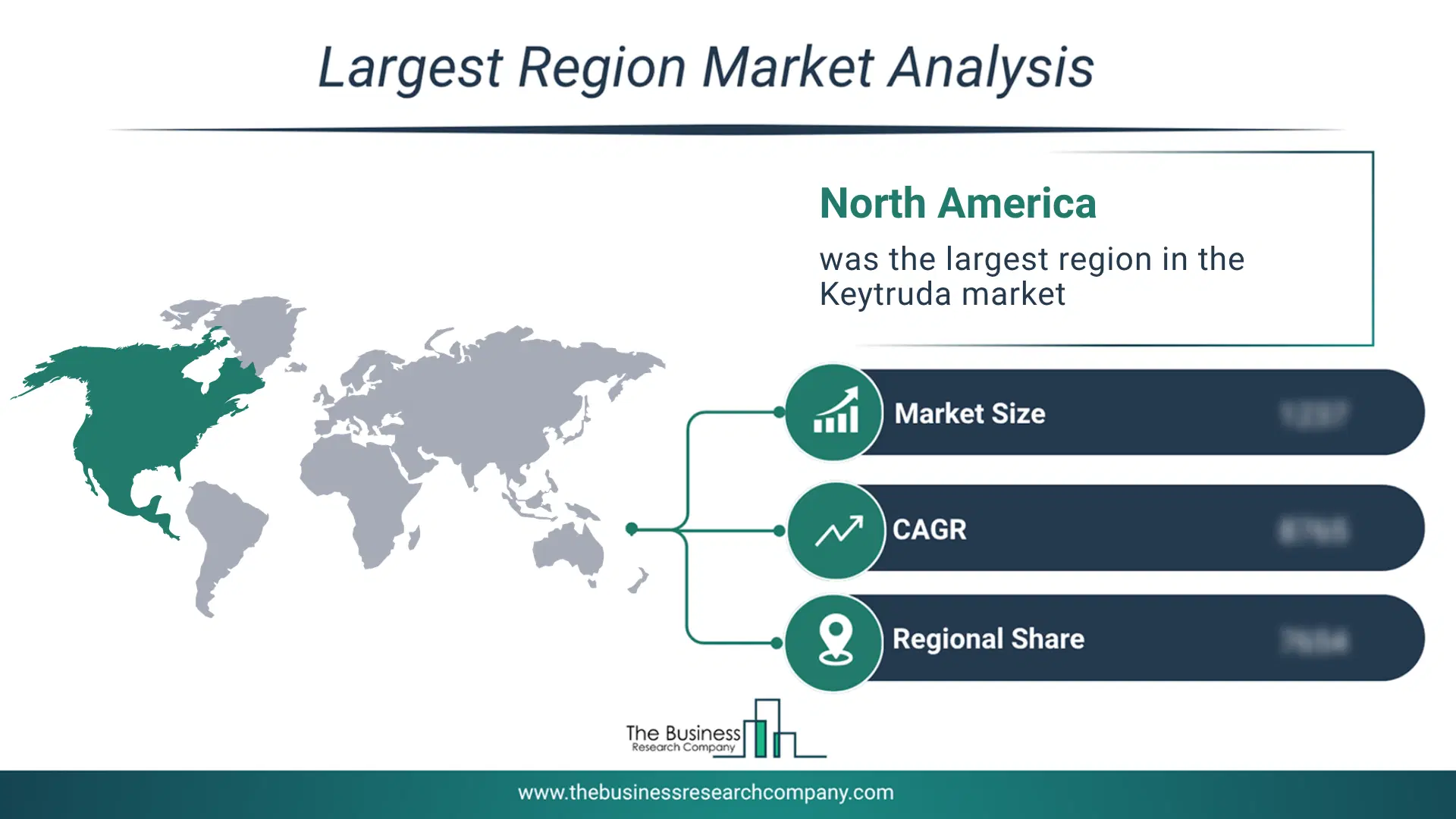
Regional Outlook
North America was the largest region in the keytruda market in 2025. The regions covered in this market report are Asia-Pacific, South East Asia, Western Europe, Eastern Europe, North America, South America, Middle East, Africa. The countries covered in this market report are Australia, Brazil, China, France, Germany, India, Indonesia, Japan, Taiwan, Russia, South Korea, UK, USA, Canada, Italy, Spain.What Defines the Keytruda Market?
The keytruda market consists of sales of immunotherapy, combination therapies, clinical trials, and personalized medicine. Values in this market are ‘factory gate’ values, that is the value of goods sold by the manufacturers or creators of the goods, whether to other entities (including downstream manufacturers, wholesalers, distributors, and retailers) or directly to end customers. The value of goods in this market includes related services sold by the creators of the goods.How is Market Value Defined and Measured?
The market value is defined as the revenues that enterprises gain from the sale of goods and/or services within the specified market and geography through sales, grants, or donations in terms of the currency (in USD unless otherwise specified). The revenues for a specified geography are consumption values that are revenues generated by organizations in the specified geography within the market, irrespective of where they are produced. It does not include revenues from resales along the supply chain, either further along the supply chain or as part of other products.
This chart presents market attractiveness based on a quantitative evaluation of growth, competition, strategic alignment, and risk, offering a clear view of opportunity areas for decision-making. This chart is for illustrative purposes; the full report contains the complete analysis.

This chart highlights the Total Addressable Market (TAM) by estimating the maximum revenue opportunity using an assumption-driven approach, supporting strategic planning and opportunity sizing across markets. The chart is illustrative; the full report provides a more comprehensive analysis.
What Key Data and Analysis Are Included in the Keytruda Market Report 2026?
The keytruda market research report is one of a series of new reports from The Business Research Company that provides market statistics, including industry global market size, regional shares, competitors with the market share, detailed market segments, market trends and opportunities, and any further data you may need to thrive in the keytruda industry. The market research report delivers a complete perspective of everything you need, with an in-depth analysis of the current and future state of the industry.Keytruda Market Report Forecast Analysis
| Report Attribute | Details |
|---|---|
| Market Size Value In 2026 | $26.05 billion |
| Revenue Forecast In 2030 | $36.32 billion |
| Growth Rate | CAGR of 9.8% from 2026 to 2030 |
| Base Year For Estimation | 2025 |
| Actual Estimates/Historical Data | 2020-2025 |
| Forecast Period | 2026 - 2030 |
| Market Representation | Revenue in USD Billion and CAGR from 2026 to 2030 |
| Segments Covered | Cancer Type, Payer Type, Distribution Channel |
| Regional Scope | Asia-Pacific, Western Europe, Eastern Europe, North America, South America, Middle East, Africa |
| Country Scope | The countries covered in the report are Australia, Brazil, China, France, Germany, India, Indonesia, Japan, Taiwan, Russia, South Korea, UK, USA, Canada, Italy, Spain. |
| Key Companies Profiled | Merck & Co. Inc., Eisai Co. Ltd., Pfizer Inc., AstraZeneca plc, Roche Holding AG, Novartis AG, Sanofi S.A., Amgen Inc., Gilead Sciences Inc., AbbVie Inc., Bristol Myers Squibb, Eli Lilly and Company, Regeneron Pharmaceuticals Inc., BeiGene Ltd., Incyte Corporation, Takeda Pharmaceutical Company Limited, Chugai Pharmaceutical Co. Ltd., Bayer AG, Boehringer Ingelheim, Seagen Inc. |
| Customization Scope | Request for Customization |
| Pricing And Purchase Options | Explore Purchase Options |