
Lactic Acid And Polylactic Acid (PLA) Market Report 2026
Global Outlook – By Type (Lactic Acid, Polylactic Acid, Polylactic-Co-Glycolic Acid), By Raw Material (Corn, Sugarcane, Cassava, Sugar Beet), By Form (Liquid, Powder, Pellets, Granules), By Distribution Channel (Direct Sales, Distributors And Wholesalers, Online Sales), By End User (Packaging Industry, Food And Beverage Industry, Healthcare Industry, Textile Industry, Agriculture Industry, Consumer Goods Industry, Automotive Industry, Electronics Industry, Chemical Industry) – Market Size, Trends, Strategies, and Forecast to 2030
Lactic Acid And Polylactic Acid (PLA) Market Overview
• Lactic Acid And Polylactic Acid (PLA) market size has reached to $3.35 billion in 2025 • Expected to grow to $6.41 billion in 2030 at a compound annual growth rate (CAGR) of 13.7% • Growth Driver: Growth In The Food And Beverage Industry Drives The Market Growth Due To Increasing Demand For Sustainable And Compostable Packaging Solutions • Market Trend: Advanced PLA Material Platforms Innovations Driving Sustainable Material Performance • North America was the largest region in 2025 and Asia-Pacific is the fastest growing region.What Is Covered Under Lactic Acid And Polylactic Acid (PLA) Market?
Lactic acid is a bio-based organic acid produced from renewable carbohydrate-rich feedstocks through fermentation. Polylactic Acid (PLA) is a biodegradable and bio-based polymer manufactured by polymerizing lactic acid. Together, they provide a sustainable alternative to conventional petroleum-based plastics while supporting environmentally friendly material production. The main types of lactic acid and polylactic acid (PLA) include lactic acid, polylactic acid, and polylactic-co-glycolic acid. Lactic acid refers to an organic acid produced through the fermentation of carbohydrates and used as a chemical intermediate and raw material for various products. These products are derived from corn, sugarcane, cassava, and sugar beet, and are available in liquid, powder, pellets, and granules forms. They are distributed through direct sales, distributors and wholesalers, and online sales, and they are used by several end users such as packaging industry, food and beverage industry, healthcare industry, textile industry, agriculture industry, consumer goods industry, automotive industry, electronics industry, and chemical industry.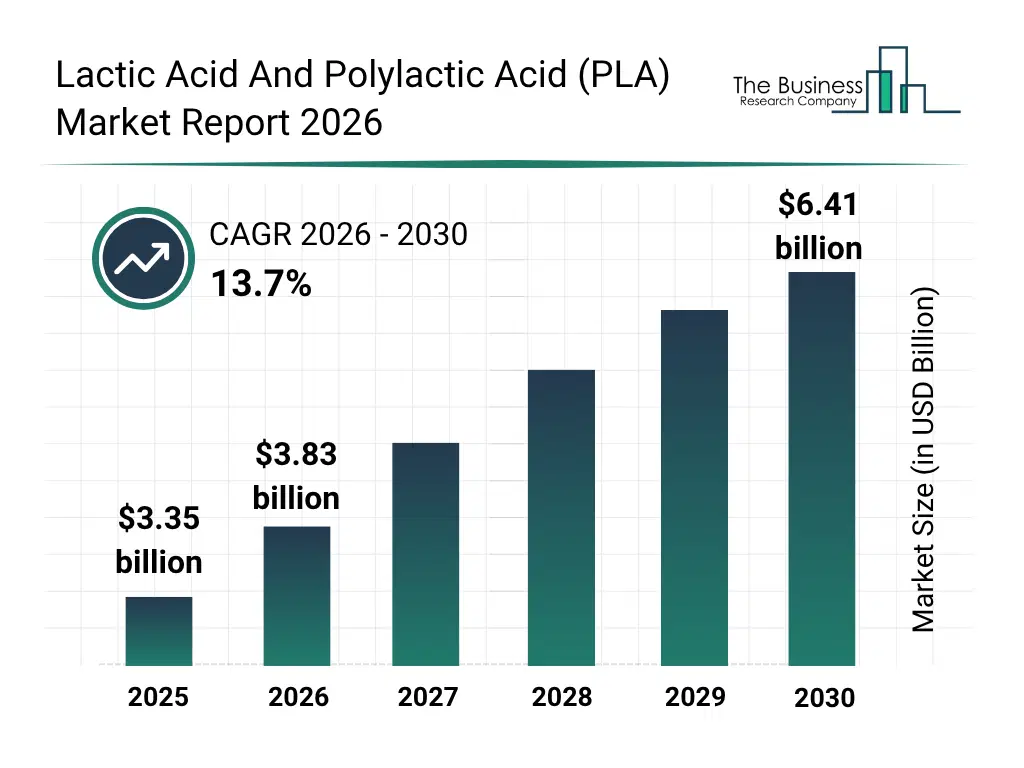
What Is The Lactic Acid And Polylactic Acid (PLA) Market Size and Share 2026?
The lactic acid and polylactic acid (pla) market size has grown rapidly in recent years. It will grow from $3.35 billion in 2025 to $3.83 billion in 2026 at a compound annual growth rate (CAGR) of 14.2%. The growth in the historic period can be attributed to rising demand for biodegradable plastics, increasing adoption of sustainable packaging, growth in food and beverage applications, expansion of pharmaceutical and healthcare applications, availability of renewable carbohydrate feedstocks.What Is The Lactic Acid And Polylactic Acid (PLA) Market Growth Forecast?
The lactic acid and polylactic acid (pla) market size is expected to see rapid growth in the next few years. It will grow to $6.41 billion in 2030 at a compound annual growth rate (CAGR) of 13.7%. The growth in the forecast period can be attributed to stricter regulations on conventional plastics, increasing investment in bioplastic manufacturing capacity, rising demand for compostable packaging solutions, expansion of PLA applications in automotive and electronics, growing adoption of bio-based materials across consumer goods. Major trends in the forecast period include bio-based lactic acid production from renewable feedstocks, development of high-performance PLA grades, expansion of biodegradable and compostable PLA applications, increasing use of fermentation-based production technologies, development of customized lactic acid and PLA formulations.Tariff Impact On Lactic Acid And Polylactic Acid (PLA) Market
Tariffs are impacting the lactic acid and polylactic acid (PLA) market by increasing the cost of imported feedstocks, bioplastic resins, and processing equipment required for lactic acid and PLA production. This is slowing the expansion of bio-based material production and increasing costs for downstream applications, particularly in regions dependent on imported materials such as Asia-Pacific, Europe, and North America. PLA resin and processed bioplastic segments are most affected due to international supply chain dependencies, while packaging, food and beverage, healthcare, and consumer goods industries also face higher material costs. However, tariffs are also encouraging local production, regional supplier diversification, and increased investment in domestic bioplastic manufacturing ecosystems, creating long-term resilience in the market.
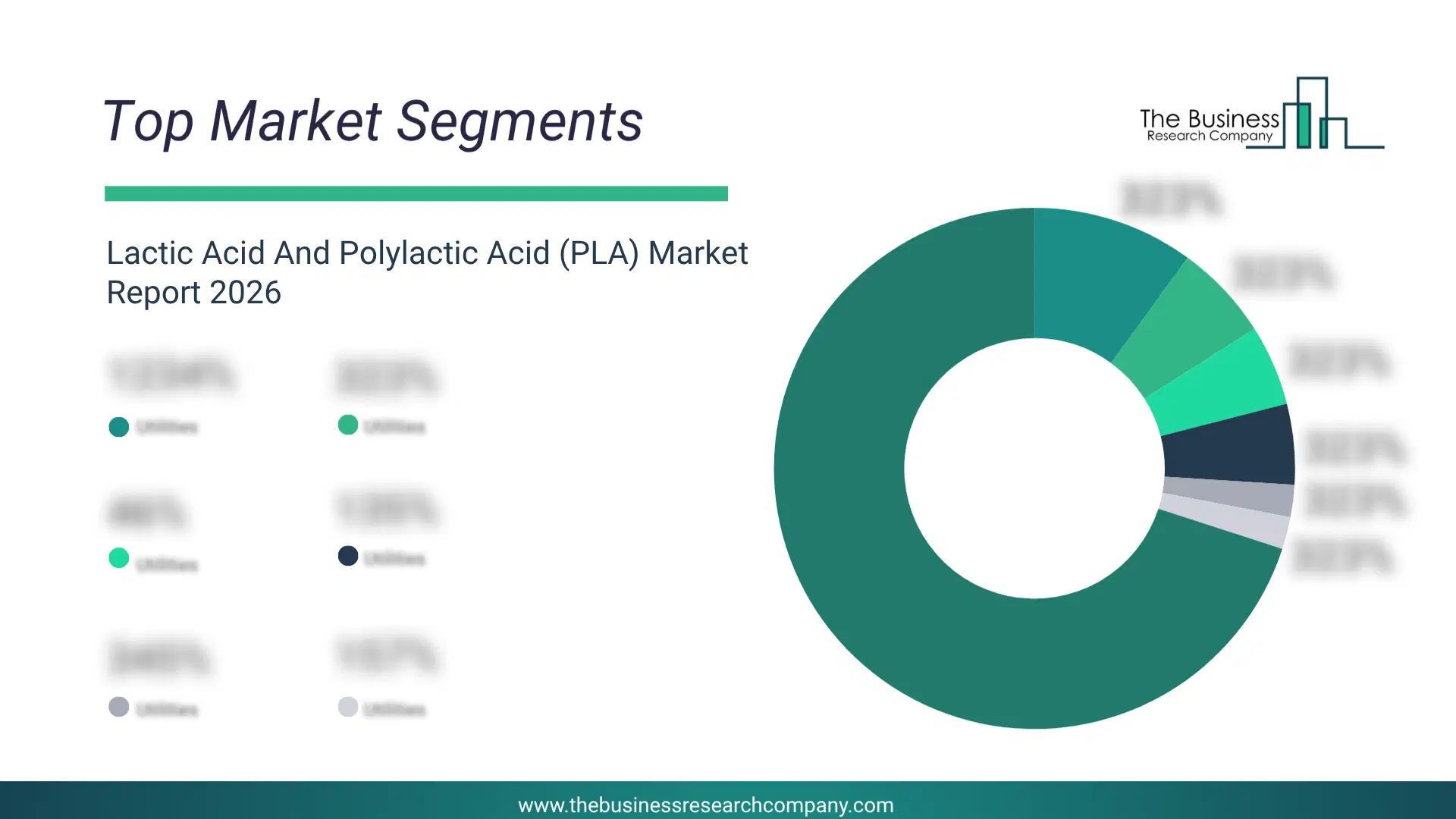
Global Lactic Acid And Polylactic Acid PLA Market Segmentation
1) By Type: Lactic Acid, Polylactic Acid, Polylactic-Co-Glycolic Acid 2) By Raw Material: Corn, Sugarcane, Cassava, Sugar Beet 3) By Form: Liquid, Powder, Pellets, Granules 4) By Distribution Channel: Direct Sales, Distributors And Wholesalers, Online Sales 5) By End User: Packaging Industry, Food And Beverage Industry, Healthcare Industry, Textile Industry, Agriculture Industry, Consumer Goods Industry, Automotive Industry, Electronics Industry, Chemical Industry Subsegments: 1) By Lactic Acid: L-Lactic Acid, D-Lactic Acid, DL-Lactic Acid, Food-Grade Lactic Acid, Industrial-Grade Lactic Acid, Pharmaceutical-Grade Lactic Acid 2) By Polylactic Acid: Poly-L-Lactic Acid, Poly-D-Lactic Acid, Poly-DL-Lactic Acid, Stereocomplex Polylactic Acid, Amorphous Polylactic Acid, Crystalline Polylactic Acid 3) By Polylactic-Co-Glycolic Acid: 50:50 Polylactic-Co-Glycolic Acid, 65:35 Polylactic-Co-Glycolic Acid, 75:25 Polylactic-Co-Glycolic Acid, 85:15 Polylactic-Co-Glycolic Acid, High Molecular Weight Polylactic-Co-Glycolic Acid, Low Molecular Weight Polylactic-Co-Glycolic AcidWhat Is The Driver Of The Lactic Acid And Polylactic Acid (PLA) Market?
The growth in the food and beverage industry is expected to propel the growth of the lactic acid and polylactic acid (PLA) market going forward. The food and beverage industry encompasses businesses involved in the manufacturing, processing, packaging, distribution, and sale of food and drink products for consumers. The food and beverage industry is increasing due to changing consumer lifestyles, as rising urbanization and busy schedules are driving greater demand for convenient, ready-to-eat, and packaged food and beverage products. The expanding food and beverage industry drives lactic acid and polylactic acid (PLA) by increasing demand for lactic acid as a food ingredient and for PLA-based sustainable packaging solutions to meet consumer preferences and regulatory requirements. For instance, in March 2026, according to Verband Deutscher Maschinen und Anlagenbau, Germany-based, industry association for mechanical and plant engineering, that packaged food sales are projected to rise 11% from 872 million tons in 2024 to 968 million tons by 2029, with particularly strong growth expected in the Middle East/Africa (21%) and Asia (14%). Therefore, the growth in the food and beverage industry is driving the growth of the lactic acid and polylactic acid (PLA) industry.Key Players In The Global Lactic Acid And Polylactic Acid (PLA) Market
Major companies operating in the lactic acid and polylactic acid (pla) market are Mitsubishi Chemical Group Corporation, Toray Industries Inc., Evonik Industries AG, Mitsui Chemicals Inc., Kingfa Sci. & Tech. Co. Ltd., Jungbunzlauer Suisse AG, Henan Jindan Lactic Acid Technology Co. Ltd., NatureWorks LLC, Unitika Ltd., TotalEnergies Corbion B.V., Zhejiang Hisun Biomaterials Co. Ltd., Galactic S.A., Teknor Apex Company, Futerro S.A., Shenzhen Esun Industrial Co. Ltd., Anhui Fengyuan Group Co. Ltd., Musashino Chemical Laboratory Ltd., Henan Xinghan Biotechnology Co. Ltd., COFCO Corporation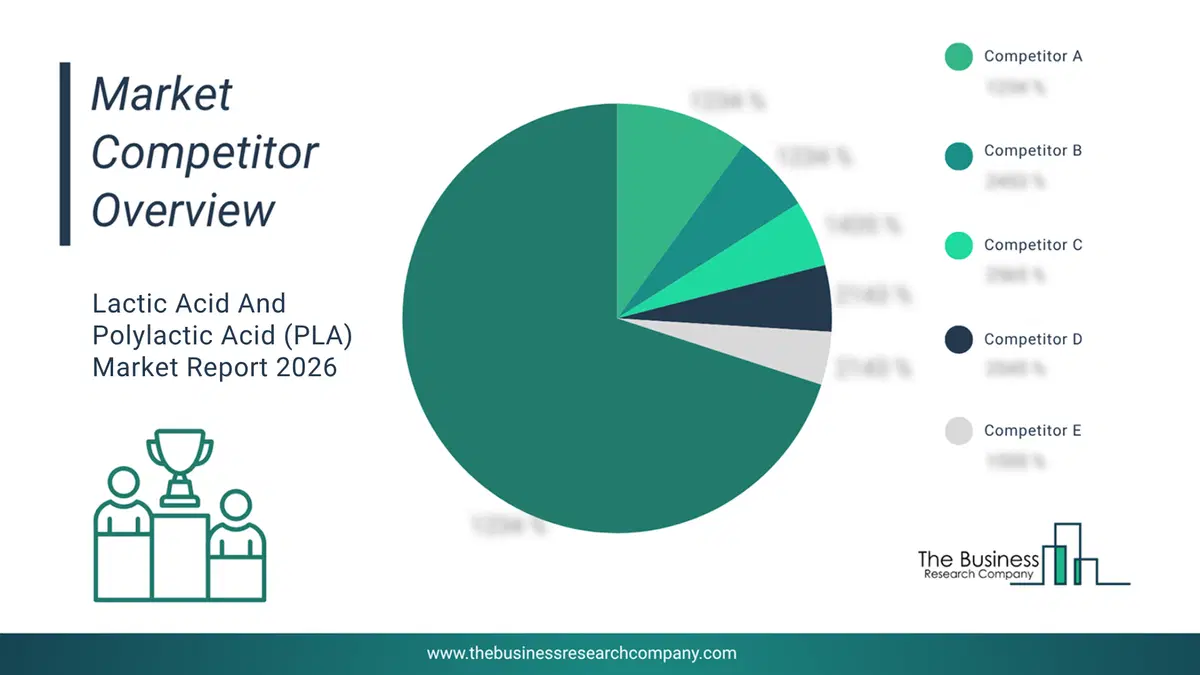
This chart is for illustrative purposes; the full report includes a detailed competitor analysis and comprehensive overview of the top 10 companies in the market.
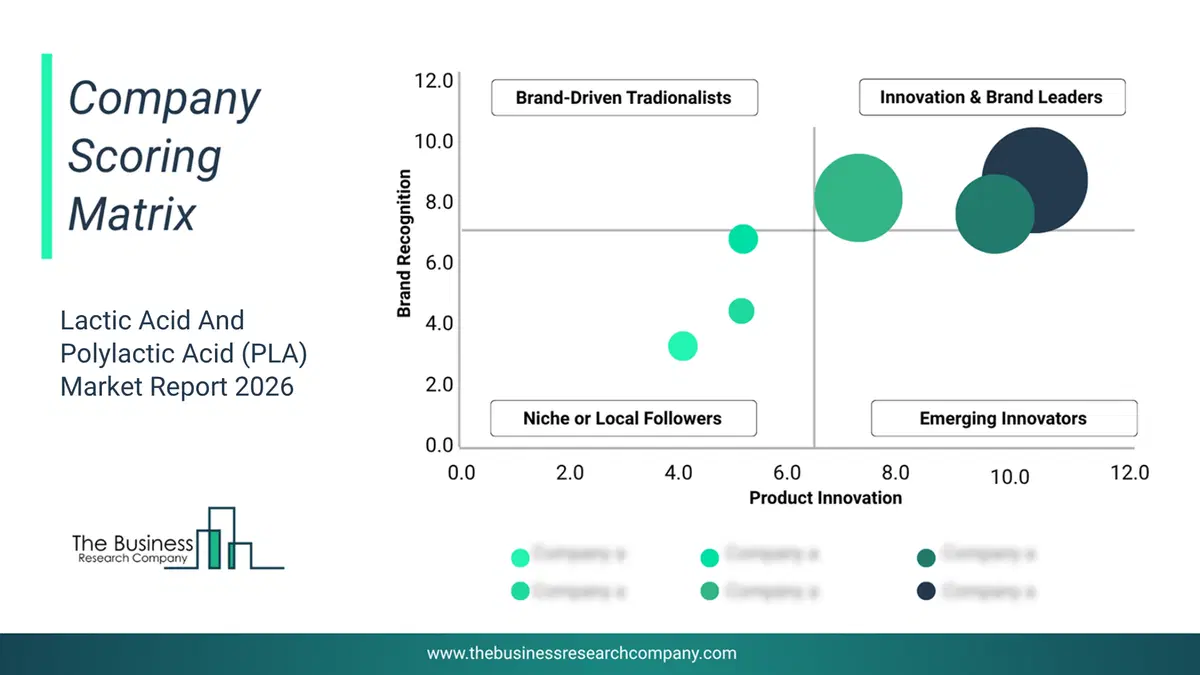
This chart maps companies by product innovation and brand strength, with bubble size indicating relative revenue, helping identify market leaders, challengers, and niche players. This is an illustrative chart; the full report provides a complete and accurate competitive analysis.
Global Lactic Acid And Polylactic Acid (PLA) Market Trends and Insights
Major companies operating in the lactic acid and polylactic acid (PLA) market are focusing on developing innovative solutions such as advanced PLA material platforms to improve sustainability, expand bio-based material adoption, and enhance performance across diverse industrial applications. Advanced PLA material platforms refer to integrated portfolios of polylactic acid-based materials engineered to deliver improved functionality, sustainability, and processing capabilities for a wide range of applications. For instance, in January 2025, Futerro SA, a Belgium-based chemical company, launched Futeon, an advanced PLA material platform designed to provide high-performance and sustainable PLA-based material solutions. It offers benefits such as enhanced material performance, improved sustainability through renewable bio-based content, and greater versatility for multiple end-use requirements. The launch aims to help customers accelerate the transition to low-carbon materials while supporting the growing demand for circular and sustainable polymer solutions.What Are Latest Mergers And Acquisitions In The Lactic Acid And Polylactic Acid (PLA) Market?
In April 2025, thyssenkrupp Uhde GmbH, a Germany-based chemical engineering and plant engineering company, partnered with Praj Industries Limited to develop an end-to-end integrated technology for lactic acid and polylactic acid (PLA) production. Through this partnership, the companies aim to combine Praj Industries' lactic acid production technology with Uhde Inventa-Fischer's PLA polymerization expertise to deliver complete PLA production plants, accelerate the commercialization of sustainable bioplastics, and support the global transition toward a circular bioeconomy. Praj Industries Limited is an India-based industrial biotechnology company that provides lactic acid production technology.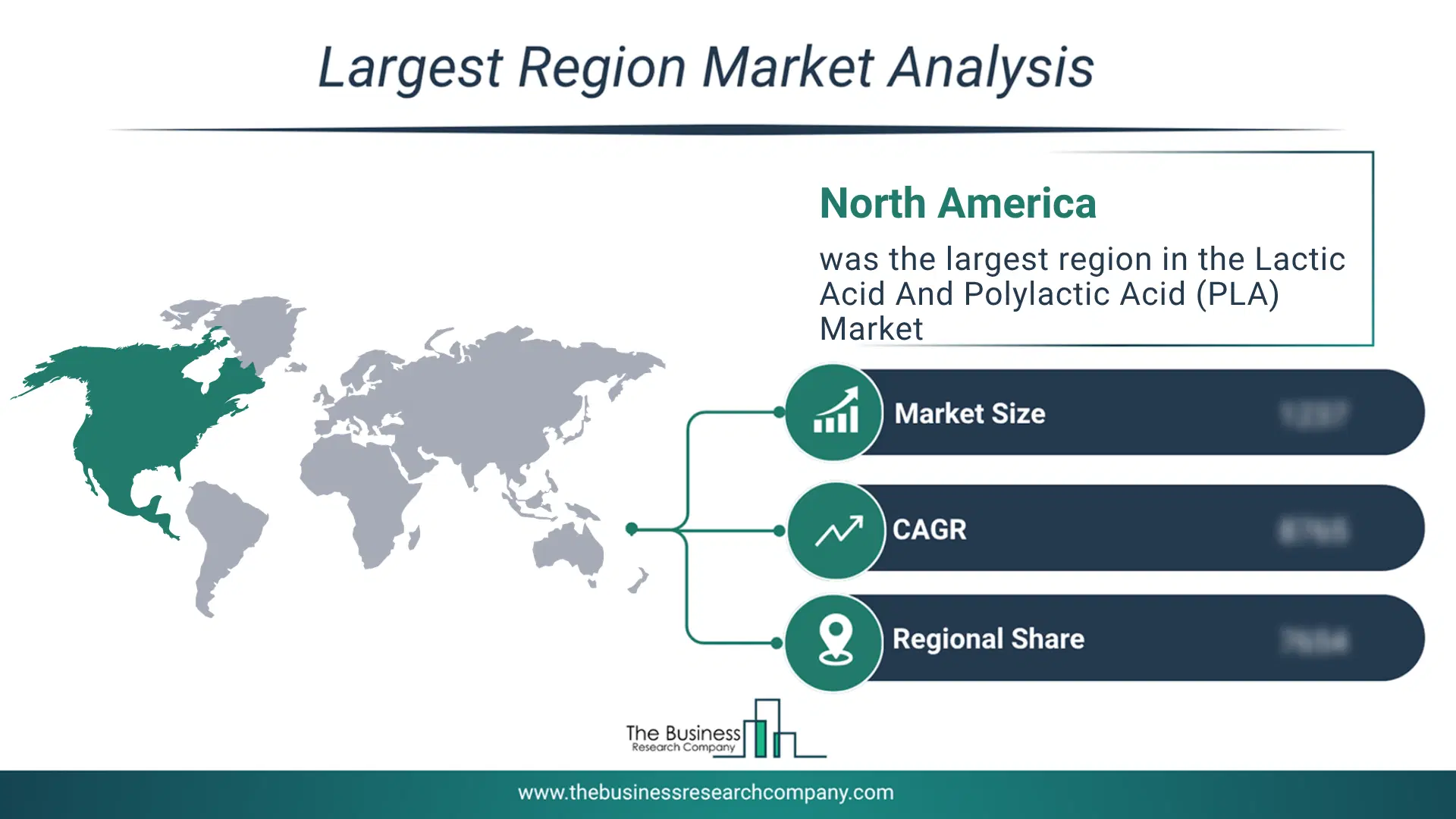
Regional Outlook
North America was the largest region in the lactic acid and polylactic acid (pla) market in 2025. Asia-Pacific is expected to be the fastest-growing region in the forecast period. The regions covered in this market report are Asia-Pacific, South East Asia, Western Europe, Eastern Europe, North America, South America, Middle East, Africa. The countries covered in this market report are Australia, Brazil, China, France, Germany, India, Indonesia, Japan, Taiwan, Russia, South Korea, UK, USA, Canada, Italy, Spain.What Defines the Lactic Acid And Polylactic Acid (PLA) Market?
The lactic acid and polylactic acid market consists of sales of lactic acid esters, sodium lactate, calcium lactate, and potassium lactate. Values in this market are ‘factory gate’ values, that is, the value of goods sold by the manufacturers or creators of the goods, whether to other entities (including downstream manufacturers, wholesalers, distributors, and retailers) or directly to end customers. The value of goods in this market includes related services sold by the creators of the goods.How is Market Value Defined and Measured?
The market value is defined as the revenues that enterprises gain from the sale of goods and/or services within the specified market and geography through sales, grants, or donations in terms of the currency (in USD unless otherwise specified). The revenues for a specified geography are consumption values that are revenues generated by organizations in the specified geography within the market, irrespective of where they are produced. It does not include revenues from resales along the supply chain, either further along the supply chain or as part of other products.
This chart presents market attractiveness based on a quantitative evaluation of growth, competition, strategic alignment, and risk, offering a clear view of opportunity areas for decision-making. This chart is for illustrative purposes; the full report contains the complete analysis.

This chart highlights the Total Addressable Market (TAM) by estimating the maximum revenue opportunity using an assumption-driven approach, supporting strategic planning and opportunity sizing across markets. The chart is illustrative; the full report provides a more comprehensive analysis.
What Key Data and Analysis Are Included in the Lactic Acid And Polylactic Acid (PLA) Market Report 2026?
The lactic acid and polylactic acid (pla) market research report is one of a series of new reports from The Business Research Company that provides market statistics, including industry global market size, regional shares, competitors with the market share, detailed market segments, market trends and opportunities, and any further data you may need to thrive in the lactic acid and polylactic acid (pla) industry. The market research report delivers a complete perspective of everything you need, with an in-depth analysis of the current and future state of the industry.Lactic Acid And Polylactic Acid (PLA) Market Report Forecast Analysis
| Report Attribute | Details |
|---|---|
| Market Size Value In 2026 | $3.83 billion |
| Revenue Forecast In 2030 | $6.41 billion |
| Growth Rate | CAGR of 13.7% from 2026 to 2030 |
| Base Year For Estimation | 2025 |
| Actual Estimates/Historical Data | 2020-2025 |
| Forecast Period | 2026 - 2030 |
| Market Representation | Revenue in USD Billion and CAGR from 2026 to 2030 |
| Segments Covered | Type, Raw Material, Form, Distribution Channel, End User |
| Regional Scope | Asia-Pacific, Western Europe, Eastern Europe, North America, South America, Middle East, Africa |
| Country Scope | The countries covered in the report are Australia, Brazil, China, France, Germany, India, Indonesia, Japan, Taiwan, Russia, South Korea, UK, USA, Canada, Italy, Spain. |
| Key Companies Profiled | Mitsubishi Chemical Group Corporation, Toray Industries Inc., Evonik Industries AG, Mitsui Chemicals Inc., Kingfa Sci. & Tech. Co. Ltd., Jungbunzlauer Suisse AG, Henan Jindan Lactic Acid Technology Co. Ltd., NatureWorks LLC, Unitika Ltd., TotalEnergies Corbion B.V., Zhejiang Hisun Biomaterials Co. Ltd., Galactic S.A., Teknor Apex Company, Futerro S.A., Shenzhen Esun Industrial Co. Ltd., Anhui Fengyuan Group Co. Ltd., Musashino Chemical Laboratory Ltd., Henan Xinghan Biotechnology Co. Ltd., COFCO Corporation |
| Customization Scope | Request for Customization |
| Pricing And Purchase Options | Explore Purchase Options |