

Large-Surface-Area Microcarrier Bioreactor Market Report 2026
Global Outlook – By Product Type (Single-Use Bioreactors, Multi-Use Bioreactors), By Microcarrier Type (Synthetic Microcarriers, Natural Microcarriers, Hybrid Microcarriers), By Distribution Channel (Hospital Pharmacy, Online Pharmacy, Retail Pharmacy), By Application (Cell Therapy, Vaccine Production, Tissue Engineering, Stem Cell Research, Other Appplications), By End User (Pharmaceutical And Biotechnology Companies, Research Institutes, Contract Manufacturing Organizations, Other End Users) – Market Size, Trends, Strategies, and Forecast to 2030
Large-Surface-Area Microcarrier Bioreactor Market Overview
• Large-Surface-Area Microcarrier Bioreactor market size has reached to $1.81 billion in 2025 • Expected to grow to $3.74 billion in 2030 at a compound annual growth rate (CAGR) of 15.5% • Growth Driver: Growing Demand For Gene Therapies Fueling The Growth Of The Market Due To The Need For Scalable, Standardized, And High-Quality Production Processes • Market Trend: 3D Nanofibre Microcarriers Enhance Scalable Cell Cultivation Efficiency • North America was the largest region in 2025 and Asia-Pacific is the fastest growing region.What Is Covered Under Large-Surface-Area Microcarrier Bioreactor Market?
A large-surface-area microcarrier bioreactor is a bioprocessing system that uses microcarriers suspended in a controlled bioreactor environment to provide extensive surface area for the growth of anchorage-dependent cells. Its purpose is to enable efficient, scalable expansion of cells for applications such as vaccine production, cell and gene therapies, and regenerative medicine. The main product types of large-surface-area microcarrier bioreactors are single-use bioreactors and multi-use bioreactors. Single-use bioreactors are disposable culture systems designed to support high-density adherent cell growth using microcarriers while reducing contamination risk and cleaning requirements. These systems use synthetic microcarriers, natural microcarriers, and hybrid microcarriers, distributed through hospital pharmacies, online pharmacies, and retail pharmacies, applied in cell therapy, vaccine production, tissue engineering, stem cell research, and others, among end users including pharmaceutical and biotechnology companies, research institutes, contract manufacturing organizations, and others.
What Is The Large-Surface-Area Microcarrier Bioreactor Market Size and Share 2026?
The large-surface-area microcarrier bioreactor market size has grown rapidly in recent years. It will grow from $1.81 billion in 2025 to $2.10 billion in 2026 at a compound annual growth rate (CAGR) of 15.8%. The growth in the historic period can be attributed to increasing adoption of large-surface-area microcarrier bioreactors, growing demand for high-density adherent cell cultures, rising investment in regenerative medicine research, expansion of automated cell expansion technologies, and increasing utilization of single-use microcarrier systems.What Is The Large-Surface-Area Microcarrier Bioreactor Market Growth Forecast?
The large-surface-area microcarrier bioreactor market size is expected to see rapid growth in the next few years. It will grow to $3.74 billion in 2030 at a compound annual growth rate (CAGR) of 15.5%. The growth in the forecast period can be attributed to rising focus on scalable stem cell production, growing investment in advanced microcarrier bioprocessing, increasing demand for clinical-grade cell expansion, expansion of biotechnology and pharmaceutical R&D, and strongly increasing adoption of automated and high-precision platforms. Major trends in the forecast period include technology advancements in microcarrier bioreactors, innovations in automated cell expansion platforms, developments in high-density adherent cell culture techniques, research and developments in single-use microcarrier systems, and advancements in real-time monitoring and process control.
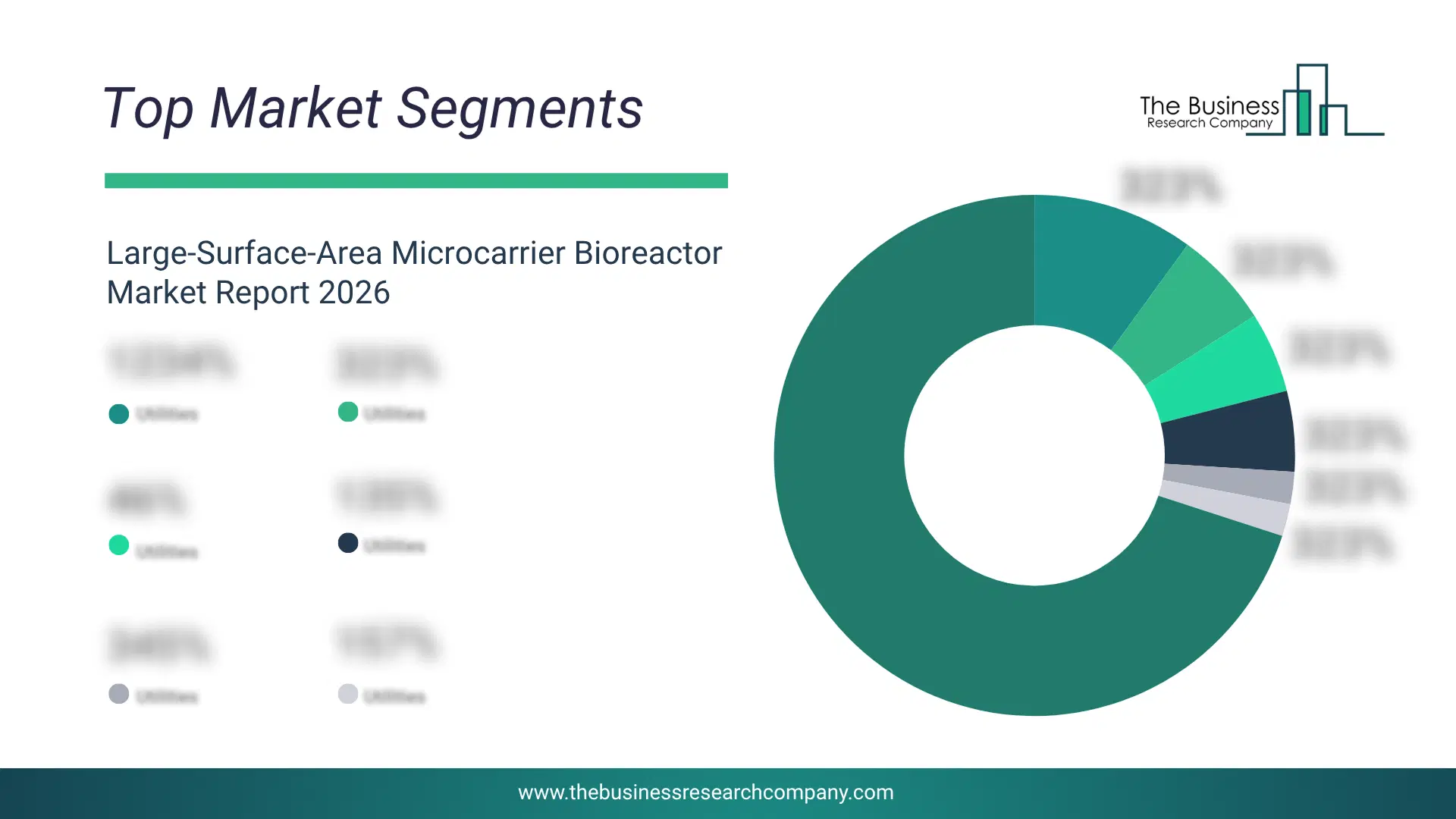
Global Large-Surface-Area Microcarrier Bioreactor Market Segmentation
1) By Product Type: Single-Use Bioreactors, Multi-Use Bioreactors 2) By Microcarrier Type: Synthetic Microcarriers, Natural Microcarriers, Hybrid Microcarriers 3) By Distribution Channel: Hospital Pharmacy, Online Pharmacy, Retail Pharmacy 4) By Application: Cell Therapy, Vaccine Production, Tissue Engineering, Stem Cell Research, Other Appplications 5) By End User: Pharmaceutical And Biotechnology Companies, Research Institutes, Contract Manufacturing Organizations, Other End Users Subsegments: 1) By Single-Use Bioreactors: Disposable Microcarrier Vessels, Pre-Sterilized Culture Chambers, Single-Cycle Expansion Units, Plug-And-Play Bioprocessing Modules, Disposable Agitation Systems 2) By Multi-Use Bioreactors: Autoclavable Microcarrier Vessels, Cleanable Stainless Steel Chambers, Reusable Agitation Systems, Long-Term Operation Bioprocess Units, Reprocessable Culture ModulesWhat Are The Drivers Of The Large-Surface-Area Microcarrier Bioreactor Market?
The growing demand for gene therapies is expected to propel the growth of the large-surface-area microcarrier bioreactor market going forward. Gene therapy refers to a medical technique that involves modifying or replacing defective genes to treat or prevent diseases. The increasing demand for gene therapy is due to advancements in genetic sequencing and diagnostics, which enable precise identification of disease-causing genes for targeted treatment. Large-surface-area microcarrier bioreactors support gene therapy by providing an extensive growth surface for efficient expansion of adherent cells used in gene-modified treatments. They enhance therapeutic development by increasing cell yield, ensuring consistency, and enabling scalable production of gene therapy products. For instance, in December 2024, according to the American Society of Gene & Cell Therapy (ASGCT), a US-based non-profit medical and scientific organization, the Food and Drug Administration (FDA) approved six gene therapy products in 2023, up from five approvals in 2022. Therefore, the growing demand for gene therapies is driving the growth of the large-surface-area microcarrier bioreactor industry. The rising healthcare expenditure is expected to propel the growth of the large-surface-area microcarrier bioreactor market going forward. Healthcare expenditure refers to the total amount of financial resources spent on healthcare services, including medical treatments, hospital care, medications, and public health initiatives, by governments, businesses, and individuals. The increasing demand for healthcare expenditure is due to the rising prevalence of chronic diseases, which require long-term and costly treatments. Rising healthcare expenditure enhances large-surface-area microcarrier bioreactors by enabling investment in advanced bioprocessing technologies that support large-scale cell production. This improves therapeutic development by increasing efficiency, scalability, and consistency in manufacturing cell and gene therapies. For instance, in May 2024, according to the Office for National Statistics, a UK-based government department, total healthcare expenditure saw a 5.6% increase in nominal terms in 2023, an increase of 0.9% growth compared to 2022. Therefore, the rising healthcare expenditure is driving the growth of the large-surface-area microcarrier bioreactor industry.Key Players In The Global Large-Surface-Area Microcarrier Bioreactor Market
Major companies operating in the large-surface-area microcarrier bioreactor market are Thermo Fisher Scientific Inc., Merck KGaA, Corning Incorporated, Lonza Group AG, Cytiva Sweden AB, Sartorius AG, Bio-Rad Laboratories Inc., Eppendorf SE, Repligen Corporation, Pall Corporation, PBS Biotech Inc., Applikon Biotechnology B.V., Esco VacciXcell, Meissner Filtration Products Inc., Distek Inc., Infors HT AG, Adolf Kühner AG, Kuhner Shaker GmbH, Cellexus Ltd., Solaris Biotech S.r.l.
This chart is for illustrative purposes; the full report includes a detailed competitor analysis and comprehensive overview of the top 10 companies in the market.
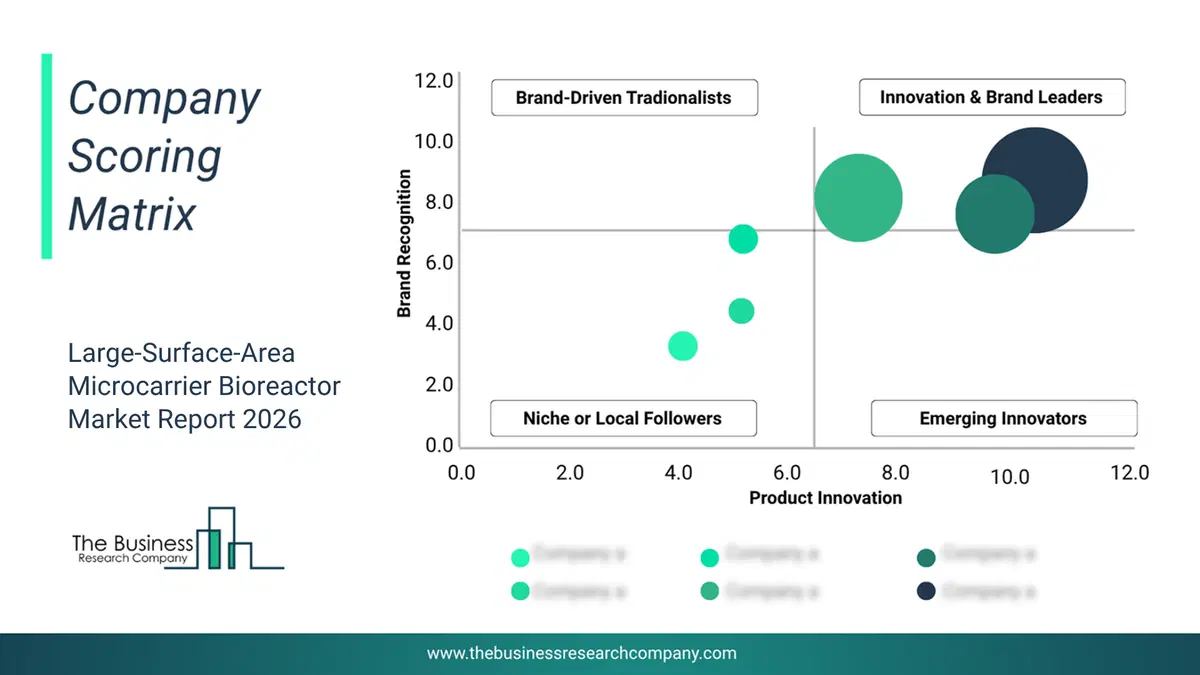
This chart maps companies by product innovation and brand strength, with bubble size indicating relative revenue, helping identify market leaders, challengers, and niche players. This is an illustrative chart; the full report provides a complete and accurate competitive analysis.
Global Large-Surface-Area Microcarrier Bioreactor Market Trends and Insights
Major companies operating in the large-surface-area microcarrier bioreactor market are focusing on developing advanced products, such as 3D nanofibre scaffolds, to boost efficiency, enhance cell growth, and reduce process variability and development timelines. 3D nanofibre microcarriers refer to advanced, biomimetic scaffolds that provide a three-dimensional environment for cell adhesion and proliferation, mimicking the natural extracellular matrix. For instance, in February 2025, Cellevate AB, a Sweden-based cell culture materials innovator, launched the Cellevat3D nanofibre microcarrier. It is a customizable, synthetic microcarrier designed for scalable cell cultivation, featuring a unique nanofibrous architecture that increases surface area for enhanced cell attachment and yield. It includes precise biochemical and physical parameter control, enabling optimal growth conditions for various cell types, including stem cells and therapeutic cells, without extensive process re-development. It also incorporates xeno-free and animal-free material options, improving product safety and regulatory compliance for biopharmaceutical and cultivated meat producers.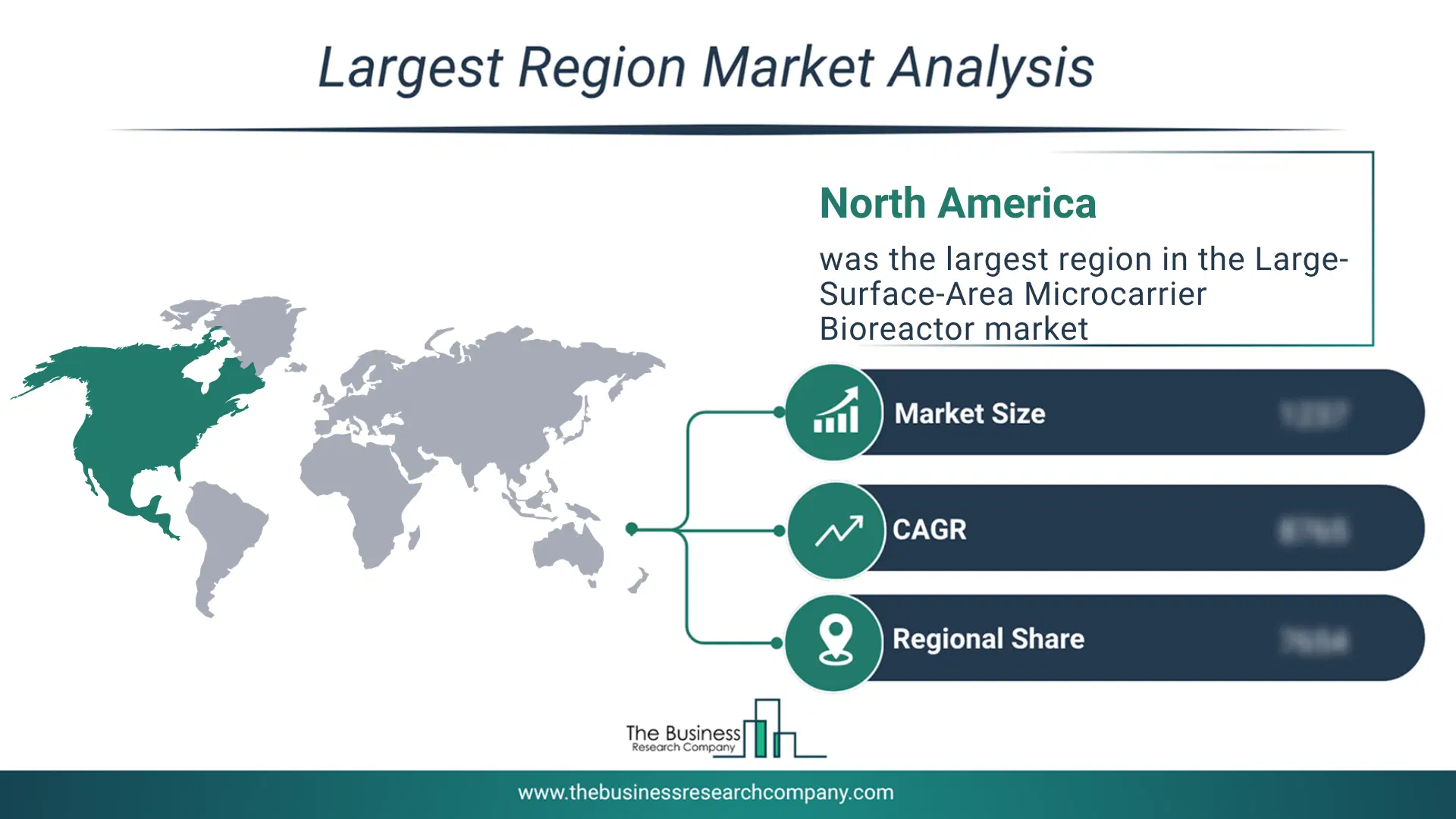
Regional Insights
North America was the largest region in the large-surface-area microcarrier bioreactor market in 2025. Asia-Pacific is expected to be the fastest-growing region in the forecast period. The regions covered in this market report are Asia-Pacific, South East Asia, Western Europe, Eastern Europe, North America, South America, Middle East, Africa. The countries covered in this market report are Australia, Brazil, China, France, Germany, India, Indonesia, Japan, Taiwan, Russia, South Korea, UK, USA, Canada, Italy, Spain.What Defines the Large-Surface-Area Microcarrier Bioreactor Market?
The large-surface-area microcarrier bioreactor market consists of revenues earned by entities by providing services such as bioreactor system installation, cell culture process development, microcarrier selection and optimization support, validation and qualification services, and technical maintenance and operator training. The market value includes the value of related goods sold by the service provider or included within the service offering. The large-surface-area microcarrier bioreactor market also includes sales of microcarrier bioreactor vessels, large-surface-area microcarriers, agitation and control systems, integrated monitoring sensors, and single-use consumables. Values in this market are ‘factory gate’ values, that is, the value of goods sold by the manufacturers or creators of the goods, whether to other entities (including downstream manufacturers, wholesalers, distributors, and retailers) or directly to end customers. The value of goods in this market includes related services sold by the creators of the goods.How is Market Value Defined and Measured?
The market value is defined as the revenues that enterprises gain from the sale of goods and/or services within the specified market and geography through sales, grants, or donations in terms of the currency (in USD unless otherwise specified). The revenues for a specified geography are consumption values that are revenues generated by organizations in the specified geography within the market, irrespective of where they are produced. It does not include revenues from resales along the supply chain, either further along the supply chain or as part of other products.
This chart presents market attractiveness based on a quantitative evaluation of growth, competition, strategic alignment, and risk, offering a clear view of opportunity areas for decision-making. This chart is for illustrative purposes; the full report contains the complete analysis.

This chart highlights the Total Addressable Market (TAM) by estimating the maximum revenue opportunity using an assumption-driven approach, supporting strategic planning and opportunity sizing across markets. The chart is illustrative; the full report provides a more comprehensive analysis.
What Key Data and Analysis Are Included in the Large-Surface-Area Microcarrier Bioreactor Market Report 2026?
The large-surface-area microcarrier bioreactor market research report is one of a series of new reports from The Business Research Company that provides market statistics, including industry global market size, regional shares, competitors with the market share, detailed market segments, market trends and opportunities, and any further data you may need to thrive in the large-surface-area microcarrier bioreactor industry. The market research report delivers a complete perspective of everything you need, with an in-depth analysis of the current and future state of the industry.Large-Surface-Area Microcarrier Bioreactor Market Report Forecast Analysis
| Report Attribute | Details |
|---|---|
| Market Size Value In 2026 | $2.10 billion |
| Revenue Forecast In 2030 | $3.74 billion |
| Growth Rate | CAGR of 15.5% from 2026 to 2030 |
| Base Year For Estimation | 2025 |
| Actual Estimates/Historical Data | 2020-2025 |
| Forecast Period | 2026 - 2030 |
| Market Representation | Revenue in USD Billion and CAGR from 2026 to 2030 |
| Segments Covered | Product Type, Microcarrier Type, Distribution Channel, Application, End User |
| Regional Scope | Asia-Pacific, Western Europe, Eastern Europe, North America, South America, Middle East, Africa |
| Country Scope | The countries covered in the report are Australia, Brazil, China, France, Germany, India, Indonesia, Japan, Taiwan, Russia, South Korea, UK, USA, Canada, Italy, Spain |
| Key Companies Profiled | Thermo Fisher Scientific Inc., Merck KGaA, Corning Incorporated, Lonza Group AG, Cytiva Sweden AB, Sartorius AG, Bio-Rad Laboratories Inc., Eppendorf SE, Repligen Corporation, Pall Corporation, PBS Biotech Inc., Applikon Biotechnology B.V., Esco VacciXcell, Meissner Filtration Products Inc., Distek Inc., Infors HT AG, Adolf Kühner AG, Kuhner Shaker GmbH, Cellexus Ltd., Solaris Biotech S.r.l. |
| Customization Scope | Request for Customization |
| Pricing And Purchase Options | Explore Purchase Options |