

Leasing Global Market Opportunities And Strategies To 2035
By Type (Automotive Equipment Leasing, Consumer Goods And General Rental Centers, Machinery Leasing, Lessors Of Nonfinancial Intangible Assets), By Mode (Online, Offline), By Lease Type (Closed-Ended Lease, Option To Buy Lease, Sub-Vented Lease, Other Lease Types), And By Region, Opportunities And Strategies – Global Forecast To 2035
Leasing Market Definition
Leasing refers to a contractual arrangement where one party (the lessor) grants another party (the lessee) temporary rights to use an asset in exchange for periodic payments. It is used by businesses and individuals who want to access equipment, vehicles, software or other assets. Leasing is typically entered when users require flexibility, lower capital expenditure and asset management support. The service is widely used across industries such as automotive, manufacturing and media, as well as by consumers for personal asset use. The leasing market consists of sales of leasing services by entities (organizations, sole traders and partnerships) that provide a wide variety of tangible goods such as consumer goods, industrial machinery and equipment, automobiles and others for use and assign intangible assets such as trademarks to customers in return for a periodic rental or lease payment. The leasing industry includes establishments that rent or lease tangible and intangible goods and equipment and establishments that lease machinery and equipment used for business operations or personal use.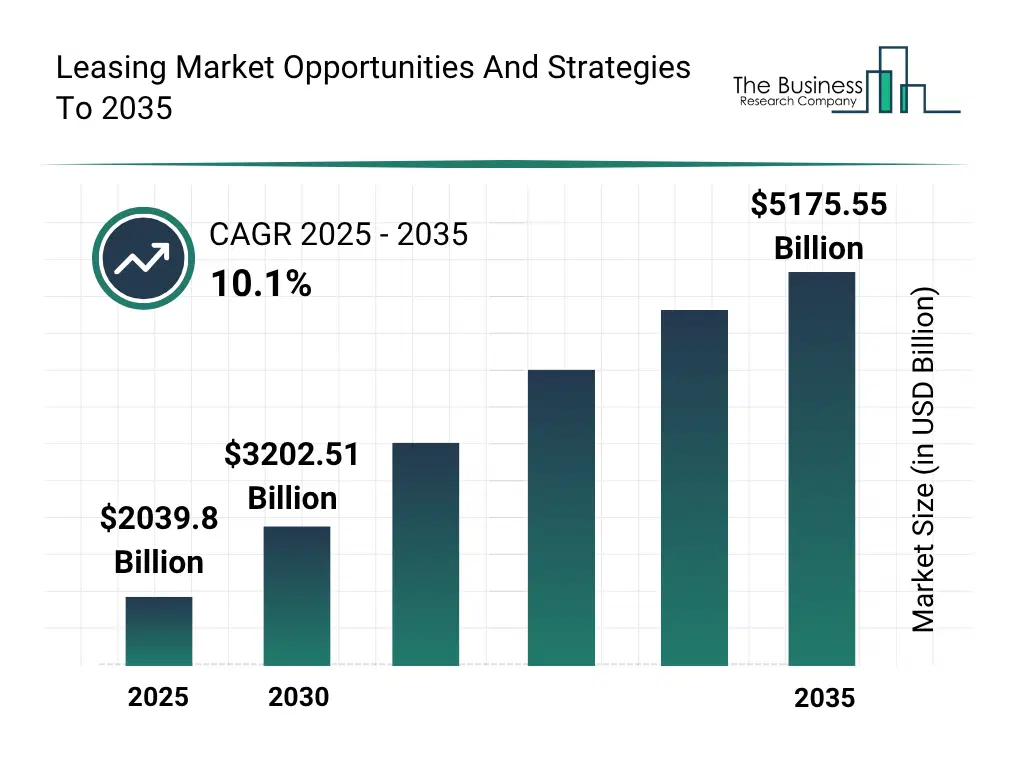
Leasing Market Size
The global leasing market reached a value of nearly $2,039,795.2 million in 2025, having grown at a compound annual growth rate (CAGR) of 10.8% since 2020. The market is expected to grow from $2,039,795.2 million in 2025 to $3,202,506.1 million in 2030 at a rate of 9.4%. The market is then expected to grow at a CAGR of 10.1% from 2030 and reach $5,175,552.6 million in 2035. Growth in the historic period resulted from rising demand for asset-light business models, increasing adoption of equipment leasing across industries, expansion of automotive and vehicle leasing services and growing infrastructure development. Factors that negatively affected growth in the historic period were high upfront cost barriers, regulatory complexity across regions and volatility in interest rates. Going forward, rising infrastructure investments and mega projects, global expansion of multinational corporations and asset leasing services, corporate focus on capital efficiency and cash-flow optimization and expansion of vendor financing and captive leasing programs will drive the growth. Factors that could hinder the growth of the leasing market in the future include compatibility issues with existing IT infrastructure, risk of asset misuse or damage by lessees and impact of trade wars and tariffs.
Leasing Market Segmentation
The leasing market is segmented by type, by mode and by lease type.By Type
The leasing market is segmented by type into:
- a) Automotive Equipment Leasing
- b) Consumer Goods And General Rental Centers
- c) Machinery Leasing
- d) Lessors Of Nonfinancial Intangible Assets
By Mode –
The leasing market is segmented by mode into:
- a) Online
- b) Offline
By Lease Type –
The leasing market is segmented by lease type into:
- a) Closed-Ended Lease
- b) Option To Buy Lease
- c) Sub-Vented Lease
- d) Other Lease Types
By Geography - The leasing market is segmented by geography into:
- China
- India
- Japan
- Australia
- Indonesia
- South Korea
- USA
- Canada
- Brazil
- France
- Germany
- UK
- Italy
- Spain
- Russia
-
o Asia Pacific
o Africa