
Leather Chemicals Market Report 2026
Global Outlook – By Product (Biocides, Surfactants, Chromium Sulfate, Polyurethane Resins, Sodium Bicarbonate), By Process (Tanning And Dyeing, Beamhouse, Finishing Chemicals), By Application (Footwear, Upholstery, Leather Goods, Garments) – Market Size, Trends, Strategies, and Forecast to 2030
Leather Chemicals Market Overview
• Leather Chemicals market size has reached to $10.03 billion in 2025 • Expected to grow to $13.76 billion in 2030 at a compound annual growth rate (CAGR) of 6.5% • Growth Driver: Rising Demand For Leather Products Fuels Growth In The Leather Chemicals Market • Market Trend: Strategic Partnerships Drive Innovation In The Leather Chemicals Industry • Asia-Pacific was the largest region and fastest growing region.Market Gains By 2030 – Top Opportunities By Segment
Market Gain identifies the most promising market opportunities by highlighting the segments or products expected to generate the highest incremental revenue growth over the next five years.
What Is Covered Under Leather Chemicals Market?
Leather chemicals are a class of chemical compounds that enhance leather product quality, reduce water consumption during production, and create more efficient process formulations. Leather chemicals are used in tanning, dyeing, and retaining leather during its multiple uses. These leather chemicals have different functions and come in preservatives, cleansing and wetting agents, biocides, fat liquors, and dyes. The main products of leather chemicals are biocides, surfactants, chromium sulfate, polyurethane resins, and sodium bicarbonate. Biocides are chemicals or microorganisms used to kill, discourage, render harmless, or control any dangerous organisms through chemical or biological means. Biocides are manufactured in liquid and powder forms as ready-to-use formulations or as concentrates. The various processes of leather chemicals are tanning and dyeing, beamhouse, and finishing chemicals that are applied in the footwear, upholstery, leather goods, and garment sectors.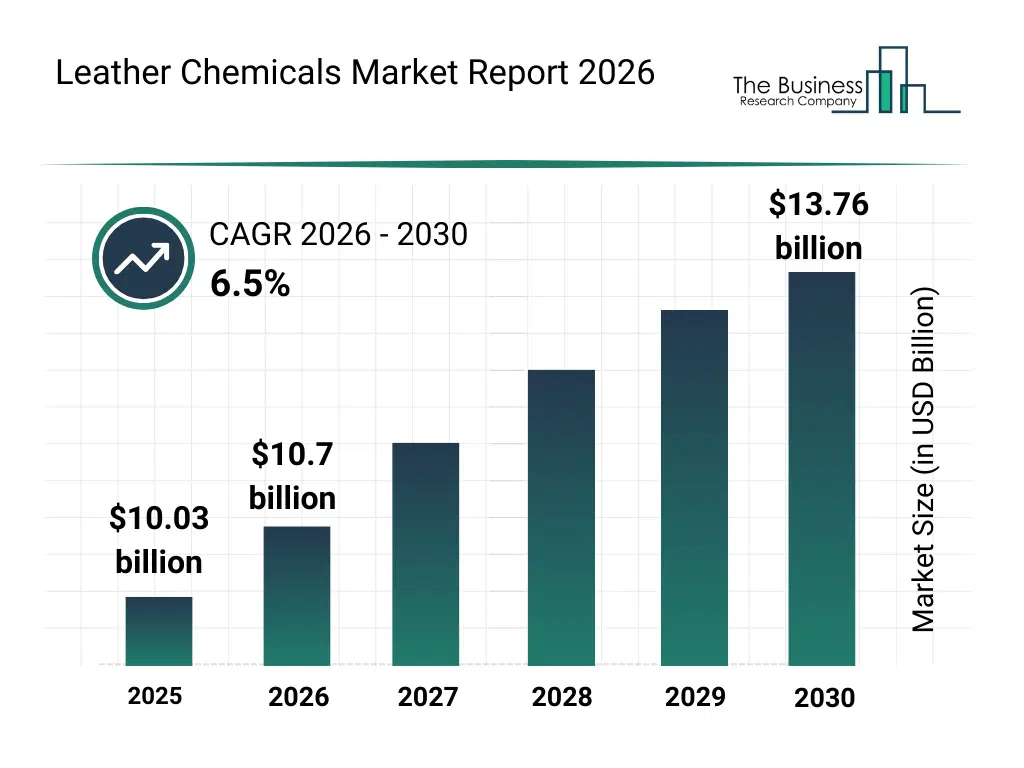
What Is The Leather Chemicals Market Size and Share 2026?
The leather chemicals market size has grown strongly in recent years. It will grow from $10.03 billion in 2025 to $10.7 billion in 2026 at a compound annual growth rate (CAGR) of 6.7%. The growth in the historic period can be attributed to expansion of footwear and leather goods manufacturing, availability of chromium-based tanning agents, growth of global leather exports, increasing demand for dyed and finished leather, established tanning infrastructure.What Is The Leather Chemicals Market Growth Forecast?
The leather chemicals market size is expected to see strong growth in the next few years. It will grow to $13.76 billion in 2030 at a compound annual growth rate (CAGR) of 6.5%. The growth in the forecast period can be attributed to increasing regulatory pressure on chemical usage, rising adoption of sustainable leather processing, expansion of automotive upholstery demand, growing focus on water-efficient tanning, increasing investments in specialty leather chemicals. Major trends in the forecast period include growing adoption of eco-friendly tanning chemicals, rising use of low-water consumption formulations, increasing demand for high-performance fat liquors, expansion of chrome-free tanning solutions, enhanced focus on process efficiency.
Global Leather Chemicals Market Segmentation
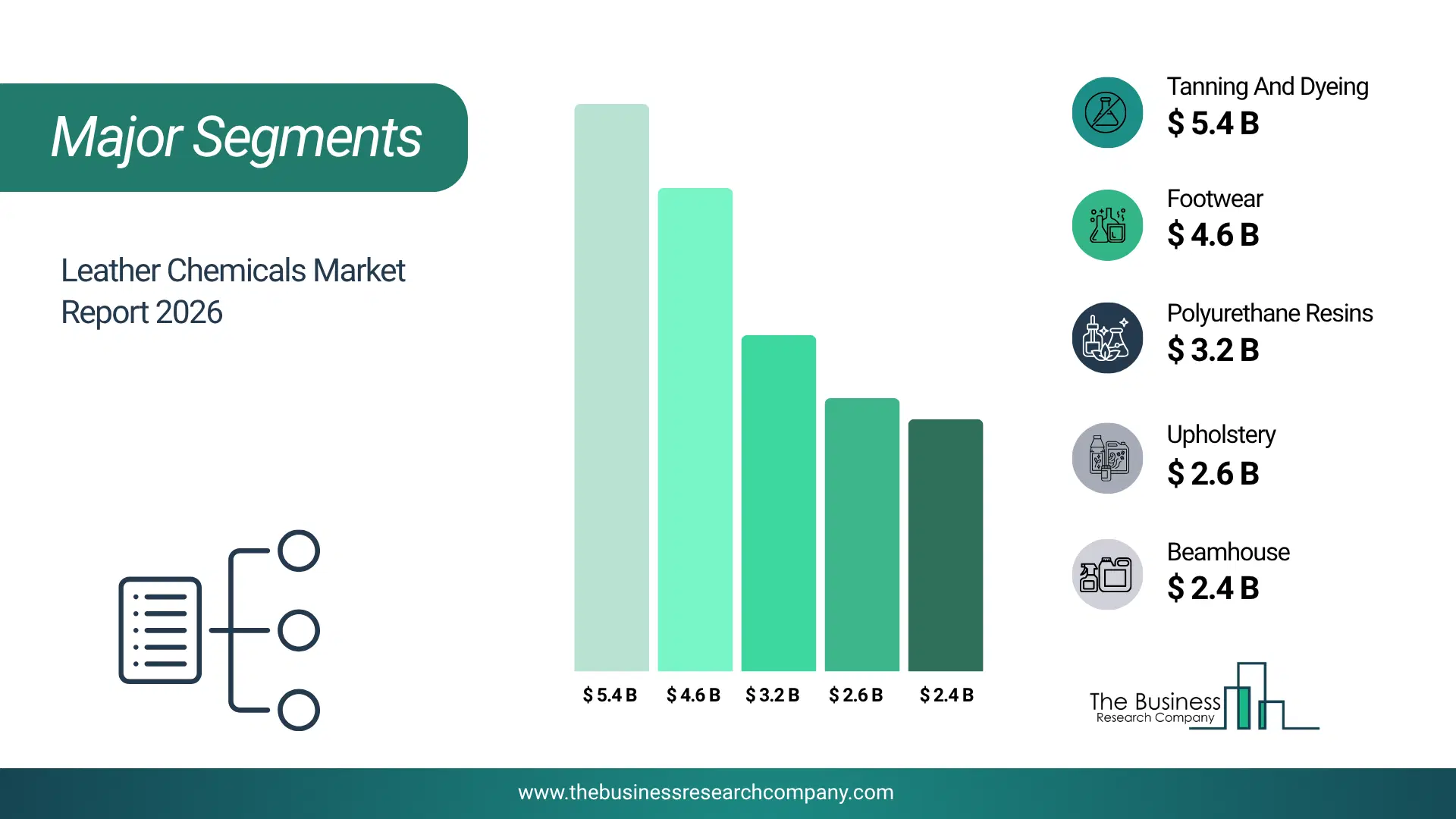
1) By Product: Biocides, Surfactants, Chromium Sulfate, Polyurethane Resins, Sodium Bicarbonate 2) By Process: Tanning And Dyeing, Beamhouse, Finishing Chemicals 3) By Application: Footwear, Upholstery, Leather Goods, Garments Subsegments: 1) By Biocides: Preservatives, Fungicides, Bactericides 2) By Surfactants: Anionic Surfactants, Cationic Surfactants, Nonionic Surfactants 3) By Chromium Sulfate: Basic Chromium Sulfate, Sulfate-Free Chromium Compounds 4) By Polyurethane Resins: Flexible Polyurethane Resins, Rigid Polyurethane Resins 5) By Sodium Bicarbonate: Leather Tanning Agent, PH Regulator The top segments in the leather chemicals market will be: • Tanning And Dyeing will reach $5483.67 Million by 2025. • Footwear will reach $4642.95 Million by 2025. • Polyurethane Resins will reach $3216.52 Million by 2025. • Upholstery will reach $2619.33 Million by 2025. • Beamhouse will reach $2468.47 Million by 2025.What Is The Driver Of The Leather Chemicals Market?
The increasing demand for leather products is expected to propel the growth of the leather chemicals market going forward. Leather products refer to a wide range of goods and items made from leather, which is a durable and flexible material obtained from the hides and skins of animals. The use of appropriate leather chemicals allows manufacturers to tailor leather products to specific requirements, ensuring they meet quality, performance, and aesthetic standards. For instance, in April 2023, according to Hermès International, a France-based luxury goods company, sales in the Leather Goods and Saddlery business line rose by 19% compared with Q1 2022. Therefore, increasing demand for leather products will drive the growth of the leather chemicals industry.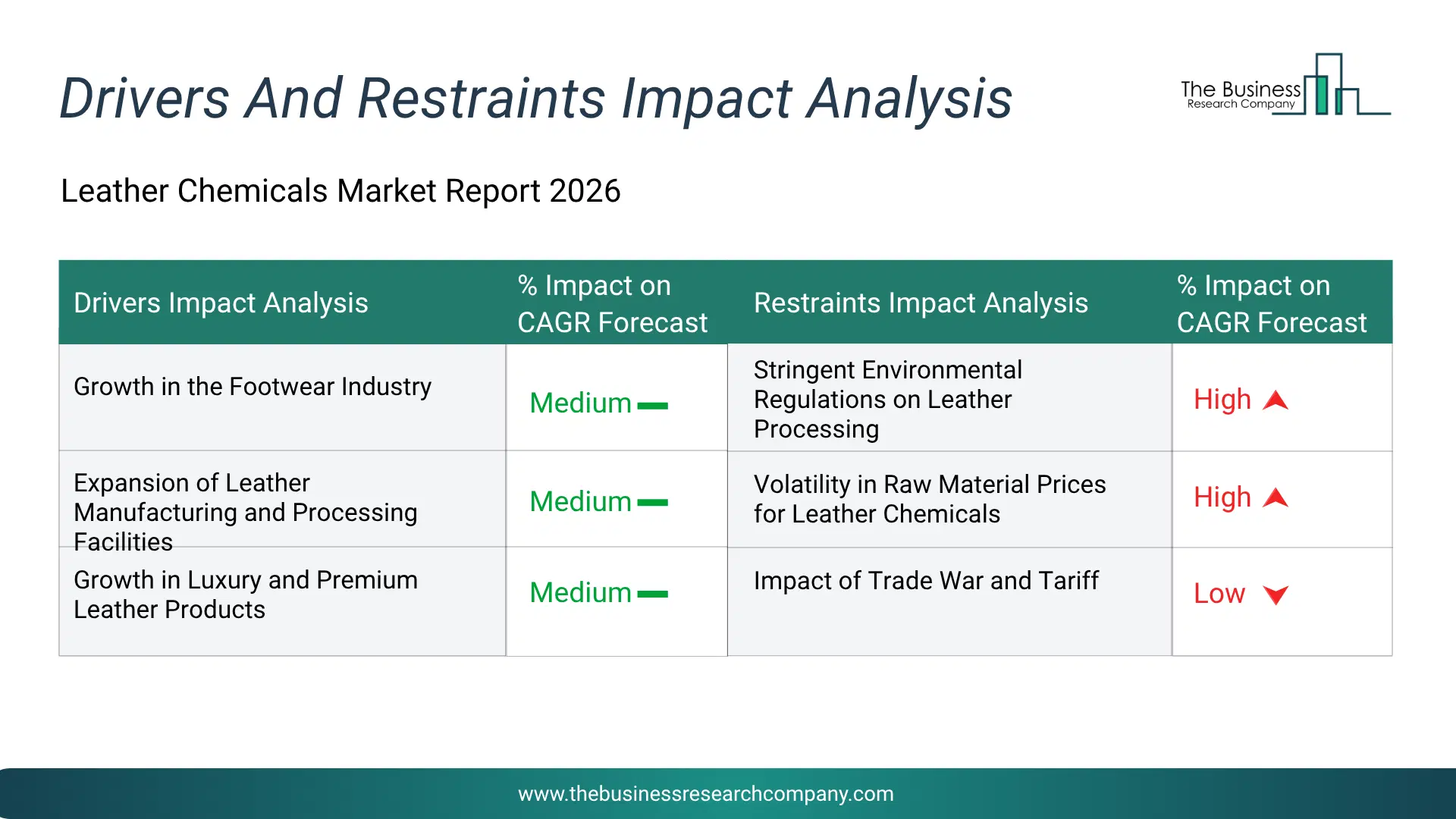
Infographic Chart Showing Key Market Drivers Analysis And Restraints For Leather Chemicals Market
The chart presents an impact analysis of key drivers and restraints, quantifying their relative influence on the market's growth rate and helping assess the balance between growth enablers and limiting factors. This chart offers a high-level perspective; the full report contains more detailed insights.
How Will The Drivers Impact Growth In The Global Leather Chemicals Market?
• Growth in the Footwear Industry (Medium) – The growth in the footwear industry will become a key driver of growth in the global leather chemicals market by 2030. As global demand for casual shoes, sportswear and premium footwear rises, manufacturers are investing in advanced chemical formulations to improve comfort, style, and longevity. Moreover, global brands are increasingly outsourcing production to Asia and other emerging regions, where new tanneries and contract manufacturing facilities adopt chemical-intensive processes to meet export quality standards. This expansion not only increases the volume of chemicals consumed but also accelerates the shift toward eco-friendly and high-performance leather chemicals that align with sustainability commitments of international footwear brands. As a result, the growth in the footwear industry is anticipated to contributing to a 1.8% annual growth in the market. • Expansion of Leather Manufacturing and Processing Facilities (Medium) – The expansion of leather manufacturing and processing facilities will emerge as a major factor driving the expansion of the global leather chemicals market by 2030. As countries invest in new tanneries and upgrade existing ones with modern technologies, the scale of leather production increases. Larger and more sophisticated facilities require a steady and diverse supply of leather chemicals, from beamhouse agents for raw hide preparation to advanced finishing chemicals for durability and appearance. Expansion also brings stricter environmental compliance, creating opportunities for bio-based and chrome-free formulations. This growth in production capacity directly translates to higher demand for innovative and sustainable leather chemicals that can support both volume and regulatory requirements, propelling the market. Consequently, the expansion of leather manufacturing and processing facilities is projected to contributing to a 1.6% annual growth in the market. • Growth in Luxury and Premium Leather Products (Medium) – The growth in luxury and premium leather products will serve as a key growth catalyst for the global leather chemicals market by 2030. Luxury and premium brands in handbags, footwear, automotive interiors and apparel demand leather with flawless aesthetics, soft touch, rich color, uniform finish, and long-lasting quality. Achieving these standards relies heavily on sophisticated leather chemicals that can deliver vibrant dyeing, smooth finishing, and eco-friendly protection. With consumers increasingly associating premium leather with lifestyle and status, manufacturers push for innovative formulations that meet luxury expectations while maintaining sustainability. This continuous pursuit of superior finishes and performance drives ongoing growth for leather chemicals in the luxury market segment. Therefore, growth in luxury and premium leather products operations is projected to supporting to a 1.1% annual growth in the market. • Growth in Sports Activities (Low) – The growth in sports activities will become a significant driver contributing to the growth of the global leather chemicals market by 2030. This fuels the need for high-quality leather used in equipment like footballs, gloves, pads, and cricket gear. These items must withstand rough usage, sweat and constant physical stress, characteristics achieved only through chemical treatments that enhance flexibility, water resistance, and durability. As sports become more commercialized and professionalized, brands seek premium-quality sports gear, further increasing the use of advanced tanning, re-tanning, and finishing chemicals. This trend ensures that growing sports culture continues to stimulate demand in the leather chemicals market. Consequently, the rising adoption of predictive maintenance strategies is projected to contributing to a 0.6% annual growth in the market.How Will The Restraints Impact Growth In The Global Leather Chemicals Market?
• Stringent Environmental Regulations on Leather Processing (Medium) – Stringent Environmental Regulations on Leather Processing will restrict the growth of the Leather Chemicals market during the forecast period. Leather processing involves the use of hazardous chemicals including chromium, aldehydes, and organic solvents that are subject to stringent environmental regulations. Compliance with wastewater discharge standards, emission limits, and chemical handling requirements increases operational costs for tanneries. These regulatory pressures may force smaller tanneries to close or relocate, reducing demand for leather chemicals. • Volatility in Raw Material Prices for Leather Chemicals (Medium) – Volatility in Raw Material Prices for Leather Chemicals will restrict the growth of the Leather Chemicals market during the forecast period. Leather chemical production relies on raw materials such as petrochemicals, minerals, and plant extracts, which are subject to price fluctuations. Oil price volatility directly impacts the cost of synthetic chemicals, while changes in commodity markets affect the availability and cost of natural tanning agents. Price uncertainty makes it difficult for manufacturers to maintain stable pricing and profit margins. • Impact of Trade War and Tariff (Medium) – Impact of Trade War and Tariff will restrict the growth of the Leather Chemicals market during the forecast period. Leather chemicals trade across international borders, making them vulnerable to tariff changes and trade disputes. Tariffs on imported chemicals increase costs for domestic tanneries and leather manufacturers, reducing their competitiveness in global markets. Trade barriers may also restrict the flow of specialty chemicals from key producing regions, impacting supply chains.Key Players In The Global Leather Chemicals Market
Major companies operating in the leather chemicals market are Stahl Holdings BV, Clariant AG, TFL Ledertechnik GmbH, Balmer Lawrie & Co. Ltd., Arkema SA, Eastman Chemical India Pvt. ltd., Evonik Industries AG, Saudi Basic Industries Corporation, Dystar Singapore Pte Ltd., Elementis PLC, Chemtan Company Inc., Lawrence Industries Limited, Schill Seilacher GmbH, TASA Group International, Zschimmer & Schwarz Co. KG, Indofil Industries Ltd., Papertex Specialty Chemicals Pvt. Ltd., Smit & Zoon BV, BASF SE, Cargill Inc., Koninklijke DSM NV, AllChem Corporation, Chemours Company, Dow Chemical Company, Hebei Yida Chemical Industry Co. Ltd., Lanxess AG, Solvay SA, Sumitomo Chemical Co. Ltd., Wacker Chemie AG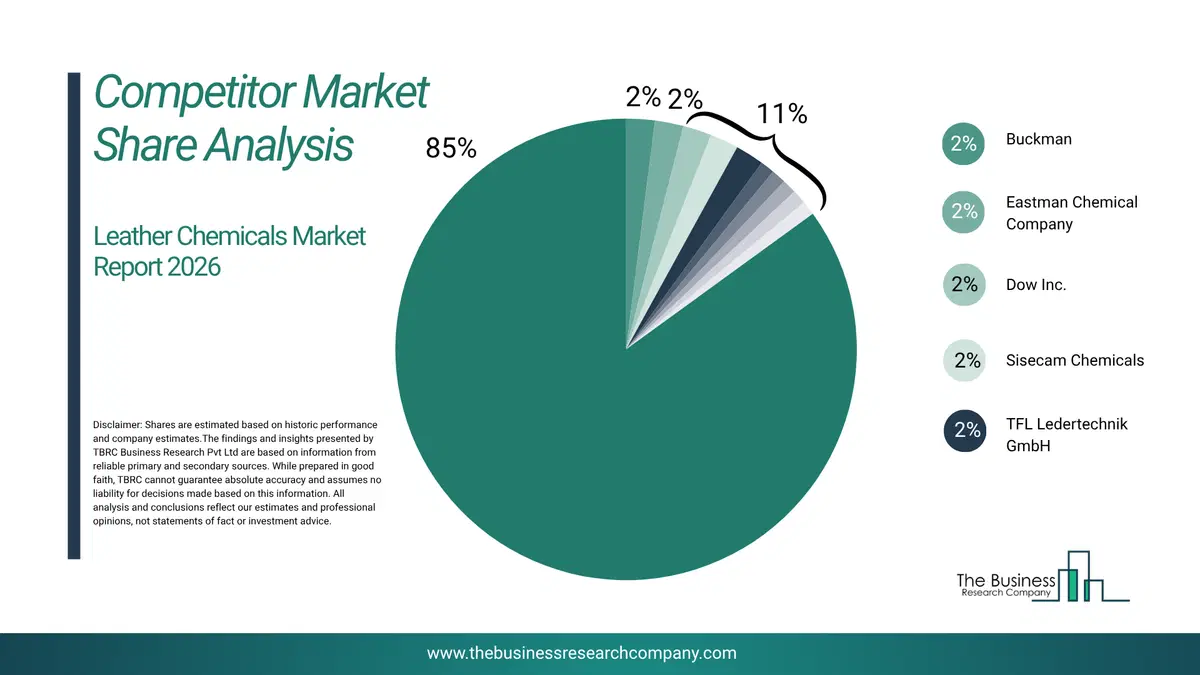
This chart is for illustrative purposes; the full report includes a detailed competitor analysis and comprehensive overview of the top 10 companies in the market.
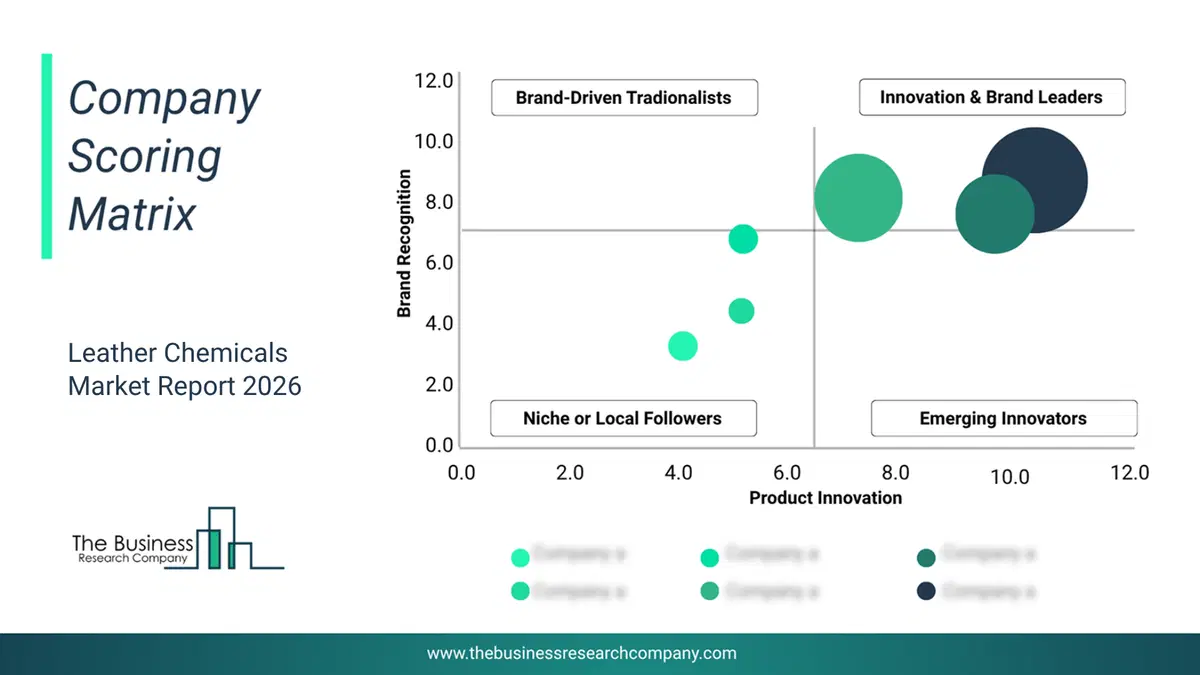
This chart maps companies by product innovation and brand strength, with bubble size indicating relative revenue, helping identify market leaders, challengers, and niche players. This is an illustrative chart; the full report provides a complete and accurate competitive analysis.
Global Leather Chemicals Market Trends and Insights
Major companies operating in the leather chemicals industry are adopting a strategic partnership approach to strengthen their market presence and offer innovative solutions to their customers. Strategic partnerships refer to a process in which companies leverage each other's strengths and resources to achieve mutual benefits and success. For instance, in October 2023, TRUMPLER GmbH & Co. KG, a Germany-based leather chemicals company, partnered with Archroma, a Switzerland-based specialty chemicals company, to introduce an innovative leather production process, DyTan. This groundbreaking method enables the production of high-performance leather in a more environmentally friendly and cost-effective manner. It provides an alternative to traditional metal-free and chrome-tanned leather production techniques. DyTan leverages the AVICUERO System in combination with Trumpler's bio-based fatliquors and retanning chemical agents. These components are derived from functional biopolymers obtained through the hydrolysis of leather shavings. The Trumpler Group, serving as Archroma's exclusive global partner, holds the responsibility for the worldwide distribution of the AVICUERO System.What Are Latest Mergers And Acquisitions In The Leather Chemicals Market?
In November 2024, an affiliate of Syntagma Capital, a Belgium-based private equity firm, acquired the wet-end leather chemicals business of Stahl for an undisclosed amount. With this acquisition, Syntagma Capital aimed to establish a dedicated, standalone leather chemicals platform to serve global tanneries and leather goods manufacturers, consolidating wet-end tanning agents, syntans, fatliquors, and beamhouse solutions under a focused business to better address the needs of the leather chemicals market. Stahl is a Netherlands-based provider of wet-end leather chemicals, offering a full portfolio of tanning and leather processing agents for the leather goods, footwear, automotive, and upholstery industries.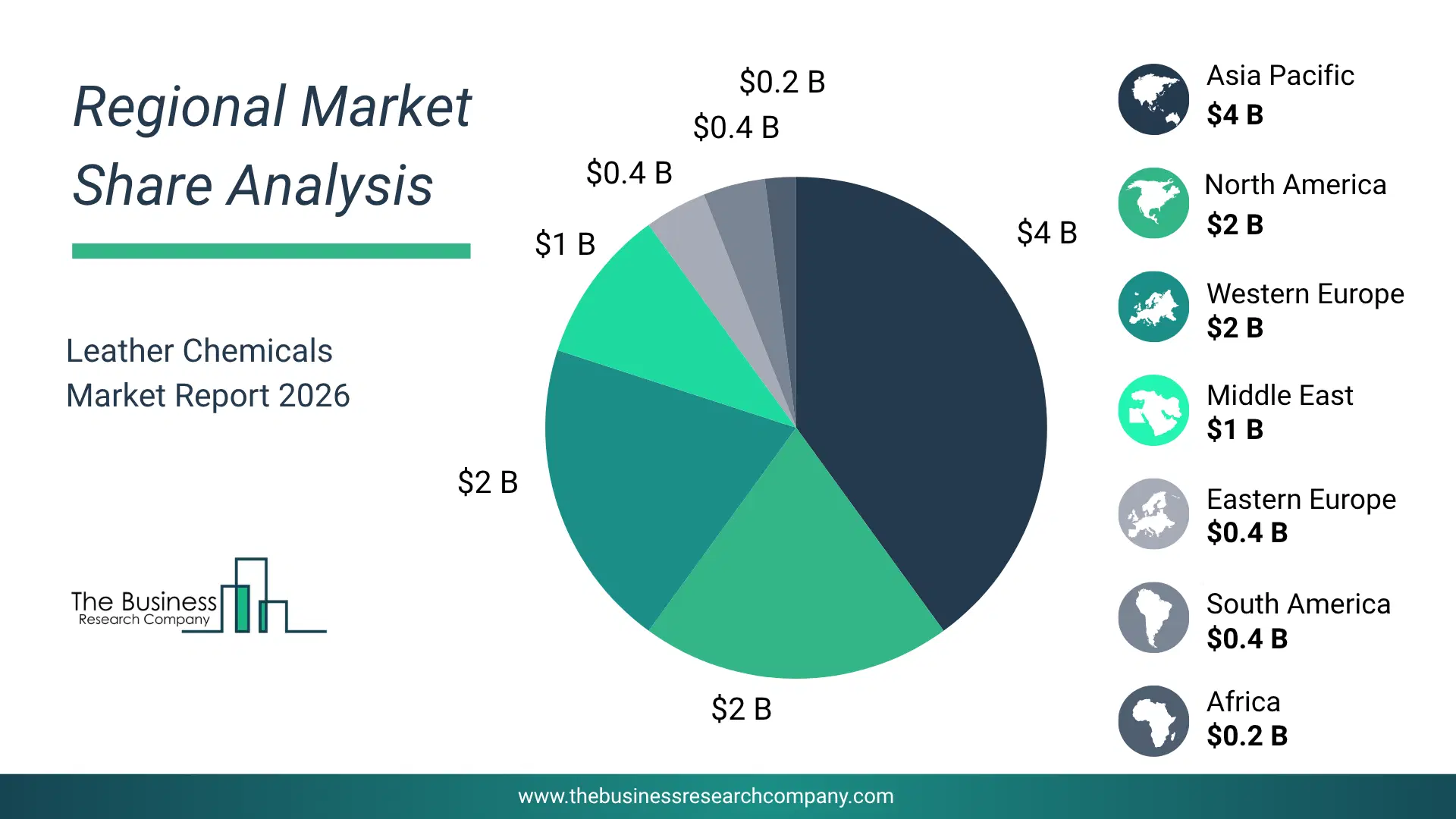
Regional Insights
Asia-Pacific was the largest region in the leather chemical market share in 2025. Asia-Pacific is expected to be the fastest-growing region in the forecast period. The regions covered in this market report are Asia-Pacific, South East Asia, Western Europe, Eastern Europe, North America, South America, Middle East, Africa The countries covered in this market report are Australia, Brazil, China, France, Germany, India, Indonesia, Japan, Taiwan, Russia, South Korea, UK, USA, Canada, Italy, SpainWhat Defines the Leather Chemicals Market?
The leather chemicals market consists of sales of degreasers, swell regulating agents, lime, sodium sulfide, sodium hydrosulfide, caustic soda, and soda ash. Values in this market are ‘factory gate’ values, that is, the value of goods sold by the manufacturers or creators of the goods, whether to other entities (including downstream manufacturers, wholesalers, distributors, and retailers) or directly to end customers. The value of goods in this market includes related services sold by the creators of the goods.How is Market Value Defined and Measured?
The market value is defined as the revenues that enterprises gain from the sale of goods and/or services within the specified market and geography through sales, grants, or donations in terms of the currency (in USD unless otherwise specified). The revenues for a specified geography are consumption values that are revenues generated by organizations in the specified geography within the market, irrespective of where they are produced. It does not include revenues from resales along the supply chain, either further along the supply chain or as part of other products.
This chart presents market attractiveness based on a quantitative evaluation of growth, competition, strategic alignment, and risk, offering a clear view of opportunity areas for decision-making. This chart is for illustrative purposes; the full report contains the complete analysis.

This chart highlights the Total Addressable Market (TAM) by estimating the maximum revenue opportunity using an assumption-driven approach, supporting strategic planning and opportunity sizing across markets. The chart is illustrative; the full report provides a more comprehensive analysis.
What Key Data and Analysis Are Included in the Leather Chemicals Market Report 2026?
The leather chemicals market research report is one of a series of new reports from The Business Research Company that provides market statistics, including industry global market size, regional shares, competitors with the market share, detailed market segments, market trends and opportunities, and any further data you may need to thrive in the leather chemicals industry. The market research report delivers a complete perspective of everything you need, with an in-depth analysis of the current and future state of the industry.Leather Chemicals Market Report Forecast Analysis
| Report Attribute | Details |
|---|---|
| Market Size Value In 2026 | $10.7 billion |
| Revenue Forecast In 2030 | $13.76 billion |
| Growth Rate | CAGR of 6.7% from 2026 to 2030 |
| Base Year For Estimation | 2025 |
| Actual Estimates/Historical Data | 2020-2025 |
| Forecast Period | 2026 - 2030 |
| Market Representation | Revenue in USD Billion and CAGR from 2026 to 2030 |
| Segments Covered | Product, Process, Application |
| Regional Scope | Asia-Pacific, Western Europe, Eastern Europe, North America, South America, Middle East, Africa |
| Country Scope | The countries covered in the report are Australia, Brazil, China, France, Germany, India, Indonesia, Japan, Taiwan, Russia, South Korea, UK, USA, Canada, Italy, Spain. |
| Key Companies Profiled | Stahl Holdings BV, Clariant AG, TFL Ledertechnik GmbH, Balmer Lawrie & Co. Ltd., Arkema SA, Eastman Chemical India Pvt. ltd., Evonik Industries AG, Saudi Basic Industries Corporation, Dystar Singapore Pte Ltd., Elementis PLC, Chemtan Company Inc., Lawrence Industries Limited, Schill Seilacher GmbH, TASA Group International, Zschimmer & Schwarz Co. KG, Indofil Industries Ltd., Papertex Specialty Chemicals Pvt. Ltd., Smit & Zoon BV, BASF SE, Cargill Inc., Koninklijke DSM NV, AllChem Corporation, Chemours Company, Dow Chemical Company, Hebei Yida Chemical Industry Co. Ltd., Lanxess AG, Solvay SA, Sumitomo Chemical Co. Ltd., Wacker Chemie AG |
| Customization Scope | Request for Customization |
| Pricing And Purchase Options | Explore Purchase Options |