
Leather Tanning Chemicals Market Report 2026
Global Outlook – By Chemical Type (Chromium Sulfate Chemicals, Synthetic Tanning Agents, Vegetable Tanning Agents, Aldehyde Tanning Agents, Resin Tanning Agents, Other Tanning Chemicals), By Form (Liquid, Powder, Paste, Granules), By Application (Footwear, Automotive Leather, Furniture And Upholstery, Leather Goods, Garments And Apparel), By End User (Leather Tanneries, Footwear Manufacturers, Automotive Interior Manufacturers, Furniture Manufacturers, Leather Goods Manufacturers) – Market Size, Trends, Strategies, and Forecast to 2030
Leather Tanning Chemicals Market Overview
• Leather Tanning Chemicals market size has reached to $2.32 billion in 2025 • Expected to grow to $2.97 billion in 2030 at a compound annual growth rate (CAGR) of 4.9% • Growth Driver: Surge In Automotive Industry Fueling The Growth Of The Market Due To Increasing Vehicle Production And Rising Demand For Automotive Leather Applications • Market Trend: Innovation In Low-Bisphenol Retanning Technology Enhancing Leather Performance • Asia-Pacific was the largest region in 2025 and Asia-Pacific is the fastest growing region.What Is Covered Under Leather Tanning Chemicals Market?
Leather tanning chemicals are specialized chemical substances used in the tanning process to convert raw animal hides and skins into durable and stable leather materials. These chemicals help improve key properties of leather such as strength, flexibility, softness, color retention, and resistance to degradation. Leather tanning chemicals are formulated to enhance the efficiency of leather processing by supporting various chemical reactions involved in preserving and modifying the structure of hides and skins. The main chemical types of leather tanning chemicals include chromium sulfate chemicals, synthetic tanning agents, vegetable tanning agents, aldehyde tanning agents, resin tanning agents, and other tanning chemicals. Chromium sulfate chemicals refer to chromium-based compounds used to stabilize and preserve animal hides by converting them into durable leather with improved resistance to heat, moisture, and decomposition. These chemicals are available in liquid, powder, paste, and granule forms. The various applications involved are footwear, automotive leather, furniture and upholstery, leather goods, and garments and apparel, and they are used by several end users such as leather tanneries, footwear manufacturers, automotive interior manufacturers, furniture manufacturers, and leather goods manufacturers.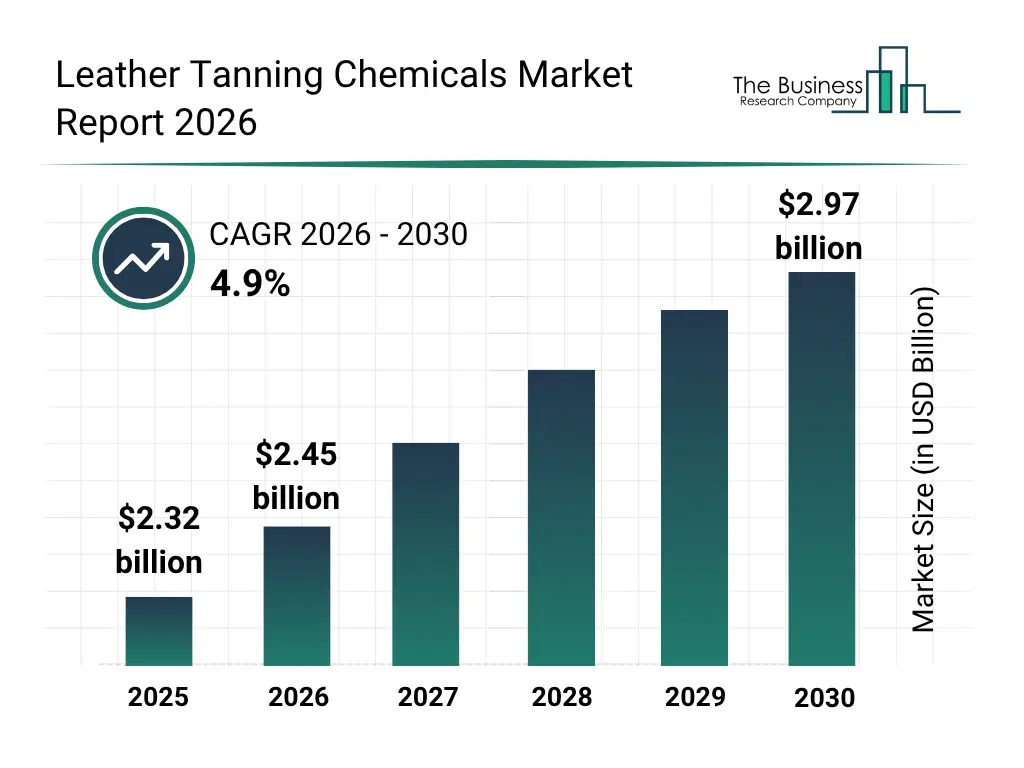
What Is The Leather Tanning Chemicals Market Size and Share 2026?
The leather tanning chemicals market size has grown strongly in recent years. It will grow from $2.32 billion in 2025 to $2.45 billion in 2026 at a compound annual growth rate (CAGR) of 5.4%. The growth in the historic period can be attributed to growth in footwear manufacturing, expansion of automotive leather production, rising demand for leather furniture and upholstery, increasing leather goods production, growth in garment and apparel manufacturing.What Is The Leather Tanning Chemicals Market Growth Forecast?
The leather tanning chemicals market size is expected to see steady growth in the next few years. It will grow to $2.97 billion in 2030 at a compound annual growth rate (CAGR) of 4.9%. The growth in the forecast period can be attributed to increasing demand for sustainable leather processing, stricter environmental regulations on tanning chemicals, rising adoption of chrome-free tanning technologies, growing demand for high-performance leather finishes, expansion of premium and specialty leather applications. Major trends in the forecast period include development of chrome-free and low-chrome tanning chemicals, increasing adoption of high-performance tanning auxiliaries, rising demand for bio-based and natural tanning agents, increasing focus on faster and more efficient tanning processes, growing development of specialty chemicals for improved leather properties.Tariff Impact On Leather Tanning Chemicals Market
Tariffs are impacting the leather tanning chemicals market by increasing the cost of imported tanning agents, chemical intermediates, and specialized processing inputs required for leather production. This is raising processing costs for leather tanneries and downstream footwear, automotive, furniture, and leather goods manufacturers, particularly in regions dependent on imported chemical inputs such as Asia-Pacific and Europe. Chemical-intensive segments such as chromium-based tanning chemicals, synthetic tanning agents, and specialty tanning inputs are most affected due to international supply chain dependencies. However, tariffs are also encouraging regional chemical production, local sourcing, supplier diversification, and increased investment in domestic leather tanning chemicals manufacturing capacity.
Global Leather Tanning Chemicals Market Segmentation
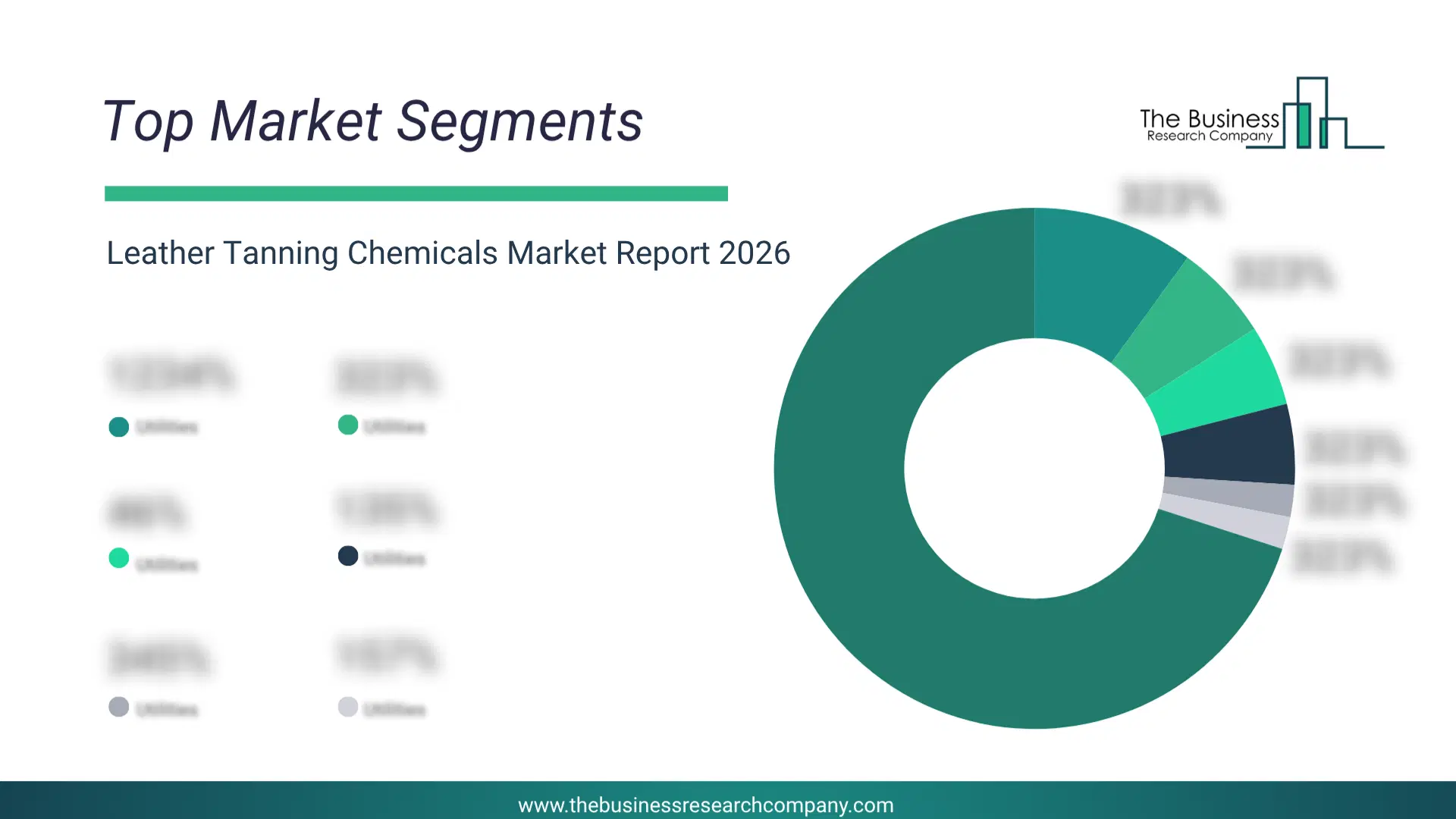
1) By Chemical Type: Chromium Sulfate Chemicals, Synthetic Tanning Agents, Vegetable Tanning Agents, Aldehyde Tanning Agents, Resin Tanning Agents, Other Tanning Chemicals 2) By Form: Liquid, Powder, Paste, Granules 3) By Application: Footwear, Automotive Leather, Furniture And Upholstery, Leather Goods, Garments And Apparel 4) By End User: Leather Tanneries, Footwear Manufacturers, Automotive Interior Manufacturers, Furniture Manufacturers, Leather Goods Manufacturers Subsegments: 1) By Chromium Sulfate Chemicals: Basic Chromium Sulfate, Chromium Sulfate Powder, Chromium Sulfate Liquid 2) By Synthetic Tanning Agents: Aromatic Syntans, Polymeric Syntans, Resin Syntans, Naphthalene Syntans 3) By Vegetable Tanning Agents: Mimosa Tanning Agents, Quebracho Tanning Agents, Chestnut Tanning Agents, Tara Tanning Agents 4) By Aldehyde Tanning Agents: Formaldehyde Tanning Agents, Glutaraldehyde Tanning Agents, Oxazolidine Tanning Agents 5) By Resin Tanning Agents: Acrylic Resin Tanning Agents, Melamine Resin Tanning Agents, Phenolic Resin Tanning Agents, Polyurethane Resin Tanning Agents 6) By Other Tanning Chemicals: Aluminum Tanning Agents, Titanium Tanning Agents, Zirconium Tanning Agents, Oil Tanning AgentsWhat Is The Driver Of The Leather Tanning Chemicals Market?
The expansion of the automotive industry is expected to propel the growth of the leather tanning chemicals market going forward. The automotive industry refers to the sector involved in the design, manufacturing, distribution, and sale of vehicles, including passenger cars, commercial vehicles, and electric vehicles. The expansion of the automotive industry is driven by increasing vehicle production, as rising demand for passenger cars and commercial vehicles boosts manufacturing activities and increases the need for automotive components, materials, and related technologies. The growing automotive industry supports the leather tanning chemicals by increasing the demand for specialized chemicals used in tanning, dyeing, fatliquoring, finishing, and surface treatment processes to enhance the durability, flexibility, appearance, and performance of leather used in automotive applications such as seats, steering wheels, dashboards, and interior trims. FFor instance, in April 2026, according to the International Organization of Motor Vehicle Manufacturers, a France-based trade association, the United States produced 10.24 million vehicles and sold 16.7 million, while Brazil emerged as a brighter spot with output reaching 2.64 million vehicles. Therefore, the expansion of the automotive industry is driving the growth of the leather tanning chemicals industry.Key Players In The Global Leather Tanning Chemicals Market
Major companies operating in the leather tanning chemicals market are Pidilite Industries Limited, Zschimmer & Schwarz GmbH & Co. KG, Brother Enterprises Holding Co. Ltd., Balmer Lawrie & Co. Ltd., Pulcra Chemicals GmbH, Schill + Seilacher GmbH, Smit & Zoon Holding B.V., Indofil Industries Limited, Silvateam S.p.A., KLF Tecnokimica S.r.l., Trumpler GmbH & Co. KG, Cromogenia Units S.A., Tecnochimica S.p.A., TEXAPEL S.L., TFL Leather Technology Holding AG, Chemtan Company Inc., Derma Color S.r.l., GSC Group S.p.A., Syn-Bios S.p.A., Dhupar Chemicals Private Limited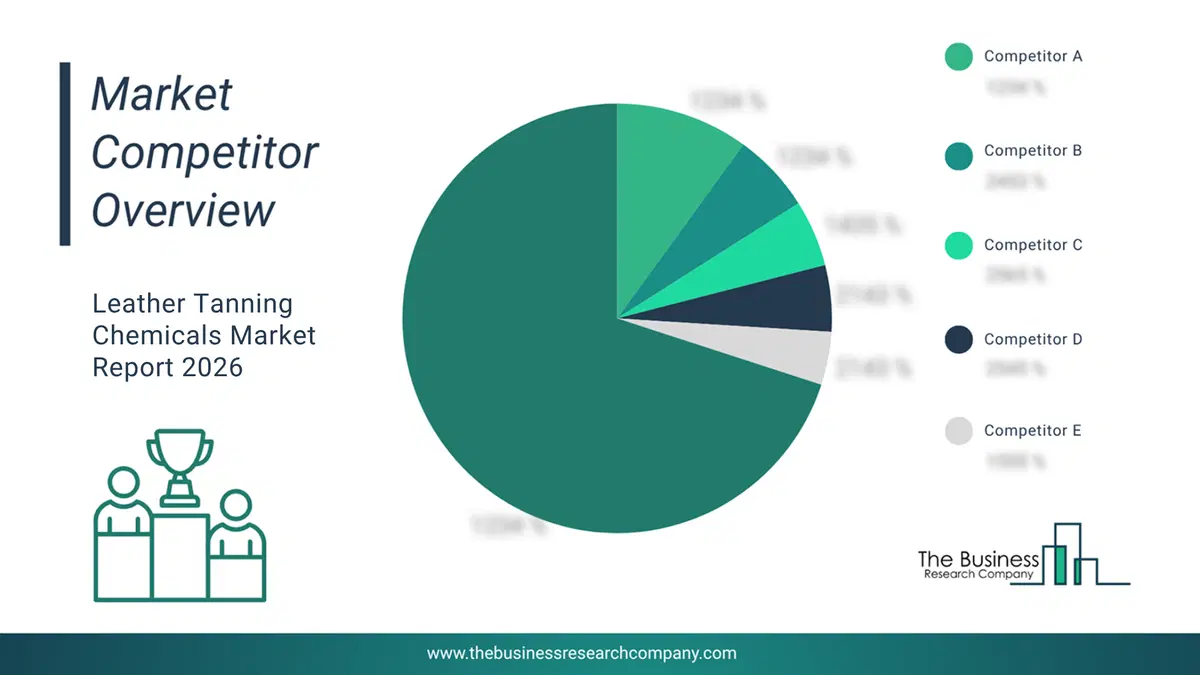
This chart is for illustrative purposes; the full report includes a detailed competitor analysis and comprehensive overview of the top 10 companies in the market.
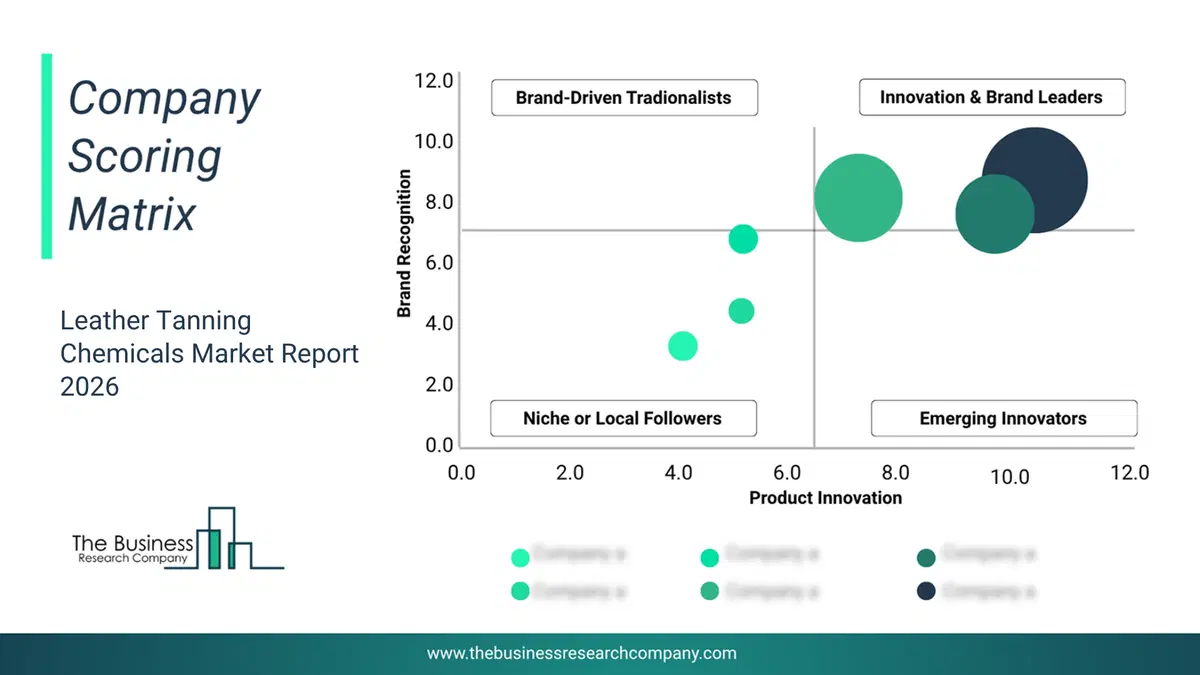
This chart maps companies by product innovation and brand strength, with bubble size indicating relative revenue, helping identify market leaders, challengers, and niche players. This is an illustrative chart; the full report provides a complete and accurate competitive analysis.
Global Leather Tanning Chemicals Market Trends and Insights
Major companies operating in the leather tanning chemicals market are focusing on developing low-bisphenol and more sustainable retanning technologies to improve tanning efficiency, whiteness, softness, lightfastness, filling properties, and environmental performance. Low-bisphenol retanning technologies refer to technologies that reduce the presence of residual bisphenols in synthetic retanning agents while maintaining the technical performance required during leather retanning, supporting safer formulations and compliance with evolving environmental standards. For instance, in September 2025, Cromogenia Units, a Spain-based specialty chemicals company, launched RETANAL XDW, a sulfone-type synthetic retanning agent designed with an extremely low content of bisphenols, particularly bisphenol S and bisphenol F. Developed after more than two years of research and development, the product maintains the technical properties of conventional sulfones, including high tanning capacity, excellent lightfastness, whitening effect, and good filling without stiffening the leather. RETANAL XDW can also be used across different leather articles without modifying existing process conditions, supporting more sustainable retanning while maintaining leather quality and performance.What Are Latest Mergers And Acquisitions In The Leather Tanning Chemicals Market?
In March 2026, FGL International SpA, an Italy-based tanning chemicals company and part of Lapi Group, acquired the finishing division of RE.PI.CO. for an undisclosed amount. Through this acquisition, FGL International aims to strengthen its presence in the leather finishing segment by integrating RE.PI.CO.’s finishing technologies into its existing product portfolio. RE.PI.CO. is an Italy-based company active in leather chemistry, offering leather chemical products and finishing solutions for the leather processing industry.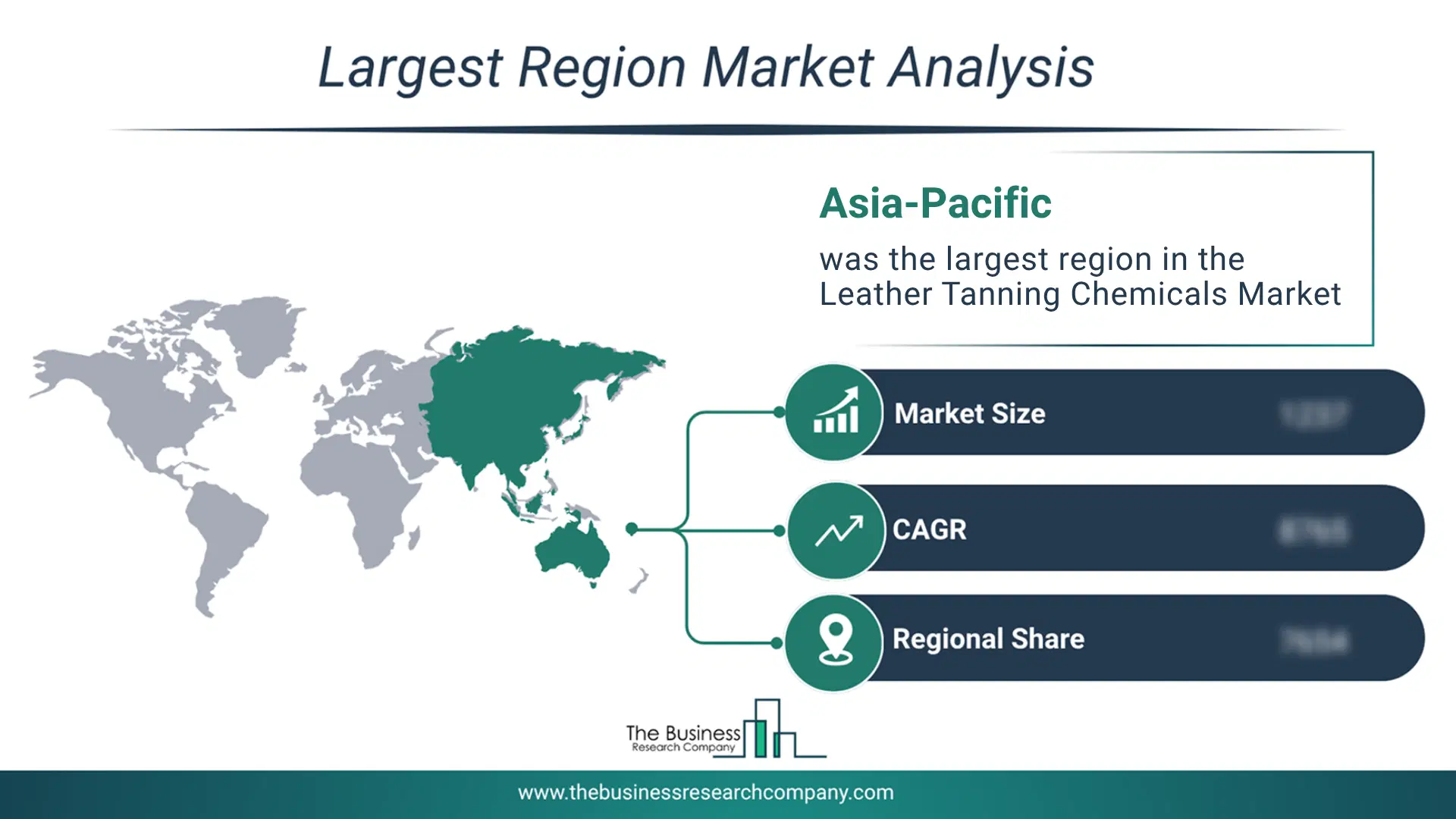
Regional Outlook
Asia-Pacific was the largest region in the leather tanning chemicals market in 2025. Asia-Pacific is expected to be the fastest-growing region in the forecast period. The regions covered in this market report are Asia-Pacific, South East Asia, Western Europe, Eastern Europe, North America, South America, Middle East, Africa. The countries covered in this market report are Australia, Brazil, China, France, Germany, India, Indonesia, Japan, Taiwan, Russia, South Korea, UK, USA, Canada, Italy, Spain.What Defines the Leather Tanning Chemicals Market?
The leather tanning chemicals market consists of sales of tanning auxiliaries, leather conditioners, coating agents, wax emulsions, and polymer dispersions. Values in this market are ‘factory gate’ values, that is, the value of goods sold by the manufacturers or creators of the goods, whether to other entities (including downstream manufacturers, wholesalers, distributors, and retailers) or directly to end customers. The value of goods in this market includes related services sold by the creators of the goods.How is Market Value Defined and Measured?
The market value is defined as the revenues that enterprises gain from the sale of goods and/or services within the specified market and geography through sales, grants, or donations in terms of the currency (in USD unless otherwise specified). The revenues for a specified geography are consumption values that are revenues generated by organizations in the specified geography within the market, irrespective of where they are produced. It does not include revenues from resales along the supply chain, either further along the supply chain or as part of other products.
This chart presents market attractiveness based on a quantitative evaluation of growth, competition, strategic alignment, and risk, offering a clear view of opportunity areas for decision-making. This chart is for illustrative purposes; the full report contains the complete analysis.

This chart highlights the Total Addressable Market (TAM) by estimating the maximum revenue opportunity using an assumption-driven approach, supporting strategic planning and opportunity sizing across markets. The chart is illustrative; the full report provides a more comprehensive analysis.
What Key Data and Analysis Are Included in the Leather Tanning Chemicals Market Report 2026?
The leather tanning chemicals market research report is one of a series of new reports from The Business Research Company that provides market statistics, including industry global market size, regional shares, competitors with the market share, detailed market segments, market trends and opportunities, and any further data you may need to thrive in the leather tanning chemicals industry. The market research report delivers a complete perspective of everything you need, with an in-depth analysis of the current and future state of the industry.Leather Tanning Chemicals Market Report Forecast Analysis
| Report Attribute | Details |
|---|---|
| Market Size Value In 2026 | $2.45 billion |
| Revenue Forecast In 2030 | $2.97 billion |
| Growth Rate | CAGR of 4.9% from 2026 to 2030 |
| Base Year For Estimation | 2025 |
| Actual Estimates/Historical Data | 2020-2025 |
| Forecast Period | 2026 - 2030 |
| Market Representation | Revenue in USD Billion and CAGR from 2026 to 2030 |
| Segments Covered | Chemical Type, Form, Application, End User |
| Regional Scope | Asia-Pacific, Western Europe, Eastern Europe, North America, South America, Middle East, Africa |
| Country Scope | The countries covered in the report are Australia, Brazil, China, France, Germany, India, Indonesia, Japan, Taiwan, Russia, South Korea, UK, USA, Canada, Italy, Spain. |
| Key Companies Profiled | Pidilite Industries Limited, Zschimmer & Schwarz GmbH & Co. KG, Brother Enterprises Holding Co. Ltd., Balmer Lawrie & Co. Ltd., Pulcra Chemicals GmbH, Schill + Seilacher GmbH, Smit & Zoon Holding B.V., Indofil Industries Limited, Silvateam S.p.A., KLF Tecnokimica S.r.l., Trumpler GmbH & Co. KG, Cromogenia Units S.A., Tecnochimica S.p.A., TEXAPEL S.L., TFL Leather Technology Holding AG, Chemtan Company Inc., Derma Color S.r.l., GSC Group S.p.A., Syn-Bios S.p.A., Dhupar Chemicals Private Limited |
| Customization Scope | Request for Customization |
| Pricing And Purchase Options | Explore Purchase Options |