

Leber Congenital Amaurosis Market Report 2026
Global Outlook – By Treatment Type (Gene Therapy, Pharmaceutical Drugs, Retinal Prosthesis, Assistive Devices, Other Treatments), By Age Of Onset (Congenital Leber Congenital Amaurosis (LCA) (From Birth), Early Childhood Leber Congenital Amaurosis (LCA) (1-5 Years), Late-Onset Leber Congenital Amaurosis (LCA) (6 Years And Above)), By Distribution Channel (Direct Tender, Retail Sales), By End User (Hospitals, Specialized Eye Clinics, Ophthalmology Research Centers, Home Care Settings, Other End Users) - Market Size, Trends, Strategies, and Forecast to 2030
Leber Congenital Amaurosis Market Overview
• Leber Congenital Amaurosis market size has reached to $1.06 billion in 2025 • Expected to grow to $1.39 billion in 2030 at a compound annual growth rate (CAGR) of 5.5% • Growth Driver: Rising Prevalence Of Inherited Retinal Diseases Driving The Growth Of The Market Due To Advancements In Genetic Testing And Diagnosis • Market Trend: Advancing RNA-Based Treatments In The Market • North America was the largest region in 2025 and Asia-Pacific is the fastest growing region.What Is Covered Under Leber Congenital Amaurosis Market?
Leber congenital amaurosis (LCA) is a genetic eye disorder that causes severe vision loss or blindness from infancy due to mutations affecting the retina’s ability to detect light. It is characterized by poor visual response, involuntary eye movements (nystagmus), and extreme farsightedness resulting from disrupted photoreceptor function and progressive retinal degeneration. The main treatment types for leber congenital amaurosis (LCA) include gene therapy, pharmaceutical drugs, retinal prostheses, assistive devices, and other treatments. Gene therapy is a medical technique that uses genetic material to treat or prevent diseases, such as LCA, by correcting defective genes. The age of onset for LCA is categorized into congenital LCA (from birth), early childhood LCA (1–5 years), and late-onset LCA (6 years and above). Pharmaceutical drugs for LCA are distributed through various channels, including direct tender and retail sales, and are used by end users such as hospitals, specialized eye clinics, ophthalmology research centers, and home care settings.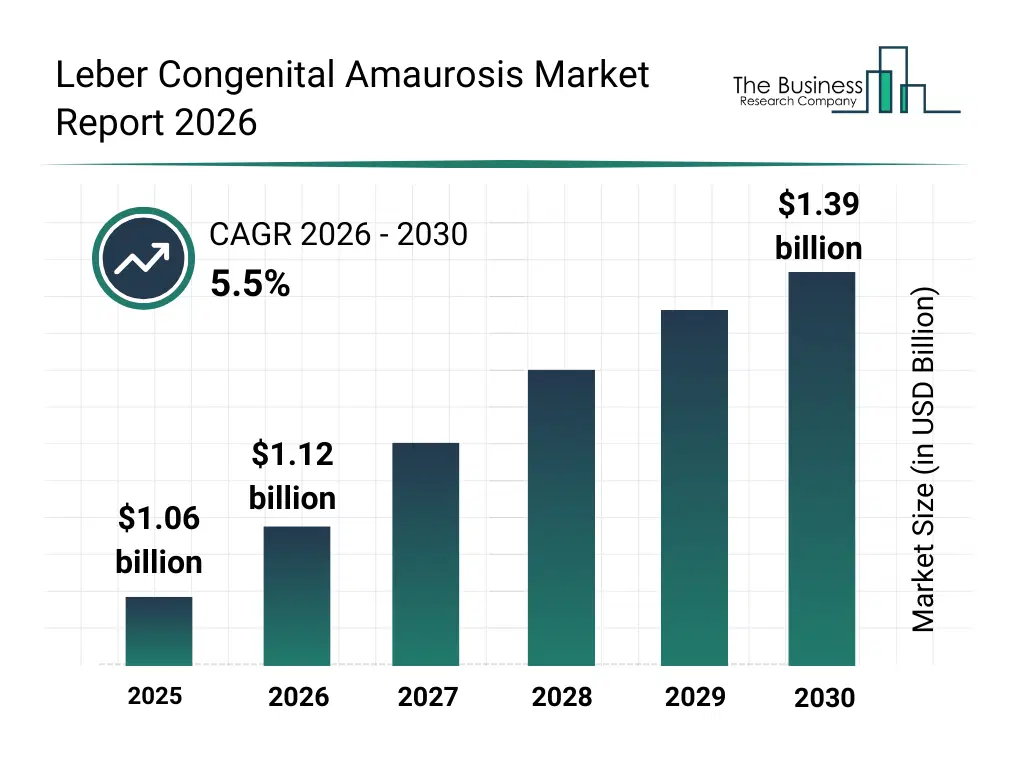
What Is The Leber Congenital Amaurosis Market Size and Share 2026?
The leber congenital amaurosis market size has grown strongly in recent years. It will grow from $1.06 billion in 2025 to $1.12 billion in 2026 at a compound annual growth rate (CAGR) of 5.5%. The growth in the historic period can be attributed to limited treatment options for inherited retinal disorders, increasing awareness of rare genetic eye diseases, advancements in retinal imaging technologies, growth in pediatric ophthalmology services, early research in gene replacement therapy.What Is The Leber Congenital Amaurosis Market Growth Forecast?
The leber congenital amaurosis market size is expected to see strong growth in the next few years. It will grow to $1.39 billion in 2030 at a compound annual growth rate (CAGR) of 5.5%. The growth in the forecast period can be attributed to rising investment in ophthalmic gene therapy research, expansion of precision medicine initiatives, increasing number of regulatory approvals for rare disease treatments, growing adoption of advanced genetic testing, expanding healthcare access for rare genetic disorders. Major trends in the forecast period include expansion of gene therapy approvals for inherited retinal diseases, rising focus on early genetic screening and diagnosis, growth in clinical trials for novel retinal regeneration therapies, increasing adoption of assistive vision technologies, advancements in retinal prosthesis and bionic eye solutions.
Global Leber Congenital Amaurosis Market Segmentation
1) By Treatment Type: Gene Therapy, Pharmaceutical Drugs, Retinal Prosthesis, Assistive Devices, Other Treatments 2) By Age Of Onset: Congenital Leber Congenital Amaurosis (LCA) (From Birth), Early Childhood Leber Congenital Amaurosis (LCA) (1-5 Years), Late-Onset Leber Congenital Amaurosis (LCA) (6 Years And Above) 3) By Distribution Channel: Direct Tender, Retail Sales 4) By End User: Hospitals, Specialized Eye Clinics, Ophthalmology Research Centers, Home Care Settings, Other End Users Subsegments: 1) By Gene Therapy: RPE65 Gene Replacement Therapy, CRISPR-Based Gene Editing, AAV (Adeno-Associated Virus) Vector Therapy, Emerging Experimental Gene Therapies 2) By Pharmaceutical Drugs: Retinoid-Based Therapies, Neuroprotective Agents, Anti-Inflammatory Drugs, Antioxidant Therapies 3) By Retinal Prosthesis: Implantable Retinal Chips, Artificial Retinal Stimulation Devices, Bionic Eye Technology 4) By Assistive Devices: Low Vision Aids, Screen Readers and Braille Devices, Mobility Aids for Vision Impairment 5) By Other Treatments: Stem Cell Therapy, Optogenetics-Based Treatments, Visual Rehabilitation Programs, Nutritional and Dietary InterventionsWhat Is The Driver Of The Leber Congenital Amaurosis Market?
The increasing prevalence of inherited retinal diseases is expected to propel the growth of the leber congenital amaurosis (LCA) market. Inherited retinal diseases (IRDs) refer to genetic disorders affecting the retina, the light-sensitive tissue at the back of the eye responsible for vision. The increase in inherited retinal diseases is attributed to improving genetic testing, awareness and diagnosis, and longer life expectancy. Advancements in genetic testing have made it easier to diagnose inherited retinal diseases, leading to the identification of more cases. Leber congenital amaurosis helps advance the understanding of inherited retinal diseases by revealing genetic mutations and disease mechanisms that contribute to developing targeted therapies and treatments. For instance, in January 2025, according to the UK Parliament's House of Commons Library, a UK-based government administration, approximately 25,000 people in the UK were affected by inherited retinal diseases in 2024, an increase of 2% yearly. Therefore, the increasing prevalence of inherited retinal diseases drives the leber congenital amaurosis industry.Key Players In The Global Leber Congenital Amaurosis Market
Major companies operating in the leber congenital amaurosis market are Sanofi S.A., Novartis AG, Astellas Pharma Inc., Invitae Corporation, Novelion Therapeutics Inc., Andelyn Biosciences Inc., CD Genomics Inc., Editas Medicine Inc., MeiraGTx Holdings plc, Sangamo Therapeutics Inc., LKC Technologies Inc., Aldeyra Therapeutics Inc., Asper Biogene OÜ, Allergan Inc., ProQR Therapeutics N.V., GenSight Biologics S.A., Ocugen Inc., Ophthotech Corporation, Atsena Therapeutics Inc., HuidaGene Therapeutics Co. Ltd.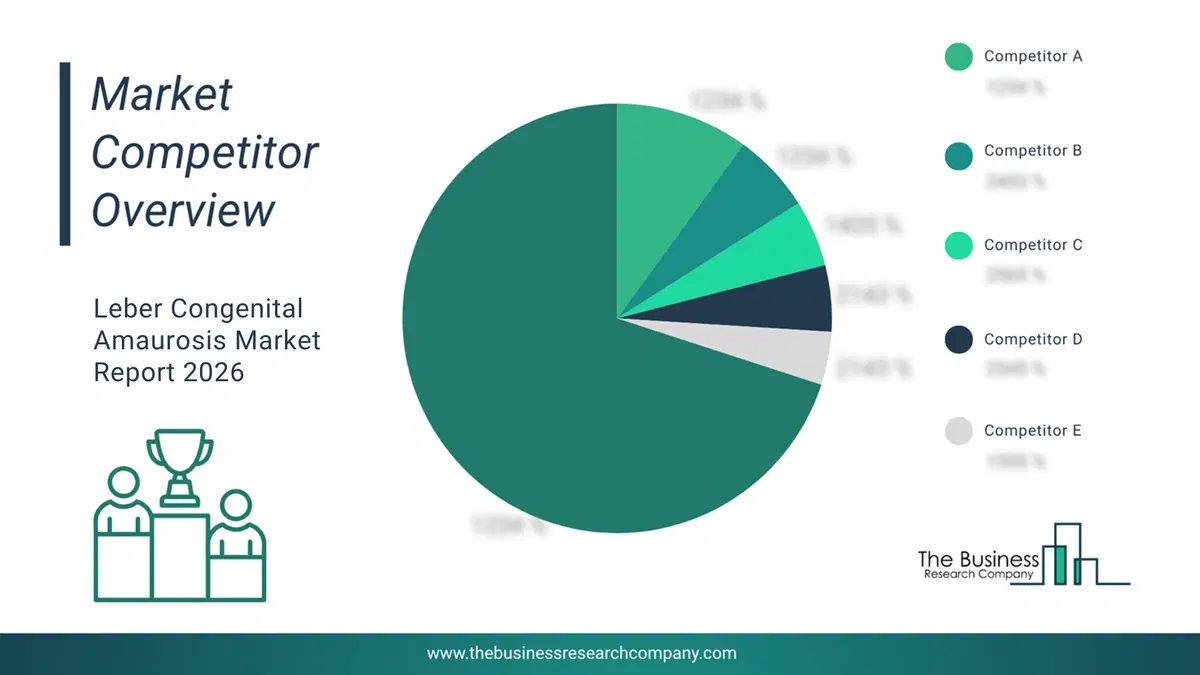
This chart is for illustrative purposes; the full report includes a detailed competitor analysis and comprehensive overview of the top 10 companies in the market.
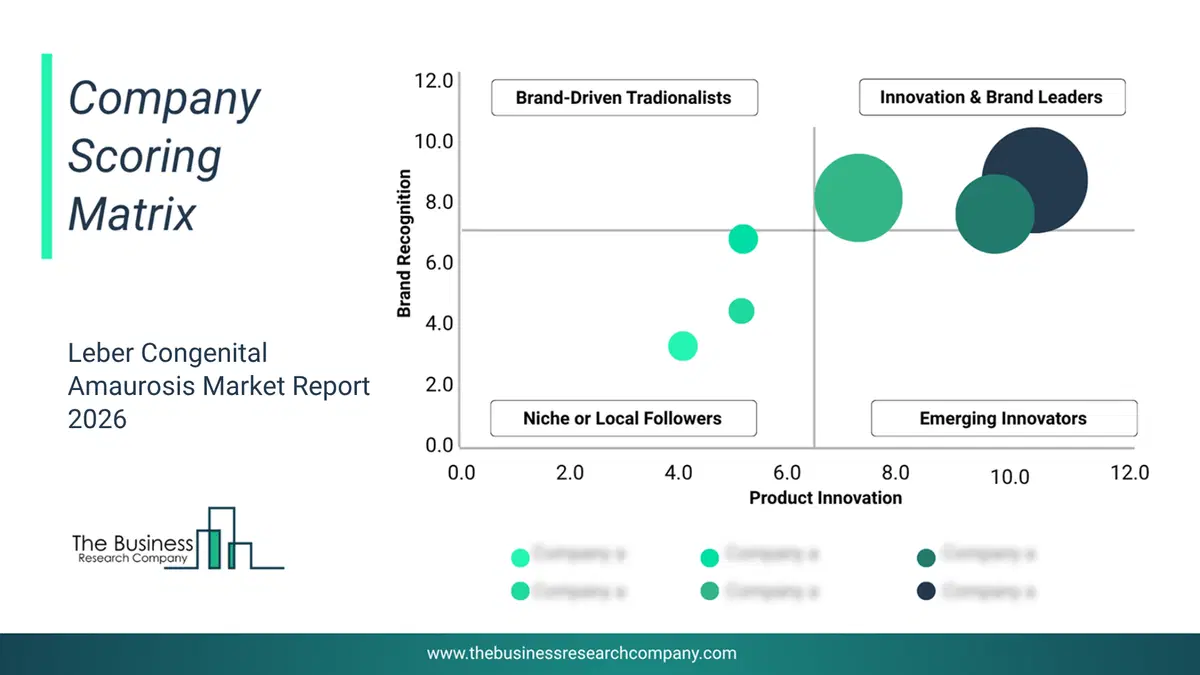
This chart maps companies by product innovation and brand strength, with bubble size indicating relative revenue, helping identify market leaders, challengers, and niche players. This is an illustrative chart; the full report provides a complete and accurate competitive analysis.
Global Leber Congenital Amaurosis Market Trends and Insights
Major companies operating in the leber congenital amaurosis market are focusing on developing innovative solutions, such as RNA-based treatments to improve vision restoration and disease management. RNA-based treatments use RNA molecules to treat diseases by targeting genetic processes. These include mRNA vaccines, siRNA therapies, antisense oligonucleotides, and RNA aptamers. For instance, in January 2025, Laboratoires Théa S.A.S., a France-based pharmaceutical company, launched Sepul Bio, a dedicated business unit aimed at advancing RNA therapies for inherited retinal diseases, explicitly targeting sepofarsen for leber congenital amaurosis 10 (LCA10) and ultevursen for USH2A-associated retinitis pigmentosa. With the successful dosing of the first patient in the LUNA Phase 2b clinical trial for ultevursen, Sepul Bio is poised to make significant strides in addressing these rare genetic disorders.What Are Latest Mergers And Acquisitions In The Leber Congenital Amaurosis Market?
In October 2024, Ocuphire Pharma Inc., a US-based biopharmaceutical company, acquired Opus Genetics Inc. for an undisclosed amount. With this acquisition, Ocuphire Pharma aims to create a leading clinical-stage biotechnology company focused on developing gene therapies for inherited retinal diseases (IRDs). Opus Genetics Inc. is a US-based gene therapy company that develops treatments for inherited retinal diseases.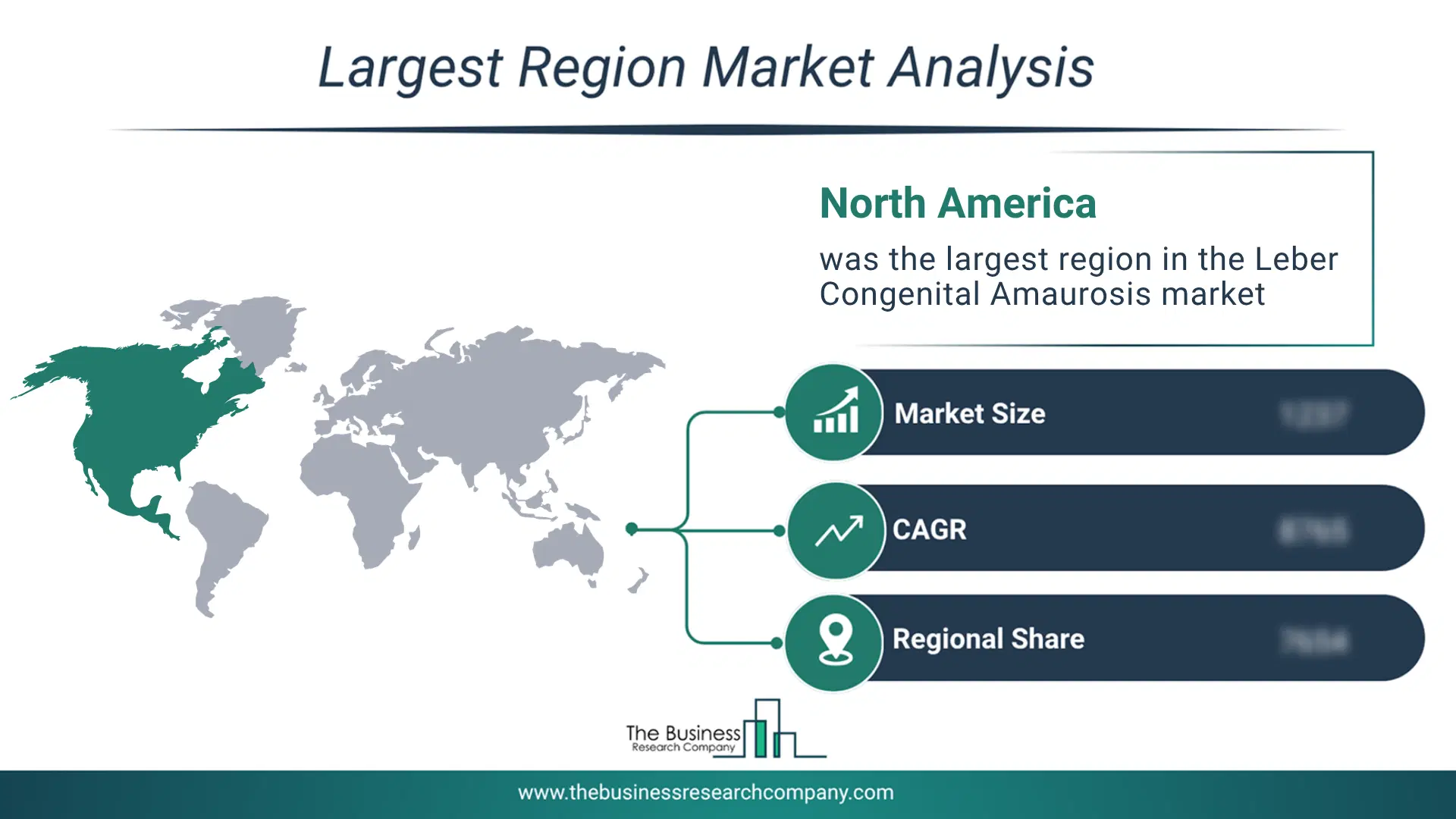
Regional Outlook
North America was the largest region in the leber congenital amaurosis market in 2025. Asia-Pacific is expected to be the fastest-growing region in the forecast period. The regions covered in this market report are Asia-Pacific, South East Asia, Western Europe, Eastern Europe, North America, South America, Middle East, Africa. The countries covered in this market report are Australia, Brazil, China, France, Germany, India, Indonesia, Japan, Taiwan, Russia, South Korea, UK, USA, Canada, Italy, Spain.What Defines the Leber Congenital Amaurosis Market?
The leber congenital amaurosis (LCA) market consists of revenues earned by entities by providing services such as clinical trial services, healthcare and patient support services, vision rehabilitation services, and diagnostic testing services. The market value includes the value of related goods sold by the service provider or included within the service offering. The leber congenital amaurosis (LCA) market also includes sales of retinal implants, diagnostic testing kits, assistive devices, and gene therapies. Values in this market are ‘factory gate’ values, that is the value of goods sold by the manufacturers or creators of the goods, whether to other entities (including downstream manufacturers, wholesalers, distributors and retailers) or directly to end customers. The value of goods in this market includes related services sold by the creators of the goods.How is Market Value Defined and Measured?
The market value is defined as the revenues that enterprises gain from the sale of goods and/or services within the specified market and geography through sales, grants, or donations in terms of the currency (in USD unless otherwise specified). The revenues for a specified geography are consumption values that are revenues generated by organizations in the specified geography within the market, irrespective of where they are produced. It does not include revenues from resales along the supply chain, either further along the supply chain or as part of other products.
This chart presents market attractiveness based on a quantitative evaluation of growth, competition, strategic alignment, and risk, offering a clear view of opportunity areas for decision-making. This chart is for illustrative purposes; the full report contains the complete analysis.

This chart highlights the Total Addressable Market (TAM) by estimating the maximum revenue opportunity using an assumption-driven approach, supporting strategic planning and opportunity sizing across markets. The chart is illustrative; the full report provides a more comprehensive analysis.
What Key Data and Analysis Are Included in the Leber Congenital Amaurosis Market Report 2026?
The leber congenital amaurosis market research report is one of a series of new reports from The Business Research Company that provides market statistics, including industry global market size, regional shares, competitors with the market share, detailed market segments, market trends and opportunities, and any further data you may need to thrive in the leber congenital amaurosis industry. The market research report delivers a complete perspective of everything you need, with an in-depth analysis of the current and future state of the industry.Leber Congenital Amaurosis Market Report Forecast Analysis
| Report Attribute | Details |
|---|---|
| Market Size Value In 2026 | $1.12 billion |
| Revenue Forecast In 2030 | $1.39 billion |
| Growth Rate | CAGR of 5.5% from 2026 to 2030 |
| Base Year For Estimation | 2025 |
| Actual Estimates/Historical Data | 2020-2025 |
| Forecast Period | 2026 - 2030 |
| Market Representation | Revenue in USD Billion and CAGR from 2026 to 2030 |
| Segments Covered | Treatment Type, Age Of Onset, Distribution Channel, End User |
| Regional Scope | Asia-Pacific, Western Europe, Eastern Europe, North America, South America, Middle East, Africa |
| Country Scope | The countries covered in the report are Australia, Brazil, China, France, Germany, India, Indonesia, Japan, Taiwan, Russia, South Korea, UK, USA, Canada, Italy, Spain |
| Key Companies Profiled | Sanofi S.A., Novartis AG, Astellas Pharma Inc., Invitae Corporation, Novelion Therapeutics Inc., Andelyn Biosciences Inc., CD Genomics Inc., Editas Medicine Inc., MeiraGTx Holdings plc, Sangamo Therapeutics Inc., LKC Technologies Inc., Aldeyra Therapeutics Inc., Asper Biogene OÜ, Allergan Inc., ProQR Therapeutics N.V., GenSight Biologics S.A., Ocugen Inc., Ophthotech Corporation, Atsena Therapeutics Inc., HuidaGene Therapeutics Co. Ltd. |
| Customization Scope | Request for Customization |
| Pricing And Purchase Options | Explore Purchase Options |