
Leukemia Inhibitory Factor (LIF) Market Report 2026
Global Outlook – By Product Type (Recombinant Leukemia Inhibitory Factor, Monoclonal Antibodies, Antibodies And Antibody-Drug Conjugates, Cytokine Mixes), By Distribution Channel (Direct Sales, Online Sales, Third-Party Retailers), By Application (Cancer Treatment, Stem Cell Research, Neurological Disorders, Fertility Treatment, Other Applications), By End-User (Hospitals, Research Institutes, Biotechnology Companies, Other End Users) – Market Size, Trends, Strategies, and Forecast to 2030
Leukemia Inhibitory Factor (LIF) Market Overview
• Leukemia Inhibitory Factor (LIF) market size has reached to $0.92 billion in 2025 • Expected to grow to $1.37 billion in 2030 at a compound annual growth rate (CAGR) of 8.2% • Growth Driver: Rise In Clinical Trials Fueling The Growth Of The Market Due To Increasing Focus On Innovative Therapies And Regenerative Medicine • Market Trend: Advancements In Cytokine Development For Regenerative Medicine • North America was the largest region in 2025 and Asia-Pacific is the fastest growing region.What Is Covered Under Leukemia Inhibitory Factor (LIF) Market?
Leukemia inhibitory factor (LIF) is a multifunctional glycoprotein belonging to the interleukin-6 (IL-6) cytokine family. It plays a crucial role in various biological processes, including cell differentiation, proliferation, and survival. Leukemia inhibitory factor (LIF) exerts its effects by binding to a specific receptor complex composed of LIF receptor (LIFR) and glycoprotein 130 (gp130), which activates downstream signaling pathways. The main product types of the leukemia inhibitory factors (LIF) are recombinant leukemia inhibitory factor, monoclonal antibodies, antibodies and antibody-drug conjugates, and cytokine mixes. Recombinant leukemia inhibitory factor is a lab‑made cytokine produced using engineered cells, typically bacteria or mammalian, that deliver a highly purified version of the protein. These are distributed through various channels, such as direct sales, online sales, and third-party retailers, and are used across a wide range of applications, including cancer treatment, stem cell research, neurological disorders, fertility treatment, and other therapeutic areas. The products are utilized by different end users, including hospitals, research institutes, biotechnology companies, and other healthcare and life science organizations.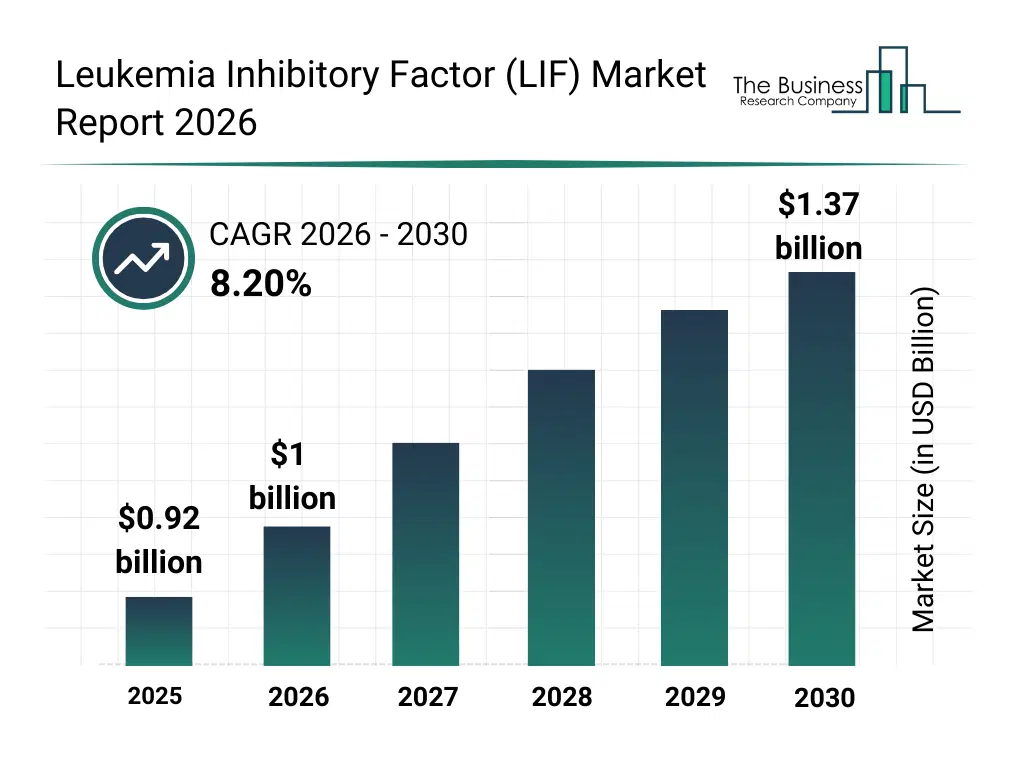
What Is The Leukemia Inhibitory Factor (LIF) Market Size and Share 2026?
The leukemia inhibitory factor (lif) market size has grown strongly in recent years. It will grow from $0.92 billion in 2025 to $1 billion in 2026 at a compound annual growth rate (CAGR) of 8.7%. The growth in the historic period can be attributed to limited availability of recombinant lif, reliance on animal-derived cytokines, growing stem cell research initiatives, increasing use in cancer research, rising awareness of fertility treatment solutions.What Is The Leukemia Inhibitory Factor (LIF) Market Growth Forecast?
The leukemia inhibitory factor (lif) market size is expected to see strong growth in the next few years. It will grow to $1.37 billion in 2030 at a compound annual growth rate (CAGR) of 8.2%. The growth in the forecast period can be attributed to development of human recombinant and animal-free lif, expansion of neurological disorder applications, rising biotechnology research investments, adoption of monoclonal antibodies and adc therapies, integration with precision medicine platforms. Major trends in the forecast period include rising demand for recombinant leukemia inhibitory factor products, expansion of stem cell research applications, increased adoption in fertility treatments, growth in cancer therapy research using lif, enhanced focus on preclinical and diagnostic antibody development.
Global Leukemia Inhibitory Factor (LIF) Market Segmentation
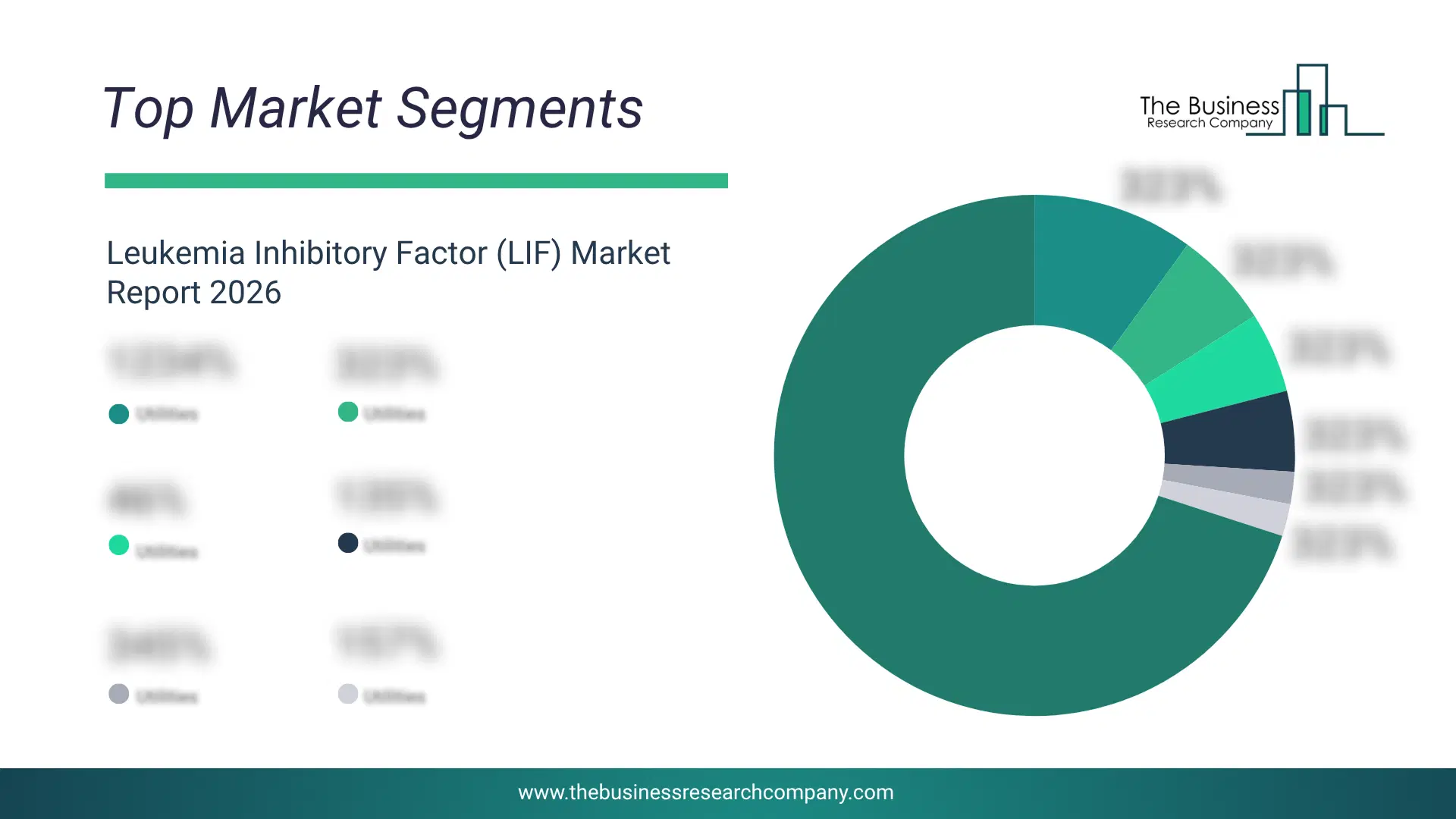
1) By Product Type: Recombinant Leukemia Inhibitory Factor, Monoclonal Antibodies, Antibodies And Antibody-Drug Conjugates, Cytokine Mixes 2) By Distribution Channel: Direct Sales, Online Sales, Third-Party Retailers 3) By Application: Cancer Treatment, Stem Cell Research, Neurological Disorders, Fertility Treatment, Other Applications 4) By End-User: Hospitals, Research Institutes, Biotechnology Companies, Other End Users Subsegments: 1) By Recombinant Leukemia Inhibitory Factor: Human Recombinant Leukemia Inhibitory Factor, Mouse Recombinant Leukemia Inhibitory Factor, Rat Recombinant Leukemia Inhibitory Factor, GMP-Grade Leukemia Inhibitory Factor, Animal-Free Recombinant Leukemia Inhibitory Factor 2) By Monoclonal Antibodies: Anti-Leukemia Inhibitory Factor Monoclonal Antibodies, Anti-Leukemia Inhibitory Factor Receptor Antibodies, Neutralizing Monoclonal Antibodies, Diagnostic Use Monoclonal Antibodies 3) By Antibodies and Antibody-Drug Conjugates: Leukemia Inhibitory Factor Targeted Antibody-Drug Conjugates, Bispecific Antibodies Involving Leukemia Inhibitory Factor, Antibody Fragments Against Leukemia Inhibitory Factor, Preclinical Antibody-Drug Conjugate Candidates 4) By Cytokine Mixes: Leukemia Inhibitory Factor With IL-6 Cytokine Mix, Leukemia Inhibitory Factor With BMP And FGF Mixes, Stem Cell Culture Cytokine Cocktails Containing Leukemia Inhibitory Factor, Tumor Microenvironment Cytokine Panels Including Leukemia Inhibitory FactorWhat Are The Drivers Of The Leukemia Inhibitory Factor (LIF) Market?
The increasing number of clinical trials is expected to propel the growth of the leukemia inhibitory factor (LIF) market going forward. Clinical trials refer to research studies performed on people to evaluate the safety, effectiveness, and side effects of new medical treatments, drugs, therapies, or devices. The rise in clinical trials is driven by growing investment in pharmaceutical research and development, which accelerates the development of innovative therapies and requires more trials to test their safety and efficacy. Clinical trials support the demand for leukemia inhibitory factors (LIF) by generating scientific evidence on its effectiveness in treating conditions like cancer and neurodegenerative diseases, which boosts its credibility and encourages wider use in medical research and therapeutic development. For instance, in December 2024, according to the Association of the British Pharmaceutical Industry, a UK-based trade association, the number of industry clinical trials initiatives increased to 426 in 2023, up from 411 in 2022. Therefore, the increasing number of clinical trials drives the growth of the leukemia inhibitory factor (LIF) industry. The increasing healthcare expenditure is expected to propel the growth of the leukemia inhibitory factor (LIF) market going forward. Healthcare expenditure refers to the overall spending on medical services, healthcare products, and public health programs in a country or region. The increase in healthcare expenditure is rising due to the growing burden of chronic diseases, as managing long-term conditions requires continuous treatment, diagnostics, and monitoring, driving up overall healthcare costs. Rising healthcare expenditure supports leukemia inhibitory factors (LIF) by allocating more resources to innovative research and clinical evaluations, helping advance the development and implementation of LIF-based therapies in regenerative medicine and disease management. For instance, in April 2025, according to the American Medical Association, a US-based professional association, health spending in the U.S. rose by 7.5% in 2023 to reach $4.9 trillion, or $14,570 per person, marking a notable increase compared to the 4.6% growth recorded in 2022. Therefore, the increasing healthcare expenditure is driving the growth of the leukemia inhibitory factor (LIF) industry.Key Players In The Global Leukemia Inhibitory Factor (LIF) Market
Major companies operating in the leukemia inhibitory factor (lif) market are Thermo Fisher Scientific Inc., Merck KGaA, Bio-Techne Corporation, STEMCELL Technologies Inc., GenScript Biotech Corporation, Abcam Plc, BioLegend Inc., Sino Biological Inc., Cell Signaling Technology Inc., RayBiotech Inc., Proteintech Group Inc., Santa Cruz Biotechnology Inc., Creative BioMart Inc., Aviva Systems Biology Corporation, ReproCELL Inc., G Biosciences, Abbiotec LLC, Boster Biological Technology Co. Ltd., ProSpec-Tany TechnoGene Ltd., and InVitria.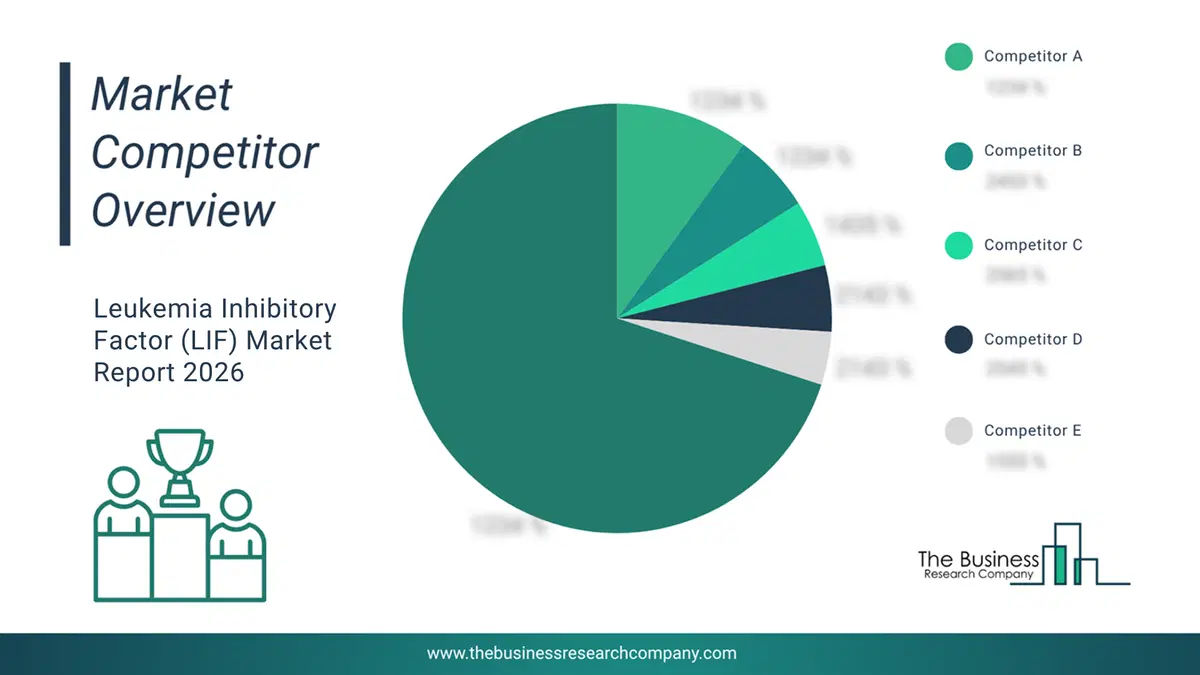
This chart is for illustrative purposes; the full report includes a detailed competitor analysis and comprehensive overview of the top 10 companies in the market.
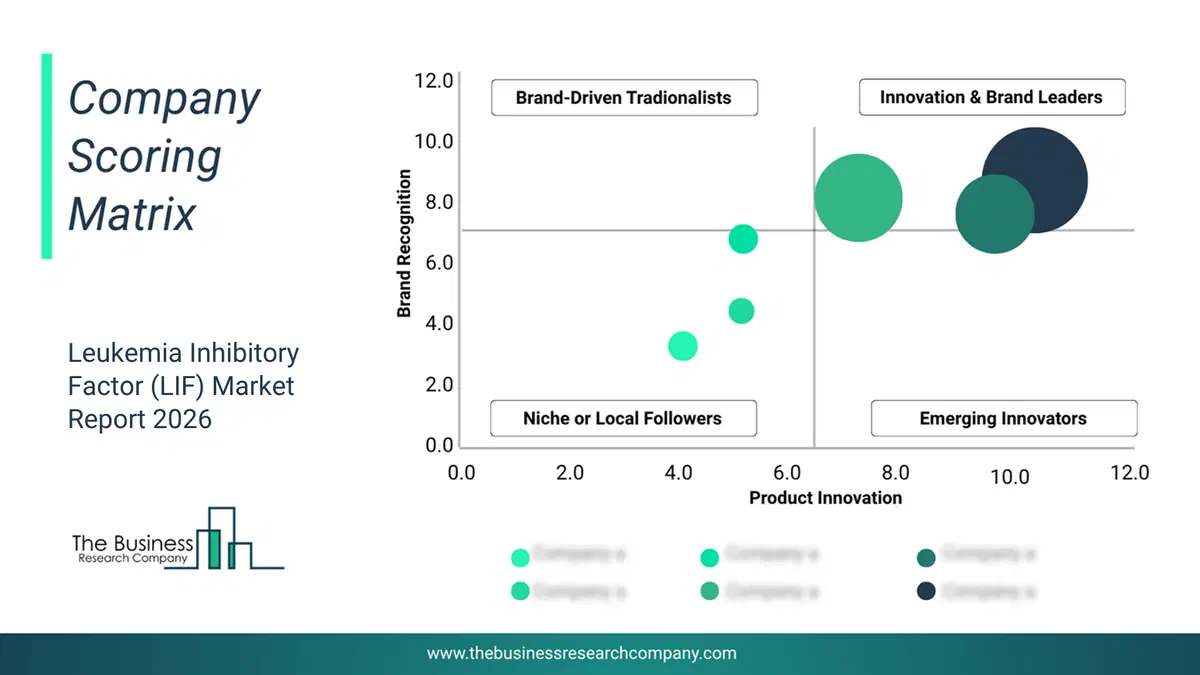
This chart maps companies by product innovation and brand strength, with bubble size indicating relative revenue, helping identify market leaders, challengers, and niche players. This is an illustrative chart; the full report provides a complete and accurate competitive analysis.
Global Leukemia Inhibitory Factor (LIF) Market Trends and Insights
Major companies operating in the leukemia inhibitory factor (LIF) market are focusing on developing advanced solutions, such as stem cell research, to enhance the development of advanced regenerative therapies and expand the clinical applications of LIF in tissue repair and cell differentiation. Stem cell research involves studying stem cells to explore their potential in regenerating tissues and developing treatments for various diseases. For instance, in August 2023, Sino Biological Inc., a China-based biotech company, launched a line of GMP-grade recombinant cytokines to support stem cell research by providing high-purity, high-bioactivity reagents that meet strict clinical and manufacturing standards. Manufactured in compliance with stringent good manufacturing practice (GMP) standards, these cytokines are devoid of endotoxins, animal-derived substances, and microbial impurities. Rigorous testing is performed on each batch to confirm its safety, stability, and biological activity. These characteristics make them ideal for advanced uses like stem cell preservation, differentiation, and tissue repair, ensuring consistent research results and facilitating progress toward clinical applications in regenerative medicine and cell therapy.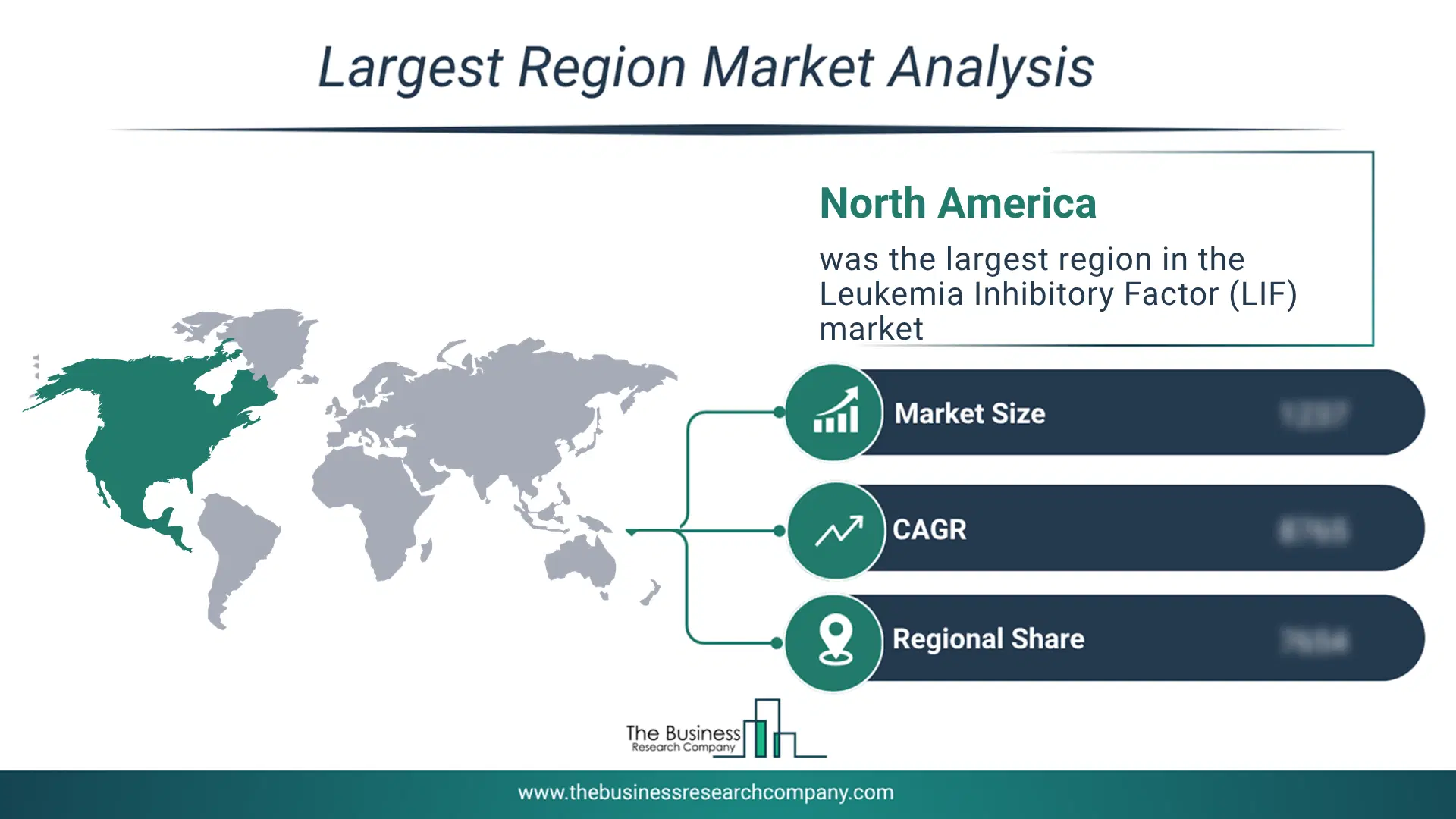
Regional Insights
North America was the largest region in the leukemia inhibitory factor (LIF) market in 2025. Asia-Pacific is expected to be the fastest-growing region in the forecast period. The regions covered in this market report are Asia-Pacific, South East Asia, Western Europe, Eastern Europe, North America, South America, Middle East, Africa. The countries covered in this market report are Australia, Brazil, China, France, Germany, India, Indonesia, Japan, Taiwan, Russia, South Korea, UK, USA, Canada, Italy, Spain.What Defines the Leukemia Inhibitory Factor (LIF) Market?
The leukemia inhibitory factor (LIF) market consists of sales of stem cell culture reagents, cell signaling kits, and cytokine assay kits. Values in this market are ‘factory gate’ values, that is the value of goods sold by the manufacturers or creators of the goods, whether to other entities (including downstream manufacturers, wholesalers, distributors and retailers) or directly to end customers. The value of goods in this market includes related services sold by the creators of the goods.How is Market Value Defined and Measured?
The market value is defined as the revenues that enterprises gain from the sale of goods and/or services within the specified market and geography through sales, grants, or donations in terms of the currency (in USD unless otherwise specified). The revenues for a specified geography are consumption values that are revenues generated by organizations in the specified geography within the market, irrespective of where they are produced. It does not include revenues from resales along the supply chain, either further along the supply chain or as part of other products.
This chart presents market attractiveness based on a quantitative evaluation of growth, competition, strategic alignment, and risk, offering a clear view of opportunity areas for decision-making. This chart is for illustrative purposes; the full report contains the complete analysis.

This chart highlights the Total Addressable Market (TAM) by estimating the maximum revenue opportunity using an assumption-driven approach, supporting strategic planning and opportunity sizing across markets. The chart is illustrative; the full report provides a more comprehensive analysis.
What Key Data and Analysis Are Included in the Leukemia Inhibitory Factor (LIF) Market Report 2026?
The leukemia inhibitory factor (lif) market research report is one of a series of new reports from The Business Research Company that provides market statistics, including industry global market size, regional shares, competitors with the market share, detailed market segments, market trends and opportunities, and any further data you may need to thrive in the leukemia inhibitory factor (lif) industry. The market research report delivers a complete perspective of everything you need, with an in-depth analysis of the current and future state of the industry.Leukemia Inhibitory Factor (LIF) Market Report Forecast Analysis
| Report Attribute | Details |
|---|---|
| Market Size Value In 2026 | $1 billion |
| Revenue Forecast In 2030 | $1.37 billion |
| Growth Rate | CAGR of 8.7% from 2026 to 2030 |
| Base Year For Estimation | 2025 |
| Actual Estimates/Historical Data | 2020-2025 |
| Forecast Period | 2026 - 2030 |
| Market Representation | Revenue in USD Billion and CAGR from 2026 to 2030 |
| Segments Covered | Product Type, Distribution Channel, Application, End-User |
| Regional Scope | Asia-Pacific, Western Europe, Eastern Europe, North America, South America, Middle East, Africa |
| Country Scope | The countries covered in the report are Australia, Brazil, China, France, Germany, India, Indonesia, Japan, Taiwan, Russia, South Korea, UK, USA, Canada, Italy, Spain. |
| Key Companies Profiled | Thermo Fisher Scientific Inc., Merck KGaA, Bio-Techne Corporation, STEMCELL Technologies Inc., GenScript Biotech Corporation, Abcam Plc, BioLegend Inc., Sino Biological Inc., Cell Signaling Technology Inc., RayBiotech Inc., Proteintech Group Inc., Santa Cruz Biotechnology Inc., Creative BioMart Inc., Aviva Systems Biology Corporation, ReproCELL Inc., G Biosciences, Abbiotec LLC, Boster Biological Technology Co. Ltd., ProSpec-Tany TechnoGene Ltd., and InVitria. |
| Customization Scope | Request for Customization |
| Pricing And Purchase Options | Explore Purchase Options |