
Life Science Analytics Software Market Report 2026
Global Outlook – By Product (Prescriptive Analytics, Descriptive Analytics, Predictive Analytics), By Delivery Model (On-Premise, Cloud), By Application (Research And Development, Sales And Marketing Support, Regulatory Compliance, Supply Chain Analytics, Pharmacovigilance), By End User (Pharmaceutical And Biotechnology Companies, Medical Device Companies, Research Centers, Third Party Administrators) - Market Size, Trends, Strategies, and Forecast to 2030
Life Science Analytics Software Market Overview
• Life Science Analytics Software market size has reached to $11.29 billion in 2025 • Expected to grow to $23 billion in 2030 at a compound annual growth rate (CAGR) of 15.2% • Growth Driver: Surge In Clinical Trial Activity Fueling The Growth Of The Market Due To Increased Industry-Sponsored Trials • Market Trend: Driving Innovation In Life Sciences Through Advanced Analytics • North America was the largest region in 2025.What Is Covered Under Life Science Analytics Software Market?
Life science analytics software refers to specialized software designed to analyze and interpret complex data in the life sciences sector, including biology, healthcare, pharmaceuticals, and biotechnology. This software aids in decision-making, research, clinical trials, and regulatory compliance by providing insights through data visualization, predictive modeling, and statistical analysis. The main products of life science analytics software are prescriptive analytics, descriptive analytics, and predictive analytics. Prescriptive analytics is a type of data analysis that recommends actions to achieve desired outcomes based on data. It combines insights from descriptive and predictive analytics to suggest the best course of action for future opportunities or risks. This software is delivered on-premise and cloud. This software is used in several applications, such as research and development, sales and marketing support, regulatory compliance, supply chain analytics, and pharmacovigilance by various end users including pharmaceutical and biotechnology companies, medical device companies, research centers, and third-party administrators.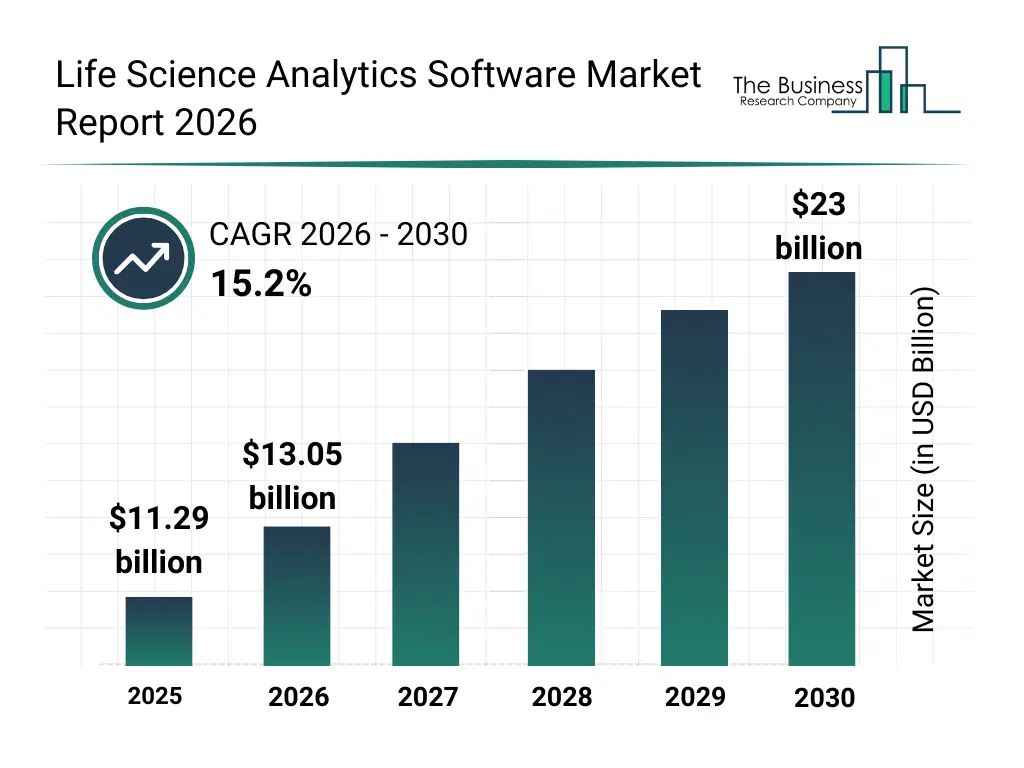
What Is The Life Science Analytics Software Market Size and Share 2026?
The life science analytics software market size has grown rapidly in recent years. It will grow from $11.29 billion in 2025 to $13.05 billion in 2026 at a compound annual growth rate (CAGR) of 15.6%. The growth in the historic period can be attributed to expansion of clinical trial data volumes, increasing use of data-driven decision-making in pharma, growth of digital healthcare records, rising complexity of regulatory reporting, adoption of analytics in sales and marketing functions.What Is The Life Science Analytics Software Market Growth Forecast?
The life science analytics software market size is expected to see rapid growth in the next few years. It will grow to $23 billion in 2030 at a compound annual growth rate (CAGR) of 15.2%. The growth in the forecast period can be attributed to increasing deployment of AI and machine learning analytics, rising demand for personalized medicine insights, expansion of cloud-native analytics platforms, growing integration of genomics and clinical datasets, increasing investments in life science digital transformation. Major trends in the forecast period include increasing adoption of advanced predictive analytics tools, rising integration of real-world evidence analytics, growing use of cloud-based life science platforms, expansion of AI-driven clinical trial analytics, enhanced focus on regulatory-compliant data insights.
Global Life Science Analytics Software Market Segmentation
1) By Product: Prescriptive Analytics, Descriptive Analytics, Predictive Analytics 2) By Delivery Model: On-Premise, Cloud 3) By Application: Research And Development, Sales And Marketing Support, Regulatory Compliance, Supply Chain Analytics, Pharmacovigilance 4) By End User: Pharmaceutical And Biotechnology Companies, Medical Device Companies, Research Centers, Third Party Administrators Subsegments: 1) By Prescriptive Analytics: Decision Optimization Software, Simulation and Scenario Modeling Tools, Workflow Automation Solutions 2) By Descriptive Analytics: Data Visualization Tools, Reporting and Dashboard Solutions, Real-Time Monitoring Tools 3) By Predictive Analytics: Predictive Modeling Software, Machine Learning and AI Tools, Risk Assessment and Forecasting SolutionsWhat Is The Driver Of The Life Science Analytics Software Market?
The increasing number of clinical trials is expected to propel the growth of the life science analytics software market going forward. Clinical trials are research studies conducted in humans to evaluate the safety and efficacy of medical interventions such as drugs, treatments, devices, or preventive measures. Clinical trial numbers are rising to meet the increasing demand for innovative treatments and to address a growing global disease burden. Life Science Analytics Software is used in clinical trials to analyze and interpret trial data, optimize processes, and ensure regulatory compliance for better decision-making and patient outcomes. For instance, in December 2024, according to the Association of the British Pharmaceutical Industry (ABPI), a UK based trade association, the total number of industry-sponsored clinical trials initiated in the UK rose from 411 in 2022 to 426 in 2023. Therefore, the increasing number of clinical trials drives the life science analytics software industry.Key Players In The Global Life Science Analytics Software Market
Major companies operating in the life science analytics software market are McKesson Corporation, Accenture Plc, International Business Machines Corporation (IBM), Oracle Corporation, Cognizant Technology Solutions Corporation, Koninklijke Philips N.V., IQVIA, Wipro Limited, Genpact, EPIC Systems Corporation, PerkinElmer Inc., SAS Institute Inc., Veeva Systems Inc, M3 (EU) Ltd, ExlService Holdings Inc., eClinicalWorks, TIBCO Software Inc., Allscripts Healthcare LLC, Computer Programs and Systems Inc., Elinext, Analytics8, MaxisIT Incorporated, Neuroimaging And Monitoring Equipment
This chart is for illustrative purposes; the full report includes a detailed competitor analysis and comprehensive overview of the top 10 companies in the market.
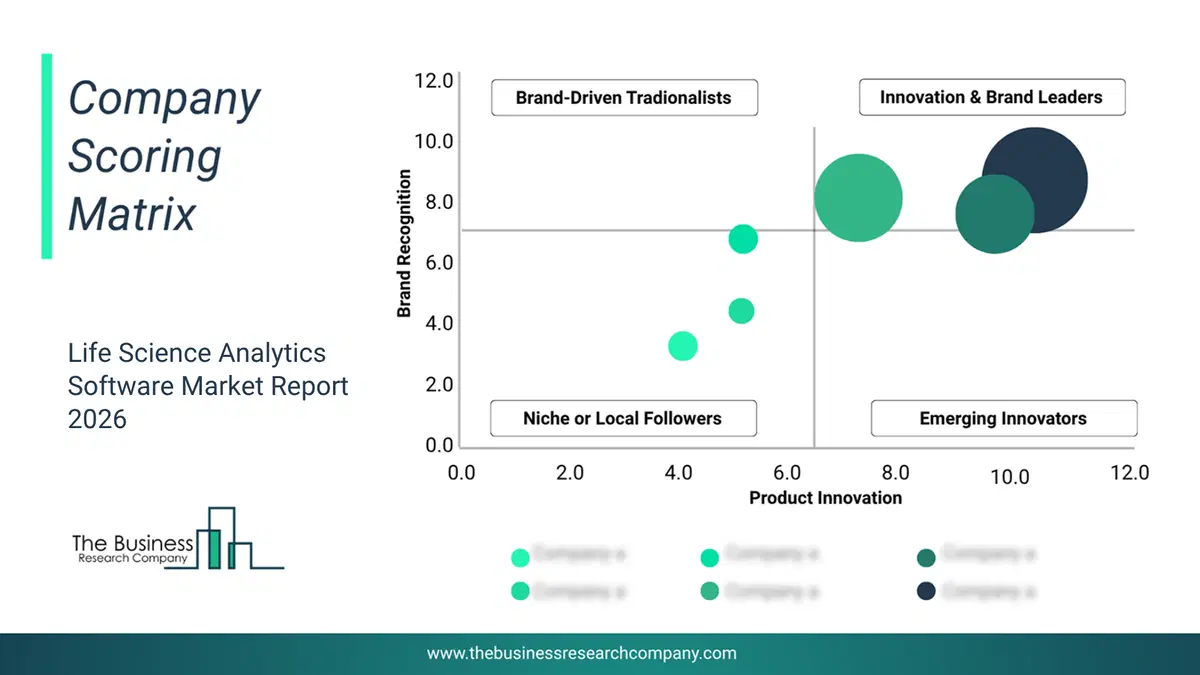
This chart maps companies by product innovation and brand strength, with bubble size indicating relative revenue, helping identify market leaders, challengers, and niche players. This is an illustrative chart; the full report provides a complete and accurate competitive analysis.
Global Life Science Analytics Software Market Trends and Insights
Major companies operating in the life science analytics software market are focusing on technological advancements such as artificial intelligence (AI)-powered analytics platforms to gain a competitive advantage. AI-powered analytics platforms are advanced software systems that utilize artificial intelligence and machine learning algorithms to analyze large datasets, identify patterns, and generate insights. For instance, in February 2024, Trinity Life Sciences, a US-based life sciences consulting firm, launched Brand Insights AI, a cutting-edge chat-based AI interface aimed at enhancing the analysis and application of biopharmaceutical brand research. This innovative tool empowers insights and analytics teams by allowing them to swiftly access and synthesize large volumes of archived data from diverse sources. By uncovering hidden patterns and speeding up decision-making, Brand Insights AI serves as a transformative resource for life sciences executives looking to optimize research processes and enhance strategic outcomes.What Are Latest Mergers And Acquisitions In The Life Science Analytics Software Market?
In June 2024, EPAM Systems Inc., a US-based software company, acquired Odysseus Data Services Inc. for an undisclosed amount. EPAM's acquisition of Odysseus significantly enhances its capabilities in data analytics, real-world evidence, and life sciences solutions, positioning the combined entity as a leader in transforming the life sciences value chain. Odysseus Data Services Inc. is a US-based provider of life sciences analytics software.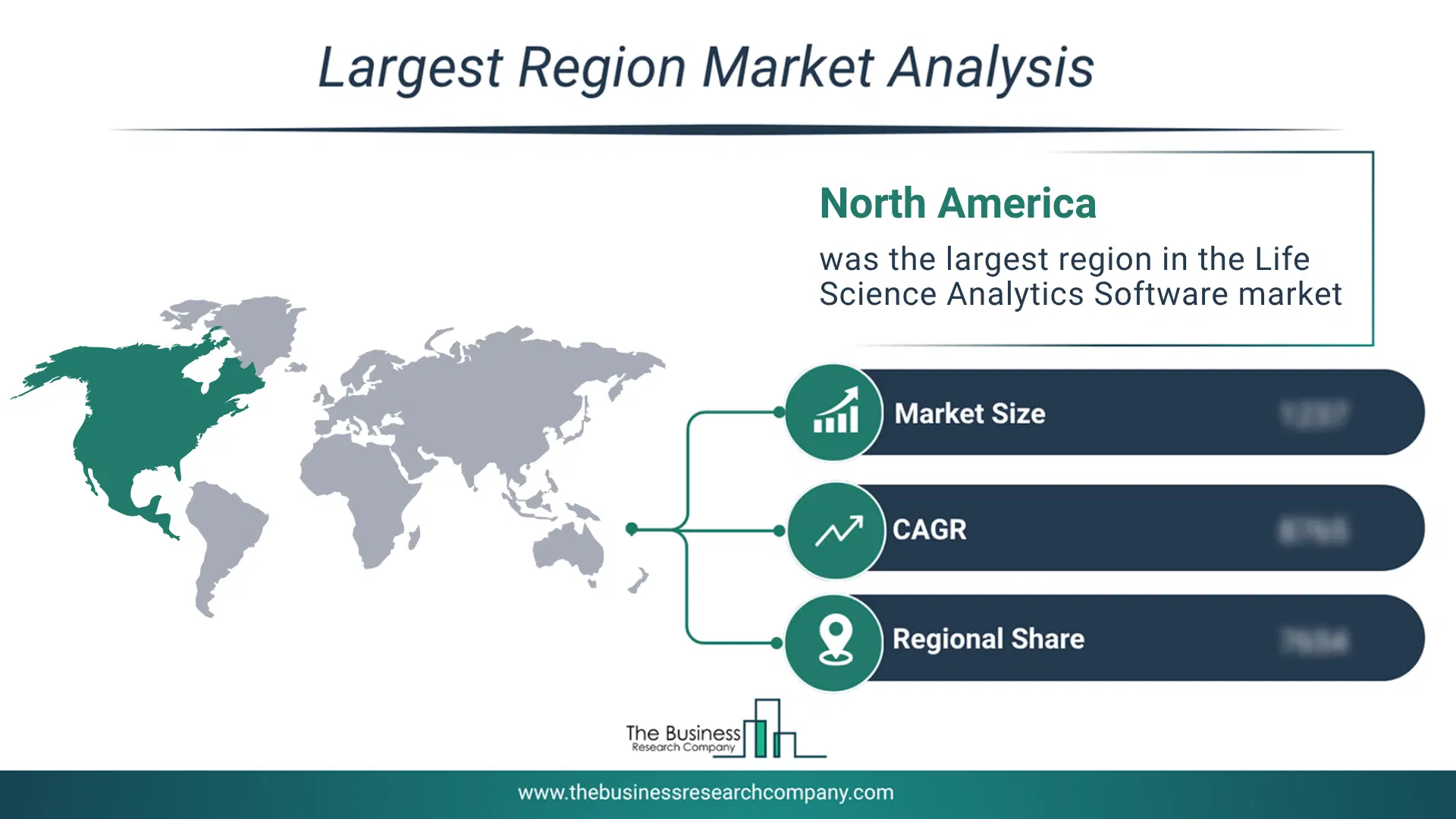
Regional Outlook
North America was the largest region in the life science analytics software market in 2025. The regions covered in this market report are Asia-Pacific, South East Asia, Western Europe, Eastern Europe, North America, South America, Middle East, Africa. The countries covered in this market report are Australia, Brazil, China, France, Germany, India, Indonesia, Japan, Taiwan, Russia, South Korea, UK, USA, Canada, Italy, Spain.What Defines the Life Science Analytics Software Market?
The life science analytics software market includes revenues earned by entities by providing services such as clinical data management, data integration, risk management, and genomic data analysis. The market value includes the value of related goods sold by the service provider or included within the service offering. Only goods and services traded between entities or sold to end consumers are included.How is Market Value Defined and Measured?
The market value is defined as the revenues that enterprises gain from the sale of goods and/or services within the specified market and geography through sales, grants, or donations in terms of the currency (in USD unless otherwise specified). The revenues for a specified geography are consumption values that are revenues generated by organizations in the specified geography within the market, irrespective of where they are produced. It does not include revenues from resales along the supply chain, either further along the supply chain or as part of other products.
This chart presents market attractiveness based on a quantitative evaluation of growth, competition, strategic alignment, and risk, offering a clear view of opportunity areas for decision-making. This chart is for illustrative purposes; the full report contains the complete analysis.

This chart highlights the Total Addressable Market (TAM) by estimating the maximum revenue opportunity using an assumption-driven approach, supporting strategic planning and opportunity sizing across markets. The chart is illustrative; the full report provides a more comprehensive analysis.
What Key Data and Analysis Are Included in the Life Science Analytics Software Market Report 2026?
The life science analytics software market research report is one of a series of new reports from The Business Research Company that provides market statistics, including industry global market size, regional shares, competitors with the market share, detailed market segments, market trends and opportunities, and any further data you may need to thrive in the life science analytics software industry. The market research report delivers a complete perspective of everything you need, with an in-depth analysis of the current and future state of the industry.Life Science Analytics Software Market Report Forecast Analysis
| Report Attribute | Details |
|---|---|
| Market Size Value In 2026 | $13.05 billion |
| Revenue Forecast In 2030 | $23 billion |
| Growth Rate | CAGR of 15.2% from 2026 to 2030 |
| Base Year For Estimation | 2025 |
| Actual Estimates/Historical Data | 2020-2025 |
| Forecast Period | 2026 - 2030 |
| Market Representation | Revenue in USD Billion and CAGR from 2026 to 2030 |
| Segments Covered | Product, Delivery Model, Application, End User |
| Regional Scope | Asia-Pacific, Western Europe, Eastern Europe, North America, South America, Middle East, Africa |
| Country Scope | The countries covered in the report are Australia, Brazil, China, France, Germany, India, Indonesia, Japan, Taiwan, Russia, South Korea, UK, USA, Canada, Italy, Spain |
| Key Companies Profiled | McKesson Corporation, Accenture Plc, International Business Machines Corporation (IBM), Oracle Corporation, Cognizant Technology Solutions Corporation, Koninklijke Philips N.V., IQVIA, Wipro Limited, Genpact, EPIC Systems Corporation, PerkinElmer Inc., SAS Institute Inc., Veeva Systems Inc, M3 (EU) Ltd, ExlService Holdings Inc., eClinicalWorks, TIBCO Software Inc., Allscripts Healthcare LLC, Computer Programs and Systems Inc., Elinext, Analytics8, MaxisIT Incorporated, Neuroimaging And Monitoring Equipment |
| Customization Scope | Request for Customization |
| Pricing And Purchase Options | Explore Purchase Options |