

Life Science Market Report 2026
Global Outlook – By Type (Biotechnology, Pharmaceuticals, Medical Devices, Life Science Tools, Digital Health Solutions), By Therapeutic Areas (Oncology, Cardiology, Neurology, Immunology, Rare Diseases, Other Therapeutic Areas), By Applications (Drug Discovery And Development, Diagnostics, Therapeutics, Clinical Trials, Research And Development), By End-User (Pharmaceutical Companies, Biotechnology Companies, Academic And Research Institutions, Hospitals And Clinics) – Market Size, Trends, Strategies, and Forecast to 2030
Life Science Market Overview
• Life Science market size has reached to $109.53 billion in 2025 • Expected to grow to $200.59 billion in 2030 at a compound annual growth rate (CAGR) of 12.9% • Growth Driver: Rising Prevalence Of Chronic Diseases Fueling The Growth Of The Market Due To Increasing Demand For Advanced Therapies And Long-Term Disease Management Solutions • Market Trend: Development Of Patented Peptide-Based Functional Ingredients For Metabolic And Glucose Health Support • North America was the largest region in 2025 and Asia-Pacific is the fastest growing region.What Is Covered Under Life Science Market?
Life science refers to the broad field of science that studies living organisms and biological processes, including disciplines such as biology, genetics, microbiology, biochemistry, and biotechnology. It focuses on understanding the structure, function, growth, and interaction of living systems at the molecular, cellular, and organism levels. It helps to advance knowledge that supports healthcare, agriculture, environmental sustainability, and the development of medical and biotechnological innovations. The main types of life science include biotechnology, pharmaceuticals, medical devices, life science tools, and digital health solutions. Biotechnology refers to the use of living systems and organisms to develop or create products for healthcare, research, and industrial applications. These solutions span therapeutic areas such as oncology, cardiology, neurology, immunology, rare diseases, and other therapeutic areas. The various applications include drug discovery and development, diagnostics, therapeutics, clinical trials, and research and development. These solutions are used by several end users such as pharmaceutical companies, biotechnology companies, academic and research institutions, and hospitals and clinics.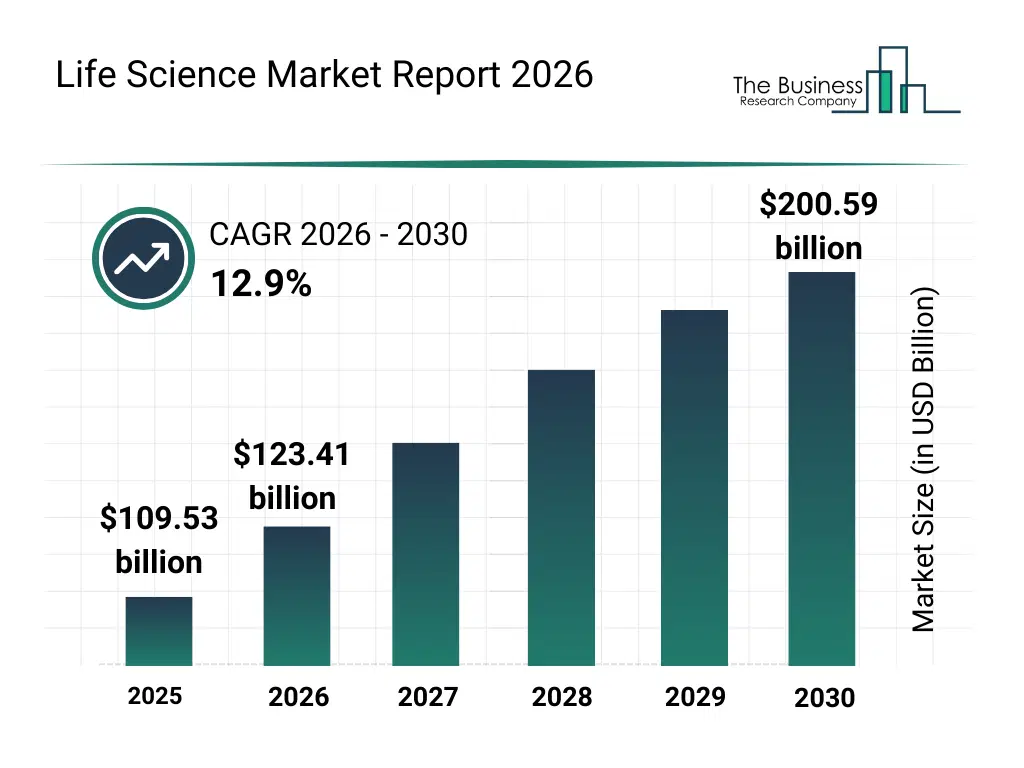
What Is The Life Science Market Size and Share 2026?
The life science market size has grown rapidly in recent years. It will grow from $109.53 billion in 2025 to $123.41 billion in 2026 at a compound annual growth rate (CAGR) of 12.7%. The growth in the historic period can be attributed to growth in pharmaceutical r&d investments, expansion of biotechnology companies, adoption of laboratory automation, increasing demand for diagnostics, rising prevalence of chronic and rare diseases.What Is The Life Science Market Growth Forecast?
The life science market size is expected to see rapid growth in the next few years. It will grow to $200.59 billion in 2030 at a compound annual growth rate (CAGR) of 12.9%. The growth in the forecast period can be attributed to advancements in precision medicine, growth in digital health solutions, integration of ai and big data analytics in research, increasing collaborations between academic and commercial research institutions, expansion of global clinical trials. Major trends in the forecast period include advanced drug discovery platforms, integrated clinical trial management, high-throughput laboratory automation, regulatory compliance and consulting services, Bioinformatics and data analytics.
Global Life Science Market Segmentation
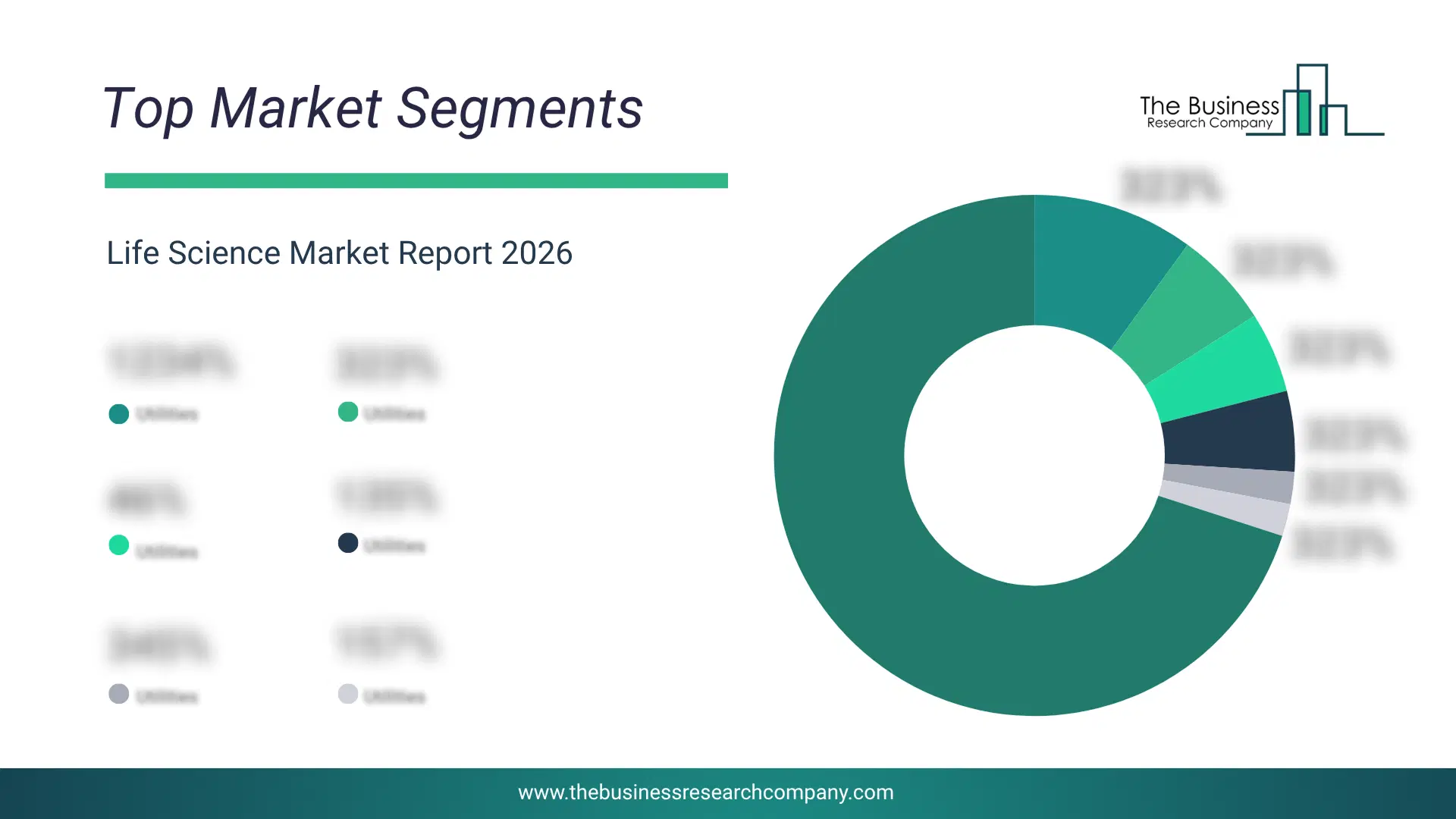
1) By Type: Biotechnology, Pharmaceuticals, Medical Devices, Life Science Tools, Digital Health Solutions 2) By Therapeutic Areas: Oncology, Cardiology, Neurology, Immunology, Rare Diseases, Other Therapeutic Areas 3) By Applications: Drug Discovery And Development, Diagnostics, Therapeutics, Clinical Trials, Research And Development 4) By End-User: Pharmaceutical Companies, Biotechnology Companies, Academic And Research Institutions, Hospitals And Clinics Subsegments: 1) By Biotechnology: Genetic Engineering, Cell Based Technologies, Microbial Biotechnology, Industrial Biotechnology, Agricultural Biotechnology 2) By Pharmaceuticals: Prescription Drugs, Over The Counter Drugs, Generic Drugs, Branded Drugs, Specialty Drugs 3) By Medical Devices: Diagnostic Devices, Therapeutic Devices, Surgical Instruments, Monitoring Devices, Implantable Devices 4) By Life Science Tools: Laboratory Instruments, Reagents And Consumables, Analytical Tools, Sample Preparation Tools, Research Software Solutions 5) By Digital Health Solutions: Health Information Systems, Remote Patient Monitoring, Mobile Health Applications, Clinical Decision Support Systems, Healthcare Data AnalyticsWhat Is The Driver Of The Life Science Market?
The increasing prevalence of chronic diseases is expected to propel the growth of life science market going forward. Chronic diseases refer to long-lasting conditions that typically progress slowly and require ongoing management rather than short-term treatment. Chronic diseases are increasing due to unhealthy lifestyle habits, such as poor diet, physical inactivity, and rising obesity rates. Life science helps address chronic diseases by enabling the discovery of novel therapies, diagnostics, and biologics that improve long-term disease management and patient outcomes. For instance, in April 2025, according to Centers for Disease Control and Prevention, a US based government agency, in 2023, 76.4% (representing 194 million) of US adults reported 1 or more chronic conditions, including 59.5%, 78.4%, and 93.0% of young, midlife, and older adults, respectively. Therefore, the increasing prevalence of chronic diseases is driving the growth of life science industry.Key Players In The Global Life Science Market
Major companies operating in the life science market are Johnson & Johnson, Roche Holding AG, Pfizer Inc., AbbVie Inc., AstraZeneca plc, Bayer AG, Novartis AG, Bristol-Myers Squibb Company, Sanofi S.A., Abbott Laboratories, Thermo Fisher Scientific Inc., GlaxoSmithKline plc, Novo Nordisk A/S, Amgen Inc., Eli Lily and Company, Takeda Pharmaceutical Company Limited, Gilead Sciences Inc., Merck KGaA, Boehringer Ingelheim International GmbH, Vertex Pharmaceuticals Incorporated, Astellas Pharma Inc., Biogen Inc., bioMérieux SA, Sartorius AG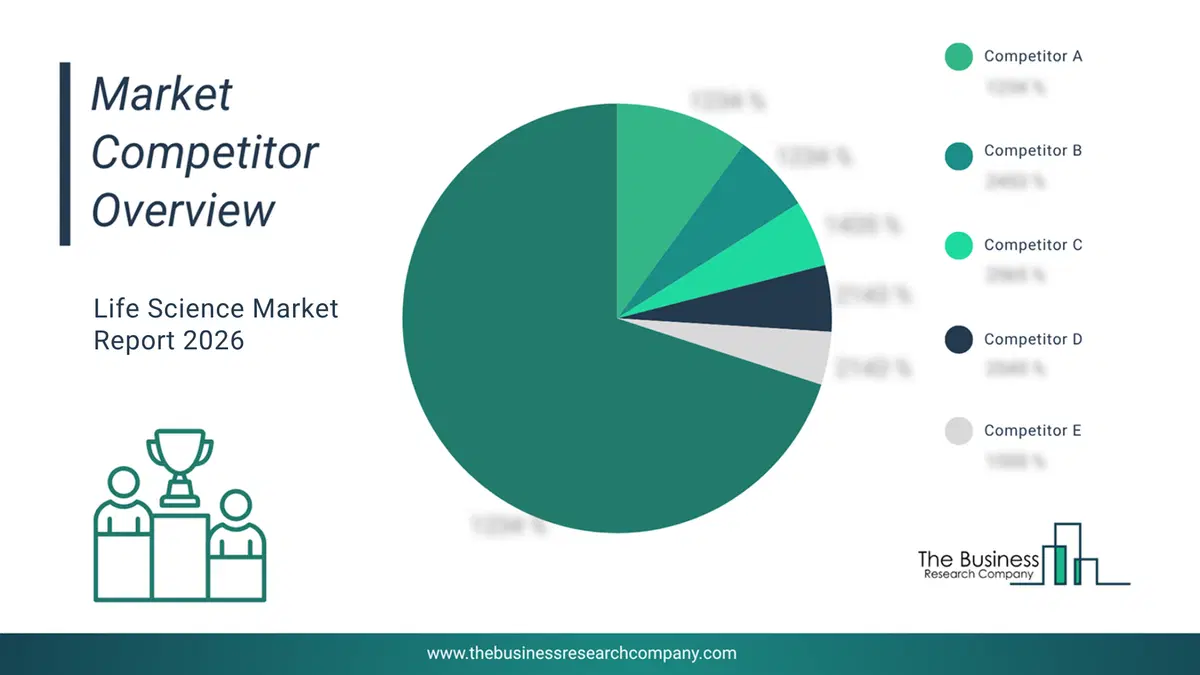
This chart is for illustrative purposes; the full report includes a detailed competitor analysis and comprehensive overview of the top 10 companies in the market.
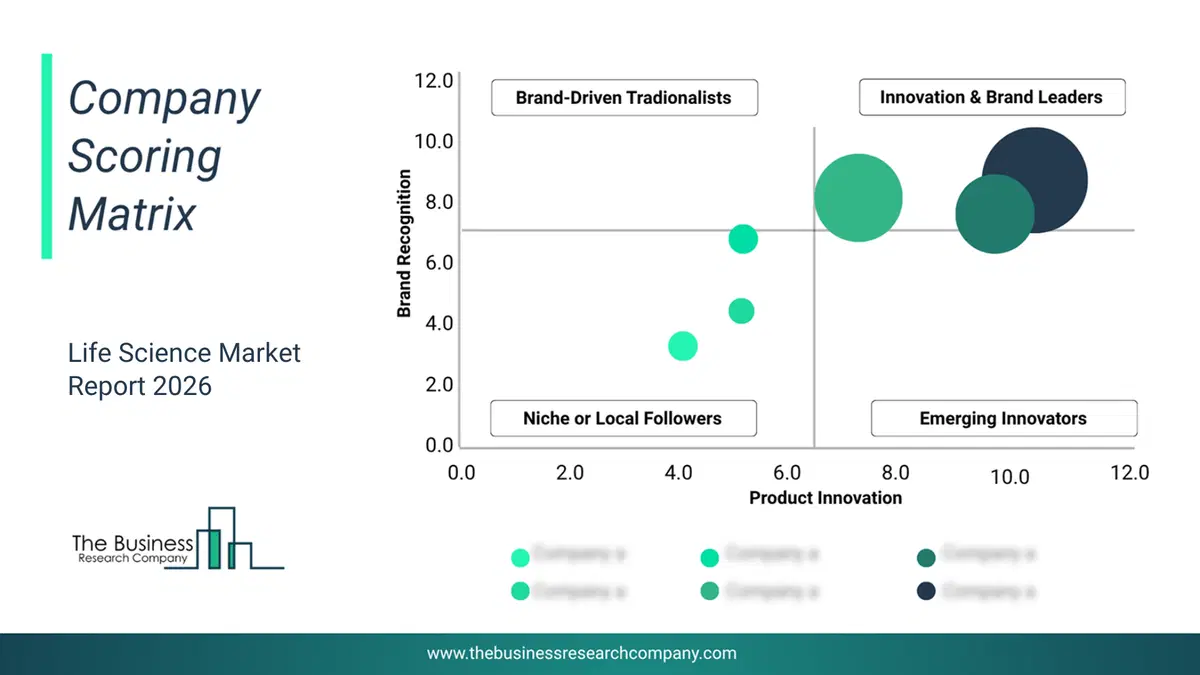
This chart maps companies by product innovation and brand strength, with bubble size indicating relative revenue, helping identify market leaders, challengers, and niche players. This is an illustrative chart; the full report provides a complete and accurate competitive analysis.
Global Life Science Market Trends and Insights
Major companies operating in the life science market are focusing on developing innovative products, such as patented peptide-based functional ingredients, to provide scientifically validated support for glucose regulation and metabolic health. Peptide-based functional ingredients are bioactive, short-chain amino acid compounds designed to interact with specific metabolic pathways to deliver targeted health benefits. For instance, in December 2025, Greenyn Biotechnology Co. Ltd., a Taiwan-based provider of proprietary biotechnology-driven functional ingredients and health supplement solutions, launched Insumate mcIRBP-19 Bitter Melon Peptide, a bioactive peptide designed to support metabolic health in dietary supplement applications. The product features a uniquely identified bitter melon-derived peptide that mimics insulin receptor binding activity, supporting blood glucose control. It is produced using a low-temperature supercritical extraction process to preserve peptide bioactivity and consistency. Insumate mcIRBP-19 is backed by clinical validation and international certifications, positioning it as a next-generation, evidence-based nutraceutical ingredient targeting the rapidly growing metabolic health and diabetes-support segment.What Are Latest Mergers And Acquisitions In The Life Science Market?
In October 2025, MJH Life Sciences, a US-based provider of healthcare information, education, and data analytics solutions, acquired BPD Healthcare for an undisclosed amount. With this acquisition, MJH Life Sciences aims to strengthen its portfolio of omnichannel medical education, clinical insights, and healthcare marketing capabilities, expanding its reach across life sciences, pharmaceuticals, and healthcare professionals. BPD Healthcare is a US-based company specializing in healthcare communications, medical education, and strategic marketing solutions for pharmaceutical and medical device companies.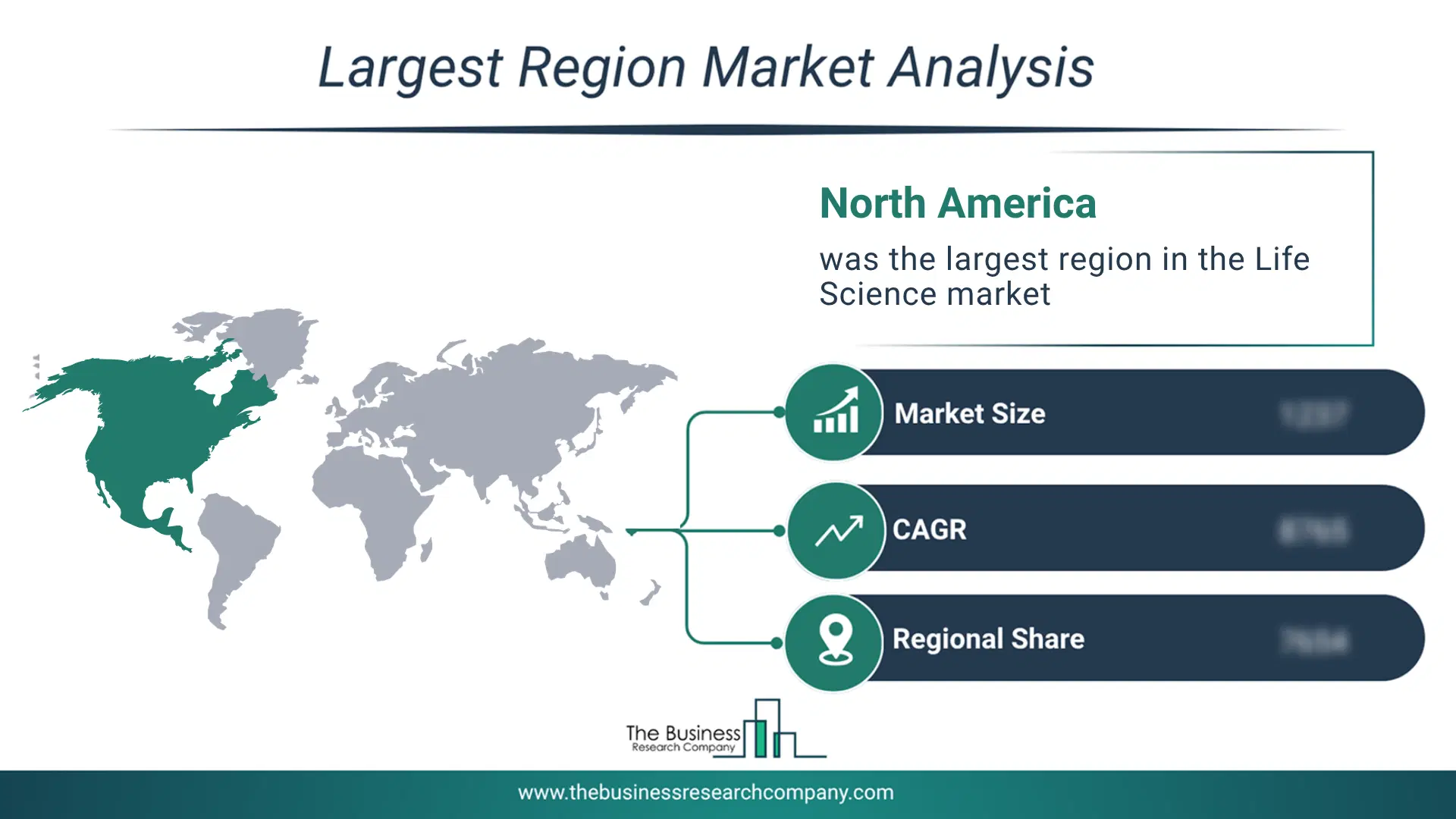
Regional Outlook
North America was the largest region in the life science market in 2025. Asia-Pacific is expected to be the fastest-growing region in the forecast period. The regions covered in this market report are Asia-Pacific, South East Asia, Western Europe, Eastern Europe, North America, South America, Middle East, Africa. The countries covered in this market report are Australia, Brazil, China, France, Germany, India, Indonesia, Japan, Taiwan, Russia, South Korea, UK, USA, Canada, Italy, Spain.What Defines the Life Science Market?
The life science market consists of revenues earned by entities by providing services such as research and development services, clinical trial management, laboratory testing and analysis, regulatory and compliance consulting, and bioinformatics support. The market value includes the value of related goods sold by the service provider or included within the service offering. The life science market also includes sales of laboratory instruments, analytical equipment, reagents and consumables, biotechnology products, diagnostic kits, and research tools. Values in this market are ‘factory gate’ values, that is, the value of goods sold by the manufacturers or creators of the goods, whether to other entities (including downstream manufacturers, wholesalers, distributors, and retailers) or directly to end customers. The value of goods in this market includes related services sold by the creators of the goods.How is Market Value Defined and Measured?
The market value is defined as the revenues that enterprises gain from the sale of goods and/or services within the specified market and geography through sales, grants, or donations in terms of the currency (in USD unless otherwise specified). The revenues for a specified geography are consumption values that are revenues generated by organizations in the specified geography within the market, irrespective of where they are produced. It does not include revenues from resales along the supply chain, either further along the supply chain or as part of other products.
This chart presents market attractiveness based on a quantitative evaluation of growth, competition, strategic alignment, and risk, offering a clear view of opportunity areas for decision-making. This chart is for illustrative purposes; the full report contains the complete analysis.

This chart highlights the Total Addressable Market (TAM) by estimating the maximum revenue opportunity using an assumption-driven approach, supporting strategic planning and opportunity sizing across markets. The chart is illustrative; the full report provides a more comprehensive analysis.
What Key Data and Analysis Are Included in the Life Science Market Report 2026?
The life science market research report is one of a series of new reports from The Business Research Company that provides market statistics, including industry global market size, regional shares, competitors with the market share, detailed market segments, market trends and opportunities, and any further data you may need to thrive in the life science industry. The market research report delivers a complete perspective of everything you need, with an in-depth analysis of the current and future state of the industry.Life Science Market Report Forecast Analysis
| Report Attribute | Details |
|---|---|
| Market Size Value In 2026 | $123.41 billion |
| Revenue Forecast In 2030 | $200.59 billion |
| Growth Rate | CAGR of 12.7% from 2026 to 2030 |
| Base Year For Estimation | 2025 |
| Actual Estimates/Historical Data | 2020-2025 |
| Forecast Period | 2026 - 2030 |
| Market Representation | Revenue in USD Billion and CAGR from 2026 to 2030 |
| Segments Covered | Type, Therapeutic Areas, Applications, End-User |
| Regional Scope | Asia-Pacific, Western Europe, Eastern Europe, North America, South America, Middle East, Africa |
| Country Scope | The countries covered in the report are Australia, Brazil, China, France, Germany, India, Indonesia, Japan, Taiwan, Russia, South Korea, UK, USA, Canada, Italy, Spain. |
| Key Companies Profiled | Johnson & Johnson, Roche Holding AG, Pfizer Inc., AbbVie Inc., AstraZeneca plc, Bayer AG, Novartis AG, Bristol-Myers Squibb Company, Sanofi S.A., Abbott Laboratories, Thermo Fisher Scientific Inc., GlaxoSmithKline plc, Novo Nordisk A/S, Amgen Inc., Eli Lily and Company, Takeda Pharmaceutical Company Limited, Gilead Sciences Inc., Merck KGaA, Boehringer Ingelheim International GmbH, Vertex Pharmaceuticals Incorporated, Astellas Pharma Inc., Biogen Inc., bioMérieux SA, Sartorius AG |
| Customization Scope | Request for Customization |
| Pricing And Purchase Options | Explore Purchase Options |