
Life Science Software Market Report 2026
Global Outlook – By Type (Predictive, Descriptive, Prescriptive), By Deployment (On-Premise, Hosted), By Application (Compliance, R&D, Pharmacovigilance), By End User (Healthcare Institutes, Biopharmaceutical Industry, Medical Devices Industry, Medical Research Centers) - Market Size, Trends, And Global Forecast 2026-2030
Life Science Software Market Overview
• Life Science Software market size has reached to $20.07 billion in 2025 • Expected to grow to $34.45 billion in 2030 at a compound annual growth rate (CAGR) of 11.5% • Growth Driver: Rising Demand For Personalized Medicine Propels The Life Science Software Market • Market Trend: Integration Of Advanced Technologies In The Life Science Software To Improve Efficiency • North America was the largest region in 2025 and Asia-Pacific is the fastest growing region.Market Gains By 2030 – Top Opportunities By Segment
Market Gain identifies the most promising market opportunities by highlighting the segments or products expected to generate the highest incremental revenue growth over the next five years.
What Is Covered Under Life Science Software Market?
Life science software refers to specialized software applications and platforms designed to support and streamline various processes within the field of life sciences. It is utilized across various domains within the life sciences industry to enhance research, streamline processes and improve overall efficiency. The main types of life science software are predictive, descriptive, and prescriptive. The term predictive refers to a type of software that utilizes predictive analytics, it is deployed in on-premise and hosted, it has various applications such as marketing, compliance, research and development, pharmacovigilance, and SCM, and it used in various end users such as healthcare institutes, the biopharmaceutical industry, medical devices industry, and medical research centers.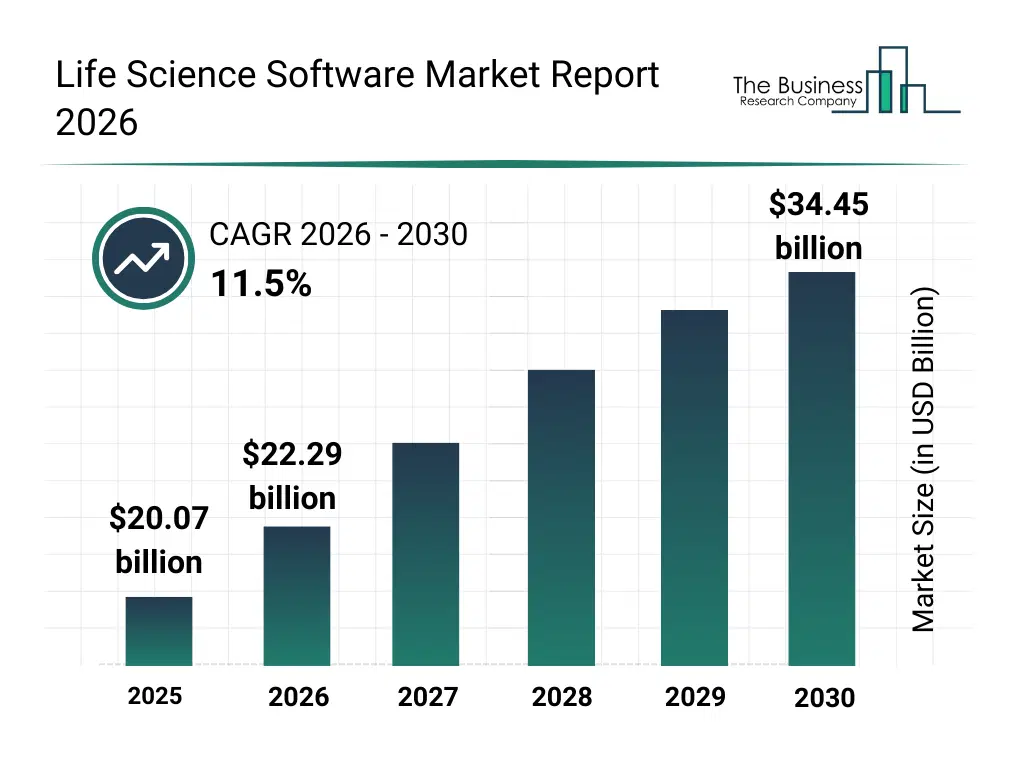
What Is The Life Science Software Market Size and Share 2026?
The life science software market size has grown rapidly in recent years. It will grow from $20.07 billion in 2025 to $22.29 billion in 2026 at a compound annual growth rate (CAGR) of 11.1%. The growth in the historic period can be attributed to growth in life science research activities, increasing complexity of clinical trials, rising adoption of digital record keeping, expansion of pharmaceutical and biotech industries, early implementation of enterprise software solutions.What Is The Life Science Software Market Growth Forecast?
The life science software market size is expected to see rapid growth in the next few years. It will grow to $34.45 billion in 2030 at a compound annual growth rate (CAGR) of 11.5%. The growth in the forecast period can be attributed to rising demand for scalable software solutions, increasing focus on operational efficiency, growth in global clinical trial volumes, expanding use of software in pharmacovigilance, higher investments in life science digital infrastructure. Major trends in the forecast period include increasing adoption of integrated life science platforms, rising demand for workflow automation in research processes, growing focus on regulatory and compliance software, expansion of software usage across clinical and preclinical activities, increasing need for data standardization and interoperability.
Global Life Science Software Market Segmentation
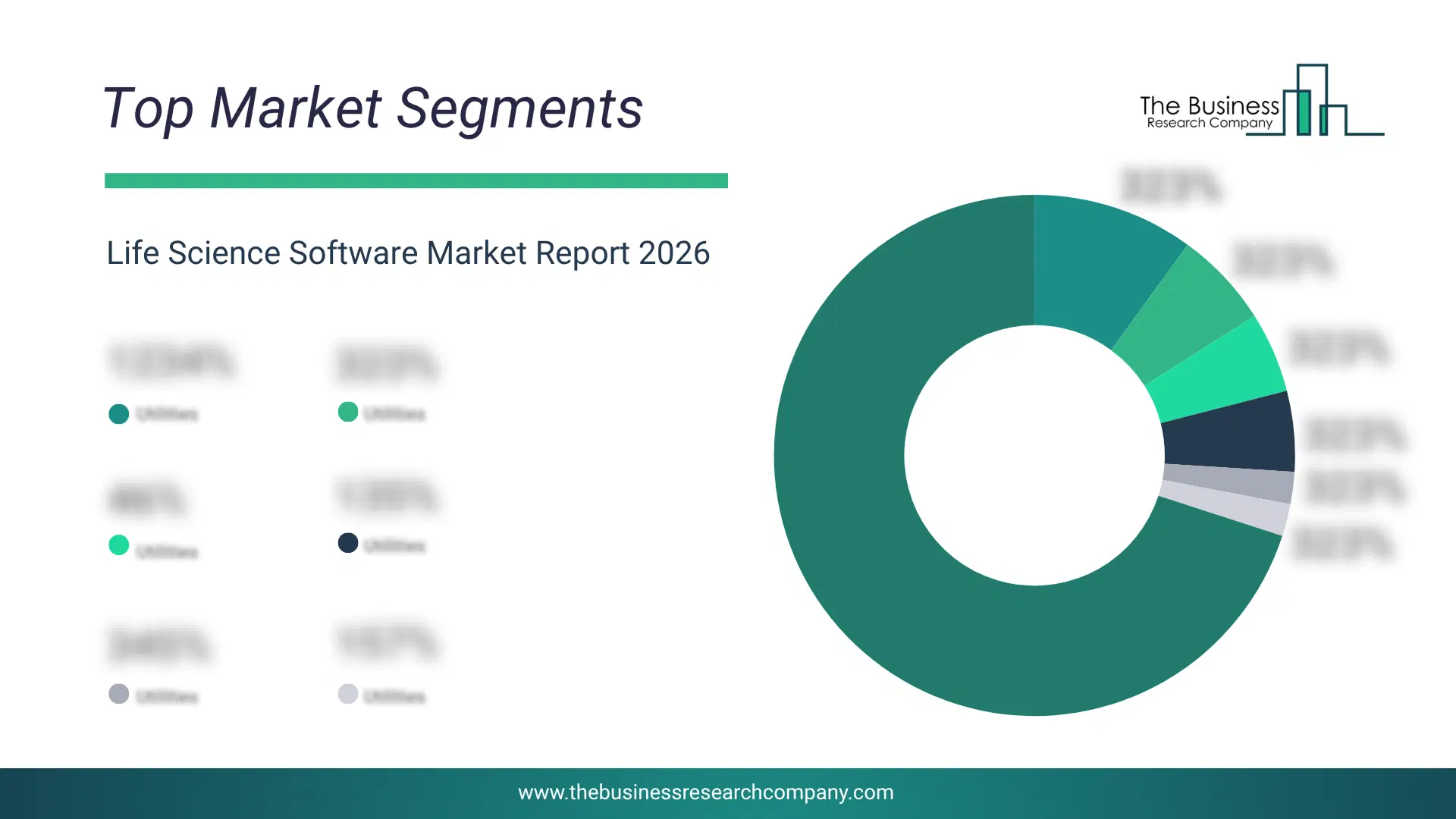
1) By Type: Predictive, Descriptive, Prescriptive 2) By Deployment: On-Premise, Hosted 3) By Application: Compliance, R&D, Pharmacovigilance 4) By End User: Healthcare Institutes, Biopharmaceutical Industry, Medical Devices Industry, Medical Research Centers Subsegments: 1) By Predictive: Predictive Analytics Tools, Risk Assessment Software, Patient Outcome Prediction 2) By Descriptive: Data Visualization Tools, Reporting Software, Statistical Analysis Software 3) By Prescriptive: Decision Support Systems, Optimization Tools The top segments in the life science software market will be: • Hosted will reach $12927.88 Million by 2025. • Descriptive will reach $9816.79 Million by 2025. • Biopharmaceutical Industry will reach $8793.19 Million by 2025. • R&D will reach $7951.36 Million by 2025. • On-Premise will reach $7138.98 Million by 2025.What Is The Driver Of The Life Science Software Market?
Rising demand for personalized medicine is expected to propel the growth of life science software going forward. Personalized medicine is a medical approach that tailors healthcare decisions and treatments to individual characteristics, such as genetics, lifestyle, and environmental factors. Advanced software solutions are required for personalized medicine to standardize and integrate data from several sources, including wearable, genetic testing and electronic health records. Life science software plays a pivotal role in facilitating the analysis and interpretation of complex biological information, enabling researchers and healthcare professionals to tailor treatment plans based on individual patient characteristics. For instance, in February 2024, according to the Personalized Medicine Coalition, a US-based non-profit organization, the US Food and Drug Administration (FDA) approved 16 new personalized treatments for rare diseases in 2023 compared to 6 in the year 2022. Therefore, the rising demand for personalized medicine is driving the growth of the life science software industry.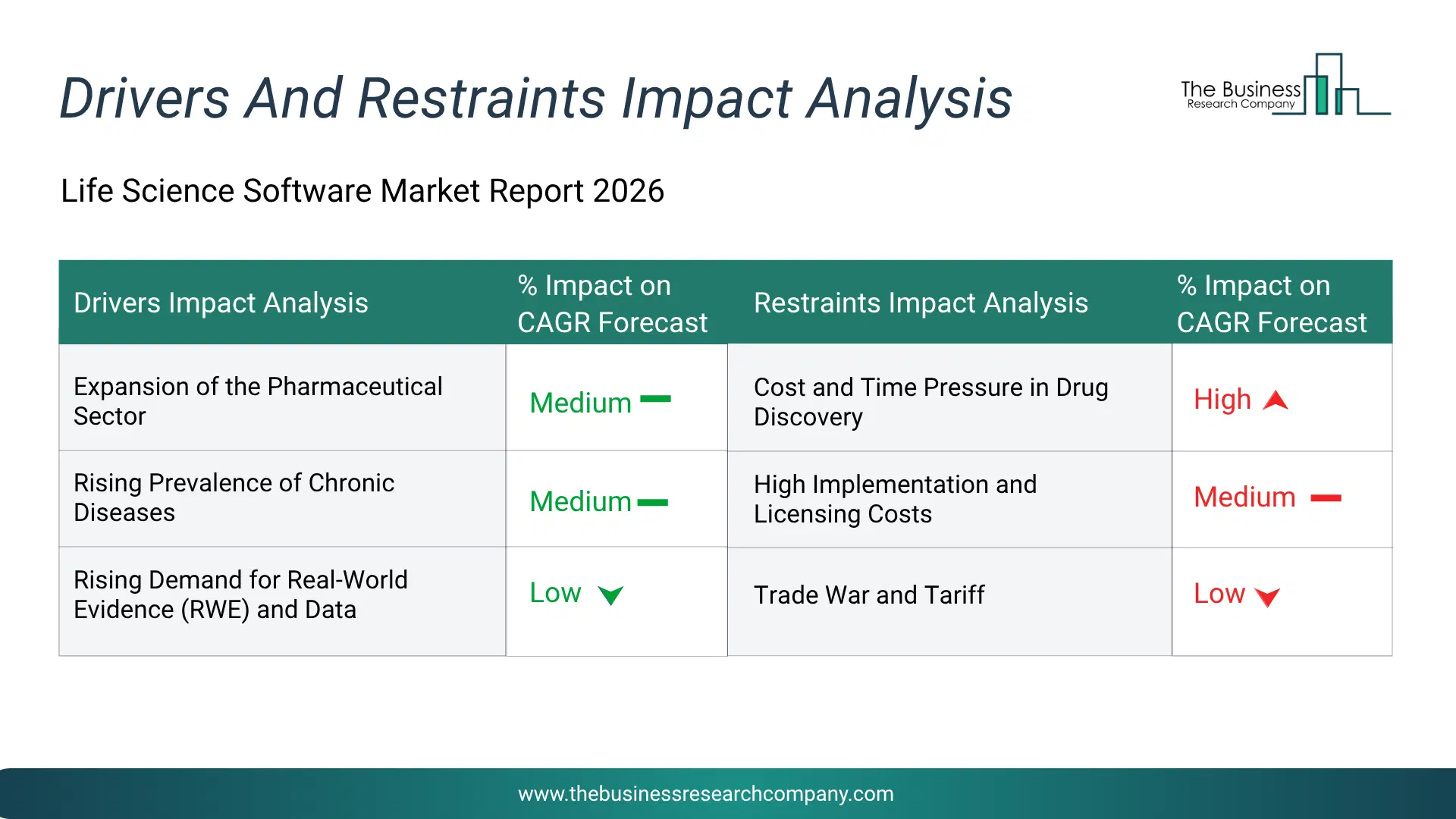
Infographic Chart Showing Key Market Drivers Analysis And Restraints For Life Science Software Market
The chart presents an impact analysis of key drivers and restraints, quantifying their relative influence on the market's growth rate and helping assess the balance between growth enablers and limiting factors. This chart offers a high-level perspective; the full report contains more detailed insights.
How Will The Drivers Impact Growth In The Global Life Science Software Market?
• Expansion of the Pharmaceutical Sector (Medium) – The expansion of the pharmaceutical sector will become a key driver of growth in the life science software market by 2030. As pharmaceutical companies handle vast volumes of research and patient data, they require software for data integration, analysis and secure management. The rise in new drug pipelines and biologics further drives adoption of solutions that streamline processes and reduce time-to-market. Additionally, digital platforms enable collaboration across global research teams, enhancing efficiency and innovation in pharmaceutical development. As a result, the expansion of the pharmaceutical sector is anticipated to contributing to a 1.3% annual growth in the market. • Rising Prevalence of Chronic Diseases (Medium) – The rising prevalence of chronic diseases will emerge as a major factor driving the expansion of the life science software market by 2030. The growing prevalence of chronic diseases such as cancer, diabetes and cardiovascular disorders is driving demand for advanced healthcare solutions. Managing these conditions requires large-scale data collection, analysis and patient monitoring, which can be efficiently handled through life science software. Such platforms support clinical research, personalized treatment planning and drug development. As healthcare providers and researchers seek more effective ways to manage long-term diseases, adoption of life science software continues to accelerate. Consequently, the accelerating rising prevalence of chronic diseases capabilities is projected to contributing to a 1.0% annual growth in the market. • Rising Demand for Real-World Evidence (RWE) and Data (Low) – The rising demand for real-world evidence (RWE) and data processes will serve as a key growth catalyst for the life science software market by 2030. The growing demand for real-world evidence (RWE) and real-world data is driving the adoption of life science software, as organizations need advanced platforms to collect, manage and analyze large-scale patient and healthcare data. Regulators and payers increasingly require RWE to assess drug safety, effectiveness and value in real-world settings. This pushes pharmaceutical and biotech companies to invest in digital tools that ensure accurate insights and compliance. As a result, life science software plays a critical role in accelerating decision-making and supporting evidence-based healthcare outcomes. Therefore, this rising demand for real-world evidence (RWE) and data operations is projected to supporting to a 0.5% annual growth in the market. • Rising Demand for Cloud Adoption in MedTech (Low) – The rising demand for cloud adoption in medtech will become a significant driver contributing to the growth of the life science software market by 2030. The growing adoption of cloud technologies in medtech is boosting the life science software market by enabling secure, scalable and cost-efficient data management. Cloud platforms allow seamless integration of large and complex datasets, supporting advanced analytics, real-time collaboration and remote access. This improves efficiency in clinical trials, research and regulatory compliance. Additionally, cloud adoption helps medtech companies accelerate innovation and enhance patient-centric digital solutions. Consequently, the rising demand for cloud adoption in medtech strategies is projected to contributing to a 0.3% annual growth in the market.How Will The Restraints Impact Growth In The Global Life Science Software Market?
• Cost and Time Pressure in Drug Discovery (Medium) – Cost and Time Pressure in Drug Discovery will restrict the growth of the Life Science Software market during the forecast period. Drug discovery and development face significant cost and time pressures that affect software adoption decisions. High costs and long development timelines create budget constraints for R&D spending. Pressure to reduce costs and accelerate timelines may limit investment in software tools. • High Implementation and Licensing Costs (Low) – High Implementation and Licensing Costs will restrict the growth of the Life Science Software market during the forecast period. Life science software involves significant costs for licensing, implementation, and ongoing maintenance. High costs create barriers for smaller research organizations and budget-constrained institutions. Cost constraints can limit software adoption and affect market growth in price-sensitive segments. • Trade War and Tariff (Low) – Trade War and Tariff will restrict the growth of the Life Science Software market during the forecast period. Trade tensions and economic uncertainty can affect pharmaceutical and biotech R&D spending. Reduced R&D budgets during trade disputes may limit software investment. Trade barriers may also impact international research collaboration and data sharing.Key Players In The Global Life Science Software Market
Major companies operating in the life science software market are International Business Machines Corp, Oracle, SAP, Dassault Systèmes, SAS Institute Inc, Veeva Systems Inc, Medidata Solutions Inc, ArisGlobal LLC, Perceptive Informatics Inc, Cegedim SA, Model N Inc, TIBCO Software Inc, Epic Systems Corporation, MEDITECH, Allscripts Healthcare LLC, CPSI, Thermo Fisher Scientific Inc, PAREXEL International Corporation, Optum Inc, Cognizant, DXC Technology Co, HCL Technologies Ltd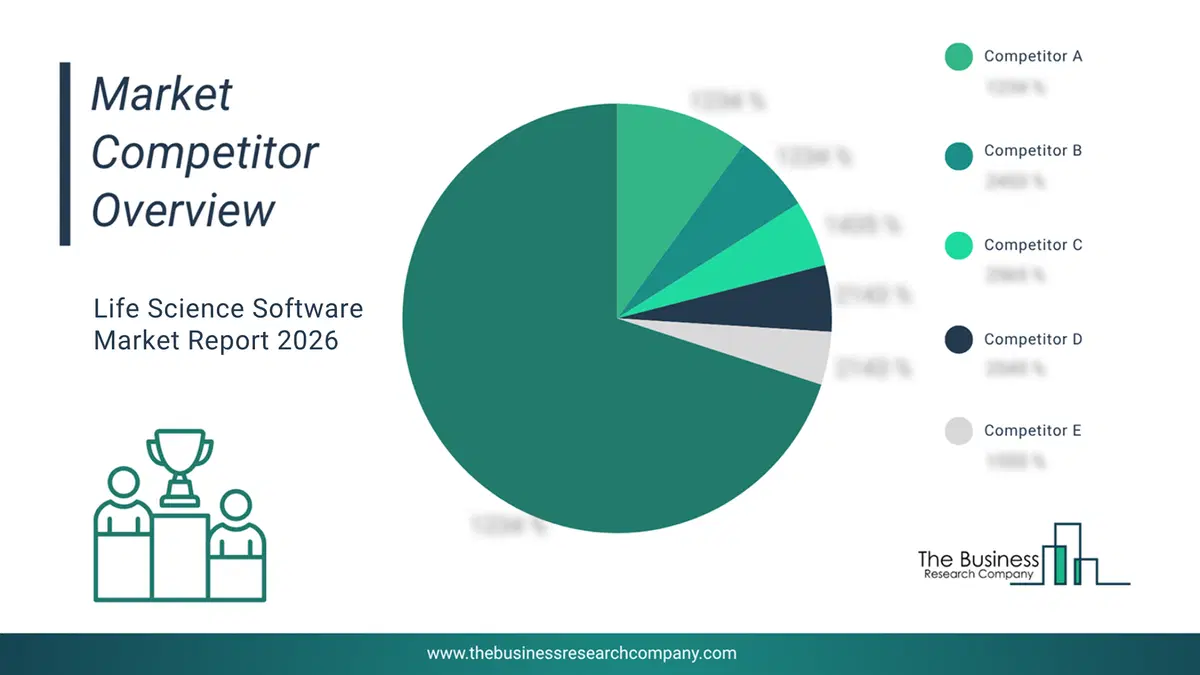
This chart is for illustrative purposes; the full report includes a detailed competitor analysis and comprehensive overview of the top 10 companies in the market.
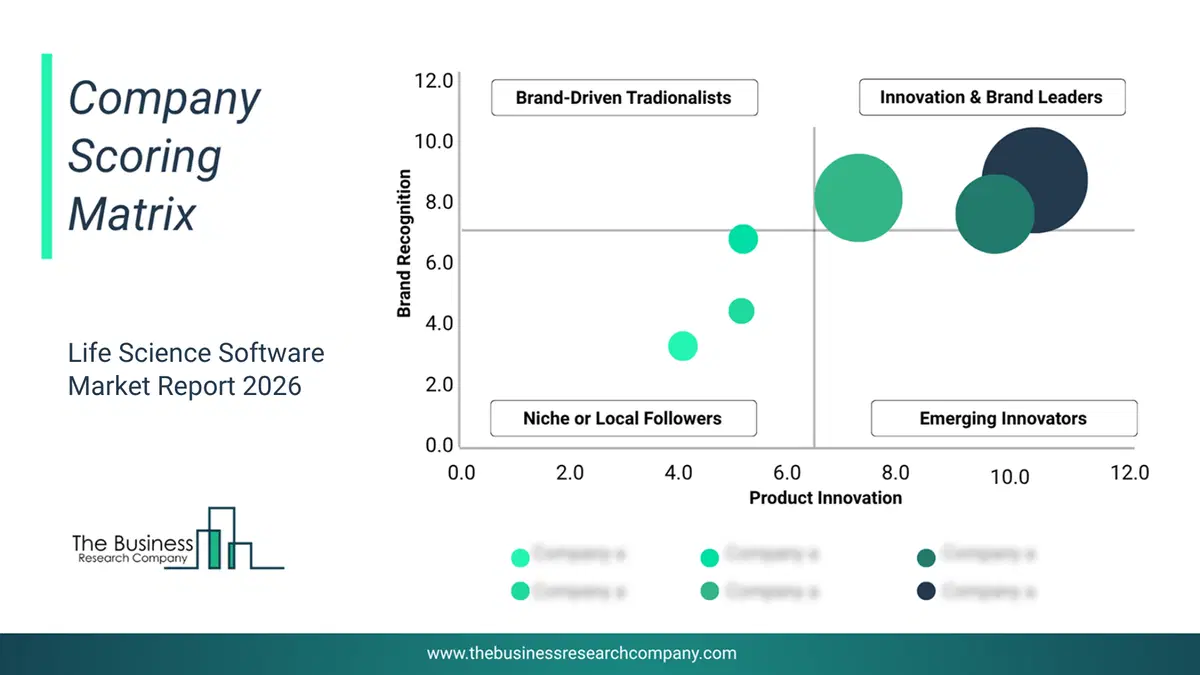
This chart maps companies by product innovation and brand strength, with bubble size indicating relative revenue, helping identify market leaders, challengers, and niche players. This is an illustrative chart; the full report provides a complete and accurate competitive analysis.
Global Life Science Software Market Trends and Insights
Major companies operating in the life science software market are integrating advanced technologies, such as generative AI, machine learning (ML) and computer-aided drug-design (CADD), for improving drug discovery process, enhancing efficiency and accelerating breakthroughs. Generative AI is employed to design novel molecular structures, while ML algorithms analyze vast datasets to identify potential drug candidates and predict their efficacy. Integrated with CADD tools, these technologies enable researchers to computationally simulate and optimize drug interactions, significantly streamlining the identification and development of promising compounds. For instance, in December 2023, Merck, a Germany-based science and technology company, launched AIDDISON, a drug discovery software. AIDDISON is intended to speed the identification of novel medications and increase the efficiency of the drug development process. The platform is based on artificial intelligence (AI) and machine learning (ML) technologies, allowing it to evaluate massive volumes of data and find prospective medication candidates faster and more effectively than traditional approaches.What Are Latest Mergers And Acquisitions In The Life Science Software Market?
In August 2024, Valsoft Corporation Inc., a Canada-based company specializing in the acquisition and development of vertical market software businesses, acquired Anju Software for an undisclosed amount. This acquisition aims to expand Valsoft's presence in the life sciences sector and enhance its portfolio with adaptable solutions for clinical research, medical affairs, and data science. Anju Software is a US-based company that designs and develops life sciences software platforms.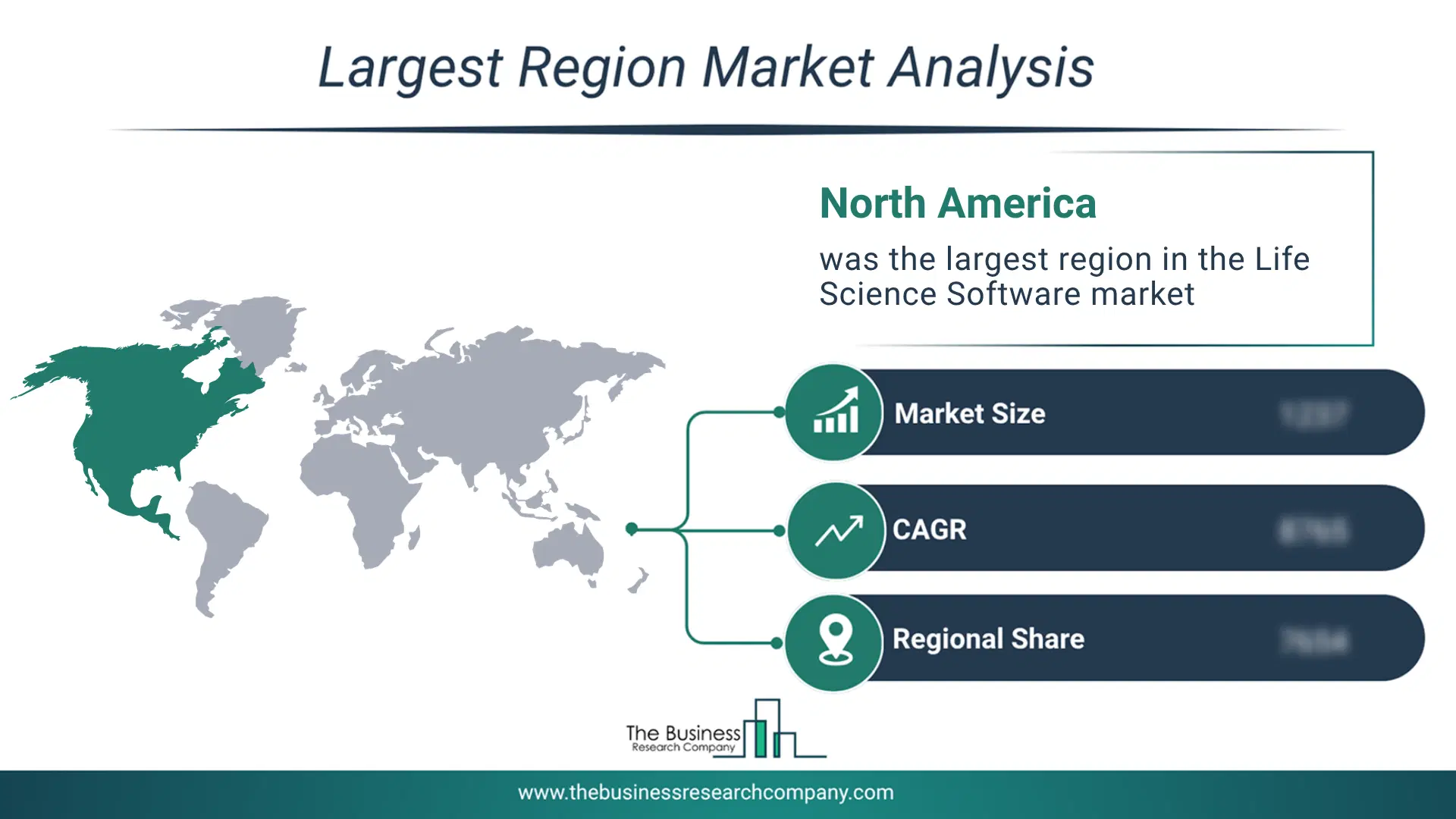
Regional Outlook
North America was the largest region in the life science software market in 2025. Asia-Pacific is expected to be the fastest-growing region in the forecast period. The regions covered in this market report are Asia-Pacific, South East Asia, Western Europe, Eastern Europe, North America, South America, Middle East, Africa. The countries covered in this market report are Australia, Brazil, China, France, Germany, India, Indonesia, Japan, Taiwan, Russia, South Korea, UK, USA, Canada, Italy, Spain.What Defines the Life Science Software Market?
The life science software market includes revenues earned by entities by providing services such as genomic analysis services, clinical trial management services, laboratory information management system (LIMS) services, bioinformatics and computational biology services, drug discovery and development services, and regulatory compliance services. The market value includes the value of related goods sold by the service provider or included within the service offering. Only goods and services traded between entities or sold to end consumers are included. The Life Science Software market consists of sales of laboratory information management systems, electronic lab notebooks, scientific data analysis and visualization software, and scientific modeling and simulation software. Values in this market are ‘factory gate’ values, that is the value of goods sold by the manufacturers or creators of the goods, whether to other entities (including downstream manufacturers, wholesalers, distributors, and retailers) or directly to end customers. The value of goods in this market includes related services sold by the creators of the goods.How is Market Value Defined and Measured?
The market value is defined as the revenues that enterprises gain from the sale of goods and/or services within the specified market and geography through sales, grants, or donations in terms of the currency (in USD unless otherwise specified). The revenues for a specified geography are consumption values that are revenues generated by organizations in the specified geography within the market, irrespective of where they are produced. It does not include revenues from resales along the supply chain, either further along the supply chain or as part of other products.
This chart presents market attractiveness based on a quantitative evaluation of growth, competition, strategic alignment, and risk, offering a clear view of opportunity areas for decision-making. This chart is for illustrative purposes; the full report contains the complete analysis.

This chart highlights the Total Addressable Market (TAM) by estimating the maximum revenue opportunity using an assumption-driven approach, supporting strategic planning and opportunity sizing across markets. The chart is illustrative; the full report provides a more comprehensive analysis.
What Key Data and Analysis Are Included in the Life Science Software Market Report 2026?
The life science software market research report is one of a series of new reports from The Business Research Company that provides market statistics, including industry global market size, regional shares, competitors with the market share, detailed market segments, market trends and opportunities, and any further data you may need to thrive in the life science software industry. The market research report delivers a complete perspective of everything you need, with an in-depth analysis of the current and future state of the industry.Life Science Software Market Report Forecast Analysis
| Report Attribute | Details |
|---|---|
| Market Size Value In 2026 | $22.29 billion |
| Revenue Forecast In 2030 | $34.45 billion |
| Growth Rate | CAGR of 11.1% from 2026 to 2030 |
| Base Year For Estimation | 2025 |
| Actual Estimates/Historical Data | 2020-2025 |
| Forecast Period | 2026 - 2030 |
| Market Representation | Revenue in USD Billion and CAGR from 2026 to 2030 |
| Segments Covered | Type, Deployment, Application, End User |
| Regional Scope | Asia-Pacific, Western Europe, Eastern Europe, North America, South America, Middle East, Africa |
| Country Scope | The countries covered in the report are Australia, Brazil, China, France, Germany, India, Indonesia, Japan, Taiwan, Russia, South Korea, UK, USA, Canada, Italy, Spain. |
| Key Companies Profiled | International Business Machines Corp, Oracle, SAP, Dassault Systèmes, SAS Institute Inc, Veeva Systems Inc, Medidata Solutions Inc, ArisGlobal LLC, Perceptive Informatics Inc, Cegedim SA, Model N Inc, TIBCO Software Inc, Epic Systems Corporation, MEDITECH, Allscripts Healthcare LLC, CPSI, Thermo Fisher Scientific Inc, PAREXEL International Corporation, Optum Inc, Cognizant, DXC Technology Co, HCL Technologies Ltd |
| Customization Scope | Request for Customization |
| Pricing And Purchase Options | Explore Purchase Options |