

Ligases Enzyme Market Report 2026
Global Outlook – By Type (E. coli DNA Ligases, T4 DNA Ligase, Mammalian Ligases, Thermostable Ligases), By Source (Microorganisms, Animal), By Application (Ligase Chain Reaction (LCR), Ligase Detection Reaction (LDR), Next-Generation Sequencing (NGS), Rolling Circle Amplification (RCA), Proximity Ligation Assay (PLA), Molecular Cloning, Ligation Mediated PCR, Mutation Detection ), By End-User (Research Laboratories And Institutions, Pharmaceutical And Biopharmaceutical Companies, Diagnostic Laboratories) - Market Size, Trends, Strategies, and Forecast to 2030
Ligases Enzyme Market Overview
• Ligases Enzyme market size has reached to $3.57 billion in 2025 • Expected to grow to $6.34 billion in 2030 at a compound annual growth rate (CAGR) of 12.3% • Growth Driver: Ligase Enzymes Market Surge Addressing The Rising Tide Of Cancer And Genetic Disorders • Market Trend: Advancements In Nanopore Technology Transforming DNA Analysis And Genomics • North America was the largest region in 2025 and Asia-Pacific is the fastest growing region.What Is Covered Under Ligases Enzyme Market?
Ligase enzymes refer to a class of proteins that catalyze the joining of two DNA strands. These enzymes are extensively used in biotechnology and pharmaceuticals as they are essential in various cellular processes, including DNA replication and protein synthesis. The main types of products in ligases enzyme are e. coli DNA ligase, T4 DNA ligase, mammalian ligases, and thermostable ligases. E. coli DNA ligase refers to a specific type of DNA ligase enzyme derived from Escherichia coli (E. coli) bacteria. It includes various sources such as microorganisms, animals, and plants. These are used for several applications, including ligase chain reaction (LCR), ligase detection reaction (LDR), next-generation sequencing (NGS), repeat expansion detection (RED), rolling circle amplification (RCA), proximity ligation assay (PLA), molecular cloning, ligation-mediated PCR and mutation detection, which are used by several end-users, such as research laboratories and institutions, pharmaceutical and biopharmaceutical companies, and diagnostic laboratories.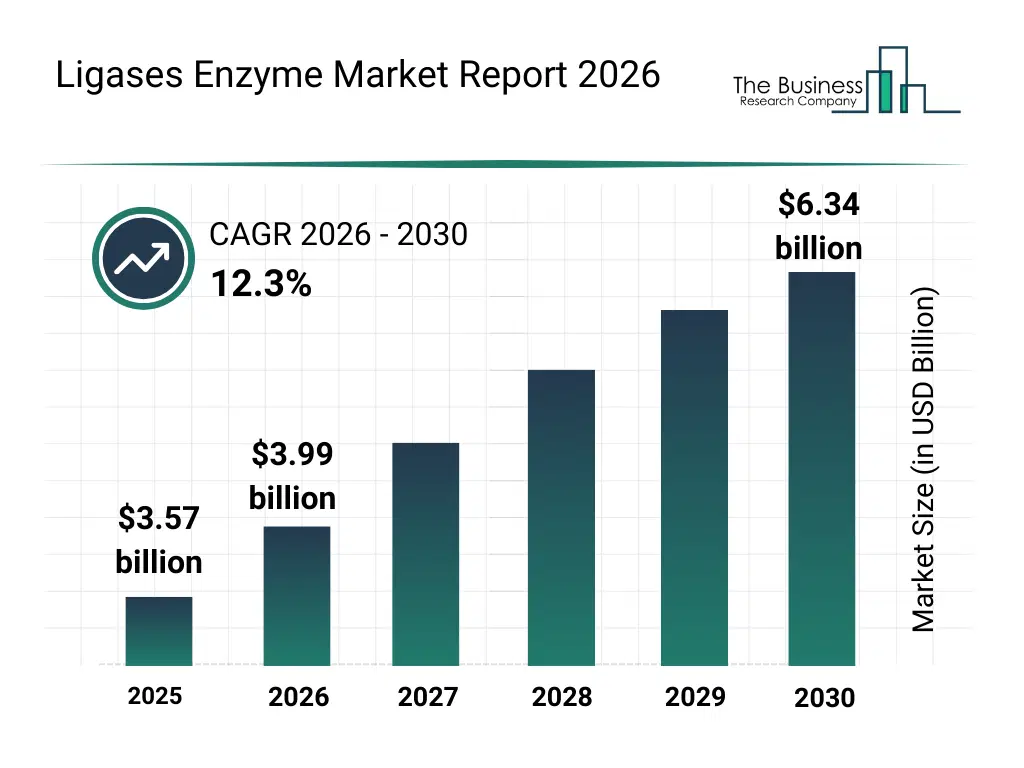
What Is The Ligases Enzyme Market Size and Share 2026?
The ligases enzyme market size has grown rapidly in recent years. It will grow from $3.57 billion in 2025 to $3.99 billion in 2026 at a compound annual growth rate (CAGR) of 11.7%. The growth in the historic period can be attributed to growth in molecular biology research, early adoption of ligase enzymes in cloning, expansion of academic research laboratories, increasing pharmaceutical R&D activities, rising use of enzymatic tools in diagnostics.What Is The Ligases Enzyme Market Growth Forecast?
The ligases enzyme market size is expected to see rapid growth in the next few years. It will grow to $6.34 billion in 2030 at a compound annual growth rate (CAGR) of 12.3%. The growth in the forecast period can be attributed to increasing demand for advanced genetic testing, expansion of next-generation sequencing applications, growing investments in biotechnology research, rising focus on personalized medicine, increasing adoption of ligase-based diagnostic techniques. Major trends in the forecast period include rising demand for enzymes in molecular cloning, increasing use of ligases in genetic research, growing adoption in diagnostic assays, expansion of ligase applications in drug discovery, rising preference for high-efficiency and specialty ligases.
Global Ligases Enzyme Market Segmentation
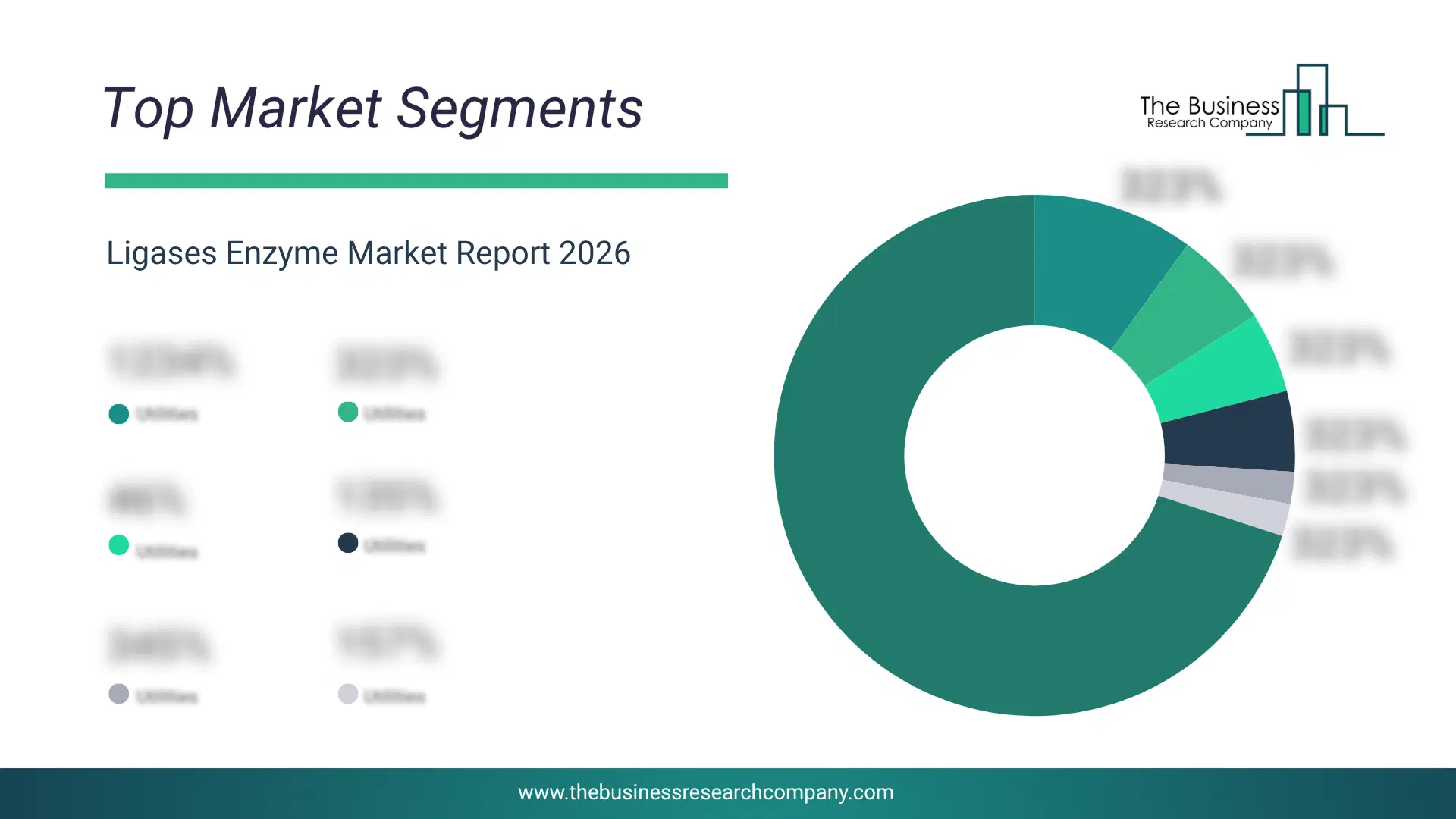
1) By Type: E. coli DNA Ligases, T4 DNA Ligase, Mammalian Ligases, Thermostable Ligases 2) By Source: Microorganisms, Animal 3) By Application: Ligase Chain Reaction (LCR), Ligase Detection Reaction (LDR), Next-Generation Sequencing (NGS), Rolling Circle Amplification (RCA), Proximity Ligation Assay (PLA), Molecular Cloning, Ligation Mediated PCR, Mutation Detection 4) By End-User: Research Laboratories And Institutions, Pharmaceutical And Biopharmaceutical Companies, Diagnostic Laboratories Subsegments: 1) By E. coli DNA Ligase: Ligase I, Ligase II 2) By T4 DNA Ligase: Wild-Type T4 Ligase, Modified T4 Ligase 3) By Mammalian Ligases: Ligase IV, Ligase I 4) By Thermostable Ligases: Taq DNA Ligase, Pyrococcus Furiosus LigaseWhat Are The Drivers Of The Ligases Enzyme Market?
The increasing prevalence of cancer and genetic disorders is expected to propel the growth of the ligase’s enzyme market going forward. Cancer refers to a group of diseases characterized by the uncontrolled growth and spread of abnormal cells, and genetic disorders refer to a wide range of medical conditions caused by abnormalities or mutations in an individual's genetic material, particularly in their DNA. Ligases enzymes are essential for DNA replication, repair, and recombination. In cancer, ligases can be used to repair damaged DNA, leading to the uncontrolled growth of cells. Ligases can also be used to target and kill cells with genetic disorders. For instance, in July 2024, according to the Australian Institute of Health and Welfare, an Australia-based government agency, in Australia the number of cancer cases diagnosed increased from 160,570 in 2022 to 164,694 in 2023, reflecting a notable rise over the year. This upward trend highlights the growing prevalence of cancer within the country. Furthermore, 403 new cancer cases and 144 cancer-related deaths were reported for every 100,000 people. Furthermore, in February 2023, according to Gene People UK, a UK-based registered charity group, around 1 in 25 children are affected by a genetic condition in the UK, leading to more than 2.4 million children and adults in the UK living with a genetic disorder, and 30,000 babies and children are newly diagnosed each year. Therefore, the increasing prevalence of cancer and genetic disorders is driving the growth of the ligase’s enzyme market. An increase in research and development activities is expected to propel the growth of the ligase enzyme market going forward. Research and development (R&D) activities are the investigative work done by a company or organization to improve existing products and procedures or to lead to the development of new products and procedures. Ligase enzymes, also known as DNA ligases, play a crucial role in joining DNA molecules together, making them essential tools for various research and development (R&D) activities across diverse fields. For instance, in February 2025, according to a report published by the National Science Foundation (NSF), a U.S.-based federal agency, total research and experimental development (R&D) expenditures in the United States totaled $892 billion in 2022, with an estimated rise to $940 billion in 2023. Therefore, the increase in research and development activities is driving the growth of the ligase enzyme market.Key Players In The Global Ligases Enzyme Market
Major companies operating in the ligases enzyme market are New England Biolabs Inc., Promega Corporation, Takara Bio Inc., Thermo Fisher Scientific Inc., Merck KGaA, GenScript, Creative Enzymes, ArcticZymes Technologies ASA, BLIRT S.A., Jena Bioscience, Enzo Life Sciences, BioVision Inc., Bioneer Corporation, Sino Biological Inc., Genetix Biotech Asia Pvt. Ltd., Omega Bio-tek Inc., Canvax Biotech, NZYGene, Vivantis Technologies, Toyobo Co. Ltd.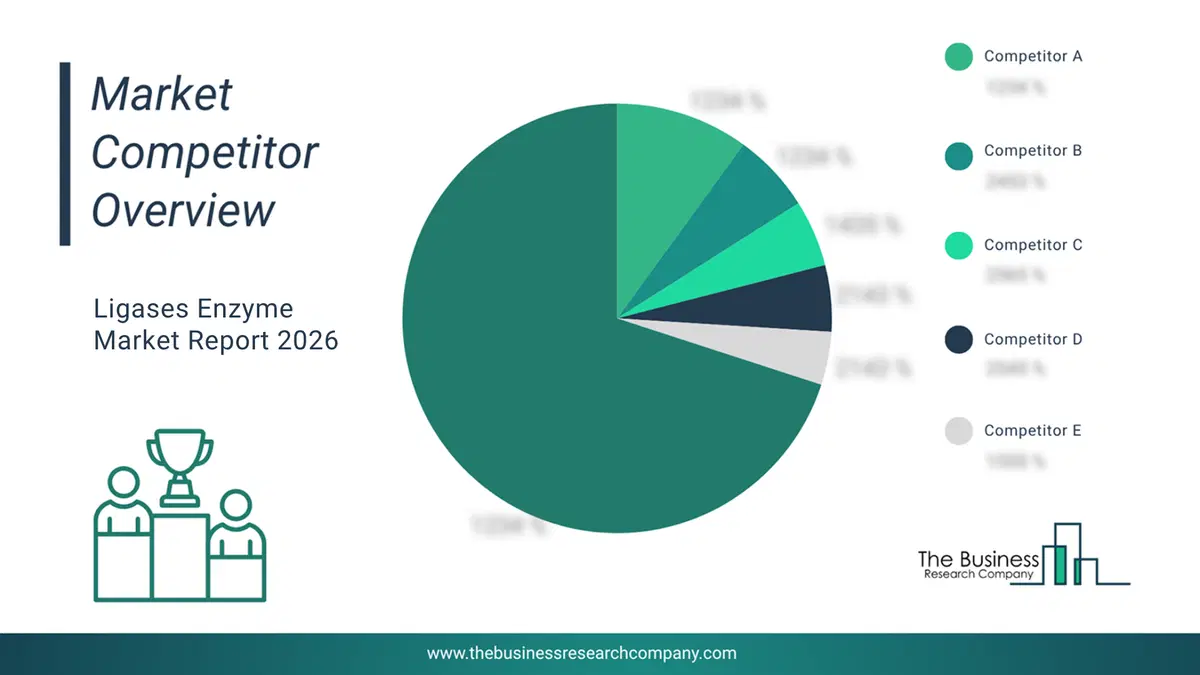
This chart is for illustrative purposes; the full report includes a detailed competitor analysis and comprehensive overview of the top 10 companies in the market.
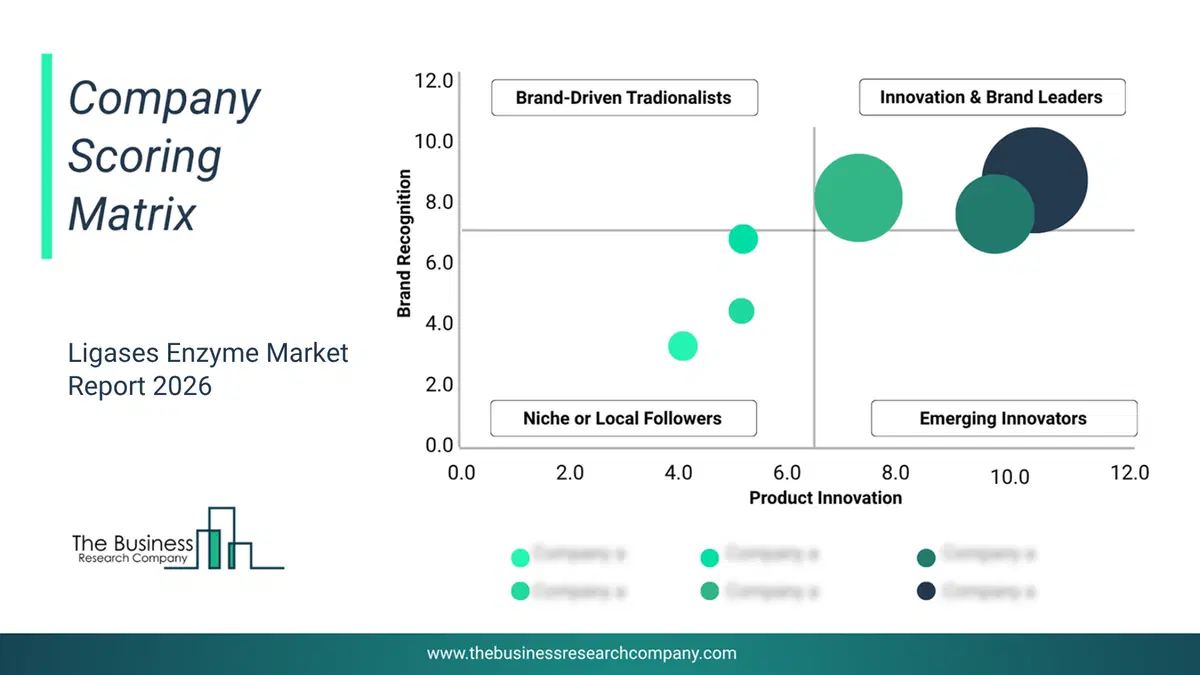
This chart maps companies by product innovation and brand strength, with bubble size indicating relative revenue, helping identify market leaders, challengers, and niche players. This is an illustrative chart; the full report provides a complete and accurate competitive analysis.
Global Ligases Enzyme Market Trends and Insights
Major companies operating in the ligases enzyme market are developing technologies such as nanopore technologies to enhance the precision and efficiency of DNA sequencing and manipulation, ultimately improving applications in genomics, synthetic biology, and personalized medicine. Nanopore technologies involve the use of nanopores to detect and analyze molecules, such as DNA or proteins, by measuring changes in ionic current as they pass through the pore. For instance, in February 2023, Eurofins Genomics, a US-based biotechnology company, launched the Express Oxford Nanopore Sequencing service. The service utilizes Oxford Nanopore technology, which allows for the sequencing of long DNA fragments. This is particularly beneficial for applications requiring comprehensive genomic analysis, such as metagenomics and structural variant detection.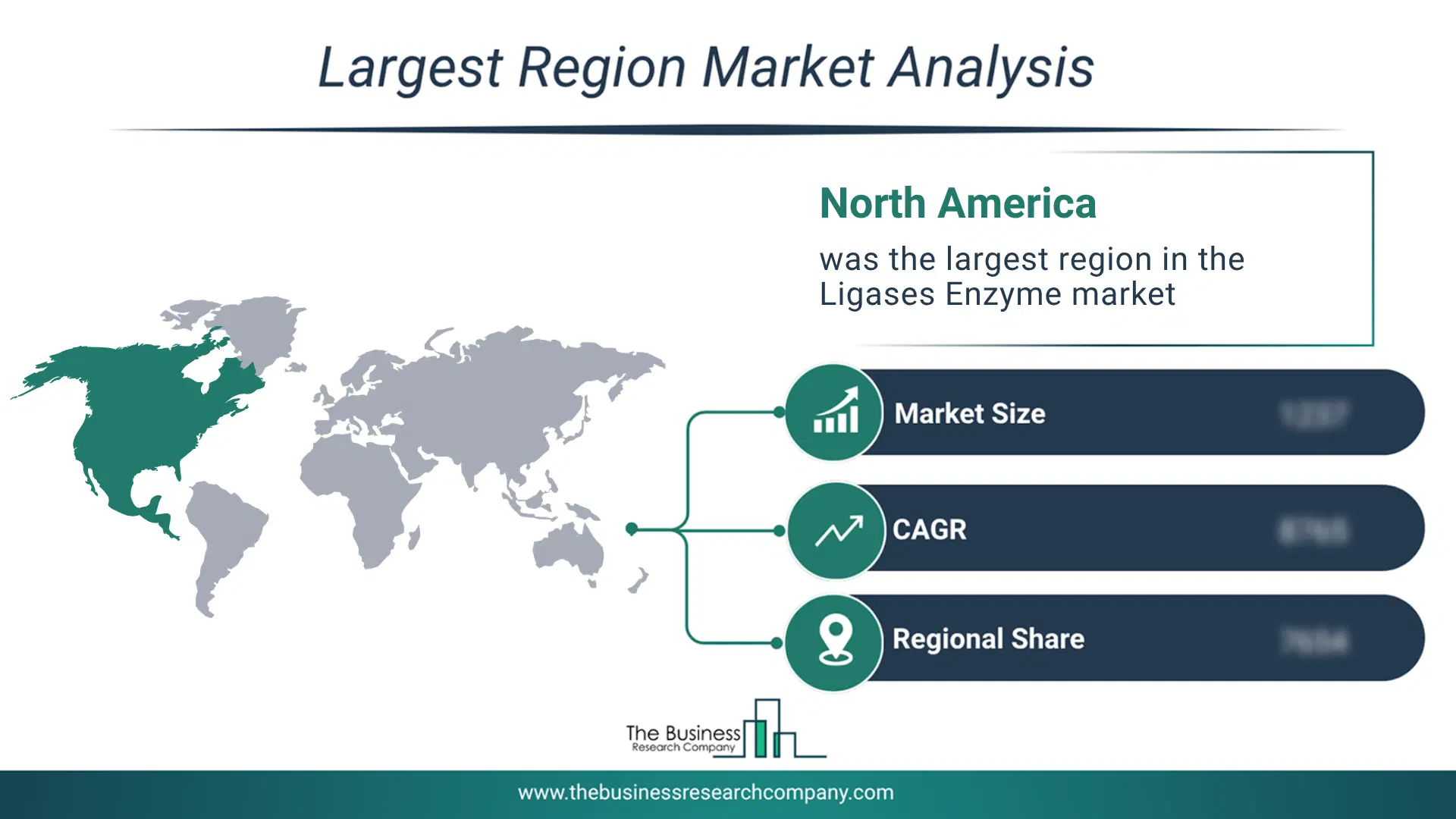
Regional Outlook
North America was the largest region in the ligases enzyme market in 2025. Asia-Pacific is expected to be the fastest-growing region in the ligases enzyme market report during the forecast period. The regions covered in this market report are Asia-Pacific, South East Asia, Western Europe, Eastern Europe, North America, South America, Middle East, Africa. The countries covered in this market report are Australia, Brazil, China, France, Germany, India, Indonesia, Japan, Taiwan, Russia, South Korea, UK, USA, Canada, Italy, Spain.What Defines the Ligases Enzyme Market?
The ligases enzyme market consists of sales of hi-t4 DNA ligase, splintR ligase, salt-t4 DNA ligase, t7 DNA ligase, quick ligation kits, Taq DNA ligase, and electroLigase. Values in this market are ‘factory gate’ values, that is, the value of goods sold by the manufacturers or creators of the goods, whether to other entities (including downstream manufacturers, wholesalers, distributors, and retailers) or directly to end customers. The value of goods in this market includes related services sold by the creators of the goods.How is Market Value Defined and Measured?
The market value is defined as the revenues that enterprises gain from the sale of goods and/or services within the specified market and geography through sales, grants, or donations in terms of the currency (in USD unless otherwise specified). The revenues for a specified geography are consumption values that are revenues generated by organizations in the specified geography within the market, irrespective of where they are produced. It does not include revenues from resales along the supply chain, either further along the supply chain or as part of other products.
This chart presents market attractiveness based on a quantitative evaluation of growth, competition, strategic alignment, and risk, offering a clear view of opportunity areas for decision-making. This chart is for illustrative purposes; the full report contains the complete analysis.

This chart highlights the Total Addressable Market (TAM) by estimating the maximum revenue opportunity using an assumption-driven approach, supporting strategic planning and opportunity sizing across markets. The chart is illustrative; the full report provides a more comprehensive analysis.
What Key Data and Analysis Are Included in the Ligases Enzyme Market Report 2026?
The ligases enzyme market research report is one of a series of new reports from The Business Research Company that provides market statistics, including industry global market size, regional shares, competitors with the market share, detailed market segments, market trends and opportunities, and any further data you may need to thrive in the ligases enzyme industry. The market research report delivers a complete perspective of everything you need, with an in-depth analysis of the current and future state of the industry.Ligases Enzyme Market Report Forecast Analysis
| Report Attribute | Details |
|---|---|
| Market Size Value In 2026 | $3.99 billion |
| Revenue Forecast In 2030 | $6.34 billion |
| Growth Rate | CAGR of 12.3% from 2026 to 2030 |
| Base Year For Estimation | 2025 |
| Actual Estimates/Historical Data | 2020-2025 |
| Forecast Period | 2026 - 2030 |
| Market Representation | Revenue in USD Billion and CAGR from 2026 to 2030 |
| Segments Covered | Type, Source, Application, End-User |
| Regional Scope | Asia-Pacific, Western Europe, Eastern Europe, North America, South America, Middle East, Africa |
| Country Scope | The countries covered in the report are Australia, Brazil, China, France, Germany, India, Indonesia, Japan, Taiwan, Russia, South Korea, UK, USA, Canada, Italy, Spain |
| Key Companies Profiled | New England Biolabs Inc., Promega Corporation, Takara Bio Inc., Thermo Fisher Scientific Inc., Merck KGaA, GenScript, Creative Enzymes, ArcticZymes Technologies ASA, BLIRT S.A., Jena Bioscience, Enzo Life Sciences, BioVision Inc., Bioneer Corporation, Sino Biological Inc., Genetix Biotech Asia Pvt. Ltd., Omega Bio-tek Inc., Canvax Biotech, NZYGene, Vivantis Technologies, Toyobo Co. Ltd. |
| Customization Scope | Request for Customization |
| Pricing And Purchase Options | Explore Purchase Options |