
Linen Loss Prevention Analytics Market Report 2026
Global Outlook – By Component (Software, Hardware, Services), By Deployment Mode (On-Premises, Cloud), By Offering (Linen Tracking Systems, Real Time Monitoring Solutions, Inventory Management Solutions, Data Analytics Platforms, Automated Reporting Solutions), By Technology (Radio Frequency Identification Technology, Barcode Tracking Technology, Internet Of Things Sensor Technology, Global Positioning System Enabled Tracking, Artificial Intelligence Based Analytics), By End-User (Hospitals, Hotels And Resorts, Commercial Laundries, Other End Users) – Market Size, Trends, Strategies, and Forecast to 2030
Linen Loss Prevention Analytics Market Overview
• Linen Loss Prevention Analytics market size has reached to $1.51 billion in 2025 • Expected to grow to $2.33 billion in 2030 at a compound annual growth rate (CAGR) of 16.2% • Growth Driver: Growing Use Of RFID Tracking Fueling The Growth Of The Market Due To Increased Adoption Of Predictive Digital Tools • Market Trend: Integration Of RFID-Enabled Digital Platforms For Automated Inventory Tracking And Lifecycle Management • North America was the largest region in 2025 and Asia-Pacific is the fastest growing region.Market Gains By 2030 – Top Opportunities By Segment
Market Gain identifies the most promising market opportunities by highlighting the segments or products expected to generate the highest incremental revenue growth over the next five years.
What Is Covered Under Linen Loss Prevention Analytics Market?
Linen loss prevention analytics refers to the use of data-driven tools and analytical techniques to track, monitor, and optimize the management of linen inventory, ensuring minimal loss, misplacement, or wastage. It leverages real-time data collection, pattern recognition, and predictive algorithms to provide actionable insights that enhance operational efficiency and cost control. By identifying trends and anomalies in linen usage and movement, it helps organizations implement proactive measures for inventory optimization and resource management. The main component of linen loss prevention analytics includes software, hardware, and services. Software refers to applications and programs that analyze, track, and manage linen usage and losses to optimize inventory and reduce waste. The deployment modes include on-premises and cloud-based. The offerings include linen tracking systems, real-time monitoring solutions, inventory management, data analytics platforms, and automated reporting solutions. The technologies involved include radio frequency identification, barcode tracking, Internet of Things sensor technology, global positioning system-enabled tracking, and artificial intelligence-based analytics and the key end users include hospitals, hotels and resorts, commercial laundries, and others.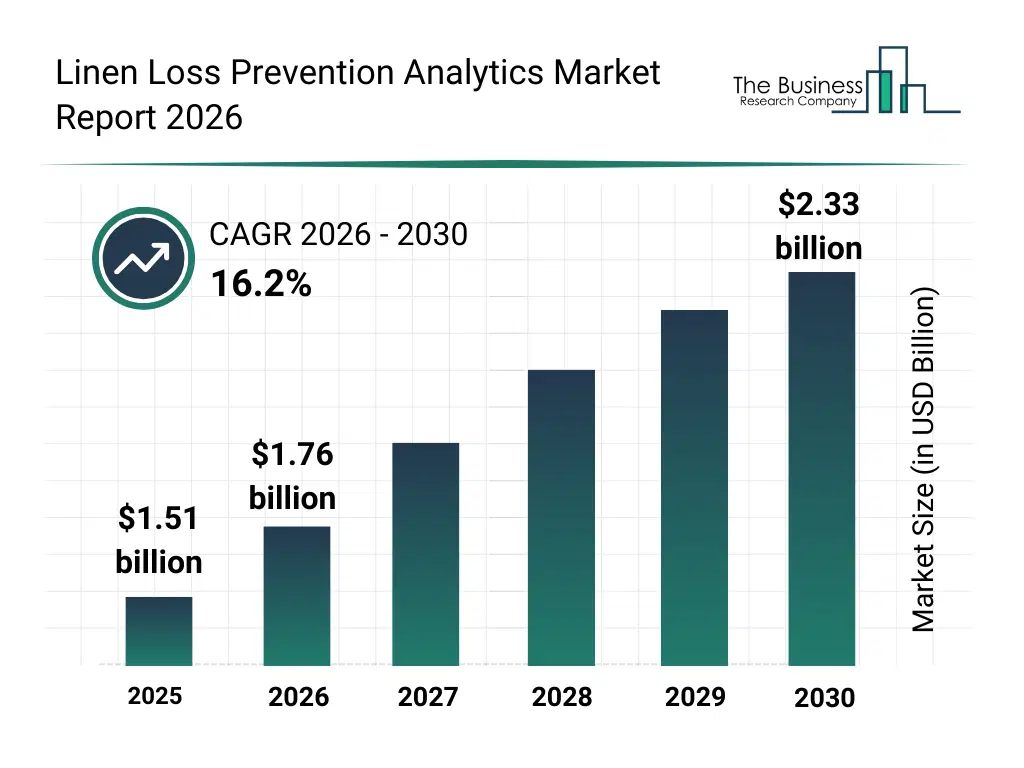
What Is The Linen Loss Prevention Analytics Market Size and Share 2026?
The linen loss prevention analytics market size has grown rapidly in recent years. It will grow from $1.51 billion in 2025 to $1.76 billion in 2026 at a compound annual growth rate (CAGR) of 16.4%. The growth in the historic period can be attributed to increasing adoption of radio frequency identification linen tracking, growing need for cost control, rising focus on operational efficiency, expanding use of automated laundry systems, increasing awareness of linen loss issues.What Is The Linen Loss Prevention Analytics Market Growth Forecast?
The linen loss prevention analytics market size is expected to see rapid growth in the next few years. It will grow to $2.33 billion in 2030 at a compound annual growth rate (CAGR) of 16.2%. The growth in the forecast period can be attributed to growing demand for cloud based linen analytics, increasing integration of internet of things sensors, rising investment in digital transformation, expanding use of predictive analytics, growing emphasis on real time linen visibility. Major trends in the forecast period technology advancements in radio frequency identification systems, innovations in smart textile tracking, developments in automated monitoring platforms, research and developments in artificial intelligence-based analytics, advancements in cloud driven linen management.
Global Linen Loss Prevention Analytics Market Segmentation
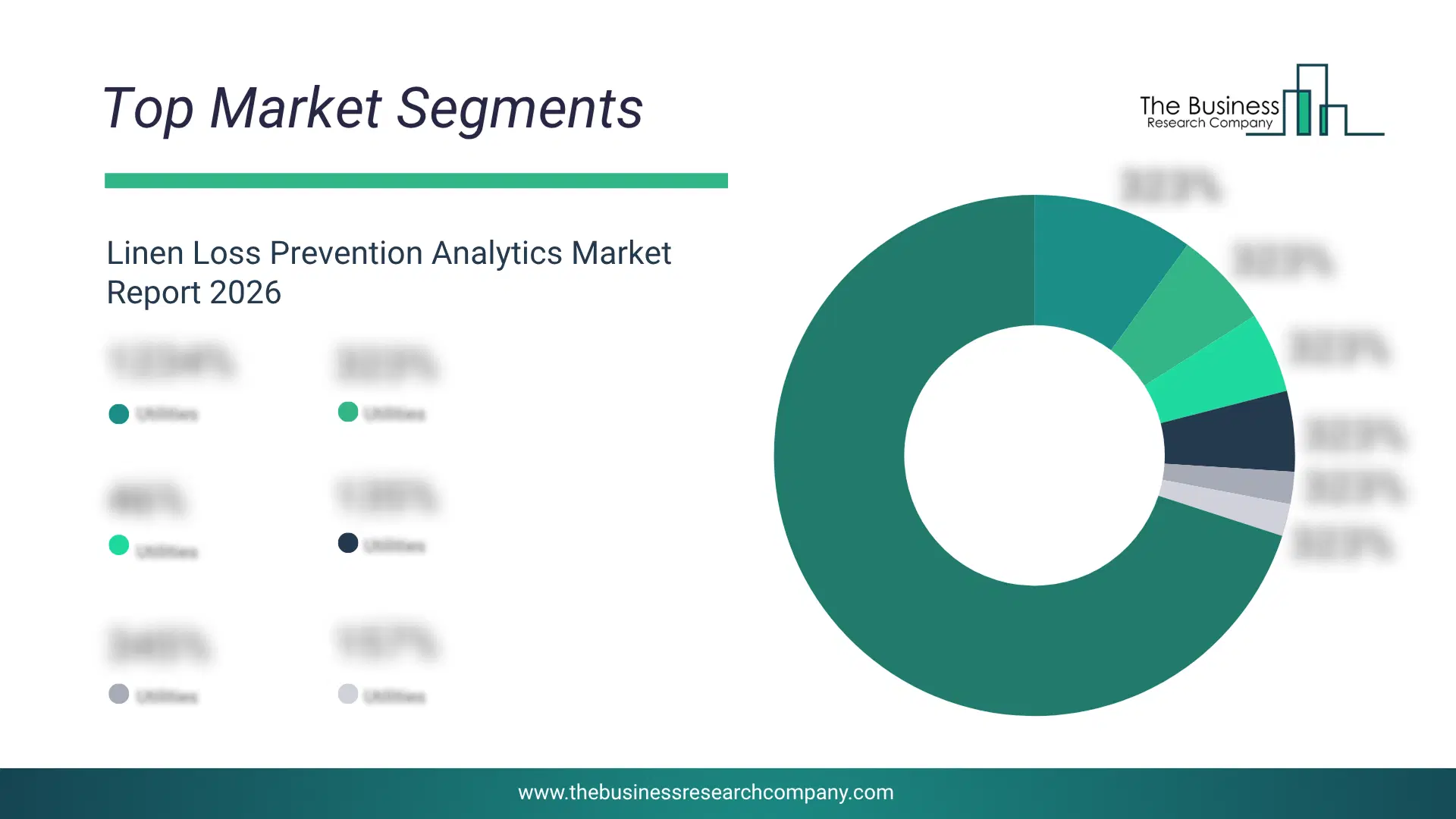
1) By Component: Software, Hardware, Services 2) By Deployment Mode: On-Premises, Cloud 3) By Offering: Linen Tracking Systems, Real Time Monitoring Solutions, Inventory Management Solutions, Data Analytics Platforms, Automated Reporting Solutions 4) By Technology: Radio Frequency Identification Technology, Barcode Tracking Technology, Internet Of Things Sensor Technology, Global Positioning System Enabled Tracking, Artificial Intelligence Based Analytics 5) By End-User: Hospitals, Hotels And Resorts, Commercial Laundries, Other End Users Subsegments: 1) By Software: Predictive Analytics, Inventory Tracking, Customer Behavior Analysis, Fraud Detection 2) By Hardware: Surveillance Cameras, Smart Shelving, Radio Frequency Sensors, Point Of Sale Terminals 3) By Services: Consulting, Implementation, Maintenance, Training The top segments in the linen loss prevention analytics market will be: • Software will reach $1.24 Billion by 2030. • Hardware will reach $1.14 Billion by 2030. • Services will reach $0.45 Billion by 2030.What Is The Driver Of The Linen Loss Prevention Analytics Market?
The growing use of radio frequency identification (RFID) tracking is expected to propel the growth of the linen loss prevention analytics market going forward. Radio frequency identification (RFID) tracking involves using electromagnetic fields to automatically identify and track tags attached to objects, such as hospital linen and textiles. Use of radio frequency identification (RFID) tracking is rising as businesses seek real-time visibility over assets and inventory to reduce errors prevent losses and streamline operations across complex supply chains. Linen loss prevention analytics platforms support radio frequency identification (RFID) tracking by leveraging data to identify loss patterns, optimize stock levels, and automate replenishment processes. For instance, in February 2025, according to Shopify Inc., a Canada-based e-commerce platform, 61% of retailers are increasing their investment in radio frequency identification technology (RFID), while 42% plan to adopt the technology within the next three years. Therefore, the growing use of radio frequency identification tracking is driving the growth of the linen loss prevention analytics industry.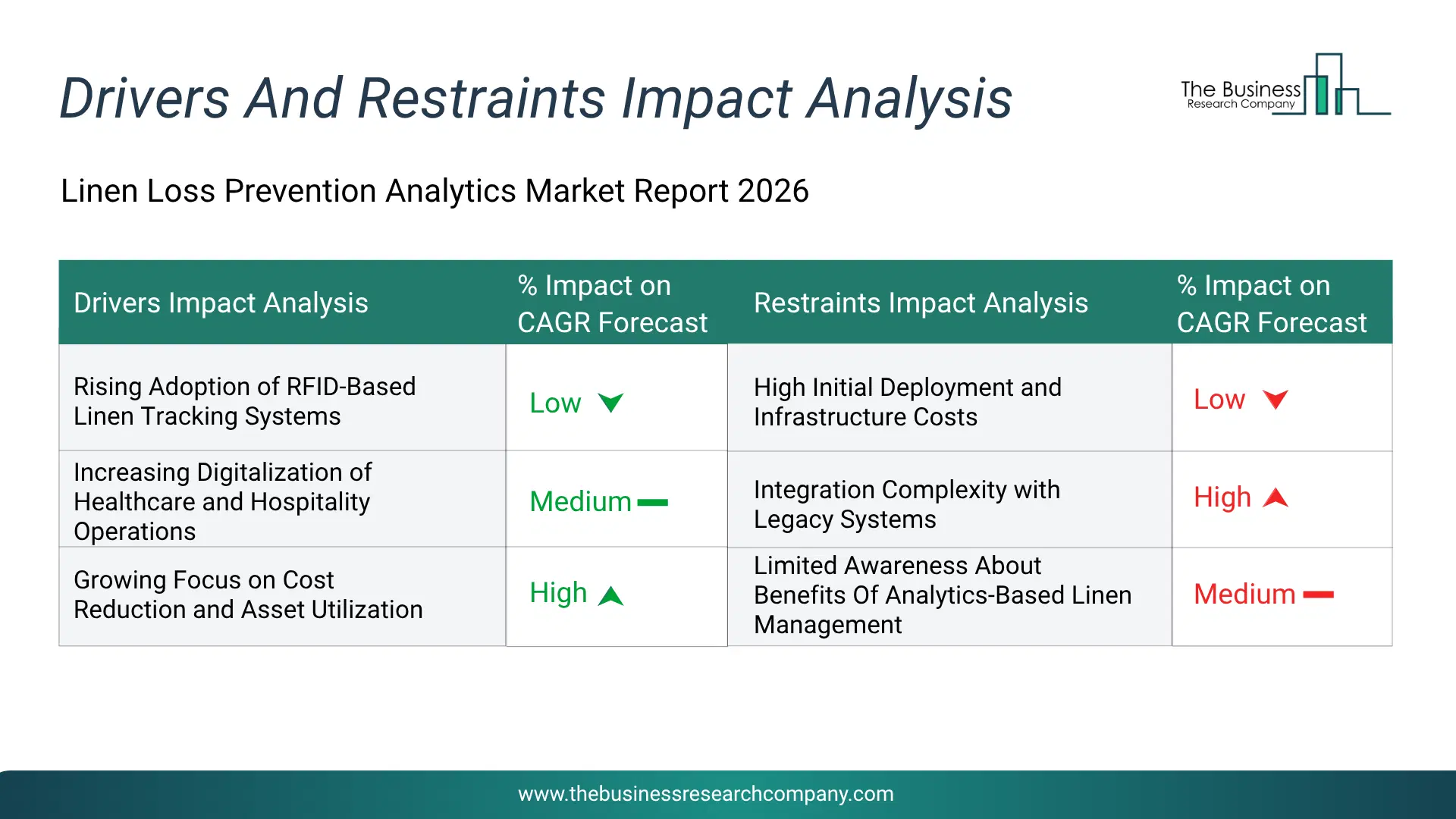
Infographic Chart Showing Key Market Drivers Analysis And Restraints For Linen Loss Prevention Analytics Market
The chart presents an impact analysis of key drivers and restraints, quantifying their relative influence on the market's growth rate and helping assess the balance between growth enablers and limiting factors. This chart offers a high-level perspective; the full report contains more detailed insights.
How Will The Drivers Impact Growth In The Global Linen Loss Prevention Analytics Market?
• Rising Adoption of RFID-Based Linen Tracking Systems (Low) – During the forecast period, the rising adoption of RFID-based linen tracking systems is expected to become a key growth driver for the linen loss prevention analytics market by 2030. Healthcare providers, hotels, and commercial laundries are increasingly deploying RFID-enabled linen tracking to minimize losses and improve inventory accuracy. RFID tags and readers enable real-time visibility of linen movement across facilities, reducing manual errors and theft. Automated tracking also shortens inventory cycles and improves linen utilization. As organizations seek greater operational efficiency, demand for analytics platforms integrated with RFID infrastructure continues to increase. • Increasing Digitalization of Healthcare and Hospitality Operations (Medium) – During the forecast period, the increasing digitalization of healthcare and hospitality operations is expected to emerge as a major factor driving the expansion of the linen loss prevention analytics market by 2030. Hospitals and hospitality organizations are accelerating digital transformation initiatives to optimize resource management and reduce operating costs. Linen analytics solutions provide centralized dashboards, automated reporting, and predictive inventory insights that improve decision-making. Integration with hospital information systems and laundry management platforms enhances workflow efficiency. Cloud-based deployments further simplify monitoring across multiple facilities. • Growing Focus on Cost Reduction and Asset Utilization (High) – During the forecast period, the growing focus on cost reduction and asset utilization is expected to act as a key growth catalyst for the linen loss prevention analytics market by 2030. Linen replacement and inventory losses represent a significant operational expense for healthcare facilities and hotels. Analytics solutions identify usage patterns, excessive losses, and inefficient linen circulation, enabling organizations to reduce unnecessary procurement. Predictive insights improve inventory planning and extend linen life cycles through optimized utilization. Reduced shrinkage directly lowers operating costs while improving service quality.How Will The Restraints Impact Growth In The Global Linen Loss Prevention Analytics Market?
• High Initial Deployment and Infrastructure Costs (Low) – During the forecast period, the implementing a comprehensive linen loss prevention analytics system requires investment in RFID tags, readers, scanning stations, software platforms, and system integration. Small hospitals, independent hotels, and regional laundries may find these upfront costs difficult to justify. Additional expenses for installation, staff training, and ongoing maintenance further increase the total cost of ownership. Budget constraints can delay modernization projects and limit adoption among smaller organizations. This remains a key restraint to broader market penetration. • Integration Complexity with Legacy Systems (Medium) – During the forecast period, the many healthcare facilities and hospitality organizations continue to operate legacy laundry management and enterprise software systems. Integrating modern analytics platforms with these existing environments can be technically complex and time-consuming. Data compatibility issues, customization requirements, and workflow modifications often increase implementation timelines and costs. Organizations may also require specialized IT expertise to ensure seamless interoperability. These integration challenges can slow adoption despite the long-term operational benefits. • Limited Awareness About Benefits Of Analytics-Based Linen Management (High) – During the forecast period, the limited awareness about the benefits of analytics-based linen management acts as a restraint for the Linen Loss Prevention Analytics market because many organizations continue to rely on traditional manual tracking methods for managing linen inventory. Healthcare facilities, hotels, and laundries may not fully understand the potential benefits of analytics solutions, including reduced losses, improved inventory visibility, and operational efficiency. Lack of awareness can delay technology adoption and reduce investment interest among potential users. Organizations may also underestimate the financial impact of linen losses, making digital solutions appear less necessary. Consequently, limited awareness can slow market penetration.Key Players In The Global Linen Loss Prevention Analytics Market
Major companies operating in the linen loss prevention analytics market are Impinj Inc., Tagit Pte Ltd., DreamzTech Solutions Pvt. Ltd., GAO RFID Inc., Terso Solutions Inc., American RFID Solutions LLC, RFID4U IT Solutions Private Limited, Dipole RFID Solutions Pvt. Ltd., SATO Holdings Corporation, iVEDiX Inc., ACube Infotech LLC, Tag Systems RFID GmbH, Tagway RFID Solutions Pvt. Ltd., IntelTag Systems Pvt. Ltd., BUNDLE LAUNDRY UK LTD, UBI Solutions Inc., Ruddersoft Solutions Private Limited, LinenTech Solutions Inc., SmartLinen Systems Inc., Laundris Corporation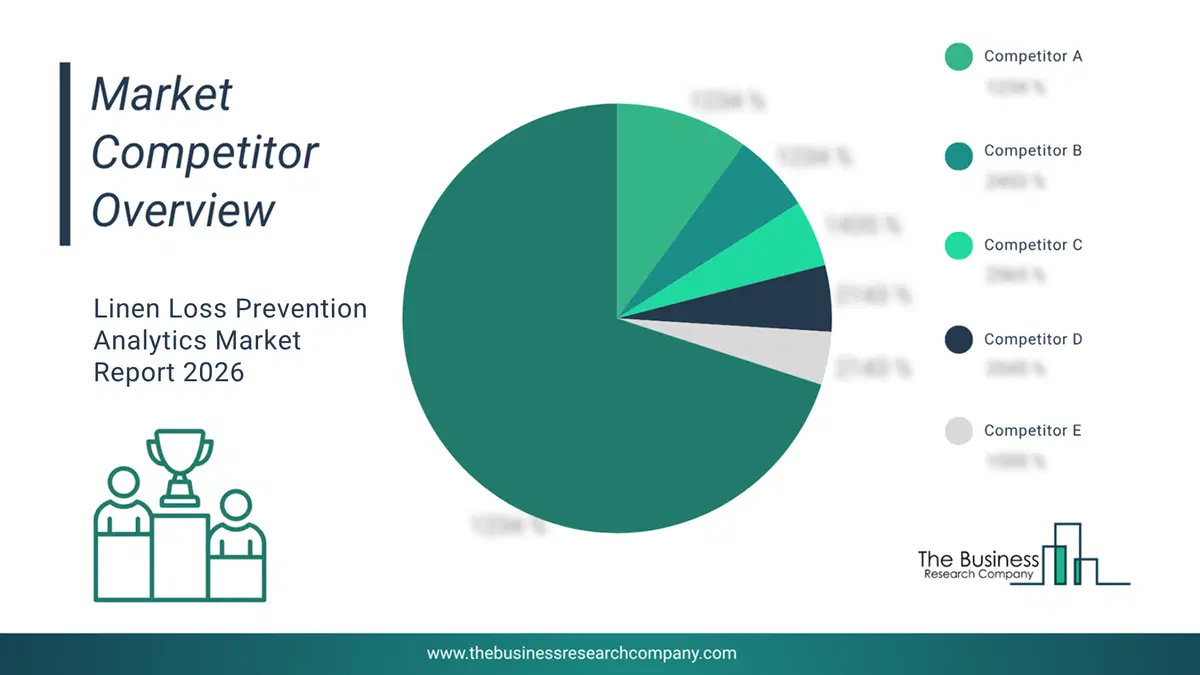
This chart is for illustrative purposes; the full report includes a detailed competitor analysis and comprehensive overview of the top 10 companies in the market.
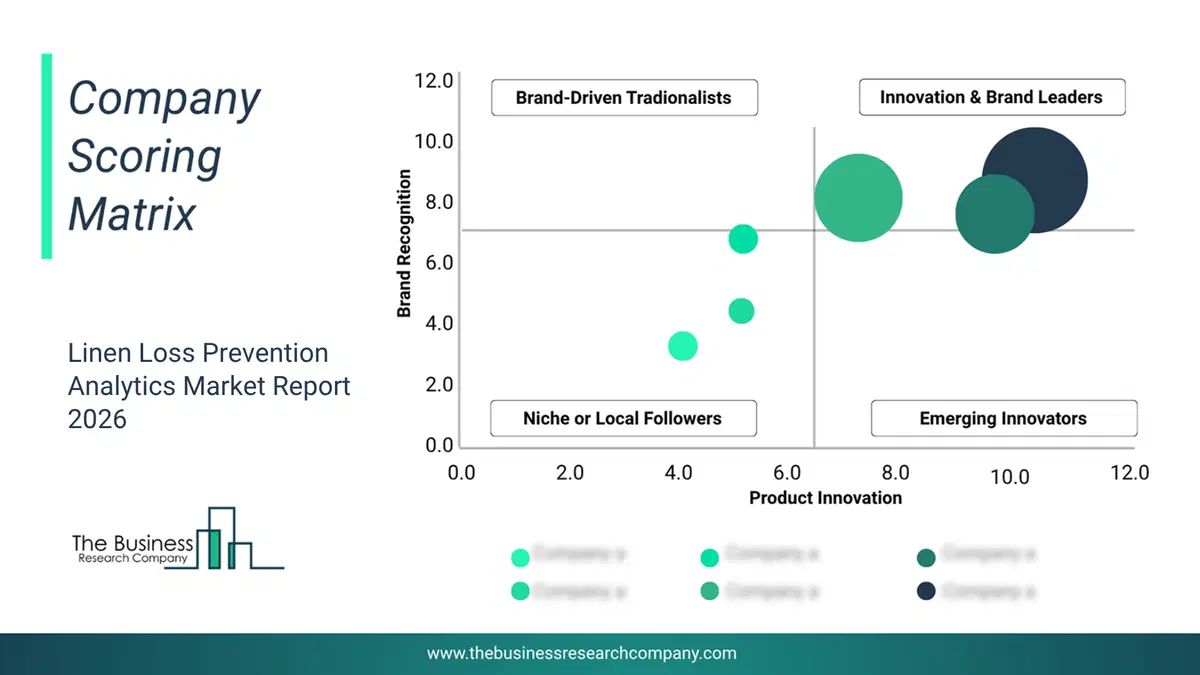
This chart maps companies by product innovation and brand strength, with bubble size indicating relative revenue, helping identify market leaders, challengers, and niche players. This is an illustrative chart; the full report provides a complete and accurate competitive analysis.
Global Linen Loss Prevention Analytics Market Trends and Insights
Major companies operating in the linen loss prevention analytics market are focusing on developing advanced technologies, such as small RFID reader tags, to improve real-time tracking, inventory accuracy, and loss prevention across hospitality and healthcare facilities. A small RFID reader tag refers to a compact, embedded radio-frequency identification component designed to be discreetly attached to individual linen items, enabling automated identification, location tracking, and lifecycle monitoring without affecting fabric comfort or usability. For instance, in June 2023, ASSA ABLOY Global Solutions, a Sweden-based provider of access control and hospitality technology solutions, launched the Acuity Linen Management System through its VingCard brand to address persistent linen loss challenges. The system incorporates small RFID reader tags that are sewn directly into linens, allowing continuous tracking as items move through laundry, storage, and operational workflows. The solution utilizes durable RFID tags and cloud-based analytics to track linen movement and quality in real time, providing hoteliers with actionable insights to optimize stock levels, reduce waste from premature disposal, and prevent loss through automated alerts and comprehensive reporting dashboards.What Are Latest Mergers And Acquisitions In The Linen Loss Prevention Analytics Market?
In July 2025, Laundris GT Linens, a US‑based commercial laundry and linen services provider, partnered with RFID Global Solutions, to improve linen supply‑chain visibility and reduce losses through advanced analytics. Through this partnership, Laundris GT Linens and RFID Global Solutions aim to deploy RFID‑enabled tracking solutions combined with data analytics to monitor linen movement, detect loss patterns, and optimise inventory utilisation across healthcare, hospitality, and institutional environments. RFID Global Solutions is a US‑based provider of RFID tracking and analytics technologies.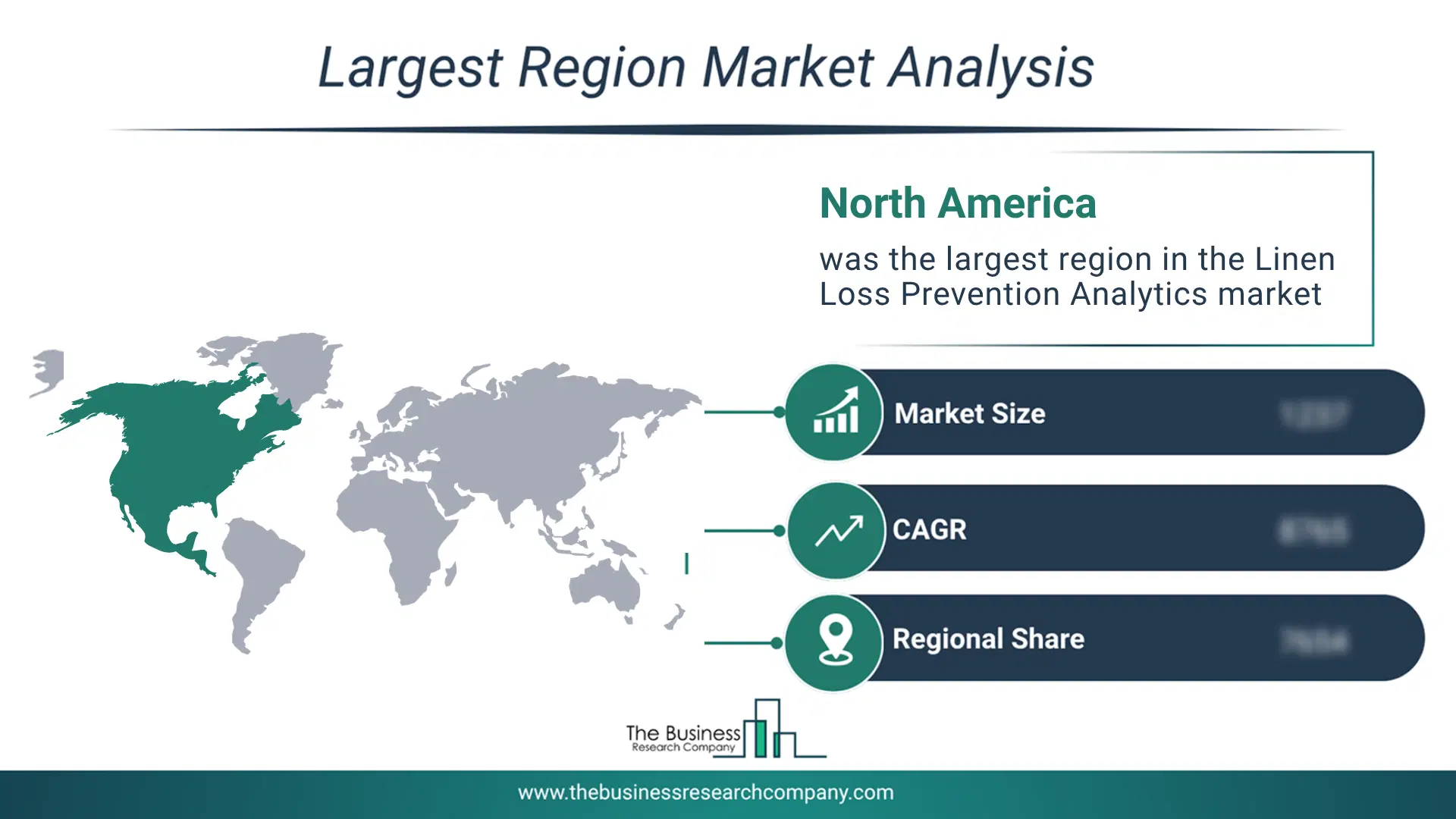
Regional Insights
North America was the largest region in the linen loss prevention analytics market in 2025. Asia-Pacific is expected to be the fastest-growing region in the forecast period. The regions covered in this market report are Asia-Pacific, South East Asia, Western Europe, Eastern Europe, North America, South America, Middle East, Africa. The countries covered in this market report are Australia, Brazil, China, France, Germany, India, Indonesia, Japan, Taiwan, Russia, South Korea, UK, USA, Canada, Italy, Spain.What Defines the Linen Loss Prevention Analytics Market?
The linen loss prevention analytics market consists of sales of items such as radio frequency identification (RFID) laundry tags, linen-inventory tracking software, rfid handheld readers, laundry cart radio frequency identification (RFID) reading stations, cloud-based linen management platforms. Values in this market are ‘factory gate’ values, that is the value of goods sold by the manufacturers or creators of the goods, whether to other entities (including downstream manufacturers, wholesalers, distributors and retailers) or directly to end customers. The value of goods in this market includes related services sold by the creators of the goods.How is Market Value Defined and Measured?
The market value is defined as the revenues that enterprises gain from the sale of goods and/or services within the specified market and geography through sales, grants, or donations in terms of the currency (in USD unless otherwise specified). The revenues for a specified geography are consumption values that are revenues generated by organizations in the specified geography within the market, irrespective of where they are produced. It does not include revenues from resales along the supply chain, either further along the supply chain or as part of other products.
This chart presents market attractiveness based on a quantitative evaluation of growth, competition, strategic alignment, and risk, offering a clear view of opportunity areas for decision-making. This chart is for illustrative purposes; the full report contains the complete analysis.

This chart highlights the Total Addressable Market (TAM) by estimating the maximum revenue opportunity using an assumption-driven approach, supporting strategic planning and opportunity sizing across markets. The chart is illustrative; the full report provides a more comprehensive analysis.
What Key Data and Analysis Are Included in the Linen Loss Prevention Analytics Market Report 2026?
The linen loss prevention analytics market research report is one of a series of new reports from The Business Research Company that provides market statistics, including industry global market size, regional shares, competitors with the market share, detailed market segments, market trends and opportunities, and any further data you may need to thrive in the linen loss prevention analytics industry. The market research report delivers a complete perspective of everything you need, with an in-depth analysis of the current and future state of the industry.Linen Loss Prevention Analytics Market Report Forecast Analysis
| Report Attribute | Details |
|---|---|
| Market Size Value In 2026 | $1.76 billion |
| Revenue Forecast In 2030 | $2.33 billion |
| Growth Rate | CAGR of 16.4% from 2026 to 2030 |
| Base Year For Estimation | 2025 |
| Actual Estimates/Historical Data | 2020-2025 |
| Forecast Period | 2026 - 2030 |
| Market Representation | Revenue in USD Billion and CAGR from 2026 to 2030 |
| Segments Covered | Component, Deployment Mode, Offering, Technology, End-User |
| Regional Scope | Asia-Pacific, Western Europe, Eastern Europe, North America, South America, Middle East, Africa |
| Country Scope | The countries covered in the report are Australia, Brazil, China, France, Germany, India, ... |
| Key Companies Profiled | Impinj Inc., Tagit Pte Ltd., DreamzTech Solutions Pvt. Ltd., GAO RFID Inc., Terso Solutions Inc., American RFID Solutions LLC, RFID4U IT Solutions Private Limited, Dipole RFID Solutions Pvt. Ltd., SATO Holdings Corporation, iVEDiX Inc., ACube Infotech LLC, Tag Systems RFID GmbH, Tagway RFID Solutions Pvt. Ltd., IntelTag Systems Pvt. Ltd., BUNDLE LAUNDRY UK LTD, UBI Solutions Inc., Ruddersoft Solutions Private Limited, LinenTech Solutions Inc., SmartLinen Systems Inc., Laundris Corporation |
| Customization Scope | Request for Customization |
| Pricing And Purchase Options | Explore Purchase Options |