
Liquefied Natural Gas (LNG) Virtual Pipeline Market Report 2026
Global Outlook – By Type (Ordinary Type, Special Type), By Mode Of Transportation (Truck, Rail, Ship, Barge), By End Use (Commercial, Industrial, Transportation) – Market Size, Trends, Strategies, and Forecast to 2030
Liquefied Natural Gas (LNG) Virtual Pipeline Market Overview
• Liquefied Natural Gas (LNG) Virtual Pipeline market size has reached to $1.45 billion in 2025 • Expected to grow to $1.98 billion in 2030 at a compound annual growth rate (CAGR) of 6.4% • Growth Driver: Rising Clean Energy Demand Boosts LNG Virtual Pipeline Market • Market Trend: Advanced Modular Energy Systems Improve Access To Reliable Power • North America was the largest region in 2025.What Is Covered Under Liquefied Natural Gas (LNG) Virtual Pipeline Market?
Liquefied natural gas (LNG) virtual pipeline refers to a logistical and transportation system that enables the delivery of LNG to locations that do not have direct access to conventional natural gas pipelines. It uses a combination of LNG transport and storage solutions to effectively transport and distribute LNG over distances and regions where building physical pipelines is impractical or economically unfeasible. The main types in the liquefied natural gas (LNG) virtual pipeline market are ordinary type and special type. An ordinary type LNG virtual pipeline refers to a standard system used for transporting and distributing liquefied natural gas (LNG) without relying on traditional fixed pipelines. The various modes of transportation include truck, rail, ship, and barge, and several end users including commercial, industrial, and transportation.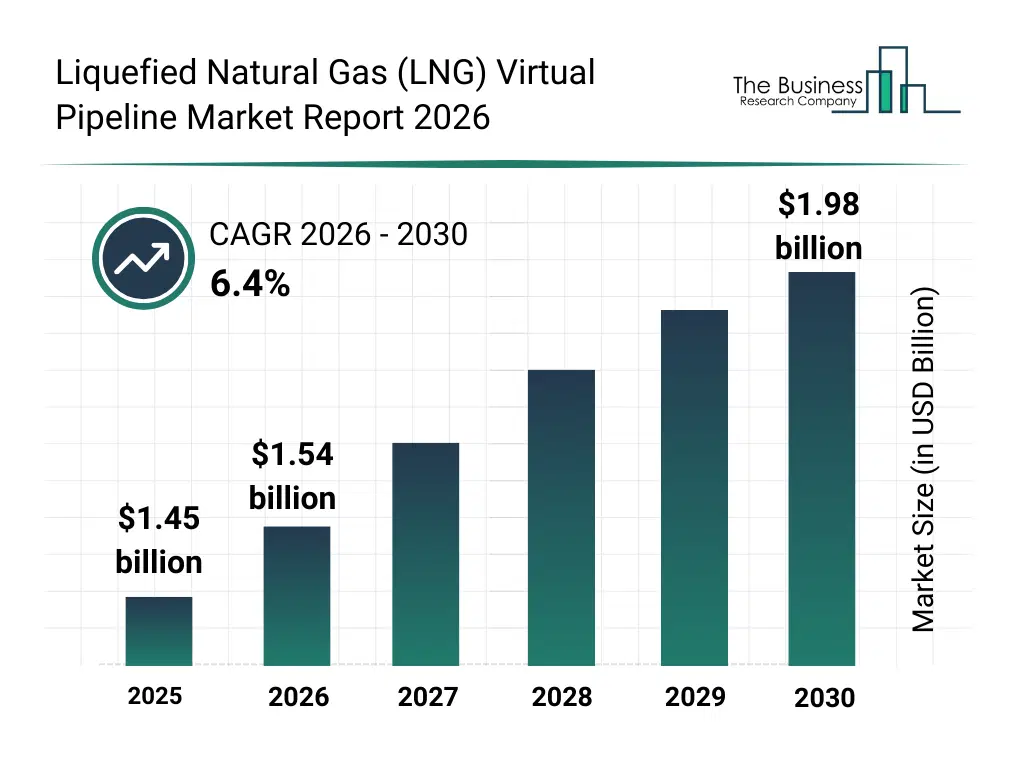
What Is The Liquefied Natural Gas (LNG) Virtual Pipeline Market Size and Share 2026?
The liquefied natural gas (lng) virtual pipeline market size has grown strongly in recent years. It will grow from $1.45 billion in 2025 to $1.54 billion in 2026 at a compound annual growth rate (CAGR) of 6.5%. The growth in the historic period can be attributed to development of conventional storage systems, deployment of standard lng containers, increasing industrial and commercial lng demand, early adoption of pressurized lng containers, expansion of lng transport modes.What Is The Liquefied Natural Gas (LNG) Virtual Pipeline Market Growth Forecast?
The liquefied natural gas (lng) virtual pipeline market size is expected to see strong growth in the next few years. It will grow to $1.98 billion in 2030 at a compound annual growth rate (CAGR) of 6.4%. The growth in the forecast period can be attributed to advancements in modular storage technologies, growth in virtual pipeline solutions, increasing regulatory support for lng transport, rising integration with remote and off-grid industrial applications, adoption of digital monitoring and logistics optimization. Major trends in the forecast period include expansion of lng virtual pipeline networks, increasing adoption of modular lng storage units, growth in cryogenic tank deployments, rising demand for lng delivery via truck, rail, and ship, integration of advanced lng logistics and tracking solutions.
Global Liquefied Natural Gas (LNG) Virtual Pipeline Market Segmentation
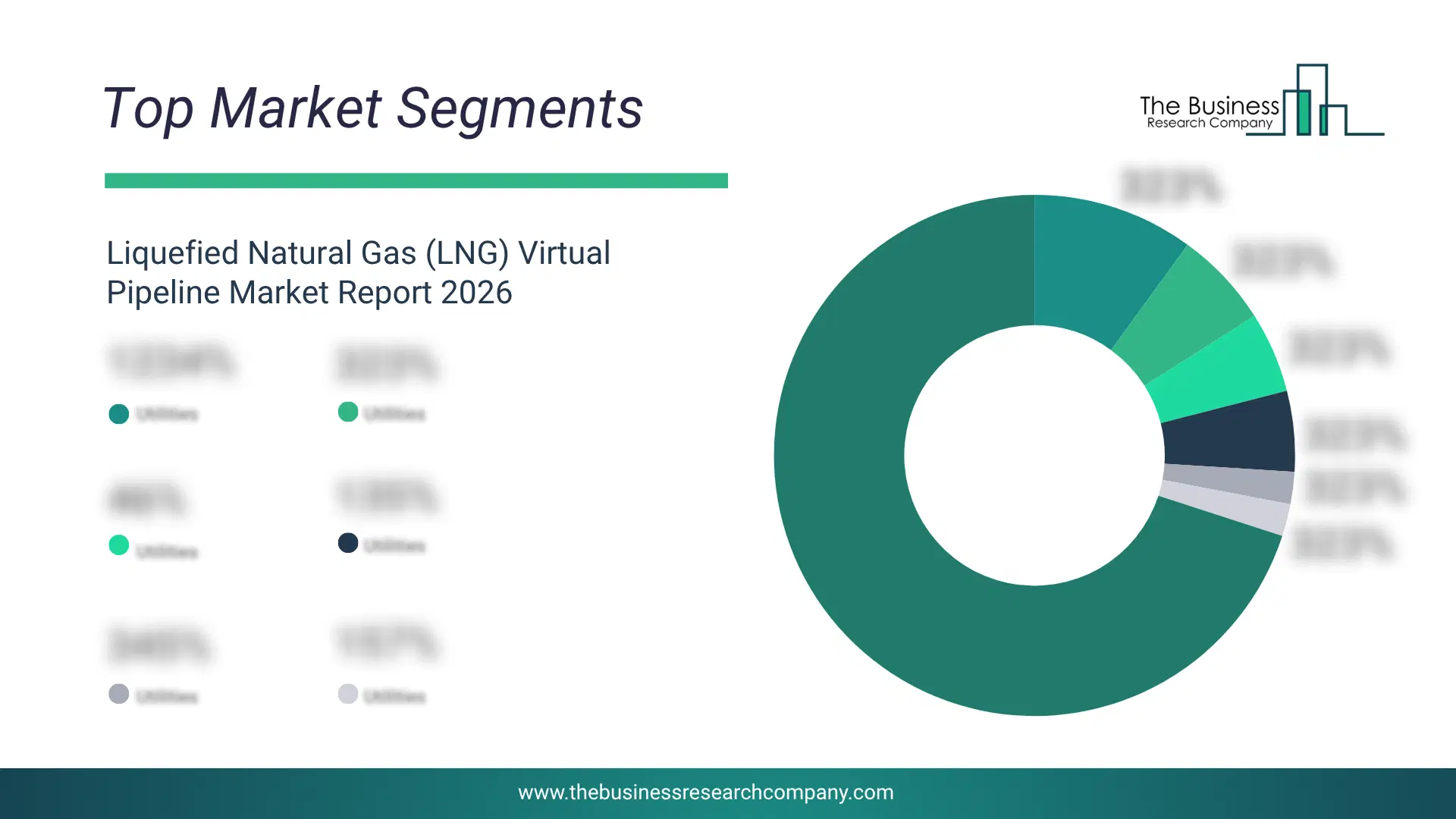
1) By Type: Ordinary Type, Special Type 2) By Mode Of Transportation: Truck, Rail, Ship, Barge 3) By End Use: Commercial, Industrial, Transportation Subsegments: 1) By Ordinary Type: Standard LNG Containers, Conventional Storage Systems 2) By Special Type: Cryogenic Tanks, Pressurized LNG Containers, Modular Storage UnitsWhat Is The Driver Of The Liquefied Natural Gas (LNG) Virtual Pipeline Market?
The increasing demand for clean energy sources is expected to propel the growth of the liquefied natural gas (LNG) virtual pipeline market going forward. Clean energy sources refer to renewable and sustainable technologies with minimal environmental impact, such as solar, wind, hydroelectric, and geothermal energy. The demand for clean energy sources is increasing due to growing environmental concerns and the desire to reduce dependence on fossil fuels, driven by their renewable nature and minimal ecological impact. The LNG virtual pipeline enhances access to clean energy sources by transporting liquefied natural gas (LNG) to areas without pipeline infrastructure, reducing emissions, and promoting cleaner energy alternatives. For instance, in February 2023, according to a report published by the Energy Information Administration (EIA), a US-based government agency, by the end of 2022, the U.S. electric power sector had installed 73 Gigawatt (GW) of solar photovoltaic (PV) capacity, and further to increase this capacity by 43% (32 GW) in 2023. Moreover, in 2022, wind and solar accounted for 14% of U.S. electricity generation, with projections indicating this share would rise to 16% in 2023 and 18% in 2024. Therefore, increasing demand for clean energy sources will drive the LNG virtual pipeline market.Key Players In The Global Liquefied Natural Gas (LNG) Virtual Pipeline Market
Major companies operating in the liquefied natural gas (lng) virtual pipeline market are ExxonMobil Corporation, TotalEnergies SE, Cheniere Energy Inc., Linde plc, Siemens Energy AG, Air Liquide S.A., Mitsubishi Heavy Industries Ltd., Baker Hughes, McDermott International Ltd., Sempra Energy, Dominion Energy Inc., Fluor Corporation, Air Products and Chemicals Inc., IHI Corporation, Technip Energies NV, TechnipFMC plc, Wärtsilä Corporation, JGC Holdings Corporation, Black & Veatch Corp, MAN Energy Solutions, Gaztransport & Technigaz SA, Chart Industries Inc., GreenLine Mobility Solutions Limited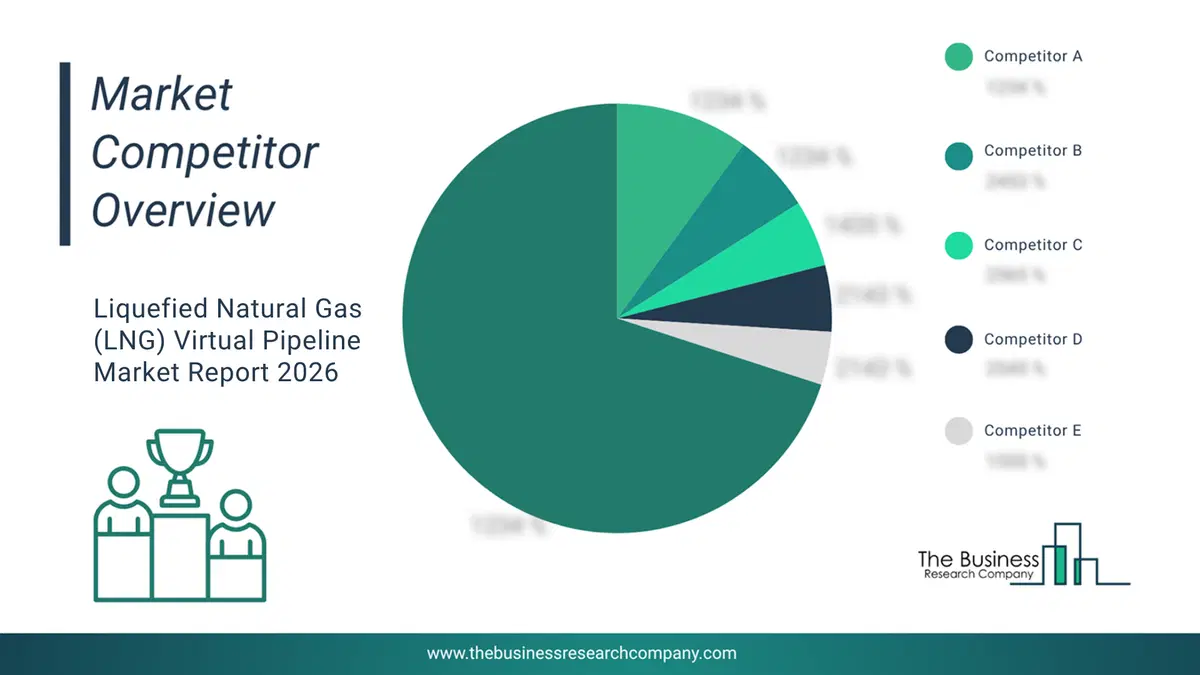
This chart is for illustrative purposes; the full report includes a detailed competitor analysis and comprehensive overview of the top 10 companies in the market.
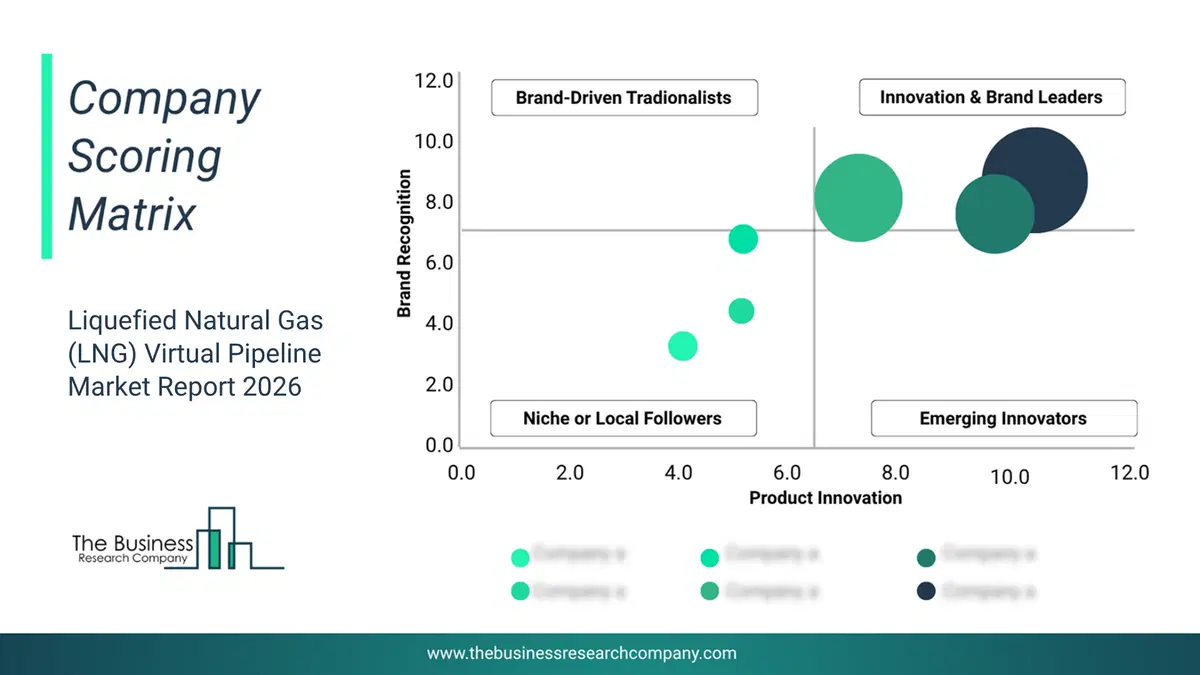
This chart maps companies by product innovation and brand strength, with bubble size indicating relative revenue, helping identify market leaders, challengers, and niche players. This is an illustrative chart; the full report provides a complete and accurate competitive analysis.
Global Liquefied Natural Gas (LNG) Virtual Pipeline Market Trends and Insights
Major companies operating in the Liquefied Natural Gas virtual pipeline market are focusing on developing advanced solutions, such as virtual LNG pipelines, to improve energy accessibility, reduce infrastructure constraints, and enable reliable fuel supply for power generation and industrial applications. Virtual LNG pipelines refer to modular, micro-scale liquefaction and transportation systems that allow natural gas to be liquefied, transported by road in cryogenic containers, and delivered to end users not connected to traditional pipeline networks. For instance, in March 2023, Galileo Global Technologies Limited, an Argentina-based energy technology company, launched a new virtual LNG pipeline in the Cuyo region of Argentina to supply a thermal power generation plant. Designed to ensure uninterrupted energy delivery, the system comprises nine Cryobox units producing approximately 120 tons of liquefied natural gas per day and supplies a 40 MW power plant, enabling efficient energy transport to remote locations while reducing environmental impact and operating costs.What Are Latest Mergers And Acquisitions In The Liquefied Natural Gas (LNG) Virtual Pipeline Market?
In January 2024, Nebula Energy LLC, a US-based oil and gas company, acquired a majority stake in AG&P LNG for $300 million. The acquisition aims to enhance its presence in the liquefied natural gas (LNG) sector. Nebula Energy's investment is poised to strengthen AG&P LNG's capabilities in developing downstream LNG infrastructure, thereby meeting the growing energy needs in Asia, where LNG is increasingly recognized as a critical fuel for reducing carbon emissions. AG&P Terminals & Logistics Pte Ltd is a UAE-based oil and gas company providing virtual pipelines.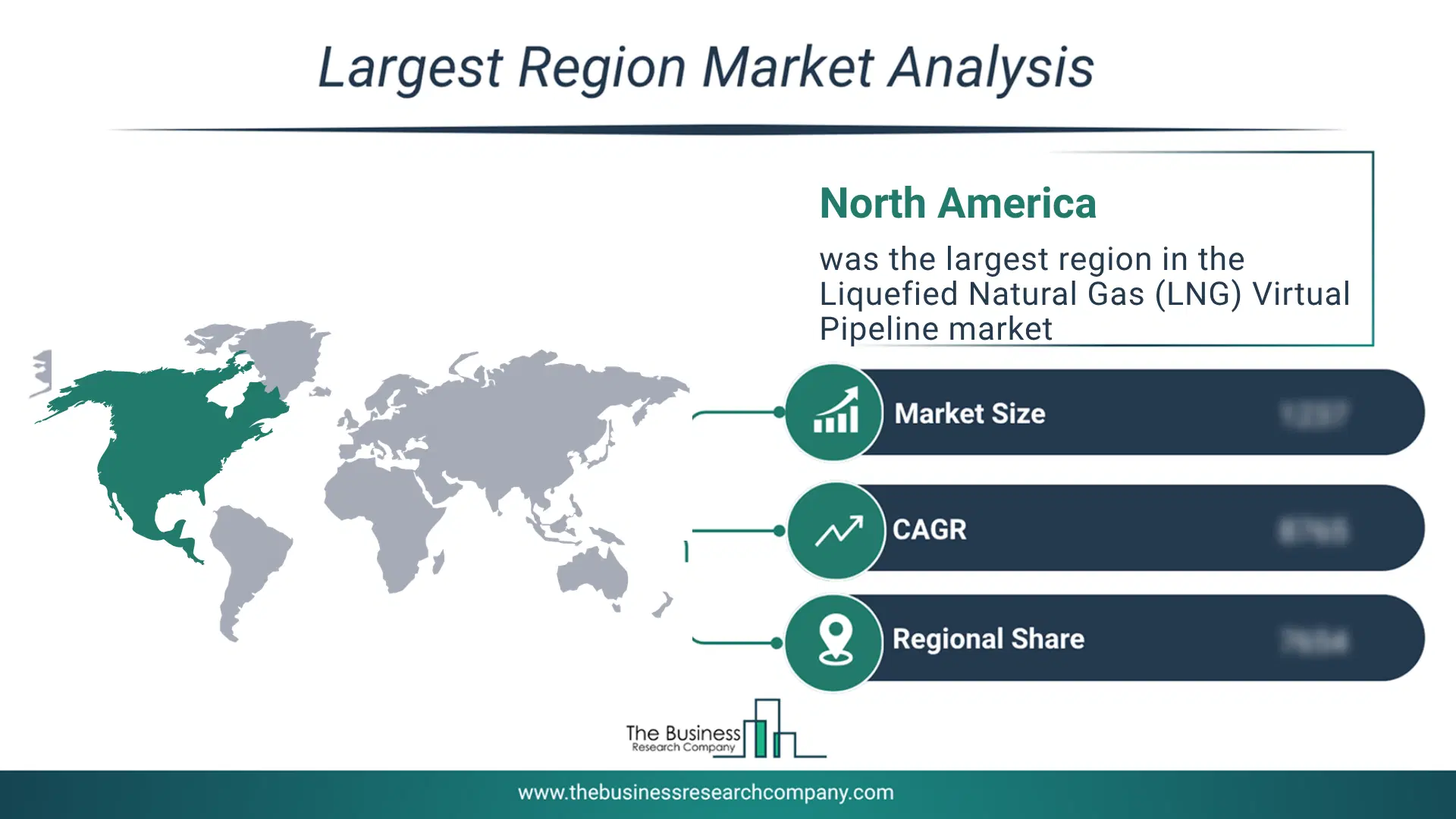
Regional Outlook
North America was the largest region in the LNG virtual pipeline market in 2025. The regions covered in this market report are Asia-Pacific, South East Asia, Western Europe, Eastern Europe, North America, South America, Middle East, Africa. The countries covered in this market report are Australia, Brazil, China, France, Germany, India, Indonesia, Japan, Taiwan, Russia, South Korea, UK, USA, Canada, Italy, SpainWhat Defines the Liquefied Natural Gas (LNG) Virtual Pipeline Market?
The LNG virtual pipeline market consists of revenues earned by entities by providing services such as LNG transportation logistics, operational management of cryogenic storage and transport units, safety compliance, and technological support for efficient distribution. The market value includes the value of related goods sold by the service provider or included within the service offering. The LNG virtual pipeline market also includes sales of LNG storage tanks, specialized transport vehicles, and regasification facilities. Values in this market are ‘factory gate’ values, that is, the value of goods sold by the manufacturers or creators of the goods, whether to other entities (including downstream manufacturers, wholesalers, distributors, and retailers) or directly to end customers. The value of goods in this market includes related services sold by the creators of the goods.How is Market Value Defined and Measured?
The market value is defined as the revenues that enterprises gain from the sale of goods and/or services within the specified market and geography through sales, grants, or donations in terms of the currency (in USD unless otherwise specified). The revenues for a specified geography are consumption values that are revenues generated by organizations in the specified geography within the market, irrespective of where they are produced. It does not include revenues from resales along the supply chain, either further along the supply chain or as part of other products.
This chart presents market attractiveness based on a quantitative evaluation of growth, competition, strategic alignment, and risk, offering a clear view of opportunity areas for decision-making. This chart is for illustrative purposes; the full report contains the complete analysis.

This chart highlights the Total Addressable Market (TAM) by estimating the maximum revenue opportunity using an assumption-driven approach, supporting strategic planning and opportunity sizing across markets. The chart is illustrative; the full report provides a more comprehensive analysis.
What Key Data and Analysis Are Included in the Liquefied Natural Gas (LNG) Virtual Pipeline Market Report 2026?
The liquefied natural gas (lng) virtual pipeline market research report is one of a series of new reports from The Business Research Company that provides market statistics, including Market Report 2026?global market size, regional shares, competitors with the market share, detailed market segments, market trends and opportunities, and any further data you may need to thrive in the liquefied natural gas (lng) virtual pipeline Market Report 2026? The market research report delivers a complete perspective of everything you need, with an in-depth analysis of the current and future state of the Market Report 2026?Liquefied Natural Gas (LNG) Virtual Pipeline Market Report Forecast Analysis
| Report Attribute | Details |
|---|---|
| Market Size Value In 2026 | $1.54 billion |
| Revenue Forecast In 2030 | $1.98 billion |
| Growth Rate | CAGR of 6.5% from 2026 to 2030 |
| Base Year For Estimation | 2025 |
| Actual Estimates/Historical Data | 2020-2025 |
| Forecast Period | 2026 - 2030 - 2030 |
| Market Representation | Revenue in USD Billion and CAGR from 2026 to 2030 |
| Segments Covered | Type, Mode Of Transportation, End Use |
| Regional Scope | Asia-Pacific, Western Europe, Eastern Europe, North America, South America, Middle East, Africa |
| Country Scope | The countries covered in the report are Australia, Brazil, China, France, Germany, India, Indonesia, Japan, Taiwan, Russia, South Korea, UK, USA, Canada, Italy, Spain. |
| Key Companies Profiled | ExxonMobil Corporation, TotalEnergies SE, Cheniere Energy Inc., Linde plc, Siemens Energy AG, Air Liquide S.A., Mitsubishi Heavy Industries Ltd., Baker Hughes, McDermott International Ltd., Sempra Energy, Dominion Energy Inc., Fluor Corporation, Air Products and Chemicals Inc., IHI Corporation, Technip Energies NV, TechnipFMC plc, Wärtsilä Corporation, JGC Holdings Corporation, Black & Veatch Corp, MAN Energy Solutions, Gaztransport & Technigaz SA, Chart Industries Inc., GreenLine Mobility Solutions Limited |
| Customization Scope | Request for Customization |
| Pricing And Purchase Options | Explore Purchase Options |