
Liver Cancer Therapeutics Market Report 2026
Global Outlook – By Type (Hepatocellular Carcinoma, Cholangio Carcinoma, Hepatoblastoma, Other Types), By Therapy Type (Targeted Therapy, Immunotherapy, Chemotherapy, Radiation Therapy, Other Therapy Types), By Distribution Channel Type (Hospital Pharmacy, Retail Pharmacy, Online Pharmacy), By End-Users (Pediatrics, Adults) – Market Size, Trends, Strategies, and Forecast to 2030
Liver Cancer Therapeutics Market Overview
• Liver Cancer Therapeutics market size has reached to $2.94 billion in 2025 • Expected to grow to $6.34 billion in 2030 at a compound annual growth rate (CAGR) of 16.5% • Growth Driver: Rising Hepatitis B Infections Fueling The Growth Of The Market Due To The Increasing Risk Of Malignant Liver Conditions • Market Trend: Innovative Therapies Driving Growth In Liver Cancer Treatment Market Through Immunotherapy Advancements • North America was the largest region in 2025 and Asia-Pacific is the fastest growing region.What Is Covered Under Liver Cancer Therapeutics Market?
Liver cancer therapeutics encompass a range of medical approaches aimed at managing abnormal cell growth within a vital organ responsible for critical metabolic and detoxification functions. These interventions are designed to target, contain, or eliminate harmful cellular activity while preserving as much healthy tissue as possible. The main types of liver cancer therapeutics include hepatocellular carcinoma, cholangio carcinoma, hepatoblastoma, and others. Hepatocellular carcinoma (HCC) refers to the type of primary liver cancer that originates in the hepatocytes (the main liver cells). It is a major cause of cancer-related deaths globally, particularly in regions with high rates of chronic liver diseases such as hepatitis B, hepatitis C, and alcohol-related liver disease, as well as those with cirrhosis (liver scarring). It offers various therapy types such as targeted therapy, immunotherapy, chemotherapy, radiation therapy, and others, and can be distributed through hospital pharmacies, retail pharmacies, and online pharmacies. It is used by various end-users, including pediatrics and adults.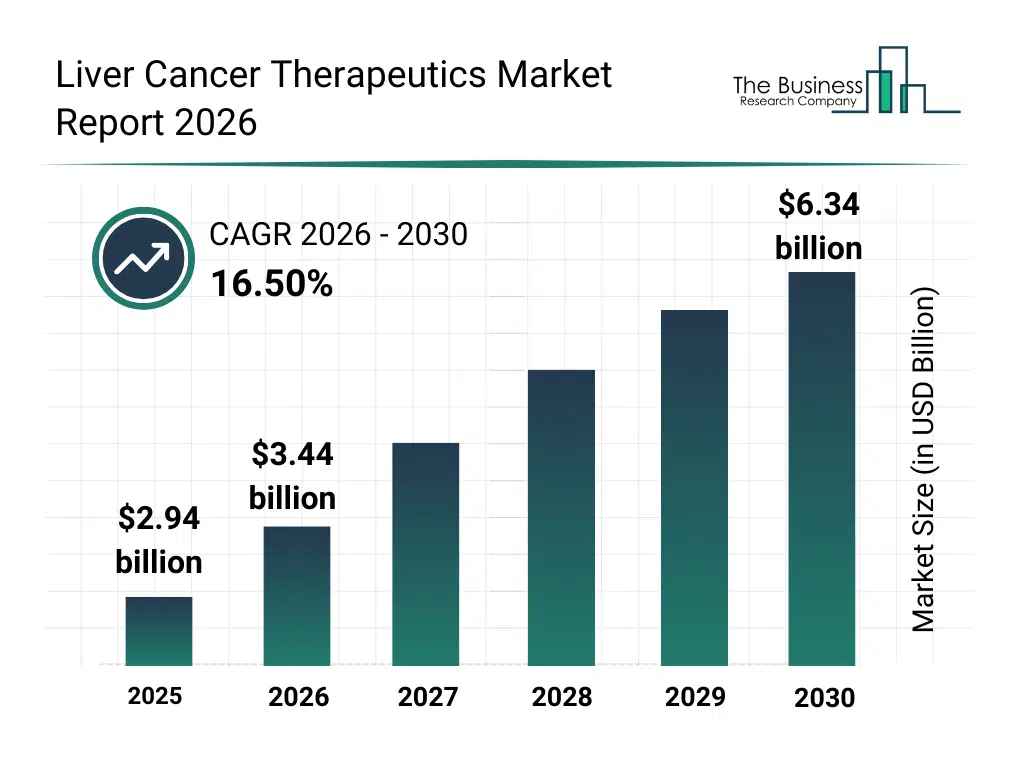
What Is The Liver Cancer Therapeutics Market Size and Share 2026?
The liver cancer therapeutics market size has grown rapidly in recent years. It will grow from $2.94 billion in 2025 to $3.44 billion in 2026 at a compound annual growth rate (CAGR) of 16.8%. The growth in the historic period can be attributed to rising global incidence of liver cancer, limited effectiveness of conventional chemotherapy, increased awareness of early diagnosis, expansion of oncology treatment centers, regulatory approvals of targeted therapies.What Is The Liver Cancer Therapeutics Market Growth Forecast?
The liver cancer therapeutics market size is expected to see rapid growth in the next few years. It will grow to $6.34 billion in 2030 at a compound annual growth rate (CAGR) of 16.5%. The growth in the forecast period can be attributed to growth in immuno-oncology pipelines, increasing prevalence of chronic liver diseases, advancements in biomarker-driven therapies, rising healthcare expenditure on cancer care, expansion of personalized oncology treatment strategies. Major trends in the forecast period include increasing adoption of immunotherapy in liver cancer, rising use of targeted therapies for advanced disease, growing preference for combination treatment regimens, expansion of precision medicine approaches, increasing clinical trials for novel liver cancer drugs.
Global Liver Cancer Therapeutics Market Segmentation
1) By Type: Hepatocellular Carcinoma, Cholangio Carcinoma, Hepatoblastoma, Other Types 2) By Therapy Type: Targeted Therapy, Immunotherapy, Chemotherapy, Radiation Therapy, Other Therapy Types 3) By Distribution Channel Type: Hospital Pharmacy, Retail Pharmacy, Online Pharmacy 4) By End-Users: Pediatrics, Adults Subsegments: 1) By Hepatocellular Carcinoma: Localized Hepatocellular Carcinoma, Advanced Hepatocellular Carcinoma, Recurrent Hepatocellular Carcinoma 2) By Cholangiocarcinoma: Intrahepatic Cholangiocarcinoma, Extrahepatic Cholangiocarcinoma, Perihilar Cholangiocarcinoma 3) By Hepatoblastoma: Standard-Risk Hepatoblastoma, High-Risk Hepatoblastoma, Metastatic Hepatoblastoma 4) By Other Types: Fibrolamellar Carcinoma, Angiosarcoma Of The Liver, HemangiosarcomaWhat Is The Driver Of The Liver Cancer Therapeutics Market?
The rise in incidence of hepatitis B infections is anticipated to fuel the growth of the liver cancer therapeutics market going forward. Hepatitis B infection refers to a viral disease caused by the hepatitis B virus (HBV) that primarily affects the liver and can lead to both short-term (acute) and long-term (chronic) health complications, including liver cancer. The rise in hepatitis B infections is partly driven by increasing injection drug use, which spreads the virus through the sharing of contaminated needles and syringes. Liver cancer therapeutics are required for hepatitis B infections, as chronic infection can lead to persistent liver inflammation and cellular damage, significantly increasing the risk of developing malignant liver conditions over time. For instance, in July 2025, according to the World Health Organization, a Switzerland-based health organization, there are approximately 1.2 million new HBV infections globally every year. e. Therefore, the rising incidence of hepatitis B infections will boost the growth of the liver cancer therapeutics industry.Key Players In The Global Liver Cancer Therapeutics Market
Major companies operating in the liver cancer therapeutics market are Pfizer Inc., F. Hoffmann-La Roche Ltd., Merck & Co. Inc., Novartis AG, Bayer AG, Sanofi SA, Bristol-Myers Squibb, AstraZeneca PLC, Amgen Inc., Eli Lilly and Company , Gilead Sciences Inc., Regeneron Pharmaceuticals Inc., Eisai Co. Ltd., Ipsen, Exelixis Inc., BeiGene Ltd., Hutchmed, Celgene Corporation, Zymeworks Inc., Can-Fite BioPharma, Onyx Pharmaceuticals Inc.
This chart is for illustrative purposes; the full report includes a detailed competitor analysis and comprehensive overview of the top 10 companies in the market.
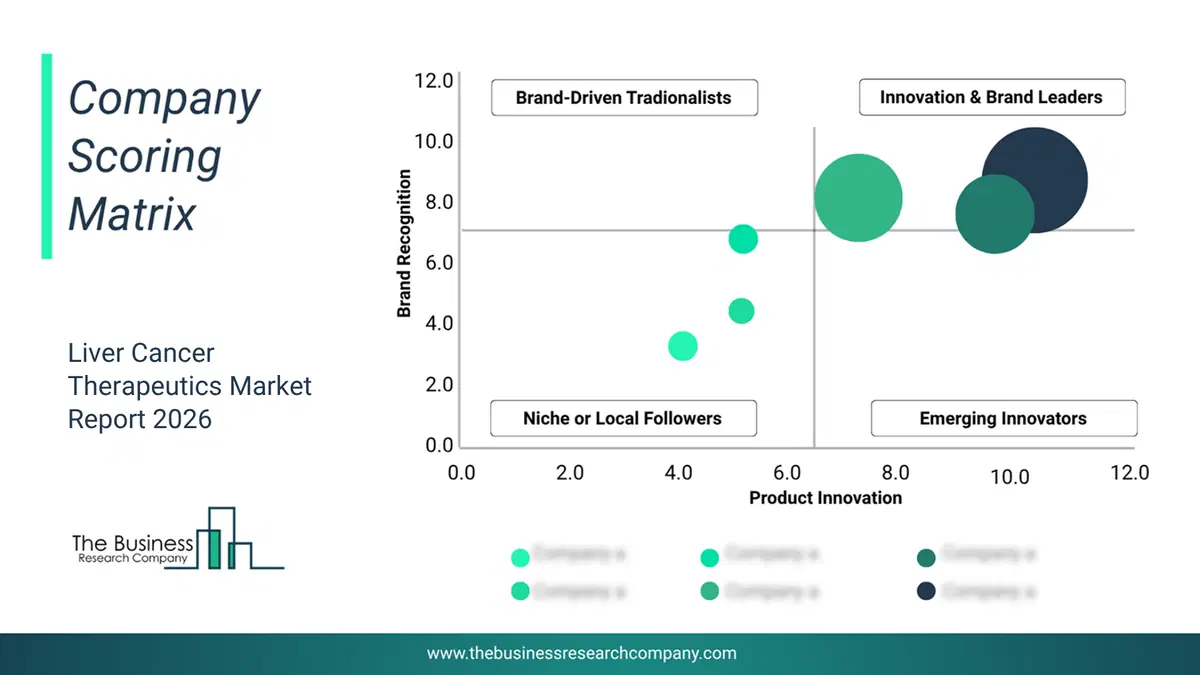
This chart maps companies by product innovation and brand strength, with bubble size indicating relative revenue, helping identify market leaders, challengers, and niche players. This is an illustrative chart; the full report provides a complete and accurate competitive analysis.
Global Liver Cancer Therapeutics Market Trends and Insights
Major companies operating in the liver cancer therapeutics market are focusing on developing innovative therapies, such as prescription immunotherapy medications, to provide long-lasting effects. Prescription immunotherapy medications are drugs that enhance or suppress the body's immune system to help fight specific diseases, such as cancer or chronic infections, by targeting and modulating immune responses. For instance, in April 2025, Bristol Myers Squibb, a US-based biopharmaceutical company, announced the U.S. Food and Drug Administration (FDA) approval for Opdivo (nivolumab) and Yervoy (ipilimumab) for adult patients with hepatocellular carcinoma (HCC), the most prevalent primary liver cancer, that is either incurable or has spread, as a first-line treatment. The unique feature of this product lies in its approval, which is based on the results of the global Phase 3 randomized, open-label CheckMate-9DW trial. In this study, patients with metastatic or incurable HCC who had not previously had systemic therapy were randomized to receive Opdivo plus Yervoy in addition to the investigator's choice of tyrosine kinase inhibitor monotherapy (lenvatinib or sorafenib). The combination therapy demonstrated statistically significant improvements in overall survival (OS) and overall response rate (ORR) compared to the comparator arm, marking it as the only trial supporting an FDA approval that shows superior results in this setting.What Are Latest Mergers And Acquisitions In The Liver Cancer Therapeutics Market?
In September 2023, Coherus BioSciences Inc., a US-based biopharmaceutical company, acquired Surface Oncology Inc. for an undisclosed amount. As a result of the acquisition, Coherus' immuno-oncology pipeline now includes four differentiated clinical-stage assets, including toripalimab (anti-PD-1), casdozokitug (IL-27-targeted), CHS-114 (CCR8-targeted), and CHS-006 (TIGIT-targeted). Development efforts will focus on achieving breakthrough survival benefits for cancer patients, surpassing the efficacy of current chemotherapy plus checkpoint inhibitor regimens. Surface Oncology Inc. is a US-based company developing therapeutics for liver cancer.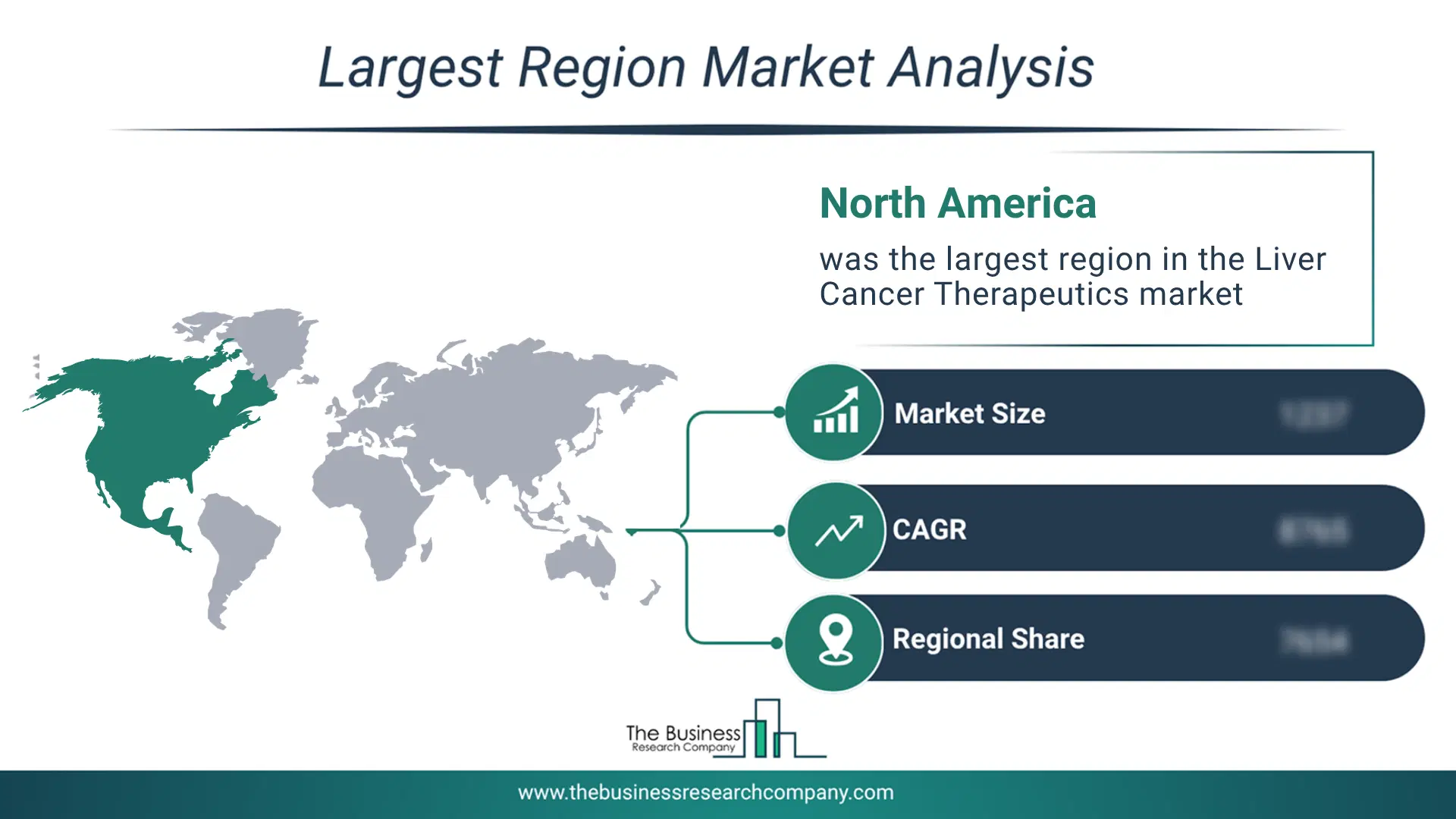
Regional Insights
North America was the largest region in the liver cancer therapeutics market in 2025. Asia-Pacific is expected to be the fastest-growing region in the forecast period. The regions covered in this market report are Asia-Pacific, South East Asia, Western Europe, Eastern Europe, North America, South America, Middle East, Africa. The countries covered in this market report are Australia, Brazil, China, France, Germany, India, Indonesia, Japan, Taiwan, Russia, South Korea, UK, USA, Canada, Italy, Spain.What Defines the Liver Cancer Therapeutics Market?
The liver cancer therapeutics market consists of revenues earned by entities by providing services such as diagnostics and screening, personalized treatment planning, minimally invasive procedures, and supportive care services. The market value includes the value of related goods sold by the service provider or included within the service offering. The liver cancer therapeutics market also includes sales of drug delivery systems, diagnostic kits, biologics and supportive medications. Values in this market are ‘factory gate’ values, that is the value of goods sold by the manufacturers or creators of the goods, whether to other entities (including downstream manufacturers, wholesalers, distributors and retailers) or directly to end customers. The value of goods in this market includes related services sold by the creators of the goods.How is Market Value Defined and Measured?
The market value is defined as the revenues that enterprises gain from the sale of goods and/or services within the specified market and geography through sales, grants, or donations in terms of the currency (in USD unless otherwise specified). The revenues for a specified geography are consumption values that are revenues generated by organizations in the specified geography within the market, irrespective of where they are produced. It does not include revenues from resales along the supply chain, either further along the supply chain or as part of other products.
This chart presents market attractiveness based on a quantitative evaluation of growth, competition, strategic alignment, and risk, offering a clear view of opportunity areas for decision-making. This chart is for illustrative purposes; the full report contains the complete analysis.

This chart highlights the Total Addressable Market (TAM) by estimating the maximum revenue opportunity using an assumption-driven approach, supporting strategic planning and opportunity sizing across markets. The chart is illustrative; the full report provides a more comprehensive analysis.
What Key Data and Analysis Are Included in the Liver Cancer Therapeutics Market Report 2026?
The liver cancer therapeutics market research report is one of a series of new reports from The Business Research Company that provides market statistics, including industry global market size, regional shares, competitors with the market share, detailed market segments, market trends and opportunities, and any further data you may need to thrive in the liver cancer therapeutics industry. The market research report delivers a complete perspective of everything you need, with an in-depth analysis of the current and future state of the industry.Liver Cancer Therapeutics Market Report Forecast Analysis
| Report Attribute | Details |
|---|---|
| Market Size Value In 2026 | $3.44 billion |
| Revenue Forecast In 2030 | $6.34 billion |
| Growth Rate | CAGR of 16.8% from 2026 to 2030 |
| Base Year For Estimation | 2025 |
| Actual Estimates/Historical Data | 2020-2025 |
| Forecast Period | 2026 - 2030 |
| Market Representation | Revenue in USD Billion and CAGR from 2026 to 2030 |
| Segments Covered | Type, Therapy Type, Distribution Channel Type, End-Users |
| Regional Scope | Asia-Pacific, Western Europe, Eastern Europe, North America, South America, Middle East, Africa |
| Country Scope | The countries covered in the report are Australia, Brazil, China, France, Germany, India, Indonesia, Japan, Taiwan, Russia, South Korea, UK, USA, Canada, Italy, Spain. |
| Key Companies Profiled | Pfizer Inc., F. Hoffmann-La Roche Ltd., Merck & Co. Inc., Novartis AG, Bayer AG, Sanofi SA, Bristol-Myers Squibb, AstraZeneca PLC, Amgen Inc., Eli Lilly and Company , Gilead Sciences Inc., Regeneron Pharmaceuticals Inc., Eisai Co. Ltd., Ipsen, Exelixis Inc., BeiGene Ltd., Hutchmed, Celgene Corporation, Zymeworks Inc., Can-Fite BioPharma, Onyx Pharmaceuticals Inc. |
| Customization Scope | Request for Customization |
| Pricing And Purchase Options | Explore Purchase Options |