
Long-Read Sequencing Market Report 2026
Global Outlook – By Product And Service (Instruments Or Platforms, Consumables And Reagents, Services And Software), By Workflow (Pre-Sequencing, Sequencing, Data Analysis), By Technology Platform (Single Molecule Real-Time (SMRT) High-Fidelity (HiFi) Sequencing, Synthetic Long-Read Or Linked-Read, Hybrid And Other Emerging), By Application (Human Genomics And Rare-Disease Diagnostics, Oncology And Liquid Biopsy, Metagenomics And Microbiome, Transcriptomics, Agri Genomics And Plant Or Animal Breeding, Other Applications), By End User (Academic And Research Institutes, Hospitals And Clinics, Pharmaceutical And Biotechnology Companies, Other End-Uses) – Market Size, Trends, Strategies, and Forecast to 2030
Long-Read Sequencing Market Overview
• Long-Read Sequencing market size has reached to $1.15 billion in 2025 • Expected to grow to $3.74 billion in 2030 at a compound annual growth rate (CAGR) of 26.5% • Growth Driver: Increasing Prevalence Of Genetic Diseases Fueling The Growth Of The Market Due To Rising Demand For Accurate Diagnosis And Personalized Treatment • Market Trend: High-Fidelity Long Reads Enable Precise Genomic Analysis • North America was the largest region in 2025 and Asia-Pacific is the fastest growing region.What Is Covered Under Long-Read Sequencing Market?
Long-read sequencing refers to a deoxyribonucleic acid or ribonucleic acid sequencing technology that generates relatively long continuous reads of nucleic acids, typically thousands to millions of base pairs in length, compared to short-read methods. It enables more accurate genome assembly, detection of structural variations, and analysis of complex regions. The main product and service types of long-read sequencing are instruments or platforms, consumables and reagents, and services and software. Instruments or platforms refer to the sequencing machines and hardware used to perform long-read sequencing. This involve workflows such as pre-sequencing, sequencing, and data analysis, and is supported by technology platforms including single molecule real-time (SMRT) high-fidelity (HiFi) sequencing, nanopore sequencing, synthetic long-read or linked-read, hybrid, and others. It is applied in human genomics and rare-disease diagnostics, oncology and liquid biopsy, metagenomics and microbiome, transcriptomics, agri-genomics and plant or animal breeding, and others, serving end users such as academic and research institutes, hospitals and clinics, pharmaceutical and biotechnology companies, and others.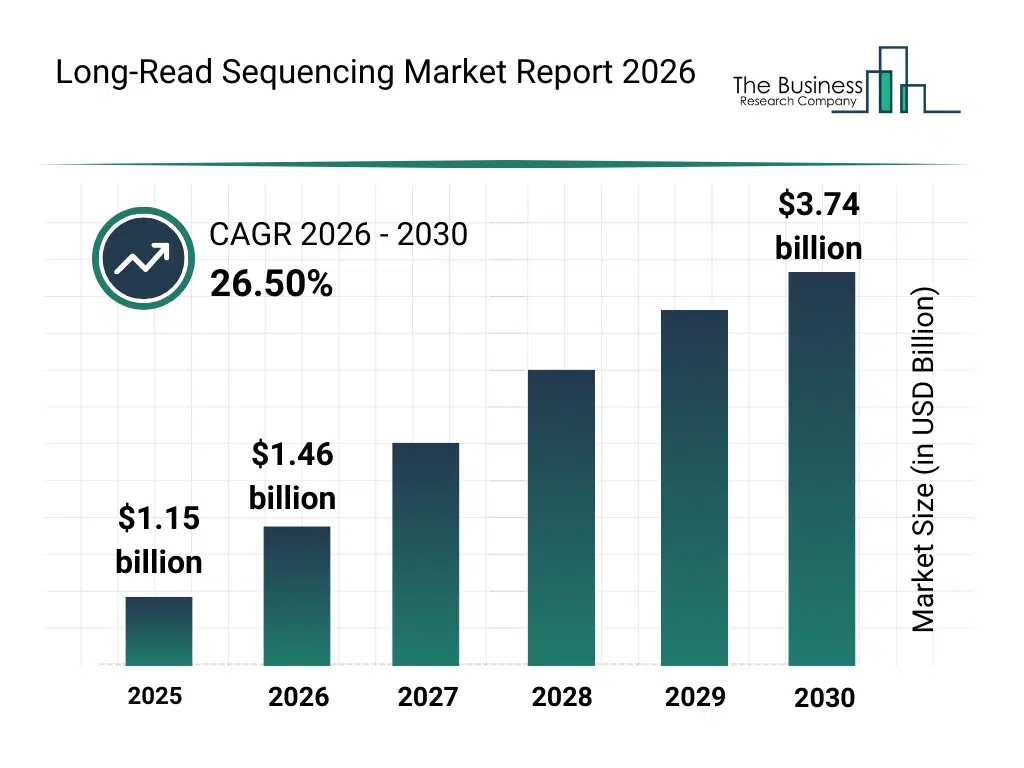
What Is The Long-Read Sequencing Market Size and Share 2026?
The long-read sequencing market size has grown exponentially in recent years. It will grow from $1.15 billion in 2025 to $1.46 billion in 2026 at a compound annual growth rate (CAGR) of 26.8%. The growth in the historic period can be attributed to limitations of short-read sequencing, growth of genomics research, technological breakthroughs in nanopore sequencing, demand for accurate genome assembly, increased funding in life sciences.What Is The Long-Read Sequencing Market Growth Forecast?
The long-read sequencing market size is expected to see exponential growth in the next few years. It will grow to $3.74 billion in 2030 at a compound annual growth rate (CAGR) of 26.5%. The growth in the forecast period can be attributed to clinical adoption of long-read sequencing, declining sequencing costs, integration with AI-based analysis, expansion in oncology diagnostics, growth of population genomics. Major trends in the forecast period include increasing adoption of long-read technologies, improved structural variant detection, growth of hybrid sequencing approaches, expansion of rare disease genomics, rising use in complex genome assembly.
Global Long-Read Sequencing Market Segmentation
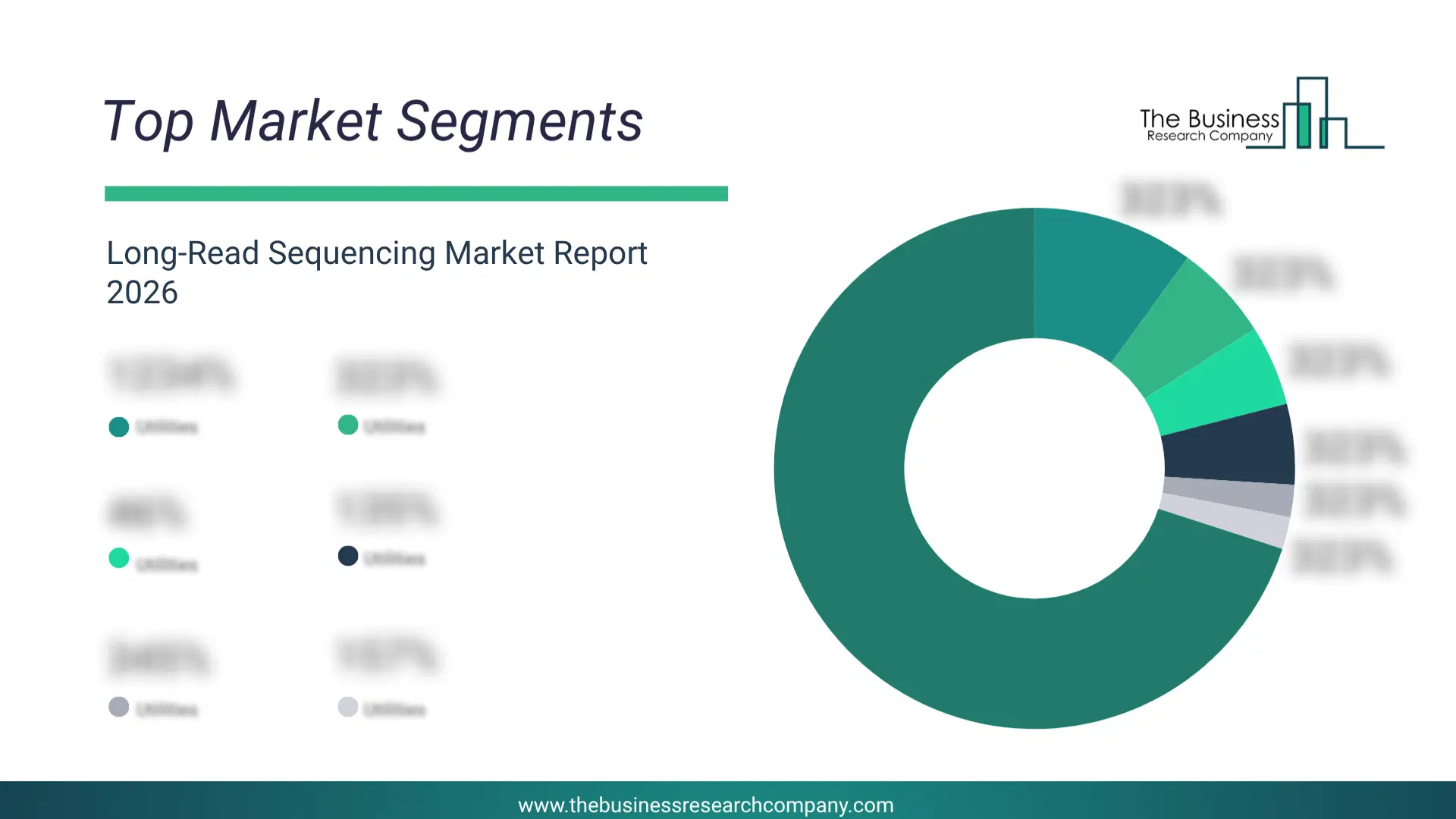
1) By Product And Service: Instruments Or Platforms, Consumables And Reagents, Services And Software 2) By Workflow: Pre-Sequencing, Sequencing, Data Analysis 3) By Technology Platform: Single Molecule Real-Time (SMRT) High-Fidelity (HiFi) Sequencing, Synthetic Long-Read Or Linked-Read, Hybrid And Other Emerging 4) By Application: Human Genomics And Rare-Disease Diagnostics, Oncology And Liquid Biopsy, Metagenomics And Microbiome, Transcriptomics, Agri Genomics And Plant Or Animal Breeding, Other Applications 5) By End User: Academic And Research Institutes, Hospitals And Clinics, Pharmaceutical And Biotechnology Companies, Other End-Uses Subsegments: 1) By Instruments Or Platforms: Single-Molecule Real-Time (SMRT) Sequencers, Nanopore Sequencers 2) By Consumables And Reagents: Library Preparation Kits, Sample Preparation Kits, Sequencing Kits 3) By Services And Software: Sequencing Services, Data Analysis Services, Bioinformatics SoftwareWhat Is The Driver Of The Long-Read Sequencing Market?
The increasing prevalence of genetic diseases is expected to propel the growth of the long-read sequencing market going forward. Genetic diseases are disorders caused by changes or mutations in DNA, which can be inherited or occur spontaneously, affecting health, development, or body functions. The rising prevalence of genetic diseases is due to increased awareness and advancements in diagnostic technologies, as these enable earlier and more accurate detection of previously undiagnosed conditions. Long-read sequencing enhances genetic disorder management by providing highly accurate and comprehensive genomic insights, making it ideal for diagnosing complex and rare conditions. It reduces diagnostic uncertainty by detecting structural variations and complex mutations, improving personalized treatment and clinical decision-making. For instance, in October 2024, according to the Cystic Fibrosis Trust, a UK-based national charity, there were 11,148 people living with cystic fibrosis (CF) in the UK in 2022, increasing to 11,318 in 2023. Therefore, the increasing prevalence of genetic diseases is driving the growth of the long-read sequencing industry.Key Players In The Global Long-Read Sequencing Market
Major companies operating in the long-read sequencing market are Thermo Fisher Scientific Inc., Agilent Technologies Inc., Revvity Inc., Bio-Rad Laboratories Inc., BGI Genomics Co. Ltd., Novogene Co. Ltd., Takara Bio Inc., Oxford Nanopore Technologies plc, Pacific Biosciences of California Inc., New England Biolabs Inc., Roche Sequencing Solutions Inc., The Garvan Institute, Element Biosciences Inc., Eurofins Genomics, CD Genomics, BaseClear B.V, France Génomique, GrandOmics Biosciences Co. Ltd., Future Genomics Technologies B.V., MicrobesNG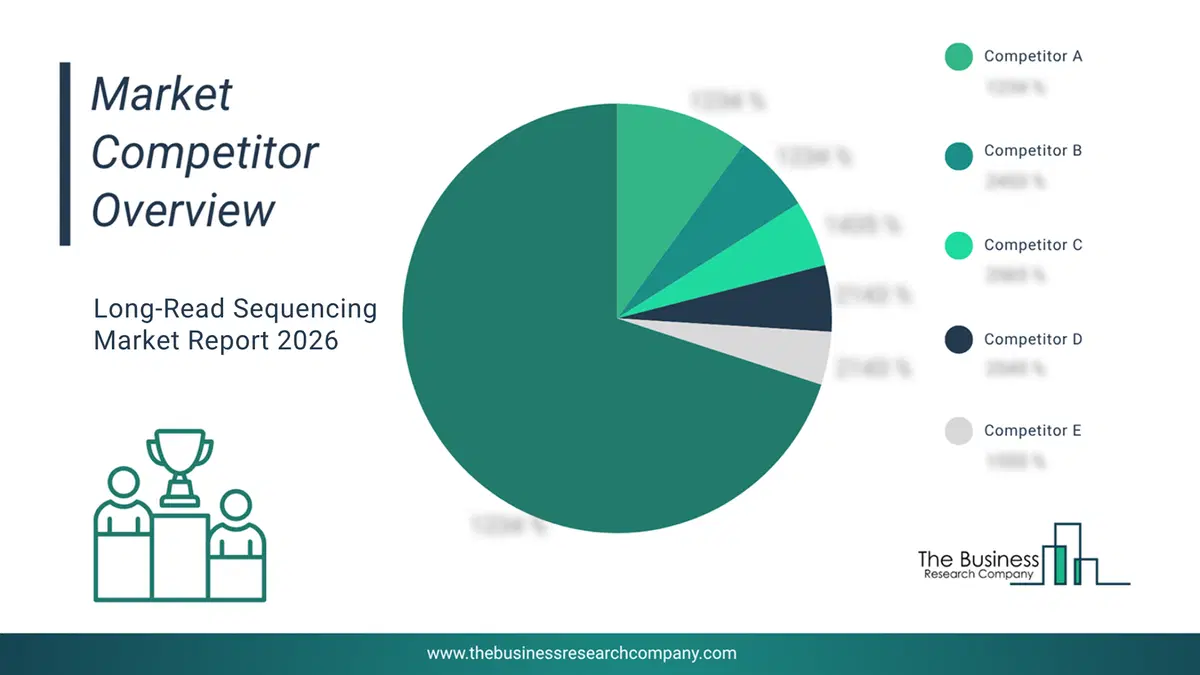
This chart is for illustrative purposes; the full report includes a detailed competitor analysis and comprehensive overview of the top 10 companies in the market.
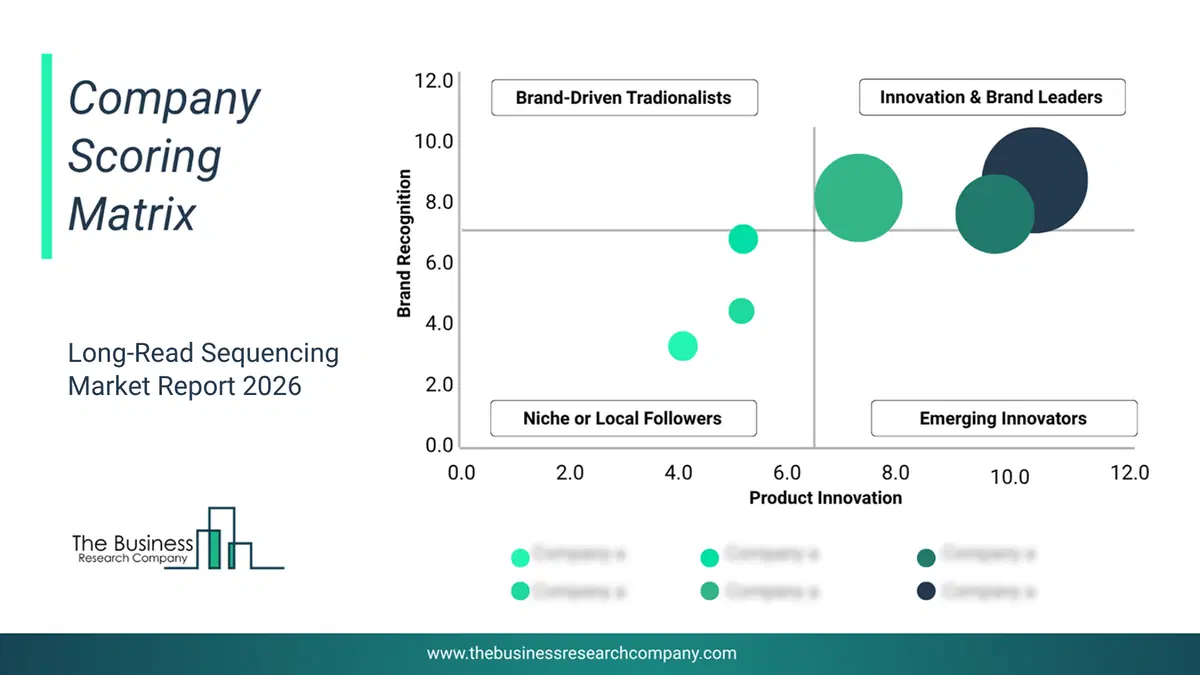
This chart maps companies by product innovation and brand strength, with bubble size indicating relative revenue, helping identify market leaders, challengers, and niche players. This is an illustrative chart; the full report provides a complete and accurate competitive analysis.
Global Long-Read Sequencing Market Trends and Insights
Major companies operating in the long-read sequencing market are focusing on developing innovative solutions, such as HiFi reads, to enhance sequencing accuracy, detect complex genetic variations, and accelerate genomic research. High-fidelity (HiFi) reads refer to long DNA sequences generated by certain long-read sequencing technologies, offering both long read lengths and very low error rates, enabling accurate detection of complex genetic variants and structural variations. For instance, in November 2024, Pacific Biosciences of California Inc., a US-based biotechnology company, launched a Vega system, its first benchtop long-read sequencing platform designed for faster and more accessible genomic analysis. It is a compact, affordable benchtop long-read sequencer delivering highly accurate HiFi data with 99.9% read accuracy. It enables fast, versatile sequencing for applications such as RNA, targeted, and small genome sequencing, bringing advanced genomics capabilities within reach of more labs. Vega simplifies workflows with onboard computing and easy operation, empowering researchers to unlock complex genetic insights efficiently.What Are Latest Mergers And Acquisitions In The Long-Read Sequencing Market?
In March 2024, Clinical Microbiomics A/S, a Denmark-based multi-omics microbiome company, acquired DNASense ApS for an undisclosed amount. Through this acquisition, Clinical Microbiomics aims to strengthen its long-read sequencing capabilities for metagenomics, industrial, and environmental microbiome applications by integrating DNASense’s advanced long-read DNA and RNA sequencing technologies and high-resolution bioinformatics. DNASense ApS is a Denmark-based contract research organization (CRO) specializing in long-read sequencing services and analytical workflows for DNA and RNA.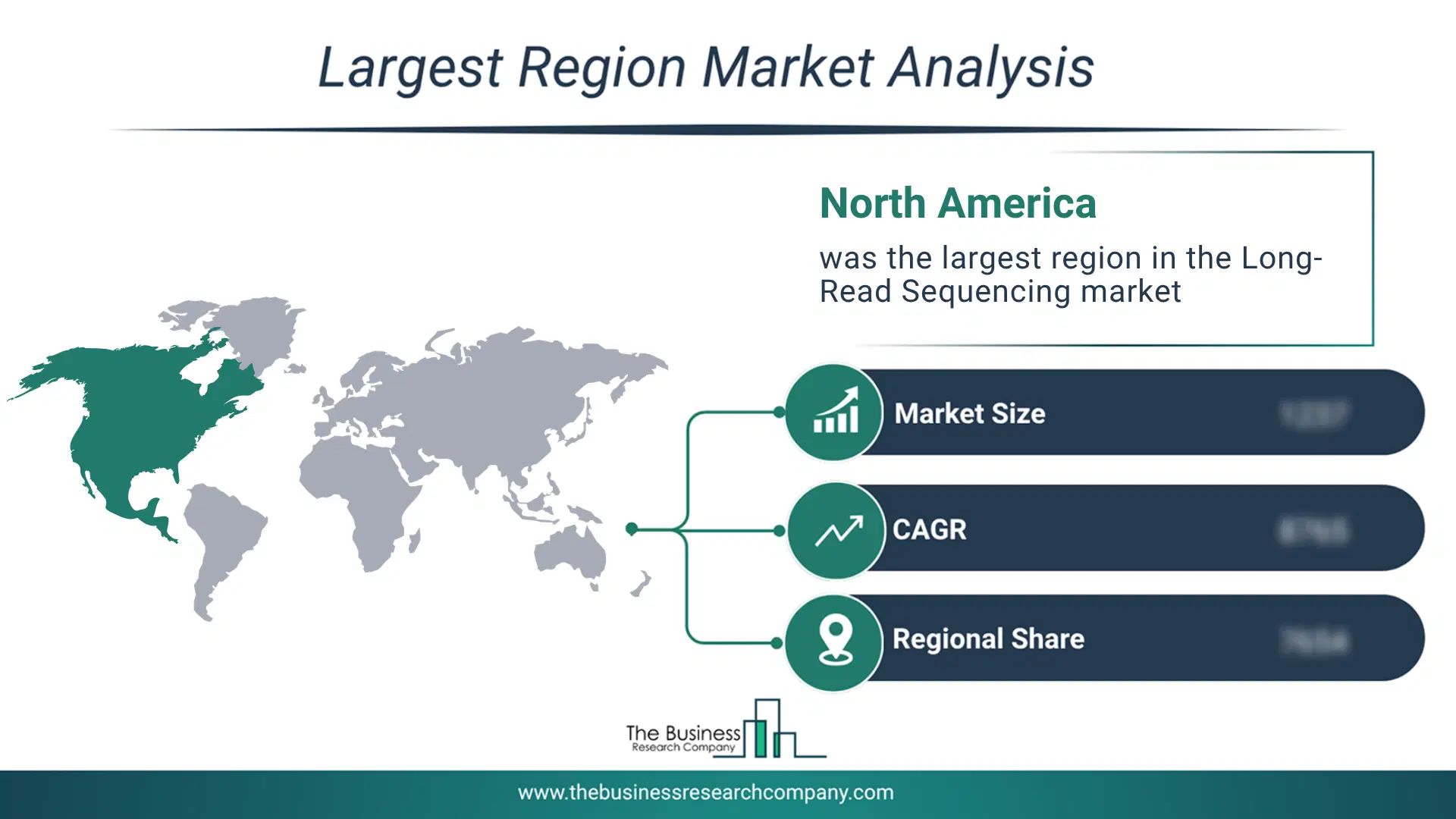
Regional Outlook
North America was the largest region in the long-read sequencing market in 2025. Asia-Pacific is expected to be the fastest-growing region in the forecast period. The regions covered in this market report are Asia-Pacific, South East Asia, Western Europe, Eastern Europe, North America, South America, Middle East, Africa. The countries covered in this market report are Australia, Brazil, China, France, Germany, India, Indonesia, Japan, Taiwan, Russia, South Korea, UK, USA, Canada, Italy, SpainWhat Defines the Long-Read Sequencing Market?
The long-read sequencing market consists of revenues earned by entities by providing services such as high-throughput DNA sequencing, real-time genome analysis, structural variant detection, and de novo genome assembly. The market value includes the value of related goods sold by the service provider or included within the service offering. The long-read sequencing market also includes sales of library preparation kits, analysis tools, and library and sample prep kits. Values in this market are ‘factory gate’ values, that is, the value of goods sold by the manufacturers or creators of the goods, whether to other entities (including downstream manufacturers, wholesalers, distributors, and retailers) or directly to end customers. The value of goods in this market includes related services sold by the creators of the goods.How is Market Value Defined and Measured?
The market value is defined as the revenues that enterprises gain from the sale of goods and/or services within the specified market and geography through sales, grants, or donations in terms of the currency (in USD unless otherwise specified). The revenues for a specified geography are consumption values that are revenues generated by organizations in the specified geography within the market, irrespective of where they are produced. It does not include revenues from resales along the supply chain, either further along the supply chain or as part of other products.
This chart presents market attractiveness based on a quantitative evaluation of growth, competition, strategic alignment, and risk, offering a clear view of opportunity areas for decision-making. This chart is for illustrative purposes; the full report contains the complete analysis.

This chart highlights the Total Addressable Market (TAM) by estimating the maximum revenue opportunity using an assumption-driven approach, supporting strategic planning and opportunity sizing across markets. The chart is illustrative; the full report provides a more comprehensive analysis.
What Key Data and Analysis Are Included in the Long-Read Sequencing Market Report 2026?
The long-read sequencing market research report is one of a series of new reports from The Business Research Company that provides market statistics, including industry global market size, regional shares, competitors with the market share, detailed market segments, market trends and opportunities, and any further data you may need to thrive in the long-read sequencing industry. The market research report delivers a complete perspective of everything you need, with an in-depth analysis of the current and future state of the industry.Long-Read Sequencing Market Report Forecast Analysis
| Report Attribute | Details |
|---|---|
| Market Size Value In 2026 | $1.46 billion |
| Revenue Forecast In 2030 | $3.74 billion |
| Growth Rate | CAGR of 26.5% from 2026 to 2030 |
| Base Year For Estimation | 2025 |
| Actual Estimates/Historical Data | 2020-2025 |
| Forecast Period | 2026 - 2030 |
| Market Representation | Revenue in USD Billion and CAGR from 2026 to 2030 |
| Segments Covered | Product And Service, Workflow, Technology Platform, Application, End User |
| Regional Scope | Asia-Pacific, Western Europe, Eastern Europe, North America, South America, Middle East, Africa |
| Country Scope | The countries covered in the report are Australia, Brazil, China, France, Germany, India, Indonesia, Japan, Taiwan, Russia, South Korea, UK, USA, Canada, Italy, Spain. |
| Key Companies Profiled | Thermo Fisher Scientific Inc., Agilent Technologies Inc., Revvity Inc., Bio-Rad Laboratories Inc., BGI Genomics Co. Ltd., Novogene Co. Ltd., Takara Bio Inc., Oxford Nanopore Technologies plc, Pacific Biosciences of California Inc., New England Biolabs Inc., Roche Sequencing Solutions Inc., The Garvan Institute, Element Biosciences Inc., Eurofins Genomics, CD Genomics, BaseClear B.V, France Génomique, GrandOmics Biosciences Co. Ltd., Future Genomics Technologies B.V., MicrobesNG |
| Customization Scope | Request for Customization |
| Pricing And Purchase Options | Explore Purchase Options |