
Low Fat Sausage Market Report 2026
Global Outlook – By Type (Pork, Beef, Chicken, Plant-Based, Other Types), By Nature (Organic, Conventional), By Application (Food Industry, Hotels Or Restaurants Or Cafes (HoReCa), Household (Retail)), By Distribution Channel (Hypermarkets And Supermarkets, Specialty Stores, Convenience Stores, Online Sales Channels, Other Distribution Channels) – Market Size, Trends, Strategies, and Forecast to 2030
Low Fat Sausage Market Overview
• Low Fat Sausage market size has reached to $3.41 billion in 2025 • Expected to grow to $4.42 billion in 2030 at a compound annual growth rate (CAGR) of 5.2% • Growth Driver: Clean Eating Trend Boosts Low-Fat Sausage Market Through Health-Conscious Demand • Market Trend: Innovative Low-Saturated-Fat Sausages Meet Growing Consumer Demand For Healthier Food Options • North America was the largest region in 2025.What Is Covered Under Low Fat Sausage Market?
A low-fat sausage is a type of sausage with reduced fat content compared to traditional varieties, often achieved through the use of leaner meats and minimal added fats. These sausages are commonly used as healthier alternatives in various culinary dishes, catering to dietary preferences that emphasize lower fat intake without compromising on flavor. The main types of low-fat sausage are pork, beef, chicken, plant-based, and others. Pork sausages are meat products produced from ground pork that are usually combined with spices, salt, and other seasonings and wrapped in a skin. It is available in organic and conventional nature, for different applications such as the food industry, hotels, restaurants, or cafes (HoReCa), and households (retail). They are provided through a variety of distribution channels, consisting of hypermarkets and supermarkets, specialty stores, convenience stores, online sales channels, and others.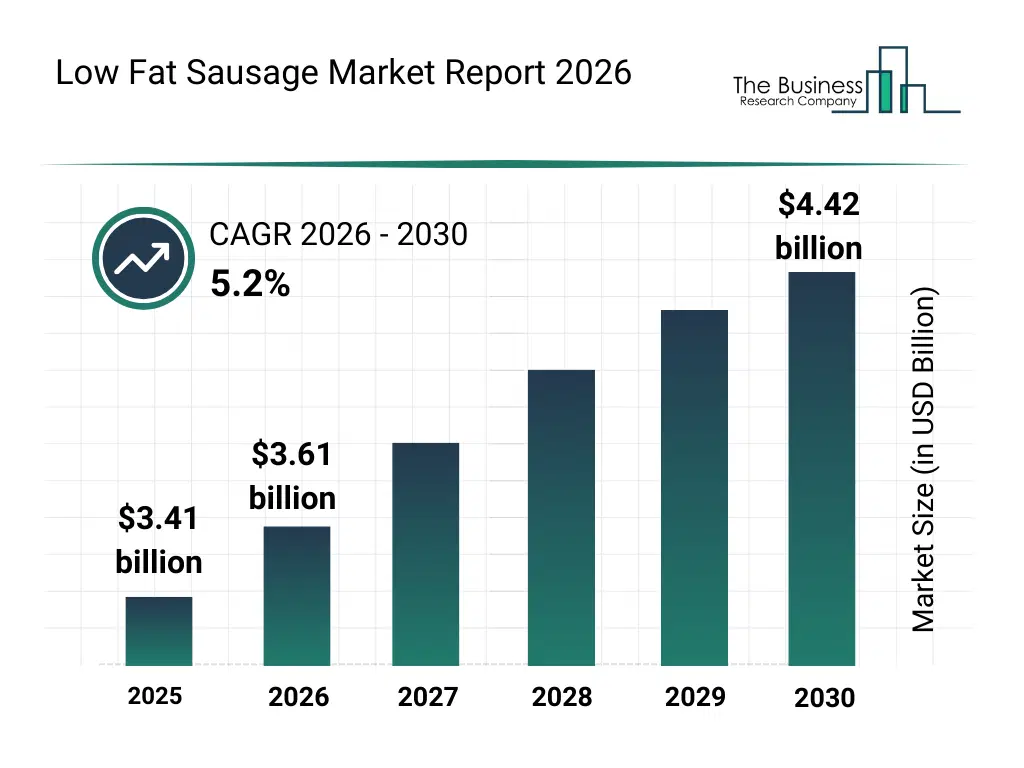
What Is The Low Fat Sausage Market Size and Share 2026?
The low fat sausage market size has grown strongly in recent years. It will grow from $3.41 billion in 2025 to $3.61 billion in 2026 at a compound annual growth rate (CAGR) of 5.8%. The growth in the historic period can be attributed to growing consumer awareness of dietary health, rising incidence of lifestyle-related diseases, expansion of functional food consumption, increased availability of lean meat sources, growth of organized food retail.What Is The Low Fat Sausage Market Growth Forecast?
The low fat sausage market size is expected to see strong growth in the next few years. It will grow to $4.42 billion in 2030 at a compound annual growth rate (CAGR) of 5.2%. The growth in the forecast period can be attributed to increasing demand for protein-rich low-fat foods, rising adoption of flexitarian diets, expansion of plant-based sausage offerings, growing innovation in fat-reduction technologies, increasing focus on clean-label meat alternatives. Major trends in the forecast period include increasing demand for health-oriented meat products, rising adoption of lean and clean-label formulations, growing preference for plant-based and hybrid sausages, expansion of organic and reduced-sodium variants, enhanced focus on taste retention in low-fat products.
Global Low Fat Sausage Market Segmentation
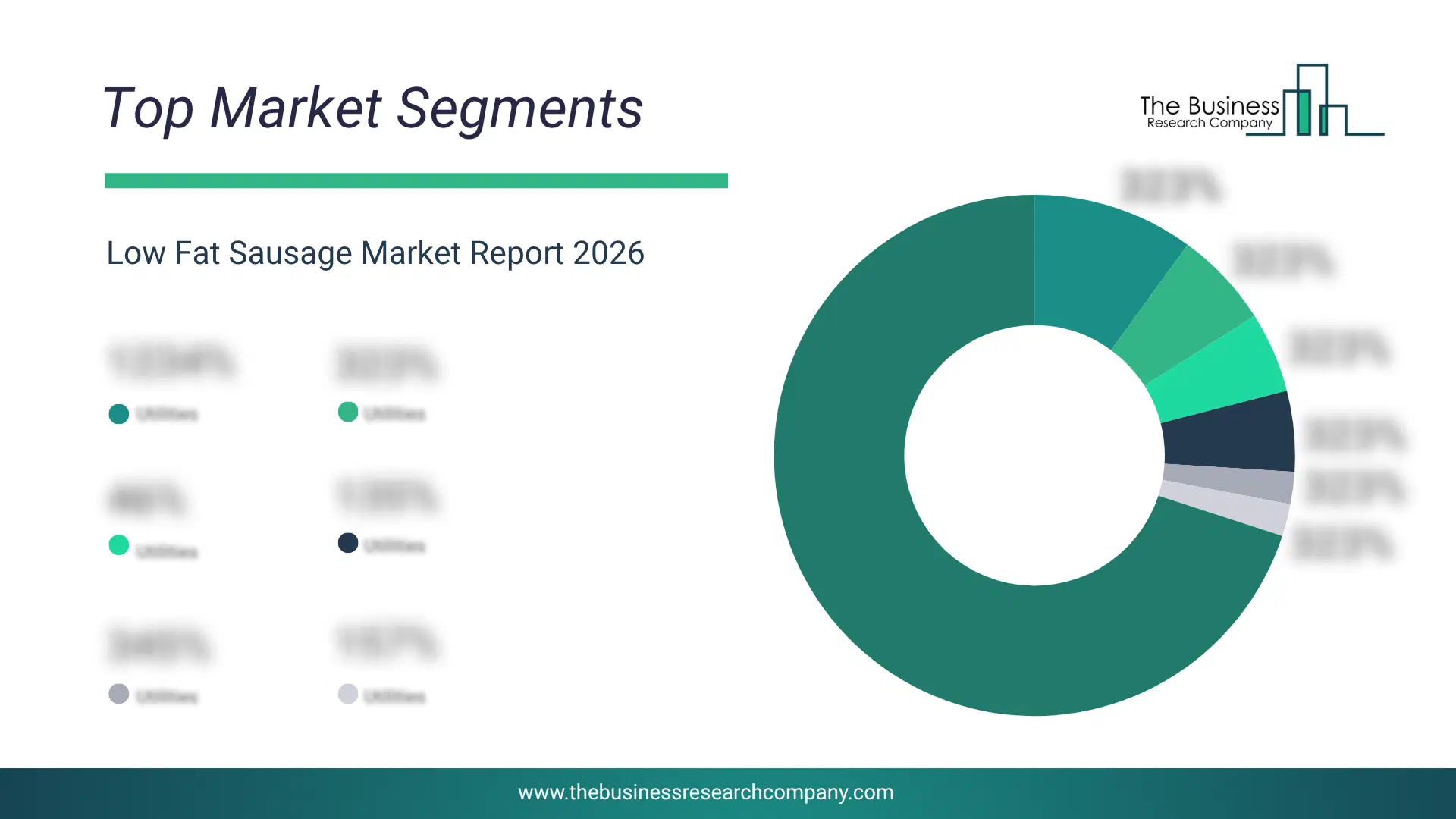
1) By Type: Pork, Beef, Chicken, Plant-Based, Other Types 2) By Nature: Organic, Conventional 3) By Application: Food Industry, Hotels Or Restaurants Or Cafes (HoReCa), Household (Retail) 4) By Distribution Channel: Hypermarkets And Supermarkets, Specialty Stores, Convenience Stores, Online Sales Channels, Other Distribution Channels Subsegments: 1) By Pork: Low-Fat Pork Sausages, Lean Pork Sausages, Reduced-Fat Pork Sausages, Organic Pork Sausages, Pork Sausages With Herbs And Spices, Pork Sausages With Reduced Sodium 2) By Beef: Lean Beef Sausages, Low-Fat Beef Sausages, Grass-Fed Beef Sausages, Reduced-Fat Beef Sausages, Beef Sausages With Natural Flavors, Organic Beef Sausages 3) By Chicken: Lean Chicken Sausages, Low-Fat Chicken Sausages, Grilled Chicken Sausages, Ground Chicken Sausages, Chicken Sausages With Herbs And Spices, Organic Chicken Sausages 4) By Plant-Based: Vegan Sausages, Vegetarian Sausages, Soy-Based Plant Sausages, Lentil And Bean-Based Sausages, Pea Protein-Based Sausages, Seitan-Based Sausages, Mushroom-Based Plant Sausages 5) By Other Types: Turkey Sausages, Fish Sausages, Lamb Sausages, Game Meat Sausages (Venison, Bison), Duck Sausages, Rabbit SausagesWhat Is The Driver Of The Low Fat Sausage Market?
The growth in the clean eating trend is expected to drive the low-fat sausage market going forward. Clean eating is a dietary approach focused on consuming whole, minimally processed foods that are free from additives and artificial ingredients. The growth in clean eating is driven by increasing health awareness, a desire for transparency in food sourcing, and a growing preference for natural and organic products. Low-fat sausages contribute to the clean eating trend by offering healthier, minimally processed alternatives, such as plant-based options, that meet consumers' demand for nutritious and natural foods. For instance, in April 2025, according to the Organic Trade Association (OTA), a US-based organic industry association, U.S. organic food sales to US $71.6 billion in 2024. Therefore, the growth in the clean eating trend is driving the low-fat sausage market.Key Players In The Global Low Fat Sausage Market
Major companies operating in the low fat sausage market are Cargill Incorporated, Nestlé S.A., Tyson Foods Inc., WH Group Limited, Smithfield Foods Inc., Perdue Farms, ELPOZO ALIMENTACIÓN S.A., Atria Plc, Butterball LLC, Boar's Head, Johnsonville LLC, Beyond Meat, Kayem Foods Inc., Premio Foods, Heck Food Ltd., Bob Evans Farms, Applegate Farms LLC, Aidells Sausage Company, Roquette Frères, Beneo GmbH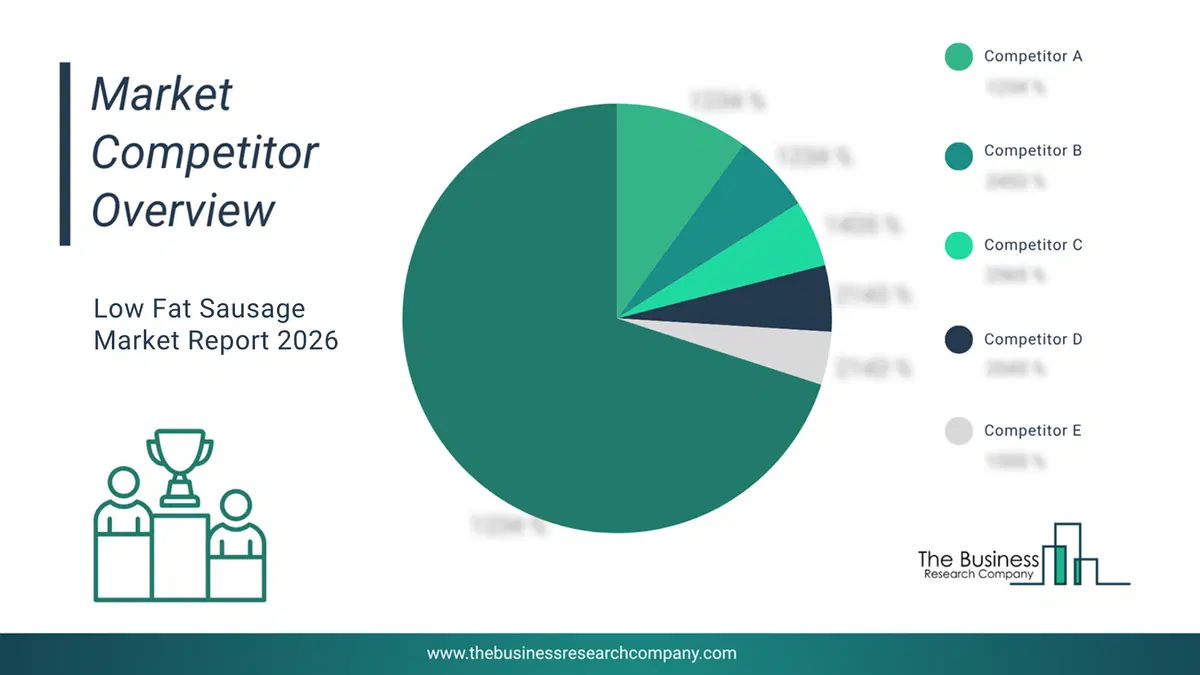
This chart is for illustrative purposes; the full report includes a detailed competitor analysis and comprehensive overview of the top 10 companies in the market.
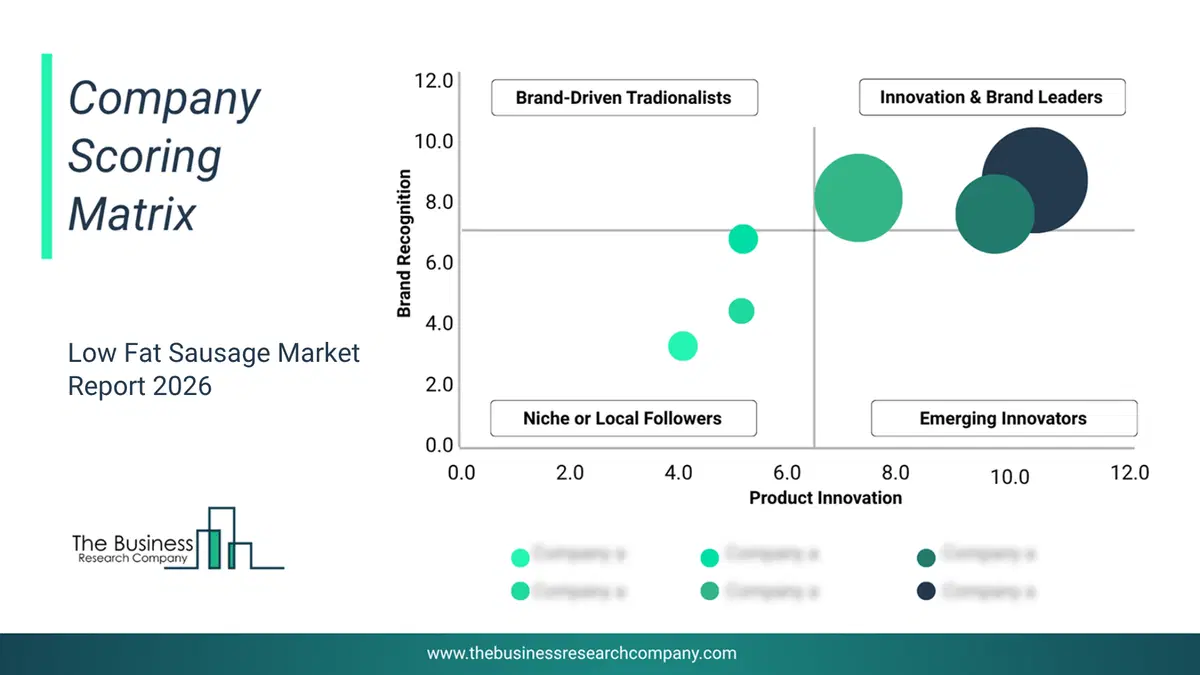
This chart maps companies by product innovation and brand strength, with bubble size indicating relative revenue, helping identify market leaders, challengers, and niche players. This is an illustrative chart; the full report provides a complete and accurate competitive analysis.
Global Low Fat Sausage Market Trends and Insights
Major companies operating in the low-fat sausage market are increasing their focus on developing sausage with reduced saturated fat content to meet the growing consumer demand for healthier and more nutritious food options. A low-saturated-fat sausage is a healthier alternative to regular sausages, with substantially lower levels of saturated fat, making it a better choice for those aiming to minimize their consumption of unhealthy fats. For instance, in June 2024, Beyond Meat, a US-based plant-based meat products company, launched the fourth generation of Beyond Sausage. This latest version boasts enhanced flavor and a meatier texture while significantly improving its nutritional profile. It is made with avocado oil and contains 66% less saturated fat, at just 2g per link, which is 75% less than traditional pork sausage.What Are Latest Mergers And Acquisitions In The Low Fat Sausage Market?
In November 2024, Traina Dried Fruit, Inc., a US-based food supplier known for producing the world's finest sun-dried fruit, acquired Martin Farms for an undisclosed amount. Through this acquisition, Traina Dried Fruit, Inc. aims to expand its sun-dried tomato offerings, preserve traditional drying methods, and strengthen its commitment to sustainability in food production. JMartin Farms is a US-based agricultural company, specializes in low-fat sausage products.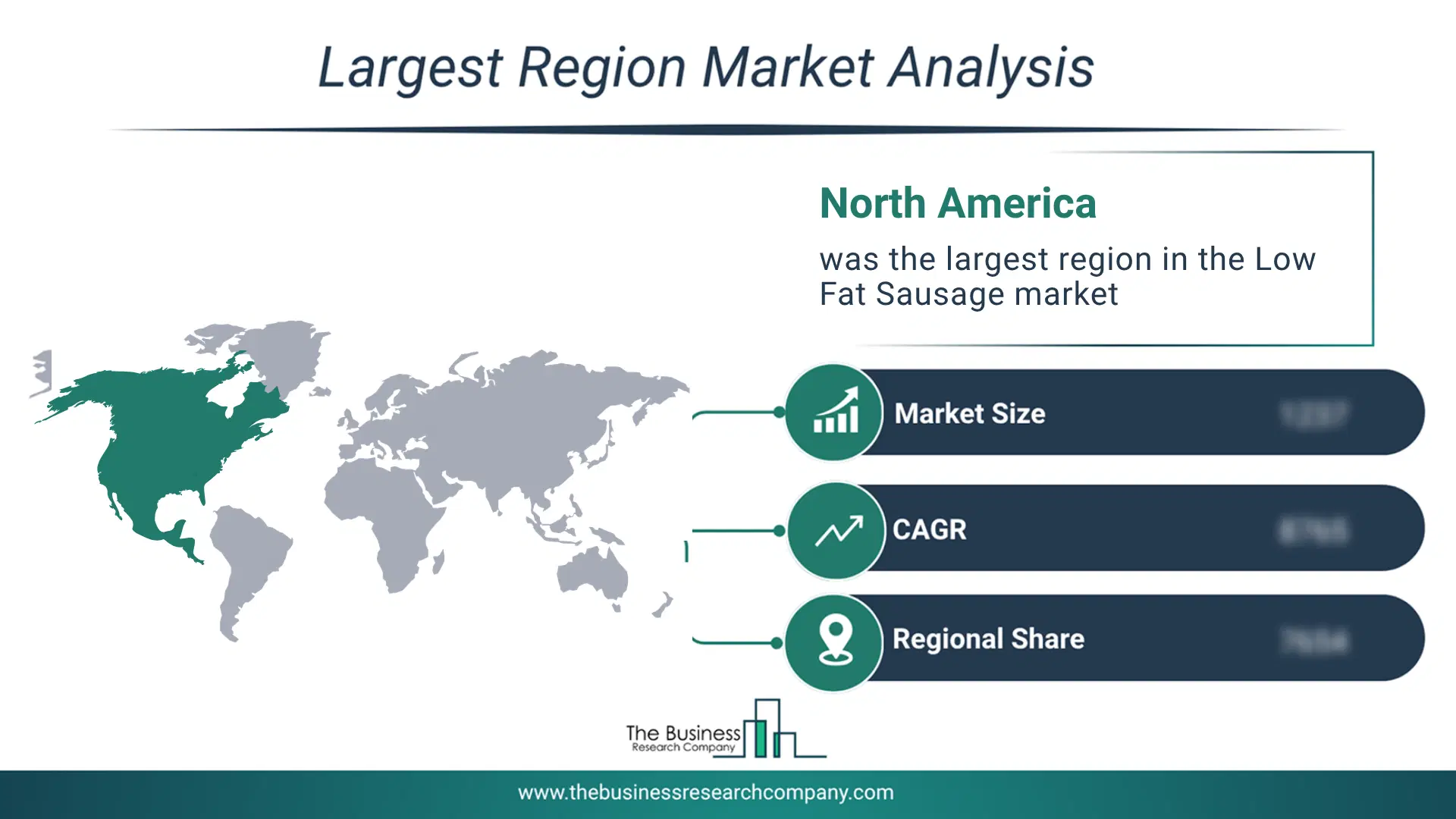
Regional Outlook
North America was the largest region in the low fat sausage market in 2025. The regions covered in this market report are Asia-Pacific, South East Asia, Western Europe, Eastern Europe, North America, South America, Middle East and Africa. The countries covered in this market report are Australia, Brazil, China, France, Germany, India, Indonesia, Japan, Taiwan, Russia, South Korea, UK, USA, Italy, Spain, CanadaWhat Defines the Low Fat Sausage Market?
The low-fat sausage market consists of sales of turkey, lamb, venison, seafood, and game meats. Values in this market are ‘factory gate’ values, that is, the value of goods sold by the manufacturers or creators of the goods, whether to other entities (including downstream manufacturers, wholesalers, distributors, and retailers) or directly to end customers. The value of goods in this market includes related services sold by the creators of the goods.How is Market Value Defined and Measured?
The market value is defined as the revenues that enterprises gain from the sale of goods and/or services within the specified market and geography through sales, grants, or donations in terms of the currency (in USD unless otherwise specified). The revenues for a specified geography are consumption values that are revenues generated by organizations in the specified geography within the market, irrespective of where they are produced. It does not include revenues from resales along the supply chain, either further along the supply chain or as part of other products.
This chart presents market attractiveness based on a quantitative evaluation of growth, competition, strategic alignment, and risk, offering a clear view of opportunity areas for decision-making. This chart is for illustrative purposes; the full report contains the complete analysis.

This chart highlights the Total Addressable Market (TAM) by estimating the maximum revenue opportunity using an assumption-driven approach, supporting strategic planning and opportunity sizing across markets. The chart is illustrative; the full report provides a more comprehensive analysis.
What Key Data and Analysis Are Included in the Low Fat Sausage Market Report 2026?
The low fat sausage market research report is one of a series of new reports from The Business Research Company that provides market statistics, including industry global market size, regional shares, competitors with the market share, detailed market segments, market trends and opportunities, and any further data you may need to thrive in the low fat sausage industry. The market research report delivers a complete perspective of everything you need, with an in-depth analysis of the current and future state of the industry.Low Fat Sausage Market Report Forecast Analysis
| Report Attribute | Details |
|---|---|
| Market Size Value In 2026 | $3.61 billion |
| Revenue Forecast In 2030 | $4.42 billion |
| Growth Rate | CAGR of 5.8% from 2026 to 2030 |
| Base Year For Estimation | 2025 |
| Actual Estimates/Historical Data | 2020-2025 |
| Forecast Period | 2026 - 2030 |
| Market Representation | Revenue in USD Billion and CAGR from 2026 to 2030 |
| Segments Covered | Type, Nature, Application, Distribution Channel |
| Regional Scope | Asia-Pacific, Western Europe, Eastern Europe, North America, South America, Middle East, Africa |
| Country Scope | The countries covered in the report are Australia, Brazil, China, France, Germany, India, Indonesia, Japan, Taiwan, Russia, South Korea, UK, USA, Canada, Italy, Spain. |
| Key Companies Profiled | Cargill Incorporated, Nestlé S.A., Tyson Foods Inc., WH Group Limited, Smithfield Foods Inc., Perdue Farms, ELPOZO ALIMENTACIÓN S.A., Atria Plc, Butterball LLC, Boar's Head, Johnsonville LLC, Beyond Meat, Kayem Foods Inc., Premio Foods, Heck Food Ltd., Bob Evans Farms, Applegate Farms LLC, Aidells Sausage Company, Roquette Frères, Beneo GmbH |
| Customization Scope | Request for Customization |
| Pricing And Purchase Options | Explore Purchase Options |